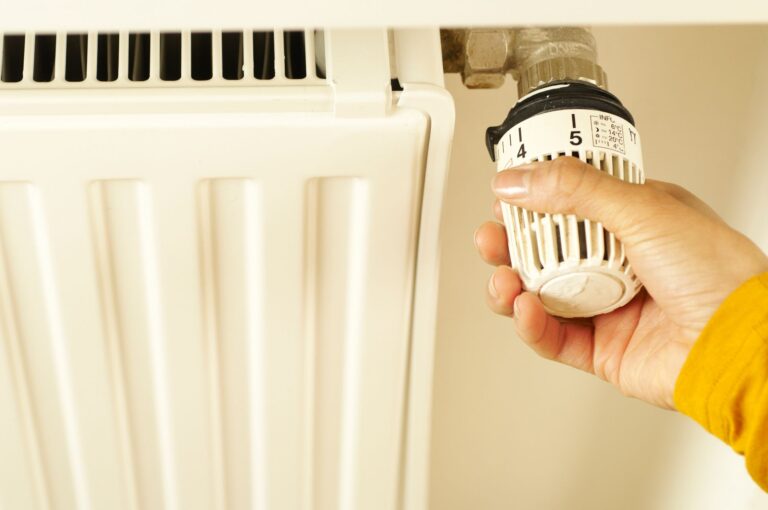

Your thermostat is the brain of your heating and cooling system, and choosing the wrong one turns a small wall box into daily frustration. The picks below cover everything from a basic garage stat to radiant floor heating controls, so you can match the unit to your system type without overspending or under-speccing.
A Closer Look At The Lineup
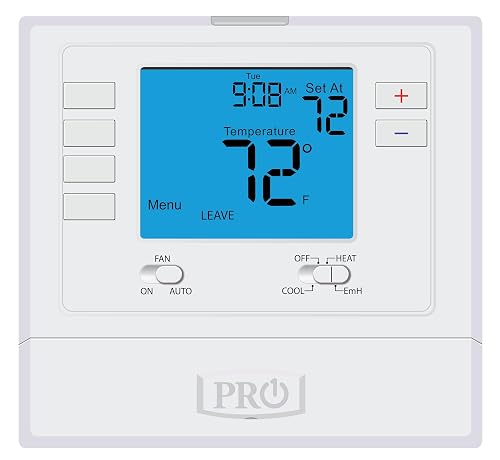
PRO1 T725 Heat Pump/Conventional Programmable Thermostat

PRO1 T771 Single Stage Non-Programmable Wall Thermostat
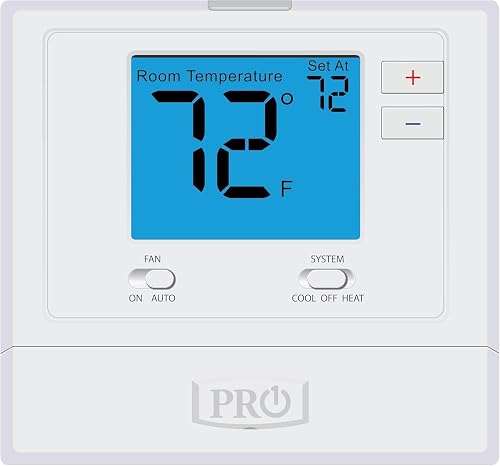
PRO1 T701 Single Stage Non-Programmable Wall Thermostat

PRO1 T715 Multi-Stage Programmable Gas Thermostat
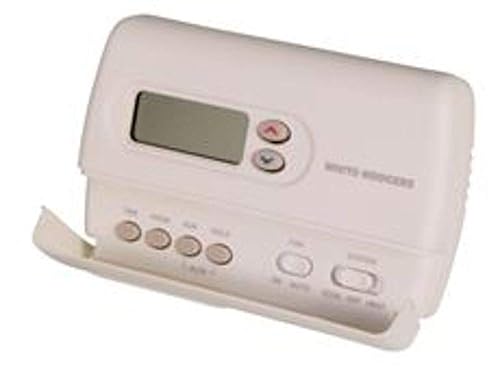
White-Rodgers 1F80-361 Emerson 80 Series Thermostat
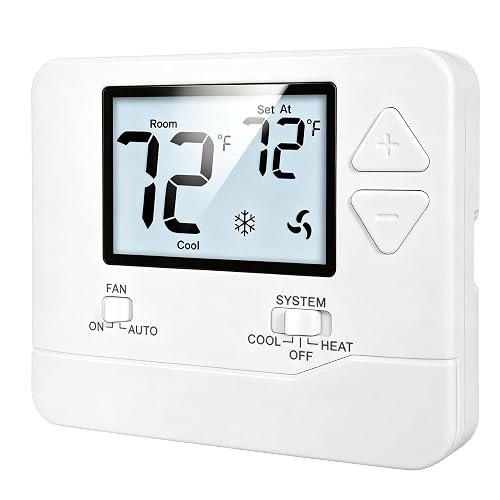
Heagstat Non-Programmable Thermostat 1 Heat/1 Cool
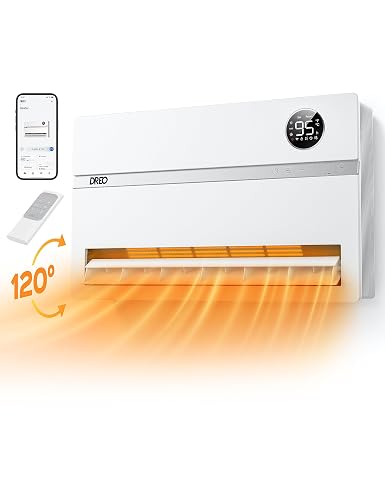
Dreo Smart Wall Heater for Large Rooms
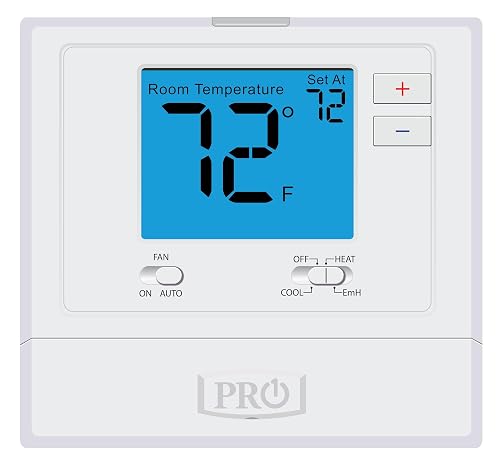
PRO1 T721 Non-Programmable Wall Thermostat

OJ Microline UTN4 Radiant Floor Heat Thermostat

PRO1 T805 Single Stage Programmable Wall Thermostat
Taking A Closer Look At The Options
The PRO1 T725 sits in a sweet spot that few thermostats in this price tier reach. It handles both 2 heat/1 cool heat pump setups and 1 heat/1 cool conventional systems, so the same wall box can follow you through a system swap. That kind of flexibility matters when you’re not sure which way your HVAC plans will lean in a few years.
Compared to the simpler PRO1 T701 below, this T725 adds 7-day and 5/1/1 scheduling, which means four daily periods and weekday/weekend tuning. For most households, that scheduling depth is the difference between a forgettable stat and one that actually trims the bill.
The Value In It
- Compatible with both heat pump and conventional systems in one unit
- 7-day and 5/1/1 programming with four daily periods for granular control
- Large 4 sq. in. blue backlit screen that stays readable at a glance
- Filter and system reminders help you stay ahead of HVAC maintenance
Things To Consider
- Programming takes patience on first setup, so block out a quiet evening
- Battery backup behavior may feel light if your area sees frequent power blips
Quick Facts
Who Will Love This
Homeowners with heat pump systems who want real scheduling without paying smart-statetier money.
A Better Fit Elsewhere
Stick with the PRO1 T701 when your system is strictly 1 heat/1 cool conventional and you’d rather skip programming entirely.
The PRO1 T771 is a purpose-built unit for the spaces your main thermostat ignores. Garages, sheds, and workshops tend to need wider temperature swing than living-room stats allow, and this model’s setpoint range stretches from 25°F to 90°F. That’s the kind of low-end reach that protects pipes or keeps a workshop comfortable during shoulder seasons.
It skips programming entirely, which is honest for the job. You walk up, press a button, and walk away. In a busy garage that gets used at odd hours, that simplicity beats a fancy schedule nobody bothers to set up.
Everyday Perks
- Wide 25°F–90°F setpoint range suited for unconditioned spaces
- Single-stage design keeps wiring straightforward for retrofits
- 4 sq. in. blue backlit display is easy to read in dim garages
- Swing adjustment and calibration help fine-tune comfort
Honest Caveats
- No scheduling, so manual adjustments become routine
- Limited to conventional 1H/1C systems, not heat pumps
Best Suited To
Owners outfitting detached garages, sheds, or workshops that need lower setpoint capability than a living-room stat offers.
Look Elsewhere When
You’d rather have scheduling and a wider system list, in which case the PRO1 T725 is the more capable sibling.
The PRO1 T701 is the stat to hand to a first-time installer or a parent who’d rather not learn a menu tree. It sticks to single-stage 1 heat/1 cool conventional systems, with gas or electric configurability. The glow-in-the-dark light button is a small touch that pays off every night you fumble for it in a dark hallway.
Against the Heagstat later in the list, the T701 feels a step more polished in display size and platform support. You give up nothing in terms of daily operation, and you get a stat that disappears into your wall instead of dominating it.
Strengths Worth Knowing
- Plain up-and-down temperature control with no menu to navigate
- Glow-in-the-dark light button for nighttime adjustments
- Works with most gas, oil, and electric conventional systems
Trade Offs
- No scheduling, so you adjust manually day to day
- Only fits single-stage systems, not multi-stage or heat pumps
- Display is functional rather than large, so vision-impaired users may struggle
Feature Snapshot
Made For
First-time installers and anyone replacing an aging manual stat with a clean, no-learning-curve upgrade.
Reach For A Different Pick When
You want a larger, easier-to-read display, in which case the PRO1 T805 steps up with a 7 sq. in. screen.
The PRO1 T715 is built for households whose gas furnace and air conditioner have more than one stage. That extra stage is the difference between a stat that clicks on at full blast and one that ramps gradually, which usually means quieter operation and steadier temperatures. For a 2 heat/2 cool system, you basically need a stat that speaks the right language, and the T715 does.
It offers 7-day, 5/1/1, and non-programmable modes, so you can grow into the schedule over time. You may find the learning curve on the menu system takes an afternoon, but the day-to-day operation settles in fast.
Practical Advantages
- Supports 2H/2C systems, matching more capable HVAC equipment
- Multiple scheduling modes including fully non-programmable
- Glow-in-the-dark light button for nighttime visibility
- Battery or hardwire power flexibility during install
Points To Note
- More settings to navigate than a non-programmable model
- Overkill for a single-stage system that doesn’t need multi-stage control
Who Should Grab It
Owners with two-stage gas furnaces and matching AC units who want closer temperature control and scheduling.
Swap It Out When
You have a straightforward 1H/1C conventional system, where the PRO1 T701 is a more honest fit.
The White-Rodgers 1F80-361 has been a quiet workhorse in the thermostat world for years, and the contractor bulk-pack format means you’re getting the same hardware the pros install. The 5+1+1 schedule with up to four periods per day is the kind of routine that lets a stat actually pay for itself. It’s compatible with 24V and millivolt systems, which widens where it can drop in.
Unlike the touchscreen-leaning PRO1 units, this Emerson leans old-school with a button-driven interface. In most homes, that translates to a faster, less fussy experience once you learn the layout.
Benefits That Matter
- 5+1+1 programming with four daily periods for weekday and weekend tuning
- Works with gas, oil, electric, and millivolt systems
- Single stage heat/cool design keeps wiring clean
- Proven platform with a long track record in residential installs
Some Limits To Know
- No Wi-Fi, so remote app control is off the table
- Display is functional but not the largest in this list
- Setup instructions live on the listing rather than in the box, so read ahead
At A Glance
Right Fit For
Anyone doing a replacement install on a conventional 24V system who values proven hardware over flashy screens.
Not Your Match When
You want app control or voice integration, in which case the Dreo Smart Wall Heater is a very different but app-driven alternative.
The Heagstat is the stat to reach for when the priority is keeping costs low without giving up basic accuracy. It’s a 24VAC conventional unit, designed for 1H/1C forced-air systems running gas, oil, or electric furnaces. The white backlight keeps the display readable, and the wiring base accepts two to five wires, which covers the most common residential configurations.
Compared to the PRO1 T701, you trade a glow-in-the-dark button and a slightly more refined display for a noticeably smaller hit to your wallet. For rental units and guest rooms, that trade usually makes sense.
Standout Benefits
- Low cost of entry for a digital wall thermostat
- Compatible with gas, oil, and electric conventional systems
- White backlit display for clear nighttime reads
Points To Keep In Mind
- Not compatible with 6 to 8 wire systems, so verify wiring before buying
- No scheduling, so comfort is adjusted manually
- Plastic housing feels lighter than the PRO1 platform
Built With In Mind
Rental property owners and budget-minded shoppers who need a serviceable stat for a 1H/1C conventional system.
Where A Sibling Pick Shines
The PRO1 T701 is a step up in build polish and display refinement for similar conventional system support.
The Dreo Smart Wall Heater is the outlier on this list, and on purpose. It’s not a wall thermostat, it’s the heater itself, designed for large rooms where you want supplemental warmth with serious app and voice control. The 120-degree wide oscillation pushes heat further than a typical wall-mounted unit, and the quiet operation matters more in bedrooms than specs suggest.
Worth considering alongside the PRO1 picks as a different category of solution. You may find it covers a cold bonus room that your central system can’t reach, rather than replacing your main stat.
Strong Points
- App and voice control from the Dreo app ecosystem
- 120-degree oscillation spreads warmth across large rooms
- Quiet operation suitable for bedrooms and home offices
- Scheduling integrates with daily routines
Worth Noting
- It is the heater, not just the thermostat, so it adds to the wall rather than replacing a stat
- Requires Wi-Fi and app setup to unlock its full feature set
Key Product Details
Perfect Match For
Anyone needing supplemental heat in a cold bedroom or bonus room with app and voice convenience.
Skip It When
You only need a thermostat to control an existing central system, where the PRO1 T725 is the more appropriate pick.
The PRO1 T721 is the non-programmable sibling to the T725, and it earns its place on this list for one specific reason: heat pump flexibility without scheduling menus. It supports 2 heat/1 cool heat pump systems or 1 heat/1 cool conventional systems, so it can drop into either setup. The glow-in-the-dark light button is a small detail that punches above its weight in dim hallways.
It’s a useful bridge for homes that have a heat pump but no real interest in programming. Set it, walk away, and let the system do its job.
Where It Delivers
- Heat pump and conventional compatibility in one unit
- Simple non-programmable operation for set-and-forget households
- 4 sq. in. blue backlit display with glow-in-the-dark button
Room For Improvement
- No scheduling, so it doesn’t help you trim bills through automation
- Limited to 2 heat/1 cool configurations on the heat pump side
Whose Shelf It Belongs On
Heat pump owners who want a clean, dial-style stat without the programming overhead of the T725.
Consider Something Else When
You want scheduling flexibility, in which case the PRO1 T725 is the closer match for your system.
The OJ Microline UTN4 steps into a totally different corner of the category: electric radiant floor heating. A Class A GFCI (Ground Fault Circuit Interrupter) is built into the unit, which is the safety feature that radiant floor heat requires by code in many installations. Dual sensing uses both the floor sensor and ambient air to keep temperatures honest, and the included sensor saves a separate purchase.
It runs on 120V or 240V, which covers both common North American floor heat circuits. For a bathroom or kitchen with tile over a heating mat, this is the kind of stat that does the job the right way.
The Good Stuff
- Built-in Class A GFCI for required safety in wet-area floor heat
- Dual sensing with included floor sensor for accurate temperature control
- 120V/240V compatibility fits common residential circuits
- Non-programmable interface keeps setup minimal
Practical Considerations
- Specific to electric radiant floor heat, not central HVAC systems
- No scheduling, so daily on/off is manual
Best Suited To
Homeowners with electric radiant floor heating in bathrooms, kitchens, or basements who need a code-friendly control.
A Better Fit Elsewhere
The PRO1 T725 is the right stat for central heat pump systems, while the UTN4 stays in its own radiant floor lane.
The PRO1 T805 rounds out the list by leaning into legibility. The 7 sq. in. display is the largest in this lineup, and the glow-in-the-dark light button makes it approachable for anyone who reads the stat from across the room. It supports 7-day, 5/1/1, or fully non-programmable modes, so the schedule depth is up to you.
Compared to the T701 earlier, the T805 trades compactness for a screen you don’t have to squint at. For older homeowners or anyone with imperfect eyesight, that size difference shows up every single day.
The Practical Payoff
- Extra-large 7 sq. in. blue backlit display for easy reading
- 7-day, 5/1/1, or non-programmable modes for flexible scheduling
- Glow-in-the-dark light button for nighttime use
Factors To Consider
- Larger footprint than the more compact PRO1 units
- Single-stage only, not suited to multi-stage systems
Feature Rundown
Built With In Mind
Households with conventional 1H/1C systems that value a large, readable display and optional scheduling.
Reach For A Different Pick When
You have a multi-stage gas furnace, where the PRO1 T715 is the more capable option.
Choosing The Right Thermostat For Your Home
Knowing your system type is the single biggest step before picking a stat. Single-stage conventional systems cover most homes with one furnace and one air conditioner, while multi-stage systems ramp output gradually for tighter comfort. Heat pumps use a different wiring language, so a heat pump-compatible stat like the PRO1 T725 or T721 is non-negotiable for those homes.
Programmable vs. non-programmable comes down to your routine. Households with predictable schedules often recoup the cost of a programmable stat through setpoint setbacks during work hours, while vacation homes and guest spaces rarely benefit from scheduling and do fine with a simpler model.
Voltage and wiring matter more than most shoppers expect. Most modern stats run on 24VAC from a low-voltage transformer, but millivolt systems in older homes need a stat rated for that. The Heagstat, for example, caps at five wires, so confirming the wire count at your existing wall plate prevents a return trip.
Display size, backlight, and button feel often get overlooked but show up in daily use. A larger screen and glow-in-the-dark button, like those on the PRO1 T805, become real quality-of-life upgrades in hallways and bedrooms. For specialty applications, garage sheds benefit from wide setpoint ranges such as those on the PRO1 T771, and radiant floor heating needs GFCI protection built in, which the OJ Microline UTN4 provides.
What To Watch Before You Click
Wrong Turns To Avoid
Buying a thermostat before confirming your system type is the most common slip. The Heagstat, for instance, only works with 2 to 5 wires on conventional 1H/1C systems, so it won’t drop into a heat pump or multi-stage setup. Always check the wiring count at the wall plate, the system voltage, and whether your home uses a heat pump or conventional furnace.
A second trap is overpaying for features you won’t use. A smart Wi-Fi stat with geofencing makes sense in a primary residence, but it’s wasted in a guest room or workshop where a non-programmable unit like the PRO1 T701 does the same job for less. Match the stat to the space, not to a spec sheet.
Where The Extra Money Goes
Higher-tier models typically buy you more scheduling depth, larger displays, and broader system compatibility. The PRO1 T805 earns its price over the T701 through a 7 sq. in. screen and full 7-day programming, both of which matter day to day in a primary living space. The T715 earns its price over single-stage options through 2H/2C support, which is the only way to properly control a two-stage furnace.
For radiant floor heating, the upgrade to the OJ Microline UTN4 is about safety as much as comfort. Built-in GFCI protection is a code requirement in many installations, so paying for it inside the stat instead of through a separate breaker often simplifies the install.
Frequently Asked Questions
What is a programmable thermostat?
A programmable thermostat lets you set a temperature schedule so the home adjusts automatically throughout the day. Models like the PRO1 T725 and PRO1 T805 support 7-day and 5/1/1 schedules, while non-programmable options like the PRO1 T701 rely on manual adjustment.
Do all thermostats work with heat pumps?
No, only heat pump-compatible models support the specific wiring and staging those systems use. The PRO1 T725 and PRO1 T721 are designed for heat pump setups, while the Heagstat and PRO1 T701 are conventional-only.
What does a GFCI do in a floor heat thermostat?
A GFCI, or Ground Fault Circuit Interrupter, cuts power quickly if it detects current leakage, which protects against shock in wet areas like bathrooms. The OJ Microline UTN4 includes Class A GFCI protection, which is required for many radiant floor installations.
How many wires do I need for a digital thermostat?
Most digital wall thermostats need between 2 and 5 wires for basic conventional systems, and more for multi-stage or heat pump systems. The Heagstat explicitly does not support 6 to 8 wire configurations, so check your existing wiring before ordering.
Is a smart wall heater a thermostat?
Not exactly. The Dreo Smart Wall Heater is the heating unit itself with built-in smart controls, rather than a wall thermostat controlling a separate furnace and air conditioner. It works as supplemental heat in a specific room rather than a whole-home solution.
Closing Remarks
The right thermostat is the one that matches your system type, your daily routine, and the room it’s mounted in. Start with system compatibility, decide whether scheduling saves you money, and let display size and special features settle the rest. With those filters in place, this list narrows quickly, and you’ll land on a stat that quietly does its job for years.