
A thermostat quietly runs the show in most homes, yet it’s often the last thing anyone thinks about replacing. Pick the wrong one and you fight schedules, lose compatibility with your system, or end up staring at a confusing interface every night. The right one fades into the background, keeps rooms even, and only asks for attention when seasons change. This roundup covers ten heating system thermostats for 2026, from simple manual dials to app-connected floor heating kits, so you can match the hardware to your actual setup and skill level.
The Essentials At A Glance
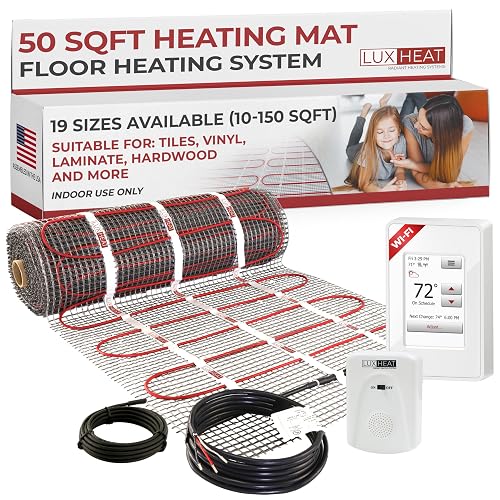
LuxHeat 50 sqft Floor Heating System with WiFi Thermostat
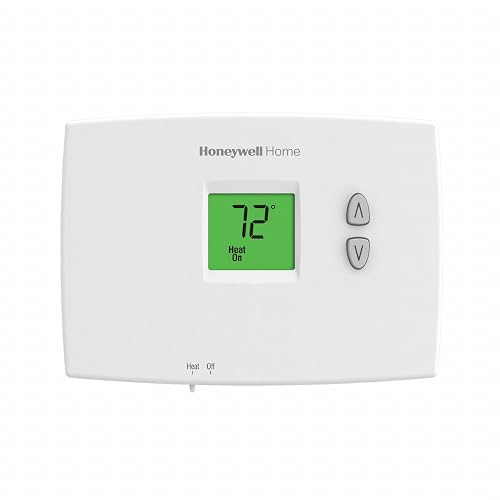
Honeywell TH1100DH1004 PRO 1000 Non-Programmable Thermostat
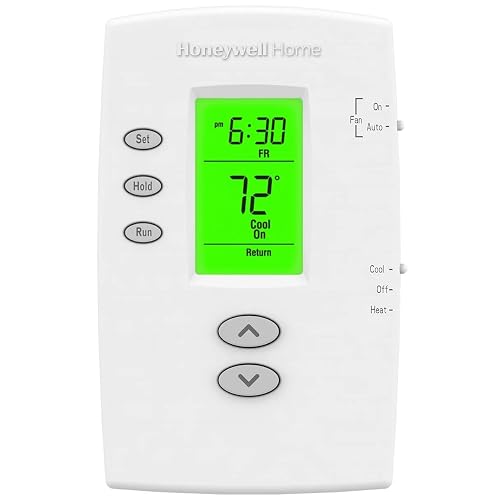
Honeywell TH2110DV1008 PRO 2000 Programmable Thermostat
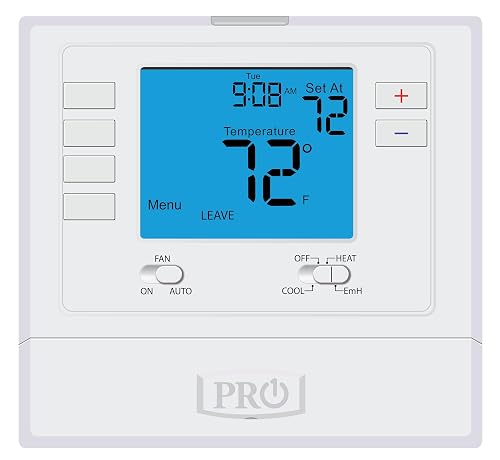
PRO1 T725 Heat Pump/Conventional Programmable Thermostat

PRO1 T771 Single Stage Non-Programmable Thermostat
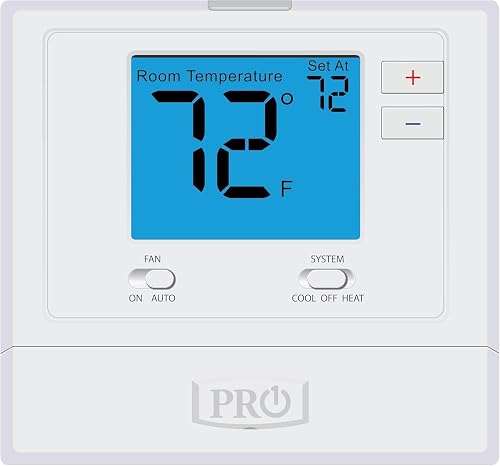
PRO1 T701 Single Stage Non-Programmable Thermostat

PRO1 T715 Multi-Stage Programmable Gas Thermostat
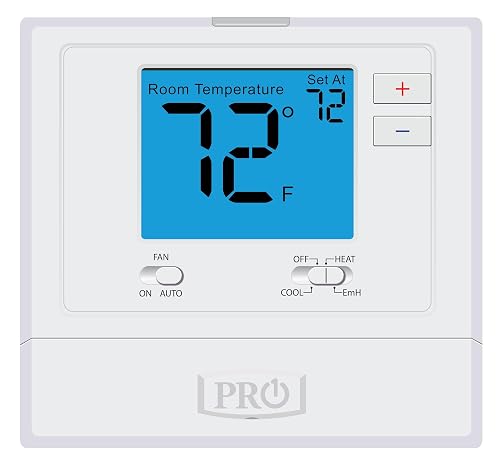
PRO1 T721 Non-Programmable Wall Thermostat

Honeywell TH3210D1004 Non-Programmable Digital Thermostat

PRO1 T805 Single Stage Programmable Thermostat
The Picks, Examined More Closely
The LuxHeat 50 sqft Floor Heating System isn’t a wall thermostat in the traditional sense; it’s a complete radiant floor kit, which sets it apart from every other item on this list. You get a 50 square foot self-adhesive heating mat running on 120 volts, paired with an OJ Microline UWG4-4999 WiFi programmable thermostat that includes a floor sensor and built-in GFCI (Ground Fault Circuit Interrupter, a safety feature that cuts power if it detects a fault). The mat is designed to be embedded under tile, laminates, and similar surfaces, making this a remodeling pick rather than a quick swap.
Where it earns its place is for homeowners committing to a tile or laminate floor project in a bathroom, kitchen entry, or small mudroom. The WiFi thermostat lets you warm the floor on a schedule or trigger it remotely before stepping out of bed. Compared to the simpler wall-mounted units later in this list, this one requires planning around subfloor prep, electrical capacity, and thinset or underlayment choice.
Good Reasons To Consider
- Whole-kit design removes guesswork about mat and thermostat pairing
- WiFi scheduling means a warm bathroom floor before your morning alarm
- Floor sensor protects the surface from overheating, important under wood or laminate
- Built-in GFCI on the thermostat adds a safety layer for wet locations
- 50 square foot coverage suits most small to mid-size bathroom layouts
Things To Consider
- Installation requires subfloor work, electrical planning, and tile or laminate skills
- Coverage is fixed at 50 sqft, so larger rooms need additional mats
- Not a direct wall-thermostat replacement; this is a floor heating project
Who It Suits Best
Homeowners mid-bathroom-remodel who want a complete radiant system with a smart thermostat bundled in.
Where Another Pick Suits Better
Stick with the Honeywell TH1100DH1004 PRO 1000 if you only need a wall thermostat and aren’t pulling up any flooring.
The Honeywell TH1100DH1004 PRO 1000 is the kind of wall thermostat a landlord installs and never touches again. It runs in horizontal orientation, handles heat-only systems, and is dual powered, meaning it can draw from either the heating system’s 24V wiring or batteries, which simplifies replacement wiring headaches. The backlit display is easy to read at a glance, even in a dim hallway, and the controls are stripped down to the basics.
This is a non-programmable unit, so there’s no schedule to set and no learning curve. It works best for a heat-only furnace, baseboard system, or a rental where tenants shouldn’t be poking around with programming. Compared to the LuxHeat kit earlier, this is the opposite end of the spectrum: a small, focused upgrade to a single wall box.
The Good Stuff
- Dual power support eases installation when C-wire (the common wire that delivers continuous power) is missing
- Backlit display holds up in low-light hallways and basements
- No programming means almost no chance of accidental schedule changes
- Wide 40 to 90F setpoint range covers most residential needs
Honest Caveats
- Heat-only, so it won’t run a central air system
- No scheduling means manual temperature tweaks throughout the day
- Plain interface offers no energy-use feedback
Key Specs
Made For
Landlords, rental property owners, and homeowners with a heat-only system who want set-and-forget simplicity.
Skip It When
You need scheduling, the Honeywell TH2110DV1008 PRO 2000 is a more flexible fit for a heat/cool home.
The Honeywell TH2110DV1008 PRO 2000 vertical thermostat is a sensible first step into programmable comfort. It supports heat/cool or heat pump systems without auxiliary heat and uses a 5-2 schedule, meaning five weekday settings plus two weekend settings, which is enough structure for most working households. The backlit display shows the ambient temperature constantly, and a one-touch button jumps you straight to the setpoint so you’re not digging through menus.
For someone replacing a basic manual dial, this model is the smallest leap that still delivers energy savings from setbacks. The vertical layout suits narrow wall spaces where the horizontal PRO 1000 might feel cramped. It lacks the multi-stage sophistication of the PRO1 T715 reviewed later, but that’s also why it costs less and pairs with simpler systems.
The Practical Payoff
- 5-2 weekday/weekend programming handles school and work routines
- Preset schedule options shorten the initial setup
- One-touch setpoint access keeps daily tweaks quick
- Early start logic pre-heats or pre-cools so the home hits target on time
Points To Keep In Mind
- No 7-day flexibility; weekends share one block
- Limited to single-stage heat pump or basic heat/cool systems
Best Suited To
First-time programmable owners with a standard heat/cool system who want weekday and weekend control without complexity.
A Better Fit Elsewhere
Pick the PRO1 T725 instead if your home runs on a 2 heat/1 cool heat pump and you’d like full 7-day scheduling.
The PRO1 T725 lives on the T700 platform, the brand’s mid-tier hardware family, and it shows in the layout. A 4 square inch blue backlit screen displays schedule blocks like wake, leave, return, and sleep, which is more structure than the PRO 2000 offers. The T725 handles either a 2 heat/1 cool heat pump or a 1 heat/1 cool conventional system, with 7-day or 5/1/1 programmability (five weekdays, plus separate Saturday and Sunday blocks).
This is the unit to consider when your home has a heat pump but you don’t need the multi-stage gas furnace control of the PRO1 T715. Owners with shifting weekly schedules, like rotating shift workers, benefit from the 7-day mode. Compared to the Honeywell TH2110DV1008 above, the T725 adds screen real estate and deeper scheduling without crossing into smart-WiFi territory.
Standout Benefits
- Dual compatibility with heat pump or conventional systems
- 7-day scheduling gives each day its own routine
- Named schedule blocks (wake, leave, return, sleep) make programming intuitive
- Backlit display remains readable in dim hallways
Trade Offs
- No WiFi or app control, so remote adjustments require a manual touch
- Setup menus assume some comfort with HVAC terminology
Feature Snapshot
Right Fit For
Heat pump owners who want 7-day schedules without stepping up to a full smart thermostat ecosystem.
Look Elsewhere When
You run a 2H/2C gas system; the PRO1 T715 Multi-Stage Programmable Gas Thermostat covers that setup more accurately.
The PRO1 T771 is built for spaces that aren’t typical living rooms. The standout feature is its wide setpoint range, dipping down to 25F, which matters if you heat a garage, workshop, or shed where you want freeze protection rather than full comfort. It handles 1 heat/1 cool conventional systems and uses a 4 square inch blue backlit display for visibility, plus swing adjustment and calibration to fine-tune how often the system cycles.
Non-programmable means there’s nothing to schedule, just turn the dial and walk away. That simplicity works well in a detached shop where a smart thermostat’s WiFi would be a stretch. Compared to the T701 reviewed next, the T771 trades some home-friendly polish for that wider low-end range.
What Works In Its Favor
- Setpoint range down to 25F supports freeze-protection in unheated spaces
- Swing adjustment helps smooth short-cycling in larger or drafty rooms
- Calibration feature corrects for sensor offset against a separate thermometer
- Backlit display survives cold-room lighting
Worth Noting
- No scheduling, so unoccupied garages hold the same setpoint all day
- Wide range is overkill for a conditioned living space
Whose Shelf It Belongs On
Garage, shed, and workshop owners who need freeze-protection or low-temperature heating without programming.
Another Choice May Suit
For a standard home interior, the PRO1 T701 Single Stage offers a more typical comfort setpoint range and a similar interface.
The PRO1 T701 is the comfortable middle of the T700 family. Built on the same larger T700 platform as the T725, it shares the spacious 4 square inch blue backlit display and adds a glow-in-the-dark light button so you can find it at 2 a.m. without fumbling for a phone flashlight. It supports 1 heat/1 cool conventional systems and is gas or electric compatible, covering the majority of standard forced-air homes.
Non-programmable keeps the user experience gentle: set the temperature and let it run. This is the choice for someone who found the Honeywell PRO 1000 too plain but doesn’t want a learning curve. Compared to the T771 reviewed just before, the T701 is the home-interior counterpart with a more typical setpoint range.
Where It Excels
- Large 4 sq. in. backlit display reads clearly from across a room
- Glow-in-the-dark light button is a small but useful night-time touch
- Works with both gas and electric conventional systems
- Simple operation suits households that don’t want a programming routine
Minor Gripes
- No scheduling means manual tweaks for temperature swings
- Limited to single-stage equipment, not for multi-stage setups
Perfect Match For
Conventional-system households wanting a clear, accessible display without committing to programming or a learning curve.
Swap It Out When
You want 7-day scheduling on a 1H/1C system; the PRO1 T805 Single Stage Programmable Thermostat brings that next step.
The PRO1 T715 is the most capable wall unit in the T700 line. It supports 2 heat/2 cool conventional gas systems, meaning a two-stage furnace plus two-stage air conditioning, and offers 7-day, 5/1/1, or non-programmable operation. The 4 square inch blue backlit display is shared with the T701, but the T715 adds scheduling depth and a glow-in-the-dark light button for low-light adjustments. Power is flexible, accepting either AA batteries or a hard-wired common wire.
For owners of a modern two-stage furnace, lower-stage firing on mild days and high-stage only on the coldest mornings, this thermostat gets the most out of that equipment. Compared to the Honeywell TH3210D1004 covered later, the T715 adds scheduling where the Honeywell stays manual, and it accepts more heating stages.
Practical Advantages
- 2 heat/2 cool support matches modern multi-stage gas furnaces
- Flexible 7-day, 5/1/1, or non-programmable modes cover any preference
- Battery or hard-wired power simplifies retrofit installs
- Glow-in-the-dark light button helps in dark hallways
Some Limits To Know
- No WiFi or app control, so remote access isn’t possible
- Initial setup uses more menus than a single-stage unit
Quick Facts
Built With In Mind
Owners of two-stage gas furnace systems who want 7-day scheduling without adding smart-home complexity.
Where A Sibling Pick Shines
For a simpler single-stage home, the PRO1 T701 is a friendlier, more affordable match.
The PRO1 T721 sits in an interesting middle position. It supports a 2H/1C heat pump or a 1H/1C conventional system, so it flexes with whatever equipment you already have in the wall. Like the T701, it uses a 4 square inch blue backlit display and a glow-in-the-dark light button, and it accepts either AA batteries or a hard-wired common wire. The lack of programming is intentional; this is a manual thermostat for someone who prefers a constant setpoint.
For homes that bounce between equipment, like a converted heat pump space, the T721 is reassuring. Compared to the Honeywell TH1100DH1004 reviewed earlier, the T721 handles more system types but doesn’t add scheduling, so the two share a similar manual philosophy.
Bright Spots
- Dual support for heat pump or conventional equipment adds flexibility
- Backlit 4 sq. in. display stays readable at night
- Glow-in-the-dark light button aids late-night adjustments
- Battery or hard-wired power eases installation in older homes
A Few Limitations
- No scheduling means no automatic setbacks for sleep or work hours
- 2H/1C heat pump only, not enough for a 2H/2C gas furnace system
Right Fit For
Households with a heat pump or standard conventional system who want a clear manual thermostat without programming overhead.
Not Your Match When
You need 7-day scheduling; the PRO1 T725 covers similar system types with a programmable mode added.
The Honeywell TH3210D1004, part of the Pro 3000 family, has been a workhorse model for years. It supports 2H/1C conventional systems, so it handles a two-stage heating setup like a furnace plus an air conditioner, and the backlit display shows both the current and set temperatures at the same time. That dual readout is genuinely useful when you’re standing a few feet away and want to confirm the system is responding.
Precise comfort control to within ±1F keeps temperatures from drifting noticeably between cycles. Compared to the PRO1 T721, the Honeywell stays strictly conventional and offers no heat-pump support, but it has a long track record and is widely understood by HVAC technicians. For a two-stage conventional home that wants simple manual control, this is a reliable fit.
Real Benefits
- Simultaneous current and set temperature readouts reduce guesswork
- Backlit display performs well in low lighting
- ±1F accuracy keeps rooms from feeling uneven
- 2H/1C support suits many two-stage conventional homes
Points To Weigh
- No scheduling capability whatsoever
- Conventional systems only, no heat-pump support
Spec Overview
Who Will Love This
Two-stage conventional homeowners who want reliable manual control and dual temperature readouts without WiFi distractions.
Reach For A Different Pick When
You need 2H/2C support; the PRO1 T715 Multi-Stage Programmable Gas Thermostat covers that wider system type.
The PRO1 T805 closes the list with the largest screen in the lineup. Built on the T800 platform, it carries an extra-large 7 square inch blue backlit display, which is meaningful for anyone who squints at smaller thermostat text from across a room. It supports 1H/1C conventional systems and offers 7-day, 5/1/1, or non-programmable modes, giving you scheduling depth without forcing it on you.
A glow-in-the-dark light button is in the mix, and the T805 accepts either batteries or a hard-wired connection. The honest read is that this is a T701-style experience with a bigger display and added programming. Compared to the Honeywell TH2110DV1008 covered earlier, the T805’s screen is dramatically easier to read at a distance.
The Case For It
- 7 sq. in. display is the largest in this roundup and easy on aging eyes
- 7-day, 5/1/1, or non-programmable flexibility adapts to any routine
- Glow-in-the-dark light button helps in nighttime hallways
- Battery or hard-wired power suits older wiring
Where It May Fall Short
- Single-stage only, so multi-stage furnaces will underutilize the hardware
- Larger footprint may not suit tight wall boxes
At A Glance
Who Should Grab It
Single-stage conventional households that want a generous, easy-to-read display with optional scheduling.
Consider Something Else When
You have a heat pump; the PRO1 T725 handles heat pump wiring and adds similar scheduling in a smaller housing.
What Matters Most Before Choosing a Heating System Thermostat
System compatibility is the first filter. Heat-only, heat/cool, heat pump, and multi-stage equipment all expect different terminal labels (the labeled screw connections on the thermostat base) and a different number of wires. Count the wires in your current thermostat and note any C-wire before browsing. The wrong fit simply won’t power on, or worse, it can short out a control board.
Programmable vs. non-programmable is the next decision. Schedules save real energy only when you actually use them, and a non-programmable unit like the Honeywell TH1100DH1004 or the PRO1 T701 often beats a programmable one that nobody bothers to set. For predictable routines, the Honeywell TH2110DV1008 and the PRO1 T805 are sensible middle options.
Power source changes the install. Battery-only units are forgiving but need fresh cells. Hard-wired or dual-power thermostats like the PRO1 T715 and T805 offer steadier operation but may require a C-wire adapter. Display size, backlighting, and glow-in-the-dark buttons are small touches that matter most in hallways and bedrooms where lighting varies.
Finally, look at room type. The PRO1 T771 with its wide setpoint range is the right call for garages and sheds. The LuxHeat kit belongs in a floor remodel, not a wall swap. Matching the thermostat to the space and equipment saves time and avoids returns.
Mistakes Worth Dodging and Where Spending Up Pays
Pitfalls Shoppers Hit
The most common slip is buying a thermostat before checking the system’s stage count. A 2H/2C furnace paired with a single-stage thermostat will technically work, but it loses the efficiency benefits the equipment was designed to deliver. Another frequent error is ignoring the C-wire, which leaves a smart or hard-wired thermostat unable to power its WiFi radio or backlight consistently.
When Paying More Pays Off
Spending up makes sense when the equipment behind the wall justifies it. A multi-stage gas furnace paired with a basic manual thermostat leaves comfort and efficiency on the table, so the PRO1 T715 earns its place in that home. Likewise, a remodel that includes floor heating justifies the bundled cost of the LuxHeat kit over a stand-alone wall thermostat. For simpler systems, the savings from a Honeywell PRO 1000 or a PRO1 T701 are real and worth keeping.
Frequently Asked Questions
How do I know which thermostat will work with my heating system?
Look at the wires connected to your existing thermostat and check the labels. Heat-only, heat/cool, and heat pump systems use different terminal layouts, and multi-stage equipment needs a unit that supports the correct number of stages. The product listing should list compatible system types clearly.
Do I need a C-wire for these thermostats?
Not always. Several models on this list, including the Honeywell PRO 1000, the PRO1 T701, T715, T721, and T805, accept battery power as a fallback. A C-wire becomes important when you want a steady hard-wired connection without swapping batteries.
Can a programmable thermostat really save money?
Yes, but only when the schedule matches real life. Setbacks during work hours and sleep save energy; a default schedule nobody follows is just decoration. For unpredictable routines, a non-programmable thermostat you actually set may outperform an unused schedule.
Is a smart thermostat necessary for floor heating?
No. A WiFi thermostat like the OJ Microline included with the LuxHeat kit is convenient, but a standard programmable floor-sensing thermostat will run a radiant mat just as well. Smart features matter most for remote warm-up and energy tracking.
What’s the difference between programmable and multi-stage?
Programmable refers to the schedule, while multi-stage refers to the heating equipment. A thermostat can be programmable without being multi-stage, and vice versa. Multi-stage thermostats like the PRO1 T715 control furnaces that fire in low and high stages, which smooths temperature swings on mild versus cold days.
Closing Remarks
The right heating system thermostat depends on what sits behind the wall and how you actually live. Match the equipment first, then weigh scheduling, display, and power needs. A simple manual unit in a small home often beats an over-featured thermostat nobody adjusts, while a multi-stage furnace benefits from hardware that knows how to use both firing stages. Pick the one that fits your system and your routine, and it’ll quietly do its job for years.