
The thermostat used to be a wall fixture you touched twice a year. Now it shapes how your home feels every single day, and choosing a sluggish or confusing model makes a noticeable dent in comfort. This roundup cuts through the noise for homeowners, renters, and DIYers who want responsive temperature control without a steep learning curve. Each pick below was evaluated for clarity, build quality, scheduling flexibility, and how well it matches common HVAC setups found in single-family homes, garages, and additions. Read on for steady guidance that respects both your time and your budget.
A Quick View Of The Lineup
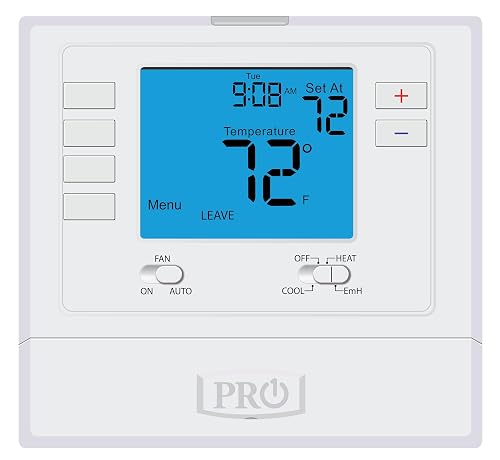
PRO1 T725 Heat Pump/Conventional Programmable Thermostat

PRO1 T771 Single Stage Non-Programmable Wall Thermostat
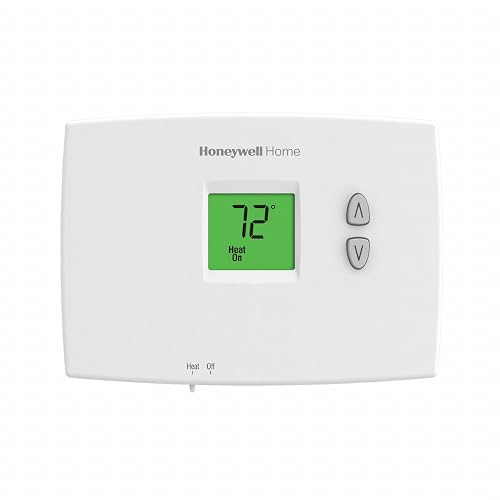
Honeywell TH1100DH1004 Horizontal PRO 1000 Thermostat
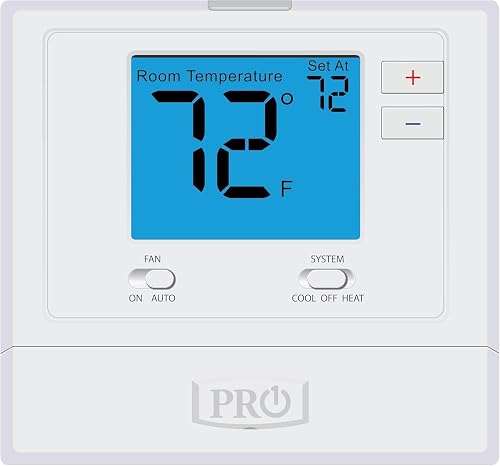
PRO1 T701 Single Stage Non-Programmable Wall Thermostat

PRO1 T715 Multi-Stage Programmable Gas Thermostat
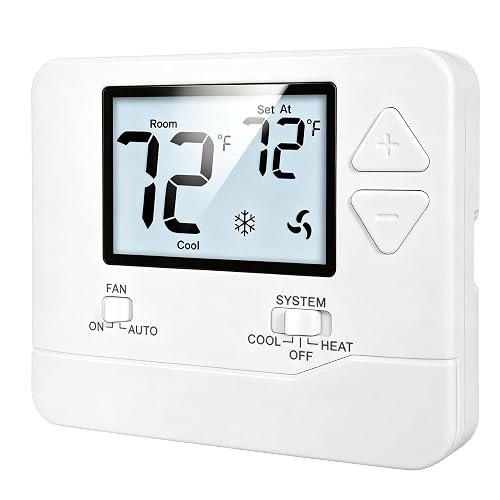
Heagstat Non-Programmable Thermostat 1 Heat/1 Cool
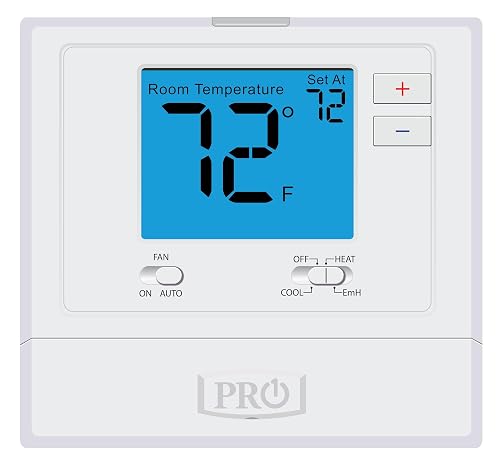
PRO1 T721 Non-Programmable Wall Thermostat (2H/1C)

PRO1 T805 Single Stage Programmable Wall Thermostat
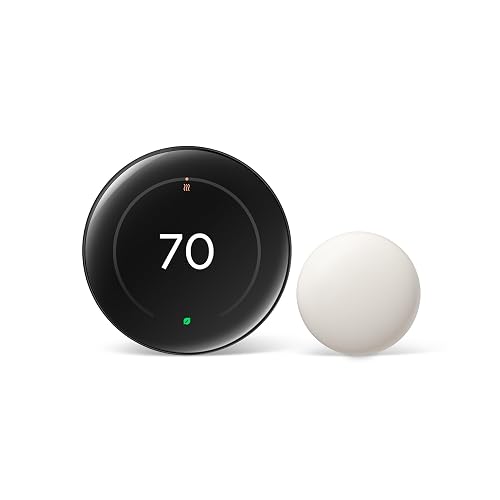
Google Nest Learning Thermostat (4th Gen) Obsidian + Sensor
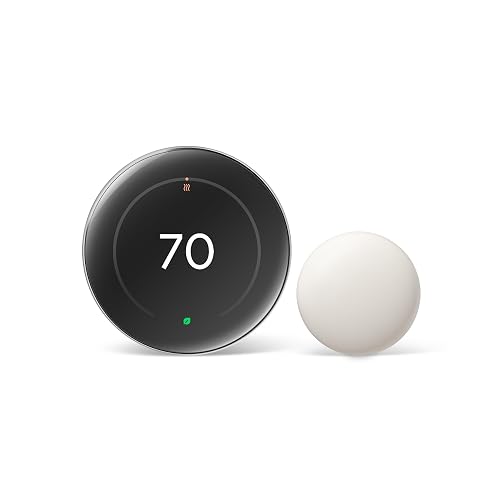
Google Nest Learning Thermostat (4th Gen) Silver + Sensor
Taking A Closer Look At The Options
The PRO1 T725 sits at the top of this list because it handles two distinct system types in one wall unit, which is rarer than it sounds in this price band. It supports 2 heat/1 cool heat pump setups as well as 1 heat/1 cool conventional systems, so households with a heat pump today who might add a furnace later have a flexible path. The 4 sq. in. blue backlit screen is a meaningful step up from the postage-stamp displays common on budget thermostats.
For most homeowners, the T725 covers the daily reality of switching between heating and cooling across seasons without forcing a learning curve. A programmable schedule (a pre-set temperature plan that changes automatically through the day) covers 7-day or 5/1/1 patterns, where 5/1/1 means five weekday days with one Saturday and one Sunday block, so a couple with predictable work weeks can stop fiddling with the dial. Compared to the simpler PRO1 T701 covered later, this one trades a few extra setup steps for noticeably more capability.
Well-Handled Touches
- Dual compatibility reduces worry when upgrading HVAC equipment later
- Two scheduling formats fit both rigid and flexible weekly routines
- Backlit 4 sq. in. display reads clearly from across a room
- Heat pump and conventional wiring supported without separate firmware swaps
- Day-to-day operation feels quick once the schedule is set
Points To Keep In Mind
- Setup is denser than a non-programmable unit, so first-time installers should expect extra time at the wall
- The wider feature set may be more than a one-room cabin really needs
Whose Home It Suits Best
Heat pump households that want a programmable schedule without jumping to a learning thermostat will find the T725 a confident fit.
Where Another Pick Suits Better
Workshop owners running a single-stage conventional system in a detached garage will get more value from the PRO1 T771 Single Stage Non-Programmable Wall Thermostat.
Most thermostats are built around 68°F living spaces. The PRO1 T771 starts its comfort range at 25°F, which is exactly why shops, detached garages, and storage buildings keep landing on it. A wide setpoint range (the lowest and highest temperatures you can dial in) lets the unit run safely in spaces that would freeze a normal living-room stat. The non-programmable design also means there is no schedule to lose in a power outage.
For a single heating or single cooling system, the T771 stays simple on purpose. The 4 sq. in. blue backlit display remains readable in dim corners where garage lighting tends to be sparse. The difference from the T725 covered earlier comes down to focus, where this one trades programming depth for a lower-temperature ceiling that homeowners with workshop heat will appreciate.
What Earns Its Place
- Setpoint range goes low enough for unconditioned spaces
- Single-stage design keeps wiring straightforward for DIYers
- Backlit screen survives dim shop lighting well
- No schedule means fewer settings to troubleshoot later
Trade-Offs Worth Knowing
- No scheduling means manual adjustments through the day
- Not the right match for multi-stage heating systems that need finer staging control
Made For
Garage, shed, and workshop owners running a simple single-stage system who need a thermostat that tolerates a cold environment.
Skip It When
Main-floor living spaces with daily routines benefit more from the scheduling flexibility of the PRO1 T725 Heat Pump/Conventional Programmable Thermostat.
Honeywell’s PRO 1000 has been a quiet workhorse for years, and the TH1100DH1004 horizontal version is a familiar sight in basements and add-on rooms with heat-only systems. It runs without a common wire (a shared low-voltage return line that some thermostats require) thanks to dual-power capability, meaning it can pull current from the heating circuit or run on batteries. That single feature alone can save an afternoon of fishing wire through a finished wall.
For most supplemental heat applications, the trade-off is intentional. There is no schedule, no app, and no learning curve, which is often exactly the point in a guest room that sees weekend use. Compared to the PRO1 T701, this Honeywell leans even simpler, with a horizontal layout that fits narrow wall spots where the T701’s vertical form would crowd the trim.
Positive Points
- Heat-only design avoids confusing extras for non-technical users
- Horizontal layout fits tight wall sections and narrow baseboards
- Backlit display shows the current temperature at a glance
Worth Noting
- Heat-only configuration cannot control central air conditioning
- Common-wire-free operation sometimes needs fresh batteries every heating season
Key Specs
Right Fit For
Homeowners heating a basement, attic room, or addition with a single heat-only system will find this an honest, no-surprise replacement.
A Better Fit Elsewhere
Main-floor homes needing both heating and cooling control should consider the PRO1 T701 Single Stage Non-Programmable Wall Thermostat instead.
For a 1 heat/1 cool conventional system, the PRO1 T701 is the kind of thermostat that disappears into the wall and does its job. It does not try to learn your habits or push you into an app, and that restraint tends to be the reason it lands in rentals and primary residences alike. The 4 sq. in. blue backlit display is large enough to read across a hallway, and the glow-in-the-dark light button means fumbling for the screen at 6 a.m. is not part of the deal.
Compared to the Honeywell TH1100DH1004, the T701 adds cooling compatibility, which opens it up to full central air homes. It is a sensible middle ground between the workshop-grade T771 and the schedule-heavy T725. The honest read is that this is a confident daily driver for households that want the thermostat out of the conversation.
What Helps Most
- Works with both gas and electric systems without jumper changes
- Glow-in-the-dark button helps in midnight hallway runs
- Spacious display keeps elderly eyes and partial sight users happy
Honest Caveats
- No scheduling means setback temperatures (a deliberate temperature change when you sleep or leave) require manual adjustment
- Smart-home integration is not part of the package
- Wall-mount placement means a low-voltage wire is needed at the chosen spot
Best Suited To
Homeowners with a standard 1H/1C conventional HVAC system who want a clear display and minimal programming.
Consider Another Pick When
Anyone wanting automatic setback temperatures across a weekly routine will find more value in the PRO1 T805 Single Stage Programmable Wall Thermostat.
Multi-stage HVAC systems (heating or cooling units with two or more output levels) need a thermostat that can keep up, which is where the PRO1 T715 earns its keep. It is built for 2 heat/2 cool gas systems, meaning it can ask the furnace for a low fire one moment and a high fire the next. The result is steadier indoor temperatures, especially during shoulder seasons when a single-stage system short-cycles (turns on and off too frequently, wearing parts out faster).
For most two-stage households, the T715 pays you back in comfort rather than convenience tricks. The T700 platform provides a 4 sq. in. backlit screen with a glow-in-the-dark light button, and battery or hardwire power gives flexibility at install time. The programming options cover 7-day, 5/1/1, and non-programmable use, so if schedules feel like overkill, you can simply leave it in manual mode.
Useful Strengths
- Full 2H/2C staging support for two-stage furnace and AC equipment
- Programmable, semi-programmable, and manual modes in one unit
- Hardwire or AA battery power accommodates older wiring
Small Caveats
- Staging depth is wasted on a single-stage HVAC system
- Setup menus run deeper than simpler thermostats on this list
Whose Home It Suits Best
Owners of 2H/2C gas systems who want programmability and proper staging control without stepping into learning-thermostat territory.
Look Elsewhere When
Single-stage systems like the PRO1 T701 Single Stage Non-Programmable Wall Thermostat are a more honest match for simpler equipment.
The Heagstat lands as the most budget-aware pick in the roundup without feeling like a stripped-down spare. It targets 24VAC (24-volt alternating current, the standard low-voltage power used by most home thermostats) conventional single-stage 1H/1C forced-air systems, covering gas, oil, and electric furnaces paired with a separate outdoor AC condenser. The white backlight makes the display readable in low light, which is a small but real upgrade over dimmer budget models.
For most renters and first-time homeowners, the Heagstat’s appeal is honesty. It is a non-programmable unit, so expectations around scheduling stay grounded. The wiring base accepts 2 to 5 wires, which is the most common layout in older homes, so mismatched wiring is less of a concern than on the 6- to 8-wire Nest-type installs. Compared to the PRO1 T701, the Heagstat is more limited in supported features but easier on the wallet for a quick swap.
What Makes Sense
- Compatible with common 2 to 5 wire conventional systems
- White backlight improves nighttime visibility
- Single-stage simplicity lowers installer confusion
A Few Limitations
- Not compatible with heat pump systems or multi-stage equipment
- No scheduling means temperature adjustments are manual
- Build quality is more functional than premium
Key Specs
Right Fit For
Renters, condos, and homeowners with a basic forced-air system who want a simple wall control without complications.
Another Choice May Suit
Heat pump households need a heat-pump-compatible unit like the PRO1 T721 Non-Programmable Wall Thermostat (2H/1C).
Switching thermostats between a heat pump system and a conventional system usually means buying two different units, but the PRO1 T721 handles both. It supports 2H/1C heat pump setups and 1H/1C conventional setups in a single wall plate, which is useful for homes with a heat pump that may add a furnace or backup heat later. The 4 sq. in. blue backlit display carries the same readable footprint as the rest of the T700 platform.
For most owners with a heat pump who do not need a learning curve, the T721 strikes a practical middle. It loses the programmability of the T725 covered earlier but keeps the system flexibility. The glow-in-the-dark light button is a small touch that makes the unit easy to find during a midnight furnace cycle, and the AA battery option keeps older homes with no common wire in the running.
Where It Excels
- Heat pump and conventional compatibility in one unit
- Backlit 4 sq. in. display with glow-in-the-dark button
- Battery or hardwire power accommodates older wiring
Possible Compromises
- Non-programmable design means no automatic setbacks
- Setup jumps are common when swapping between system types
Best Suited To
Heat pump households that want a simple wall thermostat without giving up the option to add backup heat later.
Reach For A Different Pick When
Anyone needing automatic temperature schedules should consider the PRO1 T725 Heat Pump/Conventional Programmable Thermostat.
Display real estate sounds trivial until you find yourself squinting at a thermostat from across a kitchen. The PRO1 T805 stretches a 7 sq. in. blue backlit screen onto a 1H/1C conventional wall unit, which is roughly 75 percent larger than the 4 sq. in. displays common on this list. The T800 platform it sits on also adds a glow-in-the-dark light button, so the unit remains usable when the lights are low.
For most homeowners with standard conventional equipment, the T805 adds scheduling without piling on app dependencies. The 7-day, 5/1/1, or non-programmable modes cover a real range of routines. Compared to the simpler PRO1 T701, this one costs a few extra moments at setup in exchange for visible gains in readability and weekly automation.
Noteworthy Benefits
- Extra-large display aids users with limited vision
- Multiple programming modes adapt to different weekly routines
- Glow-in-the-dark button improves night-time navigation
- Clean conventional system compatibility keeps wiring simple
Details To Watch
- Single-stage design cannot take advantage of multi-stage furnaces
- Larger face may not suit narrow wall sections or cramped baseboards
Key Specs
Whose Home It Suits Best
Homeowners who want a generous, readable display and weekly scheduling on a standard 1H/1C system.
Not Your Match When
Multi-stage households should step up to the PRO1 T715 Multi-Stage Programmable Gas Thermostat for proper staging control.
The 4th-generation Nest Learning Thermostat moves beyond fixed schedules by adjusting to how you actually live. It builds a temperature plan from the manual changes you make, which means the first two weeks of ownership feel like onboarding. The included 2nd-generation Nest Temperature Sensor adds a second data point in a room that tends to run hot or cold, balancing comfort across a multi-room home.
For most tech-comfortable households, the Obsidian finish lands especially well in modern interiors with darker hardware. Compared to every PRO1 model in this roundup, the Nest trades hands-on simplicity for adaptive automation, remote control, and energy tracking. If you are migrating from a programmable unit like the PRO1 T805, the Nest softens the transition by handling the schedule-building for you.
Practical Pluses
- Learning algorithm removes weekly schedule tweaking
- Remote temperature sensor helps hot and cold rooms in larger homes
- App control keeps the wall unit in sync with phones and watches
Factors To Consider
- Wi-Fi and app setup is heavier than a standalone wall thermostat
- Learning phase can feel slow during the first two weeks of ownership
- Best experience requires a C-wire (common wire) at the mounting spot
Key Specs
Who Should Grab It
Smart-home enthusiasts who want the thermostat to learn their patterns and to control comfort from a phone.
Swap It Out When
Households wanting a simple wall unit without an app or Wi-Fi dependency will find the PRO1 T701 Single Stage Non-Programmable Wall Thermostat a more grounded choice.
The Silver variant of the 4th-generation Nest brings the same learning thermostat platform into lighter interiors where the Obsidian finish would look out of place. The included 2nd-generation Nest Temperature Sensor rounds out the bundle for households trying to balance a single room’s swings. It is the same product philosophy as the Obsidian pick above, just with a different finish.
For most homes with bright walls, white trim, or stainless kitchen hardware, Silver tends to blend in more gracefully. Everything else, including the learning algorithm, the app control, and the Wi-Fi requirements, mirrors the Obsidian version covered earlier. If you are weighing the two, the honest read is that the choice is mostly aesthetic, with a small nod toward which finish best matches the surrounding hardware.
Positive Takeaways
- Light finish suits bright walls and lighter hardware palettes
- Learning features and sensor bundle match the Obsidian sibling
- App control supports phone and watch adjustments
Worth Bearing In Mind
- Setup effort is identical to the Obsidian model, including C-wire need
- Learning phase still takes about two weeks to feel dialed in
Key Specs
Who Will Love This
Owners with bright or white-dominant interiors who want the same learning thermostat features in a lighter finish.
Where A Sibling Pick Shines
Households with darker hardware and modern cabinets may prefer the Obsidian variant of the Google Nest Learning Thermostat (4th Gen).
What Matters Most Before Choosing high performance thermostats
Match The Thermostat To Your System Type
Every thermostat on this list is designed around a specific configuration, and matching that configuration to your HVAC equipment is the single biggest factor. Heat pump homes should look at the PRO1 T721 or PRO1 T725 families, while conventional forced-air homes can pair with the T701, T771, or Heagstat. Trying to wire a conventional-only thermostat to a heat pump almost always ends in a service call.
Decide How Much Scheduling You Actually Want
Programmable thermostats like the PRO1 T725 and T805 reward households with predictable routines, while non-programmable models like the T701 and Heagstat suit set-and-forget owners. Learning thermostats such as the Nest take the schedule-building off your hands but trade a heavier setup for the convenience. Pick the level of automation that matches your week, not the highest level the wall can offer.
Consider Display, Wiring, And Power Realities
A backlit display, glow-in-the-dark button, and battery or hardwire power options can make the difference between a thermostat that disappears into the wall and one that becomes a daily annoyance. Older homes without a common wire should bias toward units with battery fallback. Larger households may also want to plan for sensor support, as on the Nest, to balance hot and cold rooms.
Key Considerations Across These Picks
Wrong Turns To Avoid
The most common slip is buying a thermostat based on features rather than system compatibility, which leads to terminals that simply do not match the equipment. Another frequent miss is ignoring the C-wire, the low-voltage common return line that powers many modern thermostats; without it, Wi-Fi models can be unreliable. Finally, do not skip counting your wires before ordering, since 2 to 5 wire systems have different options than 6 to 8 wire ones.
When Paying More Pays Off
Stepping up from a non-programmable unit to a programmable or learning thermostat tends to pay off when a household keeps a steady schedule and would otherwise forget to adjust temperatures manually. The premium also goes toward larger displays, multi-stage support, and remote sensors that smooth out uneven rooms. The honest case is simple: if your routine is consistent, the upgrade tends to earn its place within a season or two.