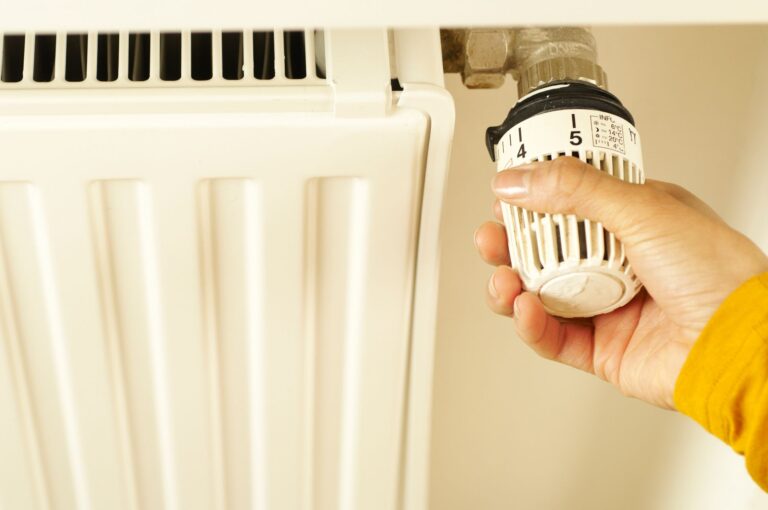

Most homes run the same furnace setting from October through March, regardless of whether anyone’s actually home. That’s where programmable thermostats earn their keep. The picks below split neatly into three groups: classic 7-day schedulers for single-stage and heat-pump systems, non-programmable replacements for households that just want clear temperature control, and one learning thermostat that builds its own schedule over time. Each one targets a specific wiring setup, so matching the right model to your existing HVAC gear matters more than chasing features.
The Lineup, Simplified
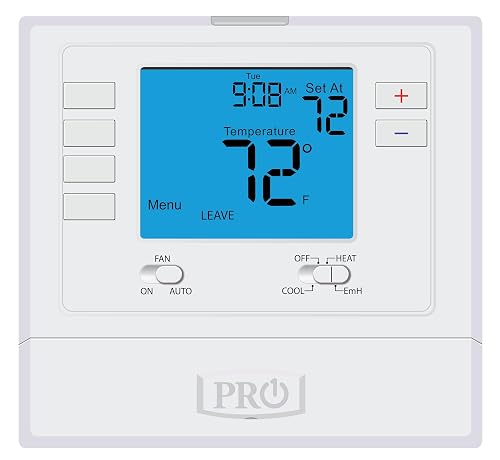
PRO1 T725 Heat Pump/Conventional Programmable Wall Thermostat
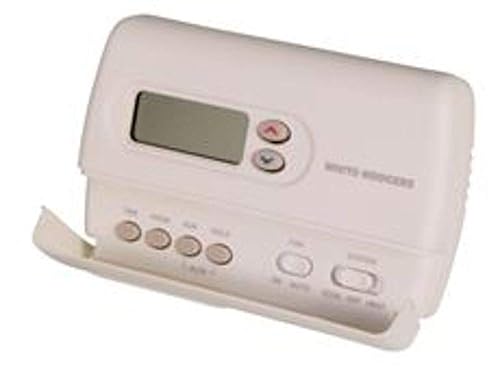
White-Rodgers 1F80-361 Emerson 80 Series Programmable Thermostat
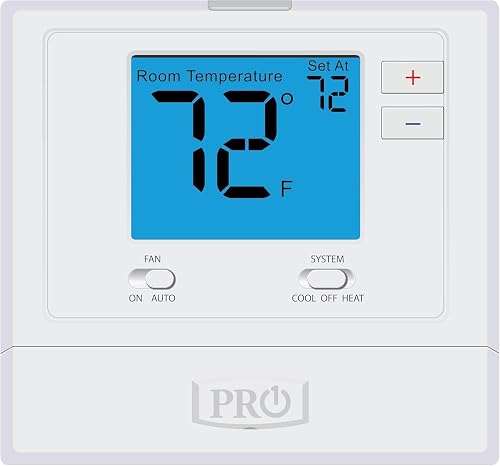
PRO1 T701 Single Stage Non-Programmable Wall Thermostat

PRO1 T715 Multi-Stage Programmable Gas Thermostat
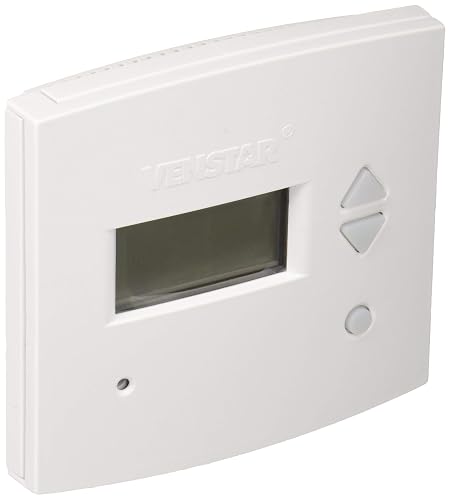
Venstar T2800 Commercial Platinum Slimline Thermostat
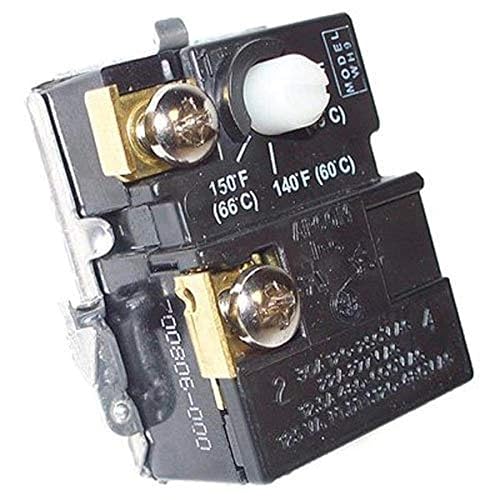
Reliance 9000507-045 Lower Electric Thermostat
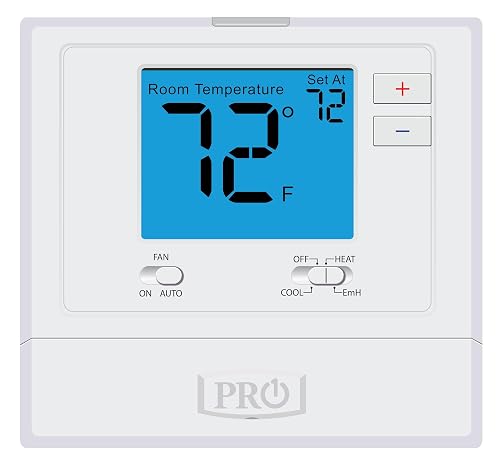
PRO1 T721 Non-Programmable Wall Thermostat
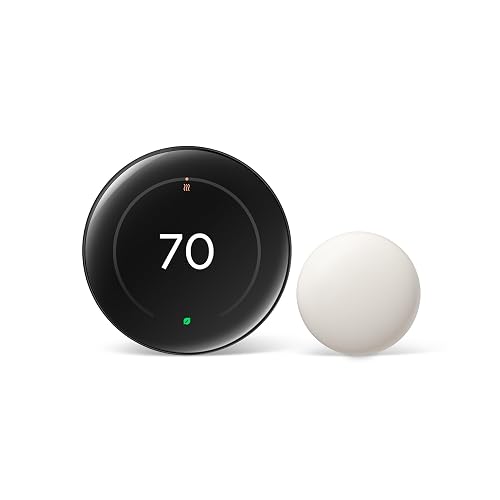
Google Nest Learning Thermostat 4th Gen (Obsidian)
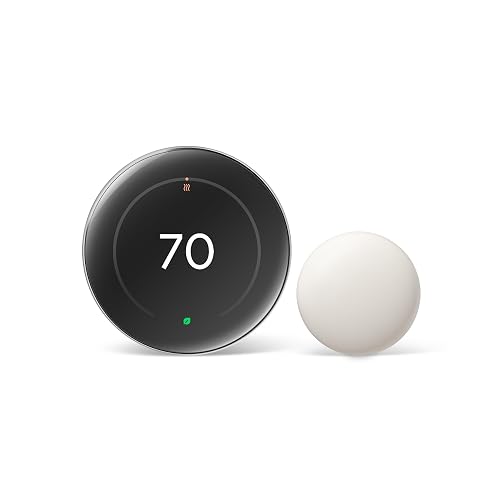
Google Nest Learning Thermostat 4th Gen (Silver)
Inside Each Recommended Option
The T725 sits on PRO1’s T700 platform, which means the body is roomy enough to wire without squinting and the backlit screen stays readable in a darkened hallway. The headline feature is dual compatibility: it handles 2 heat/1 cool heat pump systems and 1 heat/1 cool conventional setups, so a homeowner with a hybrid system can keep one thermostat through a fuel switch.
For people in mixed-fuel homes, the 7-day or 5/1/1 schedule flexibility matters more than it sounds. You can program a cool-down for weekday mornings, a warmer setback during work hours, and a different weekend rhythm without resetting the whole board. Most installers report the wiring terminals follow a familiar layout, which keeps the swap to about 15 minutes for anyone comfortable with a screwdriver.
Well-Handled Touches
- Compatible with both 2H/1C heat pumps and 1H/1C conventional systems, eliminating a second purchase after a fuel conversion
- 7-day and 5/1/1 scheduling modes give you weekday-versus-weekend control without constant reprogramming
- 4 sq. in. blue backlit display stays legible from across a room and works in low light
- Sits on the proven T700 platform, which keeps spare parts and trim plates easy to source
Things To Weigh Up
- Requires a common wire (C-wire) for full functionality in many installations, so older homes may need an adapter
- Lacks any Wi-Fi or app integration, meaning all schedule changes happen at the wall
- The 2H/1C ceiling is a hard limit; households with two-stage cooling need a different model
Key Specs
Right Fit For
Homeowners with a heat pump system who want genuine 7-day scheduling without paying for Wi-Fi features they will never use.
Skip It When
The PRO1 T715 is the smarter reach if your furnace runs two heating stages and you need a thermostat that talks to both.
Emerson’s 80 Series has been a workhorse in HVAC trucks for years, and the 1F80-361 ships as a single unit pulled from a contractor bulk pack. It targets single-stage heating and cooling only, which keeps the wiring simple: no juggling of W2 terminals or accessory relays. For anyone with a basic forced-air furnace and a single-stage AC, the install is about as close to foolproof as residential thermostats get.
You get a 5+1+1 program with up to four periods per day, enough granularity for a wake, leave, return, and sleep schedule across weekdays and a separate weekend rhythm. The unit runs on 24V common and accepts millivolt systems, so it can drop onto older baseboard setups without rewiring. For a no-drama replacement that just works, the 1F80-361 earns its long-standing reputation.
Points In Its Favor
- Compatible with gas, oil, and electric single-stage systems, which covers the bulk of older homes
- 5+1+1 programming with four daily periods gives meaningful schedule control without complexity
- Millivolt and 24V compatible, so it can replace thermostats on older baseboard or floor-furnace systems
Practical Considerations
- Single-stage only; multistage or heat-pump households will need to look elsewhere
- No backlit display mentioned in the source data, which makes nighttime adjustments harder
- Programming requires button presses on the unit itself, with no companion app or remote sensor support
Built With In Mind
Homeowners with a basic single-stage furnace and central air who want reliable contractor-grade scheduling without learning curves.
Another Choice May Suit
The PRO1 T725 is worth a look if your system runs a heat pump, since the 1F80-361 does not support that wiring configuration.
Not every household wants a schedule. The T701 strips the experience down to up, down, and done, and that is exactly the appeal. It targets 1 heat/1 cool conventional systems, which means straightforward forced-air furnaces paired with a single-stage AC. The shared T700 platform gives the T701 the same roomy 4 sq. in. blue backlit screen as its programmable siblings, so legibility is not the price of simplicity.
The glow-in-the-dark light button is a small touch that earns its keep on a 2 a.m. trip down the hall. For a guesthouse, a workshop with a minisplit-style setup, or a homeowner who simply wants the temperature they set to stay put, the T701 keeps things calm. Compared to the T725 above, you trade every scheduling function for a clean, no-fuss wall unit.
Notable Gains
- Non-programmable design means no accidental schedule wipes when the batteries die
- 4 sq. in. blue backlit display stays readable across a room
- Glow-in-the-dark light button helps with late-night adjustments without fumbling
Minor Gripes
- No scheduling means heating and cooling run at one setpoint until you manually change it
- Limited to single-stage conventional systems, so heat pumps and multistage setups are not supported
Quick Facts
Who It Suits Best
Households that prefer to set a temperature once and leave it alone, especially in guest suites, workshops, or rarely-adjusted rooms.
Look Elsewhere When
The PRO1 T715 makes more sense if you want genuine 7-day scheduling on a multistage system instead of a single setpoint.
Where the T701 runs one stage, the T715 talks to two. This programmable wall unit covers 2 heat/2 cool gas systems, which covers most two-stage furnaces and central ACs in newer construction. The flexibility goes beyond just heating and cooling stages: the T715 lets you choose between 7-day, 5/1/1, or non-programmable operation, so the same thermostat fits a scheduler’s routine or a set-and-forget household.
The same backlit screen and glow-in-the-dark button found on the T701 carry over, along with a choice between battery or hardwired power. For anyone replacing a thermostat on a two-stage gas furnace, the T715 is the right level of capability without crossing into learning-thermostat territory.
Real Benefits
- Supports 2 heat/2 cool systems, which covers most two-stage gas furnace and AC pairings
- Choose between 7-day, 5/1/1, or non-programmable modes from the same hardware
- Compatible with battery or hardwired power setups, easing retrofit installs
Honest Caveats
- Heat pump systems are not in the compatibility list, so hybrid homes need a different model
- No Wi-Fi connectivity, which rules out app control and remote adjustments
Feature Snapshot
Best Suited To
Homeowners with two-stage gas furnaces who want real scheduling control and are happy to make adjustments at the wall.
Where Another Pick Suits Better
Choose the PRO1 T725 if your system runs a heat pump rather than a gas furnace, since the T715 is not configured for that wiring.
The T2800 wears a “commercial” label, but in a residential context it shows up in detached workshops, converted garages, and additions where the HVAC gear is overspecced for the space. It handles 3 heat/2 cool stages, heat-pump operation, and three configurable outputs, which gives an installer the freedom to tie it into a more elaborate system than a typical homeowner thermostat supports.
Color-coded keys and a backlit display keep the controls readable in a dusty shop or a dim basement. Service reminders for filters and UV lamps also live in the unit, which helps anyone managing multiple systems keep maintenance on schedule. For most single-family homes, the T2800 is overkill, but for a workshop with a multi-stage unit, the configurability is the point.
Good Reasons To Consider
- 3 heat/2 cool staging plus heat pump compatibility covers a wide range of HVAC configurations
- Three configurable outputs give installers flexibility for unusual system layouts
- Backlit, color-coded keys and a service reminder for filters and UV lamps help with upkeep
Practical Considerations
- Commercial-grade capability adds cost that a basic single-stage home will not use
- Setup complexity goes up with the configurability; many homeowners will want an installer
Who Should Grab It
Owners of light-commercial spaces, workshops, or additions with multi-stage equipment who want more control than a residential unit offers.
Reach For A Different Pick When
The PRO1 T725 is the cleaner residential answer if you only need 2 heat/1 cool and prefer simpler programming.
A different kind of thermostat entirely. The Reliance 9000507-045 is a direct replacement for the lower element thermostat on a dual-element electric water heater, so it lives behind a metal panel rather than on a living-room wall. If your showers have been getting shorter and the upper element tests fine, the lower thermostat is often the failing part.
As a maintenance part, the appeal is the fit. This model is the specified replacement for many Reliance, Rheem, and compatible water heaters, which means the mounting, probe length, and terminal layout all line up. For a homeowner comfortable with a voltage tester and a screwdriver, swapping it out restores the lower element’s contribution to overall tank capacity.
Where It Delivers
- Direct-fit replacement for the lower thermostat on many electric water heaters
- Restores the lower element’s function, which is key to full-tank hot water capacity
Honest Caveats
- Not a wall thermostat and cannot control heating or cooling of living space
- Requires basic electrical work and voltage verification, so it is not a zero-skill replacement
Right Fit For
Homeowners troubleshooting a dual-element electric water heater whose lower element is no longer heating consistently.
Swap It Out When
Pick the PRO1 T701 if you actually need a wall thermostat for heating and cooling, since this Reliance unit is built for a water heater, not a living space.
The T721 is a non-programmable unit, but it punches above that label by supporting both 2H/1C heat pump and 1H/1C conventional systems. That dual compatibility makes it a sensible replacement for a thermostat on a hybrid system where the homeowner does not need schedule automation. The T700 platform chassis gives it the same backlit 4 sq. in. display and glow-in-the-dark light button that runs through the T701 and T715.
For someone who keeps a predictable routine and prefers the temperature to stay put, this is a calm wall unit. It runs on AA batteries, which keeps installation simple and avoids the C-wire question entirely in most cases.
Where It Excels
- Compatible with both 2H/1C heat pump and 1H/1C conventional systems, giving flexibility across HVAC types
- 4 sq. in. blue backlit display with a glow-in-the-dark light button for late-night visibility
- Runs on AA batteries, simplifying retrofits in homes without a C-wire
Worth Noting
- Non-programmable, so it cannot run setback schedules during the day
- Lacks Wi-Fi, so any adjustment happens at the wall
Feature Card
Who Will Love This
Homeowners with a heat pump or conventional single-stage system who want a simple setpoint and no scheduling headaches.
Consider Something Else When
The PRO1 T725 fits the bill if you want 7-day programming on the same dual-compatible hardware, since the T721 deliberately omits scheduling.
The 4th-generation Nest Learning Thermostat is a different category of device than every other pick on this list. Instead of asking you to program a 7-day schedule, it watches how you adjust the temperature, learns the patterns, and builds a routine on its own. The Obsidian finish leans dark and reflective, so it disappears into a modern interior rather than drawing the eye.
The bundle includes a 2nd-generation Nest Temperature Sensor, which lets you measure comfort in another room and weigh that into the system’s decisions. For busy households whose schedules drift week to week, the learning approach is genuinely useful. Where the PRO1 T725 above offers fixed 7-day programming, the Nest trades a one-time setup for an evolving, app-driven experience.
What It Does Well
- Learns your preferred temperatures over time and adapts the schedule as your routine changes
- Bundled 2nd-gen Nest Temperature Sensor helps prioritize comfort in a specific room
- App-based control means you can adjust settings from anywhere with a phone
Points To Keep In Mind
- Requires a C-wire for full functionality, and older homes may need a power adapter
- Learning behavior takes a week or two to settle, so initial performance may not feel tuned
- Significantly higher cost than wall-mounted programmable units, depending on the retailer
Made For
Tech-comfortable households with shifting schedules who want the thermostat to handle automation without manual programming.
A Better Fit Elsewhere
Choose the PRO1 T725 if you prefer a fixed schedule and the predictability of a non-connected wall unit.
The Silver version of the 4th-generation Nest is functionally identical to the Obsidian model above, with the same learning algorithm, app control, and bundled 2nd-gen temperature sensor. The difference is purely aesthetic: the silver finish tends to blend into traditional trim and lighter wall colors, while the Obsidian leans modern and minimal. Pick the one that matches the room rather than the spec sheet.
The 2nd-gen sensor is the practical highlight of the bundle. You can place it in a nursery, an upstairs bedroom, or a home office and let the thermostat prioritize that room’s reading. For a two-story home where the hallway thermostat always reads warmer than the bedrooms, this single addition tends to be the reason people upgrade.
Benefits That Matter
- Silver finish suits traditional interiors and lighter wall colors better than the Obsidian
- Bundled 2nd-gen temperature sensor addresses common hot-and-cold-spot issues in multi-room homes
- Same learning engine and app control as the Obsidian model, with no feature trade-off
Where It Is Less Suited
- Same C-wire requirement as the Obsidian, so older homes may need adapter installation
- Higher cost than non-connected programmable thermostats, which may not pay off in smaller homes
At A Glance
Perfect Match For
Two-story or zoned homes where the hallway thermostat does not reflect bedroom comfort, and owners who prefer a silver finish on the wall.
Not Your Match When
Pick the PRO1 T715 if you would rather avoid app-driven learning and stick to fixed 7-day programming on a multistage gas system.
What To Match Up Before You Pick a Thermostat
The thermostat that fits your home is the one that matches your wiring, your HVAC stages, and your schedule. Single-stage systems are the simplest: one wire for heat, one for cool, and a common wire for power. Heat pumps add a reversing valve, while multistage systems add W2 and Y2 wires for the second stage. Pulling the cover off your current thermostat and noting the terminal letters is a five-minute job that prevents buying the wrong model.
Programmable thermostats earn their value when the home is empty for predictable stretches. A 7-day or 5/1/1 schedule lets the system back off during work hours and recover before anyone returns. If your routine is irregular or you live in a smaller space, a non-programmable unit removes the temptation to fiddle with a schedule that no longer fits. Learning thermostats take the opposite approach and build the routine themselves, which suits households whose days shift week to week.
Compatibility matters more than features. A thermostat that supports two-stage heat will not work on a single-stage furnace, and a heat-pump model will not behave correctly on a conventional gas system. Confirm the staging, the system type, and the presence of a C-wire before you commit.
Key Considerations Across These Picks
Traps First Timers Fall Into
The most common mistake is buying a thermostat that does not match the existing wiring. A learning thermostat without a C-wire adapter will not power on, and a multistage unit wired to a single-stage furnace will leave the second stage unused. Take a photo of the current terminal block before you buy, and match the letters to the new thermostat’s compatibility list.
The second slip is ignoring staging. A single-stage thermostat on a two-stage furnace can run the system, but it will not get the efficiency benefit of the lower first stage. The result is a furnace that feels either short-cycling or always running, and the homeowner blames the thermostat. Checking the furnace data plate is faster than swapping units twice.
The Case For Spending Up
Higher-tier models cost more because they handle more stages, offer finer scheduling, or include sensors that measure comfort in other rooms. For a single-stage furnace in a one-bedroom home, the extra cost rarely pays back. For a two-story house with a nursery that runs hot, the bundled temperature sensor in the Nest 4th-gen picks often solves a comfort problem a basic programmable cannot.
The upgrade is also about the schedule, not the thermostat itself. A 5/1/1 program covers most routines, but a true 7-day schedule lets you set different temperatures for every day. Households that work rotating shifts or alternate caregiving schedules find the extra granularity worth the step up.
Frequently Asked Questions
What is a C-wire, and do I need one?
A C-wire, or common wire, delivers continuous 24V power to the thermostat. Many newer units need it for Wi-Fi, backlighting, and consistent operation. Homes without a C-wire can use battery-powered models like the PRO1 T721, or install a power adapter kit before mounting a learning thermostat.
Can a programmable thermostat really lower my bill?
It can, by setting back the temperature during hours when no one is home and recovering before anyone returns. The actual savings depend on your setback range, your local climate, and how consistently you let the schedule run. The thermostat itself does not save energy; the schedule does.
What is the difference between single-stage and multistage?
A single-stage furnace runs at one output level, on or off. A multistage furnace can run at a lower output for milder days and ramp up only when the temperature drops. A multistage thermostat can talk to both stages, while a single-stage thermostat only uses the first.
Will a learning thermostat work without Wi-Fi?
It will still run, but it loses the app, the remote sensors, and the weather-aware features. The on-unit controls still adjust the temperature, so it is functional, but you give up most of what makes the learning model distinct from a standard programmable unit.
Are these thermostats compatible with my old system?
That depends on the terminals in your current thermostat and the voltage of your system. Most of the picks on this list support 24V common residential wiring. Millivolt systems, used by some older baseboard heaters, are supported only on certain models like the White-Rodgers 1F80-361.
The Takeaway
The right programmable thermostat is the one that matches your system and the way you actually live. For most single-stage homes, a straightforward 5/1/1 or 7-day unit does the job without ceremony. For heat pumps, multistage gas systems, or learning-curve schedules, the higher-tier options earn their place. Match the wiring first, then pick the level of automation that suits your routine.