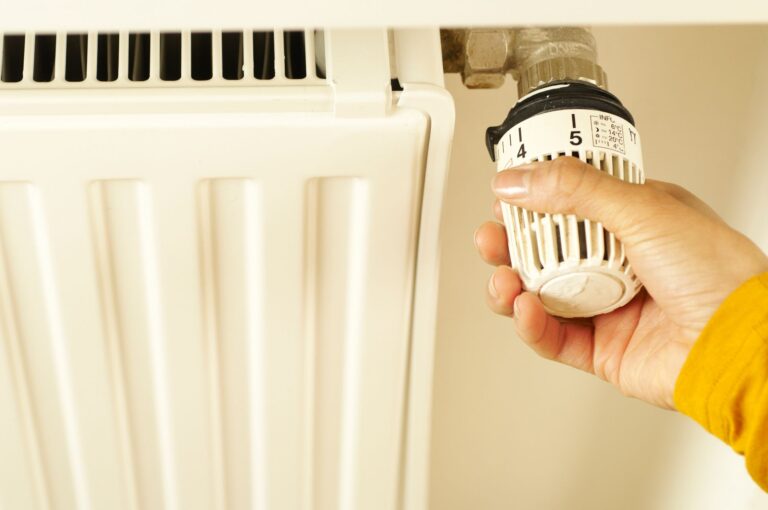

Choosing a thermostat for a boiler-driven system can feel like a sideways step into a category you’ve never browsed before. The honest truth is that a boiler wall unit is a different animal from a smart thermostat, and most guides skip right over the mechanical realities. This roundup covers ten solid options that pair well with common residential hydronic systems, with a focus on compatibility, ease of wiring, and the kind of readability you want when you’re squinting at a hallway wall at 6 a.m.
Your Options, Compared
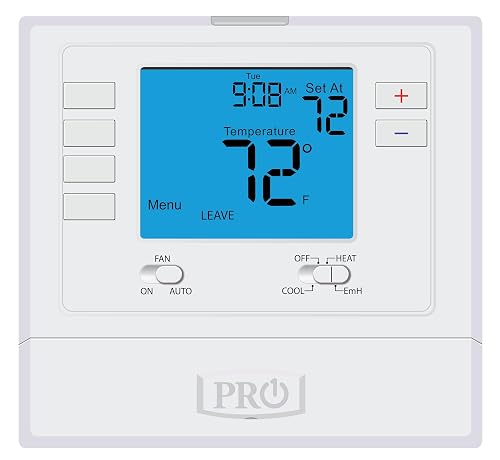
PRO1 T725 Heat Pump/Conventional Programmable Wall Thermostat

PRO1 T771 Single Stage Non-Programmable Wall Thermostat
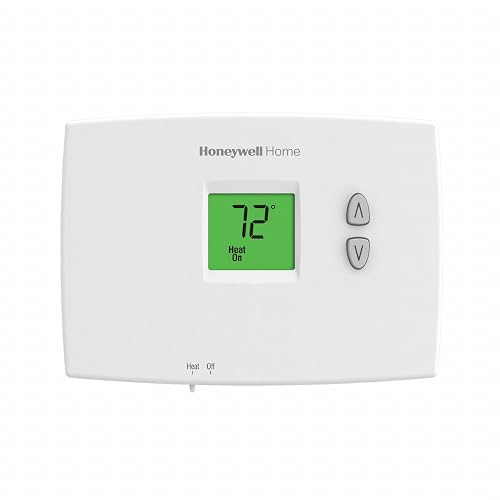
Honeywell TH1100DH1004 PRO 1000 Non-Programmable Heat-Only Thermostat
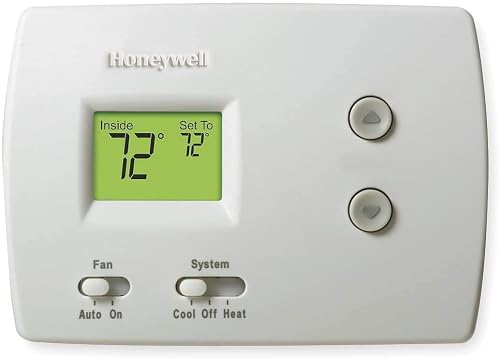
Honeywell TH3110D1008 Pro Non-Programmable Digital Thermostat
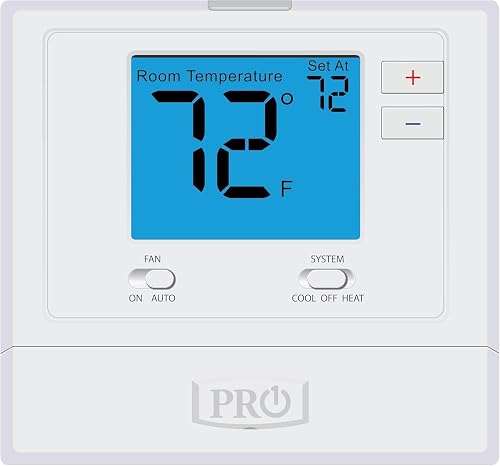
PRO1 T701 Single Stage Non-Programmable Wall Thermostat

PRO1 T715 Multi-Stage Programmable Gas Wall Thermostat
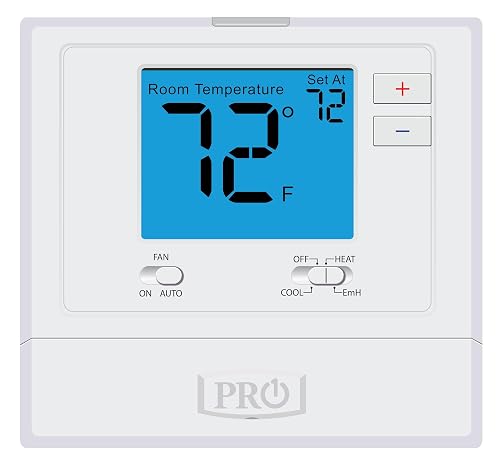
PRO1 T721 Non-Programmable Heat Pump or Conventional Thermostat
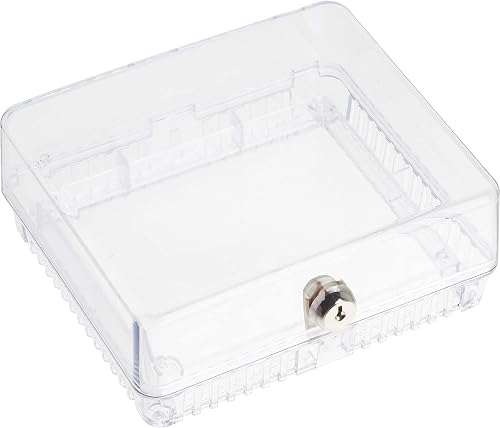
Honeywell Home CG511A1000 Medium Thermostat Guard
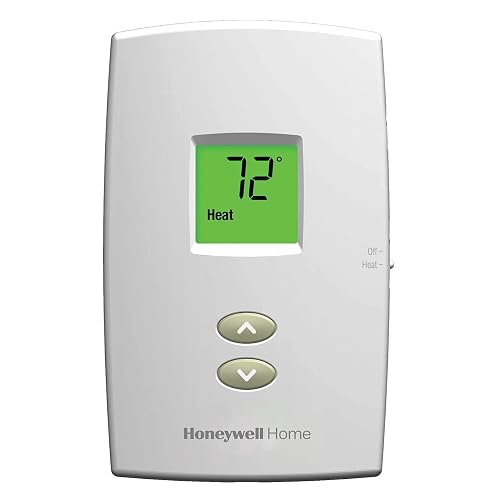
Honeywell TH1100DV1000 Pro-Digital 2-Wire Heat-Only Thermostat

PRO1 T805 Single Stage Programmable Wall Thermostat
More On The Choices That Made The List
The PRO1 T725 sits in an interesting middle ground that few thermostats in this price range actually address. It covers 2 heat/1 cool heat pump systems and 1 heat/1 cool conventional setups, so a homeowner who isn’t sure which camp they fall into can stop overthinking the decision. The 4 sq. in. blue backlit display is large enough to read across a room, which matters more in real hallways than spec sheets suggest.
You get 7-day or 5/1/1 programming (a 5-day weekday, 1-day Saturday, 1-day Sunday schedule), so a working household can automate morning and evening setpoints without babysitting the wall. Compared to the non-programmable T771 below, this one trades a couple of setup steps for noticeably more control.
Real-World Strengths
- Dual compatibility with heat pump and conventional systems removes guesswork at checkout
- Programmable schedule with wake, leave, return, and sleep periods adapts to a standard weekday routine
- Backlit screen makes nighttime adjustments painless in a dark hallway
- Wide enough setpoint range to handle a typical residential heating curve
Things To Consider
- Wiring complexity rises with heat-pump support; homeowners commonly find the C-wire (common wire) requirement a real consideration
- Programming interface is button-based, not touchscreen, so expect a learning curve on first setup
- Smaller footprint than the T805’s 7 sq. in. display, so the screen reads tighter from across the room
Quick Facts
Made For
Homeowners with mixed heat-pump and conventional equipment who want a single wall unit that handles both without manual switching.
Where Another Pick Suits Better
The PRO1 T805 suits you better if an oversized 7 sq. in. screen and occasional non-programmable use matter more than heat-pump compatibility.
Garages, workshops, and shed conversions tend to live outside the comfort range of a standard residential thermostat, and that’s exactly where the T771 earns its reputation. Its setpoint range stretches down to 25°F, which keeps pipes from freezing in a detached outbuilding without burning through fuel all winter. The 4 sq. in. blue backlit display is a comfortable size for quick glances.
Swing adjustment and calibration controls are part of the package, which matters when a thermostat sits near a drafty door or a sunny window. The non-programmable design keeps the interface intentionally thin: one dial, one screen, no schedule menus to scroll through.
The Upside
- Low-end setpoint of 25°F protects plumbing in uninsulated spaces
- Swing adjustment lets you tune how often the system cycles
- Calibration offset corrects for placement near hot or cold spots
Worth Noting
- Single-stage only, so multi-zone or two-stage boiler setups aren’t supported
- Lacks programmability, which becomes a drawback in main living areas
- No glow-in-the-dark button like the T701, so nighttime use relies on the backlight
Who It Suits Best
Shoppers outfitting a garage, workshop, or seasonal outbuilding where freeze protection matters more than scheduling flexibility.
A Better Fit Elsewhere
The Honeywell TH1100DH1004 fits better if you want a heat-only horizontal thermostat for indoor hydronic use rather than a wide-range outbuilding unit.
The TH1100DH1004 keeps the brief deliberately short: a horizontal, heat-only thermostat with a backlit display and dual power (battery or hardwired). For a single-zone hydronic system, the stripped-down feature set is honestly the point. There is no app, no scheduling menu, and no learning curve to speak of.
The adjustable temperature scale (a 40-90°F standard range, plus a 35-90°F garage setting) gives the unit a second life in utility spaces. Owners commonly mount it in basements and boiler rooms where a vertical-style face plate would look out of place.
Practical Advantages
- Horizontal layout matches existing wire holes in many older homes, reducing drywall patching
- Dual power accepts batteries or a hardwired common, so older 2-wire systems can still install cleanly
- Garage mode widens the setpoint range to 35°F for utility spaces
Honest Caveats
- Heat-only, so cooling control requires a separate unit or a system upgrade
- No programming, which becomes a real ownership cost in occupied living areas
- Backlit display brightness is functional rather than generous in full daylight
Feature Snapshot
Best Suited To
Boiler homeowners with a single heat-only zone who want a basic Honeywell wall unit without paying for cooling circuitry they’ll never use.
Not Your Match When
The PRO1 T725 suits you better if you need programmable scheduling and want heat-pump compatibility in a single wall unit.
The TH3110D1008 has been a workhorse on contractor trucks for years, and the reason is the simultaneous display of set and current temperatures. Instead of toggling between two numbers, you see both on screen at once, which makes a noticeable difference for anyone adjusting a thermostat by feel.
Precise comfort control within 1°F keeps the room from drifting into the “almost warm enough” zone. The 1H/1C compatibility covers a typical boiler-plus-AC setup, although in many homes this unit is wired for heat only, since cooling isn’t a feature the boiler itself supports.
What It Does Well
- Shows setpoint and current temperature at the same time, so you don’t have to toggle
- Precise 1°F increments prevent the room from overshooting your target
- Pro-series build is widely stocked for replacement installs
Points To Note
- No scheduling means manual adjustment for day and night
- Display size is modest compared to the PRO1 T805’s 7 sq. in. screen
- 1H/1C limits use in homes with multi-stage equipment
Who Will Love This
Replacement shoppers who want a familiar Honeywell wall unit in a basement or hallway where a small, reliable display is enough.
Look Elsewhere When
The PRO1 T715 suits you better if your home has a 2H/2C multi-stage setup that this single-stage unit cannot address.
The T701 is the entry point on the T700 platform, and that matters more than it sounds. Owners commonly find the glow-in-the-dark light button a small but real upgrade when fumbling for the thermostat in a dark hallway at 2 a.m. The 4 sq. in. blue backlit display is generously sized for a non-programmable model.
Built for 1H/1C conventional systems, it covers a wide swath of single-zone gas or electric setups. Compared to the Honeywell TH3110D1008 above, the T701 trades a familiar brand badge for a slightly larger screen and the glow button, which can be the deciding factor in a child’s bedroom or guest room.
Standout Benefits
- Glow-in-the-dark light button makes the unit findable without turning on a light
- Spacious 4 sq. in. display is generous for a non-programmable unit
- Gas or electric compatibility covers most residential boiler-fed systems
Trade Offs
- No scheduling or programmability, so daily adjustments stay manual
- Single-stage only, limiting use in homes with multi-stage equipment
- Button layout takes a few days to learn by feel
Perfect Match For
First-time thermostat installers who want a simple, no-programming wall unit for a guest room or a low-traffic zone.
Reach For A Different Pick When
The Honeywell TH1100DH1004 fits better if a horizontal face plate matches the existing wall cutout in an older hydronic system.
The T715 is the multi-stage sibling of the T701, and it makes the case for itself the moment your home runs a two-stage furnace plus central air. The 2H/2C configuration supports layered heating and cooling, which is the kind of nuance that single-stage units cannot replicate. Programming is flexible: 7-day, 5/1/1, or fully non-programmable, depending on how much structure you want.
The 4 sq. in. blue backlit display and glow-in-the-dark light button carry over from the T701, so the family resemblance is intentional. Battery or hardwired power gives installers a choice, which matters in retrofits where the C-wire is missing.
The Good Stuff
- 2H/2C support handles two-stage furnaces and central cooling in a single unit
- Three programming modes let you scale complexity to your schedule
- Glow-in-the-dark light button improves nighttime usability
Room For Improvement
- Multi-stage wiring is more involved; expect a longer install than the T701
- Programming interface is button-driven rather than touchscreen
- Heat-pump systems require the T725 instead, since this model targets gas furnaces
Key Product Details
Built With In Mind
Homeowners with a two-stage gas furnace and central air who want programmable scheduling without jumping to a touchscreen interface.
Skip It When
The PRO1 T805 suits you better if you only need 1H/1C conventional support and value a larger 7 sq. in. display over multi-stage capacity.
Heat-pump homes with a backup heating source are a real edge case in this category, and the T721 addresses them head-on. It supports 2H/1C heat pump systems (two stages of heating, one stage of cooling) or 1H/1C conventional systems, so a single wall unit covers both sides of a hybrid install. The non-programmable design keeps the interface close to a thermostat’s roots.
The 4 sq. in. blue backlit display and glow-in-the-dark light button match the T701 and T715 family. Power comes from AA batteries, which keeps the install clean in homes without a common wire run to the wall location.
Bright Spots
- Dual heat-pump and conventional support covers hybrid HVAC setups
- Battery power simplifies retrofit installs without a C-wire
- Glow button is genuinely useful in a hallway with no nearby light switch
Points To Keep In Mind
- No programmability, which limits use as a primary living-area thermostat
- Cooling support on the conventional side is single-stage only
- Button interface, not touchscreen, slows down first-time setup
Whose Shelf It Belongs On
Homeowners with a heat-pump primary system and a backup heat source who want a single non-programmable wall unit for either configuration.
Swap It Out When
The PRO1 T725 fits better if you need a programmable schedule and a 4 sq. in. backlit display on a heat-pump or conventional system.
Some thermostats need a bodyguard, and the CG511A1000 is exactly that. This clear plastic cover fits Honeywell Home RTH-series and CT3x thermostats up to roughly 5″ H x 6″ W, and the key lock keeps curious hands (or coworkers) from cranking the setpoint to extremes. It pairs naturally with the T701, T725, or T805 listed above.
The cover dimensions run about 6.5″ H x 7.5″ W x 3″ D externally, so check your thermostat’s actual face plate before ordering. Owners commonly install these in offices, schools, rental units, and common areas of multi-family buildings.
The Case For It
- Key lock prevents unauthorized adjustments in shared spaces
- Clear casing keeps the display visible without removing the cover
- Inner shelf design supports a wide range of thermostat footprints
Practical Considerations
- Won’t fit oversized smart thermostats, so confirm dimensions first
- Adds visible bulk to the wall, which may bother design-focused rooms
- Lost keys are a real-world ownership hassle; owners commonly keep a spare nearby
Right Fit For
Landlords, facility managers, and homeowners in shared spaces who want to lock down thermostat access without removing it entirely.
Where A Sibling Pick Shines
The PRO1 T805 suits you better if you actually need a programmable thermostat rather than a lockable guard for an existing wall unit.
The TH1100DV1000 is the model to reach for when an old boiler only runs two wires to the wall. Most modern thermostats need a common wire for continuous power, but this 2-wire design pulls what it needs from the heating circuit itself, which sidesteps the most common retrofit headache. The backlit display is a comfortable size for quick reads.
Built-in compressor protection (a short delay before the system restarts) keeps the equipment from short-cycling after a power blip. The setpoint range lands at 40 to 90°F, so it covers a standard indoor heat-only use case without overreaching.
Reasons It Performs
- 2-wire compatibility solves retrofit installs where a common wire isn’t available
- Backlit display remains readable in low light
- Compressor protection prevents short-cycling after power interruptions
Possible Compromises
- Heat-only configuration excludes cooling entirely
- No scheduling or programmability
- Setpoint range tops out at 90°F, which is fine for heating but limiting in warm climates
Feature Card
Who Should Grab It
Homeowners replacing an aging thermostat in a 2-wire boiler system who want a clean install without running new wire through the wall.
Consider Something Else When
The Honeywell TH1100DH1004 fits better if your existing wall opening is horizontal rather than the vertical layout of the TH1100DV1000.
The T805 is the T800 platform’s flagship for a reason: the 7 sq. in. blue backlit display is meaningfully larger than the 4 sq. in. screens on the T701 and T715. From across a living room, that extra real estate makes a real difference, especially in homes where the thermostat sits at the far end of a long wall.
Programming covers 7-day, 5/1/1, or fully non-programmable, so the same unit adapts to a structured workweek and a set-and-forget household. Built for 1H/1C conventional systems, the T805 is the right size and shape for main living areas rather than utility zones.
A Few Highlights
- Extra-large 7 sq. in. display reads clearly from across a room
- Three programming modes scale to your schedule
- Glow-in-the-dark light button improves nighttime usability
Where It Is Less Suited
- Single-stage only, so multi-stage furnace homes need the T715
- Conventional systems only; heat-pump setups require the T725
- Larger face plate means a slightly bigger wall footprint
Spec Overview
The Right Fit
Main living areas in homes with single-stage conventional equipment where wall-distance readability matters more than multi-stage capacity.
Another Choice May Suit
The PRO1 T715 fits better if your home has a two-stage furnace that this single-stage T805 cannot address.
What To Weigh Before Choosing A Boiler Thermostat
The first decision is always system compatibility, not brand loyalty. A 2-wire heat-only boiler cannot safely power a thermostat designed for 5-wire conventional systems, and a heat-pump thermostat that lacks conventional support will frustrate a homeowner in a hybrid setup. Match the thermostat to the wires already running through your wall before you fall in love with a screen size.
Setpoint range matters more in outbuildings and basements than in finished living areas. A standard 40-90°F range covers indoor comfort, but garages, workshops, and seasonal cabins often need a lower floor to prevent frozen pipes. The PRO1 T771’s 25°F minimum is the kind of detail that pays for itself the first cold snap.
Programming is worth it in occupied living areas and a waste in guest rooms. A 7-day schedule with wake, leave, return, and sleep periods (a four-event daily routine) can shave noticeable dollars off a heating bill, but a room used twice a year doesn’t need that complexity. Pick the feature that matches the space, not the spec sheet that looks most impressive.
Finally, physical dimensions and face plate style affect how the install looks. A horizontal Honeywell TH1100DH1004 fits a different wall cutout than a vertical PRO1 T725, and drywall patching is a real ownership cost. Measure first, buy second, and you will save yourself a Saturday with a putty knife.
Key Considerations Across These Picks
Pitfalls Shoppers Hit
The single most common mistake is buying a thermostat that needs a common wire when the wall only has two conductors. Newer programmable units draw continuous power, and without a C-wire they will slowly drain batteries or refuse to hold a schedule. The Honeywell TH1100DV1000 exists precisely for this scenario, and skipping that step is how people end up with a non-functional wall unit and a return label.
A second slip-up is ignoring the difference between heat-only and heat-pump configurations. The PRO1 T725 and T721 both speak to heat-pump homes, while the T701, T715, and T805 target conventional systems. A wrong match shows up as either a constant error code or a system that never quite reaches setpoint, depending on which direction the mismatch goes.
Where The Extra Money Goes
Spending up generally buys programmability, a larger display, and broader system support. The PRO1 T805’s 7 sq. in. screen is the kind of upgrade you stop noticing after a week, then miss immediately if you swap back to a 4 sq. in. model. Multi-stage thermostats like the T715 add real efficiency in homes with two-stage furnaces, since the system can hold a low fire longer instead of cycling at full capacity.
The premium tier also tends to include a glow-in-the-dark light button, which sounds minor until you find yourself squinting at a wall thermostat in a dark hallway at 5 a.m. None of these features are essential, but together they add up to a wall unit that feels designed rather than assembled.
Frequently Asked Questions
What is a C-wire and why does it matter for boiler thermostats?
A C-wire, or common wire, provides continuous 24-volt power to a thermostat so it can run a backlit display and hold programming without draining batteries. Older boiler systems often lack this wire, which is why 2-wire models like the Honeywell TH1100DV1000 exist for retrofit installs.
Can I use a Honeywell boiler thermostat with a heat-pump system?
Some models support both, but many do not. The PRO1 T725 and T721 cover heat-pump configurations, while the Honeywell TH1100DH1004 and PRO1 T701 target conventional systems only. Always check the system compatibility before installing.
Do non-programmable thermostats save energy in occupied homes?
Non-programmable thermostats rely on manual setpoint changes, which most households forget to adjust. Programmable models like the PRO1 T805 typically reduce energy waste by automatically lowering the setpoint during work hours and at night.
What is a setpoint swing and why would I adjust it?
Setpoint swing is the temperature difference between the setpoint and the room temperature that triggers the system to turn on. A smaller swing keeps the room closer to the setpoint but cycles the system more often, while a larger swing saves fuel at the cost of comfort variation.
Are thermostat guards worth installing in a home?
Thermostat guards like the Honeywell Home CG511A1000 make sense in shared or rental spaces where unauthorized adjustments can run up energy costs. In a single-family home, they are usually unnecessary unless small children are present.
Closing Remarks
The right thermostat depends less on brand and more on the wires in your wall, the system in your basement, and the rooms you actually want to control. Match those three, and the rest of the decision becomes straightforward. Take your time with the compatibility check, and the install will go smoothly the first time.