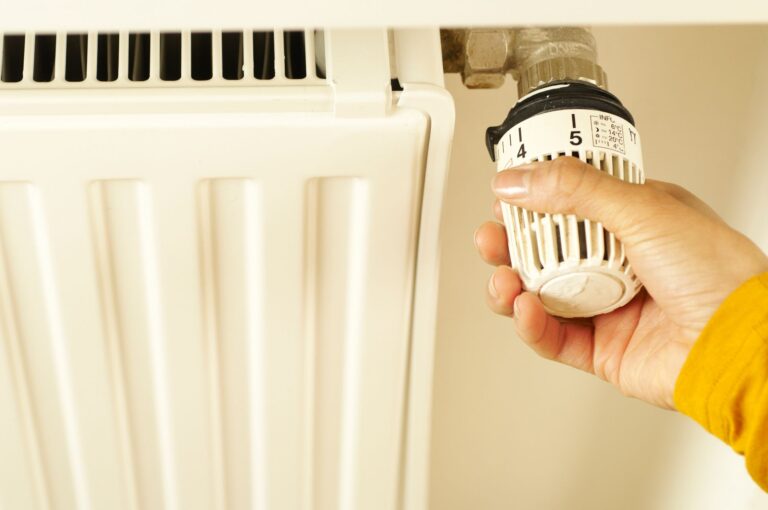

A reliable thermostat quietly does its job for years, then earns real appreciation the morning a cold snap rolls in. The right pick balances your HVAC setup, your daily routine, and the kind of control you actually want, from a no-fuss dial to a fully scheduled 7-day program. Honeywell’s catalog covers that whole spectrum, with options for single-stage heat-only systems, low-voltage central HVAC, line-voltage baseboards, and learning thermostats for tech-forward homes. This roundup sorts through ten solid choices to help you find one that fits how your home actually runs.
The Lineup, Simplified
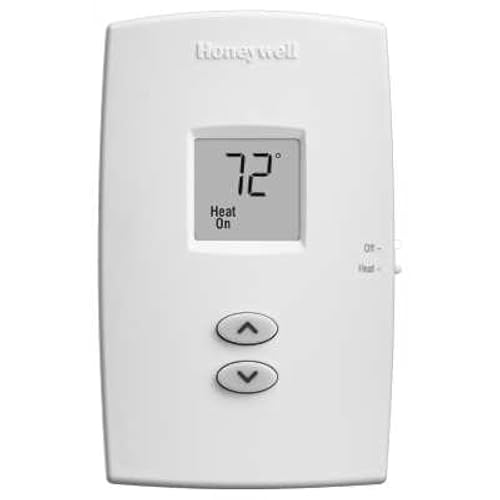
Honeywell TH1100DV1000 PRO 1000 Single-Stage Heat-Only Vertical Thermostat
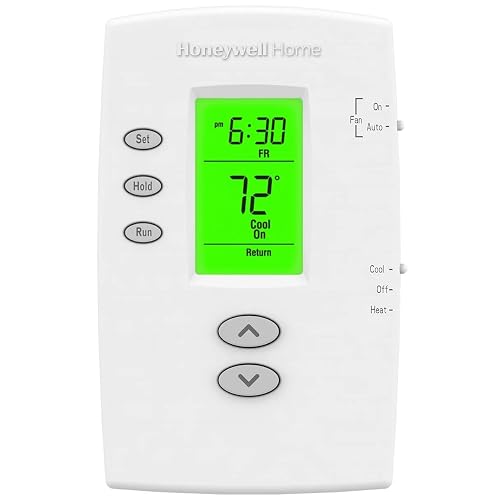
Honeywell TH2110DV1008 PRO 2000 Vertical Programmable Thermostat
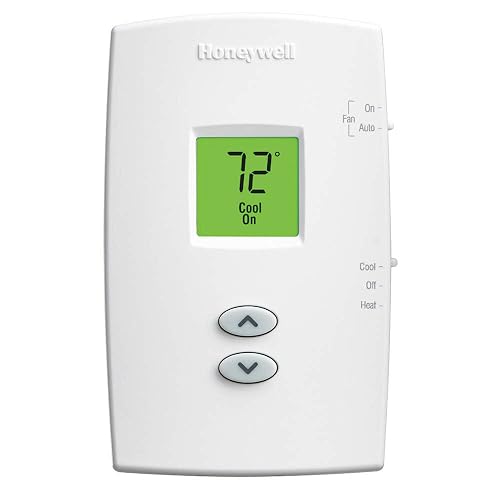
Honeywell TH1110DV1009/U Pro 1000 Vertical Non-Programmable Thermostat
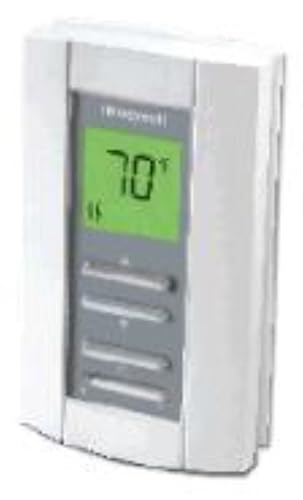
Honeywell TL7235A1003 Line Volt Pro 240V Digital Thermostat
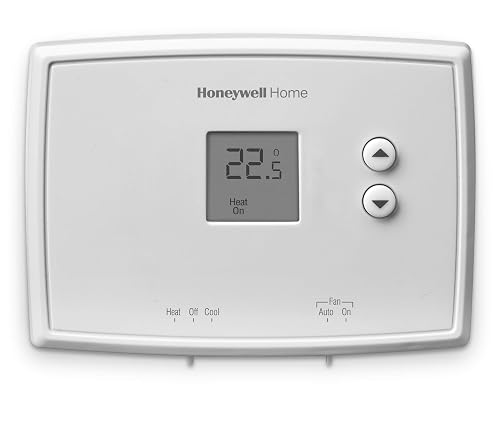
Honeywell Home RTH111B Digital Non-Programmable Thermostat

Honeywell Home X2P Programmable Thermostat, Single-Stage

Honeywell RLV3150A1004 Low-Volt Non-Programmable Thermostat

Honeywell TH3210D1004 Pro 3000 Non-Programmable Digital Thermostat
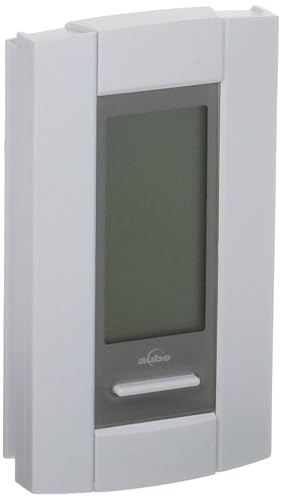
Honeywell TH115-A-12 120V 4-Wire SPST 7-Day Digital Heat Thermostat
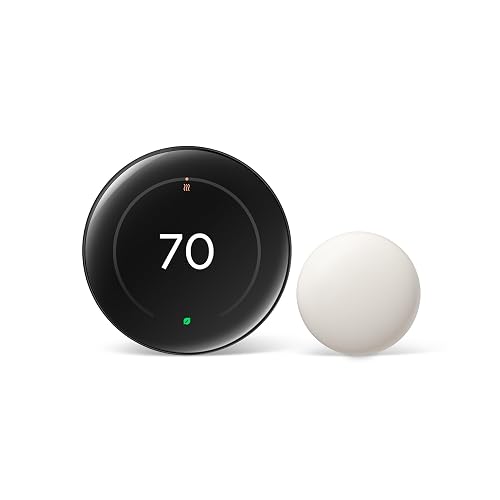
Google Nest Learning Thermostat (4th Gen) + Nest Temperature Sensor (2nd Gen)
The Strengths Of Each Pick
The TH1100DV1000 is the kind of thermostat that quietly does its job in a basement furnace room or a small workshop where cooling is handled by a window unit. Its vertical layout keeps the temperature reading and the up/down controls aligned, so adjusting the heat feels intuitive even if you’ve never programmed a thermostat before.
At roughly 4 11/16 inches tall and 2 7/8 inches wide, the unit stays compact against the wall without looking like an afterthought. The premier white finish blends with most trim colors, and the body keeps things minimal for homeowners who want function over flash. Compared to the TH2110DV1008, this one intentionally drops scheduling to keep the interface uncluttered.
Notable Upsides
- Single-stage heat-only design suits furnace-only systems without confusing extra buttons.
- Vertical layout keeps the temperature display and adjustment buttons aligned for quick reads.
- Premier white finish reads as a neutral match for most interior trim.
- Compact footprint fits tight wall spaces where larger thermostats feel oversized.
Things To Consider
- Heat-only operation means it’s not useful for central air conditioning setups.
- Lacks any scheduling features, so temperature holds require manual adjustment.
Who It Suits Best
Homeowners with a heat-only furnace who want a manual, no-schedule thermostat that stays out of the way.
Consider Something Else When
The Honeywell TH2110DV1008 is a better match for anyone running a heat/cool system and wanting 5-2 scheduling built in.
The PRO 2000 steps in where the TH1100DV1000 leaves off, adding real scheduling without pushing the price into learning-thermostat territory. It targets heat/cool systems and heat pumps without auxiliary heat, which covers the majority of single-stage HVAC setups in older homes.
The 5-2 weekday/weekend program is the workhorse feature: you set four periods for the work week and four for the weekend, and the thermostat does the rest. Early start mode preconditions the home so the target temperature arrives on schedule, and a backlit display keeps things readable in dim hallways. The setpoint and ambient temperature show on screen at the same time, so you always know how far off the room is from your target.
The Case For It
- 5-2 programming covers most work-and-weekend routines without overcomplicating setup.
- Early start feature preconditions the home so it’s warm when the morning schedule kicks in.
- Backlit display improves readability in dim hallways and overnight checks.
- Temporary and permanent override options let you adjust for one evening or indefinitely.
Worth Noting
- Compatible with heat/cool or heat-pump-without-auxiliary systems only, which may exclude multi-stage equipment.
- Programming is button-based, so the initial setup takes a few patient minutes.
Quick Facts
Made For
Homeowners running a single-stage heat/cool or heat pump system who want set-and-forget weekly scheduling without a learning curve.
Not Your Match When
The Honeywell Home X2P is a smarter fit for households that need 5-1-1, 5-2, 7-day, or non-programmable flexibility in one unit.
The TH1110DV1009 takes the Pro 1000 family and adds heat/cool switching without piling on programming menus. The vertical profile mirrors the TH1100DV1000, so the muscle memory transfers if you’re swapping an older Pro unit on the same wall plate.
For households where someone is constantly adjusting the temperature back to a favorite number, the dial-and-button layout works better than a touchscreen: you don’t have to navigate a menu to bump the heat up two degrees. At 4 11/16 inches tall, it sits flush on most interior walls without crowding trim or switch plates.
Useful Touches
- Heat/cool switching without scheduling menus keeps the interface uncluttered.
- Vertical layout matches the TH1100DV1000, easing replacement of older Pro units.
- Premier white finish stays neutral against most wall colors.
Trade Offs
- No weekly scheduling means temperature drops and raises need manual changes.
- Single-stage design may not suit multi-stage HVAC equipment.
- Display lacks backlighting, so nighttime adjustments can be hard to see in dark hallways.
Best Suited To
Homeowners with a basic single-stage heat/cool system who prefer direct manual control over weekly programs.
Look Elsewhere When
The Honeywell TH2110DV1008 is the better pick for shoppers wanting built-in 5-2 scheduling on a similar vertical body.
Most low-voltage thermostats in this roundup won’t talk to a 240-volt baseboard heater, so the TL7235A1003 fills a very specific gap. It handles line-voltage systems directly, with electronic temperature control instead of the old bimetallic strip, which is why it’s the go-to option for electric baseboard and convection upgrades.
The on-demand backlight means the screen lights up when you press a button, rather than glowing all night. A heating indicator at a glance confirms the system is actively calling for heat, useful in cold rooms where the difference between “off” and “running” isn’t always obvious. Compared to the TH1100DV1000, this one trades low-voltage simplicity for high-voltage muscle.
The Good Stuff
- 240V line-voltage compatibility suits electric baseboards, convectors, and radiant ceilings.
- On-demand backlight activates only when you interact, reducing glow in bedrooms.
- Soundproof operation cuts the audible “click” common with mechanical line-voltage stats.
- Heating indicator confirms at a glance that the system is actively calling for heat.
Room For Improvement
- Not compatible with low-voltage central HVAC systems.
- Wiring a line-voltage thermostat requires confidence with high-voltage circuits.
- Lacks any weekly scheduling, so setpoints stay where you last left them.
Who Will Love This
Homeowners with 240V electric baseboard or convector heaters who want a quiet digital replacement for a mechanical thermostat.
A Better Fit Elsewhere
The Honeywell RLV3150A1004 is a smarter match for low-voltage central heating systems including furnaces, boilers, and heat pumps.
The RTH111B is the thermostat to hand to a family member who’s never touched a programming menu. Soft-touch buttons, a clear digital display, and a focus on showing only the information you actually need make it approachable from the first install.
Precise temperature control keeps the room within a tight band of the setpoint, which matters in nurseries or home offices where a two-degree swing is noticeable. The display deliberately trims back extras like outdoor weather, which keeps the screen legible from across a hallway. Relative to the TH3210D1004, this one stays simpler and aims at everyday single-stage use.
Benefits That Matter
- Soft-touch buttons feel responsive without being stiff on cold mornings.
- Precise temperature control keeps the room near the setpoint within a tight band.
- Minimalist display only shows the numbers you actively need.
Points To Keep In Mind
- No scheduling means you adjust the temperature manually as routines shift.
- Single-stage design may not match multi-stage heating and cooling equipment.
- Display lacks advanced readouts like humidity or outdoor temperature.
Feature Snapshot
Right Fit For
First-time thermostat shoppers, rental property owners, and anyone who wants a clear digital interface without weekly scheduling.
Swap It Out When
The Honeywell Home X2P is a smarter match if you want 5-1-1, 5-2, 7-day, or non-programmable flexibility in a single unit.
The X2P is a “one thermostat, many schedules” type of pick. It supports 5-1-1, 5-2, 7-day, or 1-week programming, plus a non-programmable mode, so you can start simple and grow into the schedule that actually fits your routine.
Single-stage 1 heat/1 cool support covers most standard central HVAC setups, and reminders like change-air-filter help you stay on top of routine maintenance. Compared to the RTH111B, the X2P adds real scheduling depth without becoming intimidating. The white finish sits well in most modern interiors.
Well-Handled Touches
- Multiple scheduling modes cover mixed weekly routines in a single unit.
- Non-programmable option lets you start simple and activate scheduling later.
- Air filter reminder helps you stay on top of routine HVAC maintenance.
Honest Caveats
- Single-stage support excludes multi-stage heating and cooling systems.
- Programming setup can take a few patient minutes for first-time users.
Perfect Match For
Households with mixed weekly schedules that want flexible programming options plus the option to run the thermostat in non-programmable mode.
Skip It When
The Honeywell TH2110DV1008 is a better match for anyone who only needs a 5-2 schedule and prefers a simpler vertical body.
The RLV3150A1004 is the roundup’s bridge pick. It speaks the low-voltage language of central heating systems, so it works with furnaces, boilers, central air conditioning, and heat pumps from a single wall unit, which is rare in this price range.
Its compact body fits where larger thermostats feel oversized, and the simplified control layout keeps adjustments fast. Compared to the TL7235A1003, this unit handles low-voltage systems instead of 240V baseboard heaters, so the use case is the opposite end of the wiring spectrum. It also works as a baseboard thermostat in some 120V/240V installations, depending on the existing wiring.
A Few Highlights
- Low-voltage compatibility covers furnaces, boilers, central A/C, and heat pumps from a single unit.
- Compact design fits tight wall spaces without crowding trim.
- Simplified control layout keeps adjustments fast for non-technical users.
- Range of -4 to 120 degrees Fahrenheit suits garages, basements, and cold-climate rooms.
Small Caveats
- No scheduling features, so temperature holds require manual changes.
- Single-degree increments feel less precise than half-degree competitors.
Built With In Mind
Homeowners with variable HVAC equipment who want one reliable low-voltage thermostat that works across multiple system types.
Reach For A Different Pick When
The Honeywell Home X2P is a smarter match for households that want flexible programming on top of a single-stage system.
The Pro 3000 steps up from single-stage Pro 1000 territory into 2 heat/1 cool territory, which expands compatibility with two-stage heating systems found in newer homes. The backlit display shows both the current room temperature and the setpoint at the same time, eliminating the back-and-forth press that plagues simpler thermostats.
Precise comfort control holds the room within roughly 1 degree Fahrenheit of the setpoint, which matters in homes where a 3-degree swing registers as a draft. Compared to the RTH111B, this unit supports more heating stages at the cost of an extra digit or two on the display.
Real Benefits
- 2 heat/1 cool support fits homes with two-stage heating systems.
- Backlit display shows current and setpoint temperatures simultaneously.
- Precise comfort control holds the room within about 1 degree Fahrenheit of the setpoint.
Less Ideal Details
- No weekly scheduling, so setpoints stay where you last set them.
- Body design runs larger than the slim Pro 1000 vertical units.
Quick Technical Notes
Whose Shelf It Belongs On
Homeowners with two-stage heating equipment who want reliable digital accuracy without paying for a learning thermostat.
Where A Sibling Pick Shines
The Honeywell TH115-A-12 is a stronger fit for shoppers wanting 7-day scheduling in a line-voltage floor-heating setup.
The TH115-A-12 lands in a category most homeowners never think about: 120V floor heating and 4-wire SPST applications. The TRIAC-based design switches silently, so the thermostat itself never adds to the room noise, which is a real upgrade over the click-clack of mechanical floor-heating controls.
Up to four daily settings can be programmed individually for each day of the week, which adds up to a real 7-day schedule rather than a 5-2 compromise. Microprocessor-optimized temperature control with 15-minute cycles aims to keep the floor temperature stable. Compared to the TL7235A1003, this unit targets 120V floor heating with weekly scheduling rather than 240V baseboard simplicity.
Useful Strengths
- TRIAC switching keeps operation silent in quiet bedrooms and living rooms.
- Up to four daily settings per day, fully programmable for all seven days of the week.
- Microprocessor temperature control with 15-minute cycles aims for stable floor temperatures.
- Heating command indicator confirms the system is actively warming the floor.
Possible Compromises
- Specific to 120V/4-wire SPST floor-heating systems, so it’s not a general-purpose pick.
- Programming a full 7-day schedule takes more time than a 5-2 setup.
- Remote input compatibility depends on the existing floor-heating wiring.
Who Should Grab It
Homeowners with 120V electric floor heating who want a silent, fully programmable thermostat for everyday comfort.
Another Choice May Suit
The Honeywell TL7235A1003 is a better fit for 240V baseboard or convector installations where weekly scheduling is less important.
The Nest Learning Thermostat earns the “smart upgrade” slot because it does the programming for you. Over the first week or two, it watches the temperatures you set and the times you set them, then builds a schedule that follows your real routine rather than the one you typed into a menu.
The included Nest Temperature Sensor (2nd gen) adds room-by-room awareness, so the thermostat can prioritize the room you’re actually using instead of the hallway where the wall unit lives. The Obsidian finish gives the roundup a darker, modern look that stands out from the white wall units higher in the list. Compared to the X2P, this one learns over time instead of asking you to set a schedule up front.
Why It Works Well
- Self-learning routine builds a schedule from your real temperature adjustments.
- Included temperature sensor helps the system prioritize the rooms you actually use.
- Obsidian finish offers a darker, modern look compared to white wall units.
- Adapts to routine changes without manual reprogramming.
Worth Bearing In Mind
- Learning behavior takes a week or two to settle into a reliable schedule.
- Sensor placement and smart features need a C-wire or compatible power setup in most homes.
Key Product Details
Built With In Mind
Tech-forward homeowners who want a thermostat that adapts to their routine and supports room-specific temperature sensing.
Look Elsewhere When
The Honeywell Home X2P is a better match for households that prefer explicit programming control without a learning curve.
Picking The Right Honeywell For Your Setup
Before you commit to a thermostat, take a minute to match the unit to the system already on your wall. A mismatch is the most common reason a “great” thermostat underperforms from day one. Here are the factors that matter most when narrowing this roundup.
Match The Voltage And System Type First
Low-voltage thermostats, like the TH2110DV1008 and RLV3150A1004, work with most central HVAC systems, including furnaces, boilers, and heat pumps. Line-voltage models, like the TL7235A1003 and TH115-A-12, are designed for electric baseboards, convectors, and radiant floors that run on 120V or 240V circuits. Putting a low-voltage stat on a 240V baseboard, or a line-voltage stat on a furnace, is a wiring problem, not a comfort problem.
Decide How Much Scheduling You Actually Want
If you only need to set the temperature once and walk away, a non-programmable unit like the RTH111B or TH1100DV1000 keeps the wall simple. Households with predictable weekday and weekend routines usually find a 5-2 schedule enough, while mixed weekly routines benefit from 5-1-1, 5-2, 7-day, or non-programmable flexibility, all of which the X2P covers. Learning thermostats like the Nest go further, building the schedule from your real adjustments.
Think About The Installation And Long-Term Fit
A vertical body like the TH1100DV1000 or TH2110DV1008 is a clean swap for older Pro series units on the same wall plate. Larger, more advanced thermostats sometimes need a C-wire, a common wire that delivers continuous power, so it helps to check the existing wiring before choosing. Sensors like the Nest Temperature Sensor (2nd gen) extend comfort into specific rooms, but only if you’re ready to place and maintain them over time.
Key Considerations Across These Picks
Common Shopping Slip Ups
The most expensive mistake is buying a low-voltage thermostat for a 240V baseboard system, or vice versa, which is why the TL7235A1003 and TH115-A-12 stand out for line-voltage applications. Another frequent miss is overlooking weekly scheduling: a non-programmable thermostat feels like a deal until you’re adjusting the temperature by hand every weekend. Finally, picking a learning thermostat without checking the wiring can mean a surprise C-wire install after the box is already open.
Where The Extra Money Goes
Higher-tier models like the Nest Learning Thermostat add self-programming routines, room sensors, and modern finishes that justify the step up for tech-forward households. Mid-tier options like the X2P add flexible scheduling modes and air filter reminders, which pay off for routine-driven families. The extra spend rarely buys “better heating”; it usually buys more accurate scheduling and a smoother daily experience, so it makes sense when you’ll actually use those features.
Frequently Asked Questions
How do I know if I need a low-voltage or line-voltage Honeywell thermostat?
Check the voltage of your heating system: 120V or 240V baseboards and most radiant floors need a line-voltage model like the TL7235A1003. Central HVAC systems with furnaces, boilers, and most heat pumps run on low voltage, so a unit like the TH2110DV1008 or RLV3150A1004 fits.
Do I need a C-wire for these Honeywell thermostats?
Most non-smart Honeywell thermostats in this roundup run on battery or “steal” power from the heating circuit, but learning thermostats like the Nest often need a C-wire, a common wire that supplies continuous 24V power, to function reliably. Checking the existing wiring before purchase avoids an unexpected install step.
Can a programmable Honeywell thermostat really save money on heating?
Programmable thermostats save money by automatically lowering the temperature when you’re away or asleep and bringing it back up before you need it. The actual savings depend on your climate, your schedule, and how well you program the unit to match real occupancy.
What does “single-stage” mean on a Honeywell thermostat?
Single-stage means the system has one level of heating or cooling output, on or off, with no intermediate low-fire or high-fire steps. A 2 heat/1 cool unit like the TH3210D1004 supports two heating stages, which improves comfort in homes with multi-stage furnaces.
How long do Honeywell thermostats typically last?
Most Honeywell thermostats in this category are commonly expected to last around a decade with normal use, though exact lifespan depends on the environment, the HVAC system, and how often the unit is cycled. Swapping the batteries or checking the wiring every couple of years tends to keep them running smoothly.
Wrap Up
The right Honeywell thermostat is the one that matches your system voltage, fits your scheduling style, and stays out of your way on the wall. Heat-only homes do well with the TH1100DV1000, while heat/cool systems benefit from the TH2110DV1008 or the more flexible X2P. Line-voltage baseboards call for the TL7235A1003, and tech-forward homes will appreciate what the Nest Learning Thermostat brings to the routine. Take stock of your wiring and weekly rhythm first, and the rest of the choice tends to fall into place.