
Picking a wall thermostat sounds simple until you stand in the hardware aisle staring at a wall of nearly identical white rectangles. The reality is that the right pick depends on your system type, whether you want a weekly schedule, and how visible the screen needs to be from across the room. Programmable models from Honeywell and PRO1 cover the common single-stage, multi-stage, and heat pump setups found in most homes. Non-programmable options still earn their place in garages, workshops, and rentals where schedules don’t matter. The list below sorts through the clutter so you can match a thermostat to your HVAC, not the other way around.
A Fast Comparison Of The Options
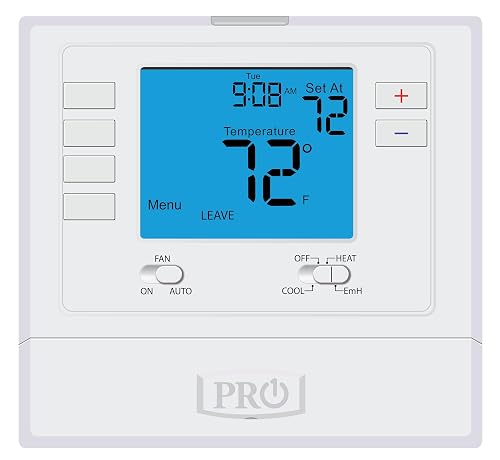
PRO1 T725 Programmable Heat Pump Thermostat

PRO1 T771 Single Stage Non-Programmable Thermostat
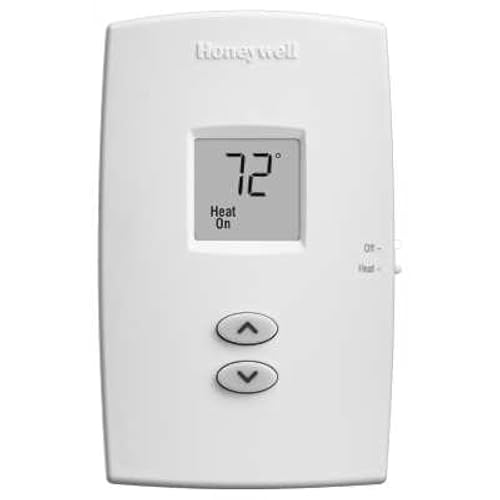
Honeywell TH1100DV1000 PRO 1000 Heat Only
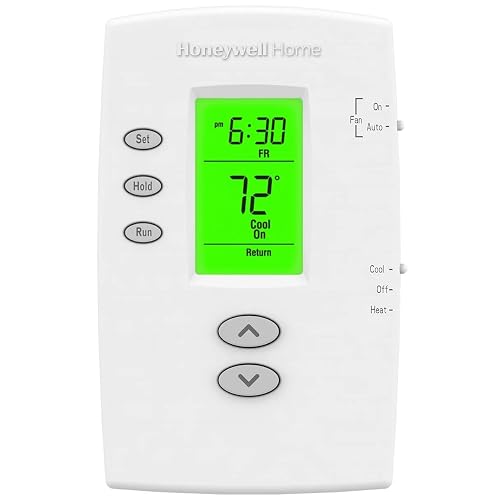
Honeywell TH2110DV1008 PRO 2000 Programmable
PRO1 T701 Single Stage Non-Programmable Thermostat

PRO1 T715 Multi-Stage Programmable Gas Thermostat
Honeywell TL7235A1003 Line Volt Pro 240V
PRO1 T721 Non-Programmable Heat Pump Thermostat
Honeywell RTH3100C1002/E1 Heat Pump Thermostat

PRO1 T805 Programmable Single Stage Thermostat
A Breakdown Of The Leading Choices
Heat pump homes tend to be the trickiest setups to match a thermostat to, since the unit has to juggle compressor staging and conventional backup heat without short-cycling. The PRO1 T725 steps into that role with 2 heat/1 cool heat pump support plus 1 heat/1 cool conventional compatibility, which is unusual for a wall unit at this level. A 4-square-inch blue backlit screen reads clearly at a glance, and 7-day or 5/1/1 programming lets you build a separate routine for weekdays and weekends.
For most homeowners with a heat pump system, this is the kind of thermostat that quietly handles the schedule in the background. You set wake, leave, return, and sleep periods once, then forget about it. The trade-off is that you give up multi-stage cooling support, so homes with two-stage cooling compressors will want to keep scrolling.
Practical Advantages
- Supports 2 heat/1 cool heat pump plus conventional 1 heat/1 cool, so it covers two system types in one unit
- 7-day or 5/1/1 programming fits households where weekdays and weekends diverge
- 4 sq. in. blue backlit display stays readable in low light and across the room
- Builds on the T700 platform, which owners commonly report as a reliable long-running line
Trade Offs
- Not built for 2 heat/2 cool multi-stage systems, so larger HVAC setups will outgrow it
- Programming setup takes patience on first install, and a manual read is usually required
Feature Snapshot
Made For
Owners of single-stage heat pump homes who want a real weekly schedule without paying for a smart thermostat.
Consider Something Else When
You have a 2 heat/2 cool multi-stage setup, in which case the PRO1 T715 Multi-Stage Programmable Gas Thermostat is the closer match.
Garages, workshops, and sheds need thermostats that can hold steady at low temperatures without complaint, and most living-room units refuse to setpoint below 50°F. The PRO1 T771 stretches the setpoint range down to 25°F and up to 90°F, which opens it up to spaces that aren’t climate-controlled the same way a house is. A 4-square-inch blue backlit display keeps the readout visible, and the swing adjustment plus calibration options let you tune the sensor to match the space.
Unlike the PRO1 T725 reviewed above, this model has no scheduling, so you set a temperature and walk away. That’s the right trade for a detached space where a schedule adds nothing. You may find the manual a bit dense if you’ve never calibrated a thermostat before, but the on-unit controls stay straightforward once powered.
Everyday Wins
- 25°F to 90°F setpoint range handles unheated garages and cold storage spaces
- 4 sq. in. blue backlit display reads clearly in dim workshops
- Swing and calibration controls let you fine-tune the sensor to the room
- Single-stage 1 heat/1 cool compatibility fits most basic forced-air setups
Points To Keep In Mind
- No programming means manual setpoint changes for shifting conditions
- Calibration setup takes a careful first read of the manual
Who It Suits Best
Owners of detached garages, sheds, or workshops needing a low-temperature-capable thermostat without a learning curve.
Look Elsewhere When
You live in the space full-time and want scheduled comfort, in which case the PRO1 T805 Programmable Single Stage Thermostat is the better fit.
Some homes run heat only, with no central air at all, and most programmable thermostats oversell features that a heating-only system can’t use. The Honeywell TH1100DV1000 PRO 1000 keeps things deliberately small: a vertical housing, premier white finish, and a focus on doing one job well. The 4 11/16-inch tall by 2 7/8-inch wide footprint fits narrow wall spots where horizontal layouts would crowd switch plates.
Compare that to the PRO1 T701 coming up later, which is a more modern digital display, and the difference is mostly aesthetic and interface style. The Honeywell unit’s vertical orientation is its real signature, and it slots into utility rooms and older homes where the wiring drops from above rather than the side. Owners commonly report the install going quickly because there are no scheduling menus to learn.
Notable Upsides
- Vertical layout fits narrow wall sections where horizontal units crowd outlets
- Premier white finish blends into most interior trim without standing out
- Heat-only design means fewer wires and a faster swap-in for compatible systems
- Made-in-USA manufacturing on a long-running Honeywell product line
Worth Noting
- No cooling support, so summer comfort requires a separate solution
- Non-programmable interface means manual setpoint changes day to day
Right Fit For
Homeowners with heat-only boilers, baseboard, or furnace systems who want a clean, no-schedule wall unit.
A Better Fit Elsewhere
You need cooling control too, in which case the PRO1 T701 Single Stage Non-Programmable Thermostat covers 1 heat/1 cool conventional systems.
The Honeywell PRO 2000 sits in the sweet spot for people who want a real weekly schedule but don’t need the multi-stage gymnastics of a T715. Weekday/weekend programming covers the most common split, and a backlit display shows ambient and setpoint temperatures side by side. The early-start function pre-heats or pre-cools the home so the setpoint is reached by the scheduled time, which matters more than people expect during shoulder seasons.
Same story with override options: temporary and permanent hold lets you bump the temperature for a guest without losing the weekly program. Built-in compressor protection is one of those quiet features that extends equipment life without you noticing. For most routine-driven households, the PRO 2000 handles the schedule without overcomplicating the wall unit.
Real-World Strengths
- 5/2 weekday/weekend programming matches how most people actually live
- Backlit display shows ambient temperature at all times, not just on demand
- Early-start logic pre-conditions the home so it’s comfortable by the scheduled time
- Temporary and permanent override modes handle one-off comfort changes
Honest Caveats
- No 7-day independent programming, so every weekday shares the same routine
- Vertical orientation requires a low-mount wire drop in some retrofit installs
Best Suited To
Households with predictable weekday and weekend routines who want scheduling without smart-home connectivity.
Skip It When
You need separate schedules for every day of the week, in which case the PRO1 T725 Programmable Heat Pump Thermostat offers true 7-day flexibility.
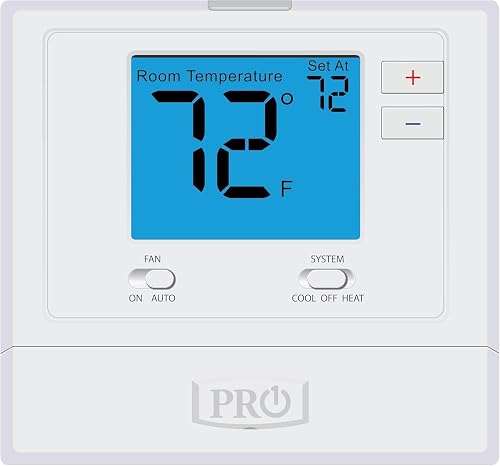
The PRO1 T701 is the kind of thermostat you install once and barely think about again. Built on the T700 platform, it pairs a 4-square-inch blue backlit display with a glow-in-the-dark light button, which is one of those small details that pays off when you walk past at 2 a.m. Compatibility with gas or electric conventional systems means it slots into most forced-air setups without rewiring.
The T701 sits between the Honeywell TH1100DV1000 PRO 1000 above and the PRO1 T721 further down, sharing the no-schedule simplicity of both. You may find the lack of programming a deal-breaker if you travel often, but for homes where the same temperature works year-round, that’s a feature, not a limitation. AA or hardwire power flexibility helps in retrofits where a common wire isn’t pulled.
The Good Stuff
- Glow-in-the-dark light button is easy to find in a dark hallway
- Works with gas or electric conventional 1 heat/1 cool systems
- AA battery or hardwire power options cover most retrofit installs
- 4 sq. in. blue backlit display keeps numbers readable across the room
Some Limits To Know
- No programming, so setpoint changes happen manually
- Single-stage only, not suitable for multi-stage heating or cooling
Who Should Grab It
Homeowners with a basic conventional system who want a clean digital thermostat without scheduling complexity.
Not Your Match When
You have a heat pump system, in which case the PRO1 T721 Non-Programmable Heat Pump Thermostat is the system-matched alternative.
Multi-stage HVAC systems are common in newer homes with two-stage gas furnaces and two-stage air conditioning, and a single-stage thermostat can leave efficiency on the table. The PRO1 T715 handles 2 heat/2 cool configurations with 7-day, 5/1/1, or non-programmable modes, so the same unit fits a scheduling household or a set-and-forget one. The T700 platform ties it to the broader PRO1 ecosystem, and the same glow-in-the-dark light button shows up across the family.
Where the T715 pulls ahead of the PRO1 T725 is in cooling stage support, not heating complexity. For homeowners with two-stage air conditioning, the difference in comfort and dehumidification is noticeable, especially on muggy summer afternoons. Battery or hardwire power keeps it friendly to older homes that lack a common wire.
Strong Points
- 2 heat/2 cool multi-stage support handles newer two-stage HVAC systems
- Three operating modes (7-day, 5/1/1, or non-programmable) in one unit
- Glow-in-the-dark light button matches the rest of the T700 family
- Battery or hardwire power options for retrofits without a common wire
Factors To Consider
- Wiring is more involved than a single-stage swap, so first-time installers should plan time
- Multi-stage programming has a learning curve, depending on your existing routine
Feature Snapshot
Whose Shelf It Belongs On
Owners of two-stage gas furnace systems who want full multi-stage control with flexible weekly scheduling.
Reach For A Different Pick When
You only have a single-stage conventional system, in which case the PRO1 T805 Programmable Single Stage Thermostat covers your needs at a lower spec level.
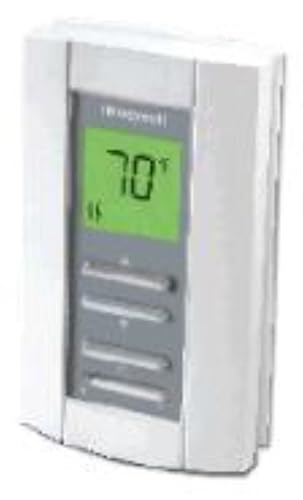
Most wall thermostats run on low voltage (24V) signal wiring, but electric baseboard heaters and other line-voltage equipment need something else entirely. The Honeywell TL7235A1003 Line Volt Pro runs on 240V, putting it in a different category from the rest of this list. An on-demand backlight reads clearly when you walk up to adjust, and a soundproof operation design quiets the relay clicking that drives some homeowners to distraction.
Same story with the heating indicator, which is a small at-a-glance light confirming the system is calling for heat. Compared to the Honeywell RTH3100C1002/E1 heat pump thermostat reviewed later, this unit is purpose-built for direct line-voltage control and won’t substitute into a low-voltage HVAC system. The honest read is that you buy this only if you specifically have 240V baseboard or convection heat.
Notable Gains
- 240V line-voltage compatibility suits electric baseboard and convection heaters
- On-demand backlight illuminates the display only when needed
- Soundproof operation reduces the relay clicking common to line-voltage stats
- Heating indicator confirms at a glance that heat is being called for
What To Weigh
- Not interchangeable with 24V low-voltage systems, so it can’t replace a standard thermostat
- Wiring must match the heater’s voltage and amp rating, which usually calls for a pro install
Perfect Match For
Homeowners with 240V electric baseboard or fan-forced heaters who need a quiet, purpose-built line-voltage control.
Swap It Out When
Your home runs a low-voltage furnace or heat pump, in which case the Honeywell RTH3100C1002/E1 Heat Pump Thermostat is the right match.
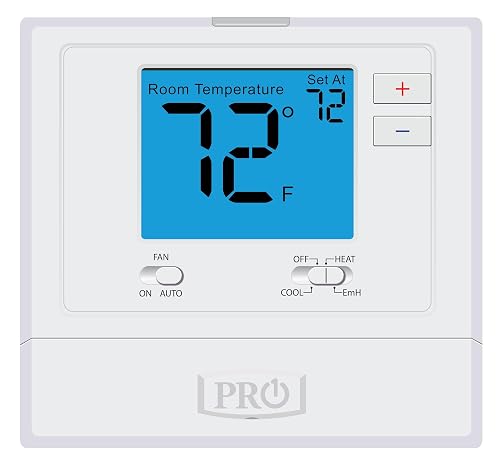
The PRO1 T721 earns its spot by covering two system types without forcing a programming commitment. It supports 2 heat/1 cool heat pump systems or 1 heat/1 cool conventional systems, which means the same thermostat can stay on the wall if a homeowner ever switches from a heat pump to a conventional setup. A 4-square-inch blue backlit display and glow-in-the-dark light button are familiar T700-family touches.
For most heat pump homes without a weekly schedule, this strikes a good middle ground. You get system-matching compatibility without paying for a programmable interface that would just sit unused. AA or hardwire power flexibility helps during retrofit, and the on-screen setpoint controls stay simple enough that guests can adjust the temperature without a manual.
Bright Spots
- Works with heat pump or conventional systems, so it’s portable between setups
- 4 sq. in. blue backlit display paired with glow-in-the-dark light button
- AA battery or hardwire power options cover most retrofit installs
- Simple setpoint controls, with no scheduling menus to navigate
Practical Considerations
- No programming means manual setpoint changes for shifting weather
- Not built for multi-stage cooling, so larger homes with two-stage compressors will need more
Built With In Mind
Heat pump or conventional homeowners who want a no-schedule thermostat that adapts if the system ever changes.
Where A Sibling Pick Shines
You want weekly scheduling on a heat pump, in which case the PRO1 T725 Programmable Heat Pump Thermostat is the upgrade path.
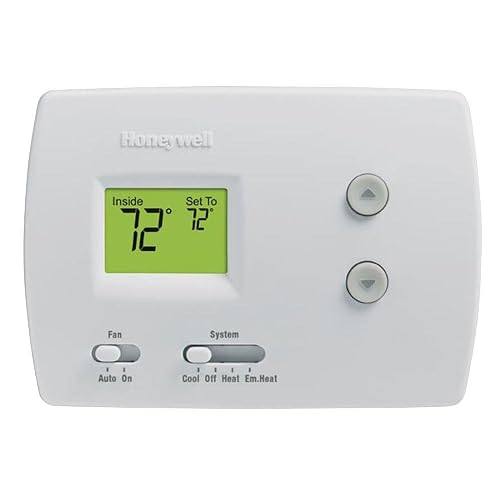
The Honeywell RTH3100C1002/E1 is a heat-pump-only thermostat built around a soft-touch button interface and a backlit display. It targets the specific case of a heat pump with auxiliary heat, which is one of the trickier system types to control cleanly. The mercury-free design is a small but real environmental plus compared to older stats that still use mercury switches.
Where this unit differs from the PRO1 T725 reviewed earlier is in scope: it doesn’t claim conventional system support and is strictly a heat-pump solution. Owners commonly report the soft-touch buttons as a step up from clicky membrane pads, especially for daily adjustments. You may find the lack of programming limiting if you want weekday/weekend routines, but for a vacation home or steady-occupancy heat pump, that’s rarely a problem.
Good Reasons To Consider
- Heat pump with auxiliary heat support handles a specific common system type
- Soft-touch button interface feels more responsive than older membrane pads
- Backlit display stays readable in dim basements and utility rooms
- Mercury-free construction is friendlier to dispose of at end of life
Where It May Fall Short
- Heat-pump-only compatibility excludes homes with conventional furnaces
- No programming, so setpoint changes are manual day to day
Who Will Love This
Homeowners with a heat pump and auxiliary heat who want a soft-touch, no-schedule wall control from a long-running Honeywell line.
Another Choice May Suit
Your home uses a conventional furnace instead, in which case the PRO1 T701 Single Stage Non-Programmable Thermostat is the better match.
Visibility is the T805’s calling card, with a 7-square-inch blue backlit display that dwarfs the 4-square-inch screens common elsewhere on this list. For homeowners who check the temperature from the kitchen or the bottom of the stairs, that extra real estate makes a noticeable difference. Built on the T800 platform, it supports 1 heat/1 cool conventional systems with 7-day, 5/1/1, or non-programmable modes, so the same unit works whether you schedule or not.
Compared to the Honeywell PRO 2000 reviewed earlier, the T805 trades vertical orientation for a wider, more readable face. Glow-in-the-dark light button tech carries over from the T700 family, so nighttime adjustments stay easy. The honest read is that you pay a small premium for screen size, and the rest of the feature set stays modest. You may find the extra screen real estate worth it if you have aging eyes or a long sightline to the wall.
Key Advantages
- 7 sq. in. blue backlit display is much easier to read from across a room
- Three operating modes (7-day, 5/1/1, non-programmable) in one unit
- Glow-in-the-dark light button is easy to find in a dark hallway
- 1 heat/1 cool conventional compatibility fits most forced-air homes
Less Ideal Details
- Larger display means a wider wall footprint, which may crowd narrow switch plates
- Single-stage only, not suited to multi-stage HVAC setups
Feature Snapshot
The Right Fit
Homeowners with a conventional 1 heat/1 cool system who want a big, easy-to-read screen and flexible scheduling.
Not Your Match When
You have a multi-stage system, in which case the PRO1 T715 Multi-Stage Programmable Gas Thermostat is the upgrade pick.
What Matters Before Choosing A Programmable Wall Thermostat
Match The System Type First
The single most common reason a thermostat install goes sideways is mismatching the unit to the HVAC system. Heat pump systems (a heating and cooling system that moves heat rather than generating it) need a thermostat that explicitly supports heat pump staging, and conventional furnaces need a different wiring layout. Multi-stage systems require a multi-stage thermostat. Confirm the heat/cool stages of your equipment before choosing, since swapping a single-stage unit into a multi-stage system leaves efficiency on the table and can cause short-cycling.
Decide Whether Programming Actually Helps
Programmable thermostats earn their keep in homes with predictable routines, where a 7-day or 5/1/1 schedule can shift setpoints automatically. For households where someone is always home, or where the temperature stays the same year-round, programming adds setup time without real savings. Non-programmable options like the PRO1 T701 or Honeywell RTH3100C1002/E1 are simpler to operate and easier for guests to adjust on the fly.
Consider Display Size And Visibility
Wall thermostats live at eye level in hallways and living rooms, where the readout competes with paintings, light switches, and the rest of the wall. A 4-square-inch screen is enough for most eyes from across a small room, but longer sightlines or aging vision benefit from a 7-square-inch display like the PRO1 T805. Glow-in-the-dark light buttons help in dark hallways without forcing the backlight to stay on all night.
Think About Wiring And Power
Battery-powered thermostats are easier to retrofit in older homes that lack a common wire (the continuous low-voltage power line that smart and many programmable stats need), while hardwired units can pull continuous power from the HVAC system. Heat-only systems often have fewer wires than combined heat/cool setups, and line-voltage systems like the Honeywell TL7235A1003 require 240V wiring that a low-voltage thermostat simply cannot handle. Check the existing wire count before choosing, or budget for a pro install.
Key Considerations Across These Picks
Pitfalls Shoppers Hit
The most common mistake is buying a thermostat for a system type you don’t have, like a heat-pump-only unit on a conventional furnace. Closely related is overlooking the stage count, where a two-stage furnace paired with a single-stage thermostat works but wastes the second stage. Voltage mismatches are the next pitfall, since 240V baseboard heaters need a line-voltage stat like the Honeywell TL7235A1003, not a 24V low-voltage model. Finally, ignoring the common wire leaves some programmable units unable to draw continuous power without a battery backup, which usually means more frequent battery swaps.
Where The Extra Money Goes
Higher-tier models like the PRO1 T715 and PRO1 T805 spend the budget on multi-stage support, larger displays, and 7-day independent scheduling. The practical payoff shows up in homes with two-stage cooling (quieter, more dehumidified operation) and in longer sightlines to the thermostat. Whether the upgrade is worth it depends on your HVAC equipment: a single-stage system doesn’t benefit from a multi-stage thermostat, and a small hallway doesn’t need a 7-square-inch display. For most households with a single-stage conventional system and a normal-sized room, a mid-tier programmable like the Honeywell PRO 2000 hits the balance between cost and capability.
Frequently Asked Questions
What Is A Programmable Thermostat?
A programmable thermostat lets you set a temperature schedule that changes automatically throughout the day or week. Most support 5/1/1 (weekdays plus Saturday plus Sunday) or full 7-day independent scheduling, so the home adjusts itself before you wake up or return from work.
Do Honeywell Programmable Thermostats Work With Heat Pumps?
Some do and some don’t. Heat-pump-compatible models like the Honeywell RTH3100C1002/E1 and the PRO1 T725 explicitly support heat pump staging, while conventional-only models do not. Always check the system type listed in the product details before installing.
What Is The Difference Between A Programmable And Non-Programmable Thermostat?
A programmable thermostat follows a schedule you set in advance, while a non-programmable thermostat holds a single setpoint until you change it manually. Programmable models save energy in scheduled homes; non-programmable models are simpler and often less expensive.
Can I Install A Wall Thermostat Myself?
Most low-voltage thermostat swaps are straightforward for anyone comfortable with a screwdriver and a wire diagram, but line-voltage systems like the Honeywell TL7235A1003 work with 240V and usually call for a licensed electrician. Turn off the breaker to the HVAC system before touching any wires.
How Often Do Programmable Thermostats Need Batteries?
Battery-only programmable thermostats typically need fresh batteries once a year, though hardwired units with battery backup may go several years between changes. Low battery warnings on most models appear on the display well before the unit loses function.
Bottom Line
The right wall thermostat depends less on brand and more on your HVAC system, your schedule, and how visible you need the display to be. Heat pump homes should look at the PRO1 T725 or T721, conventional homes will be served well by the Honeywell PRO 2000 or PRO1 T805, and specialty spaces like garages fit the PRO1 T771. Once you know your system type and whether programming helps, the rest of the decision usually makes itself.