
Picking a new thermostat sounds simple until you start sorting through model numbers, stage counts, and heat pump versus conventional layouts. The right wall unit keeps a drafty ranch comfortable in February and a sun-soaked bonus room tolerable in July, while the wrong one fights you with menus you never asked for. This roundup sorts ten solid options by what they actually do well, so you can match the hardware to the system you already have running behind the drywall.
The Choices Worth Comparing
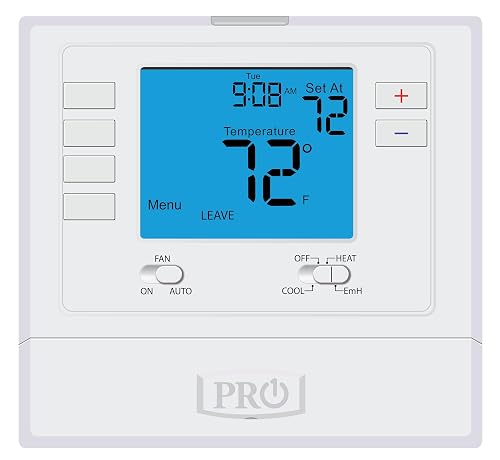
PRO1 T725 Programmable Wall Thermostat (2H/1C Heat Pump)

PRO1 T771 Non-Programmable Wall Thermostat (Garage & Shed)
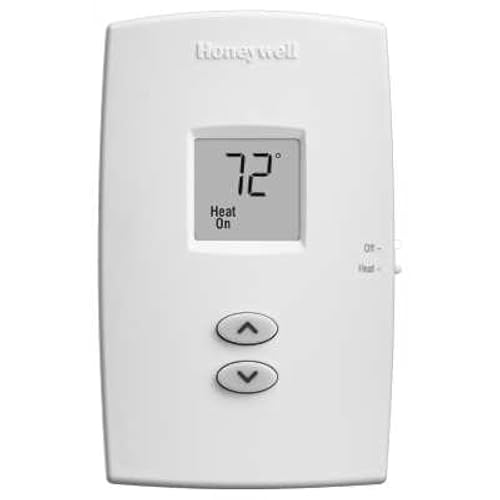
Honeywell TH1100DV1000 PRO 1000 Heat Only Vertical Thermostat
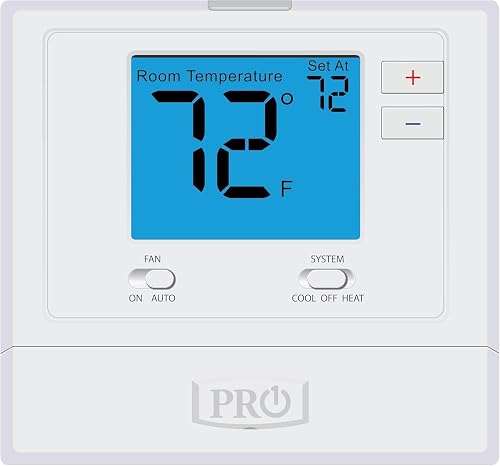
PRO1 T701 Non-Programmable Wall Thermostat (1H/1C)

PRO1 T715 Multi-Stage Programmable Gas Thermostat (2H/2C)
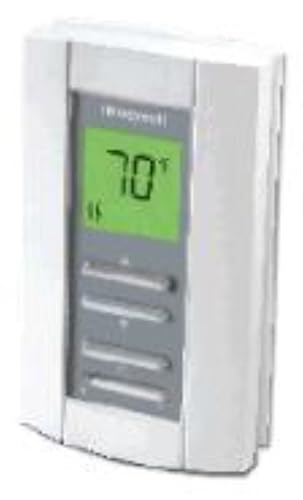
Honeywell TL7235A1003 Line Volt Pro 240V Digital Thermostat
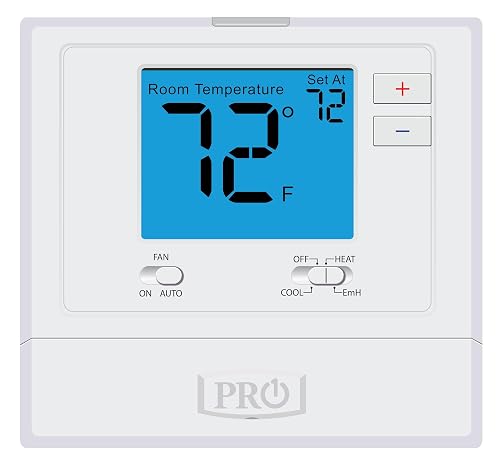
PRO1 T721 Heat Pump / Conventional Wall Thermostat (2H/1C)
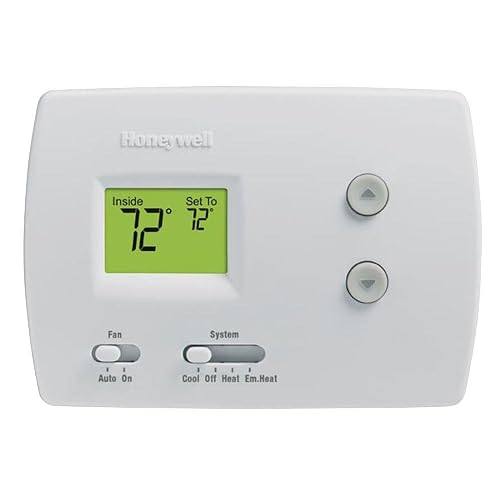
Honeywell RTH3100C1002/E1 Heat Pump Thermostat

Honeywell TH3210D1004 PRO 3000 Digital Thermostat (2H/1C)

PRO1 T805 Programmable Wall Thermostat (1H/1C, 7-Day)
The Picks, Examined More Closely
Households that have already upgraded to a heat pump but still rely on a backup furnace stage know the frustration of juggling two thermostat personalities. The PRO1 T725 covers both worlds on a single wall plate, handling 2 heat/1 cool heat pump configurations and 1 heat/1 cool conventional setups without forcing a second control somewhere down the hall.
You get a 4 sq. in. blue backlit display, 7-day or 5/1/1 scheduling, and the ability to switch between heat pump mode and conventional mode at install time. It runs on either common wire (C-wire) power or AA batteries, so older homes without a C-wire can still mount it cleanly. For most people, that dual-mode flexibility is the whole point of the unit.
What Works In Its Favor
- Dual-system support removes the need to keep an old thermostat on the wall after a heat pump retrofit
- 7-day or 5/1/1 scheduling fits working households that want a different routine on weekends
- Large blue backlit screen stays readable across a living room in low light
- Battery or hardwired power option simplifies replacement in homes without a C-wire
Things To Consider
- Only handles single-stage cooling, so homes with two-stage A/C units should look elsewhere
- Owners commonly report the scheduling buttons feel a little stiff out of the box
Feature Snapshot
Right Fit For
Owners with a heat pump plus a backup furnace stage who want one wall control instead of two.
Swap It Out When
You need true 2-stage cooling, in which case the PRO1 T715 multi-stage gas thermostat handles the load more cleanly.
Unconditioned spaces like detached garages, pole barns, and workshops usually sit outside the comfort range a standard living-room thermostat can hit. The PRO1 T771 stretches the setpoint down to 25°F, which is the kind of range you actually need when a space is barely insulated and you just want the pipes to stay above freezing.
There is no scheduling to fuss with, no Wi-Fi pairing, and no app to learn. You turn the dial, the heater responds, and that is the whole job. Compared to the T725 reviewed just above, this unit trades programming depth for raw setpoint range and a no-nonsense interface.
Real-World Strengths
- Setpoint range of 25°F to 90°F covers freeze protection and summer cooling in one unit
- Single-stage non-programmable design keeps operation obvious in low-traffic spaces
- 4 sq. in. blue backlit display stays readable in dusty shop environments
Worth Noting
- Lacks the swing adjustment and calibration options found on higher-tier PRO1 models
- Single-stage only, so multi-speed shop heaters will run at one speed regardless of demand
Made For
Shop owners and homeowners with detached garages or sheds that need simple freeze and heat control without programming overhead.
Look Elsewhere When
You want programmable scheduling for a primary living space, where the PRO1 T805 reviewed below gives you a more useful feature set.
Older homes with boiler-based hot water heat rarely need cooling control, smart features, or programming. The Honeywell TH1100DV1000 PRO 1000 is built for exactly that scenario, with a vertical layout, single-stage heat only operation, and a non-programmable design that lives up to its “set it and forget it” reputation.
The unit measures roughly 4 11/16 in. high by 2 7/8 in. wide, which fits the narrow wall plates common in older basements and utility rooms. You get a premier white finish that blends with most trim, and the slide-switch controls feel reassuringly mechanical.
Where It Delivers
- Heat-only operation matches single-function boiler and radiator systems without wasted features
- Vertical form factor fits older narrow wall boxes better than wide horizontal models
- Slide-switch interface is approachable for household members who dislike touchscreen menus
Trade Offs
- Cannot run cooling equipment at all, so adding central A/C later means a full replacement
- Non-backlit display can be hard to read in unlit basements and utility closets
Who It Suits Best
Owners of older homes with radiator or boiler heat who want a dependable wall thermostat without smart features or cooling support.
Where Another Pick Suits Better
You eventually plan to add central cooling, in which case the Honeywell TH3210D1004 PRO 3000 supports 2H/1C systems on a similar mechanical-style platform.
Most single-family homes run on a straightforward 1 heat/1 cool conventional setup, and that is exactly what the PRO1 T701 was engineered for. The T700 platform underneath gives you a familiar 4 sq. in. blue backlit display, while a glow-in-the-dark light button on the front makes late-night adjustments painless without fumbling for a hallway switch.
It works on gas or electric systems and supports either hardwired or battery power, so installation rarely turns into a wiring project. The big practical difference from the T725 reviewed earlier is the lack of programming; you set a temperature and the unit holds it, nothing more.
Strengths Worth Knowing
- Glow-in-the-dark light button helps in dark hallways and bedrooms at night
- Gas or electric compatibility covers most single-stage forced-air homes
- Battery or hardwired power option avoids needing a C-wire in older properties
Honest Caveats
- No scheduling means you handle temperature changes manually each season
- Only single-stage, so two-stage furnaces and A/C units will run at full output only
Perfect Match For
Renters and homeowners with simple single-stage equipment who want a set-and-forget wall control without paying for features they will never use.
Consider Something Else When
You want weekly scheduling and a larger screen, in which case the PRO1 T805 later in this list gives you both on the T800 platform.
Two-stage gas furnaces and two-stage air conditioners need a control that can call for low and high fire independently, otherwise you lose the efficiency and comfort benefits that justify the equipment. The PRO1 T715 is built around 2 heat/2 cool conventional systems and brings 7-day, 5/1/1, or full non-programmable modes into the same chassis.
On the T700 platform, you get the same glow-in-the-dark light button and 4 sq. in. backlit display seen on the T701, with the added benefit of weekly scheduling. You may find the deeper menus take a few extra evenings to learn, but the payoff is tighter temperature control across heating seasons.
A Few Highlights
- True 2 heat/2 cool support unlocks the staging logic of modern two-stage HVAC equipment
- Three scheduling modes (7-day, 5/1/1, non-programmable) fit any household routine
- Glow-in-the-dark light button and 4 sq. in. backlit display match the rest of the T700 family
Room For Improvement
- Does not support heat pump systems, so it pairs with conventional gas/electric setups only
- Setup menus are denser than the T701, which adds time to the first week of ownership
Best Suited To
Households with two-stage gas furnaces and two-stage A/C who want weekly scheduling without stepping up to a smart platform.
Not Your Match When
Your system runs a heat pump rather than a gas furnace, where the PRO1 T725 covers that configuration more cleanly.
Electric baseboard heaters run on 240-volt line voltage circuits, which is a completely different electrical world from the 24-volt systems every other thermostat in this roundup addresses. The Honeywell TL7235A1003 sits in that world, providing electronic temperature control with an on-demand backlight and a heating indicator that confirms the circuit is actually pulling current.
It is non-programmable, so you set the dial and the unit holds the temperature. The soundproof operation reduces the audible clicking common to mechanical line voltage thermostats, which matters in quiet bedrooms where the usual “tick, tick, tick” can become irritating over time.
Bright Spots
- On-demand backlight stays dark until you press a button, saving power and reducing glow at night
- Heating indicator light confirms the circuit is energized at a glance
- Soundproof operation reduces the mechanical clicking of older baseboard thermostats
Points To Keep In Mind
- 240-volt line voltage only, so it is not a drop-in for 24V forced-air systems
- No scheduling, so daily routines need manual setpoint changes throughout the day
Who Will Love This
Apartment dwellers and homeowners with 240V electric baseboard heat who want a quiet, digital control without buying a full smart platform.
A Better Fit Elsewhere
You run a 24V forced-air system, where the Honeywell RTH3100C1002/E1 reviewed below fits the wiring and adds a backlit soft-touch interface.
Heat pump retrofits often leave homeowners with a thermostat that was originally designed for a conventional furnace, and the result is usually a control that cannot talk to the new heat pump staging logic. The PRO1 T721 fixes that gap by handling either 2 heat/1 cool heat pump systems or 1 heat/1 cool conventional systems on the same T700 platform.
You get the 4 sq. in. blue backlit display, the glow-in-the-dark light button, and the choice of AA battery or hardwired power. The T721 is essentially the non-programmable cousin of the T725 reviewed at the top of this list, so the trade-off is scheduling flexibility in exchange for simpler day-to-day operation.
Useful Highlights
- Heat pump or conventional mode switchable at install time for retrofit flexibility
- Glow-in-the-dark light button helps in dim hallways, just like the rest of the T700 family
- Battery or hardwired power makes it a clean replacement in older homes without a C-wire
Potential Drawbacks
- No scheduling means manual setpoint changes for seasonal shifts
- Single-stage cooling only, so two-stage A/C will not get the full staging benefit
Built With In Mind
Homeowners who recently installed a heat pump and want a thermostat that actually supports heat pump staging without programming complexity.
Where A Sibling Pick Shines
Weekly scheduling matters to you, in which case the PRO1 T725 reviewed earlier adds 7-day and 5/1/1 modes to the same heat pump hardware support.
Single-stage heat pump homes need a thermostat that speaks the language of the heat pump circuit board, and the Honeywell RTH3100C1002/E1 is designed for exactly that. The unit handles heat pump operation with auxiliary heat, which is the wiring most heat pump systems use when they call for backup electric strip heating in deep cold.
You get a backlit digital display with a soft-touch button interface, mercury-free construction, and a straightforward non-programmable layout. Compared to the PRO1 T725 reviewed earlier, this Honeywell model trades multi-system flexibility for a more focused heat-pump-only design.
The Value In It
- Heat pump with auxiliary heat support matches most single-stage heat pump wiring
- Backlit display with soft-touch buttons feels modern without overwhelming the user
- Mercury-free construction aligns with current environmental standards for wall controls
Possible Compromises
- For heat pumps only, so it cannot control conventional gas or electric furnace systems
- Does not work with electric baseboard heat, gas backup, or multi-stage equipment
The Right Fit
Owners of single-stage heat pump homes who want a dependable, focused control without paying for features their system cannot use.
Skip It When
You have a conventional furnace, in which case the PRO1 T701 reviewed earlier provides 1H/1C support on a similar non-programmable platform.
For households that run two-stage heat and one-stage cooling, the Honeywell TH3210D1004 PRO 3000 covers a stage configuration that most generic thermostats in this price tier do not support. It is non-programmable, so you skip weekly scheduling, but you gain a precise ±1°F comfort control and a backlit display that shows both current and set temperatures at the same time.
The trade-off is that this is a focused unit, built for a specific stage count, and does not stretch to other configurations. If your system matches 2H/1C exactly, you get tighter control than the PRO1 T701 can deliver.
Well-Handled Touches
- Precise ±1°F comfort control keeps temperatures within a tight band
- Backlit display shows both current and set temperatures simultaneously
- 2H/1C support covers two-stage heating and single-stage cooling systems
Small Caveats
- Non-programmable, so seasonal and daily setpoint changes happen by hand
- Single-stage cooling only, so two-stage A/C will not stage properly
Whose Shelf It Belongs On
Homeowners with a two-stage furnace and a single-stage A/C who care more about precise temperature holding than about scheduling.
Another Choice May Suit
You want 2H/2C support with weekly scheduling, where the PRO1 T715 reviewed earlier covers the broader equipment profile.
Conventional 1 heat/1 cool homes that want real weekly scheduling deserve a screen large enough to read without leaning in, and the PRO1 T805 delivers an extra-large 7 sq. in. blue backlit display on the T800 platform. That is nearly twice the visible area of the 4 sq. in. screens used elsewhere in the PRO1 lineup, which makes a real difference for anyone who checks the temperature from across the room.
You can run the unit in 7-day, 5/1/1, or non-programmable mode, and a glow-in-the-dark light button helps with late-night adjustments. For most single-stage households, this is the most comfortable screen-to-feature balance in the lineup.
Strong Points
- 7 sq. in. display is the largest in the PRO1 T800 family, easier to read from a distance
- Three scheduling modes (7-day, 5/1/1, non-programmable) match any household routine
- Glow-in-the-dark light button simplifies after-dark adjustments
Factors To Consider
- Larger footprint may not fit narrow existing wall plates without minor drywall work
- Single-stage only, so two-stage systems will lose their staging benefits
Feature Snapshot
Who Should Grab It
Households with single-stage conventional HVAC who want a big screen and full weekly scheduling without stepping into smart platforms.
Reach For A Different Pick When
You want a smaller, simpler unit for a guest space or secondary room, where the PRO1 T701 keeps the footprint compact.
What Matters Most Before Choosing Honeywell Touch Screen Thermostats
Match the Thermostat to the System Stage Count
A thermostat only works as well as the equipment behind the wall allows. Confirm whether the system is single-stage (one speed for heat and cool) or multi-stage (two speeds for finer temperature control) before choosing a model. The PRO1 T715 and Honeywell TH3210D1004 both serve two-stage setups, while the PRO1 T701 and T805 stay focused on single-stage homes. Buying a thermostat with more stages than your equipment supports adds cost without functional gain, while buying fewer stages than your system offers locks you out of efficiency benefits you already paid for.
Consider the Wiring Already in the Wall
Many modern programmable thermostats expect a C-wire (common wire) to deliver continuous 24-volt power, while older homes often lack that conductor. Battery-powered units like the PRO1 T701, T721, and T725 sidestep the issue entirely, which is a real advantage in older properties where running a new wire means fishing behind drywall. Lift the existing thermostat plate and count the wires before you commit, since the wrong assumption can turn a 15-minute swap into a half-day project.
Decide How Much Scheduling You Will Actually Use
Weekly scheduling sounds useful on paper, but a non-programmable thermostat often delivers better real-world results for households that leave the temperature set the same way year-round. The PRO1 T771 and Honeywell RTH3100C1002/E1 both favor simplicity, while the PRO1 T805 and T725 add 7-day and 5/1/1 modes for households with predictable weekly routines. Honest self-assessment here saves money and avoids menus you will never open.
Factor in Display Size and Lighting Conditions
A 4 sq. in. screen works fine in a hallway with overhead lighting, but in a dim bonus room or a large living room, the 7 sq. in. display on the PRO1 T805 makes a noticeable difference. Glow-in-the-dark light buttons on the T700 and T800 PRO1 models also help in bedrooms where a bright backlit screen at 2 a.m. is a nuisance. Match the display features to where the thermostat will actually live.
Key Considerations Across These Picks
Common Buying Slip Ups
The most common mistake is choosing a thermostat based on the brand alone without checking the system type, since “Honeywell” and “PRO1” each make models tailored to specific stage counts and equipment categories. A second trap is assuming every wall unit supports both heat pump and conventional systems, when in reality most of these models handle only one configuration. Verifying system compatibility with the existing wiring saves a return trip and a frustrating afternoon of menu troubleshooting.
Why Top Tier Costs More
Higher-tier thermostats in this roundup earn their price through wider scheduling options, larger displays, and dual-system support rather than through extra reliability. The PRO1 T805 and T715 both charge a small premium for weekly scheduling and 2H/2C support, which pays off in homes with predictable routines and two-stage equipment. For households with single-stage conventional systems and a fixed daily schedule, the non-programmable models deliver the same comfort control at lower cost. The upgrade is worth it when the scheduling or staging actually matches the way you live, and unnecessary when it does not.
Frequently Asked Questions
Do any of these thermostats work with electric baseboard heaters?
The Honeywell TL7235A1003 Line Volt Pro is the only unit in this roundup built for 240-volt line voltage circuits, which is what electric baseboard heaters use. All other models target 24-volt low-voltage systems, so they will not wire into a baseboard circuit safely. Confirming the voltage before ordering is essential, since installing a 24V thermostat on a 240V line creates a serious safety hazard.
Which option works best for a heat pump with auxiliary heat?
The Honeywell RTH3100C1002/E1 is built specifically for heat pump systems with auxiliary electric strip heat, handling the wiring and staging logic that combination requires. The PRO1 T721 also supports heat pump systems, with the addition of conventional mode and a glow-in-the-dark light button. Both are non-programmable, so households that want weekly scheduling on a heat pump system should look at the PRO1 T725.
Can a non-programmable thermostat save energy compared to a programmable one?
A non-programmable thermostat only saves energy when the temperature stays set to a reasonable level, since it has no built-in setback schedule. Programmable models like the PRO1 T805 and T725 can automatically lower heating setpoints overnight, which usually delivers more energy savings than any single-setpoint non-programmable unit. The honest read is that scheduling only helps when the schedule actually matches the household routine.
What does a C-wire do, and do I need one?
A C-wire, short for common wire, delivers continuous 24-volt power to a thermostat so it does not need to draw current from the heating or cooling circuit. Many newer programmable models benefit from a C-wire, while others like the PRO1 T701 and T725 can run on AA batteries instead. Homes built before the mid-2000s often lack a C-wire, which makes battery-capable units a cleaner replacement option.
Is a 4 sq. in. screen too small to read across a room?
A 4 sq. in. screen is easy to read up close, but across a large living room, the 7 sq. in. display on the PRO1 T805 is noticeably more legible. For most hallways and bedrooms, 4 sq. in. is plenty. The size decision usually comes down to how far away the thermostat sits from where you spend most of your time.
Closing Remarks
The right thermostat for your home comes down to matching the unit to the equipment already installed and the routines you actually keep. Start with your system type, then narrow the field by stage count, scheduling needs, and display preferences. From there, the picks in this roundup cover everything from a 240V baseboard install to a two-stage gas furnace home, and each one earns its place by doing a specific job well.