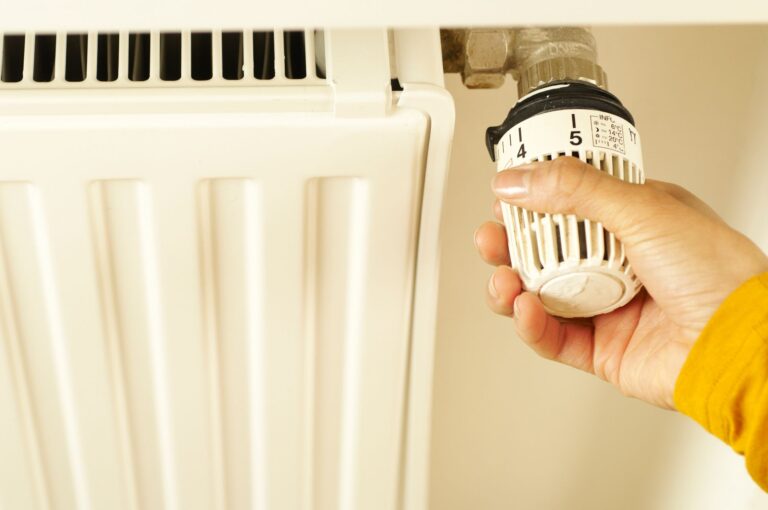

Managing climate across a rental portfolio means balancing tenant comfort, predictable utility costs, and hardware that survives tenant turnover without constant fiddling. The right thermostat should be simple enough that a new occupant can understand it in 30 seconds, sturdy enough to take years of use, and compatible with the heating and cooling system already installed in the unit. This roundup rounds up non-programmable and basic digital options that favor low maintenance, broad compatibility, and quick installation. For owners juggling multiple doors, fewer scheduling features usually means fewer tenant calls, fewer dead batteries, and less time spent explaining the device during move-in.
A Closer Look At The Lineup
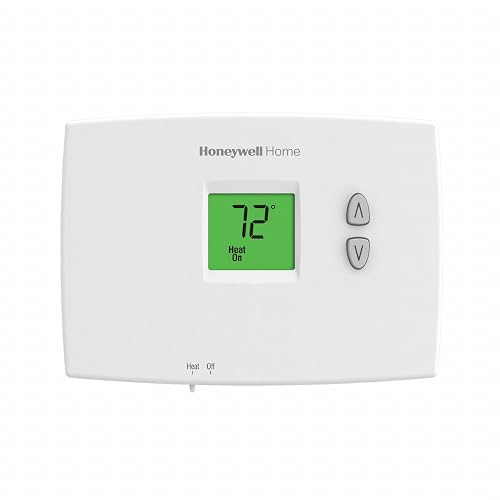
Honeywell TH1100DH1004 Horizontal PRO 1000 Heat Only Thermostat
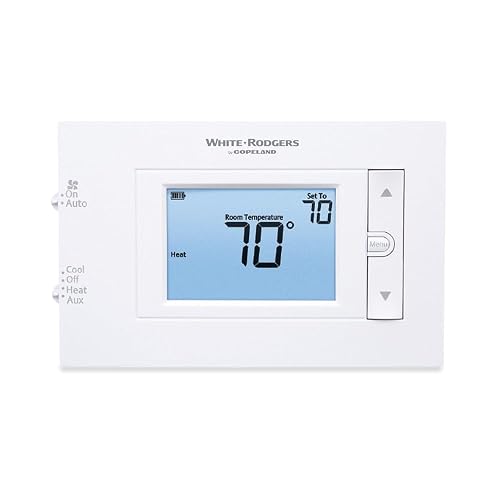
White-Rodgers 80 Series Non-Programmable Heat Pump Thermostat
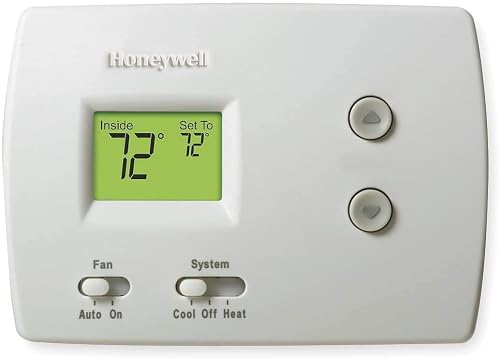
Honeywell TH3110D1008 Pro 3000 Non-Programmable Digital Thermostat
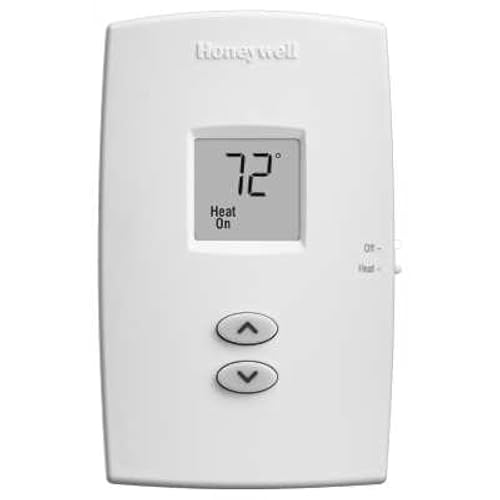
Honeywell TH1100DV1000 PRO 1000 Vertical Heat Only Thermostat
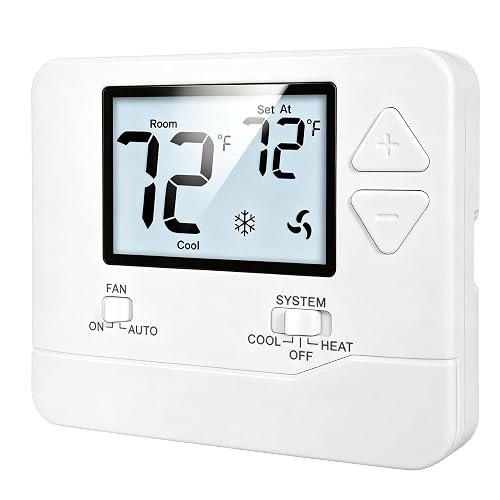
Heagstat Non-Programmable 1 Heat/1 Cool Conventional Thermostat
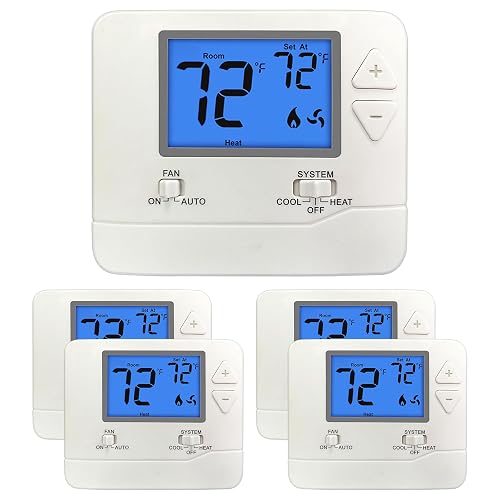
ELECTECK 5 Pack Non-Programmable 1 Heat/1 Cool Thermostat
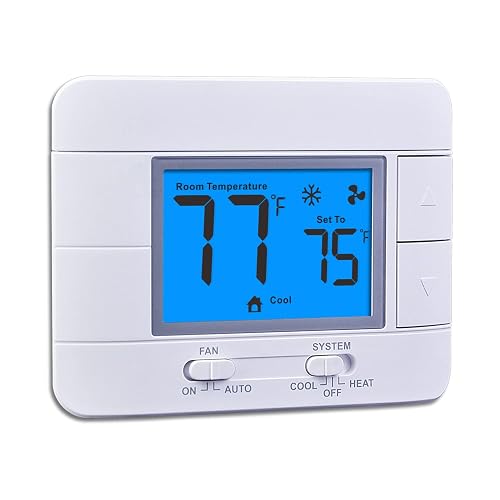
Garystat Non-Programmable Thermostat with Humidity Monitor

White-Rodgers Single Stage Non-Programmable Thermostat 1E78-144

Zero KST203 Water Heater Thermostat Upper
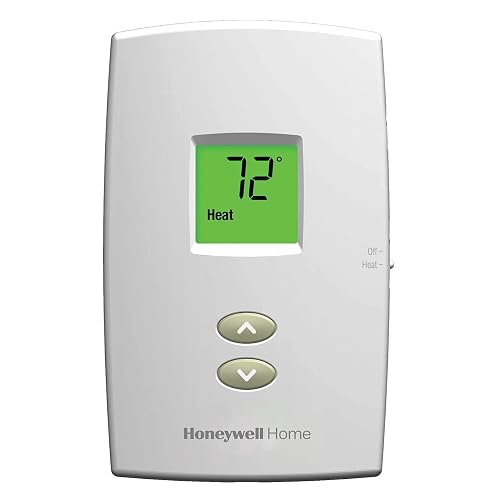
Honeywell TH1100DV1000 Pro-Digital 2-Wire Heat Only
More On The Choices That Made The List
The Honeywell TH1100DH1004 sits at the front of the list because it covers the most common rental scenario in older buildings: a heat-only forced-air system with a horizontal wall opening. Dual power (battery or 24-volt common wire) keeps the install flexible for properties where pulling a new wire is impractical. The backlit display reads cleanly in dim hallways, a quiet plus during evening showings.
For owners managing studios and one-bedrooms with simple furnaces, the PRO 1000 trims features that tend to confuse tenants. There is no schedule to override, no learning curve beyond up and down arrows, and the precision control holds setpoint within roughly one degree. Compared to the vertical Honeywell below, the horizontal footprint matches older junction box placement.
Good Reasons To Consider
- Dual power design accepts either batteries or a hardwired common, so it adapts to older wiring.
- Backlit screen makes the setpoint readable in poorly lit entryways.
- Horizontal body fits the standard footprint of many mid-century wall openings.
- Heat-only focus keeps the interface uncluttered for tenants unfamiliar with thermostat menus.
Things To Consider
- Heat-only design means it cannot drive a central AC system.
- Tenants still need to replace batteries periodically, a task commonly overlooked.
Key Specs
Right Fit For
Owners of small rental units with simple gas or electric furnaces and no central air conditioning.
Consider Something Else When
Tenants expect cooling control too, in which case the Honeywell TH3110D1008 handles heat and cool on a single stage.
Heat pump rentals in mild climates need a different control than a straight furnace, and the White-Rodgers 1F83H-21NP was built for exactly that job. The 80 Series platform is widely respected in HVAC circles for stable switching logic, and the backlit display reads cleanly even in sun-washed living rooms. The integrated level on the base plate is a small but real time-saver during install, the kind of detail that matters when you are swapping units across multiple doors.
Owners of single-family rentals with heat pump systems get a familiar interface that field techs can service without hunting for proprietary wiring. The tradeoff is the lack of programmability, which actually plays well in rentals where tenants ignore schedules anyway.
Bright Spots
- Built-in mounting level shortens install time and reduces crooked plates.
- Heat pump compatibility covers most modern split systems without auxiliary heat confusion.
- Backlit display keeps the setpoint legible in bright rooms.
- Simple mode switch reduces tenant tampering with system settings.
Worth Noting
- Heat pump focus means it is overkill for straight gas furnace properties.
- No scheduling, so setpoint depends entirely on tenant behavior.
Best Suited To
Landlords with single-family rentals in regions where heat pumps handle the winter load without auxiliary strips.
A Better Fit Elsewhere
For properties that run conventional furnaces only, the Honeywell TH3110D1008 is a more targeted and affordable choice.
When a rental has both a furnace and a condenser, the Honeywell TH3110D1008 covers the single-stage 1 heat and 1 cool configuration without complicating the wall. The Pro 3000 line is a familiar face to maintenance techs, which matters when you call a service vendor rather than a smart-home specialist. Both current and set temperatures display at the same time, so tenants stop calling to ask why the room feels warmer than the number they set.
For properties that straddle heating and cooling seasons, this thermostat delivers the basics without the Wi-Fi dependency that can fail after a router swap. Compared to the Garystat unit further down, it leans on the Honeywell brand recognition that tenants tend to trust on sight.
The Case For It
- One heat and one cool stage fits the majority of mid-grade split systems.
- Simultaneous display of room and setpoint temperature cuts tenant confusion.
- Backlit screen reads in dark hallways.
- Honeywell brand familiarity means replacement parts and adapters stay widely available.
- United States manufacturing origin tends to translate to consistent QC.
Points To Keep In Mind
- Not compatible with multistage systems or 120/240V electric baseboard heat.
- Tenant-proof against schedule changes, which is the point, but also means no off-hours setback.
- Wire count limits use; properties with six or more conductors will need a different model.
Feature Snapshot
Made For
Landlords with rentals equipped with single-stage forced-air heating and a separate air conditioning condenser.
Reach For A Different Pick When
The property uses a heat pump, where the White-Rodgers 1F83H-21NP handles the staging more accurately.
Sometimes the wall dictates the form factor, and narrow baseboard heater boxes need a vertical mount rather than the horizontal Honeywell TH1100DH1004. The TH1100DV1000 swaps orientation without changing the Pro 1000’s familiar control logic. Premier white finish blends into older trim and painted drywall, useful when you do not want to repaint around the swap.
For basement suites and converted spaces where the existing junction box is tall and skinny, this vertical variant avoids the awkward gap a horizontal unit would leave. Compared to the heat-only Pro 3000 in pick three, it sacrifices cooling for a slimmer wall profile.
Strong Points
- Vertical layout fits narrow baseboard heater wall boxes cleanly.
- Premier white color matches most interior trim without repainting.
- Same Pro 1000 control logic as the horizontal model reduces learning curve.
- Heat-only design keeps wiring simple for older 2-wire or 4-wire baseboard systems.
Trade Offs
- Heat only, so it cannot control an air conditioning system.
- Limited wire count means it is not a fit for complex HVAC retrofits.
Who It Suits Best
Owners of basement units and small apartments with vertical wall boxes and baseboard or furnace-only heat.
Look Elsewhere When
The property needs cooling too, in which case the Honeywell TH3110D1008 covers heat and cool in a horizontal body.
Cost-conscious owners outfitting multiple units at once find the Heagstat 1H/1C appealing on price, and the spec sheet covers the basics most conventional rental furnaces need. It works with 24VAC single-stage systems, including gas, oil, and electric furnaces paired with an independent AC condenser. The 2 to 5 wire range covers older installs where heavier gauge retrofits would be impractical.
The white backlight and clean interface make the learning curve short for first-time renters. Compared to the Honeywell TH3110D1008 above, you trade brand recognition for a noticeably lower entry cost across a small portfolio.
Strengths Worth Knowing
- Lower cost per unit helps when replacing thermostats across several doors at once.
- Works with gas, oil, and electric forced-air furnaces.
- White backlight keeps the setpoint visible at night.
- 2 to 5 wire compatibility covers most older conventional installs.
Points To Note
- Not compatible with multistage systems or 120/240V electric baseboard heat.
- Connections with 6 to 8 wires will not seat on the base, limiting retrofit flexibility.
- Less established service network than legacy brands, so sourcing a replacement in a hurry may take longer.
Quick Facts
Whose Shelf It Belongs On
Owners with a handful of older conventional rentals that need basic, affordable climate control.
Where A Sibling Pick Shines
For heat pump installations, the White-Rodgers 80 Series handles staging that this conventional unit cannot reach.
Owners with five or more units on the same HVAC platform get real value from the ELECTECK 5 Pack, which delivers a uniform thermostat across an entire building or small portfolio. Each unit covers 1 heat and 1 cool single-stage, plus heat pump without auxiliary, so a mixed bag of splits and basic systems can still standardize on one model.
The white digital face keeps a consistent look from unit to unit, which simplifies tenant education and creates a uniform appearance during property showings. The trade-off is the 5-pack commitment, which only makes sense when you actually need five.
What Earns Its Place
- Bulk format drops the per-unit cost meaningfully for small portfolios.
- Identical appearance across units makes tenant onboarding faster.
- Single-stage 1H/1C plus heat pump without aux covers most conventional splits.
- Digital display reads cleanly from across a small living room.
Honest Caveats
- Not for multistage systems, which limits use in higher-end rentals.
- Buying five when you only need two leaves spare units sitting in storage.
- Will not work with 120/240V electric baseboard heat, common in some older apartments.
Right Fit For
Small-scale landlords standardizing climate control across five or more similar units in one building or neighborhood.
Swap It Out When
You only need one or two thermostats, where the Honeywell TH3110D1008 or Heagstat single-unit models avoid the bulk commitment.
The Garystat stands out in this roundup for adding a humidity readout on the large blue LCD, a detail tenants in coastal or southern climates often notice. The screen is genuinely larger than most non-programmable options, which makes it accessible to older renters or anyone who squints at small digits. Single-stage 1 heat and 1 cool coverage keeps the system compatibility broad.
Owners managing rentals where summer humidity drives complaints will find the on-screen humidity value useful for tenant conversations. Compared to the Honeywell Pro 3000 above, the Garystat trades brand recognition for the extra environmental sensor.
Where It Helps
- Integrated humidity display gives tenants a fuller read on comfort than temperature alone.
- Large blue LCD is easier to read from across the room.
- Conventional single-stage compatibility covers gas, oil, and electric furnaces.
- Gas and oil configurable switch broadens install flexibility.
Worth Bearing In Mind
- Not compatible with multistage heating or cooling systems.
- Will not work with HVAC central air handlers that need a different control signal.
- Tenants occasionally misinterpret humidity readings as a separate problem to call about.
Feature Rundown
Best Suited To
Landlords in humid regions where tenant complaints focus on stuffiness as much as temperature.
Skip It When
The property needs a heat pump interface, where the White-Rodgers 80 Series is a better match.
The 1E78-144 handles a corner case that newer thermostats often skip: 24-volt and millivolt systems. Millivolt controls are the small standing-pilot systems found in some vintage wall furnaces, the kind of unit still common in older rental conversions. The backlit digital display reads cleanly without overcomplicating the wall, which suits a no-frills rental where a smart thermostat would be overkill.
Owners with mixed-era properties get a single replacement that covers both modern and legacy wiring. Compared to the Honeywell TH1100DH1004, this unit trades dual-power flexibility for millivolt compatibility, which matters in the right building.
Everyday Wins
- Millivolt compatibility covers older standing-pilot wall furnaces.
- Single-stage 1H/1C plus heat pump without aux handles common residential systems.
- Backlit display keeps numbers visible in dim hallways.
- White-Rodgers service network and parts availability tend to be strong.
Potential Drawbacks
- Not for electric baseboard heat at 120/240V.
- Some specific HVAC systems fall outside the supported list, so always check the existing wiring first.
Who Should Grab It
Landlords managing older buildings with vintage wall furnaces and millivolt control circuits.
Not Your Match When
The property runs a heat pump, where the White-Rodgers 1F83H-21NP further up the list is a stronger fit.
The Zero KST203 is the odd one out in a thermostat list, but it earns a spot because water heater failures drive real tenant complaints. This is a replacement upper thermostat for dual-element electric water heaters, with a Double Throw configuration that handles 120/480 VAC systems. The built-in safety switch cuts power if temperatures climb into the danger zone, a feature worth prioritizing in any occupied unit.
Owners comfortable with basic electrical work can swap this in to restore hot water between tenants without calling a plumber for a simple control failure. Compared to the room thermostats above, this is a specialty part, not a daily-use device.
What Works In Its Favor
- Double Throw design covers dual-element tanks in one part.
- Built-in safety shutoff protects against overheating in occupied units.
- Adjustable temperature range allows landlords to dial in tenant-friendly setpoints.
- Cross-reference compatibility with 59T SPDT and 66T models broadens replacement options.
Practical Considerations
- Requires confidence working with line-voltage electrical connections.
- Wrong model selection can leave a tank partially heated, so verify part number against the existing water heater before ordering.
Technical Highlights
Built With In Mind
Landlords who self-maintain electric water heaters and want a safe, adjustable upper thermostat on hand.
A Better Fit Elsewhere
For room climate control, the Honeywell TH3110D1008 covers typical heating and cooling needs without the electrical work.
Two-wire retrofits used to mean settling for a mechanical dial, and the Honeywell TH1100DV1000 changes that math. The 2-wire design works with older boiler zones and other systems where pulling a common wire is impractical. The display shows ambient temperature continuously and switches to setpoint with a single button press, an interface tenants grasp in seconds.
For properties with a mix of older hydronic heat zones and a single boiler, this unit standardizes the wall control without rewiring the building. Compared to the TH1100DH1004 above, the wiring count drops from 4-5 to 2, narrowing install options but opening up older zones.
Useful Touches
- 2-wire compatibility avoids pulling a common through finished walls.
- One-touch setpoint access speeds up tenant adjustments.
- Continuous ambient temperature readout keeps comfort transparent.
- Adjustable temperature scale from 40 to 90F covers most heating needs.
Where It Is Less Suited
- Heat only, so it cannot control cooling equipment.
- 2-wire limit means it will not work on systems that need a common for power.
Right Fit For
Owners with older boiler-fed radiators or other 2-wire heat-only zones that need a clean digital replacement.
Consider Something Else When
The rental has central air conditioning, in which case the Honeywell TH3110D1008 brings both heat and cool into one wall unit.
Factors To Consider When Choosing landlord thermostats
System Type And Wiring
The single biggest decision before buying is what sits behind the wall. Heat-only, heat pump, and conventional 1 heat and 1 cool systems each pull a different set of wires and signal voltages. Pull the existing thermostat off the wall, count the conductors, and note the terminals they connect to before matching to a model. A 2-wire heat-only system has very different needs from a 6-wire multistage heat pump.
Tenant Behavior And Lockout Potential
Non-programmable thermostats are common in rentals for a reason: tenants rarely reprogram schedules correctly, and the resulting comfort complaints land on the landlord. A simple up-and-down thermostat prevents mid-winter setpoint drops that drive frozen pipe calls. Consider whether a model with a default setpoint range or a hidden installer lock matches the level of control you want tenants to have.
Brand Familiarity And Service Network
Honeywell and White-Rodgers have decades of HVAC service infrastructure behind them, which means a tech can swap a unit quickly without hunting for adapters. Less established brands may cost less up front, but sourcing a replacement after a tenant damages a unit can take longer. Brand familiarity also helps tenants who already know the layout from a previous rental.
Display Readability And Accessibility
Backlit displays matter more than they seem, especially in hallways and basements where lighting runs dim. Larger LCDs help older tenants and reduce the number of times someone calls to ask how to read the screen. The Garystat’s blue LCD and large digits are a real asset in a property with senior tenants.
Key Considerations Across These Picks
Common Shopping Slip Ups
The most frequent mistake is matching a thermostat to a system type without checking the actual wire count. Many models explicitly exclude 6 to 8 wire installs, and a mismatch will leave the base plate short a terminal. Another pitfall is assuming a heat-only model can drive a condenser when summer rolls around, which results in a second purchase and a return trip to the property.
Where The Extra Money Goes
Spending more often buys broader system compatibility, longer manufacturer support windows, and sturdier internal relays. A premium pick like the White-Rodgers 80 Series earns its place with a built-in mounting level and rock-solid staging logic that field techs recognize. For owners replacing thermostats once across many years, the upgrade tends to pay back through fewer service calls and longer service life.
Frequently Asked Questions
Why do most landlord thermostats skip programmability?
Tenants tend to override schedules, leave setpoints at extreme values, or ignore setback windows entirely, which leads to frozen pipes in winter and high utility bills in summer. A simple non-programmable thermostat removes the schedule variable and keeps the unit at a reasonable default. Landlords who want a mid-ground can set a moderate default and trust tenants to nudge it.
Can a heat-only thermostat be upgraded later to control cooling?
Generally no, because the internal relay and terminal count are designed for heating only. Adding a cooling stage usually requires a new thermostat and possibly a different control board in the HVAC system. The cleaner path is to install a 1 heat and 1 cool model from the start, even in heat-only properties, to keep the door open for a future condenser install.
How do I know if my system uses a heat pump?
Heat pump systems often have an outdoor unit that runs year-round and an indoor air handler with auxiliary heat strips. The thermostat terminals typically include O and B for reversing valve control, which straight furnace systems do not have. If you see those terminals in the existing wall control, a heat pump thermostat is the right fit.
Are millivolt systems still common in rentals?
Yes, especially in older wall furnaces and some floor furnaces in pre-1960 construction. Millivolt systems generate their own low-voltage control signal from a thermocouple, which means a thermostat does not need external power. The White-Rodgers 1E78-144 covers this case alongside modern 24-volt systems.
How often should landlords replace thermostats between tenants?
A visual inspection and battery swap at every turnover is the practical baseline. Physical damage, sticky buttons, or a flickering display signal a replacement rather than a repair. Most non-programmable units in this roundup will run for years with minimal attention, which is exactly what makes them appealing for rental use.
Closing Remarks
The right landlord thermostat comes down to matching the system in the wall and the tenant in the room, more than chasing features. Heat-only properties, conventional split systems, and heat pump homes each have a clear fit in the lineup above, and the bulk pack makes sense for owners standardizing across multiple doors. Start with the existing wire count and system type, then choose the simplest interface that gets the job done. That approach keeps tenant questions to a minimum, service costs predictable, and the climate inside each unit comfortably boring.