
A reliable thermostat is one of those quiet upgrades you stop thinking about once it’s dialed in. Mechanical thermostats earn their place in workshops, garages, additions, and older homes because they don’t need Wi-Fi, batteries (in some cases), or a learning curve, and they keep doing their job for years.
This roundup focuses on straightforward temperature control without the smart-home fluff. Each pick below solves a specific problem, from a single-stage heat-only wall unit to a line-voltage option for a converted garage or workshop bay.
The Shortlist At A Glance
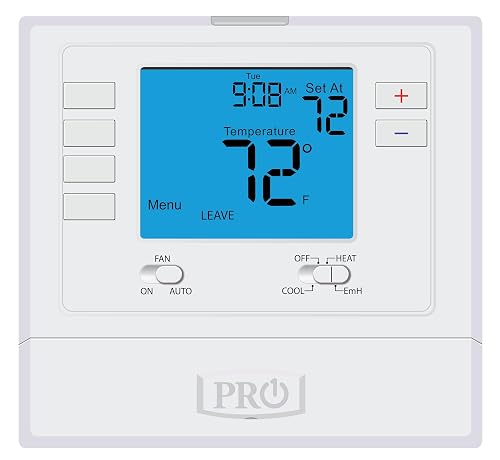
PRO1 T725 Heat Pump/Conventional Programmable Thermostat

PRO1 T771 Single Stage Non-Programmable Wall Thermostat
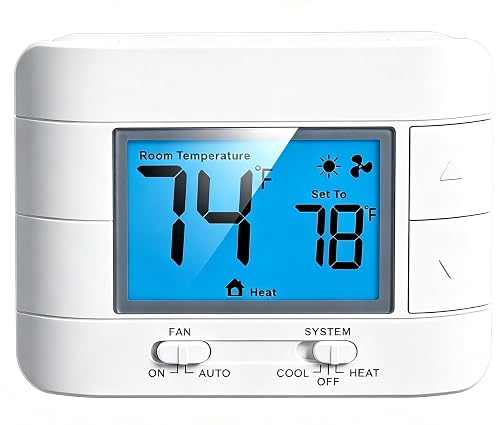
Aowel 1 Heat/1 Cool Non-Programmable Thermostat
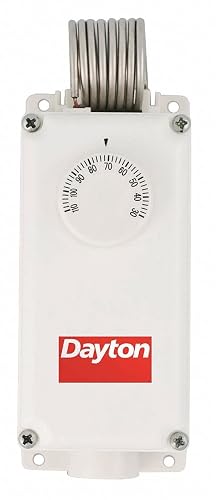
Dayton 6EDY5 Line Voltage Thermostat, 120-240V
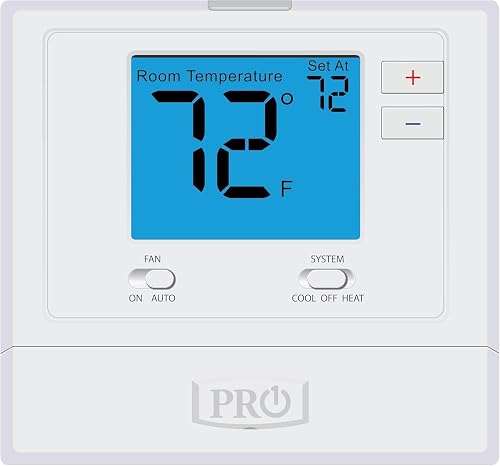
PRO1 T701 Single Stage Non-Programmable Wall Thermostat

PRO1 T715 Multi-Stage Programmable Gas Thermostat
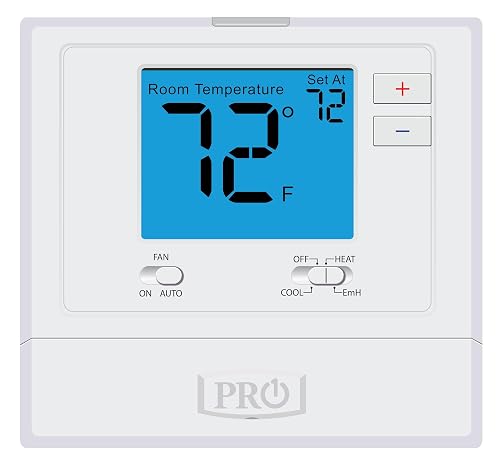
PRO1 T721 Non-Programmable Wall Thermostat
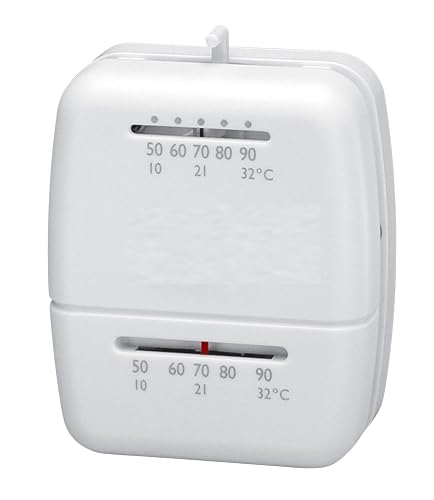
White-Rodgers Mechanical Heat Only Thermostat, 1C20-102
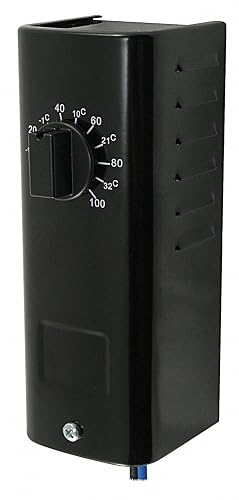
Line Voltage Mechanical Thermostat, Heating/Cooling, 120-277VAC

PRO1 T805 Single Stage Programmable Wall Thermostat
A Deeper Look At The Lineup
The PRO1 T725 sits at the top of this list because it covers more system types than most residential wall units. It handles a 2 heat/1 cool heat pump (a system that uses refrigerant to move heat in and out) and falls back to 1 heat/1 cool conventional when paired with a standard gas or electric setup. For homeowners whose HVAC equipment straddles both worlds, that dual capability removes the need to swap thermostats during a system upgrade.
The 4-square-inch blue backlit display stays readable in dim hallways and finished basements, and the T700 platform programming gives you 7-day or 5/1/1 scheduling (separate routines for weekdays, Saturday, and Sunday, with the option to repeat). For most households, the schedule flexibility alone justifies the step up from a basic non-programmable model. Power can come from either AA batteries or the system common wire (a low-voltage wire that delivers continuous 24V power from the furnace).
The Value In It
- Compatible with both heat pump and conventional systems, so you avoid replacing the unit after an HVAC upgrade
- 7-day or 5/1/1 programming supports different routines for weekdays and weekends
- Blue backlit display remains readable in low light without washing out the room
- Runs on AA batteries or a hardwired common wire, whichever your installer prefers
Things To Consider
- Programming setup takes longer than a non-programmable model like the PRO1 T701
- Only 4 square inches of screen, so quick-glance readings from across the room are harder than on the PRO1 T805
Key Specs
Made For
Homeowners running a heat pump who also want the option to fall back to conventional equipment without swapping the wall unit.
Skip It When
The PRO1 T805 is a better match if you run a single conventional system and prefer an oversized display with the same scheduling depth.
The PRO1 T771 looks plain on paper, but the setpoint range is what sets it apart. Most residential thermostats bottom out around 45 to 50°F, which is fine for a livable space. The T771 reaches down to 25°F, which makes it useful in detached garages, pole buildings, and uninsulated workshops where winter temps can crater but you still want the heater to cycle on at a sensible threshold.
Swing adjustment and calibration controls help dial the cycle rate so the furnace doesn’t short-cycle (turn on and off in rapid bursts that wear out the heat exchanger) in a drafty space. The 4-square-inch blue backlit display is the same chassis used across the T700 line, so if you’ve installed a PRO1 elsewhere in the house, the layout will feel familiar.
What Makes Sense
- Setpoint range down to 25°F handles low-temperature spaces without freezing the system logic
- Single-stage design keeps wiring simple for DIY-friendly installs
- Calibration and swing adjustment help tune cycle rate for drafty rooms
Trade Offs
- No programming means you’ll adjust the setpoint manually as seasons change
- Single-stage only, so it won’t run a multi-stage gas furnace the way the PRO1 T715 does
Best Suited To
Homeowners with a garage, shed, or workshop whose heating system needs a low-temperature setpoint the average home thermostat can’t reach.
Consider Something Else When
The PRO1 T701 is a better fit for a standard 1 heat/1 cool conventional system inside the home where a 45°F floor is fine.
The Aowel picks up where plain mechanical thermostats leave off, with a digital readout and three-mode switch: heat, off, cool. The slider on the side moves the setpoint up or down, and that’s the whole learning curve. For anyone replacing a busted thermostat in a rental or older home, the no-frills approach is a feature, not a drawback.
It runs on 24V systems, which covers most gas, oil, and electric forced-air setups (furnaces that push heated or cooled air through ducts and registers). The body is a compact 4.92 by 3.74 inches, so it tucks into tight wall spaces where bulkier smart thermostats feel oversized.
The Helpful Details
- Heat/Off/Cool mode switch makes operation obvious for first-time installers
- Compact 4.92 × 3.74 in footprint fits where larger thermostats look out of place
- 24V compatibility covers most forced-air conventional systems
Worth Noting
- No backlight, so reading the setpoint in a dark hallway takes a moment
- Not a fit for heat pump systems, where the PRO1 T721 or PRO1 T725 would step in
Who It Suits Best
Renters and first-time installers who want a reliable wall thermostat without programming menus or a mobile app.
A Better Fit Elsewhere
The PRO1 T701 makes more sense for a primary residence where glow-in-the-dark visibility matters during a midnight furnace check.
Line-voltage thermostats live in a different world from the usual wall units, and the Dayton 6EDY5 is one of the more common picks in that world. It switches 120 to 240V directly, which is what electric baseboard heaters, fan-forced wall heaters, and some unit heaters run on. If you’ve got a residential electric heat system, the 24V thermostats in this list will not work for you.
The SPDT (single-pole double-throw) switch lets the thermostat control a heating or cooling load, depending on what you wire to it. Owners commonly install these in bathroom heat circuits and small addition zones where running a new low-voltage wire back to a furnace would be invasive.
A Few Strong Suits
- Handles 120-240V loads directly, no relay (an external switch that lets a low-voltage thermostat control a high-voltage heater) required for typical baseboard heaters
- SPDT switching supports both heating and cooling circuits
- Simple wall-mount form factor installs in standard electrical boxes
Honest Caveats
- Line-voltage wiring should be done with the breaker off and verified by a qualified electrician if you’re not sure which conductor is which
- No digital display, so setpoint adjustments are approximate until the room settles
Perfect Match For
Owners of electric baseboard or fan-forced wall heaters who need a 120-240V switch without rewiring back to a furnace.
Look Elsewhere When
The PRO1 T701 is the better choice if your system runs on standard 24V low-voltage control from a central furnace.
Sometimes the goal is to replace a worn-out wall thermostat with something that just works. The PRO1 T701 fills that brief: a single-stage 1 heat/1 cool conventional unit with a 4-square-inch blue backlit display and a glow-in-the-dark light button. The latter sounds like a small detail, but it’s the kind of feature people appreciate at 2 a.m. when the furnace kicks on.
It supports gas or electric conventional systems, so it covers the most common residential HVAC configurations. Power options include AA batteries or a hardwired common wire, giving your installer the choice.
The Practical Payoff
- Glow-in-the-dark light button makes nighttime adjustments easier without fumbling for a phone flashlight
- Compatible with both gas and electric conventional systems
- Battery or hardwired power keeps installation flexible
Points To Note
- No scheduling, so weekend temperature changes happen by hand
- Only single-stage, so a multi-stage furnace will ignore the second stage
Feature Snapshot
Whose Shelf It Belongs On
Homeowners replacing a tired thermostat in a single-stage gas or electric system who want reliability without programming menus.
Not Your Match When
The PRO1 T715 is the right call if your furnace has two heating stages and you want them both under thermostat control.
The PRO1 T715 covers 2 heat/2 cool systems, which is the configuration you’ll find in larger homes with two-stage gas furnaces and a two-stage air conditioner. Two-stage heating uses a lower fire for mild days and ramps to high fire only when the temperature really drops, which most owners find quieter and more even than a single-stage system.
Programming options include 7-day, 5/1/1, or non-programmable modes, so you can use the scheduling or run it like a manual unit if you prefer. The T700 platform display and glow-in-the-dark light button carry over from the rest of the line.
What Helps Most
- 2 heat/2 cool support unlocks both stages of a multi-stage furnace and AC
- Three programming modes cover 7-day, 5/1/1, or no schedule at all
- Glow-in-the-dark light button stays visible after the lights go out
Things To Consider
- Overkill for a single-stage system, where the PRO1 T701 or PRO1 T805 would do the same job at lower cost
- Programming setup is more involved than a non-programmable model like the PRO1 T701
Feature Rundown
Built With In Mind
Owners of a 2-stage gas furnace and AC who want both stages under thermostat control without stepping into a smart-home platform.
Where Another Pick Suits Better
The PRO1 T701 is a more practical fit for a 1 heat/1 cool conventional system, where the second stage would never get used anyway.
The PRO1 T721 covers either a 2 heat/1 cool heat pump or a 1 heat/1 cool conventional setup, which makes it the kind of unit that ends up in homes that are mid-conversion. If you just replaced your old furnace with a heat pump, this thermostat follows the equipment swap without requiring a different model.
The T700 platform chassis keeps the layout consistent with the rest of the PRO1 line, and the glow-in-the-dark light button shows up again here. Power comes from AA batteries or a hardwired common wire, and the 4-square-inch blue backlit display is identical to what you’d see on the T701 or T771.
Practical Advantages
- Heat pump or conventional compatibility makes it a safe pick during an HVAC transition
- Glow-in-the-dark light button adds visibility during nighttime checks
- Consistent T700 platform layout if you’re also installing other PRO1 units
Softer Spots
- Non-programmable, so schedule changes happen by hand
- No scheduling, so the PRO1 T725 is the better pick if you want 7-day programmability in a heat pump unit
The Right Fit
Homeowners whose system is moving between heat pump and conventional equipment and want one wall unit that survives both configurations.
Reach For A Different Pick When
The PRO1 T725 is the smarter match if you want full 7-day programming in a heat pump setup rather than manual setpoint changes.
Not every home needs a programmable wall unit with cooling support. The White-Rodgers 1C20-102 is a low-voltage mechanical thermostat (a simple device that uses a temperature-sensitive metal strip and a mercury-free snap action to switch the system on and off) for single-stage heat-only systems. It uses a bimetal sensor (a coiled strip of two bonded metals that bends as temperature changes) and snap-action contacts to cycle the furnace on and off without any digital readout to fail.
A wall mounting plate is included, which helps cover the paint ghosts and screw holes that older thermostats leave behind. The mercury-free design is a quiet upgrade from older mechanical units, and the adjustable heat anticipator (a small heater inside the thermostat that fools the sensor into reacting before the room overshoots the setpoint) lets a service tech fine-tune the cycle for the specific furnace.
Points In Its Favor
- Mercury-free snap-action switch keeps the design straightforward and serviceable
- Adjustable heat anticipator helps match cycle behavior to your furnace
- Wall plate covers marks from the previous thermostat
Points To Note
- Heat-only, so it won’t run a central air system the way the Aowel or PRO1 T701 can
- Mechanical setpoint, so changes are approximate rather than exact to the degree
Who Will Love This
Owners of a single-stage heat-only system who prefer a mechanical thermostat with no programming, no display, and very little to go wrong.
Swap It Out When
The PRO1 T701 is the better fit for a 1 heat/1 cool conventional system where you want a digital display and battery backup.
For commercial bays, light-industrial spaces, and large workshop rooms, the 120 to 277VAC range of this Dayton line-voltage thermostat is the headline number. That upper limit covers 277V commercial service, which is rare in a house but common in small commercial buildings and some larger workshop setups. Like the Dayton 6EDY5 above, it switches line voltage directly, so no relay is required for compatible heaters or fans.
The bimetal sensing element drives the SPDT switch, and the dustproof contact housing aims to keep the cycling accurate even in environments where sawdust or ambient dust would gum up a lesser switch. It’s the kind of thermostat you install once and forget about.
Real-World Strengths
- 120 to 277VAC range covers both residential and light-commercial service
- Dustproof contact housing suits workshop environments
- SPDT switch handles heating or cooling loads
Practical Considerations
- Mechanical setpoint dial means changes are approximate, not pinpoint
- Line-voltage work should always start at the breaker, and most owners will want an electrician involved
Made For
Workshop owners and small commercial spaces that need a 277V-capable line-voltage thermostat without adding a relay or external transformer.
Look Elsewhere When
The PRO1 T701 is the right call for a standard 24V residential system where line-voltage switching isn’t required.
The PRO1 T805 is the display-first pick in this roundup. The 7-square-inch blue backlit screen is nearly double the area of the rest of the PRO1 T700 line, which makes a real difference for anyone who checks the setpoint from across the room. It runs on the T800 platform, so it has its own slightly larger chassis and a glow-in-the-dark light button.
Programming includes 7-day, 5/1/1, or non-programmable modes. The “non-programmable” option matters for people who want the bigger screen without the schedule headaches. It’s a 1 heat/1 cool conventional unit, so it covers most standard residential HVAC setups without overreaching.
Key Advantages
- 7-square-inch display is the largest in the PRO1 residential line and reads clearly from a distance
- Three programming modes let you schedule heavily or run it like a manual unit
- Glow-in-the-dark light button keeps the display reachable after lights-out
Worth Bearing In Mind
- Larger chassis needs more wall space than the 4-square-inch PRO1 T701
- Single-stage only, so a two-stage furnace would run on just one of its stages
Spec Overview
Who Should Grab It
Homeowners who want a clearly readable display and flexible scheduling for a standard 1 heat/1 cool conventional system.
Another Choice May Suit
The PRO1 T715 is a better fit if your furnace has two stages that you want under thermostat control, even at the cost of a smaller screen.
What Matters Most Before Choosing Mechanical Thermostats
Match The Thermostat To Your System Voltage
The first fork in the road is whether your heating system runs on 24V low-voltage control or 120 to 240V line voltage. Most central gas, oil, and electric forced-air furnaces use 24V, which is what the PRO1 T701, T715, T721, T725, T805, Aowel, and White-Rodgers 1C20-102 are built for. Electric baseboard heaters and some wall heaters use line voltage, which is where the Dayton 6EDY5 and the 120-277VAC Dayton mechanical thermostat step in. Wiring a low-voltage thermostat to a line-voltage system will damage the thermostat and create a safety hazard, so this part of the choice is non-negotiable.
Count Your Heating And Cooling Stages
A single-stage furnace cycles between off and full output, while a two-stage furnace adds a lower fire for milder weather. If your system is two-stage, a single-stage thermostat will still run the furnace, but only on high fire, which most owners notice as louder operation and bigger temperature swings. The PRO1 T715 is the multi-stage option in this roundup, while the T701, T721, T725, T805, and Aowel cover single-stage systems.
Decide Whether You Need Programming
Programmable thermostats pay off when your schedule changes between weekdays and weekends. A 7-day model lets you set every day differently, while 5/1/1 groups weekdays together and treats Saturday and Sunday as separate blocks. Non-programmable units like the Aowel, White-Rodgers 1C20-102, and PRO1 T771 are simpler to operate and cost less, which suits garages, rentals, and homes where the schedule doesn’t really change.
Key Considerations Across These Picks
Mistakes Worth Dodging
A common slip-up is buying a programmable thermostat for a system that doesn’t support it. Heat pump systems, in particular, need a thermostat that knows when to engage the auxiliary heat strip (an electric resistance heater that supplements the heat pump on very cold days), and a generic 1 heat/1 cool conventional unit will misread the system. The PRO1 T725 and T721 are designed with heat pump logic in mind and are safer choices for those setups.
Another trap is assuming any wall thermostat can replace any other. Line-voltage thermostats like the Dayton 6EDY5 cannot be swapped in where a 24V low-voltage thermostat was used, because the underlying electrical service is different. Confirm your system voltage before ordering.
Where The Extra Money Goes
The jump from a non-programmable model to a 7-day programmable model pays off through lower utility bills if your household actually uses the schedule. The glow-in-the-dark light button, oversized displays, and multi-stage support are smaller upgrades, but they tend to matter in specific situations. A two-stage furnace owner who buys a single-stage thermostat will pay for the furnace’s second stage and never use it. Spending up for the T715 in that case recovers equipment value the cheaper T701 would leave on the table.
Frequently Asked Questions
What is a mechanical thermostat?
A mechanical thermostat uses a temperature-sensitive metal strip or coil and a snap-action switch to cycle heating or cooling on and off, with no programming or digital display. The White-Rodgers 1C20-102 is a classic example of the form.
How is a line-voltage thermostat different from a low-voltage one?
A line-voltage thermostat switches the full 120 to 240V (or higher) current directly to the heater, while a low-voltage thermostat sends a small 24V signal to the furnace, which then controls the higher-voltage load. The Dayton 6EDY5 and 120-277VAC Dayton are line-voltage units.
Can a programmable thermostat run a heat pump system?
Yes, but the thermostat has to specifically support heat pump logic, including the auxiliary heat strip. The PRO1 T721 and PRO1 T725 are both designed for heat pump systems and will handle that sequencing correctly.
Do these thermostats need a common wire?
Some do, and some can run on AA batteries alone. Battery-only installs are easier for retrofits, while common-wire installs give a steadier power supply for backlights and programming memory. Power options vary by model.
Will any of these work in a garage or workshop?
The PRO1 T771 has a setpoint range down to 25°F, which is well suited for uninsulated spaces. The Dayton 6EDY5 and 120-277VAC Dayton line-voltage units fit workshop electric heaters, depending on the voltage of the existing service.
Bottom Line
Mechanical and conventional digital thermostats cover a wide range of systems, from a 25°F garage setpoint to a 7-day programmable home schedule, and the right pick comes down to your system voltage, stage count, and scheduling needs. Run through those three filters first, then match the model to the space, and the rest of the decision tends to fall into place.