

Modulating thermostats earn their keep in homes and light commercial spaces where steady comfort matters more than the cheapest wall plate. Unlike a basic thermostat that flips heat on and off, a modulating model dials the output up or down in small steps, so the room temperature drifts less and the equipment runs quieter.
The roundup below covers programmable and non-programmable options, including true commercial-grade modulating units from Honeywell that pair with VAV (variable air volume) boxes and hydronic zones. You’ll also see flexible residential picks from PRO1 that handle heat pumps, gas furnaces, and conventional systems. The right choice depends on what your equipment supports, so each review flags compatibility up front.
A Fast Comparison Of The Options
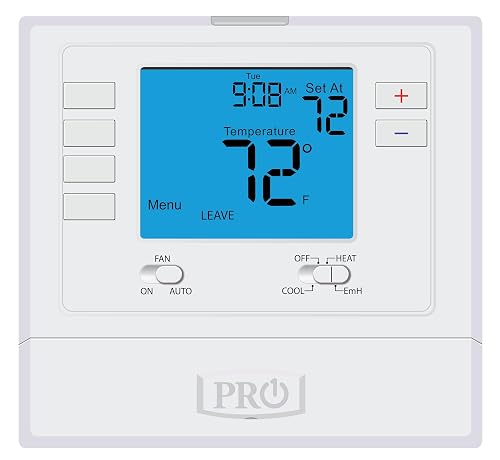
PRO1 T725 Heat Pump/Conventional Programmable Thermostat

PRO1 T771 Single Stage Non-Programmable Wall Thermostat
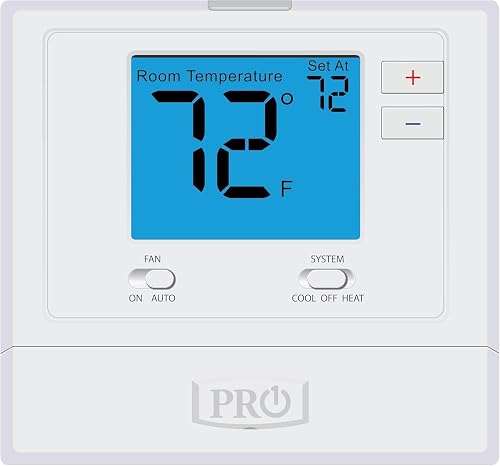
PRO1 T701 Single Stage Non-Programmable Wall Thermostat

PRO1 T715 Multi-Stage Programmable Gas Thermostat
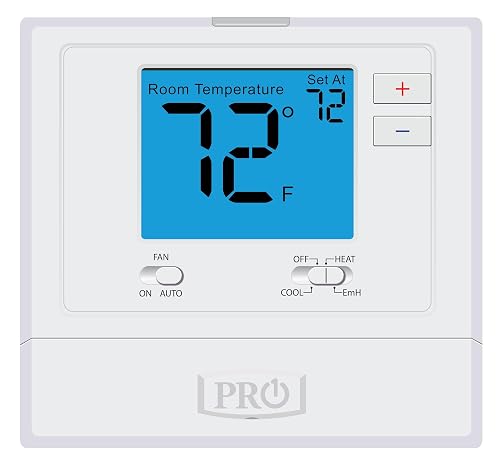
PRO1 T721 Non-Programmable Heat Pump/Conventional Thermostat
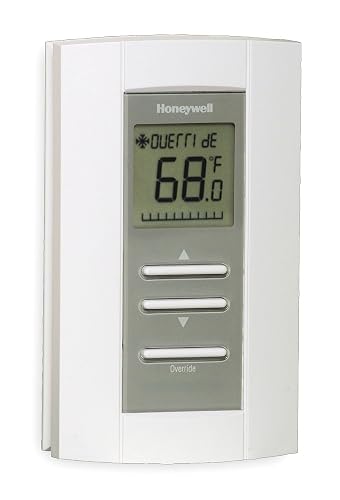
Honeywell TB7980A1006 ZonePRO Modulating Thermostat
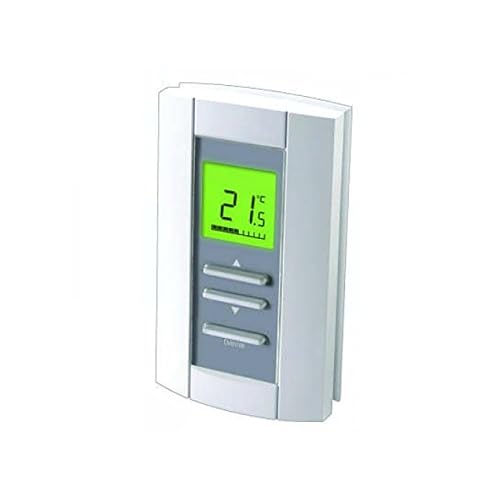
Honeywell TB7980B1005 ZonePro Modulating Thermostat

Fan Coil Modulating Valve LCD Thermostat T7300 TF60
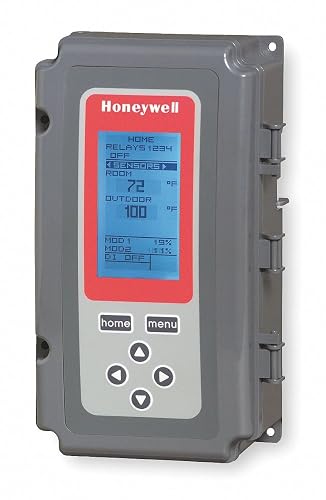
Honeywell T775B2032 Electronic Remote Controller

PRO1 T805 Single Stage Programmable Wall Thermostat
The Strengths Of Each Pick
Homeowners living with a heat pump that doubles as a backup conventional system get a single wall unit that handles both roles. The PRO1 T725 supports 2 heat/1 cool heat pump wiring and 1 heat/1 cool conventional wiring, so swapping modes usually only takes a menu setting rather than a rewiring job. A 4 sq. in. blue backlit screen keeps the readout visible from across a room, which matters in open-plan spaces where you might glance at the thermostat from a sofa or kitchen island.
The T725 lives on PRO1’s T700 platform, the same chassis that powers the non-programmable T701 you’ll see later in this list. For households that actually want a schedule, the 7-day or 5/1/1 programming options cover a working couple’s weekday routine just as well as a retiree’s flexible week. Compared to the dedicated T701, this one trades a small bump in setup complexity for real scheduling headroom, which feels like a fair exchange for most people who want some automation without learning a full smart-home app.
A Favorable Mix
- Dual compatibility with 2H/1C heat pumps and 1H/1C conventional systems
- 7-day and 5/1/1 programming for varied weekly schedules
- Blue backlit display readable from several feet away
- Schedule icons (wake, leave, return, sleep) make daily choices obvious
- Sits on the proven T700 platform, simplifying future replacements
Small Caveats
- Requires basic wiring knowledge to switch between heat pump and conventional modes
- No built-in Wi-Fi, so remote control depends on a separate smart module
Right Fit For
Households with a heat pump plus a backup conventional stage who want scheduled comfort without a full smart thermostat.
Look Elsewhere When
You need a no-schedule, set-and-forget wall unit; the PRO1 T701 keeps things simpler at the cost of programming.
Most living-room thermostats bottom out around 45°F, which is fine for a finished basement but useless in a detached garage or pole barn where pipes need protection. The PRO1 T771 pushes the setpoint range down to 25°F, letting a wall-mounted unit actually hold a space above freezing through a cold snap. Swing adjustment and calibration settings give you finer control over how often the equipment cycles once you’re near setpoint.
The 4 sq. in. blue backlit display is large enough to read while wearing gloves, which sounds minor until you’re squinting at a wall unit in a dim workshop. Where the T701 below is aimed at indoor residential rooms, the T771 leans into specialty and utility spaces where you’d never bother with a weekly schedule. For a workshop that sees weekend use, simple up/down buttons tend to serve you better than a programming interface.
Why It Works Well
- Setpoint range of 25–90°F handles freeze-protection and specialty spaces
- Swing adjustment and calibration for tighter comfort control
- Backlit display readable in low-light shops and garages
Points To Note
- Limited to single-stage 1H/1C conventional systems
- No scheduling, so daily setpoint changes happen by hand
- Wiring terminals follow a standard conventional layout only
Made For
Garages, sheds, and workshops needing freeze protection or a wider temperature window than a typical home thermostat allows.
Skip It When
You need a programmable schedule for a finished living area; the PRO1 T725 or T805 handles that job with far more flexibility.
Not every household needs a schedule, and not every wall thermostat needs a learning curve. The PRO1 T701 is a non-programmable unit designed for straightforward 1 heat/1 cool conventional systems, the kind of furnace-and-air-conditioner combo still common in older homes and rental properties. The glow-in-the-dark light button helps you find the controls at night without turning on a hallway light, which renters in particular tend to appreciate.
Built on the same T700 platform as the T725, the T701 trades scheduling for simplicity, and the trade is usually worth it for a guest room or a basement apartment where the temperature rarely changes. The 4 sq. in. backlit display is large enough that older eyes can read the setpoint without leaning in. For households comparing it to the T725, the honest read is that programming is the only meaningful feature gap.
Practical Pluses
- Simple up/down setpoint, ideal for guests and rentals
- Glow-in-the-dark light button for night-time adjustments
- Compatible with gas or electric conventional systems
- Larger 4 sq. in. screen for clearer readability
Less Ideal Details
- No scheduling means setpoint changes happen manually
- Limited to single-stage 1H/1C wiring
Feature Snapshot
Best Suited To
Owners of rental properties, in-law suites, and any home where the temperature rarely changes throughout the day.
A Better Fit Elsewhere
You want to schedule setbacks for energy savings; the PRO1 T725 brings 7-day programming to the same platform.
Two-stage gas furnaces and matching two-stage air conditioners need a thermostat that understands what “low fire” and “high fire” actually mean, and the PRO1 T715 is built for that conversation. It supports 2 heat/2 cool systems and lets you choose between 7-day, 5/1/1, or full non-programmable operation, so you can grow into the scheduling features over time. The T700 platform keeps the menu layout consistent with the T701 and T725.
Compared to the single-stage T701, this thermostat adds a meaningful layer of equipment control without forcing you into a smart-home ecosystem. The 4 sq. in. backlit display and glow-in-the-dark light button carry over from the rest of the T700 family, so a household standardizing across rooms gets a familiar interface in every location. For most homes with two-stage equipment, the T715 sits in a sweet spot between residential simplicity and contractor-grade capability.
What Helps Most
- Native 2 heat/2 cool support for two-stage gas systems
- Three operating modes: 7-day, 5/1/1, or non-programmable
- Consistent T700 menu layout across the PRO1 lineup
- Backlit display and glow light button for low-light adjustments
Worth Noting
- Setup menus for staging need careful attention during installation
- No wireless or app-based remote control
Key Product Details
Who It Suits Best
Homeowners with a two-stage gas furnace who want scheduled comfort and the option to step down to a non-programmable mode later.
Swap It Out When
Your system is single-stage only; the PRO1 T701 covers 1H/1C conventional systems without the extra menu complexity.
Some homes run a heat pump most of the year and switch to a gas furnace only when temperatures drop below the balance point, which is exactly the dual-mode situation the PRO1 T721 was designed to handle. It covers 2 heat/1 cool heat pump systems and 1 heat/1 cool conventional systems without programming menus getting in the way. The glow-in-the-dark light button and 4 sq. in. backlit display are familiar PRO1 T700 touches.
The T721 lives between the T701 (single-stage only) and the T725 (same dual compatibility with scheduling). For households that want flexibility but no weekly program, this is often the better fit than the T725, because the controls stay simple once installation is finished. The trade-off is the same one that runs through the whole PRO1 line: scheduling is a deliberate add-on, not a freebie.
Positive Takeaways
- Handles 2H/1C heat pump or 1H/1C conventional in one unit
- Manual mode suits households that prefer fixed setpoints
- AA battery or hardwired C-wire options simplify retrofits
- Familiar glow-button navigation across the T700 family
Honest Caveats
- Heat-pump-to-conventional switching lives in the installer menu, so you may want a pro to handle it the first time
- No scheduling, so setpoint changes happen by hand
Whose Shelf It Belongs On
Property managers and homeowners with mixed heat-pump/conventional systems who want one wall unit that adapts to either setup.
Another Choice May Suit
You want the same dual-mode flexibility with built-in scheduling; the PRO1 T725 adds 7-day programming to an identical wiring profile.
Now we step into a different league. The Honeywell TB7980A1006 is part of the ZonePRO family built for low-voltage pressure-dependent variable air volume (VAV) applications, the kind of commercial zones found in small office buildings, schools, and medical suites. It delivers a modulating 2 to 10 VDC analog output, which means the actuator on the VAV box can throttle the damper gradually instead of slamming it open or closed. The result is steadier room temperature and quieter ductwork, which occupants tend to notice within a day.
Beyond VAV boxes, the same unit covers hydronic perimeter heating and cooling, plus bypass arrangements with or without reheat. Maximum and minimum setpoint limits keep tenants or staff from accidentally pushing a space into uncomfortable territory. Compared to the residential PRO1 picks above, this thermostat expects a controls contractor to commission it, so it’s not a weekend swap project.
Where It Helps
- Modulating 2–10 VDC analog output for true variable-air-volume control
- Works with hydronic perimeter heating/cooling and bypass boxes
- Setpoint limits protect zones from accidental over-adjustment
- Honeywell commercial build quality for long service life
Trade-Offs To Consider
- Requires a controls-knowledgeable installer, not a typical DIY job
- Single output only, so multi-stage loads need the TB7980B variant
Feature Card
Built With In Mind
Facility teams running pressure-dependent VAV boxes or hydronic perimeter zones in small commercial spaces.
Reach For A Different Pick When
You need extra switched outputs alongside the modulating signal; the Honeywell TB7980B1005 adds two additional outputs for that.
The TB7980B1005 is the sibling of the TB7980A covered above, and the headline difference is two additional outputs sitting alongside the modulating 0–10 VDC signal. In a typical VAV zone, those extra outputs can drive a reheat valve, a fan relay, or a peripheral piece of equipment that needs to know when the zone is calling for conditioning. The B variant gives a controls contractor room to handle auxiliary loads without stacking a second controller on the wall.
Like the rest of the ZonePRO family, this unit works with pressure-dependent VAV boxes, hydronic perimeter heating/cooling, and bypass boxes with or without reheat. Setpoint limits keep the zone inside a sensible range, and the same Honeywell commercial build quality applies. For projects that would otherwise need the TB7980 plus a separate relay panel, the B version simplifies wiring and reduces wall clutter.
Good Reasons To Consider
- Modulating 0–10 VDC plus two switched outputs in one wall unit
- Reduces the need for a separate relay panel in simple VAV zones
- Compatible with hydronic and reheat applications
- Configurable setpoint limits for tenant comfort control
Practical Considerations
- More outputs mean a more involved commissioning process
- Best value when the extra outputs are actually used
Perfect Match For
Light commercial VAV zones with reheat or fan-coil auxiliaries that benefit from a single integrated controller.
Not Your Match When
You only need a single modulating signal with no auxiliary outputs; the Honeywell TB7980A1006 covers that case at a lower complexity.
Fan coil units and chilled-beam ceilings run on modulating water valves, and the T7300 TF60 is a compact wall thermostat designed to drive both on/off and proportional valve solenoids from a single device. The LCD readout gives a clear setpoint-versus-room-temperature view, and the unit accepts a wide range of HVAC valve configurations, which is helpful when retrofitting older fan coil risers. The compact layout also makes it easier to mount in shallow European-style back boxes common in hospitality and apartment buildings.
Where the Honeywell ZonePRO units target VAV ductwork, this thermostat sits closer to the hydronic side of the modulating family, with output behavior tuned for valve rather than damper control. In a hotel retrofit or an apartment tower with two-pipe fan coil risers, that valve-focused design reduces the parts list. Pair it with the right valve actuator and the room stays within a narrow comfort band without the cycling noise of a traditional thermostatic radiator valve.
Points In Its Favor
- Drives both on/off and modulating valve solenoids
- Compact layout fits shallow wall boxes
- Clear LCD for setpoint and room temperature
- Wide compatibility with common HVAC valve brands
Room For Improvement
- Documentation is thinner than the Honeywell commercial line
- Best suited to valve-based hydronic systems, not VAV ducts
Who Should Grab It
Hospitality and multifamily projects standardizing on two-pipe or four-pipe fan coil units with modulating valves.
Consider Something Else When
Your project runs ducted VAV boxes; the Honeywell TB7980A1006 is purpose-built for that environment.
The Honeywell T775 series steps away from the wall-thermostat form factor and into panel-mount controllers used in greenhouses, mechanical rooms, and light industrial processes. The T775B2032 ships with two SPDT relay outputs, a floating output, and two sensor inputs, with one temperature sensor included. Floating output means the controller can drive a modulating actuator with paired open and close commands, which suits valve and damper actuators that lack a 0–10 VDC feedback signal.
For commercial growers managing heating and ventilation in a propagation house, or for facilities teams monitoring a mechanical room, the remote-sensor approach lets the controller live in a control panel while the sensor sits in the actual conditioned space. The T775 family also supports a time-clock scheduler, which is useful for applications with predictable daily cycles. Compared to the ZonePRO wall thermostats, this controller is meant to be wired into a panel rather than mounted in a living area.
What Works In Its Favor
- Two SPDT outputs and a floating output cover mixed load types
- Two sensor inputs for averaging or dual-zone sensing
- Time-clock scheduling for predictable daily cycles
- Panel-mount form factor suited to mechanical rooms
Possible Compromises
- Not a wall thermostat, so it doesn’t fit standard residential gang boxes
- Setup and programming benefit from controls experience
Feature Rundown
The Right Fit
Light commercial and agricultural facilities that need panel-mount control with mixed switched and floating outputs.
Where A Sibling Pick Shines
You want a wall-mounted zone thermostat for a VAV box; the Honeywell TB7980A1006 fits that use case more directly.
Reading across the room becomes a real chore on some thermostats, so PRO1 stretched the T800 platform display to 7 sq. in. for the T805, almost double the screen area of the T700-series units earlier in this list. The 1 heat/1 cool conventional compatibility keeps it in the same equipment class as the T701, but the larger readout and the option for 7-day, 5/1/1, or non-programmable operation give it more flexibility. The glow-in-the-dark light button is a small detail that matters in dim hallways.
For households prioritizing legibility, whether for aging eyes or just a long sightline from the kitchen, the T805 sits in a useful spot. The T800 platform is a step up from the T700 chassis, which also means a slightly different menu flow during setup. The trade-off is more screen real estate for a unit that still focuses on single-stage conventional equipment rather than heat pumps or multi-stage gas.
Useful Strengths
- 7 sq. in. backlit display, one of the largest in this roundup
- Three operating modes including full 7-day programming
- Glow-in-the-dark light button for night-time use
- Conventional 1H/1C compatibility for common residential systems
Where It Is Less Suited
- Limited to single-stage conventional systems, not heat pumps
- T800 platform menu differs from the T700 family, so cross-room familiarity takes a small adjustment
Who Will Love This
Households with a conventional furnace and air conditioner who want a large, readable display and the option to schedule setbacks.
Not Your Match When
You run a heat pump system; the PRO1 T725 covers 2H/1C heat pump wiring with programming on the T700 platform.
What To Weigh Before Choosing Modulating Thermostats
Start with your equipment, not the thermostat. A modulating wall unit can only modulate if the hardware downstream supports it, so confirm whether your furnace, air handler, or VAV box accepts a proportional signal or staged inputs. For most homes, that means checking the wiring terminals in the air handler against the thermostat’s terminal layout, because a mismatch can leave you with a thermostat that thinks it’s controlling more than it actually can.
Next, decide how much scheduling you really want. The PRO1 T701 and T721 stay simple for households that prefer fixed setpoints, while the T725 and T805 add 7-day programming for working routines. Multi-stage households with two-stage gas furnaces usually find the T715’s 2H/2 cool support a better long-term match.
Finally, think about the installation environment. Garages and workshops benefit from a wide setpoint range like the T771’s 25–90°F span, while commercial VAV zones need the 0–10 VDC analog output that defines the Honeywell ZonePRO line. Matching the thermostat to the room, the equipment, and the level of automation you actually use tends to pay off more than chasing the most feature-packed model on the page.
Key Considerations Across These Picks
Mistakes Worth Dodging
The most common slip in this category is buying a thermostat with more system support than the equipment actually has, then leaving staging settings on defaults that don’t match. Always cross-check the heat and cool stage count on your air handler before committing to a unit like the PRO1 T715.
Another trap is ignoring the C-wire (common wire), which supplies continuous 24VAC power. Several picks on this list accept AA batteries as a fallback, but a missing C-wire on a Wi-Fi or backlit-heavy model can shorten battery life noticeably. A quick peek at the existing wiring before ordering saves a return trip.
When Paying More Pays Off
Higher-tier commercial thermostats like the Honeywell ZonePRO series cost more because they output a true analog modulating signal rather than a simple on/off call, and they support setpoint limits, floating outputs, and remote sensors. For a single-family home with a basic furnace, the extra spend rarely translates into better comfort, so a T700- or T800-series PRO1 makes more sense.
In a light commercial space with a VAV box or hydronic perimeter loop, however, the analog output alone can smooth out the ductwork noise and temperature swings that residents actually complain about. That operational difference is what the higher tier buys, and it’s usually worth the cost in spaces where comfort drives retention or productivity.