

Running a home where every zone has its own comfort sweet spot gets old fast when the thermostats don’t play nice. If you’re chasing a setup that covers a main floor, a basement, a converted garage, and a sun-soaked bedroom without juggling four different apps, the gear below covers you. You’ll find genuine smart options, dependable non-programmable units for simpler systems, and a few accessories that tidy up the wall behind whatever you mount.
I’ve grouped these picks so a homeowner outfitting one house can mix and match across conventional furnaces, heat pumps, and pure sensor networks. The Google entries anchor the smart-home side, while the PRO1 lineup handles the straightforward 1H/1C and 2H/2C systems that don’t need WiFi. Read for the system you actually have, and the right fit usually jumps out.
A Closer Look At The Lineup
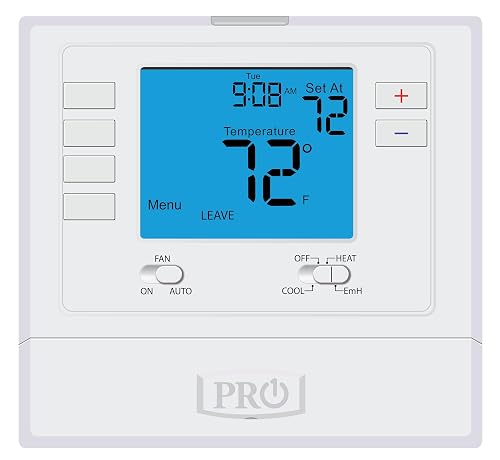
PRO1 T725 Heat Pump/Conventional Programmable Wall Thermostat

PRO1 T771 Single Stage Non-Programmable Wall Thermostat
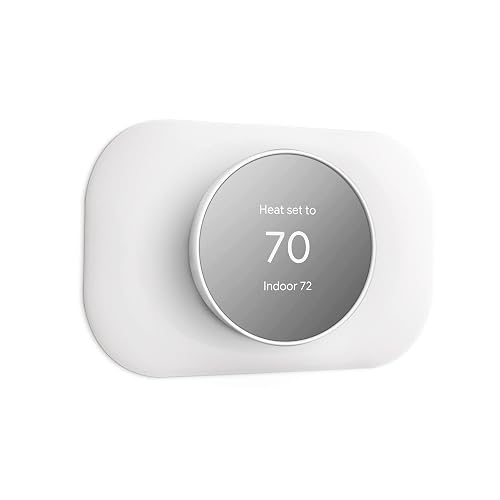
Petrichor Nest Thermostat Wall Plate Cover (Snow)
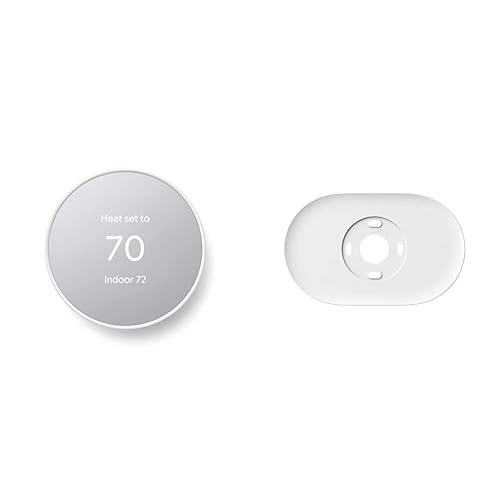
Google Nest Thermostat with Trim Kit (Snow)
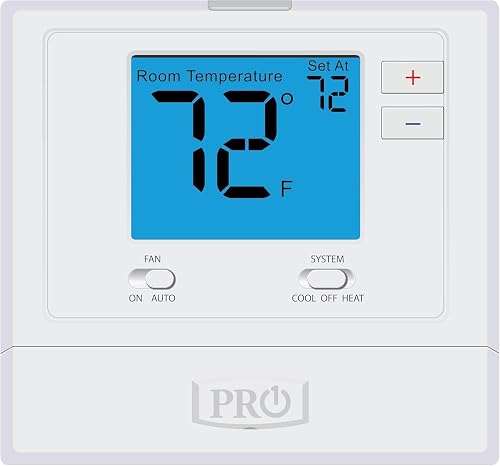
PRO1 T701 Single Stage Non-Programmable Wall Thermostat

PRO1 T715 Multi-Stage Programmable Gas Thermostat
PRO1 T721 Non-Programmable Wall Thermostat
Google Nest Temperature Sensor 3-Pack
Nest Learning Thermostat 3rd Gen with Smart Plug Bundle

PRO1 T805 Single Stage Programmable Wall Thermostat
The Strengths Of Each Pick
The PRO1 T725 is a programmable wall unit built for households that straddle two worlds: a heat pump downstairs and a conventional furnace elsewhere. It covers 2 heat/1 cool heat pump configurations and 1 heat/1 cool conventional systems, which means a single model can run two separate zones if your wiring cooperates.
A 4 sq. in. blue backlit screen does the talking, and the schedule supports 7-day or 5/1/1 programming, so weekdays, weekends, and one custom day all get their own comfort curve. You also get the glow-in-the-dark light button trick that the rest of the T700 platform uses, helpful during a midnight hallway walk.
Notable Gains
- One unit covers both heat pump and conventional setups, cutting down on the part count.
- Programmable schedule with four daily periods keeps a working household from heating an empty house.
- Wide compatibility with common low-voltage HVAC wiring makes installation less of a gamble.
- Backlit display reads clearly from across a living room.
Worth Noting
- No WiFi, so remote adjustments require being near the wall.
- The display, at 4 sq. in., is functional but smaller than the T805’s later screen.
Key Advantages
Right Fit For
Homeowners running a hybrid heat pump and conventional setup who want programmable control without paying for app connectivity.
Where Another Pick Suits Better
If you want app-based scheduling and learning behavior, the Nest Learning Thermostat 3rd Gen covers that with more polish.
The PRO1 T771 ignores the smart-home buzz and goes back to basics, which is exactly the point. It targets single-stage conventional heating and cooling, with a non-programmable design that’s perfect for spaces that don’t change temperature on a schedule. Garages, sheds, workshops, and guest cottages all fit this profile.
The wider setpoint range, from roughly 25°F to 90°F, lets you run cooler in winter storage areas or warmer in a hobby shop, and the 4 sq. in. blue backlit screen stays readable in a dim garage. Owners commonly report the swing adjustment and calibration as welcome touches for fine-tuning comfort.
Key Advantages
- Wide setpoint range supports low-temperature spaces that standard thermostats can’t reach.
- Simple, no-schedule operation means family members can’t accidentally erase your settings.
- Backlit screen reads clearly in poorly lit utility rooms.
Things To Consider
- No scheduling means manual adjustments for day and night comfort.
- Lacks the multi-stage depth that the T715 offers for larger homes.
Made For
Shop owners and homeowners outfitting a garage, workshop, or seasonal cabin where simplicity beats features.
Look Elsewhere When
You need programmable scheduling on a conventional furnace; the PRO1 T805 gives you a much larger screen and 7-day timing.
Not every Nest addition is a thermostat. The Petrichor wall plate is an accessory designed specifically for the 2020 Nest Thermostat generation, covering model numbers like GA01334-US and the related G4CVZ variants. Its job is to hide the wall scars that older thermostats leave behind when you upgrade.
The plate is sized generously to span the hole left by a previous base, and it sits flush with the wall once installed. The Snow finish is meant to blend with light-colored paint schemes, and the surface resists fingerprints so the area around your thermostat doesn’t look smudged a week after mounting.
Where It Helps
- Spans old screw holes, paint chips, and missing drywall patches from prior thermostats.
- Coordinating Snow color creates a clean transition from wall to device.
- Snap-on installation keeps mounting tools to a minimum.
Small Caveats
- Compatible only with the 2020 Nest Thermostat generation, not the older Learning Thermostat 3rd Gen.
- Color-matched paint jobs may need a touch-up if your wall has yellowed or aged since the last coat.
Right Fit For
Anyone upgrading to a 2020 Nest Thermostat who wants the wall to look as good as the new hardware.
Skip It When
You already own a Nest Learning Thermostat 3rd Gen; the bundled trim kit on the Google Nest Thermostat fits a different mounting footprint.
The Google Nest Thermostat is the entry point most people picture when they think of a smart thermostat. It’s an ENERGY STAR certified WiFi unit, controllable through the Google Home app on Android or iPhone, and ships with both a wall trim plate and a steel plate for installations over an electrical box.
The headline behavior is the auto-schedule learning: the Nest creates a temperature routine from your adjustments and then nudges the system down when it senses an empty home. For households where everyone’s away during the day, that single feature quietly trims the energy bill without much effort.
Positive Points
- ENERGY STAR certification means verified efficiency gains rather than marketing claims.
- Auto-away mode reduces heating and cooling when nobody’s home, cutting wasted runtime.
- Bundled trim plate plus steel plate covers both standard drywall and electrical box installs.
- App-based scheduling from any phone removes the “did I turn the heat down?” question.
Honest Caveats
- Requires a C-wire (common wire) for stable power in many homes, which older systems may not provide.
- Some advanced features live behind a subscription, so check the listing details before counting on full functionality.
Who It Suits Best
Smart-home newcomers who want one thermostat they can control from their phone and expand with sensors later.
Not Your Match When
Your system lacks a C-wire and you don’t want to re-pull low-voltage cable; the PRO1 T701 sidesteps the wiring question entirely.
The PRO1 T701 is the kind of thermostat that disappears into the wall and just does its job. It targets 1 heat/1 cool conventional systems, the most common residential setup in North America, and it skips programming altogether. You set a temperature, it holds it, and the household stops fiddling with the wall.
Built on the T700 platform, the unit pairs a 4 sq. in. blue backlit display with a glow-in-the-dark light button for nighttime adjustments. It also supports both battery and hardwire power configurations, which makes it friendly to older homes without a C-wire.
The Helpful Details
- Simple up-and-down temperature control that anyone in the house can use.
- Battery or hardwire power options avoid the C-wire problem in older homes.
- Glow-in-the-dark button makes midnight adjustments easy without flipping a hallway light.
Worth Bearing In Mind
- No scheduling, so you’ll be adjusting the temperature manually as seasons shift.
- Limited to single-stage systems, which excludes heat pumps and two-stage furnaces.
Best Suited To
Owners of older homes with a basic furnace and central air who want a no-fuss, no-app thermostat.
A Better Fit Elsewhere
If your conventional system has two heating and cooling stages, the PRO1 T715 covers that depth without complexity.
The PRO1 T715 is the deepest conventional option in the lineup, designed for 2 heat/2 cool gas systems that need more than a single-stage bang. Larger homes with multi-stage furnaces and central air benefit from the gentler temperature swings that staged heating and cooling deliver.
Programming options include 7-day, 5/1/1, and non-programmable modes, so you can dial in tight weekday control and let weekends coast. The same 4 sq. in. blue backlit display and glow-in-the-dark light button from the T700 platform carry over, plus your choice of battery or hardwire power.
Everyday Perks
- Two-stage heating and cooling reduces temperature swings and HVAC short-cycling.
- Three programming modes fit the way different households actually live.
- Battery or hardwire power keeps installation flexible across older and newer homes.
Room For Improvement
- Overkill for single-stage homes that don’t need two heating or cooling stages.
- No WiFi, so adjustments from outside the home aren’t possible.
Feature Snapshot
Right Fit For
Owners of larger homes with a two-stage furnace who want efficient, programmable control without paying for a smart platform.
Another Choice May Suit
For heat pump homes, the PRO1 T725 handles that system profile with a similar programming approach.
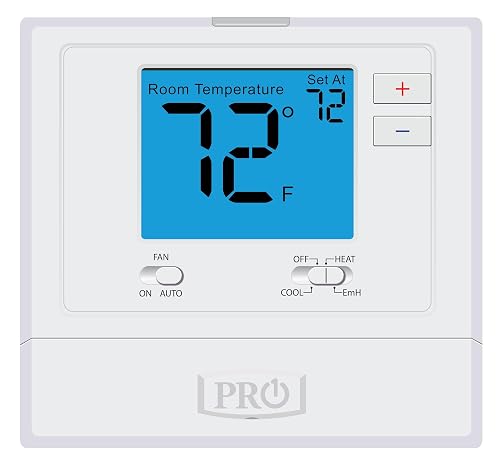
The PRO1 T721 sits in an interesting middle ground: it’s a non-programmable thermostat that still handles two very different system types. You can run it on a 2 heat/1 cool heat pump setup or a 1 heat/1 cool conventional system, which gives some flexibility if you’re not sure which side of the HVAC fence your home sits on.
Like the rest of the T700 series, the T721 uses a 4 sq. in. blue backlit display with a glow-in-the-dark light button. Power options include AA batteries or a hardwire configuration, so the unit installs in older homes where a C-wire isn’t available.
A Strong Showing
- Compatible with both heat pump and conventional systems, easing replacement uncertainty.
- Battery or hardwire power sidesteps the C-wire issue common in older construction.
- Glow-in-the-dark button makes low-light adjustments straightforward.
Points To Keep In Mind
- No scheduling means manual temperature changes as conditions shift.
- Limited to single-stage cooling, so multi-stage AC systems will need a different model.
Who It Suits Best
Homeowners with a heat pump who want reliable, no-schedule control without learning a smart platform.
Swap It Out When
You want 7-day scheduling on a heat pump system; the PRO1 T725 adds programmable schedules without adding connectivity.
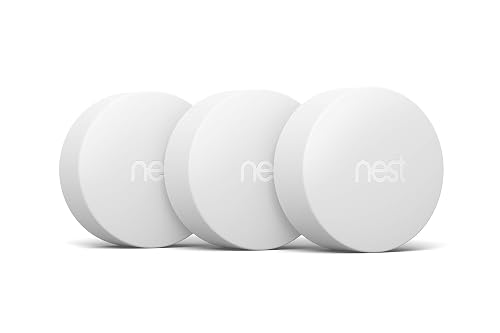
The Nest Temperature Sensor 3-Pack is the piece that turns a single Nest thermostat into something that actually understands a multi-room home. Each sensor reports the temperature in the room where it sits, then communicates that reading back to a compatible Nest thermostat up to about 50 feet away over a low-energy Bluetooth connection.
The practical upside: the baby’s room, the upstairs office, and the basement playroom can each guide the system instead of relying on the hallway reading. The thermostat decides which sensor to prioritize, and the room you actually care about stays comfortable.
Points In Its Favor
- Three sensors cover most homes’ trouble spots without buying extras later.
- Wireless placement means no new wiring through walls or floors.
- Low-energy Bluetooth preserves battery life for long service intervals.
Where It May Fall Short
- Requires a compatible Nest thermostat to function; these are add-ons, not standalone units.
- 50-foot range can struggle in very large homes with thick walls or masonry.
Best Suited To
Nest owners with a multi-story home where the hallway thermostat doesn’t reflect the rooms where you actually spend time.
Reach For A Different Pick When
You don’t yet own a Nest thermostat; the Google Nest Thermostat with Trim Kit is the better starting point.
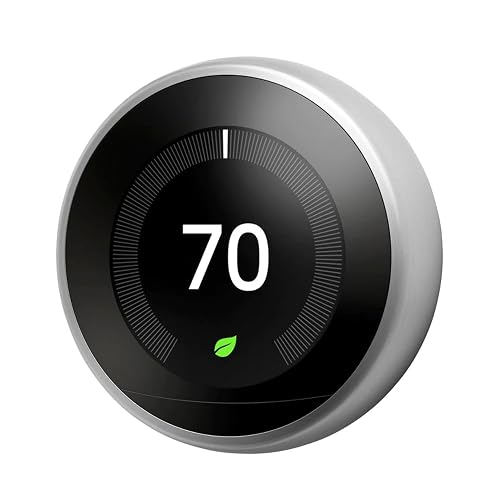
The Nest Learning Thermostat 3rd Gen in Stainless Steel is the polished version of Google’s flagship, paired in this bundle with a 2-pack of WiFi smart plugs. The thermostat itself builds a temperature schedule from your manual adjustments, so within a week or two it’s running the house without much input from you.
The rotating ring interface, large display, and Farsight feature set it apart from the entry-level Google Nest Thermostat. You can see the time, temperature, or weather from across the room, which is a small touch that earns its place in a living area.
What Stands Out
- Self-learning schedule reduces the manual programming burden after the first week.
- Farsight display shows the time or temperature from across the room.
- Bundled smart plugs let you add lamp or fan control to the same Google Home ecosystem.
Practical Considerations
- Requires a C-wire or the Nest Power Connector for stable operation in many installs.
- Premium positioning makes it more than a budget-conscious shopper needs.
Who Should Grab It
Tech-forward homeowners who want the most refined Nest experience and a starter pack of smart plugs for the same app.
Where A Sibling Pick Shines
For pure scheduling on a conventional furnace without the smart platform, the PRO1 T805 delivers a larger screen at a simpler level.
The PRO1 T805 takes everything the T701 does and adds scheduling plus a much larger display. Built on the T800 platform, it features a 7 sq. in. blue backlit screen, nearly double the viewing area of the standard T700 units, which is a real advantage for anyone who checks the temperature from the couch or wears reading glasses.
Programming supports 7-day, 5/1/1, or non-programmable modes, and the same glow-in-the-dark light button makes nighttime adjustments easy. It targets 1 heat/1 cool conventional systems, so it fits the average central-air home without complication.
What Makes Sense
- 7 sq. in. display is among the largest in this price range, easier to read at a distance.
- Three programming modes cover rigid weekday routines, weekend flexibility, or no schedule at all.
- Glow-in-the-dark button improves usability in dark hallways or bedrooms.
Some Limits To Know
- Limited to 1 heat/1 cool conventional systems, so heat pump and two-stage homes need other models.
- No WiFi connectivity, so remote adjustments aren’t possible from a phone.
Perfect Match For
Homeowners with a conventional furnace who want scheduling and a large, easy-to-read display without smart-home complexity.
Consider Something Else When
Your home runs a heat pump; the PRO1 T725 supports that system profile with comparable programming.
Choosing The Right Mix For Your Home
Picking thermostats across a whole house isn’t a single decision; it’s a series of them tied to each zone’s system type, your appetite for smart features, and how much wall fiddling you want to do. The mix below covers the most common combinations.
Match The Thermostat To The System
Before anything else, confirm what each zone actually runs. A 1 heat/1 cool conventional furnace is the most common configuration, and the PRO1 T701 or T805 both fit. Heat pump homes, common in milder southern climates, want the PRO1 T725 or T721, depending on whether you want scheduling. Two-stage conventional systems need the PRO1 T715’s extra depth. The Google Nest Thermostat works across many of these, but only when the wiring includes a C-wire or you add the Nest Power Connector.
Decide How Smart You Want To Go
WiFi thermostats add app control, learning behavior, and compatibility with voice assistants. The Nest Learning Thermostat 3rd Gen goes deepest, while the entry-level Google Nest Thermostat handles the basics. Non-programmable and programmable units from PRO1 skip the smart features entirely, which keeps them simpler for spaces like garages, guest rooms, and rental units where nobody needs an app.
Plan For Sensors In Larger Homes
A single thermostat can only read the temperature where it sits. In multi-story homes or houses with a finished basement, the hallway reading often misses the rooms that matter. The Google Nest Temperature Sensor 3-Pack extends a compatible Nest thermostat’s awareness to multiple rooms, so the nursery, the home office, and the basement can each guide the system. Without sensors, you may find yourself constantly adjusting a single thermostat to compensate.
Think About Long-Term Flexibility
C-wire requirements, sensor compatibility, and trim plate fit all matter when you’re installing multiple units in one house. Buying a consistent platform across zones simplifies the app experience, while mixing brands can keep costs down where smart features aren’t needed. Either approach works, but it’s worth deciding before the first screwdriver comes out.
Quick Considerations Before You Click
Common Shopping Slip Ups
The most frequent mistake is buying a thermostat that doesn’t match the system. Heat pumps, conventional furnaces, and multi-stage setups all need different control logic, and the wrong unit simply won’t fire the right equipment. The second is ignoring the C-wire question: many WiFi thermostats need steady 24V power, and older homes often lack it. The third is overbuying sensors before confirming the thermostat supports them. Check the compatibility list before adding accessories.
When Paying More Pays Off
Higher-tier models earn their keep through better scheduling, more accurate temperature management, and wider system support. The Nest Learning Thermostat 3rd Gen, for example, removes the manual schedule work after the first week and adds a display visible from across the room. The PRO1 T805’s 7 sq. in. screen costs more than the smaller T700 units but pays off for anyone with vision challenges or a large living space. Spend up when the upgrade solves a real daily friction; skip it when the basic unit already covers your system.
Frequently Asked Questions
Can I run multiple nest thermostats in the same home?
Yes. Multiple Nest thermostats can coexist in one home, each controlling its own zone. The Google Home app manages them together, so you can see every room’s temperature and adjust schedules from one place.
Do I need a C-wire for every Nest thermostat?
Most Nest models need a C-wire for steady power, though some installs work with the Nest Power Connector accessory. Check the wiring at each location before ordering, especially in older homes where the common wire may be missing.
Will the Nest Temperature Sensors work with any thermostat?
No, the sensors work specifically with compatible Nest thermostats like the Nest Learning Thermostat and the Nest Thermostat E. They don’t pair with non-Nest units or with the older 2020 Nest Thermostat generation in every configuration.
What’s the difference between programmable and non-programmable thermostats?
Programmable thermostats let you set a temperature schedule that changes automatically throughout the day. Non-programmable units hold one temperature until you adjust it manually. The right choice depends on whether your routine benefits from automatic shifts.
Can I mix smart and non-smart thermostats in one home?
Absolutely. Many homeowners use a smart thermostat for the main living area and a simpler non-programmable or programmable unit in less-used spaces like garages, basements, or guest rooms. The trick is matching each thermostat to the system it controls.
Closing Remarks
Outfitting multiple nest thermostats across a home comes down to matching each zone’s system to the right control style. The Google side delivers the smart features and sensor ecosystem, while the PRO1 lineup handles the simpler conventional and heat pump installs with reliable, no-app control. Start with the zone that matters most, get the wiring right, and expand from there.