

Swapping out a clunky wall dial for a modern thermostat can change how your whole house feels. The catch is that “thermostat” now covers a wide spectrum, from a simple digital wall unit to a learning Wi-Fi model that adjusts itself and tracks every room’s temperature. This guide sorts through ten solid options, from a basic garage pick to a full smart setup with remote sensors. You will find a mix of programmable wall units, Wi-Fi-enabled models, and accessories that help clean up an old install. Each entry below explains who it suits, where it falls short, and how it compares to the others on the list.
The Essentials At A Glance
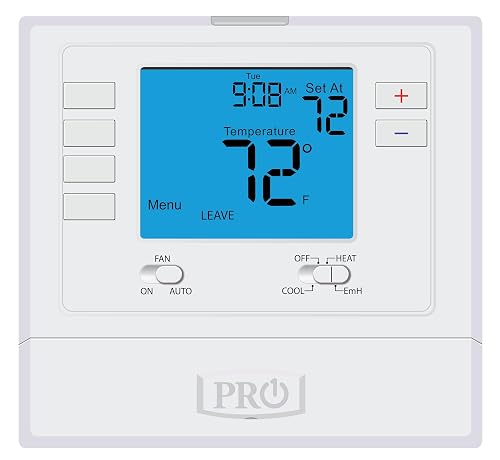
PRO1 T725 Heat Pump/Conventional Programmable Thermostat

PRO1 T771 Single Stage Non-Programmable Thermostat
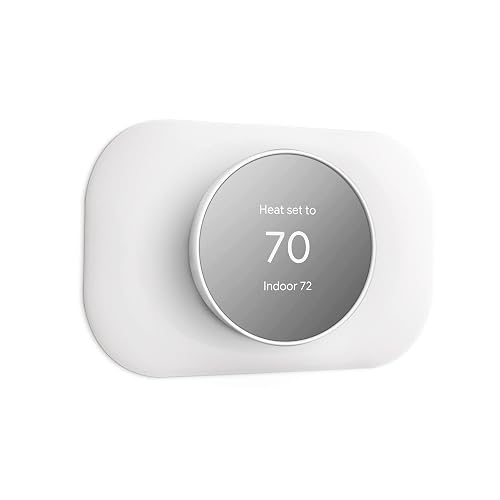
Petrichor Nest Thermostat Wall Plate (Snow)
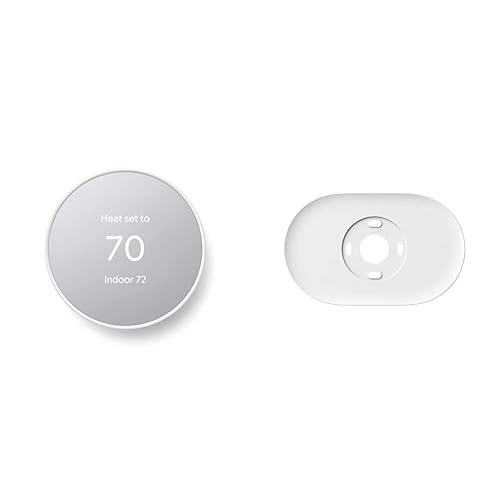
Google Nest Thermostat (Snow) with Trim Kit
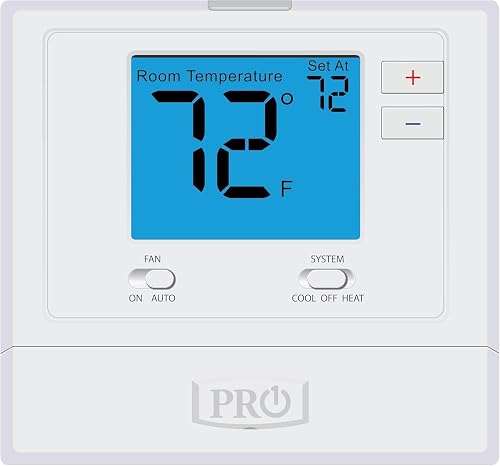
PRO1 T701 Single Stage Non-Programmable Thermostat

PRO1 T715 Multi-Stage Programmable Gas Thermostat
PRO1 T721 Non-Programmable Thermostat (Heat Pump or Conventional)
Google Nest Temperature Sensor (3-Pack)
Google Nest Learning Thermostat (Polished Steel)

PRO1 T805 Single Stage Programmable Thermostat
The Strengths Of Each Pick
Heat pump owners who also want a programmable schedule will find a lot to like in the PRO1 T725. It handles a 2 heat/1 cool heat pump layout or a 1 heat/1 cool conventional system, which is helpful if your home has a mixed setup or you may switch equipment later. Programming is flexible enough to let you run a 7-day or 5/1/1 schedule, mapping morning, work, evening, and sleep blocks. The blue backlit screen is 4 square inches, which is not huge but stays easy to scan in low light.
Compared with the entry-level T701 below, the T725 adds heat pump support, so you can run a single-stage compressor without losing smart scheduling. If your home uses a heat pump and you want a tidy digital display rather than a basic dial, this is a thoughtful middle ground. Most owners will find the button layout straightforward, and the wide compatibility removes the worry of a mismatched install.
Standout Benefits
- Dual compatibility covers heat pump and conventional systems in one unit
- Programmable 7-day or 5/1/1 scheduling supports custom weekly routines
- Backlit 4 sq. in. display keeps settings readable at night
- Part of the established T700 platform with reliable controls
Things To Consider
- No touchscreen or Wi-Fi; you adjust by hand at the wall
- Requires basic wiring knowledge during installation, which can mean a service call for some households
- Button-driven menus take a few extra presses to set up at first
Key Specs
Who It Suits Best
Homeowners with a heat pump who want a simple programmable wall unit without paying for smart features they will not use.
Where Another Pick Suits Better
Shoppers who want app control and learning behavior should look at the Google Nest Learning Thermostat instead, which is built for connected routines.
Detached garages, workshops, and sheds need temperature control, but rarely a full smart system. The PRO1 T771 leans into that reality. It is a non-programmable single-stage thermostat built for 1 heat/1 cool conventional setups, with a setpoint range stretching from 25°F to 90°F. That wide span matters in spaces you do not want to keep warm all the time, like a workshop that needs frost protection in winter but stays off the rest of the day.
The 4 sq. in. blue backlit display keeps numbers visible even in a dim garage with one overhead bulb, and swing adjustment plus calibration settings help match the reading to a nearby thermometer. You trade scheduling and Wi-Fi for a low-fuss unit that does the basics well, and that is often the right call in a utility space.
A Few Strong Suits
- Wide 25°F to 90°F setpoint range suits unheated garages and outbuildings
- Swing adjustment and calibration help match the room reading precisely
- Simple non-programmable design avoids scheduling headaches in utility spaces
Worth Noting
- No scheduling, so the temperature stays where you set it until you change it
- Limited to single-stage conventional systems, which excludes heat pump owners
Right Fit For
Owners of garages, sheds, and workshops who need a wide setpoint range and do not want Wi-Fi or scheduling in the mix.
Skip It When
Main-floor living areas with a heat pump are a better match for the PRO1 T725 above, which supports heat pump systems and a weekly program.
Replacing an old thermostat almost always reveals a paint ring, a slightly larger footprint, or a previous wire hole that does not line up. The Petrichor Nest Thermostat Wall Plate solves that problem. It is a trim plate designed for the 2020 Nest Thermostat (model numbers GA01334-US, GA02082-US, GA02081-US, and GA02083-US) and is sized to cover the gap left by older units. The Snow finish matches the lighter Nest colorways, and the surface is finished to resist fingerprint smudges after install.
This is a small accessory, not a thermostat on its own, so it pairs with the Google Nest Thermostat reviewed later. If you are already upgrading to the 2020 Nest, this plate saves you the spackle and paint step most people forget about, and the install is genuinely simple with the included hardware.
What Makes Sense
- Sized to hide old mounting holes and paint rings from prior thermostats
- Fingerprint-resistant Snow finish keeps the wall looking clean after install
- Built specifically for the 2020 Nest Thermostat, so alignment is straightforward
Honest Caveats
- Only works with the 2020 Nest Thermostat generation, not the Nest Learning Thermostat
Best Suited To
Anyone upgrading to the 2020 Nest Thermostat whose previous wall unit left visible marks or a wider footprint behind it.
Not Your Match When
Owners of the Nest Learning Thermostat will want the steel plate that ships with the Google Nest Thermostat (Snow) reviewed next, which is built for that body style.
The 2020 Google Nest Thermostat is the entry point into the connected Nest line, and it ships with a trim plate plus a steel plate for installations over an electrical box. Setup happens through the Google Home app on Android or iPhone, where you build an energy-efficient schedule and adjust the temperature from the couch, the office, or the airport. As an ENERGY STAR certified unit, it focuses on cutting wasted heating and cooling, and it turns the setpoint down when it senses nobody is home.
The Snow finish pairs nicely with the Petrichor plate above if your old install left a gap, and the included steel plate makes it easier to mount over a junction box without rewiring. Compared with the Nest Learning Thermostat reviewed further down, this model is more hands-on, since you set the schedule yourself rather than letting it learn, and that is often a fair trade for a friendlier price point.
Reasons It Performs
- ENERGY STAR certification supports year-round energy savings
- App-based scheduling and remote control from a phone
- Includes a trim plate and a steel plate for cleaner install options
- Auto-adjusts when you leave to avoid heating or cooling an empty home
Points To Keep In Mind
- Requires a stable Wi-Fi connection and a Google account for full functionality
- Some advanced learning features remain reserved for the Nest Learning Thermostat
Quick Facts
Perfect Match For
Connected homeowners who want a clean app-driven thermostat at a friendlier cost than the full Learning model.
Reach For A Different Pick When
You want a thermostat that programs itself based on your habits, in which case the Google Nest Learning Thermostat is a stronger fit.
Sometimes a thermostat just needs to do one thing well, and the PRO1 T701 fits that brief. Built on the T700 platform, it serves 1 heat/1 cool conventional systems and stays non-programmable on purpose, so the dial experience stays familiar. The 4 sq. in. blue backlit display gives the readout enough room, and a glow-in-the-dark light button makes it easy to find in a dark hallway.
Set it for gas or electric configurations, choose battery or hardwired power, and you are done. The trade-off compared with the T805 reviewed later is the absence of weekly scheduling, but for a guest room, rental unit, or a simple primary system, that is often a feature rather than a limitation.
Positive Takeaways
- Clear backlit display with a glow-in-the-dark light button for low-light use
- Gas or electric compatibility widens install options
- Battery or hardwired power setup suits different wiring situations
- No learning curve for anyone who has used a basic thermostat before
Small Caveats
- No programmable schedule means the temperature stays fixed until changed
- Limited to single-stage conventional systems, so heat pump homes will want the T725
Whose Shelf It Belongs On
Renters, guest room owners, and households with a basic single-stage system who want reliability without a learning curve.
Look Elsewhere When
Anyone wanting a full weekly program should consider the PRO1 T805, which adds 7-day scheduling on a similar T800 platform.
Larger homes with a two-stage gas furnace and central air need a thermostat that can speak that language, and the PRO1 T715 is built for that conversation. It supports 2 heat/2 cool systems, so the furnace and air conditioner can each run at low and high output, which is what makes a multi-stage system feel so smooth. Programming stretches to 7-day, 5/1/1, or non-programmable modes, which is helpful for owners who flip back and forth on schedules.
The display stays the familiar 4 sq. in. blue backlit panel, with a glow-in-the-dark light button for after-hours tweaks. Compared with the T701 above, this is the upgrade for a more capable HVAC setup, and the T700 platform keeps the menu structure close enough that moving up the line does not feel like learning a new device.
Where It Delivers
- Supports 2 heat/2 cool systems for multi-stage furnaces and air handlers
- Three program modes, including 7-day and 5/1/1, for flexible routines
- Backlit display and glow-in-the-dark light button for nighttime adjustments
- Compatible with battery or hardwired power, depending on your wiring
Trade Offs
- More wiring terminals than a single-stage unit, which can complicate a DIY install
- No Wi-Fi or app control, so remote tweaks happen at the wall only
Feature Snapshot
Made For
Homeowners with a two-stage gas furnace and central air who want a programmable wall thermostat with multi-stage support.
A Better Fit Elsewhere
Households chasing full app control should pair the Google Nest Thermostat with the multi-room sensors reviewed later in this list.
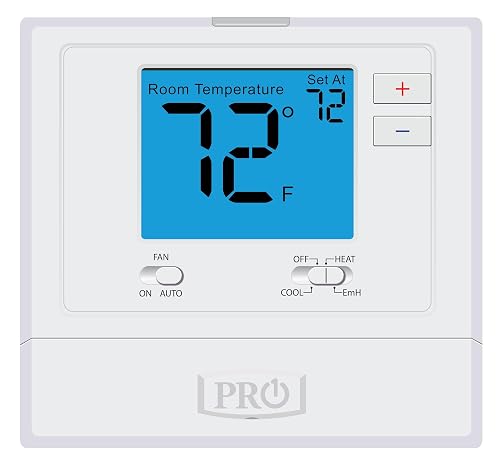
The PRO1 T721 sits in an interesting middle ground, since it is non-programmable but flexible enough to run a 2 heat/1 cool heat pump or a 1 heat/1 cool conventional system. That dual-mode setup helps households who may swap equipment later, or owners of a small property with a simpler layout who just want a straightforward wall unit. The 4 sq. in. blue backlit screen keeps the readout comfortable to scan, and a glow-in-the-dark light button helps in a dark hallway.
You can run it on AA batteries or hardwire it, which makes install options easier when the common wire is missing. Compared with the T701, the T721 adds heat pump support, and unlike the T725 it skips scheduling, so the read is the simplest dual-mode choice in this lineup.
Real-World Strengths
- Dual-mode support for heat pump and conventional systems in one unit
- Battery or hardwired power options ease install in older homes
- Glow-in-the-dark light button helps locate the unit at night
Potential Drawbacks
- No scheduling, so the temperature stays where you set it until you adjust it
- Button-based controls require a few menu steps for advanced settings
Built With In Mind
Owners with a heat pump or a mixed system who want a simple, set-and-forget wall thermostat without weekly programming.
Swap It Out When
Schedulers who want a 7-day program on a heat pump system will get more from the PRO1 T725, which adds programming to similar dual-mode support.
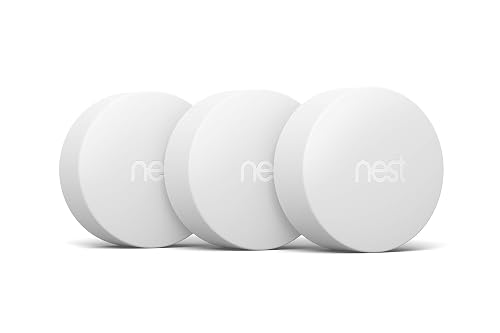
One thermostat can only read the temperature of one room, and that is exactly the problem the Google Nest Temperature Sensor pack fixes. Each small sensor talks to a compatible Nest thermostat over low-energy Bluetooth, reporting the temperature where it is placed, such as a nursery, a finished basement, or a sun-soaked living room. The thermostat then decides when the system should run to keep that space comfortable.
This 3-pack covers a typical three-zone home, and each sensor reaches the thermostat from up to about 50 feet away. It is a useful upgrade for anyone whose upstairs bedrooms run warm or whose basement stays cold, and it pairs well with the Google Nest Thermostat or Nest Learning Thermostat reviewed in this list. The trade-off is that you need an existing Nest thermostat for these to do anything useful.
Good Reasons To Consider
- Brings room-by-room awareness to a single Nest thermostat
- Low-energy Bluetooth keeps battery use gentle over time
- 3-pack covers a typical multi-room layout in one purchase
- Slim profile fits on a shelf or side table without drawing attention
Less Ideal Details
- Only works with compatible Nest thermostats, so it has no value without one
Feature Rundown
Who Will Love This
Nest owners with hot or cold rooms that a single thermostat cannot read accurately, especially families with a nursery or a finished basement.
Another Choice May Suit
Households without a Nest thermostat will not get value from this pack, so the PRO1 T805 is a better starting point for a single-room program.
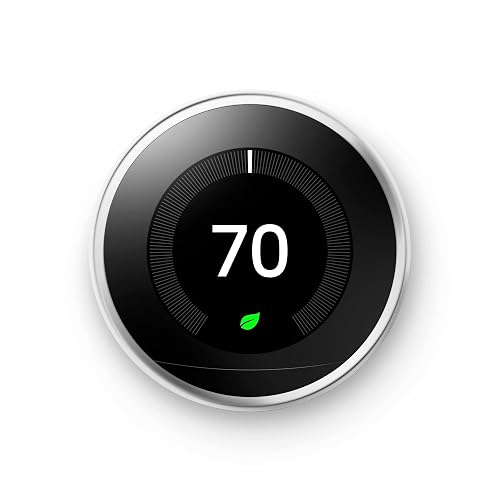
The Polished Steel Nest Learning Thermostat is the unit most people picture when they think of a smart thermostat. It watches the temperatures you choose and the times you change them, then programs itself to match. Home/Away Assist drops the setpoint to an Eco Temperature when the house is empty, and the dial-based design stays intuitive for family members who prefer not to use the app. Polished Steel is the most reflective finish, so it tends to stand out as a feature on the wall.
Energy History shows how much heating and cooling you used and why, and the Nest Leaf icon nudges you toward efficient settings. HVAC monitoring sends an alert if the system behaves unusually, and remote control works from a phone, laptop, or tablet. Compared with the entry-level Google Nest Thermostat above, the Learning model adds self-programming routines and the polished steel body, which is the more premium choice in this lineup.
Noteworthy Benefits
- Self-programming schedule built around your habits over time
- Home/Away Assist reduces energy use when nobody is home
- Energy History on phone and Quick View on the display for easy review
- HVAC monitoring sends alerts for unusual system behavior
- Polished Steel finish suits modern interior styles
Practical Considerations
- Higher price point than the entry-level Nest Thermostat with trim kit
- Full feature set requires a Google account and stable Wi-Fi
Who Should Grab It
Smart-home enthusiasts who want a thermostat that programs itself, monitors HVAC health, and works with optional room sensors.
Where A Sibling Pick Shines
For a simpler connected setup at a friendlier cost, the Google Nest Thermostat (Snow) with Trim Kit is a sensible step down.
The PRO1 T805 closes the list with the largest screen in the PRO1 family, a 7 sq. in. blue backlit display that is easy to read from across the room. It runs 1 heat/1 cool conventional systems and supports 7-day, 5/1/1, or non-programmable modes, which gives owners room to grow into the schedule over time. The T800 platform brings a glow-in-the-dark light button, so adjustments after bedtime stay easy.
You can power it on AA batteries or hardwire it, depending on what your existing wiring supports. The honest read is that this is a strong fit for anyone who values readability, and the wide display helps households where a parent or grandparent checks the temperature without leaning in close.
Benefits That Matter
- Extra-large 7 sq. in. display for at-a-glance temperature checks
- Three program modes, including full 7-day scheduling
- Glow-in-the-dark light button for late-night visibility
- Battery or hardwired power supports common wiring setups
Some Limits To Know
- Single-stage only, so heat pump and multi-stage homes will look elsewhere
- No app or Wi-Fi connectivity, so changes happen at the wall
Right Fit For
Households who want a simple programmable thermostat with an oversized, easy-to-read display, especially in a hallway or main living area.
Not Your Match When
Multi-stage furnace owners should look at the PRO1 T715 above, which adds 2 heat/2 cool support on a similar platform.
Choosing The Right Match For Your Home
Start with your HVAC system, since that single decision narrows the list fast. Heat pump homes need a thermostat rated for heat pump wiring, like the PRO1 T725 or the dual-mode T721. Multi-stage gas furnaces need 2 heat/2 cool support, which the PRO1 T715 covers. Basic 1 heat/1 cool conventional systems have the most options, including the entry-level T701, the T805 for an oversized display, and the Wi-Fi-enabled Google Nest Thermostat.
Next, think about how you want to interact with the temperature. Programmable wall units like the T725, T715, and T805 reward you for setting a schedule once, and then they run on their own. Smart Wi-Fi thermostats like the Google Nest Thermostat and the Nest Learning Thermostat add app control, energy tracking, and the option to add Nest Temperature Sensors in other rooms.
Finally, consider the space. Garages, sheds, and workshops do not need scheduling, and the PRO1 T771 with its wide 25°F to 90°F setpoint range handles those settings well. Main living areas benefit from app control, learning behavior, and optional room sensors, so the Nest line tends to win in a primary residence.
Why System Match Comes First
A thermostat is only as good as its wiring compatibility. A smart thermostat installed on a system it cannot read will throw errors or simply not control the equipment. Match the thermostat’s stage support to your furnace and air conditioner before considering features like scheduling or Wi-Fi.
Schedules vs. Learning Behavior
Programmable wall thermostats ask you to set a schedule, and then they follow it. Learning thermostats watch your habits and build the schedule for you. The honest trade-off is that learning models take a couple of weeks to lock in, while a programmable unit is accurate from day one.
Room Sensors and Whole-Home Comfort
One thermostat in the hallway cannot read every room accurately, which is where the Google Nest Temperature Sensor 3-pack helps. It brings room-by-room awareness to a single Nest thermostat, and it is a smart add-on for homes with a finished basement, a sunroom, or a nursery that runs warmer or cooler than the rest of the house.
What To Watch Before You Buy
Where Shoppers Go Wrong
The most common mistake is choosing a thermostat before checking system compatibility. A heat pump home that picks a single-stage conventional unit will lose functionality, and a multi-stage furnace that picks a basic 1 heat/1 cool thermostat will not be able to control the second stage. The second common slip is forgetting the C-wire, or common wire, since many Wi-Fi thermostats need steady power that older homes were not wired to provide.
Why Top Tier Costs More
Higher-tier thermostats cost more because they bundle learning behavior, HVAC monitoring, and room sensor support, which all rely on extra hardware and software. The Nest Learning Thermostat, for example, programs itself and tracks energy use, while a basic non-programmable unit just holds the setpoint. The upgrade is worth it for households that want a smarter routine and remote control, but it can be more than necessary for a guest room or a garage where simplicity wins.
Frequently Asked Questions
Do I need a C-wire to install a smart thermostat?
Many smart thermostats expect a continuous power source, which the C-wire provides. If your current setup does not have one, you may need an adapter or a new wire run, depending on your home’s wiring.
Can a heat pump thermostat also run a gas furnace?
Some dual-mode thermostats, like the PRO1 T725 and T721, support both heat pump and conventional systems, but installation needs to match the equipment type and the wiring terminals used by your specific HVAC setup.
How many room sensors do I really need?
One sensor is enough to read a different room than the thermostat’s location. A 3-pack like the Google Nest Temperature Sensor pack works well for a typical three-zone home, while larger layouts may need more units placed strategically.
Will a learning thermostat actually save money?
A learning thermostat can reduce wasted heating and cooling by adjusting when you are away, but the savings depend on your home’s insulation, your routine, and the temperature you usually set. It is best viewed as a tool that supports good habits.
Can I install these myself?
A basic non-programmable swap is often a manageable DIY project for someone comfortable with low-voltage wiring. Multi-stage or smart installs are more involved, and a licensed HVAC technician is the safer call if you are unsure about the wiring.
Wrap Up
A thermostat should fit the system you actually have, and the right pick depends on whether you want a simple set-and-forget unit, a programmable wall model, or a full smart experience. The PRO1 line covers conventional and heat pump homes with reliable wall units at friendlier prices, while the Google Nest Thermostat and Nest Learning Thermostat add app control, energy tracking, and optional room sensors. Match the stage support, decide whether you want scheduling or learning, and the rest of the choice tends to fall into place on its own.