

A network thermostat turns a wall box into a small command center, and the right one can quietly cut your energy bill while making daily comfort effortless. The category now stretches from bare-bones non-programmable units to learning thermostats that adapt to your routine on their own. This lineup gathers solid options across that spectrum, including simple 1H/1C controls, a 240-volt line-voltage pick, and a handful of Wi-Fi and learning models. Your shortlist comes down to system compatibility, the controls you actually want, and how much automation fits your life.
A Closer Look At The Lineup
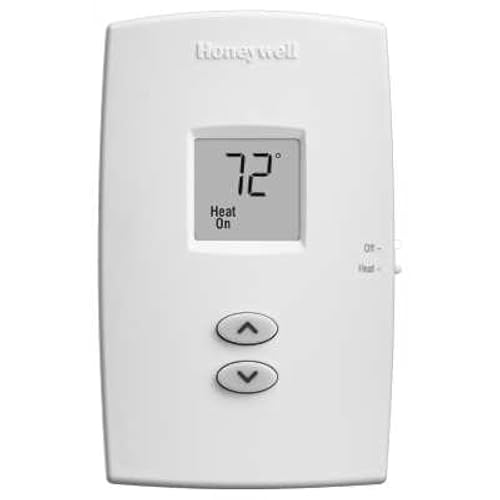
Honeywell TH1100DV1000 Pro 1000 Vertical Thermostat
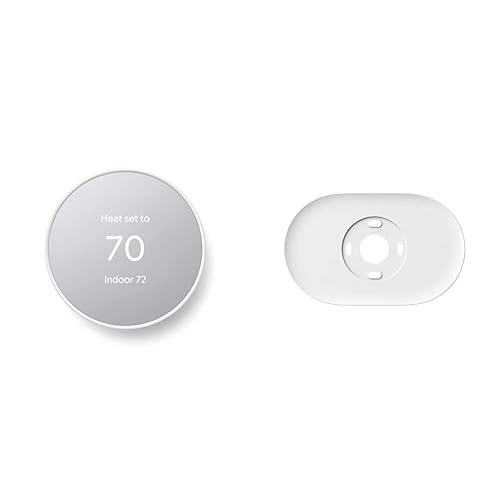
Google Nest Thermostat (Snow) with Trim Kit
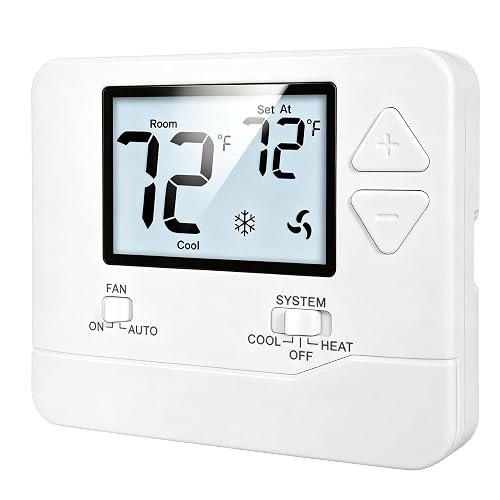
Heagstat 1 Heat/1 Cool Non-Programmable Thermostat
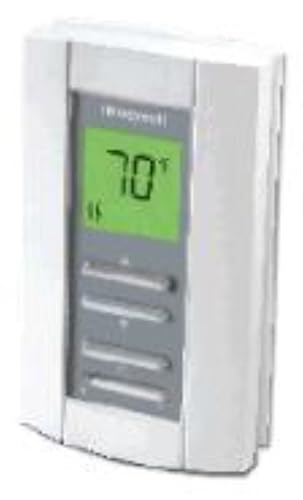
Honeywell TL7235A1003 Line Volt Pro 240V Thermostat
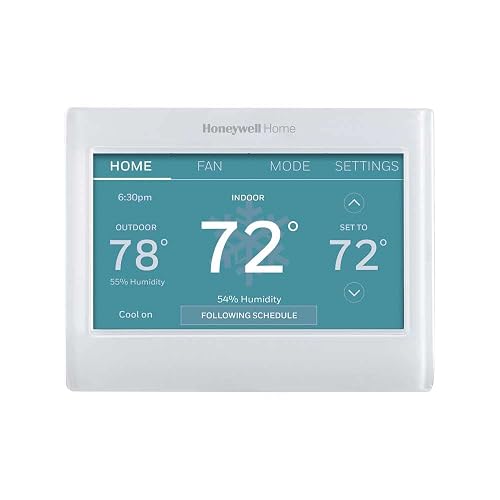
Honeywell Home RTH9600WF Smart Color Thermostat
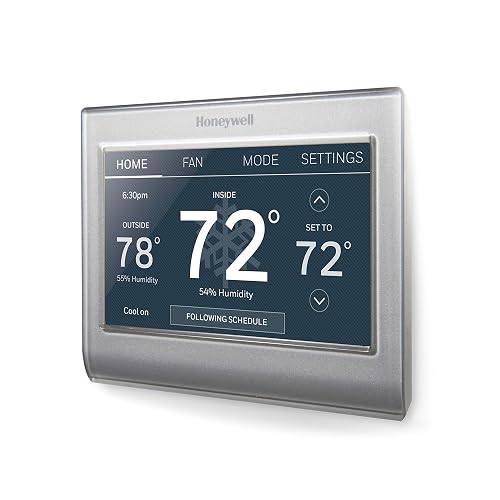
Honeywell Home RTH9585WF Wi-Fi Color Thermostat
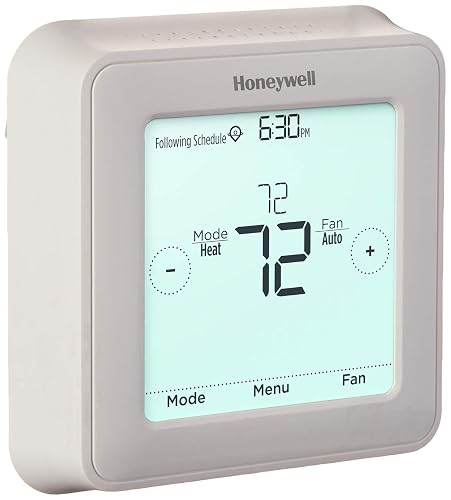
Honeywell Home 7 Day Programmable Touchscreen Thermostat
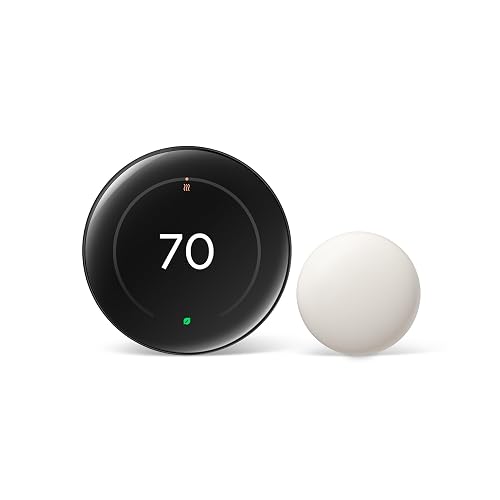
Google Nest Learning Thermostat 4th Gen (Obsidian)
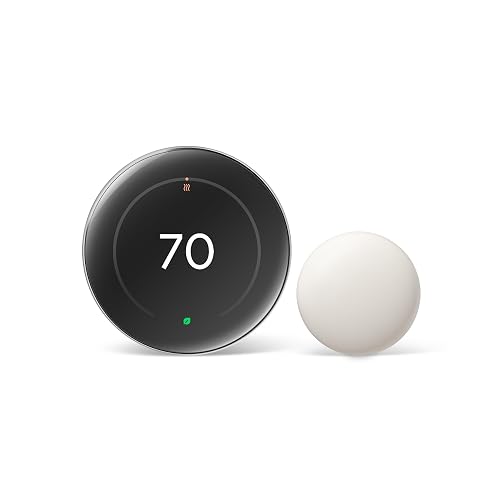
Google Nest Learning Thermostat 4th Gen (Silver)
The Strengths Of Each Pick
This Honeywell TH1100DV1000 keeps things deliberately simple. It’s a vertical, non-programmable thermostat built for single-stage heat only systems, with a clean white face that disappears into most hallways. The slide-switch operation is the kind of dial-and-leave-it experience renters and small-space owners tend to like.
For anyone whose heating system is a straightforward gas furnace or boiler with no central air, the install path is short. You get a 4 11/16-inch tall, 2 7/8-inch wide footprint that fits common wall openings. The trade-off is that you won’t get Wi-Fi, scheduling, or any learning behavior; this is honest, old-school temperature control.
Strong Points
- Vertical layout is easy to read at a glance, even without backlighting
- Compact body fits the standard wall opening without trim plates or adapters
- Mechanical-style control avoids the menu-diving common on digital units
- White finish blends with most wall paint colors and trims
Things To Consider
- Heat-only design means it’s a poor match for central air systems
- No scheduling, app control, or automation features whatsoever
- Replacement installs sometimes call for a new wall plate depending on the previous model
Who It Suits Best
Owners of single-stage heat-only homes who want reliable manual control without paying for smart features they won’t use.
Consider Something Else When
The Google Nest Thermostat (Snow) is a stronger match for households that want app-based scheduling and remote access on top of a basic install.
Unlike the bare-bones Honeywell in spot one, this Google Nest Thermostat is fully connected. The Snow finish brings a clean, soft look to most wall colors, and the included trim plate plus steel plate covers the kind of patchy paint and exposed box openings you get during a swap. It’s an ENERGY STAR certified smart thermostat, which matters if your utility offers rebates.
The Google Home app (on Android and iPhone) handles the schedule, geofencing, and away-mode adjustments. Nest’s auto-away feature nudges the temperature back when it senses an empty home, which can quietly trim cooling costs in summer. For first-time smart-thermostat owners, this is one of the friendliest setups in the lineup.
What Works In Its Favor
- ENERGY STAR certification helps with efficiency rebates from many utilities
- Included trim plate and steel cover plate simplify wall repairs after the old install
- Auto-away logic reduces wasted heating and cooling when no one is home
- App-based scheduling works from any phone, not just at the wall
Worth Noting
- Some HVAC systems require a C-wire (common wire, the low-voltage return that powers Wi-Fi thermostats) or a power adapter, and not every home has one ready to go
- Less advanced than the Learning Thermostat at adapting to shifting routines
Key Specs
Made For
Connected households stepping into smart controls for the first time, especially owners who already use the Google Home app.
Look Elsewhere When
The Google Nest Learning Thermostat 4th Gen (Obsidian) makes more sense for users who want the system to learn routines on its own without constant app tweaking.
This Heagstat thermostat targets the sweet spot between the Honeywell Pro 1000 and the smart thermostats higher on the list. It’s a non-programmable unit designed for conventional 1H/1C systems, meaning a single-stage gas, oil, or electric furnace paired with one outdoor AC condenser. The white backlight makes it readable in low light, a small but real quality-of-life touch.
Wire compatibility is the headline. The base supports a maximum of two to five wires, and six-to-eight-wire systems simply won’t fit. For a lot of older homes that meet that spec, this is a low-hassle replacement for a worn-out wall unit. The trade-off shows up if your system runs multi-stage equipment or needs dehumidification controls.
Everyday Advantages
- White backlight keeps the readout visible at night and in hallways
- Works with standard 24VAC (24 volts of alternating current, the low-voltage power most HVAC control boards use) conventional single-stage systems
- Simple up/down temperature control without app lock-in
Trade Offs
- Not compatible with 6-to-8 wire systems, which can rule out some heat-pump setups
- No scheduling means manual adjustments for every routine change
- Brand recognition is lower than Honeywell or Google, and documentation can be thin
Best Suited To
Owners with a basic 1H/1C conventional system who want a clean backlit display without monthly app juggling.
Skip It When
The Honeywell Home RTH9600WF Smart Color Thermostat is a stronger match for households ready to add Wi-Fi scheduling and a touchscreen interface.
Here’s where the list shifts. The Honeywell TL7235A1003 is a line-voltage thermostat rated for 240 volts, designed for electric baseboard and convector heaters rather than a central forced-air system. The on-demand backlight and silent electronic switching replace the familiar click of a bimetallic thermostat, which is a noticeable upgrade in bedrooms.
For homes heating room-by-room with electric baseboards, this is one of the more dependable control options. The heating indicator confirms at a glance that the unit is calling for heat, and soundproof operation keeps the relay chatter out of quiet spaces. You won’t get Wi-Fi, color screens, or learning behavior; this is purpose-built, electric-heat control.
The Practical Payoff
- Silent electronic switching is far quieter than older mechanical line-voltage thermostats
- On-demand backlight reads cleanly in dim hallways and bedrooms
- Heating indicator confirms at a glance that the system is actually calling for heat
- Direct 240V compatibility with most North American baseboard circuits
Points To Note
- Not compatible with low-voltage central HVAC systems, and pairing it with the wrong setup is a safety concern
- Wiring should be handled by someone comfortable working with line-voltage circuits
Who Will Love This
Owners of electric baseboard or convector heaters who want dependable, quiet, single-room temperature control.
Another Choice May Suit
The Honeywell TH1100DV1000 is a better fit for homes with a low-voltage gas or oil furnace rather than electric baseboards.
The Honeywell Home RTH9600WF is one of the more customizable Wi-Fi thermostats in the Honeywell Home family. The color touchscreen can shift palettes to match your wall, and the underlying schedule engine supports both daily routines and time-of-use rate plans. The interface is bigger and more visual than the older RTH9585WF that follows on the list.
You’ll need a C-wire (the common wire that delivers continuous low-voltage power to Wi-Fi thermostats), since Wi-Fi radios and color screens draw more current than batteries can comfortably provide. Most modern homes already have one, but some older installs will need a power adapter or a new pull from the furnace board. The catch is that you may not use the deeper utility-rate features unless your power company supports them.
What It Does Well
- Customizable color touchscreen that adapts to room décor and lighting
- Supports time-of-use rate scheduling for utility demand-response programs
- Full 7-day scheduling with multiple daily periods
- Remote app control and voice-assistant compatibility
Honest Caveats
- C-wire required, and missing wires sometimes mean an extra adapter purchase
- Deeper scheduling features only pay off with a compatible utility plan
Feature Snapshot
Right Fit For
Tech-comfortable households with a C-wire already in place who want flexible scheduling and a screen that matches the room.
Reach For A Different Pick When
The Honeywell Home 7 Day Programmable Touchscreen Thermostat is a stronger match for anyone who wants touchscreen scheduling without committing to a Wi-Fi account or app.
The Honeywell Home RTH9585WF is a previous-generation favorite that still earns a place on a 2026 shortlist. It pairs a customizable color touchscreen with Wi-Fi scheduling, voice-assistant compatibility, and a setup that most DIYers can handle with basic tools. Compared to the RTH9600WF just above it, the feature list is slightly leaner, but the day-to-day experience is very close.
The gray body and Energy Star rating suit a wide range of homes. The catch is compatibility: this is a low-voltage thermostat, so it does not work with line-voltage heating systems like the baseboard setup the TL7235A1003 handles. For most central forced-air homes with a C-wire already in place, it’s a comfortable, capable upgrade.
Points In Its Favor
- Color touchscreen background can shift to match wall paint or preference
- 7-day programmable schedule with four periods per day
- Energy Star rated for efficiency-conscious households
- App and voice-assistant control out of the box
Factors To Consider
- Not compatible with line-voltage heating, ruling out most electric baseboards
- C-wire required, and older homes may need a power adapter for clean install
Feature Card
Whose Shelf It Belongs On
Family households with a central HVAC system and a C-wire, looking for a balanced Wi-Fi thermostat without flagship pricing.
A Better Fit Elsewhere
The Google Nest Thermostat (Snow) makes more sense for households that want a simpler app experience and don’t need a color touchscreen.
This Honeywell Home unit is the touchscreen scheduling pick without the Wi-Fi baggage. The display is crisp, the menu is straightforward, and the included quick-install guide walks you through the typical residential setup. For households that want a real schedule but don’t need an app, it’s a sensible middle step up from the basic non-programmable picks earlier in the lineup.
The trade-off is that you lose remote control and learning behavior. You do gain simplicity: no accounts, no firmware updates, no wondering whether your router plays nicely with the thermostat. For a vacation home, a rental, or a household that’s cautious about adding more connected devices, that simplicity is the main draw.
The Good Stuff
- Intuitive touchscreen setup with on-screen prompts
- 7-day scheduling with separate weekday and weekend blocks
- Operates without an internet account or smartphone app
- Includes UWP mounting system for cleaner installs
A Few Limitations
- No remote control means temperature changes happen at the wall only
- Lacks adaptive learning that higher-tier models offer
Perfect Match For
Owners who want set-and-forget scheduling without tying their HVAC system to a Wi-Fi account.
Swap It Out When
The Honeywell Home RTH9585WF is a better fit for households that want app and voice control layered on top of the same scheduling foundation.
The 4th generation Nest Learning Thermostat is the flagship of Google’s thermostat line, and the Obsidian finish is the darker, more sculptural option. Where the standard Nest Thermostat in spot two handles scheduling, this model learns your preferences over time, building a routine on its own as your schedule shifts. The included Nest Temperature Sensor (2nd gen) lets you measure a specific room’s temperature, not just the hallway where the thermostat lives.
This is the pick for households already living inside the Google Home ecosystem. You get a richer display, more granular sensors, and stronger habit-learning behavior. The honest read is that you’ll give up some simplicity: there’s a learning curve, and the system performs best when you let it observe you for a couple of weeks before judging it.
What Pays Off
- Learns comfort preferences and adjusts to schedule changes on its own
- Includes a remote temperature sensor for hot-spot and cold-spot rooms
- Premium Obsidian finish suits modern interiors
- Deep integration with the Google Home app and voice controls
Some Limits To Know
- C-wire or compatible power adapter needed for clean install
- Learning behavior takes a couple of weeks to feel accurate, depending on routine stability
Spec Overview
Who Should Grab It
Smart-home power users already invested in Google Home who want learning behavior and remote room sensing.
Not Your Match When
The Google Nest Learning Thermostat 4th Gen (Silver) is the better pick for users who prefer a lighter finish and don’t want a dark thermostat on a bright wall.
Functionally identical to the Obsidian version in spot eight, this Silver finish offers the same learning engine, the same Nest Temperature Sensor (2nd gen), and the same Google Home integration. The difference is purely visual: the silver body sits comfortably against light walls, soft grays, and transitional interior palettes. For larger homes with hot or cold spots, the included sensor is the real draw, since one thermostat can’t read an entire house accurately.
The trade-off matches the Obsidian model: a C-wire is required, and the learning behavior needs a couple of weeks of consistent routine to dial in. For most multi-room households, that’s a fair trade for hands-off scheduling that improves over time.
Strengths Worth Knowing
- Adaptive learning engine builds a schedule without manual programming
- Remote temperature sensor helps prioritize the room you use most
- Silver finish suits lighter, neutral interior palettes
- Strong Google Home app integration for routines and notifications
Where It Is Less Suited
- C-wire or compatible power adapter required for the Wi-Fi radio
- Premium positioning means it costs more than the standard Nest Thermostat
Built With In Mind
Larger homes with room-to-room temperature variation who want learning behavior plus remote sensing in a lighter finish.
Where A Sibling Pick Shines
The Google Nest Thermostat (Snow) is a better match for smaller homes and apartments where learning behavior is overkill and a lower-tier smart thermostat is enough.
Picking The Right Thermostat For Your Home
System Compatibility Comes First
Before falling for a touchscreen or a learning engine, confirm what your HVAC system actually supports. A 240V line-voltage circuit, like the one the Honeywell TL7235A1003 is built for, behaves nothing like a 24V low-voltage furnace board. Mismatches are dangerous, not just inconvenient. Check the number of wires at your existing thermostat, the presence of a C-wire, and whether your system runs single-stage, multi-stage, or heat-pump equipment. The wire count alone rules out a surprising number of otherwise great picks.
Decide How Smart You Actually Need
Smart thermostats deliver the most value when your routine is predictable enough to program or stable enough to learn. If your week looks different every day, a learning thermostat may not save you much. For households with a steady weekday and weekend rhythm, the Honeywell Home RTH9600WF or the Google Nest Learning Thermostat 4th Gen will likely outperform a basic non-programmable unit. For renters or vacation homes, a simple Honeywell Home 7 Day Programmable Touchscreen Thermostat often hits the sweet spot.
Installation And Power Realities
A C-wire (or a power adapter equivalent) is non-negotiable for most Wi-Fi thermostats. Without it, the radio and screen draw too much current for the system to sustain. Some installs need only a small jumper at the furnace board, while others require a new wire pull. The Honeywell TL7235A1003 is a special case: it’s a 240V unit that should only be installed by someone comfortable with line-voltage wiring, since the consequences of a wiring error are more serious than with low-voltage systems.
Plan For The Long Term
Firmware updates, app changes, and discontinued support happen to every connected thermostat eventually. Honeywell and Google both have long track records, but the software you set up today may look different a few years from now. For owners who prize longevity, a non-Wi-Fi programmable unit like the Honeywell Home 7 Day Programmable Touchscreen Thermostat will outlast several rounds of app updates, since its job is to run schedules locally on the device.
Key Considerations Across These Picks
Mistakes Worth Dodging
The most common slip-up is buying a thermostat that doesn’t match the HVAC system. A 24V low-voltage Honeywell Home RTH9585WF on a 240V baseboard loop is a fire and equipment hazard, not just a compatibility note. The second mistake is overlooking the C-wire requirement: a Wi-Fi thermostat installed without one will boot-loop, randomly shut off, or kill the system until the wiring is fixed. Measure your existing wire count and check the documentation before falling in love with a touchscreen.
Where The Extra Money Goes
Higher-tier models earn their cost in three places: a richer display, learning behavior, and ecosystem depth. The Google Nest Learning Thermostat 4th Gen learns your routine, includes a remote sensor, and integrates with the rest of Google Home. Mid-tier picks like the Honeywell Home RTH9600WF give you scheduling and a color screen, but the app and learning work is on you. The upgrade pays off for owners who value automation and don’t want to babysit their thermostat, while basic non-programmable units make more sense for hands-off, single-room, or budget-focused installs.
Frequently Asked Questions
Do all Wi-Fi thermostats need a C-wire?
Most do, because the Wi-Fi radio, color display, and learning processor draw more current than batteries or “power stealing” can comfortably deliver. Confirm your existing wire count and look up compatibility before installing.
Can I install a network thermostat myself?
Low-voltage Wi-Fi thermostats are generally a manageable DIY project for someone comfortable with basic wiring and a screwdriver. Line-voltage units like the Honeywell TL7235A1003 are a different story: 240V wiring deserves professional handling.
What’s the benefit of a remote temperature sensor?
A single thermostat only reads the hallway it’s mounted in. A remote sensor, like the one bundled with the Google Nest Learning Thermostat 4th Gen, lets the system prioritize the room you’re actually using, which can solve stubborn hot and cold spots.
Will a smart thermostat work without internet?
The schedule keeps running locally, so basic heating and cooling continue during an outage. You do lose app control, voice-assistant integration, and any features that rely on cloud processing until the connection returns.
Are learning thermostats better than programmable ones?
Learning thermostats are better for households with consistent routines, since the system builds a schedule on its own. Programmable units are better for owners who want total manual control and don’t want to wait for the system to figure them out.
The Takeaway
The right network thermostat is the one that matches your system first and your lifestyle second. Baseboard homes lean toward the Honeywell TL7235A1003, basic central HVAC homes can stay simple with the Heagstat or the Honeywell TH1100DV1000, and connected households will get the most from the Honeywell Home RTH9600WF or the Google Nest Learning Thermostat 4th Gen. Match the wiring, pick the intelligence level you actually want, and the rest of the decision takes care of itself.