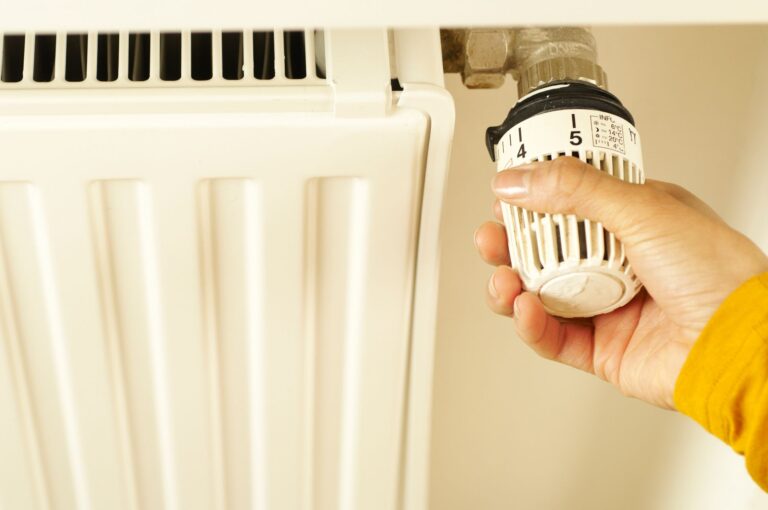

Swapping out a tired wall thermostat used to mean a Saturday tangled in wire labels and a vague hope that the new screen would actually fit. Today the category is friendlier, with options spanning single-stage simplicity, multi-stage programming, and dual-fuel heat pump logic. Whether you heat a drafty garage, a split-level family home, or a retro baseboard setup, the right control panel changes how comfortable the space feels day to day. This roundup focuses on wall-mounted digital thermostats compatible with conventional and heat pump systems, leaning on what each unit actually specifies so you can match hardware to home without guesswork.
The Lineup, Simplified
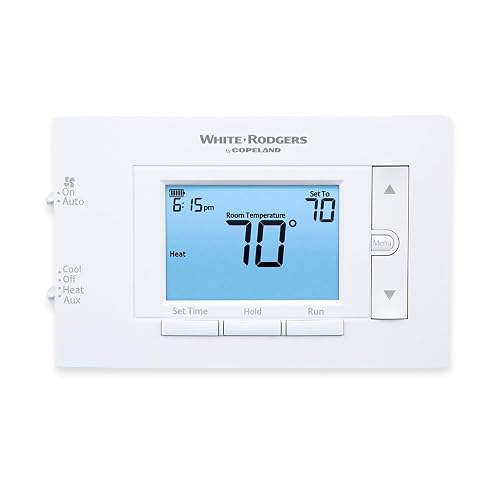
White-Rodgers Emerson 80 Series Programmable Heat Pump Thermostat
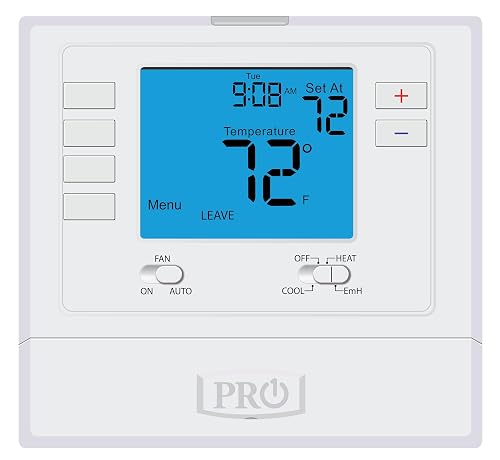
PRO1 T725 Heat Pump/Conventional Programmable Thermostat

PRO1 T771 Single Stage Non-Programmable Wall Thermostat
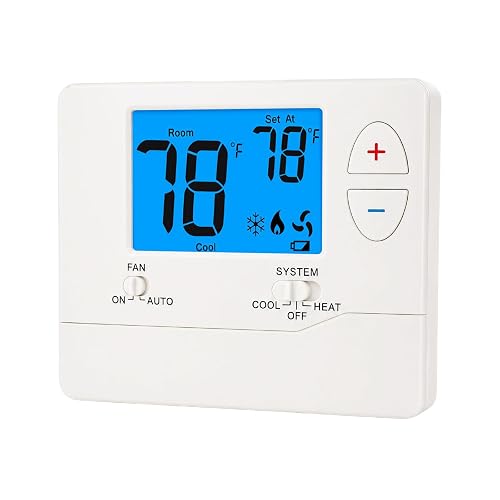
Nurfosttek Digital Energy-Saving Thermostat
PRO1 T701 Single Stage Non-Programmable Thermostat

PRO1 T715 Multi-Stage Programmable Gas Thermostat

EconoHome Non-Programmable Thermostat for Home
PRO1 T721 Non-Programmable Wall Thermostat
Honeywell TH1100DV1000 Pro-Digital 2-Wire Heat Only

PRO1 T805 Single Stage Programmable Wall Thermostat
A Deeper Look At The Lineup
The Emerson 80 Series targets homes running a heat pump with a secondary fuel source, a setup that confuses most basic thermostats. The 4.5-inch horizontal screen gives you one of the larger readouts in this lineup, which matters when the thermostat lives across the room from where you actually sit.
It supports 2 heat and 1 cool stages, a dual-fuel option that switches between heat pump and gas backup, and a programmable schedule in 7-day, 5+1+1, or non-programmable modes. The 24-volt system runs on a common wire or batteries, and the keypad lockout keeps curious kids from rewriting your settings. The L terminal, where supported, can flag service alerts from the HVAC equipment itself.
Benefits That Matter
- Dual-fuel logic helps the system choose the cheaper heat source based on outdoor temperature, easing utility costs in shoulder seasons.
- The 4.5-inch display with a horizontal profile reads clearly from across a hallway or open living area.
- Keypad lockout, temperature limits, and a profile-housing design reduce accidental changes during cleaning or play.
- Programmable in 7-day, 5+1+1, or non-programmable modes for flexible weekly control.
Honest Caveats
- The horizontal profile can look oversized on walls that previously held a smaller square stat.
- Not compatible with electric baseboard heating, so verify system type before mounting.
Built With In Mind
Homeowners with a heat pump plus a gas or oil backup who want a readable display and programmable scheduling without learning a touchscreen interface.
Reach For A Different Pick When
The PRO1 T715 is a better fit for two-stage gas furnace systems that need a 2 heat and 2 cool control without heat pump logic.
The PRO1 T725 sits in a useful middle ground for households that may switch system types during a renovation. It handles 2 heat and 1 cool heat pump setups as well as 1 heat and 1 cool conventional systems, so swapping from a furnace to a heat pump later won’t require a new wall unit. The 4-square-inch blue backlit display keeps the schedule mode visible at a glance.
Programmability covers 7-day, 5/1/1, or non-programmable operation, with wake, leave, return, and sleep periods shaping each weekday. It runs on the T700 platform, which means the wiring layout and terminal labeling stay familiar if you upgrade to another PRO1 unit down the line. For most households, the schedule flexibility earns its place over the simpler T701 we covered above.
What Makes Sense
- Dual compatibility for heat pump and conventional systems protects the purchase during HVAC upgrades.
- 7-day and 5/1/1 scheduling with four daily periods fits a working family’s varied routine.
- Blue backlit display offers clear visibility without the glare of larger touchscreens.
- Programmable or non-programmable modes let you skip scheduling entirely if your routine stays steady.
Trade-Offs To Consider
- The 4-square-inch screen may feel small from across a wide great room.
- Wiring verification matters at install, since heat pump and conventional systems use different terminal layouts.
Made For
Homeowners planning a near-term HVAC switch or already running a hybrid system who want one programmable stat that can follow along.
A Better Fit Elsewhere
The PRO1 T771 is a stronger match for a garage or workshop where wide temperature swings matter more than scheduling flexibility.
Outbuildings and unheated spaces ask thermostats to do something most living-room stats can’t: hold a setpoint down near freezing. The PRO1 T771’s 25 to 90 degree Fahrenheit range is wider than any other pick here, which makes it a natural fit for a detached garage, a garden shed, or a basement workshop where winter temperatures can dip hard.
It is strictly non-programmable, with a 4-square-inch blue backlit display and a swing adjustment that lets you tune how often the system cycles. The non-programmable simplicity means less to misconfigure after a long day working in the shop. The look and feel line up with the PRO1 T701 we covered earlier, but the wider setpoint floor is the difference that matters for cold-room use.
Useful Strengths
- Setpoint range starts at 25 degrees Fahrenheit, far below typical home thermostats.
- Swing adjustment gives you control over short-cycling in spaces with oversized heaters.
- Blue backlit display remains readable in dim basements and detached structures.
Some Limits To Know
- Single-stage only, so it cannot manage separate heating and cooling equipment.
- No scheduling, which means a manual adjustment whenever the space needs a different temperature.
Right Fit For
Workshop and garage owners who need reliable cold-tolerant control without paying for scheduling features they won’t use.
Not Your Match When
The PRO1 T725 is a better choice for living areas where weekday scheduling and 2 heat and 1 cool support are useful.
The Nurfosttek thermostat is built for someone staring at a wall plate full of wires for the first time and wanting the path of least resistance. The control layout stays intuitive, with a clear LCD that surfaces room temperature and setpoint without nested menus. It works with single-stage conventional 1 heat and 1 cool systems, which covers the bulk of gas furnace plus air conditioner pairings in older homes.
Compatibility stretches to standard central air, forced-air furnaces, and basic heat pump setups, giving it more reach than a single-fuel stat. The non-programmable approach means there is no app, no account, and no learning curve beyond reading the manual once. For households that simply want consistent temperatures without a smart home ecosystem, the Nurfosttek handles the basics without filler.
Strong Points
- Broad single-stage compatibility across gas, electric, and standard heat pump systems.
- Clear LCD readout with a straightforward control layout for first-time installers.
- No app or account required, which keeps the privacy footprint small.
Factors To Consider
- Non-programmable only, so you will adjust the setpoint manually as the day changes.
- Single-stage only, which rules out multi-speed equipment and heat pump plus gas hybrid systems.
Best Suited To
First-time thermostat installers replacing a basic wall stat in a single-stage gas furnace or central air home.
Skip It When
The Honeywell TH1100DV1000 is a better fit for two-wire heat-only systems like electric baseboards or hydronic boilers.
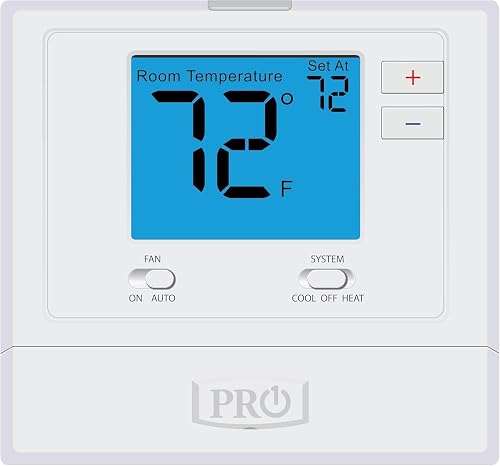
The PRO1 T701 is the kind of thermostat that disappears into a hallway after a few weeks because it does its job without fuss. The 4-square-inch blue backlit display is easy to read at a glance, and the glow-in-the-dark light button means fumbling for the wall switch in a dim corridor is a thing of the past. It is designed for 1 heat and 1 cool conventional systems, which is the most common setup in suburban homes with a gas furnace and central air.
Configuration supports gas or electric conventional HVAC equipment, giving flexibility across fuel types. The T701 sits on the larger T700 platform, so the wiring layout shares spacing with the programmable T725 we covered above. Owners commonly find the installation straightforward when the existing wire bundle includes a common or Rh lead.
Everyday Perks
- Glow-in-the-dark light button makes nighttime adjustments easier than locating a touchscreen.
- Gas or electric conventional support covers most standard residential pairings.
- 4-square-inch blue backlit display reads clearly from across a small room.
Points To Keep In Mind
- Non-programmable, so you adjust the setpoint by hand for day and night changes.
- Single-stage only, which excludes multi-speed or modulating HVAC equipment.
Feature Snapshot
Whose Shelf It Belongs On
Households with a standard single-stage furnace and central air who want a backlit, non-programmable stat that simply works.
Swap It Out When
The PRO1 T805 is a stronger match for anyone wanting a programmable schedule and an extra-large display on the same T800-style platform.
Homes with a two-stage gas furnace and a two-stage air conditioner need a thermostat that can speak to both stages of each. The PRO1 T715 is built for that job, with 2 heat and 2 cool support that lets the system ramp up gradually rather than blasting at full output every cycle. The result is a quieter runtime and a steadier indoor temperature, which matters in open floor plans where temperature swings are easy to feel.
The unit supports 7-day, 5/1/1, or non-programmable operation, so you can ignore the schedule entirely if your routine stays consistent. The 4-square-inch blue backlit display and glow-in-the-dark light button mirror what we saw on the T701 above, keeping the look consistent across rooms. Battery or hardwire power gives you install flexibility when the existing wire bundle is short on conductors.
Bright Spots
- 2 heat and 2 cool staging reduces short-cycling and keeps temperatures steadier in large homes.
- Programmable or non-programmable operation suits both hands-off and scheduled households.
- Battery or hardwire power eases installation when a common wire is missing.
Practical Considerations
- Two-stage systems are uncommon in older homes, so most retrofits only make sense alongside an HVAC upgrade.
- More internal settings can take longer to configure than a single-stage stat like the PRO1 T701.
Quick Facts
Made For
Owners of two-stage gas furnace systems who want a programmable stat that can call for low and high fire as conditions shift.
Where A Sibling Pick Shines
The White-Rodgers Emerson 80 Series is a stronger match when a heat pump plus gas backup is the system rather than a two-stage gas furnace.
The EconoHome thermostat keeps the wall plate simple, with a digital display and a push-button layout that anyone can use without an instruction manual. It is designed for single-stage systems, including central gas, oil, and electric furnaces, plus cool-only setups like a window or central air conditioner. For rental properties and guest suites, the lack of programming keeps tenants from accidentally wiping a saved schedule.
The fan switch includes on and auto modes, letting you run the blower continuously for better air circulation during peak summer humidity. The non-programmable approach means fewer settings to misconfigure during cleaning, which is a quiet plus for short-term rentals. Compared to the Nurfosttek covered above, the EconoHome leans even further toward minimalism.
Points In Its Favor
- Compatibility spans central gas, oil, and electric furnaces plus cool-only air conditioning.
- Push-button control and a clean digital readout reduce the learning curve for non-technical users.
- Manual fan switch with on and auto gives flexibility for humidity-heavy seasons.
Points To Note
- Non-programmable, so day and night setpoints need manual adjustment.
- Single-stage only, which excludes multi-speed HVAC equipment and heat pump configurations.
Perfect Match For
Landlords and homeowners upgrading a rental unit or guest room who want a fuss-free stat with no scheduling to maintain.
Look Elsewhere When
The PRO1 T805 is a stronger fit for primary living spaces where 7-day scheduling and a larger display are worth the extra setup.
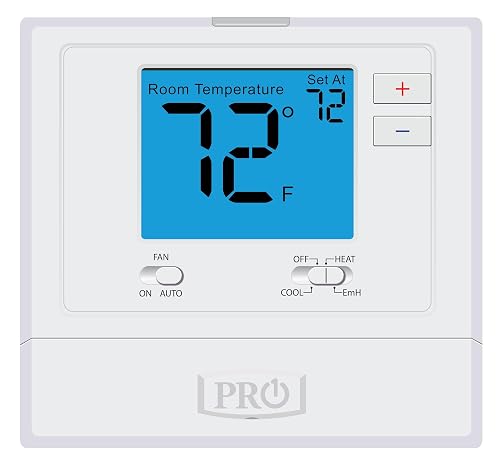
The PRO1 T721 covers a system type that lands in the middle of the lineup: a 2 heat and 1 cool heat pump or a 1 heat and 1 cool conventional system. That dual support matters when a renovation leaves the old thermostat wires in place but the equipment is being swapped. The non-programmable operation keeps the controls pared back to the essentials.
The 4-square-inch blue backlit display and glow-in-the-dark light button match the look of the T701 we covered above, so mixing PRO1 units in the same house reads as a deliberate choice. Power comes from AA batteries or a hardwire connection, which gives flexibility for older homes with thin wire bundles. For most homes, the T721 sits between the simpler T701 and the programmable T725.
The Case For It
- Dual compatibility for 2 heat and 1 cool heat pumps or 1 heat and 1 cool conventional systems.
- Glow-in-the-dark light button aids late-night adjustments without fumbling.
- AA battery or hardwire power adapts to thin existing wire bundles.
Small Caveats
- Non-programmable, so you adjust the setpoint by hand when routines change.
- Heat pump plus gas hybrid control requires verifying the terminal layout before mounting.
Spec Overview
Best Suited To
Mid-range renovation projects where the system type is not yet final and the thermostat needs to flex with the equipment choice.
Consider Something Else When
The PRO1 T725 is a better match for homeowners who want 7-day or 5/1/1 scheduling on the same dual-system hardware.
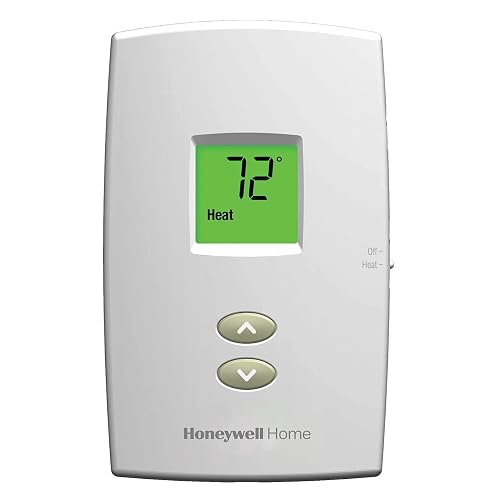
The Honeywell TH1100DV1000 solves a very specific problem: controlling a 2-wire heat-only system, like the 240-volt electric baseboards common in older apartments and condos. Most modern programmable stats need a common wire, which 2-wire setups simply do not have. This unit sidesteps that limitation with a design tailored to line-voltage heating circuits.
The display shows ambient temperature at all times and gives one-touch access to the setpoint, with an adjustable temperature scale from 40 to 90 degrees Fahrenheit. Built-in compressor protection helps in setups that pair heating with a separate cooling unit. The non-programmable format keeps the wall control pared down to the basics, which is a fair trade for the wiring simplicity.
A Favorable Mix
- 2-wire compatibility suits line-voltage electric baseboards and similar heat-only circuits.
- Backlit display reads clearly in low light, with a continuous ambient temperature readout.
- Built-in compressor protection guards paired cooling equipment from short cycling.
Worth Bearing In Mind
- Heat only, so it cannot manage a central air conditioner on its own.
- Non-programmable, which means no automatic setback for sleeping or travel hours.
Feature Rundown
Right Fit For
Owners of electric baseboard or hydronic boiler homes with 2-wire heat-only wiring who need a digital stat without rewiring.
Reach For A Different Pick When
The Nurfosttek Digital Energy-Saving Thermostat is a better choice for low-voltage conventional furnace plus central air pairings.
The PRO1 T805 closes the list by focusing on the single feature that matters most when you actually live with a thermostat: how big the numbers are. The 7-square-inch blue backlit display is the largest in this roundup, which is a real benefit in homes where the thermostat sits across a long room from the seating area. It runs on the T800 platform, a step up in screen real estate from the T700-series units we covered earlier.
Programming covers 7-day, 5/1/1, or non-programmable modes, with the schedule option available whenever the routine demands it. The unit works with 1 heat and 1 cool conventional systems, covering the typical gas furnace plus central air pairing. The glow-in-the-dark light button keeps the control locatable in a dark hallway without lighting the whole room.
What It Does Well
- 7-square-inch display is the largest in the lineup and easy to read from across a room.
- 7-day and 5/1/1 scheduling fits working households with varied weekly routines.
- Glow-in-the-dark light button helps locate the control at night without overhead lighting.
Possible Compromises
- Larger display can look out of proportion on narrow wall sections between door frames.
- Single-stage only, so it cannot drive a two-stage furnace or a heat pump system.
Details At A Glance
Who Should Grab It
Households with standard single-stage HVAC equipment who want the largest, clearest readout in this roundup with optional scheduling.
Another Choice May Suit
The PRO1 T701 is a more compact alternative when the wall space is narrow and a smaller 4-square-inch display is enough.
Picking the Right Wall Thermostat for Your Home
Match the Thermostat to the System Type First
A “heat pump” system uses an outdoor compressor to move heat in winter and reverse the flow in summer, while a “conventional” system pairs a furnace with a separate air conditioner. The two have different terminal layouts, and a heat pump thermostat without the O/B or auxiliary terminals simply will not work on a conventional system. Before choosing any wall unit, pop the cover off the existing stat and write down the wire colors connected to each letter.
Decide Whether Scheduling Actually Helps
A “programmable” thermostat lets you set different temperatures for wake, leave, return, and sleep periods across the week. For households with steady weekday routines, scheduling trims utility spend by relaxing the temperature while the home is empty. A “non-programmable” stat works best when routines vary day to day or when renters are involved.
Read the Display Through Your Glasses
Display size affects how often you walk over to the wall. A 4-square-inch screen suits hallways and small rooms, while 7 square inches reads from across a great room. Backlit screens and glow-in-the-dark light buttons are worth checking in dim corridors and bedrooms, especially for anyone with less-than-perfect vision.
Plan the Wiring Before You Mount
Battery-powered and hardwire-capable thermostats cover older homes where the common wire is missing, while 2-wire heat-only units solve line-voltage baseboard setups that most modern stats cannot touch. Power flexibility matters because pulling a new wire through a finished wall is rarely worth the effort. Confirm the stat accepts your existing wire bundle before mounting.
Key Considerations Across These Picks
Common Buying Mistakes
A frequent slip is choosing a thermostat before checking the existing wire bundle, which leads to a unit that cannot power up or is missing a needed terminal. Another common trap is buying a multi-stage stat for a single-stage furnace, paying for staging the equipment can never deliver. The honest read is to match the stat to the equipment first, then layer on scheduling and display size.
Where the Extra Money Goes
Spending up typically buys larger displays, programmable scheduling, and staging support for two-stage equipment. For homes with a heat pump plus a gas backup, the dual-fuel logic in the Emerson 80 Series and the PRO1 T725 can shift the system to the cheaper fuel automatically. When the system is a basic single-stage furnace plus central air, the upgrade usually means a bigger screen rather than smarter control.