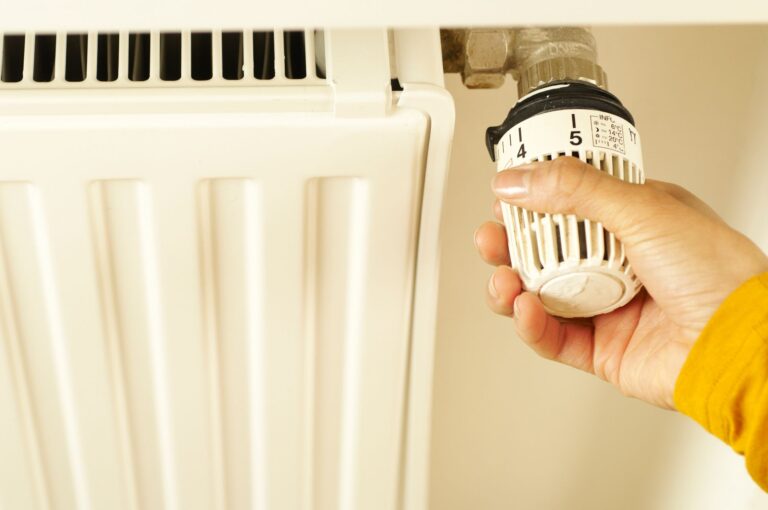

Wall-mounted temperature control is one of those quiet upgrades that changes daily life more than you’d expect. Whether you run a heat pump in a drafty split-level, manage a workshop that needs steady climate, or want app-based scheduling from a second-floor bedroom, the right thermostat keeps comfort consistent without constant fiddling. The nine options below cover conventional systems, heat pumps, multi-stage setups, and app-connected smarts, so you can match the unit to your existing wiring instead of the other way around. Each pick is framed around the system it actually works with, since that single detail shapes everything else.
A Snapshot Of The Selections
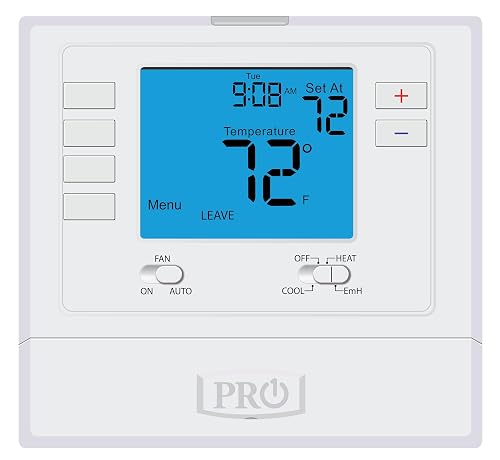
PRO1 T725 Heat Pump/Conventional Programmable Wall Thermostat

PRO1 T771 Single Stage Non-Programmable Wall Thermostat
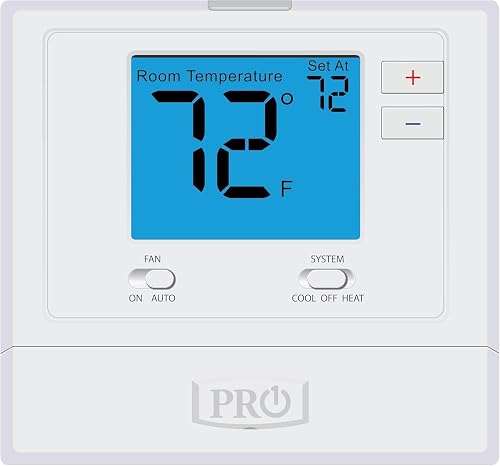
PRO1 T701 Single Stage Non-Programmable Wall Thermostat

PRO1 T715 Multi-Stage Programmable Gas Wall Thermostat
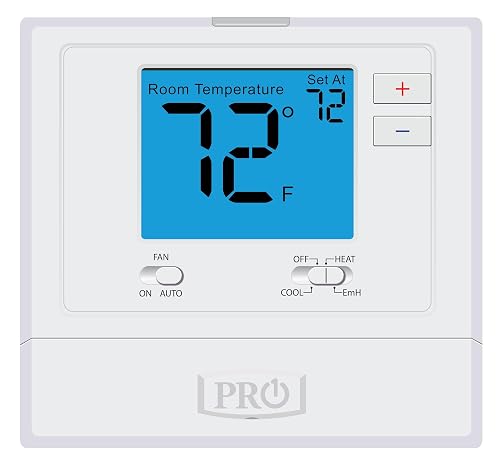
PRO1 T721 Non-Programmable Wall Thermostat (2H/1C)

PRO1 T805 Single Stage Programmable Wall Thermostat
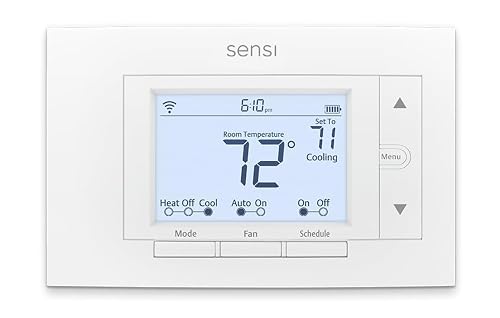
Sensi ST55 Smart Thermostat (Wi-Fi)
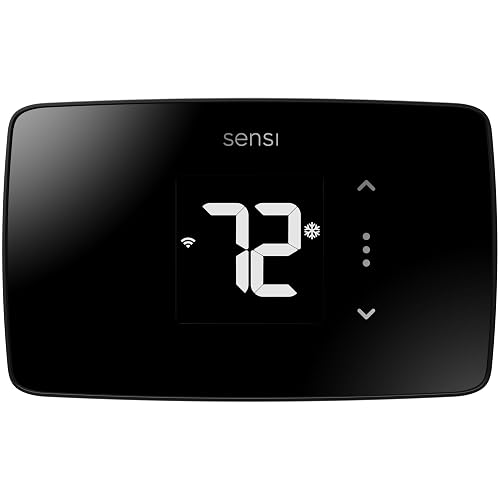
Sensi Lite ST25 Smart Thermostat (Wi-Fi)
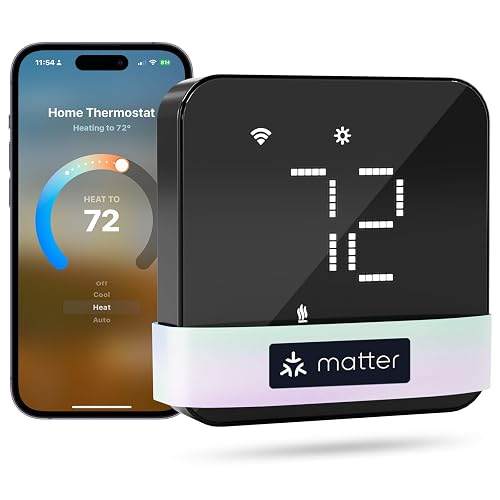
meross Matter Smart WiFi Thermostat
Why These Options Stand Out
The PRO1 T725 sits in an unusual middle ground: it speaks both heat pump and conventional HVAC languages in the same housing, which is helpful if your home’s system changed over the years. A 4-square-inch blue backlit screen reads clearly from across a hallway, and the 7-day or 5/1/1 schedule lets you set a true weekday routine rather than repeating the same daily block. Compared to the simpler T701 you’ll see later, this one adds real scheduling depth without forcing a smart-app commitment.
That dual compatibility is the headline. In homes that switched from a gas furnace to a heat pump mid-life, the T725 keeps your options open. The glow-in-the-dark light button (a small touch, but a real one when you wake up at 2 a.m.) makes late-night adjustments painless.
Everyday Advantages
- Dual-system support means one thermostat can handle either a 2 heat/1 cool heat pump or a 1 heat/1 cool conventional setup.
- 7-day and 5/1/1 programming give you genuine weekday-versus-weekend flexibility, which matters if your schedule shifts.
- The 4-square-inch blue backlit display is large enough to read without leaning in, even in dim hallways.
- Glow-in-the-dark light button for quick location in the dark, no fumbling for a wall switch.
Points To Keep In Mind
- Battery or hardwire is on you to verify, so check the terminal count before mounting.
- Programming takes a few minutes to set up the first week, longer than a one-setpoint dial.
Key Specs
Made For
Owners with a 2H/1C heat pump who want scheduled comfort without learning a smart-app ecosystem.
Consider Something Else When
Your system is purely conventional and you’d rather save with the simpler PRO1 T701.
Most wall thermostats refuse to go below 50°F, which makes them miserable for the spaces that actually need low-temperature protection. The PRO1 T771 reaches down to 25°F at the bottom of its setpoint range, which is exactly the territory that garages, sheds, and workshops live in. It’s non-programmable on purpose: you set a temperature, the unit holds it, and you move on with the day.
That wide setpoint range is the whole pitch. Swing adjustment and calibration controls let you tune how aggressively the system fires, which matters when a space heater is sharing a circuit with a compressor. The same 4-square-inch blue backlit display used on the T701 shows up here, so readability is familiar.
Everyday Wins
- 25°F to 90°F setpoint range covers freeze-protection duty in unconditioned spaces.
- Swing adjustment and calibration help you fine-tune how often the system cycles.
- Single-stage simplicity means fewer wiring mistakes during install.
Trade Offs
- No scheduling means it can’t drop the setpoint at night automatically to save energy.
- It only speaks conventional 1 heat/1 cool, so heat pump owners should look elsewhere.
Best Suited To
Anyone with a detached garage, workshop, or shed that needs freeze protection without smart complexity.
Look Elsewhere When
You want scheduled setbacks, in which case the Sensi ST55 offers app-based scheduling with broader comfort control.
Not every home needs scheduling, learning algorithms, or a phone app. The PRO1 T701 is the textbook “set it and forget it” wall unit, aimed at 1 heat/1 cool conventional systems where the homeowner wants accurate temperature control without a learning curve. Compared to the T771 covered above, this one targets living space rather than workshops, with the same oversized 4-square-inch display sitting on a slightly different platform.
For most people, the honest read is that a non-programmable digital wall unit is plenty. Gas or electric compatibility covers the majority of residential furnaces, and the glow-in-the-dark light button returns from the T700 platform for after-hours adjustments.
Strengths Worth Knowing
- Gas or electric compatibility covers the most common residential furnace setups.
- Large 4-square-inch blue backlit display stays readable across a typical room.
- Glow-in-the-dark light button simplifies late-night adjustments.
- Non-programmable design means almost no setup time, which is great for second homes and rentals.
Honest Caveats
- Single-stage only, so two-stage furnaces and heat pumps aren’t supported here.
- Lacks any scheduling, which means a small comfort gap for households that want automatic setbacks.
Right Fit For
Owners of single-stage conventional HVAC systems who want a no-fuss, large-display digital thermostat.
Swap It Out When
You’d like room-by-room scheduling, in which case the Sensi Lite ST25 handles app-based routines with minimal wiring fuss.
Multi-stage HVAC systems need a thermostat that actually understands them, and the PRO1 T715 is built for that job. It handles 2 heat/2 cool configurations, which is the wiring complexity behind a two-stage furnace paired with a two-stage air conditioner. The 7-day, 5/1/1, or non-programmable modes give you the option of running it as either a scheduled unit or a plain setpoint controller.
For most homes, the upgrade is worth it the moment a single-stage thermostat starts short-cycling a two-stage furnace. The same 4-square-inch backlit screen from the T700 platform appears here, with a glow-in-the-dark light button for after-hours use.
What Makes Sense
- True 2 heat/2 cool staging support matches modern two-stage furnace and AC pairs.
- Three operating modes: 7-day, 5/1/1, or non-programmable, so you can pick the right level of automation.
- Backlit display with glow-in-the-dark light button improves nighttime visibility.
Practical Considerations
- Initial setup is more involved than a single-stage unit, so factor in time for terminal labeling.
- Overkill for a basic single-stage home, where the T701 would do the same job for less complexity.
Feature Snapshot
Who It Suits Best
Homeowners with two-stage gas HVAC systems who want scheduled comfort without moving to a smart platform.
A Better Fit Elsewhere
Single-stage households would be overspending; the PRO1 T701 handles that simpler setup cleanly.
The PRO1 T721 occupies a useful middle position: it covers a 2 heat/1 cool heat pump or a 1 heat/1 cool conventional system, but skips programming altogether. That makes it a strong fit for homes where the system type is complex but the household routine is regular enough that a single setpoint works fine. Compared to the T725 reviewed earlier, you give up scheduling but keep the heat-pump-friendly wiring flexibility.
The T700 platform’s familiar 4-square-inch blue backlit display shows up here, and the glow-in-the-dark light button carries over as well. Power options typically include AA batteries, so installation stays approachable in older homes where a common wire is missing.
The Practical Payoff
- Dual-system support without forcing a learning curve on the household.
- Battery power option avoids the common-wire problem in older properties.
- Same readable display and glow button as the rest of the T700 family.
Some Limits To Know
- No scheduling, so energy-conscious users lose out on automatic setbacks.
- Limited to 2 heat/1 cool heat pump configurations, not 2 heat/2 cool like the T715.
Whose Shelf It Belongs On
Homeowners with mixed or older HVAC systems who want compatibility without scheduling complexity.
Reach For A Different Pick When
You’d benefit from a smart app, in which case the meross Matter Smart WiFi Thermostat is built for that route.
The PRO1 T805 jumps up to the T800 platform, which buys you a noticeably larger 7-square-inch blue backlit display. That’s a meaningful upgrade for anyone who has leaned in to read a 4-square-inch screen across a hallway at 6 a.m. The T805 still targets conventional 1 heat/1 cool systems, but adds 7-day, 5/1/1, and non-programmable modes so it grows with your schedule.
The T800 platform also keeps the glow-in-the-dark light button, so the nighttime experience carries over. Compared to the T701, you trade a slimmer unit for more display real estate and deeper scheduling.
Why It Works Well
- Extra-large 7-square-inch display is a genuine readability upgrade.
- Three operating modes, including full 7-day scheduling, give you scheduling flexibility.
- Glow-in-the-dark light button for late-night adjustments.
Points To Note
- Single-stage only, so heat pumps and multi-stage systems aren’t supported.
- The larger face means it draws more attention on the wall than the slimmer T700 series.
Quick Facts
Perfect Match For
Single-stage conventional homeowners who prioritize a large, easy-to-read display and optional scheduling.
Not Your Match When
You run a heat pump, in which case the PRO1 T725 is the better fit for similar scheduling in heat-pump territory.
The Sensi ST55 marks the transition from wall-unit-only thinking to app-connected comfort control. Made by Emerson, a company that has spent decades building HVAC components, the ST55 brings Wi-Fi scheduling, voice-assistant integration, and a familiar interface to homes that are ready to leave manual programming behind. It’s marketed as a DIY install, which matters if you’d rather not schedule a service call.
Compared to the PRO1 units above, the ST55 trades the simple physical dial for phone-based scheduling and remote access. The app stores your settings, lets you adjust from the couch or the airport, and offers usage reports. Energy Star certification ties it to documented efficiency claims from the program.
What Works In Its Favor
- App-based scheduling and remote adjustment remove the need to stand at the wall to change settings.
- DIY install focus with step-by-step app guidance.
- Energy Star certification ties to documented efficiency standards from that program.
A Few Limitations
- Requires a stable 2.4 GHz Wi-Fi connection, so dead spots in the utility room can be a real issue.
- Privacy depends on the mobile app’s data policies, which matter if you prefer devices that don’t phone home.
Who Should Grab It
Connected-home users who want remote control, scheduling, and energy reporting from a recognized HVAC brand.
Where A Sibling Pick Shines
If you live in a Matter-leaning smart home, the meross Smart WiFi Thermostat is built around cross-ecosystem compatibility.
The Sensi Lite ST25 is what happens when a smart thermostat gets trimmed down for the first-time buyer. The headline feature is that most systems don’t need a common wire (C-wire), which is the single most common installation roadblock in older homes. A 2.4 GHz Wi-Fi connection is still required, but the absence of a C-wire pull-through saves a Saturday afternoon for many households.
Compared to the ST55, you give up some of the deeper configuration, but you keep the app-based control, voice-assistant compatibility, and Energy Star certification. For rentals and starter homes, the Lite is often the right size.
Good Reasons To Consider
- No common wire required for most systems, simplifying install in older homes.
- Mobile app handles scheduling and remote control without subscription fees.
- Energy Star certified for documented efficiency performance.
Things To Weigh
- Still needs a 2.4 GHz Wi-Fi signal at the mounting location.
- Reduced feature set compared to the full ST55, so advanced automation users may feel limited.
Built With In Mind
DIY newcomers in older homes without a C-wire, who want app control without a complex install.
Skip It When
You want a Matter-first smart home, where the meross Smart WiFi Thermostat is the more future-facing pick.
The meross Smart WiFi Thermostat is built around Matter, the cross-ecosystem standard that lets one device talk to Apple Home, Google Home, Amazon Alexa, and SmartThings without juggling multiple apps. That matters more than it sounds if your household uses a mix of voice assistants and phones. The meross unit covers roughly 95% of common HVAC systems, including heat pumps, air conditioners, furnaces, boilers, dehumidifiers, and humidifiers.
Compatibility does have edges, though. Electric baseboard heaters running on 110V/120V/240V, millivolt systems, and two-wire setups are not supported. A C-wire is required and not included, so verify your wiring before ordering.
Notable Upsides
- Matter support means one device plays nicely across multiple smart-home platforms.
- Broad HVAC compatibility covers heat pump, AC, furnace, boiler, dehumidifier, and humidifier setups.
- Programmable WiFi control through the meross app or your preferred ecosystem.
Possible Compromises
- Requires a C-wire, which older homes may not have at the mounting location.
- Not suitable for line-voltage electric baseboard heaters, millivolt systems, or two-wire configurations.
Who Will Love This
Smart-home enthusiasts with mixed-ecosystem gear who want a single thermostat that integrates with all of it.
A Better Fit Elsewhere
Homeowners with no C-wire access should reach for the Sensi Lite ST25, which is engineered around that limitation.
What To Think Through Before Picking A Wall Thermostat
Match The System First, The Features Second
The single biggest decision is whether your HVAC system is conventional, heat pump, or multi-stage. Conventional systems run on simple 1 heat/1 cool wiring, while heat pumps add a reversing valve signal that non-heat-pump thermostats can’t read. Multi-stage systems use 2 heat/2 cool wiring and need a unit that explicitly supports that staging. Picking the wrong category usually means a thermostat that powers on but never actually calls for heating or cooling. The PRO1 T725 and T721 are useful precisely because they handle more than one system type.
Decide Between Programmable And App-Connected
Programmable wall units like the PRO1 T805 schedule by time block on the device itself, which works fine for predictable households. App-connected thermostats like the Sensi ST55, Sensi Lite ST25, and meross unit add remote control, learning routines, and energy reports, but they also depend on a stable 2.4 GHz Wi-Fi signal and your comfort with cloud-connected home devices. For most households, the choice is really about how much automation you want to manage.
C-Wire And Wiring Reality
Smart thermostats almost always need a C-wire, which is the common return line that delivers continuous power. Older homes often lack it, which is why the Sensi Lite ST25 markets its no-C-wire design so heavily. The meross unit does require a C-wire and clearly calls that out, so check the terminal count on your existing thermostat before ordering. Pulling a new C-wire through finished walls is doable but adds real cost and time.
Key Considerations Across These Picks
Common Shopping Slip Ups
The most common mistake is choosing a thermostat before checking the system’s stage count. A single-stage unit on a two-stage furnace will work, but the second stage never fires, and the efficiency benefit is lost. The second pitfall is assuming every smart thermostat works without a C-wire. Most do require one, and the meross listing is unusually clear about that. Finally, homeowners sometimes buy a heat-pump-compatible unit for a conventional system and pay for capability they never use.
What The Higher Tier Buys
The jump from a non-programmable wall unit to a programmable or smart thermostat buys scheduling, app control, and energy reporting. The jump from single-stage to multi-stage support, like the PRO1 T715, buys compatibility with two-stage furnaces that cycle more gently and use less energy. The biggest jump, however, is the move to a Matter-compatible smart thermostat like the meross unit, which trades a higher upfront cost for cross-ecosystem flexibility that pays off over years of smart-home changes.
Frequently Asked Questions
Do I need a C-wire for any of these thermostats?
The smart units from Sensi and meross generally need a C-wire, though the Sensi Lite ST25 is designed to work without one in most systems. The PRO1 wall units typically run on AA batteries or hardwire, so the C-wire question is less pressing. Always check the wiring at your existing thermostat before ordering.
Can I install these myself, or should I hire a pro?
The PRO1 wall thermostats and the Sensi ST55 and ST25 are marketed as DIY-friendly, with color-coded terminals and straightforward wiring layouts. If your existing thermostat is low-voltage and you’re comfortable turning off the breaker, the install is usually under an hour. Smart thermostats like the meross unit may warrant a pro if a C-wire needs to be pulled.
Will any of these work with a heat pump?
Yes. The PRO1 T725, T721, and the meross unit all support heat pump configurations, including 2 heat/1 cool systems. The PRO1 T715 supports 2 heat/2 cool gas systems, which is a different category. Single-stage conventional units like the T701 and T805 do not support heat pumps.
What’s the difference between programmable and non-programmable?
Programmable thermostats let you set different temperatures for different times of day, so the house can be cooler at night and warmer before you wake up. Non-programmable units hold a single setpoint until you change it manually. The energy savings from programming depend on your schedule, but for households with regular routines, the difference can add up over a year.
How do these handle power outages?
Battery-powered units like the PRO1 T701, T721, and T771 keep working through outages, though the display turns off between button presses. Hardwired units with battery backup behave similarly. App-connected smart thermostats typically resume their previous settings after power returns, but they need the Wi-Fi network to come back online before remote control works again.
The Takeaway
The thermostat that fits your home is the one that matches your HVAC system first, your scheduling style second, and your smart-home ambitions third. For workshops and detached spaces, the PRO1 T771’s wide setpoint range is hard to beat. For most living spaces, the PRO1 T805 or T725 covers conventional and heat-pump needs with real scheduling. For app-connected comfort, the Sensi ST55 and meross Matter thermostat are the picks worth weighing against each other. Take ten minutes to look at your existing wiring, decide how much automation you actually want, and the right choice usually falls into place.