
Swapping in a new thermostat sounds simple until you stand in the hardware aisle staring at a wall of options. Some learn your routine, some just hold a steady temperature, and a few need extra wiring you may not have. The right call depends on your HVAC setup, your comfort priorities, and how much brainpower you want the device to handle on its own.
This guide walks through ten thermostats and accessories across a wide price and feature range, from basic programmable workhorses to full smart-home hubs. You’ll see which ones fit a renter’s weekend swap, which ones reward a homeowner ready to dig into schedules, and which ones only make sense if your system already supports them. The goal is to help you skip the regret and pick a thermostat that actually matches how you live.
The Picks In Brief
PRO1 T725 Heat Pump/Conventional Programmable Wall Thermostat
PRO1 T701 Single Stage Non-Programmable Wall Thermostat

PRO1 T715 Multi-Stage Programmable Gas Thermostat
ecobee Smart Thermostat Premium with Smart Sensor
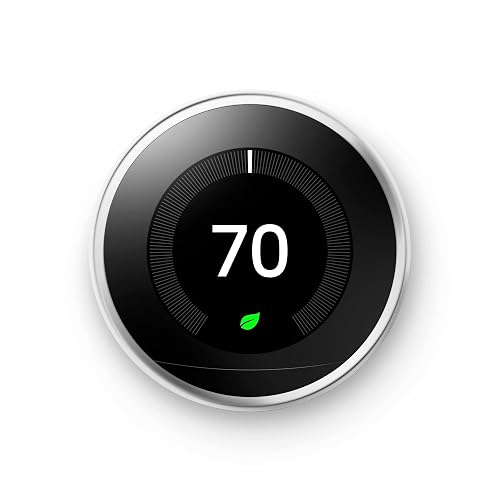
Google Nest Learning Thermostat, Polished Steel
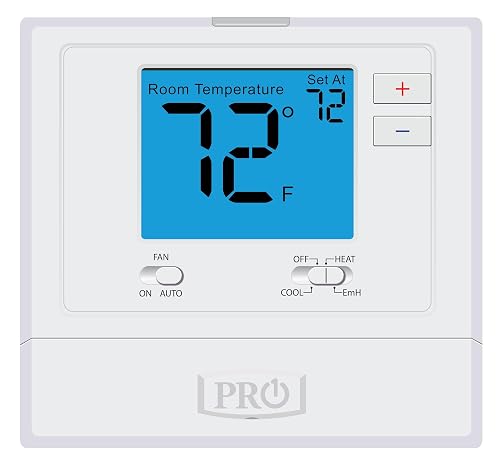
PRO1 T721 Non-Programmable Wall Thermostat 2H/1C
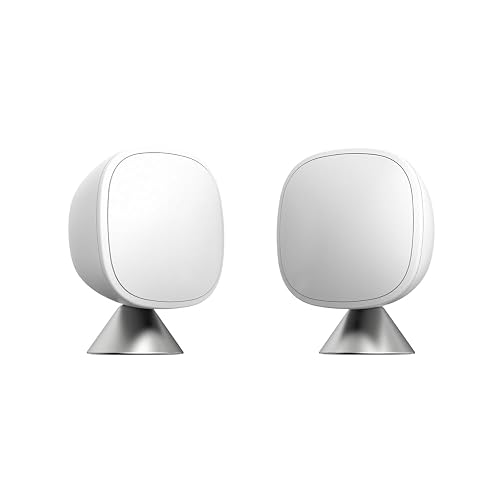
ecobee SmartSensor 2-Pack Temperature and Occupancy
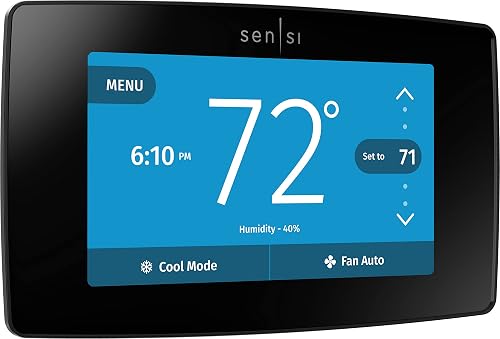
Sensi Touch Smart Thermostat ST75, Black
ecobee Smart Thermostat Enhanced Wi-Fi
Honeywell T10+ Pro Smart Thermostat with RedLINK 3.0
The Strengths Of Each Pick
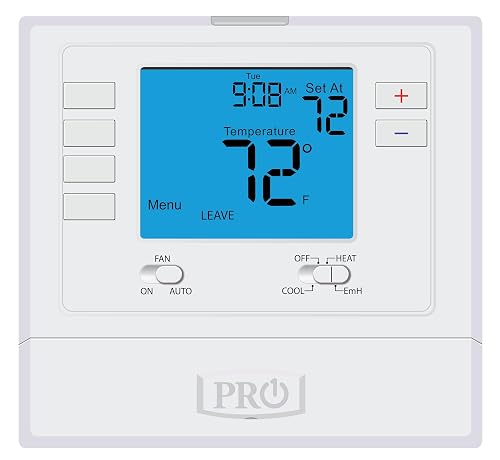
For homeowners running a heat pump and wanting a programmable thermostat that doesn’t try to do everything, the PRO1 T725 keeps things focused. It covers 2 heat/1 cool heat pump systems and falls back to 1 heat/1 cool conventional setups, which is a nice bit of insurance if you ever change equipment. The 4 sq. in. blue backlit display is large enough to read from across the room, and the schedule modes (wake, leave, return, sleep) match the rhythms most people already live by.
Unlike the bare-bones T701 later in this list, the T725 offers real 7-day or 5/1/1 programmability, so weekday and weekend routines can be tuned separately. That kind of flexibility tends to pay off in homes with shifting schedules.
Good Reasons To Consider
- Works as a 2H/1C heat pump thermostat and a 1H/1C conventional unit in one body
- 7-day and 5/1/1 scheduling handle weekday and weekend routines separately
- Large 4 sq. in. blue backlit screen stays readable in low light
- Four schedule blocks (wake, leave, return, sleep) match a typical day
- Built on the T700 platform, so the controls feel familiar if you have other PRO1 units
Things To Consider
- No Wi-Fi or app control, so remote adjustments aren’t possible from your phone
- Lacks the learning features of the Nest or ecobee smart options in this list
Who It Suits Best
Homeowners with a heat pump who want a dependable programmable wall unit without stepping into app-driven smart features.
Where Another Pick Suits Better
Shoppers who want voice control and learning should look at the Google Nest Learning Thermostat instead.
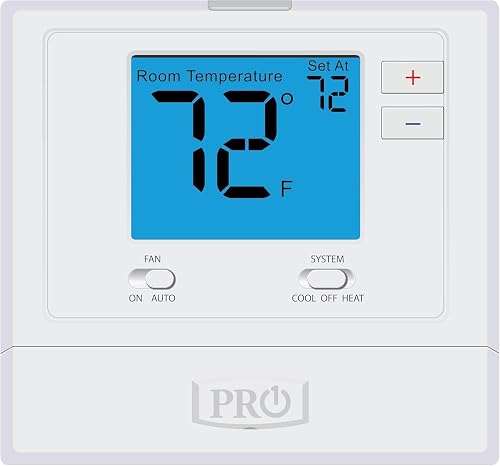
Not every home needs a thermostat that thinks for itself. The PRO1 T701 keeps it refreshingly simple: a digital wall unit for 1 heat/1 cool conventional systems, with a glow-in-the-dark light button for those late-night adjustments. The 4 sq. in. blue backlit display carries over from the larger T700 family, so even though this is the most stripped-down unit here, the screen doesn’t feel cramped.
It runs on the same platform as the programmable PRO1 units, which helps if you ever want to step up later without re-learning the interface. For a guesthouse, a rental, or a homeowner who just wants up and down arrows and a clear temperature, this is a quiet, no-fuss choice.
A Favorable Mix
- Simple up/down temperature control with no scheduling menus to navigate
- Glow-in-the-dark light button helps in nighttime hallways
- Same 4 sq. in. backlit screen used in pricier PRO1 models
- Compatible with both gas and electric conventional systems
Worth Noting
- No programmability means the temperature stays where you set it
- Single-stage only, so it won’t manage a two-stage furnace the way the T715 does
- No remote access, since there’s no Wi-Fi module built in
Made For
Owners of basic 1H/1C conventional systems who prefer a manual dial-style thermostat with a modern digital display.
Consider Something Else When
Anyone wanting energy-saving schedules should look at the PRO1 T715 Multi-Stage Programmable Gas Thermostat instead.
Two-stage gas furnaces need a thermostat that can talk to both stages cleanly, and the PRO1 T715 is built for exactly that job. It supports 2 heat/2 cool gas systems, and the same scheduling flexibility (7-day, 5/1/1, or non-programmable) that the simpler T701 doesn’t offer. The 4 sq. in. blue backlit display plus glow-in-the-dark button match the look of the rest of the PRO1 T700 family.
Compared to the T725 covered earlier, this model steps up from a heat pump focus to dedicated multi-stage gas support. That makes it the right tool for homeowners who already know they have a two-stage furnace and don’t want a thermostat that ignores half of it.
The Case For It
- Manages 2 heat/2 cool gas systems without skipping stages
- Three scheduling modes: 7-day, 5/1/1, or non-programmable
- Compatible with battery or hardwired C-wire setups
- Glow-in-the-dark button keeps the interface usable in dark hallways
Room For Improvement
- Wiring complexity can be a hurdle for first-time installers, even on a conventional system
- No Wi-Fi, so you’ll need to be near the wall to adjust schedules
Key Specs
Best Suited To
Homeowners with a two-stage gas furnace who want a reliable programmable thermostat without smart-home extras.
Skip It When
Renters or first-time smart-home shoppers should reach for the ecobee Smart Thermostat Enhanced instead.
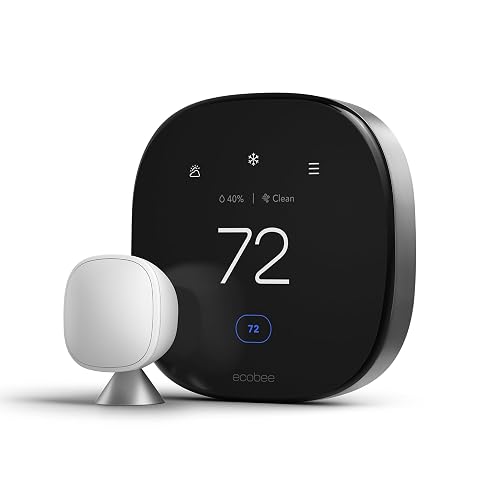
The ecobee Smart Thermostat Premium is the most feature-loaded model in this lineup, and it ships with a SmartSensor right in the box. That combination lets the unit focus comfort on the rooms you actually use rather than just the hallway where the thermostat happens to live. Built-in voice support through Siri and Alexa means no extra smart speaker is required at the wall, and the included air quality monitor adds context beyond temperature.
Compared to the basic PRO1 units, this is a different category entirely. You’re not just swapping a wall dial for a screen; you’re adding occupancy awareness, geofencing, and integration with a broader smart home. For larger homes with uneven temperatures, the SmartSensor alone can justify the upgrade.
What Helps Most
- Includes a SmartSensor, so you can target specific rooms instead of just the hallway
- Built-in voice control removes the need for a separate smart speaker on the wall
- Air quality monitor adds another layer of household awareness
- Geofencing adjusts temperature based on whether anyone’s home
Trade Offs
- Premium pricing puts it well above the basic PRO1 units in this list
- Wiring and Wi-Fi setup are more involved than a non-smart wall thermostat
Who Will Love This
Smart-home enthusiasts with multi-room comfort issues who want voice control and sensors bundled in one purchase.
Look Elsewhere When
Anyone with a heat pump who doesn’t need sensors or voice should consider the PRO1 T725 for a more focused, lower-cost fit.
The Google Nest Learning Thermostat takes a different approach from the ecobee Premium: instead of relying heavily on room sensors, it watches how you adjust the dial and builds a schedule for you. After a week or two of manual tweaks, it starts predicting the temperatures you want at the times you usually want them. Home/Away Assist nudges the system into an Eco Temperature when nobody’s there, so you’re not paying to heat or cool an empty house.
Its HVAC monitoring is the underrated feature for many owners. The Nest can flag unusual heating and cooling patterns and send alerts that point toward maintenance before something fails. That kind of heads-up is useful in older homes where the furnace doesn’t always announce problems until it stops working.
The Practical Payoff
- Learns your schedule and programs itself over the first couple of weeks
- Home/Away Assist saves energy when the house is empty
- Energy History shows usage patterns and explains the why behind the numbers
- HVAC monitoring sends alerts for unusual heating or cooling behavior
Points To Keep In Mind
- The learning curve can frustrate people who just want a set-and-forget schedule right away
- Geofencing and learning depend on a consistent routine, so irregular schedules may not benefit as much
Perfect Match For
Homeowners with predictable routines who like the idea of a thermostat that programs itself after a short learning period.
A Better Fit Elsewhere
Shoppers who already use Apple HomeKit or want a bundled sensor should look at the ecobee Smart Thermostat Premium instead.
The PRO1 T721 sits in an interesting middle ground. It’s non-programmable, so there’s no menu of schedules to set, but it covers both 2H/1C heat pump and 1H/1C conventional systems. That dual-mode coverage makes it a good fit for homeowners who might be switching equipment types in the future, or for a vacation property where the system changes between visits.
The 4 sq. in. blue backlit display and glow-in-the-dark button echo the look of the larger T700 family, including the T725 reviewed earlier. Power is flexible, with AA battery operation available when a common wire isn’t already in the wall.
Standout Benefits
- Covers both 2H/1C heat pump and 1H/1C conventional setups in one unit
- Glow-in-the-dark button makes nighttime adjustments easier
- Runs on AA batteries, so no common wire is required for basic installs
Honest Caveats
- No scheduling means manual adjustments for day and night routines
- Single-stage operation, so it won’t take advantage of two-stage equipment
Who Should Grab It
Homeowners with a heat pump who want a no-frills digital thermostat and may switch system types down the road.
Reach For A Different Pick When
Anyone wanting programmable comfort should choose the PRO1 T725 instead for 7-day scheduling.
The ecobee SmartSensor 2-Pack isn’t a thermostat, and it doesn’t replace one. It’s the accessory that turns a single-room ecobee into a whole-home comfort system. Each sensor detects both temperature and occupancy, then communicates that information wirelessly back to the thermostat, which adjusts based on the rooms you tell it to prioritize.
The 60-foot wireless range is generous, so most homes can cover upstairs bedrooms or a finished basement without needing extra wiring. For homeowners whose main complaint is one cold room and one warm room, sensors like these often do more for daily comfort than any amount of schedule tweaking on the wall unit itself.
The Upside
- Detects occupancy, not just temperature, so empty rooms don’t pull down comfort
- 60-foot wireless range covers most homes without repeaters
- Two-pack lets you handle multiple priority rooms in one purchase
Small Caveats
- Only works with compatible ecobee thermostats, so it has no value on its own
Feature Snapshot
Built With In Mind
Existing ecobee owners who want to fix uneven temperatures in specific rooms of the house.
Where A Sibling Pick Shines
Shoppers who don’t already own an ecobee should start with the ecobee Smart Thermostat Enhanced, which pairs naturally with this sensor pack.
The Sensi Touch ST75 brings a full color touchscreen to the smart thermostat world without locking you into a complex installation. The DIY-focused setup walks you through wiring with on-screen prompts, and the mobile app handles the rest. Data privacy is a stated priority, and the unit works with Alexa for voice control when you want it.
Compared to the ecobee Premium, the Sensi trades air quality monitoring and built-in voice for a more straightforward touchscreen experience. It’s a strong middle-of-the-road pick for homeowners who want Wi-Fi scheduling and app control without stepping into a full sensor and voice ecosystem.
Practical Advantages
- Color touchscreen gives a more modern feel than button-driven models
- App-guided installation makes it approachable for first-time installers
- Data privacy is a stated design focus
- Works with Alexa for voice commands through a separate device
Less Ideal Details
- Requires a C-wire (common wire) for power, which older homes may lack
- No included room sensors like the ecobee Premium offers
Right Fit For
Self-installers who want a touchscreen smart thermostat with app control and don’t need bundled room sensors.
Swap It Out When
Homeowners without an existing C-wire should look at the ecobee Smart Thermostat Enhanced, which tends to handle older wiring setups more gracefully.
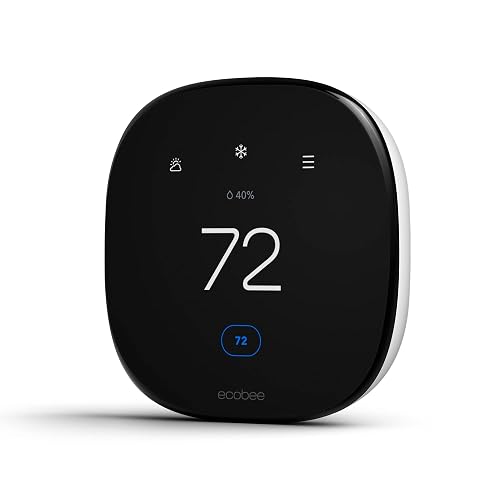
The ecobee Smart Thermostat Enhanced is the friendlier entry point into the ecobee family, sitting just below the Premium model. It still pulls in occupancy data to adjust temperatures automatically, suggests schedule changes based on your patterns, and uses the eco+ feature set to ease back on heating and cooling when nobody’s home or everyone’s asleep. The trade-off is a lower price tag and a leaner hardware spec sheet.
For shoppers who want a true smart thermostat without paying for the Premium’s voice and air quality extras, this Enhanced model often hits the sweet spot. It works with smart devices and Apple Watch, and connects into Apple Home, Google Home, and similar platforms.
Points In Its Favor
- Auto-savings adjusts temperature based on occupancy, so empty rooms don’t waste energy
- Schedule suggestions adapt as your routine shifts over time
- Works with Apple Watch, plus Apple Home and Google Home ecosystems
- Lower price than the Premium while keeping core smart features
Factors To Consider
- No built-in voice control, so a separate smart speaker is needed for voice commands
- Room sensors typically sold separately, unlike the Premium’s bundle
Whose Shelf It Belongs On
First-time smart thermostat shoppers who want genuine auto-savings without paying for premium extras.
Not Your Match When
Buyers who want voice built into the wall should look at the ecobee Smart Thermostat Premium instead.
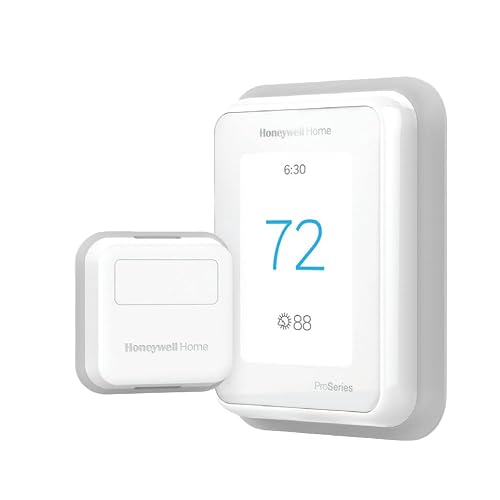
The Honeywell T10+ Pro Smart Thermostat with RedLINK 3.0 is built for homes where comfort priorities change throughout the day. Its indoor air sensor lets the system favor the rooms people are actually using, and the RedLINK 3.0 wireless platform ties into compatible Honeywell accessories. The kit also integrates humidification, dehumidification, and ventilation without running new wires, which matters in older homes where fishing cable through walls is a real chore.
For larger multi-zone homes, this is the most flexible of the Honeywell units commonly seen in the category. The trade-off is complexity: setup and accessory pairing take more patience than a single-room smart thermostat.
Useful Touches
- Prioritizes rooms based on occupancy, so comfort follows people around the house
- Integrates humidification, dehumidification, and ventilation without new wiring
- RedLINK 3.0 platform supports a range of compatible wireless accessories
- Indoor air sensor included in the kit, ready to use out of the box
Some Limits To Know
- Setup and accessory pairing are more involved than basic smart thermostats
- RedLINK accessories are typically sold separately, adding to total cost in larger homes
Made For
Homeowners with larger or multi-zone homes who want room-by-room prioritization and whole-home air quality control.
Another Choice May Suit
Shoppers in smaller homes who don’t need room prioritization should consider the ecobee Smart Thermostat Enhanced for simpler day-to-day use.
What To Weigh Before Choosing a Smart Thermostat
Compatibility with your HVAC system is the first filter. A thermostat that supports 2 heat/1 cool heat pump setups won’t do much for a homeowner with a two-stage gas furnace, and the reverse is just as true. The PRO1 T725, T715, and T721 all spell out which systems they support, so matching takes only a glance at the spec sheet.
Power wiring matters next. Many smart thermostats need a C-wire (a common wire that delivers continuous power), which older homes may not have. Battery-only models like the PRO1 T701 work without one, while units like the Sensi Touch and the Honeywell T10+ generally expect a C-wire or a power adapter kit. Pulling the cover off your current thermostat and counting wires takes about two minutes and saves a return trip.
Smart features and sensors deserve their own thought. If one room is always too cold, a sensor-based system like the ecobee Premium or Honeywell T10+ will help far more than any amount of schedule tweaking. If your routine is predictable, a learning thermostat like the Nest can save energy without much input. If you just want basic scheduling, a programmable PRO1 unit keeps things simple and avoids app dependencies.
Key Considerations Across These Picks
Common Shopping Slip Ups
The most common mistake is choosing a thermostat before checking HVAC compatibility. A beautiful smart unit is useless if it can’t talk to your system’s stages. Wiring is the second tripwire, especially C-wire expectations that don’t match the wires already in the wall. Reading the install guide for your specific system before clicking buy is worth ten minutes of patience.
Another frequent miss is overbuying. A homeowner with a small, well-insulated bungalow rarely needs room-by-room sensors, and a renter probably doesn’t need learning algorithms that take weeks to settle in. Matching the feature list to the actual problem usually beats chasing the most feature-rich model.
What The Higher Tier Buys
Premium smart thermostats earn their higher price through sensors, voice, and air quality awareness. The ecobee Premium bundles a SmartSensor, while the Honeywell T10+ integrates humidity and ventilation control without extra wiring. These extras matter most in larger homes with uneven temperatures or in households that already use voice assistants heavily.
The honest read is that basic programmable models handle 80% of what most people actually need, and the remaining 20% is where premium units pay off. If your home has clear hot and cold spots, the upgrade usually shows up the first week. If not, the basic PRO1 units deliver dependable comfort without the extra cost or app overhead.
Frequently Asked Questions
What are the main pros of smart thermostats?
Smart thermostats learn your schedule, adjust temperature automatically when you’re away, and let you control heating and cooling from your phone. Over time, that combination tends to reduce wasted energy and keep rooms more consistently comfortable.
What are the cons of smart thermostats?
They typically cost more than basic programmable thermostats, often require a C-wire for power, and depend on Wi-Fi and apps for full functionality. When the internet drops, most still work manually, but remote features go offline until the connection returns.
Do I need a C-wire for a smart thermostat?
Many smart models expect a C-wire, but some, like the ecobee Enhanced, include adapters or work with alternative power kits. Checking the wires already at your current thermostat before buying is the fastest way to avoid a last-minute trip back to the hardware store.
Are smart thermostats hard to install?
Most modern units are designed for DIY setup with app-guided instructions and clear labeling. Comfort with a screwdriver and a voltage checker is enough for many installs, though complex HVAC systems may benefit from a professional.
Can a smart thermostat work with a heat pump?
Yes, but only if the thermostat specifically supports heat pump systems. Models like the PRO1 T725 and T721 list heat pump support in their specs, while basic conventional-only units like the PRO1 T701 will not work with a heat pump setup.
Final Verdict
The right thermostat depends on the system behind your wall and the problems you actually want to solve. Heat pump owners have clear matches in the PRO1 T725 and T721, while multi-stage gas homes lean toward the T715. Smart-home enthusiasts get the most from the ecobee Premium or the Honeywell T10+, and renters or minimalists often find everything they need in a basic non-programmable unit.
Pick the model that matches your system, your wiring, and your real comfort complaints, and you’ll avoid the most common regret: a beautiful thermostat that doesn’t quite fit the job.