
Whether you’re swapping a tired wall control in the hallway or hunting down a replacement knob for an aging baseboard heater, the right thermostat saves you from fiddling with the wrong part for an hour. The category splits neatly into two worlds: full wall thermostats for central HVAC setups, and small mechanical controls that restore function to legacy baseboard units. Either way, knowing the heating and cooling stages your system supports is the real starting point.
This list covers both worlds. You’ll find programmable digital wall units for conventional and heat pump systems, simple non-programmable controls for single-stage setups, and the small Qmark SPST replacement parts that keep specific baseboard heaters running. Match the system first, then the feature set.
A Side-By-Side Look
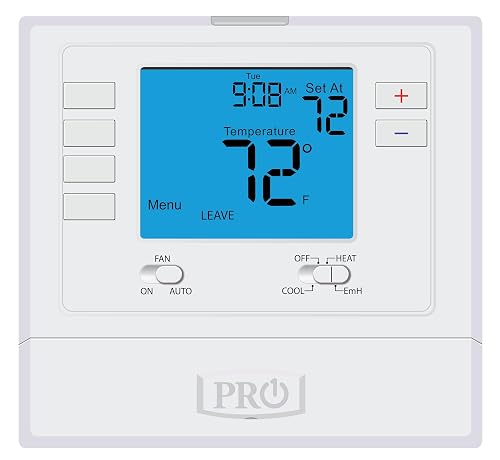
PRO1 T725 Heat Pump/Conventional Programmable Wall Thermostat

PRO1 T771 Single Stage Non-Programmable Wall Thermostat
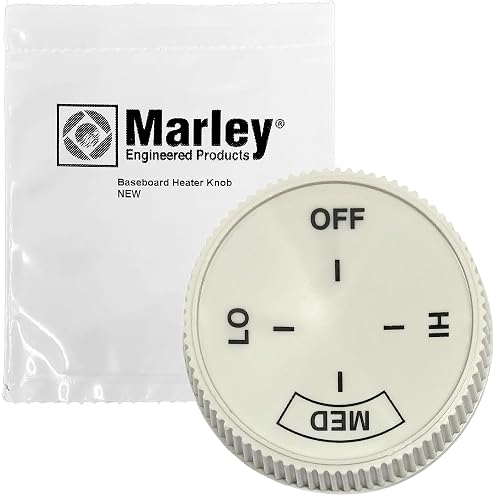
Marley Engineered Products Baseboard Heater Thermostat Knob
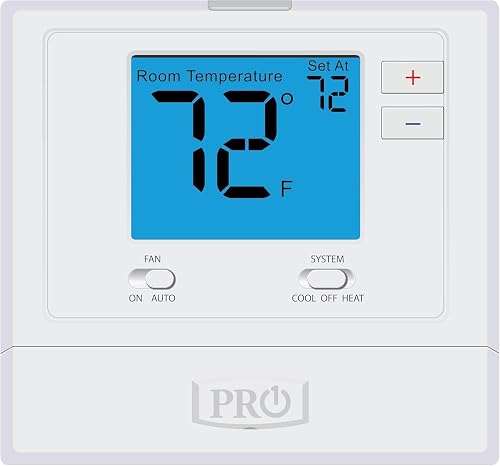
PRO1 T701 Single Stage Non-Programmable Wall Thermostat

PRO1 T715 Multi-Stage Programmable Gas Thermostat
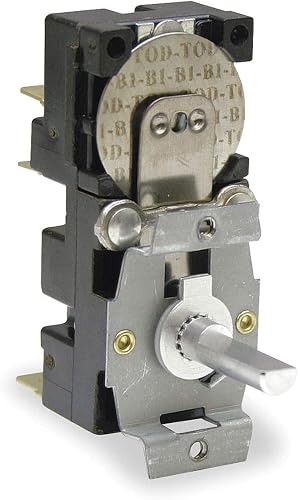
Qmark SPST Thermostat (5813-2050-000)
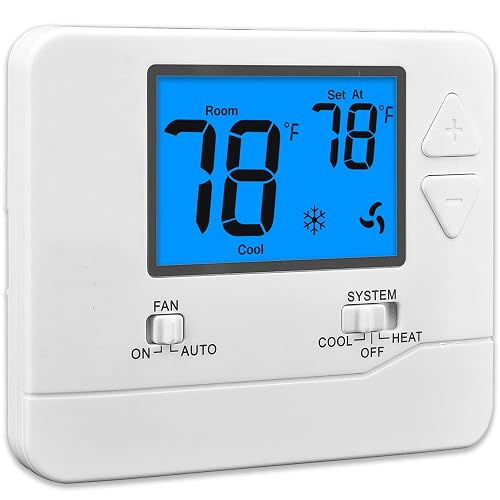
Suuwer Non-Programmable Home Thermostat (Blue Backlight)
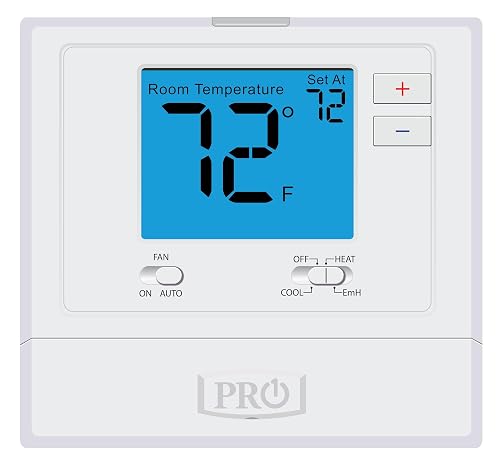
PRO1 T721 Non-Programmable Heat Pump Wall Thermostat
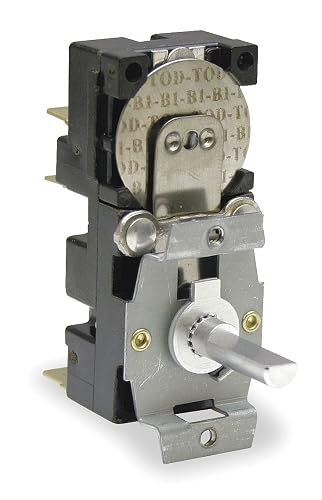
QMARK SPST Thermostat (AWH Series)

PRO1 T805 Single Stage Programmable Wall Thermostat
The Strengths Of Each Pick
For households running a heat pump one season and a conventional furnace the next, the T725 sidesteps the usual compromise of buying two controls. It supports 2 heat / 1 cool heat pump configurations and 1 heat / 1 cool conventional setups, which covers the wiring found in most suburban homes. The 4 sq. in. blue backlit display is large enough to read across a hallway at a glance.
Seven-day or 5/1/1 programming (a schedule pattern with weekday groups plus a separate Saturday and Sunday) lets you match wake, leave, return, and sleep periods to actual life. Compared with the simpler T701 coming up, this one gives you the scheduling layer without jumping to the larger T800 platform.
Why It Works Well
- Handles both heat pump and conventional wiring from a single unit
- 7-day and 5/1/1 scheduling cover the way most working households actually live
- 4 sq. in. backlit display is easy to read from the doorway
- Schedule mode clearly labels wake, leave, return, and sleep periods
- Part of the established T700 platform, so replacement parts are easy to find later
Things To Consider
- Requires 2H/1C heat pump or 1H/1C conventional wiring, so check your current setup first
- Programming takes a few minutes upfront, which may frustrate users who want set-and-forget simplicity
Key Specs
Right Fit For
Homeowners with a heat pump or mixed system who want real scheduling without jumping to a touchscreen platform.
Consider Something Else When
The PRO1 T701 fits better if you run a single-stage conventional system and would rather skip programming altogether.
The T771 earns its place on this list by going where most digital thermostats won’t. A setpoint range starting at 25°F (a low setpoint lets the space drop to near-freezing when unoccupied, which prevents frozen pipes while saving energy) makes it useful in garages, sheds, and other spaces that see real winter cold. It is built for 1 heat / 1 cool conventional systems, which keeps wiring straightforward.
For a workshop that hovers near freezing on January nights, this kind of low-end control is genuinely useful. Swing adjustment (a setting that controls how far the temperature drifts before the system kicks back on) and calibration options let you tune it to a less-insulated room without the room swinging wildly.
Useful Highlights
- Wide setpoint range from 25°F to 90°F covers unheated and semi-conditioned spaces
- Swing adjustment and calibration help dial in hard-to-heat rooms
- Non-programmable operation means no menus to learn
- 4 sq. in. blue backlit display stays readable in dim garages
- Single-stage focus keeps installation wiring simple
Worth Noting
- Only handles 1 heat / 1 cool conventional wiring, not heat pump systems
- No scheduling means you adjust the setpoint manually when conditions change
Who It Suits Best
Shoppers outfitting a detached garage, workshop, or storage building where a standard 50°F minimum is not low enough.
Look Elsewhere When
The PRO1 T725 is a better match if you want scheduled setbacks and a heat pump-friendly design for the main house.
Baseboard heater knobs have a habit of cracking, warping, or simply disappearing during a move. This replacement knob from Marley Engineered Products is the genuine OEM (original equipment manufacturer) part for the 1800, 1900, 2500, 2600, C1800, and C2500 series baseboard units, which covers a wide swath of installed Marley hardware. The ribbed sides give you grip even with cold or wet hands.
Unlike the digital wall thermostats in this list, this is a purely mechanical piece, and that is the point. The knob may be mounted on the left or right front of the heater, but it will not fit units where the knob sits on the end. Worth confirming your heater’s layout before ordering.
What Works In Its Favor
- Genuine Marley OEM part, so fit and finish match the original
- Compatible with six common baseboard series, including C1800 and C2500
- Ribbed sides give solid grip with cold or gloved hands
- One-knob package, no extra hardware to track
Honest Caveats
- Will not fit baseboard heaters with end-mounted knobs
- Plastic construction, so replacements may be needed over decades of use
Made For
Anyone with a Marley, Fahrenheat, Dayton, Qmark, or Berko baseboard heater whose original knob has cracked or gone missing.
A Better Fit Elsewhere
The QMARK SPST Thermostat suits a different repair scenario where the internal switch, not the external knob, has failed.
The T701 is the sensible middle of the PRO1 lineup. Built on the larger T700 platform with a 4 sq. in. blue backlit display and a glow-in-the-dark light button, it covers 1 heat / 1 cool conventional systems without asking you to learn a programming menu. For a lot of households, that is exactly enough.
You may find the lack of scheduling liberating after wrestling with a programmable unit that locked you into factory defaults. The screen gives you the setpoint and current temperature, and the system handles the rest.
Practical Pluses
- 4 sq. in. backlit display with glow-in-the-dark light button for low-light adjustments
- Single-stage focus, so wiring is straightforward for most homes
- Works with gas or electric conventional systems, covering a wide installation base
- Larger T700 platform means replacement parts stay available
Trade Offs
- No scheduling, so setbacks (automatic temperature drops during unoccupied hours) require manual changes
- Single-stage only, so it does not support multi-stage heating or cooling equipment
Best Suited To
Anyone with a basic 1H/1C system who wants a clear, easy-to-read wall control without programming menus.
Swap It Out When
The PRO1 T725 fits better if you want scheduled setbacks and a heat pump system rather than a single-stage conventional setup.
The T715 targets two-stage gas furnace homes, where a single-stage thermostat would be leaving efficiency and comfort on the table. With 2 heat / 2 cool support and a choice of 7-day, 5/1/1, or non-programmable modes, it adapts to how you actually live. A two-stage system runs longer at lower capacity, which often feels quieter and more even than a single-stage unit cycling on and off.
Compared with the single-stage T701 earlier in the list, this model steps up the system complexity, not just the screen size. Battery or hardwired power gives you installation flexibility depending on the wiring in your wall.
Where It Delivers
- True 2H/2C support unlocks the full efficiency of two-stage gas systems
- Three operating modes, including non-programmable, fit different comfort preferences
- Glow-in-the-dark light button helps in midnight adjustments
- 4 sq. in. blue backlit display keeps information readable at a distance
Points To Keep In Mind
- Two-stage systems cost more upfront, and not every home has the wiring to support them
- Programming the schedule takes a few minutes of patient menu navigation
Key Specs
Who Will Love This
Homeowners with a two-stage gas furnace who want the thermostat to actually use both stages instead of running full-blast.
Reach For A Different Pick When
The PRO1 T701 is a smarter fit for a single-stage conventional system that does not need 2H/2C support.
SPST stands for single-pole single-throw, which simply means the switch opens or closes one circuit. The Qmark 5813-2050-000 is a service part designed to fit specific baseboard units, particularly those referenced as 3UG73 and 3UG74 in the manufacturer’s catalog. If your heater has stopped responding to its existing control, this is the kind of internal switch that often needs replacing.
This is not a wall thermostat. Think of it as a repair component, the sort of part you order after diagnosing a specific failure inside an existing heater.
Bright Spots
- Compact form factor designed to fit inside specific baseboard units
- SPST design keeps the electrical function simple and reliable
- Listed as a Qmark service part for matched replacements
Some Limits To Know
- Not a wall thermostat, so it requires opening the heater housing to install
- Only fits the specific units it is listed for, not a general-purpose swap
Perfect Match For
Technicians and hands-on owners diagnosing a failed internal switch in a specific Qmark baseboard heater.
Not Your Match When
The Marley Engineered Products Knob is a better starting point when the issue is a missing or broken external control knob.
The Suuwer picks up where the PRO1 T701 leaves off by being the simplest possible swap-in for a 1H/1C system. Compatibility covers conventional single-stage heating and cooling with two-to-five-wire installations, which matches what most homes already have in the wall. The blue backlight is a small touch that makes late-night setpoint changes less of a guessing game.
For first-timers who would rather not deal with menus, the non-programmable design removes the biggest source of confusion. You set it once, and the unit runs from there.
The Practical Payoff
- Two-to-five-wire compatibility fits most residential installations
- Blue backlight helps in dim hallways and basements
- Non-programmable operation removes scheduling complexity for first-time installers
- 1 heat / 1 cool focus keeps wiring diagrams easy to follow
What To Weigh
- Wiring varies, so you should confirm the existing base before ordering
- No scheduling means setbacks require manual setpoint changes
Key Specs
Who Should Grab It
Homeowners with a 1H/1C conventional system who want a simple, no-menu thermostat they can install in a single afternoon.
Where A Sibling Pick Shines
The PRO1 T701 is a better long-term fit if you prefer a brand with deeper support documentation and a glow-in-the-dark light button.
The T721 sits in a useful middle ground. It supports 2H/1C heat pumps or 1H/1C conventional systems, so it works whether your home runs on a heat pump, a furnace, or both depending on the season. The 4 sq. in. blue backlit display and glow-in-the-dark light button help in low light, which matters more than people expect at 2 a.m.
Power can come from AA batteries or a hardwired connection, giving you flexibility when the existing wiring in the wall does not include a common wire (a continuous power return line that many smart thermostats need). That small detail can save an afternoon of fishing wire through the wall.
What It Does Well
- Heat pump and conventional compatibility from a single non-programmable unit
- Battery or hardwired power option eases installation in older homes
- Glow-in-the-dark light button helps in midnight adjustments
- 4 sq. in. backlit display is readable from across the room
Less Ideal Details
- No scheduling, so you change setpoints manually when routines shift
- 2H/1C heat pump only, not full multi-stage cooling support
Built With In Mind
Set-and-forget households with a heat pump who want clean operation without programming menus or app dependencies.
Skip It When
The PRO1 T725 is the better call if you want a programmable schedule on top of the same heat pump compatibility.
The QMARK AWH series thermostat is a slotted-shaft service part that fits a long list of legacy baseboard heaters. Cross-references to Grainger item numbers 13R109, 13R110, 13R108, 5E184, 5E185, 3END5, 5E186, 5E187, 3END9, 3END7, 3END8, 3UF60, 3UF61, 3UF62, 3UF63, and 3UF59 give installers a clear path to the right match. SPST (single-pole single-throw) switching keeps the electrical behavior straightforward.
For a baseboard that has run flawlessly for two decades and just needs a fresh control, this is the kind of part that brings it back without replacing the whole heater. The slotted shaft means you will need a flat-blade tool to set the calibration.
What Earns Its Place
- Fits a long list of legacy Qmark baseboard models referenced by Grainger item numbers
- Slotted-shaft design gives precise temperature adjustment
- SPST switching keeps the circuit simple and the part reliable
- Genuine Qmark service part for matched replacements
Potential Drawbacks
- Slotted shaft requires a flat-blade tool for calibration, not a finger-friendly knob
- Fit is specific to the listed models, not a universal swap
Whose Shelf It Belongs On
Owners of older Qmark baseboard heaters who want to keep the original equipment running rather than replace the whole unit.
Another Choice May Suit
The Qmark SPST Thermostat (5813-2050-000) listed earlier covers a different model range and may be the better match for some repairs.
The T805 moves you from the T700 platform to the larger T800 platform, and the difference shows on the wall. A 7 sq. in. blue backlit display is nearly twice the surface area of the T701 and T725 screens, which matters if you read the thermostat from across a large room or have any vision limitations. The unit still supports 1H/1C conventional systems, so the wiring story stays simple.
Programming modes include 7-day, 5/1/1, or non-programmable, which is a welcome touch for households that want scheduling today and the option to abandon it later. Compared with the T715 earlier, this trades multi-stage system support for a bigger screen on a simpler system.
The Helpful Details
- 7 sq. in. backlit display, the largest in this list, is easy to read at a distance
- 7-day, 5/1/1, or non-programmable modes for different comfort preferences
- Glow-in-the-dark light button helps in low light
- T800 platform support means future parts stay available
Possible Compromises
- Single-stage only, so it does not unlock two-stage furnace efficiency
- Larger footprint may not match shallow electrical boxes in older homes
Key Specs
Whose Shelf It Belongs On
Shoppers with a single-stage conventional system who want a larger, easier-to-read screen and the option to schedule or not.
Skip It When
The PRO1 T715 is the better match if you need 2H/2C support for a two-stage gas furnace.
Matching The Right Thermostat To Your System
System compatibility is the single biggest filter in this category. A thermostat that supports 1 heat / 1 cool conventional wiring will not work properly on a 2 heat / 2 cool gas furnace, and a heat pump control wired to a conventional system will not behave the way the system expects. The safest move is to take a photo of the existing wiring at the wall plate before ordering, noting the terminals in use and the number of wires.
Display size matters more than people expect. A 4 sq. in. screen works fine in a hallway, but a 7 sq. in. display makes life easier in a large living room or for anyone with reduced vision. The T700 platform and T800 platform screens in this list are the two main sizes to choose between.
Power source and common wire are the next constraint. Battery-powered units install easily in older homes without a common wire, while hardwired models free you from annual battery swaps. The PRO1 T721 offers both, which is one of the easier installs on this list.
Finally, think about the real failure mode. If the existing thermostat is fine and just an external knob cracked, a Marley replacement knob is a five-minute fix. If the internal switch has failed on a specific Qmark baseboard, the SPST service parts are the right call. Buying a new wall thermostat for a damaged baseboard heater knob is a common misstep worth avoiding.
Things Worth Knowing Before You Buy
Common Shopping Slip Ups
The most common mistake is ordering a thermostat before checking the system type. Heat pump, conventional, single-stage, and multi-stage labels on the product page map to specific wiring in the wall, and a mismatch can mean the system short-cycles (rapidly turning on and off, which stresses the equipment) or simply does not work.
Another frequent miss is ignoring the number of wires available at the mounting plate. Units that need six or more wires will not work on a two-wire system, and forcing a swap can leave you with a thermostat that loses power mid-day. Battery-powered options sidestep that issue entirely.
A third slip is replacing a working baseboard heater control knob with a full wall thermostat. The Marley knob and the Qmark SPST service parts exist because the original equipment is often the better fit. Match the repair to the actual failure.
What The Higher Tier Buys
Stepping up from a single-stage to a multi-stage programmable unit like the T715 brings quieter operation and better humidity control because the system runs longer at lower capacity. You also gain scheduling flexibility, which can pay for itself in lower utility costs within a season.
The T805 trades multi-stage support for a noticeably larger display, which is its own form of upgrade. Easier reading and clearer menus matter most for households that adjust the thermostat often or for older owners who want the screen legible from a distance.
Spending up is worth it when the system in the wall can actually use the extra capability. A two-stage furnace with a single-stage thermostat is leaving efficiency on the table, while a single-stage home with a multi-stage control is paying for features the system will never use. Match the upgrade to the equipment.
Frequently Asked Questions
What does SPST mean on a thermostat?
SPST stands for single-pole single-throw, meaning the switch opens or closes one circuit with two positions. The Qmark SPST parts on this list use this simple design for reliable on-and-off control in baseboard heaters.
Can I use a programmable thermostat on a heat pump?
Yes, the PRO1 T725 and T721 are designed for 2H/1C heat pump systems. The key is matching the thermostat’s heat pump support to the actual wiring at your wall plate.
How do I know if I need a single-stage or multi-stage thermostat?
Count the heating and cooling stages your furnace and air conditioner can deliver. A system that runs only at full capacity is single-stage, while a furnace with a low and high burner is two-stage. The product listings call this out in the system support specs.
What is the difference between a wall thermostat and a baseboard heater knob?
A wall thermostat mounts on an interior wall and controls the whole heating system, while a baseboard heater knob is the dial mounted directly on a specific baseboard unit. The Marley knob and the Qmark SPST parts are service components for baseboard heaters, not wall controls.
Why does the setpoint range matter on a garage thermostat?
Garages and unheated spaces often need lower minimum setpoints, sometimes down to 25°F, to prevent frozen pipes without wasting energy heating the space to room temperature. The PRO1 T771 covers this range where most digital wall thermostats stop at 50°F or higher.
Wrap Up
The right thermostat comes down to matching the equipment in your wall, not chasing features you will not use. Single-stage homes get clean, simple options like the T701 or T805, while heat pump and two-stage households benefit from the T725 or T715. Baseboard heater owners have a parallel set of choices between replacement knobs and internal SPST switches. Take a photo of the wiring, count the stages, and the right pick usually becomes obvious.