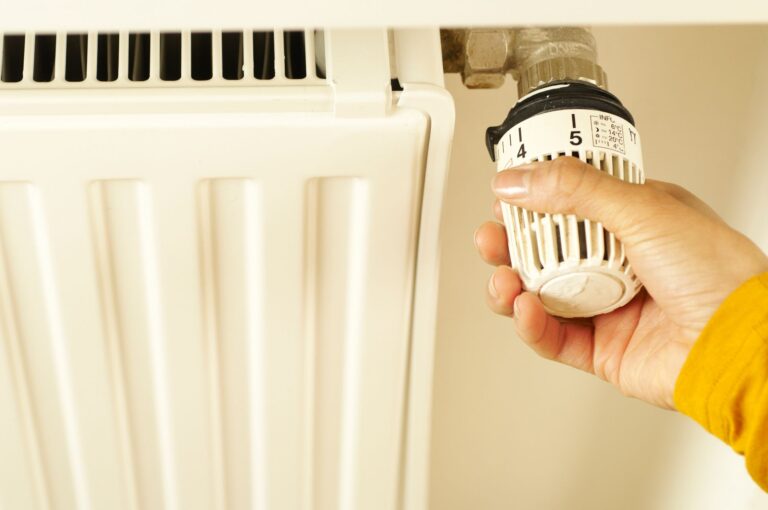

A reliable thermostat keeps a reptile’s enclosure from drifting into the danger zone, and the gap between a dial you set and forget versus one that quietly throttles heat all night is the difference between a pet that eats well and one that sulks in the cold corner. The ten controllers below cover a wide spread of wattage ceilings, sensor setups, and use cases, from a budget plug-in to dual-probe units built for serious breeding racks. Each one is mapped to a specific kind of keeper, so the right pick is whichever matches your enclosure size, heat source, and how much headroom you want on the wiring.
The Leading Options At A Glance

VE-100 Digital On/Off Thermostat
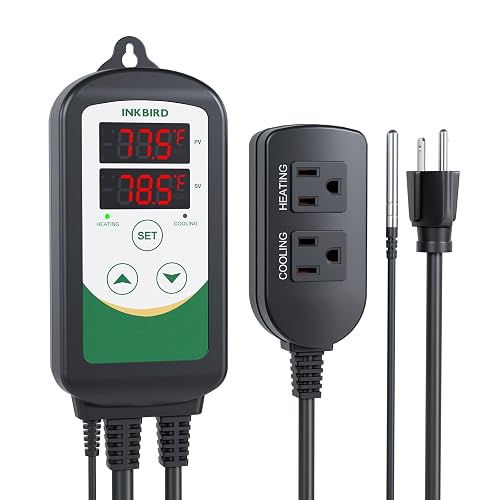
Inkbird ITC-308 2025 Updated Temperature Controller
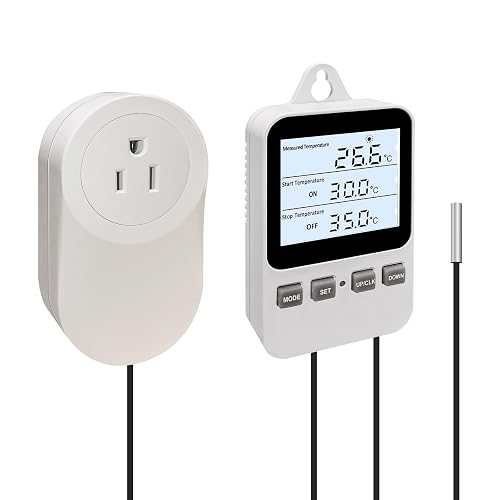
HIADA Heating and Cooling Mode Digital Thermostat
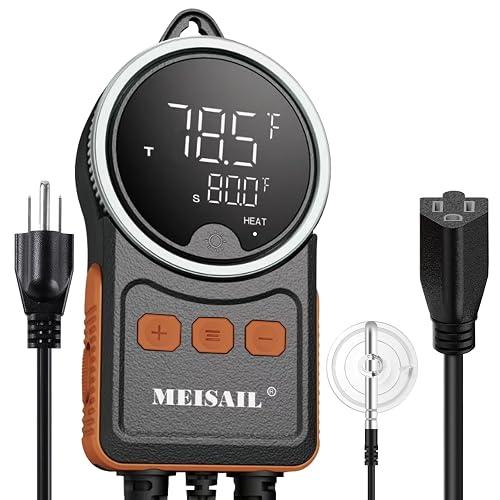
MEISAIL Dual Sensor Safety Calibration Thermostat
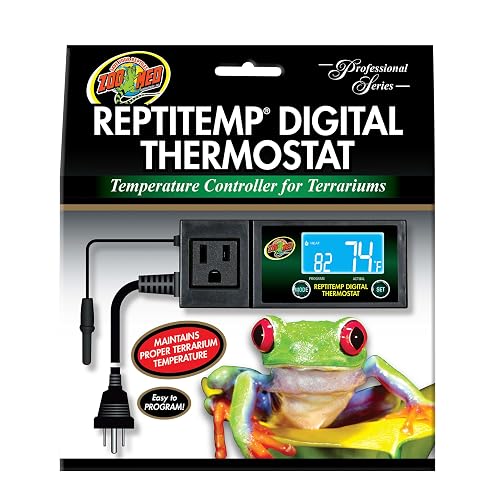
Zoo Med ReptiTemp Digital Thermostat
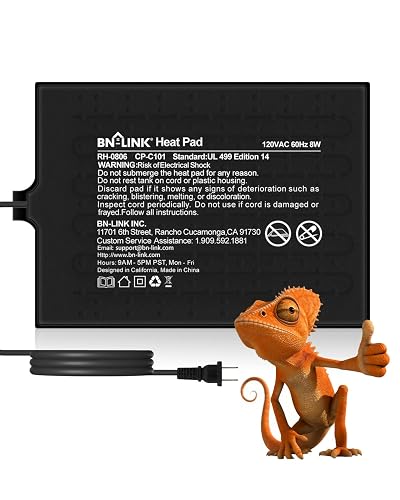
BN-LINK Reptile Heat Pad 6″x8″ 8W
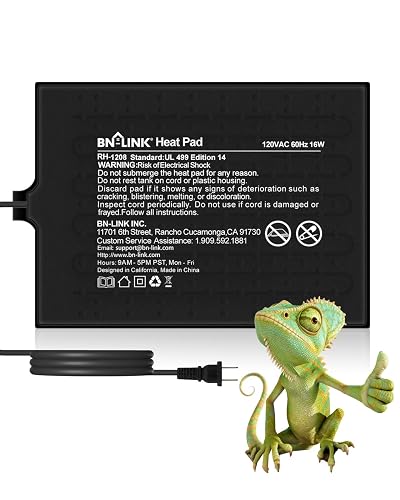
BN-LINK Reptile Heat Pad 8″x12″ 16W
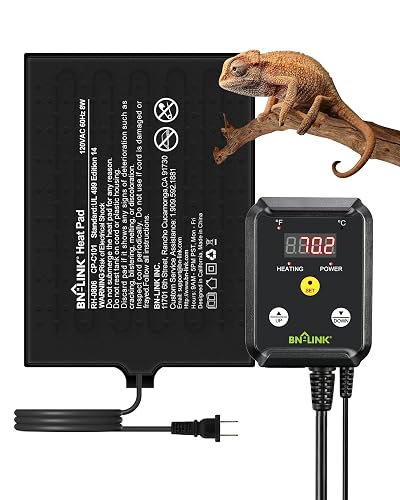
BN-LINK 6″x8″ Heating Pad with Digital Thermostat
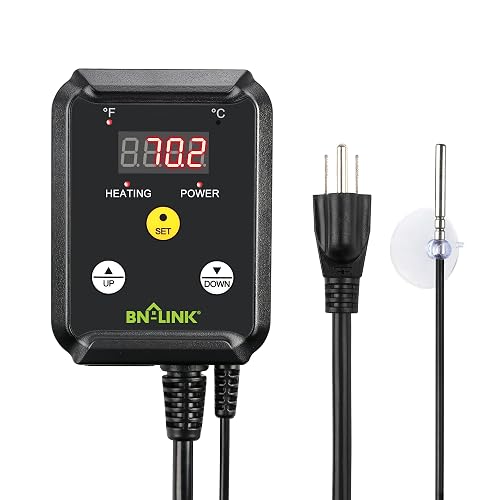
BN-LINK Digital Heat Mat Thermostat 1000W
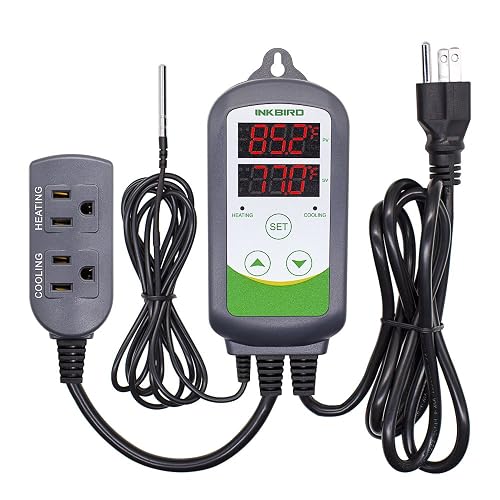
Inkbird ITC-308 2-Stage Temperature Controller
A Breakdown Of The Leading Choices
The VE-100 has been a fixture in serious reptile rooms for years, and the tabletop form factor keeps it planted next to the enclosure without dangling cords. It’s an on/off style controller, meaning it either feeds full power to the heat source or cuts it off, so it works best with heat mats and ceramic heat emitters rather than dimming a basking lamp. Probe temperature and set point both show on the main display, which removes the guesswork when you want to check the tank at a glance.
A user-replaceable fuse and 700 watt ceiling put this squarely in mid-range territory, handling most heat mats and a single CHE without strain. The internal memory also holds your set point through a power outage, so a flickering breaker at 2 a.m. doesn’t reset everything. For keepers running one or two standard enclosures, the VE-100 is the kind of unit you can set up once and trust for years.
Everyday Advantages
- Replaceable fuse saves you from tossing the whole unit if the protection trips
- Backlit display reads cleanly in low light, helpful for late-night checks
- Internal memory holds your settings through power loss
- Tabletop housing keeps the probe wire tidy and the plug out of the substrate
- 700 watt ceiling covers a standard heat mat plus a ceramic emitter on one enclosure
Worth Noting
- On/off switching can cause a faint click as it cycles, which is audible in a quiet room
- Not designed to dim lamps, so pairing with a dimming thermostat-style bulb requires a different approach
Who It Suits Best
Mid-range keepers running one to two standard glass or PVC enclosures with heat mats and ceramic emitters.
Look Elsewhere When
The Inkbird ITC-308 2-Stage Temperature Controller suits you better if you want both heating and cooling on the same circuit.
The refreshed ITC-308 leans into the kind of details that matter once you start chaining enclosures together. A four-core output and three-core input wiring layout uses thicker conductors than the older run, which holds up better under continuous load in a breeding rack. The 1100 watt ceiling gives a comfortable margin even if you stack a CHE, a heat mat, and a small fan on the same circuit.
High and low temperature alarms, plus a compressor delay function, add peace of mind for keepers running cooling equipment alongside heat. Compressor delay prevents short-cycling on a fridge-style cooler, which extends compressor life and stops the relay from hammering. You also get a choice between Celsius and Fahrenheit on the readout, a small but real benefit if you read care sheets in either unit system.
Useful Highlights
- Thicker conductors handle continuous draw without voltage sag
- 1100 watt ceiling leaves headroom for multiple heat sources
- Audible high and low alarms catch drift before it becomes a problem
- Compressor delay protects cooling equipment from rapid cycling
- Dual display shows measured and set values at the same time
Things To Consider
- Alarm volume is fixed, so in a noisy fish room you may miss it without a secondary monitor
- More features mean a slightly steeper learning curve than basic plug-in models
Made For
Multi-zone breeding racks and keepers running both heat and cool equipment on the same panel.
Where Another Pick Suits Better
The Zoo Med ReptiTemp Digital Thermostat is easier on a first-time keeper who only needs heat and nothing else.
HIADA leans into the year-round angle, with a single unit that flips between heating and cooling modes depending on the season. That’s a useful trait for keepers in regions with hot summers, where the same thermostat that runs a CHE in January can drive a small enclosure fan in July. A 120 volt, 15 amp plug-in design means it slots into a standard wall outlet without rewiring.
Beyond reptiles, the controller reads as a multi-purpose unit aimed at greenhouses, seedling mats, and incubation setups. That breadth can be a positive if you want one controller to move between projects, though the reptile focus here comes from its probe style and plug format. For most herp owners, the appeal is the seasonal flexibility without buying a second dedicated cooler controller.
Notable Upsides
- Single device covers both summer cooling and winter heating
- Standard 120V, 15A plug format fits any North American outlet
- Probe-based control works across reptile, plant, and incubation uses
Points To Note
- Single-mode operation means heat and cool don’t run at the same time, which limits some rack setups
- Multi-purpose branding can be confusing if you only want a dedicated herp unit
Right Fit For
Keepers in mixed climates who need the same controller to handle a winter heat mat and a summer cooling fan.
Skip It When
The MEISAIL Dual Sensor Safety Calibration Thermostat is a better call if dual-probe redundancy matters more to you than seasonal flexibility.
Two temperature probes working together give MEISAIL a redundancy angle that single-probe units can’t match. The controller compares both readings and auto-calibrates, so a probe that’s drifted in a humid enclosure doesn’t quietly feed bad data to the relay. Combined with load-line over-temperature protection, the unit cuts power if either the sensor reading or the connected heater’s draw goes off-pattern.
Heating and cooling modes are both supported, though only one mode runs at a time per cycle. The display brightness is also adjustable, which sounds minor until you’ve tried to sleep three feet from a glowing readout. In real-world terms, this is the kind of controller you reach for when the enclosure holds an animal you cannot afford to lose to a thermal spike.
Real-World Strengths
- Dual probes cross-check each other for more reliable readings
- Over-temperature load-line protection cuts power fast on a thermal spike
- Adjustable display brightness helps in bedrooms and dark racks
- Works across aquaculture, plant mat, and reptile use cases
Honest Caveats
- Two probes mean more wire to route cleanly inside the enclosure
- Single-mode operation per cycle is limiting for combined heat-and-cool rigs
Best Suited To
Keepers running high-wattage heat sources or expensive animals where probe failure is not an option.
Consider Something Else When
The HIADA Heating and Cooling Mode Digital Thermostat is the better fit if you just want a simple seasonal controller without dual probes.
Zoo Med built the ReptiTemp for keepers who want a recognizable brand on the shelf and a setup that doesn’t ask for a manual. The temperature control range of 50°F to 122°F covers nearly every commonly kept reptile and amphibian, from cool-side crested geckos to warm-basking bearded dragons. It works in either heat or cool mode, so the same unit follows a single enclosure through seasonal changes.
The interface stays simple: plug in, set the target, drop the probe. That low-fuss approach is the real value here, since first-time keepers often abandon advanced features anyway. For a single small-to-medium enclosure on a heat mat or CHE, the ReptiTemp does the job without burying you in settings.
Advantages To Know
- Wide 50°F to 122°F range covers nearly all common pet reptiles
- Heat or cool mode handles a single enclosure through the seasons
- Zoo Med’s brand recognition helps newer keepers feel confident
Softer Spots
- Basic interface lacks the alarms and readouts that more advanced units offer
- Documentation on wattage ceiling is thinner than competing models
Who Should Grab It
First-time keepers setting up a single enclosure who want a familiar brand and a low-fuss setup.
Reach For A Different Pick When
The BN-LINK 6″x8″ Heating Pad with Digital Thermostat is a stronger choice if you want the heat mat and controller bundled in one order.
Small enclosures don’t need a 16 watt mat, and BN-LINK’s 6″x8″ 8W pad is sized for exactly that. The product ships in two versions, with thermostat or with adjust knob, so you can pick the control style that matches your comfort level. The waterproof construction is the practical detail that matters most here, since under-tank heaters live in environments where spilled water and condensation are constant.
Aimed at 10 to 20 gallon tanks, the mat works well for hatchling enclosures, small snake tubs, and quarantine setups. The compact size also makes it easy to position under a specific basking spot rather than blanketing the whole floor. If you run a rack of small tubs, several of these in parallel on a single controller is a tidy way to heat the row.
Bright Spots
- Compact 6″x8″ size fits 10–20 gallon enclosures without overlap
- Waterproof build handles the inevitable spill in a water dish
- Available with thermostat or analog knob to match your control preference
Worth Bearing In Mind
- 8W output is undersized for larger enclosures or wood-bodied vivariums
- Adhesive pad surface can lose stickiness over time in humid setups
Perfect Match For
Keepers of small snakes, hatchling lizards, and 10–20 gallon quarantine or grow-out tanks.
Not Your Match When
The BN-LINK Reptile Heat Pad 8″x12″ 16W fits better if your enclosure runs 30–40 gallons and needs more surface area.
Step up to 30 or 40 gallons and the 8″x12″ 16W mat is the more honest size match. Twice the wattage and a wider footprint cover the larger floor area without leaving cold corners that smaller mats leave behind. Like the smaller sibling, it’s waterproof and available with a thermostat or analog knob.
For keepers upgrading from a 10 gallon starter tank to a more permanent adult enclosure, this is a sensible mid-life swap. The pad still works as a gentle belly heat source rather than a primary heat lamp substitute, which keeps the basking zone under a separate fixture. Pairing it with a thermostat like the VE-100 or a BN-LINK digital unit makes the most of the surface area.
Benefits That Matter
- 16W output covers 30–40 gallon tanks with steady warmth
- Wider 8″x12″ mat reduces cold spots under the substrate
- Waterproof build stands up to splashes and high humidity
Practical Considerations
- Larger mat means more surface area to mount level under the tank
- Still a secondary heat source for species needing strong basking spots
Built With In Mind
Keepers of adult ball pythons, leopard geckos, and other medium reptiles in 30–40 gallon enclosures.
A Better Fit Elsewhere
The VE-100 Digital On/Off Thermostat is a smarter grab if you only need the controller and already own a heat mat.
BN-LINK’s combo set solves the “do I buy the mat and the thermostat separately” question in a single order. The 6″x8″ pad comes paired with a digital controller that uses a three-button interface and supports both Fahrenheit and Celsius. A two-to-three degree buffering zone keeps the relay from clicking on and off rapidly once the surface temperature hits the set point, which owners commonly report extending mat life over the long run.
An LED indicator on the controller shows heating and power status at a glance, which is helpful when you want to know the mat is engaged without reading the temperature display. The bundled setup removes the guesswork of matching a generic thermostat to a generic mat, since the components are designed to play nicely together. For new keepers, that compatibility peace of mind is a real reason to choose the combo.
What Works In Its Favor
- Mat and controller arrive together, no compatibility guesswork
- Buffer zone prevents rapid relay cycling and extends mat life
- LED indicators show heating and power status at a glance
- Supports both Fahrenheit and Celsius on the display
Some Limits To Know
- 6″x8″ footprint is undersized for tanks above 20 gallons
- Buffer zone means the actual surface temperature drifts a few degrees from the set point
The Right Fit
First-time keepers building a complete starter setup for a small enclosure under 20 gallons.
Swap It Out When
The Inkbird ITC-308 2-Stage Temperature Controller is the better call if you want a controller that drives both heat and cool equipment.
The 40 to 108°F range and 1000W ceiling put this BN-LINK controller firmly in crossover territory. It handles reptile heat mats and ceramic emitters with the same three-button setup you’d use for seedling mats and greenhouse propagation. The hanging tab on the back is a small but useful touch for greenhouse racks, though in a reptile room you can simply set it on the shelf behind the enclosures.
Note that this controller is intended for heating devices only, so you won’t be running a cooling fan on the same circuit. For keepers with mixed hobbies who want one controller to move between projects, that’s a fair trade. ETL listing also gives some reassurance on the safety side, since the unit is certified against a recognized electrical standard.
Where It Delivers
- 1000W ceiling handles large heat mats and multiple mats on one circuit
- 40–108°F range covers reptile, plant, and incubation temperatures
- Three-button interface keeps setup simple across hobby types
- Hanging tab fits greenhouse rail setups
Where It Is Less Suited
- Heating-only design means no cooling fan control on the same outlet
- Multi-purpose branding blurs the reptile focus compared to dedicated units
Whose Shelf It Belongs On
Cross-hobby keepers who run reptile heat mats alongside seed starting mats and incubation setups.
Another Choice May Suit
The MEISAIL Dual Sensor Safety Calibration Thermostat is the stronger pick if dual-probe redundancy matters more than crossover use.
The original ITC-308 remains a workhorse for serious reptile rooms, and the dual relay output is the headline feature. One relay drives heating equipment, the other drives cooling equipment, and the same probe manages both. Maximum output load sits at 1100W on a 110V circuit, so a CHE, a heat mat, and a small fan can all hang off the same controller without tripping the relay.
The dual display window shows measured temperature and set temperature at the same time, which is a small but meaningful upgrade over single-readout units. Plug-and-play design means the wiring is minimal: probe, plug, done. Support for both Celsius and Fahrenheit keeps it readable for keepers using either convention. For a dedicated herp room with a hot side and a cool side to manage, this unit has the muscle and the clarity to handle both.
A Strong Showing
- Dual relay output runs heat and cool equipment simultaneously
- 1100W ceiling covers a CHE, a heat mat, and a small fan
- Dual display shows measured and set values side by side
- Plug-and-play setup keeps wiring to a minimum
Potential Drawbacks
- Single probe means no redundancy if the sensor fails mid-cycle
- Lacks the audible high and low alarms of the 2025 updated Inkbird
Who Will Love This
Advanced keepers running dedicated herp rooms with both heating and cooling on a single panel.
Where A Sibling Pick Shines
The Inkbird ITC-308 2025 Updated Temperature Controller is the better fit if you want audible alarms and the updated wiring.
What Matters When Shopping For A Reptile Thermostat
Match The Wattage To Your Heat Source
The wattage ceiling of a thermostat has to cover the combined draw of every heat source plugged into it. A single 8W heat mat on a 700W controller is comfortable, but a 150W ceramic heat emitter plus a 50W heat mat and a small fan already push past 200W. Always check the heat source’s stated wattage and stay well under the controller’s limit, since running close to the ceiling for long periods can shorten relay life.
On/Off Versus Proportional In Real Setups
On/off thermostats cut full power or none, which works fine for heat mats and CHEs that don’t mind the cycle. Proportional or dimming thermostats modulate the voltage, which is gentler on incandescent basking bulbs and reduces the visible flicker some reptiles react to. For most beginners, on/off is enough, but keepers with dimmable basking lamps often want proportional control down the road.
Single Probe Versus Dual Probe Reliability
A single probe reads one spot in the enclosure, and a probe that slips loose or drifts can quietly feed bad data. Dual probe units cross-check the readings and shut off the heater if either sensor goes off-pattern, which is a meaningful safety upgrade for high-value animals. For a leopard gecko in a standard 20 gallon, single probe is fine. For a breeding pair of morphs that cost more than a used car, dual probe is the safer call.
Plan For Seasonal Heating And Cooling
Many keepers buy a heat-only controller in winter and then realize in July they need a fan on the same probe. Units with heat and cool modes, or dual relay outputs like the Inkbird ITC-308 line, cover both seasons on a single device. If you live anywhere with hot summers, that seasonal flexibility is worth budgeting for up front rather than buying twice.
Pitfalls Shoppers Hit
Underestimating Wattage Headroom
The most common buying slip is grabbing a controller that barely covers your heat source’s draw. Owners commonly report nuisance tripping when a controller runs near its ceiling, especially with multiple devices daisy-chained. Aim for a controller rated at least 25% higher than your current draw so future upgrades don’t force a swap.
Mixing Probes And Probes From Other Brands
Probe plugs and probe circuits are not standardized across manufacturers, so a probe from one brand can give wrong readings on another brand’s controller. Stay matched on brand, or at minimum confirm the probe connector type matches before plugging in. Mismatched probes are a quiet source of drift that only shows up months later when a heat source misbehaves.
When Paying More Pays Off
Alarms, Compressor Delay, And Logging
Higher-tier controllers add audible alarms that catch a failed heat source before the enclosure temperature crashes. Compressor delay protects cooling equipment from short-cycling, which extends compressor life on mini fridges used for cool-side control. Data logging on premium units tracks temperature over time, which is useful for breeders monitoring incubation cycles and for keepers diagnosing slow drift.
Build Quality And Relay Lifespan
Cheaper controllers often use relays rated for fewer cycles, and the relay is the part that wears first. Spending up gets you a relay rated for more cycles, thicker internal wiring, and better surge protection on the input side. Over years of continuous use, that build quality shows up as fewer failures and fewer late-night resets.
Frequently Asked Questions
Do Reptile Thermostats Really Matter?
Yes, a thermostat is the single most important piece of safety equipment in a reptile enclosure, since it prevents a heat source from running away at full power. Without one, a heat mat or CHE can push temperatures high enough to burn or kill the animal inside.
What Wattage Thermostat Do Most People Need?
For a single standard enclosure with one heat mat and one ceramic heat emitter, a 700W controller covers the load with margin. Larger racks and breeding rooms usually need 1000W or higher to run multiple heat sources off one unit.
Can One Thermostat Run Two Enclosures?
Yes, as long as the combined wattage of both heat sources stays under the controller’s ceiling. The catch is that both enclosures share one set point, so a tropical and a temperate species in the same room cannot share a single controller.
Is A Heat Mat Enough Without A Basking Lamp?
For some species like leopard geckos and many snakes, a heat mat paired with a thermostat covers the primary heat need. Diurnal basking species like bearded dragons need overhead basking heat in addition to a mat, since they regulate body temperature from above.
How Often Should Probes Be Replaced?
Probe lifespan varies by brand and environment, but a yearly check is a common interval for keepers who want to stay ahead of drift. If a probe reads noticeably different from a separate handheld thermometer, it is time to swap the probe rather than recalibrate the controller.
The Takeaway
A reptile thermostat is the safety net between a stable enclosure and a heat source that drifts into the danger zone, and matching the controller to your heat source, wattage, and probe preference matters more than chasing features. Pick the simplest unit that covers your wattage, confirm the probe is positioned in a representative spot, and check the readout against a separate thermometer once a month. Your reptiles will spend the rest of the time doing what they do best: soaking up steady warmth without a care in the world.