
A wall thermostat quietly runs your comfort for years. Picking one that fits your HVAC system, your schedule, and the way you actually live makes the difference between fiddling with a sluggish dial and forgetting the box is even there. This roundup walks through ten programmable and non-programmable wall thermostats across several brands that show up repeatedly when shoppers search for Ritetemp-style replacements, so you can match a control to a single-stage furnace, a heat pump setup, or a smart-home upgrade without second-guessing the wiring.
The Picks In Brief
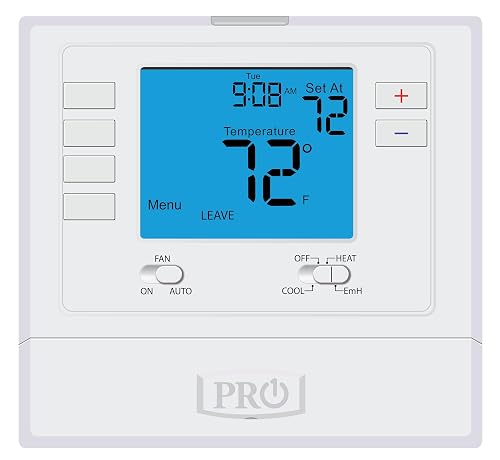
PRO1 T725 Heat Pump/Conventional Programmable Thermostat

PRO1 T771 Single Stage Non-Programmable Thermostat
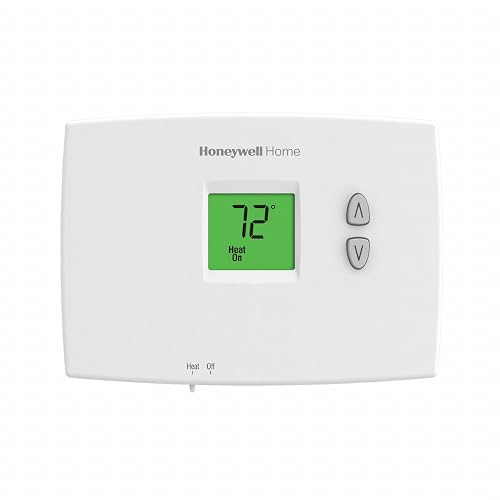
Honeywell TH1100DH1004 PRO 1000 Non-Programmable Thermostat
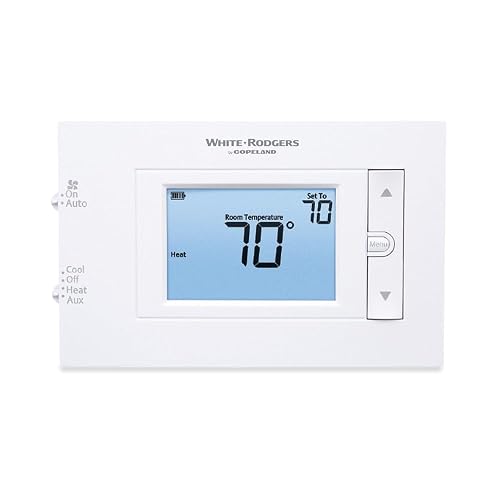
White-Rodgers 80 Series 1F83H-21NP Heat Pump Thermostat
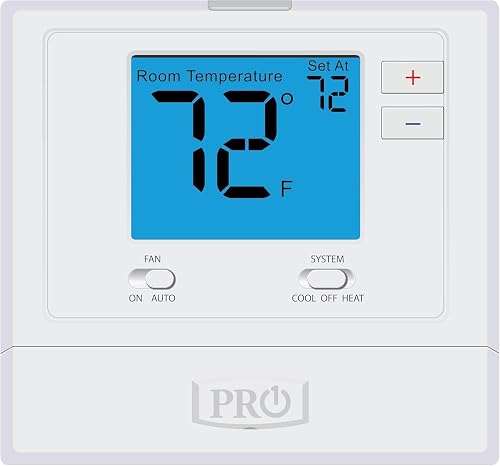
PRO1 T701 Single Stage Non-Programmable Thermostat

PRO1 T715 Multi-Stage Programmable Gas Thermostat
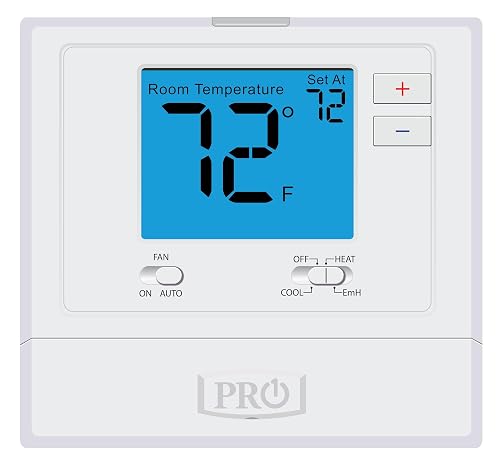
PRO1 T721 Heat Pump or Conventional Thermostat

White-Rodgers 1E78-144 Single Stage Thermostat

PRO1 T805 Single Stage Programmable Thermostat
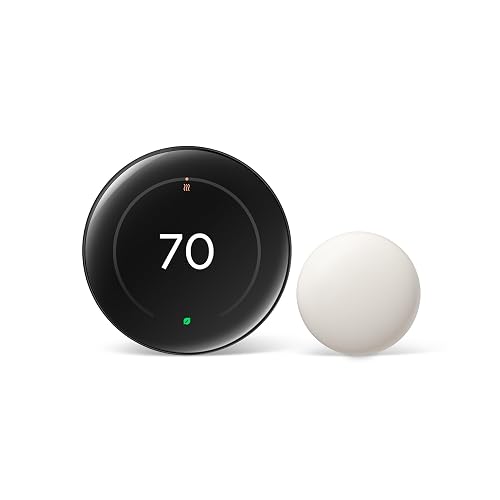
Google Nest Learning Thermostat 4th Gen with Sensor
The Details Behind The Selections
Heat pumps need a thermostat that knows the difference between auxiliary heat strips and the compressor. The PRO1 T725 handles that distinction, and it also falls back to a regular 1 heat/1 cool gas furnace setup. A 4 sq. in. blue backlit screen keeps the readout readable from across the room, which matters more than people expect during a bleary-eyed 6 a.m. glance.
Seven-day and 5/1/1 (five weekdays plus a separate Saturday and Sunday) scheduling gives you four daily periods per day, so weekday routines don’t bleed into weekends. The glow-in-the-dark light button is a quiet win for anyone who’s ever fumbled for the thermostat in a dark hallway. If your system includes a C-wire (a continuous 24-volt common wire that powers the thermostat), power stays stable without battery swaps.
The Case For It
- Dual compatibility covers 2H/1C heat pump or 1H/1C conventional setups in one unit.
- Large backlit display reads clearly from several feet away, useful in hallways and open living areas.
- Flexible 7-day or 5/1/1 scheduling with four daily periods accommodates shift workers and weekend routines.
- Hardwired or battery power options suit older homes without a dedicated common wire.
- Programmed schedules translate into roughly 10 to 15 percent HVAC runtime savings over a manual set-and-forget thermostat.
Things To Consider
- Older heat pump systems without a C-wire may need a simple power adapter, a small step that adds install time.
- The blue backlit screen, while readable, is not a color touchscreen, so changing settings uses physical buttons rather than taps.
Feature Snapshot
Right Fit For
Heat pump owners who want a programmable wall unit without paying smart-thermostat prices.
Skip It When
You have a true multi-stage gas furnace and need finer staging control; the PRO1 T715 covers that scenario.
Not every space needs a learning thermostat that wants to plan your week. The PRO1 T771 is a non-programmable (no schedules, just set-and-forget) wall thermostat built for 1 heat/1 cool conventional systems, and its setpoint range stretches down to 25°F, which is unusually low. That makes it a useful pick for a garage workshop, a basement, or a shed where freezing pipes are a real concern.
The 4 sq. in. blue backlit display is a familiar T700 platform trait shared with the T725 reviewed earlier, so the look and feel are consistent if you’re matching units across rooms. A swing setting (the temperature gap between when heat turns on and when it turns off) and calibration option let you fine-tune how often the system cycles, which matters in spaces with drafts or oversized equipment.
Everyday Perks
- Wide setpoint range down to 25°F suits unheated garages, basements, and outbuildings.
- Backlit display and swing adjustment make it practical for spot heating and cooling in specialty rooms.
- Non-programmable design removes scheduling features some users simply do not want.
- Compatible with single-stage conventional heating and cooling equipment.
Worth Noting
- No scheduling, so it is not a fit for households that want automatic setback temperatures when they leave for work.
- Garage-style setpoints may confuse anyone using it as a primary living-area thermostat.
Made For
Workshop, garage, and basement owners who need freeze-protection control without programming complexity.
Consider Something Else When
You live in the home full time and want scheduled energy savings; the PRO1 T725 gives you that with daily programming.
Heat-only homes are common in older Northern neighborhoods with boiler systems or single-stage furnaces. The Honeywell TH1100DH1004 PRO 1000 is a horizontal-mount non-programmable thermostat aimed squarely at that setup. Dual power means it can run from the system’s 24-volt common wire or from batteries alone, which simplifies older homes that lack a C-wire.
Unlike the PRO1 T771, this Honeywell model is dedicated to heat-only operation, so there is no cooling stage to wire up. The adjustable temperature scale can switch between a standard 40 to 90°F range and a 35 to 90°F garage range, so the same unit can handle a living room or a utility space depending on how it is configured at install.
Features That Help
- Dual power (hardwired or battery) keeps it compatible with older 2-wire heat-only systems.
- Switchable temperature scale supports both standard living areas and cooler garage environments.
- Backlit display remains readable in dim basements and mechanical rooms.
- Horizontal mount fits low wall placements where vertical models look awkward.
Trade Offs
- Heat-only design means it cannot control central air conditioning in the same home.
- Non-programmable operation offers no automatic setback, which slightly raises runtime versus a scheduled model like the PRO1 T725.
Best Suited To
Owners of older boiler or furnace systems running on heat-only wiring without a common conductor.
Look Elsewhere When
Your home also runs central cooling; the PRO1 T701 covers heat and cool in a single non-programmable unit.
First-time installers often hesitate because a crooked thermostat looks terrible on the wall. The White-Rodgers 1F83H-21NP solves that with a built-in bubble level in the baseplate, a small touch that saves a trip back to the toolbox. It is a non-programmable heat pump thermostat, which means it is meant for systems where reversing the refrigerant cycle handles both heating and cooling rather than separate fuel-burning equipment.
The backlit display makes the temperature readable in low light, and the 80 Series platform has a long track record in residential HVAC (heating, ventilation, and air conditioning). Unlike the programmable PRO1 T725 reviewed earlier, this one is a set-and-forget unit. For homeowners who never bother with schedules anyway, that simplicity is the point.
Positive Takeaways
- Built-in level supports clean mounting on the very first try, even on textured walls.
- Heat pump compatibility handles single-stage heat pump systems without auxiliary strips.
- Backlit screen keeps the temperature visible in low-light hallways.
- Simple non-programmable interface removes schedule complexity that some users never use.
Room For Improvement
- No programming means no scheduled setback, which costs a bit more in runtime over a season.
- Limited to heat pump applications, so it cannot replace a conventional thermostat for a gas furnace without a heat pump coil.
Feature Snapshot
Perfect Match For
DIYers replacing an older heat pump thermostat for the first time and worried about crooked mounting.
Swap It Out When
You want scheduled control rather than manual adjustment; the PRO1 T725 brings 7-day programming to the same heat pump category.
Conventional central air is the most common residential HVAC setup in the U.S., and the PRO1 T701 is aimed straight at it. This non-programmable wall thermostat supports 1 heat/1 cool conventional systems with gas or electric compatibility. For households that already know what temperature they want and just need a clean, reliable controller, the T701 keeps things uncomplicated.
The 4 sq. in. blue backlit display with a glow-in-the-dark light button carries forward the T700 platform feel, matching the look of the T725 and T771 reviewed earlier. Unlike the Honeywell TH1100DH1004 in spot three, the T701 also handles cooling stages, so it works as a whole-home primary control rather than just a heat-only unit.
Where It Excels
- Supports 1 heat/1 cool conventional systems with both gas and electric furnace compatibility.
- Glow-in-the-dark light button improves visibility during overnight hallway trips.
- Backlit screen is readable from the center of most living rooms.
- Compatible with battery or hardwired power depending on the home’s wiring.
Points To Note
- Non-programmable operation means no automatic temperature setback, so expect slightly higher runtime than scheduled models.
- Single-stage only; homeowners with two-stage furnaces need to step up to the PRO1 T715.
Whose Shelf It Belongs On
Homeowners with a standard single-stage central air system who want set-and-forget simplicity.
Another Choice May Suit
You want daily scheduling for energy savings; the PRO1 T805 in spot nine adds programmable flexibility with a larger display.
Two-stage gas furnaces run a low fire and a high fire to reduce temperature swings and improve efficiency. The PRO1 T715 controls 2 heat/2 cool systems, so it can drive both stages of a multi-stage furnace and a two-stage compressor. For homeowners who have invested in higher-end HVAC equipment, a single-stage thermostat leaves that capability on the table.
Like the T725 reviewed earlier, this model supports 7-day, 5/1/1, or non-programmable modes on the same T700 platform. The 4 sq. in. blue backlit display is identical in feel, but the multi-stage wiring terminal block is the meaningful upgrade. Compare that to the PRO1 T701 in spot five: same screen, but the T701 only drives one stage of heat and cool.
A Strong Showing
- Supports 2 heat/2 cool multi-stage systems for finer temperature control and quieter operation.
- Three operating modes (7-day, 5/1/1, non-programmable) suit both schedule-driven and set-and-forget users.
- Glow-in-the-dark light button and backlit display match the rest of the T700 lineup.
- Battery or hardwired power flexibility fits a wider range of existing wall wiring.
- Multi-stage staging cuts temperature swings, which can extend furnace filter life in busy homes.
Honest Caveats
- Multi-stage wiring requires the furnace to actually have second-stage terminals connected; not all homes are pre-wired for it.
- Pricing sits above single-stage programmable units like the PRO1 T805.
Feature Snapshot
Who Will Love This
Homeowners with two-stage gas furnaces who want scheduling plus quieter, more efficient staging.
Reach For A Different Pick When
Your system is a basic single-stage setup; the PRO1 T725 or T805 deliver what you actually need at a lower cost.
Not everyone knows which way their system leans. The PRO1 T721 works as either a 2 heat/1 cool heat pump thermostat or a 1 heat/1 cool conventional thermostat, which makes it a useful “covers both” choice for homeowners who are unsure what is sitting in their mechanical room. It also keeps the familiar T700 platform feel seen on the T701 and T725 reviewed earlier.
The 4 sq. in. blue backlit display with a glow-in-the-dark light button is the same spec used across the lineup. Unlike the Honeywell TH1100DH1004, this unit handles cooling as well as heating. Set it up once, and the installation menu lets you flip the configuration to match the actual equipment on the wall.
Positive Points
- Dual system support (heat pump 2H/1C or conventional 1H/1C) is configured at install.
- Non-programmable design keeps the user interface simple for less tech-confident households.
- Glow-in-the-dark light button and backlit display improve nighttime usability.
- Compatible with battery or hardwired power configurations.
Points To Keep In Mind
- Configuration switches need to be set correctly at install for heat pump versus conventional wiring, a small step that can confuse first-timers.
- No scheduling means no automatic setback, which is a step down from the PRO1 T725 if you want energy savings.
Right Fit For
Households that aren’t 100 percent sure of their system type or want a thermostat that survives a future equipment swap.
A Better Fit Elsewhere
You already know you have a programmable-friendly home and want 7-day scheduling; the PRO1 T805 is the more capable alternative.
Mixed-voltage systems used to be a real headache. The White-Rodgers 1E78-144 works with both 24-volt controls and millivolt systems (low-voltage setups used by some older gas fireplaces and wall furnaces that generate their own tiny electrical current). For homeowners with one of those setups, this thermostat drops in where many modern units simply will not work.
This is a non-programmable unit with a backlit digital display, similar in spirit to the PRO1 T701 but with that broader voltage compatibility. The 1E78-144 is also compatible with single-stage heating, cooling, and heat pump systems without auxiliary heat. It is not built for electric baseboard heating, a common constraint worth noting for anyone with that older setup.
Useful Touches
- Compatible with 24-volt and millivolt systems, a combination few thermostats support.
- Backlit digital display remains readable in dim mechanical rooms.
- Works with single-stage heating, cooling, and basic heat pump systems.
- Non-programmable interface keeps the controls simple for anyone who rarely touches the thermostat.
Small Caveats
- Not compatible with electric baseboard heat, which rules it out for some older homes with that heating type.
- No scheduling means no automatic setback; homeowners used to programmable controls will notice the bump in runtime.
Built With In Mind
Homeowners with millivolt or mixed-voltage HVAC equipment that newer smart thermostats cannot handle.
Not Your Match When
You want daily or weekly programming; the PRO1 T725 covers scheduling with broader conventional compatibility.
The T800 platform is the larger sibling to the T700 platform running through several other picks on this list. The PRO1 T805 carries a 7 sq. in. blue backlit display, noticeably larger than the 4 sq. in. screens on the T701 and T725. For anyone with vision concerns or a thermostat mounted across a wide room, that extra screen real estate matters more than the spec sheet suggests.
Designed for 1 heat/1 cool conventional systems, the T805 supports 7-day, 5/1/1, or non-programmable modes. Compare that to the PRO1 T701 reviewed earlier: same 1H/1C conventional compatibility, but the T701 has no scheduling. If your daily routine changes between weekdays and weekends, the T805 lets you capture that without moving into multi-stage territory.
The Good Stuff
- Oversized 7 sq. in. blue backlit display makes the temperature readable from across the room.
- Three operating modes (7-day, 5/1/1, non-programmable) accommodate varied routines.
- Glow-in-the-dark light button supports quick nighttime operation.
- Conventional 1H/1C compatibility covers the most common residential HVAC setup.
Less Ideal Details
- Single-stage only, so two-stage furnace owners should step up to the PRO1 T715.
- Bigger display means a wider wall footprint, which can crowd narrow baseboards or trim.
Who Should Grab It
Homeowners with single-stage conventional HVAC who want a big, readable display plus weekly scheduling.
Where A Sibling Pick Shines
You have a heat pump system rather than a conventional furnace; the PRO1 T725 is the heat pump equivalent with a smaller display.
Smart thermostats earn their keep by learning your patterns and trimming runtime. The Google Nest Learning Thermostat (4th gen) watches your temperature adjustments and builds a schedule without you programming one. The included Nest Temperature Sensor (2nd gen) lets the thermostat weigh the temperature in another room, which helps when the nursery runs cold or the upstairs gets stuffy.
This is a fundamentally different experience from the programmable wall units reviewed earlier. Where the PRO1 T725 or T805 need a manual schedule, the Nest builds one in the background. The Obsidian finish gives it a polished look aimed at living areas rather than utility rooms. Compatibility with most 24-volt HVAC systems is the main wiring consideration.
What Works In Its Favor
- Learning thermostat builds a personal schedule from your manual adjustments, removing the need to program one.
- Included remote temperature sensor balances hot and cold spots in multi-room homes.
- Obsidian finish and large display work as a design element in main living areas.
- Compatible with common 24-volt heating and cooling systems in most modern homes.
Trade-Offs To Consider
- Smart thermostats like this require a C-wire or compatible power adapter for stable operation in older homes.
- Setup and account linking take longer than swapping in a non-programmable wall unit like the Honeywell TH1100DH1004.
Feature Snapshot
Who Will Love This
Connected households that want learning schedules and remote room sensing without building it themselves.
Consider Something Else When
You prefer a simpler wall unit with no app or account; the PRO1 T701 or T805 deliver solid control with no connectivity required.
What To Weigh Before Choosing A Ritetemp-Style Thermostat
Match The Thermostat To Your System Type
The single biggest mistake shoppers make is grabbing a unit that does not match their equipment. Conventional furnaces with separate air conditioning need a 1 heat/1 cool thermostat. Heat pump systems, which move heat rather than burning fuel, need a thermostat that understands reversing valves and auxiliary heat. Multi-stage systems need 2H/2C support. Picking the wrong class wastes the install before the first day is done.
Schedule Features That Actually Save Energy
Programmable thermostats earn back their cost when schedules match real life. A 7-day schedule suits shift workers and people whose routines vary. A 5/1/1 setup covers a typical Monday-through-Friday work week with separate weekend blocks. Non-programmable units can be the right answer in rooms used only a few hours at a time, like a garage workshop where the PRO1 T771 reviewed earlier is a strong fit.
Wiring Realities In Older Homes
A C-wire, or common conductor, is the continuous 24-volt power line that keeps smart thermostats stable. Older homes often have only two wires running to the wall, which rules out some smart units entirely. Battery-powered non-programmable models like the Honeywell TH1100DH1004 cover heat-only systems without a C-wire. Millivolt systems found in older gas fireplaces need a special class of thermostat like the White-Rodgers 1E78-144.
Reading The Display Across The Room
Display size is one of those details that gets ignored until you live with it. A 4 sq. in. screen is fine in a hallway, but in an open living room with high ceilings a 7 sq. in. display like the one on the PRO1 T805 reads much more comfortably. Backlit screens with glow-in-the-dark buttons also matter more than people expect during late-night hallway trips.
Common Slip-Ups And Smart Upgrades Worth Knowing
Where Shoppers Go Wrong
The most common mistake is buying a smart thermostat for a system that lacks a C-wire and then returning it after a frustrating install. Closely related is matching a thermostat’s voltage class to the wrong equipment, for example using a standard 24-volt unit on a millivolt fireplace system. Always confirm your HVAC equipment type, stage count, and existing wiring before ordering, and pick the simplest unit that meets those realities rather than the flashiest one on the page.
When Paying More Pays Off
Higher-tier thermostats earn their cost in two ways. Multi-stage units like the PRO1 T715 unlock quieter staging and better efficiency from two-stage furnaces. Smart learning thermostats like the Google Nest build schedules automatically and pair with remote sensors, which can save real runtime in homes with hot or cold rooms. For households with simple set-and-forget needs, the lower tiers cover comfort without the extra spend.