

A wall thermostat used to be a quiet dial, ignored for years. Now it can learn your schedule, trim your utility bill, and warn you before your heat pump quits. The market has caught up fast, and sifting through every brand on the listing page gets old. This guide rounds up ten strong picks, from the classic Sensi Touch line to feature-rich ecobee and Nest models, so you can match the right control to your home’s wiring, your heating type, and the way you actually live.
A Fast Comparison Of The Options
Sensi Touch 2 Smart Thermostat
Google Nest Thermostat with Trim Kit
ecobee Smart Thermostat Premium
Google Nest Temperature Sensor 3-Pack
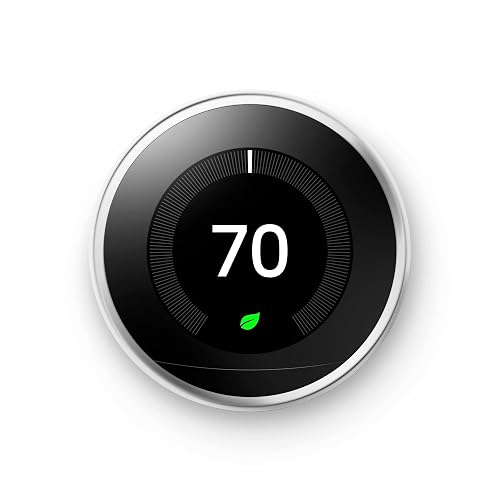
Google Nest Learning Thermostat (Polished Steel)

Mysa Smart Thermostat for Electric Baseboards
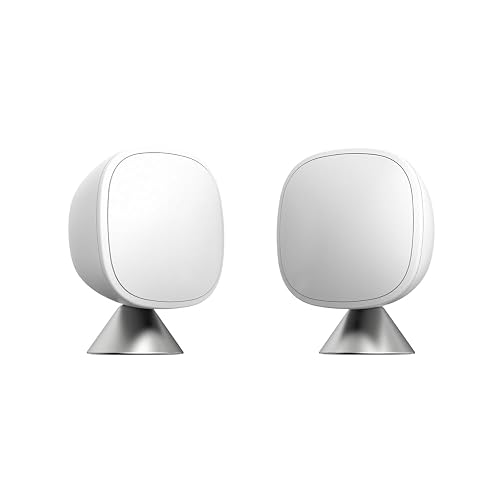
ecobee SmartSensor 2-Pack
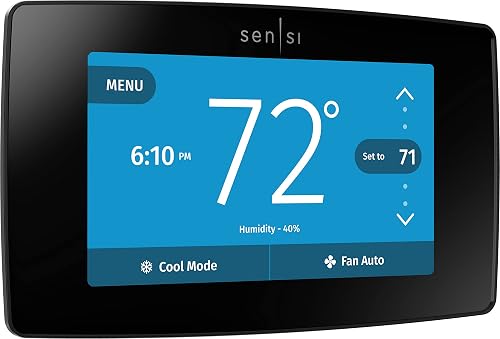
Sensi Touch Smart Thermostat (Black)
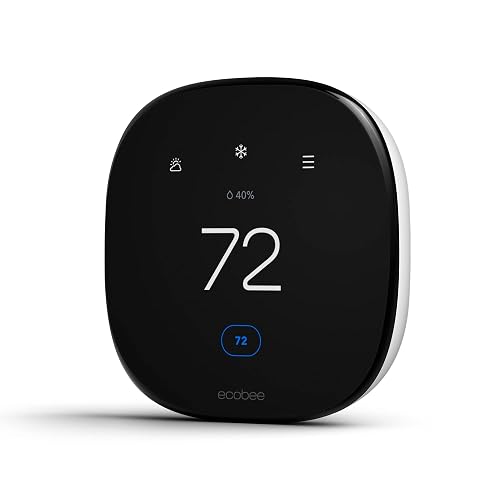
ecobee Smart Thermostat Enhanced

Alarm.com Smart Thermostat
A Breakdown Of The Leading Choices
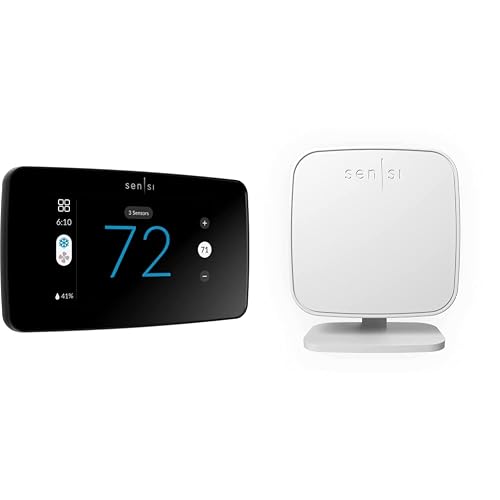
Color touchscreens change how a thermostat feels day to day, and the Sensi Touch 2 leans into that experience. The display is bright enough to read from across the room, and the app pairs through Bluetooth for a guided setup that takes the guesswork out of the wiring. For a two-story home with a stubborn upstairs bedroom, pairing this unit with Sensi’s room sensors (sold separately) lets the system weigh readings from multiple spots instead of trusting a single hallway wall.
Emerson’s Sensi line is built by a company with deep HVAC roots, which shows in compatibility with the common wire setups found in most U.S. homes. You will need a c-wire (the low-voltage common wire that delivers continuous power), so older homes may need a quick adapter install before the wall plate is mounted.
Reasons It Performs
- Color touchscreen makes schedule changes quick without pulling out a phone
- Compatible with Sensi room sensors for whole-home temperature balancing
- ENERGY STAR certification supports the maker’s claim of roughly 23% HVAC energy savings
- Bluetooth-guided app setup removes the usual wiring anxiety for first-timers
- Privacy commitment: your usage data is not sold to third parties
Things To Consider
- A c-wire is required, which may add an installation step in older homes
- Room sensors ship separately, raising the total cost for multi-room coverage
- Display style skews functional rather than decorative compared with the Nest aesthetic
Key Specs
Who It Suits Best
Homeowners with multi-level layouts who want touchscreen speed, sensor expansion, and a clean app.
Look Elsewhere When
You rely on high-voltage electric baseboards, in which case the Mysa Smart Thermostat is the better match.
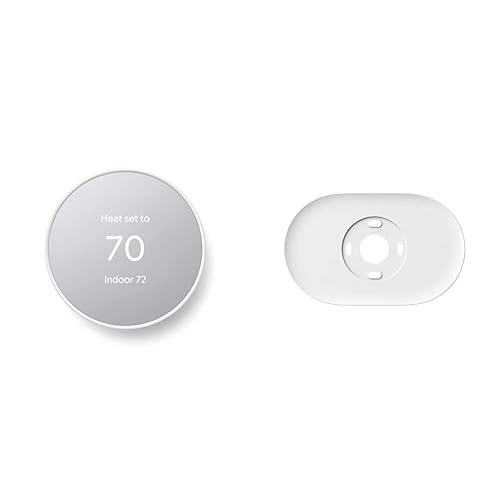
The Snow-finish Nest Thermostat skips the old learning curve. Right out of the box, it senses when you leave the house and eases the temperature back on its own, so you are not paying to condition empty rooms. The included trim plate and steel backplate help cover older paint rings or junction boxes, which matters if you are swapping a stat for the first time since the previous tenant.
Setup happens in the Google Home app, and most people with a standard low-voltage HVAC system will move from box to wall in under thirty minutes. You will need a neutral wire or a compatible power accessory in some installs, so checking the compatibility tool before you buy saves a Saturday afternoon.
Well-Handled Touches
- ENERGY STAR certified to support real utility savings
- Trim plate and steel backplate simplify retrofit installs over older junction boxes
- Auto-sensing home and away logic trims waste without manual scheduling
- Programmable schedules live in the Google Home app for Android and iPhone
Trade Offs
- No physical dial, so adjusting in the dark is all about swipes
- Some HVAC setups require a power accessory or compatible C-wire, adding a step
- Works best inside the Google Home ecosystem; HomeKit users get limited support
Made For
First-time smart thermostat shoppers who want a polished app experience and worry-free scheduling.
Swap It Out When
You want a learning thermostat that programs itself over time, in which case the Google Nest Learning Thermostat (Polished Steel) earns the upgrade.
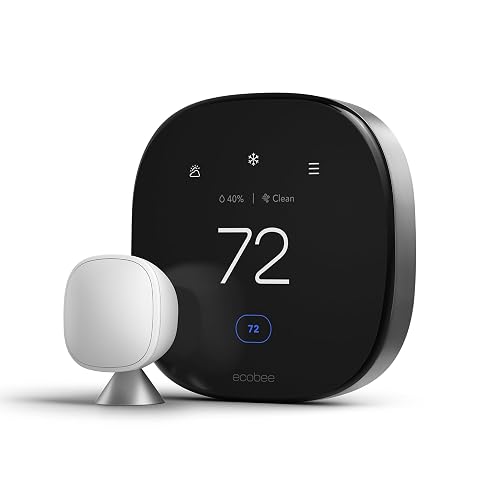
Where the Sensi Touch 2 keeps the interface tight, the ecobee Smart Thermostat Premium spreads out. A built-in air quality monitor tracks particulates and VOCs, and the included SmartSensor adjusts temperatures toward the room you actually use. Voice control through Siri and Alexa lives in the wall unit itself, so you can ask for a cooler bedroom without reaching for a phone or a speaker.
The metal body feels substantial on the wall, and the larger display doubles as a useful at-a-glance dashboard. The trade-off is cost; this is the spendier end of the lineup, so it lands best for homeowners who want monitoring beyond temperature.
What It Does Well
- Built-in air quality monitor adds a layer of insight most thermostats skip
- SmartSensor included in the box for balancing hot and cold rooms
- Far-field voice control with Siri and Alexa built in
- Wide compatibility with major smart home platforms
Worth Noting
- The price tag runs higher than the Sensi Touch 2 or Nest Thermostat
- Air quality readings work best as trends, not medical-grade readings
- Larger footprint on the wall may overpower a small hallway
Feature Snapshot
Best Suited To
Tech-forward homeowners who want air quality data, voice control, and sensor-driven comfort in one package.
Consider Something Else When
You mainly want a capable thermostat at a friendlier cost; the ecobee Smart Thermostat Enhanced covers that gap nicely.
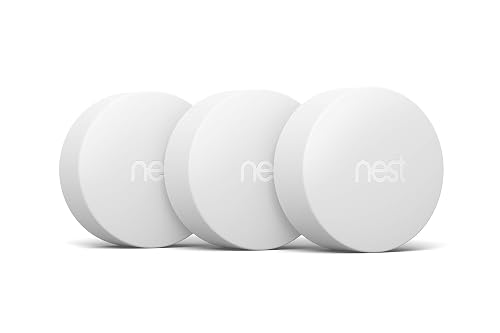
Sensors do the quiet work of a smart thermostat. This three-pack lets you drop a temperature sensor in a nursery, a basement office, and a living room, then have the Nest Thermostat weight each spot on its own schedule. A baby’s room can hold steady at night while the rest of the house drops a few degrees, and the system switches its focus as you move through the day.
Setup is small and tidy: each sensor pairs through Bluetooth Low Energy, so there is no extra hub to plug in. The catch is that they only communicate with compatible Nest thermostats, so this is an add-on rather than a standalone product.
The Helpful Details
- Three sensors cover a typical family home in one bundle
- Schedule each sensor’s priority based on time of day
- Bluetooth Low Energy connection keeps battery life long
- Compact design fits on a shelf or wall without drawing attention
Soft Spots
- Only works with compatible Nest thermostats, not Sensi or ecobee systems
- Sensors read temperature only, with no humidity or occupancy data
- Battery replacements are a small but ongoing maintenance task
Right Fit For
Existing Nest owners who want to balance temperatures in a multi-room layout without upgrading the main thermostat.
Not Your Match When
You run an ecobee system, since the ecobee SmartSensor 2-Pack pairs more naturally with that ecosystem.
The Learning Thermostat is the original self-programming stat, and the Polished Steel finish gives it the kind of presence that turns a wall plate into a small design feature. After about a week of manual tweaks, the unit starts building a schedule on its own, then nudges the temperature toward a savings band when it notices the house is empty.
For homeowners who never want to fiddle with a seven-day schedule, that learning behavior is the whole point. HVAC monitoring adds another layer, sending alerts when the system looks off and reminding you about filter changes. The Home/Away Assist feature pulls from your phone’s location rather than a built-in motion sensor, so the thermostat knows when you actually leave.
What Earns Its Place
- Self-learning schedule removes the weekly chore of programming
- Polished steel finish works well in modern kitchens and entries
- Energy History shows where the savings are actually coming from
- HVAC monitoring sends alerts when the system behaves unusually
Points To Keep In Mind
- Higher upfront cost than the entry-level Nest Thermostat
- Home/Away Assist depends on phone location, so guests at home alone may trigger Eco mode
- Full feature set lives behind the Google Home app, which may feel heavy for minimalists
Quick Facts
Who Will Love This
Homeowners who want a thermostat that programs itself and adds genuine system monitoring over time.
A Better Fit Elsewhere
You prefer a touchscreen with a fresh-out-of-the-box app, in which case the Sensi Touch 2 Smart Thermostat is a cleaner starting point.
Most smart thermostats assume you have a low-voltage central system, which leaves a whole category of homes behind. The Mysa steps in for line-voltage electric baseboard heaters running at 120 to 240 volts, with support up to 1900W at 120V or 3800W at 240V. If your heat clicks on with a soft hum from the wall rather than from a vent, this is the kind of thermostat that actually works with your wiring.
Installation is the part worth taking seriously. Mysa requires at least four wires including a neutral or second live wire, so older two-wire baseboard setups need a re-pull before the wall plate goes on. The mobile app handles scheduling, temperature, and humidity alerts without any subscription fees.
A Strong Showing
- Built specifically for high-voltage electric baseboard and fan-forced heaters
- Works with HomeKit, Alexa, and Google Home for flexible voice control
- Free app for scheduling, temperature, and humidity alerts
- Sleek, low-profile design fits cleanly on the wall
Honest Caveats
- Will not work with low-voltage or two-wire installations
- Setup is more involved than a typical low-voltage swap, so plan extra time
- Heat-only design, so it does nothing for central air conditioning
Perfect Match For
Owners of electric baseboard heating who want app and voice control without rewiring their whole system.
Skip It When
You have a standard central HVAC setup; the Sensi Touch 2 or ecobee Enhanced will serve you better.
The ecobee SmartSensor does more than read temperature. An infrared sensor detects whether a room is occupied, so the system trims conditioning in empty spaces and ramps back up when someone walks in. For households with a home office that sits unused most of the day, that single behavior can shift a noticeable slice of the utility bill.
The two-pack covers a primary living area and one secondary room, which suits most floor plans out of the gate. Pairing happens inside the ecobee app, and the sensors communicate wirelessly up to roughly 60 feet. They are tied to ecobee thermostats, so the value lands only if the main stat is already in the family.
Everyday Perks
- Occupancy detection trims conditioning in unused rooms
- Two-pack covers a typical home without buying extra
- Wireless range up to about 60 feet between sensor and thermostat
- Simple adhesive mount avoids drilling into walls
Less Ideal Details
- Only pairs with ecobee thermostats, not Sensi or Nest systems
- Battery cells need replacing on a typical yearly cycle
- No humidity reporting on this generation of sensor
Built With In Mind
ecobee owners who want smarter room-by-room comfort without touching their main thermostat setup.
Another Choice May Suit
You already run a Nest system, in which case the Google Nest Temperature Sensor 3-Pack fits that ecosystem.
The ST75 sits a step below the newer Sensi Touch 2, but the core experience stays familiar. A color touchscreen handles the quick changes, and the Sensi app walks through wiring with the same Bluetooth guidance that makes the brand approachable. For shoppers who want a touchscreen Sensi without the second-generation price, the ST75 still covers the essentials.
You will need a c-wire, just like the newer model, and the app experience feels close to the Touch 2 with slightly different menu labels. Build and finish lean functional, so it disappears into the wall rather than calling attention to itself.
Everyday Wins
- Color touchscreen at a lower price than the Touch 2
- Same Sensi app, including flexible scheduling and usage reports
- ENERGY STAR certified for efficiency-conscious homes
- Privacy-focused data policy, with no sale of personal information
Possible Compromises
- Listing availability can be patchy, so check the product page before committing
- C-wire requirement still applies, same as the newer Sensi models
- No bundled room sensor, so multi-room comfort costs extra
Whose Shelf It Belongs On
Privacy-focused homeowners who want a dependable touchscreen Sensi at a modest entry point.
Reach For A Different Pick When
You want the latest Sensi features, in which case the Sensi Touch 2 Smart Thermostat is the natural upgrade.
The Enhanced sits between the basic ecobee and the Premium, trimming the air quality monitor and the metal body to land at a friendlier price. You still get the occupancy-based scheduling and the eco+ features that ease temperatures back when you are asleep or away, which is where the real energy savings come from for most homes.
Setup is the same as the Premium, with the app guiding you through the wiring and pulling in a SmartSensor to weight the rooms you actually use. For households that do not need built-in air quality monitoring, the Enhanced is the practical sweet spot in the ecobee lineup.
Real Benefits
- Occupancy-aware scheduling and eco+ features handle the small daily savings
- Connects to Apple Watch and major smart home platforms
- SmartSensor included in the box for room-level comfort
- Lower price than the Premium tier with the same core scheduling engine
Where It Is Less Suited
- No built-in air quality monitoring, unlike the Premium
- Plastic body feels less premium than the metal Premium finish
- Full feature set needs the ecobee app, which is a heavier download than simpler options
Who Should Grab It
Mid-range shoppers who want ecobee scheduling and room sensors without paying for air quality extras.
Where A Sibling Pick Shines
You want air quality readings and metal-body build, in which case the ecobee Smart Thermostat Premium is the upgrade worth making.
The Alarm.com Smart Thermostat is less a standalone product and more a node in a larger monitored system. The real value shows up when it sits next to a security panel, smart locks, and a service plan, all reading from the same app. You get remote access, custom schedules, and critical temperature alerts that ping your phone if the home drops too cold for the pipes or too warm for a pet.
Without the surrounding Alarm.com ecosystem, this is a basic thermostat with fewer standalone app features than the Sensi or ecobee options. For households already paying for professional monitoring, it slides in cleanly; for everyone else, the consumer-focused picks deliver more for the dollar.
Benefits That Matter
- Remote access and control from the Alarm.com app
- Custom schedules that align with security routines like arm and disarm
- Critical temperature alerts protect against frozen pipes or overheating
- Geo-services automation adjusts based on your location
Potential Drawbacks
- Best value comes through a professional monitoring plan, not as a standalone buy
- Fewer consumer-facing app features than Sensi or ecobee thermostats
- Hard to evaluate without an existing Alarm.com account or service provider
The Right Fit
Households already running an Alarm.com security setup who want the thermostat to share the same brain.
A Better Fit Elsewhere
You want a self-contained smart thermostat with a polished app, in which case the Sensi Touch 2 Smart Thermostat stands on its own.
What To Weigh Before Choosing a Smart Thermostat
Match The Thermostat To Your HVAC Wiring
The single biggest factor is the wiring already in your wall. Most central HVAC systems use low-voltage control wires and may need a c-wire, the common low-voltage wire that delivers continuous power to the thermostat. Pull the old stat off the wall and count the wires before you buy, or run the Sensi compatibility tool to check. Electric baseboard owners should look at line-voltage-specific models like the Mysa, since a standard 24V stat will not switch high-voltage loads safely. Assuming your system is compatible without checking is the most common way to derail an install.
Decide How Much Automation You Actually Want
Some shoppers want a stat that programs itself, while others want to keep the schedule firmly in their own hands. Learning thermostats like the Nest Learning Thermostat build a schedule over time, while Sensi and ecobee lean on occupancy sensors and eco+ features to react in the background. Heavy travelers and irregular schedules benefit from the auto behavior; tight schedule keepers may find the manual route more predictable.
Think About Sensors And Multi-Room Comfort
Single thermostats read the hallway, not the bedroom at the end of the house. Sensor packs, like the Nest Temperature Sensor 3-Pack or the ecobee SmartSensor 2-Pack, push comfort into the rooms that actually matter. For multi-level homes, an extra sensor or two often delivers more noticeable comfort than any other upgrade you can add to the wall.
Weigh Ecosystem Lock-In
Smart thermostats work best when the rest of the home agrees with them. Apple HomeKit households may lean Mysa or ecobee, while Google Home users get the cleanest experience with Nest models. Sensi works broadly across the major platforms. Picking a stat that fights your existing smart home setup is the kind of friction that lingers for years.
Key Considerations Across These Picks
Common Shopping Slip Ups
The most common miss is buying a thermostat before checking the wiring in the wall. A quick photo of the old stat’s terminal block tells you everything you need to know, and skipping that step is how weekend installs turn into weekday service calls. The second miss is treating sensors as optional without thinking through the home’s layout: a two-story house with a single thermostat will always read the hallway. Plan for at least one room sensor if your floor plan spreads out.
Where The Extra Money Goes
The jump from a basic Nest Thermostat to a Learning Thermostat pays for a self-programming schedule, a metal body, and HVAC monitoring. The leap from the ecobee Enhanced to the Premium brings air quality monitoring and a built-in voice assistant. Those extras make sense for tech-forward households and homes with air quality concerns, but a simpler stat will do the same comfort job for most people. Spending up earns the most when the feature solves a real problem you already have, not when it adds a number on the spec sheet.