

A wall thermostat should make your home comfortable without demanding a manual thicker than a paperback. You twist the dial, the furnace clicks on, the house warms up, and you move on with your day. That’s the whole job. Yet the category has drifted toward glossy touchscreens, learning algorithms, and app logins, which is more than a lot of households actually want.
This roundup focuses on simple thermostats that keep the experience grounded: clear displays, predictable buttons, and compatibility with the HVAC gear most homes already run. The list spans basic non-programmable units for a garage, multi-stage programmable options for a gas furnace, a radiant floor controller for tile baths, and one learning pick for the smart-home crowd. Whether you’re swapping a broken unit or finishing a weekend upgrade, the picks below cover the most common install scenarios without dragging in features you won’t use.
A Closer Look At The Lineup
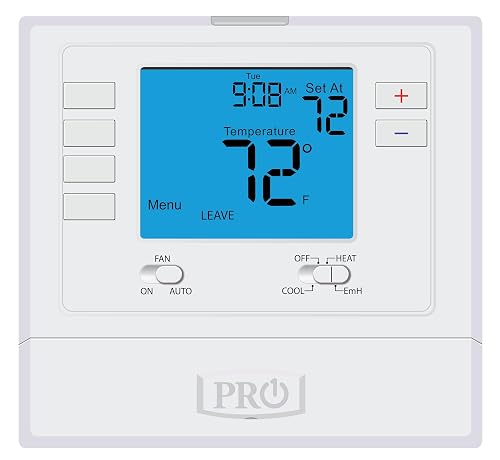
PRO1 T725 Heat Pump/Conventional Programmable Wall Thermostat

PRO1 T771 Single Stage Non-Programmable Wall Thermostat
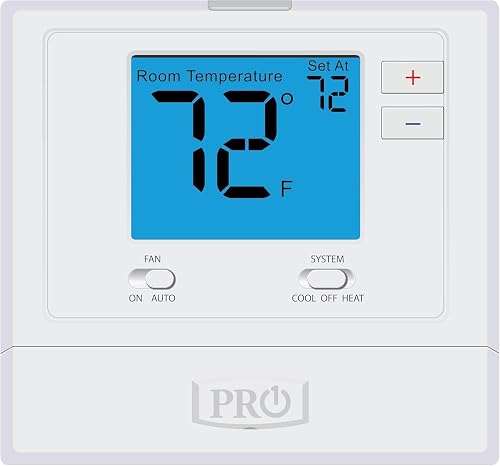
PRO1 T701 Single Stage Non-Programmable Wall Thermostat

PRO1 T715 Multi-Stage Programmable Gas Thermostat
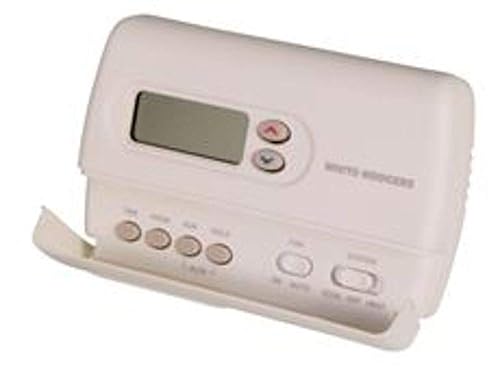
White-Rodgers 1F80-361 Emerson 80 Series Programmable Thermostat
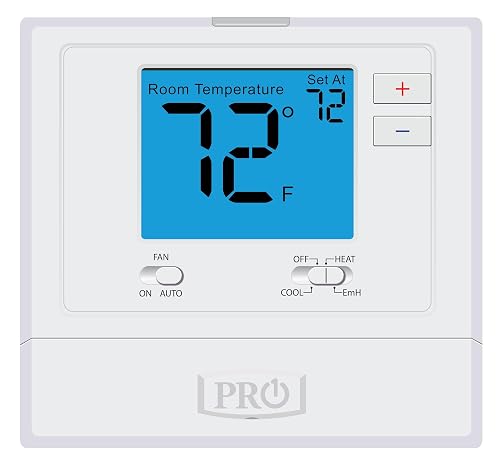
PRO1 T721 Non-Programmable Wall Thermostat
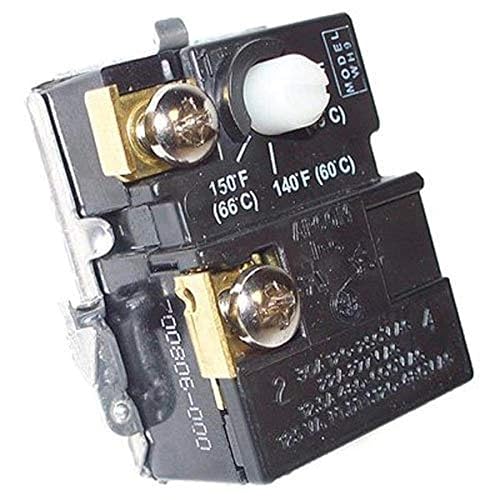
Reliance 9000507-045 Lower Electric Thermostat

OJ Microline UTN4 Radiant Floor Heat Thermostat

PRO1 T805 Single Stage Programmable Wall Thermostat
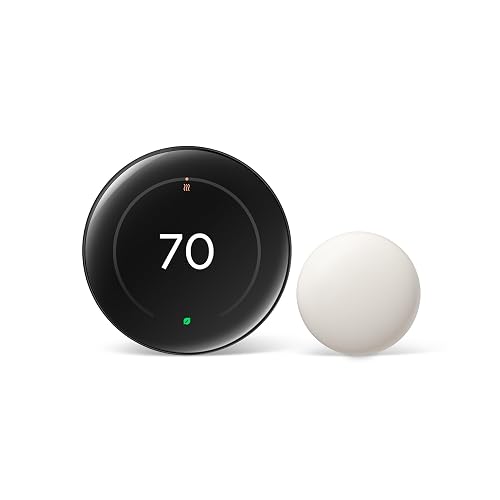
Google Nest Learning Thermostat (4th gen) + Temperature Sensor
The Details Behind The Selections
For homes running a heat pump rather than a traditional furnace, finding a programmable wall thermostat that actually understands the system can be a chore. The PRO1 T725 fills that gap with dual compatibility, handling 2 heat/1 cool heat pump configurations and 1 heat/1 cool conventional setups on the same unit.
You get 7-day or 5/1/1 scheduling, which means you can match a full work week or set a weekend override without wrestling the interface. The 4-square-inch blue backlit screen reads well across a living room, and the larger T700 platform footprint makes the buttons easier to navigate than the slim T721 reviewed later. In our view, households mid-upgrade benefit most, since this unit avoids the swap-out cycle if the system changes down the road.
What Earns Its Place
- Heat pump and conventional compatibility in a single unit, reducing the chance of a mismatched replacement
- 7-day or 5/1/1 programming gives you a full weekly schedule with a separate weekend block
- Blue backlit display stays readable from a few feet away, which helps during a 2 a.m. check
- Sits on the established T700 platform, so installation wiring feels familiar if you’ve handled a previous PRO1 model
Things To Consider
- Programming the 5/1/1 schedule takes a few cycles to learn, so first-time setters may need the manual close at hand
- Lacks Wi-Fi or app control, which rules it out for smart home setups
Key Specs
Right Fit For
Households with a heat pump system who want programmable comfort without paying for app connectivity they will not use.
Look Elsewhere When
You run a single-stage conventional furnace and just want the simplest manual dial, in which case the PRO1 T701 offers a more straightforward experience.
Unheated garages, workshop spaces, and garden sheds usually have one thing in common: a thermostat that needs to hold a wider setpoint range than a living-room model. The PRO1 T771 is built for that. It supports a setpoint range from 25°F to 90°F, which covers the cold mornings a workshop heater needs and the warm afternoons a non-climate-controlled space can hit in summer.
You give up scheduling entirely, which actually works in the T771’s favor for utility spaces. There is nothing to program, no weekly blocks to set, and the 4-square-inch blue backlit display keeps the current temperature readable even when you walk in from a cold driveway. The single-stage, 1 heat/1 cool conventional compatibility keeps it focused on the simpler systems these spaces usually run.
What Pays Off
- 25°F to 90°F setpoint range handles low-temp spaces most living-room thermostats cannot reach
- No programming means almost zero setup time, ideal for a quick garage install
- Backlit display stays visible in low-light entryways and detached buildings
- Compatible with single-stage conventional systems, the most common garage heater type
Points To Keep In Mind
- No scheduling, so anyone wanting overnight setbacks will need to adjust manually
- Not designed for heat pump systems or multi-stage furnaces
Whose Shelf It Belongs On
Anyone heating a garage, workshop, or shed with a single-stage conventional system who values a wide setpoint range over scheduling features.
Skip It When
You want a simple dial for an indoor living space without the low-temp range, in which case the PRO1 T701 is a tighter everyday fit.
The PRO1 T701 strips a thermostat down to the essentials and then does one thing extra: a glow-in-the-dark light button. That small touch matters more than it sounds, because reaching for a control in a dark hallway is the moment a too-tiny display becomes annoying. The 4-square-inch blue backlit screen reads cleanly, the button is findable without sunglasses at noon, and the rest of the unit stays out of your way.
This is a 1 heat/1 cool conventional thermostat, so it pairs with the most common residential setups, including gas or electric configurations. You may find the lack of scheduling liberating if you only adjust the temperature by hand anyway. Compared to the T725 above, you give up programming, but in return you get a more approachable daily-use experience that almost anyone in the household can operate.
What Works In Its Favor
- Glow-in-the-dark light button makes the unit findable during a midnight hallway trip
- Large 4 sq. in. display keeps temperature and setpoint easy to read at a glance
- Works with both gas and electric conventional systems for flexible installs
- No scheduling to learn, ideal for households that never used the program feature on their old unit
Honest Caveats
- No weekly scheduling, so energy-conscious households will need manual setbacks
- Limited to single-stage conventional systems, ruling out multi-stage and heat pump homes
Made For
Households with a basic single-stage conventional furnace who want the simplest possible control without learning a schedule interface.
Swap It Out When
You need 7-day programming for a real weekly routine, in which case the PRO1 T805 offers that with a noticeably larger display.
Homes with a two-stage gas furnace benefit from a thermostat that knows the difference between low and high fire. The PRO1 T715 handles 2 heat/2 cool systems, which is the configuration most modern multi-stage gas setups run, and it lets you run the unit in 7-day, 5/1/1, or full non-programmable mode depending on how hands-on you want to be.
The 4-square-inch blue backlit display and glow-in-the-dark light button carry over from the T701, which keeps the family feel consistent if you’re upgrading across the house. Battery or hardwire options add install flexibility, and the T700 platform footprint gives you familiar wiring if you’ve installed a sibling model before. In most homes running a two-stage gas furnace, this is the unit the system was designed to talk to.
Good Reasons To Consider
- True 2 heat/2 cool support matches the wiring of most modern multi-stage gas furnaces
- Three operating modes, including 7-day, 5/1/1, and non-programmable, let you pick the level of control you actually want
- Battery or hardwire power options cover installs where a C-wire is not present
- Backlit display plus glow-in-the-dark button keep nighttime operation simple
Worth Noting
- Programming depth can feel like overkill for households that never adjusted their old thermostat schedule
- No Wi-Fi, which excludes it from smart home ecosystems
Best Suited To
Households with a two-stage gas furnace that wants scheduling flexibility without a connected-app requirement.
A Better Fit Elsewhere
You run a heat pump instead of a gas furnace, in which case the PRO1 T725 is the closer match in the same family.
The Emerson 80 Series sits in that rare middle ground of being old enough to feel familiar and refined enough to still hold up. The 1F80-361 ships in a contractor bulk pack with the manual included on the listing, and the single-stage heat/cool design is compatible with 24-volt and millivolt systems, gas, oil, or electric. That flexibility is the main reason the unit has stuck around for so long.
5+1+1 programming with up to four periods per day covers the most common weekly patterns: weekday schedule, Saturday block, Sunday block. You may find this style of programming a touch more manual than the T715 above, but the trade-off is a no-nonsense interface that does the job. For replacement installs where the old unit is a worn-out 80 Series, this is the closest thing to a same-day swap.
Strong Points
- Compatible with 24V and millivolt systems, plus gas, oil, and electric, which covers most older and newer installs
- 5+1+1 programming with four daily periods gives finer control over morning, day, evening, and night
- Contractor bulk packaging means consistent quality and a manual included on the listing
- Long-running platform with widely available documentation, helpful if you are doing the install yourself
Less Ideal Details
- Display and interface feel dated compared to the larger T800 platform screens from PRO1
- No smart features or app control, so you will not get remote adjustments
Feature Snapshot
Who Will Love This
Replacing a worn-out 80 Series thermostat in a single-stage conventional home where the same proven interface is preferred.
Consider Something Else When
You want a larger, easier-to-read display with the same single-stage focus, in which case the PRO1 T805 is a modern alternative.
The T721 sits between two jobs: homes with a heat pump that don’t want to program, and homes with a conventional system that want a slightly larger platform. The unit supports 2 heat/1 cool heat pump or 1 heat/1 cool conventional configurations, which covers a real chunk of the U.S. housing stock. It runs on AA batteries or hardwire, so installs without a C-wire stay simple.
You give up scheduling entirely, but the glow-in-the-dark light button and 4-square-inch blue backlit display make the everyday adjustment feel straightforward. The T700 platform body keeps the install familiar to anyone who has handled a PRO1 unit before. For mixed-system homes where the user is happy to twist a dial rather than set a weekly program, the T721 earns its place in the lineup.
A Few Highlights
- Heat pump and conventional compatibility in one unit, helpful for homes that might switch systems later
- Battery or hardwire power keeps the install flexible in older homes without a C-wire
- Backlit display plus glow-in-the-dark button support low-light adjustment
Trade-Offs To Consider
- No weekly programming, so any setback schedule has to be handled manually
- No Wi-Fi or app control for remote adjustments
Who Should Grab It
Homeowners with a heat pump or conventional system who prefer a manual dial over programming and want the install to stay simple.
Not Your Match When
You actually want programming with the same system flexibility, in which case the PRO1 T725 reviewed earlier is the closer call.
The Reliance 9000507-045 isn’t a wall thermostat in the traditional sense. It is a lower-position replacement thermostat for an electric water heater, which means it sits inside the unit’s lower access panel rather than on a hallway wall. For anyone whose showers have gone lukewarm, the part is often the culprit, and this is the OEM-style replacement that gets the water hot again.
There is no programming, no app, no display to read from across the room. The whole job is to sense tank temperature and call for heat when needed. You may find the install easier than expected on a standard residential electric water heater, though the lower-element positioning is specific to dual-element tanks. If your water heater is gas or tankless, this part is not the right match, and you will want to confirm the model number before ordering.
A Strong Showing
- Direct-fit lower thermostat for many standard residential electric water heaters
- Restores reliable hot water without replacing the entire tank
- Simple mechanical-style replacement, approachable for a confident DIYer
Practical Considerations
- Not a wall thermostat for HVAC, so it has no place in a heating and cooling lineup
- Lower-element only, so dual-element tanks need a matching upper thermostat for full repair
Built With In Mind
Homeowners troubleshooting lukewarm water on a standard residential electric water heater who need the lower thermostat specifically.
Another Choice May Suit
You are looking for a wall thermostat to control a furnace or heat pump, in which case any of the PRO1 models above is the proper category.
Radiant floor heating has its own electrical rules, and the wall unit you bought for the living room will not cut it in a tile bathroom. The OJ Microline UTN4 is a non-programmable thermostat built specifically for electric radiant floor systems, with a built-in Class A GFCI (Ground Fault Circuit Interrupter) that is required for floor-heat circuits in wet areas. That single inclusion removes a separate GFCI breaker requirement and simplifies the install.
You get 120/240V compatibility, dual sensing (air and floor probe), and a sensor included in the box. The non-programmable design keeps the interface focused, which most floor-heat users seem to prefer once the system is dialed in. If you are finishing a bathroom, kitchen, or basement with tile, stone, laminate, or engineered wood over a mat, this thermostat is the part that ties the system together.
Notable Gains
- Built-in Class A GFCI satisfies the safety requirement for floor-heat circuits without an extra breaker
- 120/240V compatibility covers most North American electric radiant installations
- Dual sensing with included floor probe gives more accurate temperature control than air-only thermostats
Potential Drawbacks
- No weekly programming, so households wanting a setback schedule will need a different model
- Not interchangeable with a standard HVAC wall thermostat, so it cannot replace any of the PRO1 units above
Key Product Details
The Right Fit
Anyone installing or upgrading an electric radiant floor heating system in a bathroom, kitchen, or basement who wants a GFCI-integrated control.
Reach For A Different Pick When
You need a thermostat for a forced-air furnace or heat pump, in which case the PRO1 T725 or T805 is the correct category.
The PRO1 T805 leans into the one thing that matters most in daily use: a screen big enough to read from across the room. The 7-square-inch blue backlit display is nearly double the size of the T701, and the T800 platform body gives the buttons more room to breathe. For anyone with aging eyes or a thermostat mounted above a light switch, that real estate is the headline feature.
You get 7-day, 5/1/1, or non-programmable modes, so the unit flexes from hands-off to fully scheduled. The single-stage 1 heat/1 cool conventional compatibility keeps it targeted at the most common residential systems, and the glow-in-the-dark light button carries forward from the T701. In our view, the T805 is the most readable wall thermostat in the PRO1 lineup, which is reason enough to upgrade from an older smaller-display model.
Useful Highlights
- Extra-large 7 sq. in. display stays readable from across larger rooms or for users with vision challenges
- Three operating modes, including 7-day, 5/1/1, and non-programmable, give full scheduling flexibility
- Glow-in-the-dark light button keeps the unit findable in dark hallways
Small Caveats
- Limited to single-stage conventional systems, ruling out multi-stage and heat pump homes
- No Wi-Fi connectivity for app-based remote control
Who It Suits Best
Households with a single-stage conventional furnace who want a clearly readable display and the option to schedule or not, depending on the day.
Where A Sibling Pick Shines
You run a two-stage gas system, in which case the PRO1 T715 is the better match for the multi-stage wiring.
The Nest Learning Thermostat earns the last spot here not because it is the simplest, but because it is the one simple-thermostat question that goes the other way: people who do not want to program a schedule at all. The 4th generation model learns your preferred temperatures through routine adjustments and builds the schedule for you, which is genuinely the most hands-off approach in the category.
The bundle includes a Nest Temperature Sensor (2nd gen), which lets the thermostat prioritize the room you actually use. The Obsidian finish is darker than older generations, which suits modern interiors. Compared to the PRO1 units above, the trade-off is dependence on a stable Wi-Fi connection and a higher install complexity, including C-wire requirements. For smart-home households, though, this is the one simple-thermostat answer that does not feel like a compromise.
Everyday Advantages
- Learning algorithm builds a weekly schedule from your manual adjustments, removing the programming step entirely
- Included Temperature Sensor lets the system focus on the room you are actually using
- App control and remote adjustments add convenience when you are away from home
Factors To Consider
- Requires a stable Wi-Fi connection and typically a C-wire, complicating older home installs
- Learning behavior takes a week or two to settle, so the first days can feel slightly off-target
Feature Rundown
Perfect Match For
Smart-home households that want a thermostat to handle scheduling automatically and prefer app-based remote control over manual programming.
Where Another Pick Suits Better
You want a wall unit with no Wi-Fi dependency, in which case the PRO1 T805 delivers scheduling without the connected requirements.
What To Weigh Before Choosing a Simple Thermostat
Match The Thermostat To The System, Not The Other Way Around
A thermostat only works if the wiring matches the HVAC gear behind the wall. Start by confirming whether you have a conventional system (gas, oil, or electric furnace plus air conditioning) or a heat pump, since that determines the heating/cooling stages the thermostat must support. A single-stage conventional home can use the PRO1 T701, T805, or the Emerson 1F80-361, while a heat pump home should look at the PRO1 T721 or T725. Multi-stage gas furnaces need 2 heat/2 cool support, which the PRO1 T715 covers.
Decide Whether You Actually Want A Schedule
Non-programmable units are not a step down, they are a different choice. Households that never adjusted their old thermostat’s program benefit more from a clear manual dial than from a 5/1/1 interface they will never touch. Programmable units pay off when weekdays and weekends genuinely run at different temperatures. The Nest Learning Thermostat sits in the middle, building a schedule from your behavior instead of asking you to set one.
Think About Reading Distance And Lighting
A 4-square-inch display works fine in a hallway with the thermostat at eye level, but a larger living room or a thermostat mounted above a switch benefits from the 7-square-inch screen on the PRO1 T805. Glow-in-the-dark light buttons, present on most of the PRO1 units reviewed above, also matter more than expected for late-night adjustments without reaching for a phone flashlight.
Key Considerations Across These Picks
Common Shopping Slip Ups
The most frequent mistake is matching by brand or price instead of by system type. A heat pump home that buys a single-stage conventional thermostat will lose functionality on day one, and the wiring may not even match. The second slip is overlooking whether a C-wire (the continuous power wire that smart thermostats need) is present, which turns a 15-minute install into a more involved project. Confirming the system type and the existing wire count before ordering saves returns.
When Paying More Pays Off
Higher-tier picks like the PRO1 T805 or the Nest Learning Thermostat earn their cost through three upgrades: a larger or smarter display, more flexible scheduling, and a longer platform lifecycle. For a thermostat you will look at and adjust every day for a decade, that daily readability is real value, not a luxury. If your home has multi-stage equipment or you actually want a setback schedule, paying up front avoids replacing the unit in two years.