
Shopping for a thermostat gets weird fast. You walk in expecting one product, then suddenly you are staring at programmable, non-programmable, learning, geofencing, single-stage, multi-stage models that all look vaguely similar on the wall. The good news is that upgrading a thermostat tends to pay for itself quicker than almost any other smart home purchase, and late-fall shopping events are a popular moment to grab one for less. This list breaks down ten widely available wall thermostats and one companion sensor, with honest notes on who each one actually suits.
The Essentials At A Glance
Google Nest Thermostat with Snow Trim Kit
PRO1 T725 Heat Pump/Conventional Programmable Thermostat
PRO1 T701 Single Stage Non-Programmable Thermostat

PRO1 T715 Multi-Stage Programmable Gas Thermostat
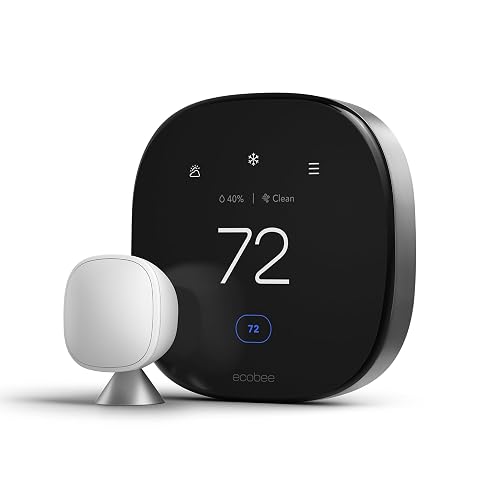
ecobee Smart Thermostat Premium with Smart Sensor
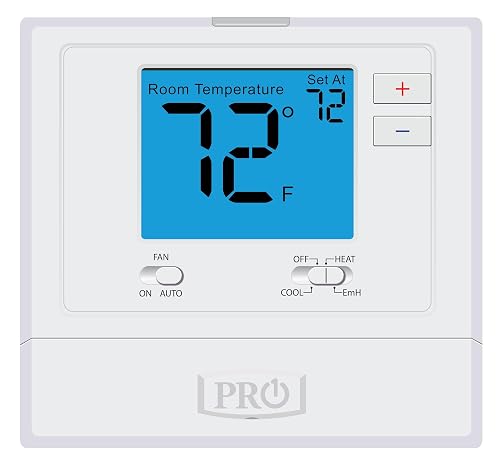
PRO1 T721 Non-Programmable Wall Thermostat
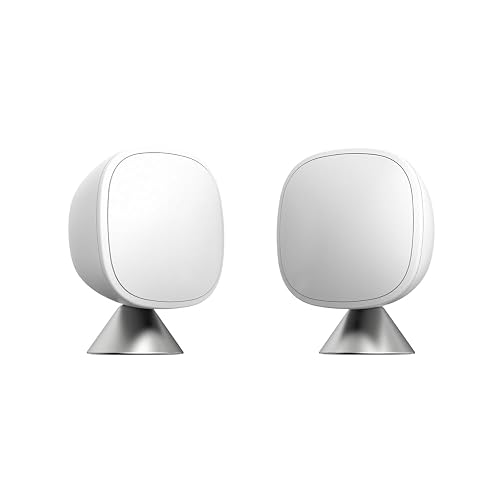
ecobee SmartSensor 2-Pack
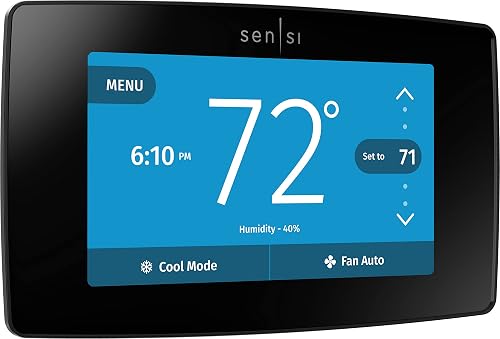
Sensi Touch Smart Thermostat ST75 (Black)
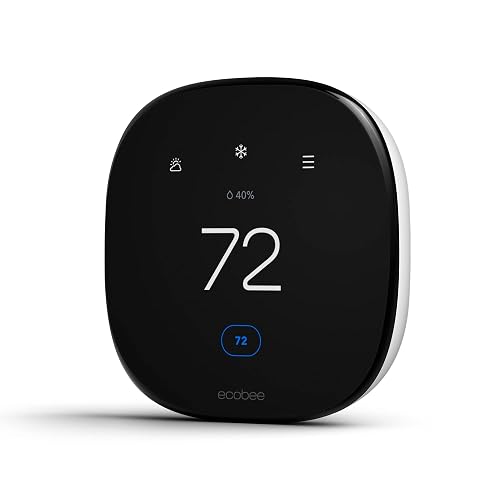
ecobee Smart Thermostat Enhanced

PRO1 T805 Single Stage Programmable Thermostat
Inside Each Recommended Option
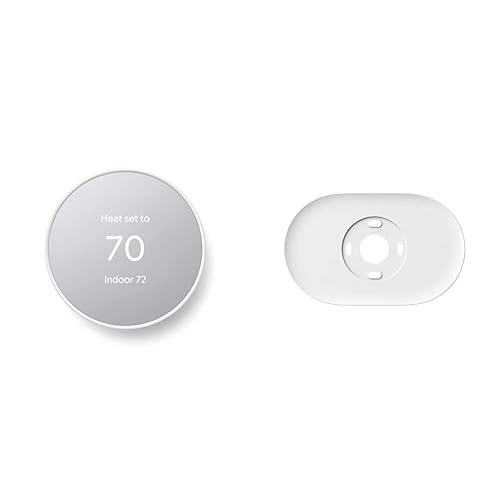
The Google Nest Thermostat is the entry point most casual smart-home users end up choosing, and the included Snow trim kit helps when the wall has an old paint ring or you are mounting over an electrical box. The unit talks to the Google Home app on Android or iPhone, where you build the schedule, set away temperatures, and track energy history. The display is a mirrored touch surface that lights up when you approach, and the whole body is smaller than a deck of cards, which helps in tight hallways.
It also works well for someone who already lives inside the Google ecosystem and wants their thermostat to follow the same app. If you are moving up from a 90s dial thermostat, this is a gentle first step.
What It Does Well
- ENERGY STAR certified, so it runs in the efficient category of smart thermostats.
- Auto-adjusts when you leave home, so you are not paying to heat or cool an empty house.
- Programmable from your phone, no ladder work required for schedule tweaks.
- Trim plate hides the old paint outline from previous thermostats.
Points To Keep In Mind
- Learning features are lighter than the older Nest Learning Thermostat, so you set the schedule yourself.
- Some homes without a common wire (called a C-wire, the constant low-voltage power line smart thermostats need) may need an adapter or a pro install.
Key Product Details
Who It Suits Best
First-time smart thermostat shoppers who want an app-driven schedule and a clean install without learning curves.
Consider Something Else When
You want room-by-room comfort and built-in voice control, in which case the ecobee Smart Thermostat Premium is the better fit.
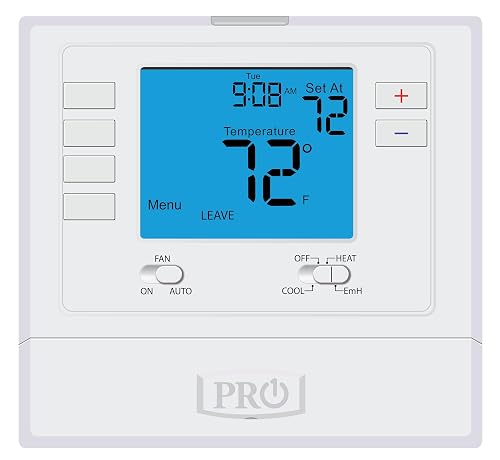
For homes with a heat pump, the PRO1 T725 gives you more control than the typical off-the-shelf dial. It supports 2 heat/1 cool heat pump systems and 1 heat/1 cool conventional systems, so it covers a lot of mixed HVAC layouts, especially in regions where a heat pump handles mild winter weather and a gas furnace kicks in during cold snaps. The blue backlit display measures 4 square inches, which is easy to read across the room.
The 7-day or 5/1/1 schedule means you can set a different plan for weekdays and weekends, which most households actually use. Power comes from AA batteries or a hardwired common wire, depending on your setup.
Practical Advantages
- Dual compatibility for heat pump and conventional systems in one unit.
- 7-day or 5/1/1 programming for realistic work-week routines.
- Large blue backlit screen that is easy on aging eyes.
- Battery or hardwire power options ease installation.
Trade Offs
- No WiFi or app control, so remote tweaks require being home.
- Programming the schedule is button-based, which can feel clunky for first-time users.
Made For
Homeowners with heat pump systems who want reliable scheduling without paying for smart-home extras.
Skip It When
You want app control from your phone, in which case the Google Nest Thermostat is a better match.
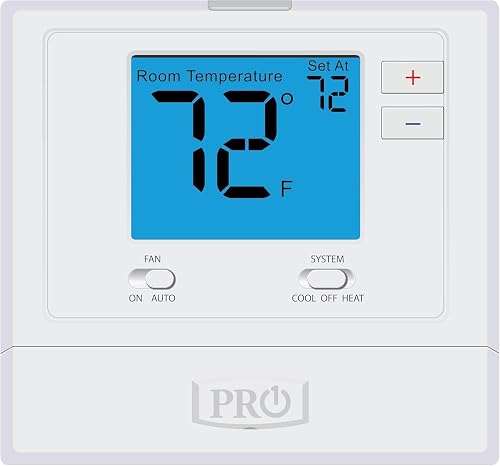
The PRO1 T701 is a simple wall thermostat for straightforward HVAC setups, meaning one furnace stage and one air conditioning stage, nothing more. It uses the same T700 platform body as the higher PRO1 units, so the 4 square inch backlit display is large and the glow-in-the-dark light button is genuinely useful in a dark hallway at 2am.
Because it is non-programmable, you walk up, press up or down, and walk away. For households that never set schedules anyway, that is a feature, not a limitation.
What Makes Sense
- Lower price than programmable siblings, which makes it a good replacement pick.
- Big readable display with a glow-in-the-dark button for low-light visibility.
- Works for gas or electric conventional systems, common across most U.S. homes.
Potential Drawbacks
- No schedule means no automatic setback when you leave, so you adjust manually.
- Single-stage only, so homes with two-stage furnaces or multi-speed cooling will not be fully supported.
Best Suited To
Older homes with a single-stage gas furnace or electric baseboard owners who want a clean digital upgrade over an analog dial.
Look Elsewhere When
You want two-stage gas heating control, where the PRO1 T715 Multi-Stage Programmable Thermostat is the stronger choice.
If your furnace is two-stage, the PRO1 T715 is the kind of thermostat that actually uses that capability. A two-stage furnace runs at a lower output most of the time and ramps up only on cold mornings, which keeps the house quieter and more even. Pairing that furnace with a single-stage thermostat wastes the design. The T715 speaks both stages, plus 2 cool stages for a two-stage air conditioner or heat pump.
You can run it as fully programmable, or as a non-programmable unit if you prefer to set it and forget it. The 4 square inch blue backlit display is shared with the T701, so the family resemblance carries over.
Real Benefits
- Handles 2 heat/2 cool systems, which covers most two-stage gas furnace setups.
- 7 day, 5/1/1, or non-programmable modes for whatever schedule you actually keep.
- Glow-in-the-dark light button for low-light adjustments.
- Battery or hardwire power, similar flexibility to the T725.
Honest Caveats
- No app or WiFi, so all programming happens at the wall unit.
- Multi-stage HVAC systems occasionally need a pro to confirm wiring compatibility before install.
Perfect Match For
Owners of two-stage gas furnaces who want their equipment to run as designed without overpaying for smart features they will not use.
Not Your Match When
You only have a single-stage system, where the PRO1 T701 will do the same job for less money.
The ecobee Smart Thermostat Premium is the unit that tries to do everything in one wall box. It has a built-in air quality monitor, supports both Alexa and Siri voice control right out of the box, and ships with at least one SmartSensor that you place in a room that never feels right. That sensor reads both temperature and occupancy, so the thermostat can target the rooms people actually use, not the hallway nobody sits in.
For larger homes where one thermostat cannot keep up, those room sensors tend to be the real reason people upgrade.
Advantages To Know
- Built-in voice control through Siri and Alexa, no extra hub needed.
- SmartSensor included for room-specific temperature and occupancy detection.
- Air quality monitor gives you an at-a-glance read on indoor conditions.
- Compatible with major smart home platforms, including Apple HomeKit.
Things To Weigh
- Higher cost than the ecobee Enhanced, and you may not use every feature.
- Some features depend on a working C-wire for full-time power.
Feature Snapshot
Who Will Love This
Households that want a premium all-in-one unit, with voice control and room sensors, and do not mind paying for the extras.
Reach For A Different Pick When
You want smart features without the premium tier, in which case the ecobee Smart Thermostat Enhanced is a sensible step down.
The PRO1 T721 sits in a small but useful niche. It handles either a 2 heat/1 cool heat pump or a 1 heat/1 cool conventional system, which covers a lot of mild-climate homes that switched to a heat pump for efficiency. It runs on the T700 platform with the same 4 square inch backlit display and glow button as the other PRO1 units, so the on-wall experience is consistent.
Power comes from AA batteries or a hardwired common wire, similar to the rest of the line. Because it is non-programmable, you give up scheduling but gain simplicity.
What Earns Its Place
- Compatible with both heat pump and conventional systems, useful for hybrid HVAC homes.
- Clean backlit display that is easy to read day or night.
- Battery or hardwire power for flexible installation.
Less-Strong Areas
- No scheduling, so you adjust the temperature by hand.
- Lacks WiFi, so it cannot be part of a broader smart home system.
Right Fit For
Heat pump owners who want a basic, dependable wall thermostat without a learning curve.
A Better Fit Elsewhere
You want scheduling included, in which case the PRO1 T725 Programmable Thermostat makes more sense.
The ecobee SmartSensor 2-Pack is not a thermostat on its own, but it is the missing piece for a lot of ecobee owners. Each sensor reads temperature and detects whether the room is occupied, then talks wirelessly to a compatible ecobee thermostat up to about 60 feet away. The thermostat uses that input to decide which rooms matter right now, and adjusts to keep them comfortable instead of just keeping the hallway happy.
For homes with a finished basement, a nursery, or a home office that never matches the rest of the house, the difference is immediate.
Where It Delivers
- Detects both temperature and occupancy using infrared technology.
- Communicates wirelessly with a compatible ecobee thermostat.
- Two-pack means you can cover two problem rooms at once.
Worth Bearing In Mind
- Only works with ecobee thermostats, not Nest or Sensi.
- Battery-operated, so you will replace batteries occasionally depending on use.
Whose Shelf It Belongs On
Existing ecobee owners who want better comfort in specific rooms, especially multi-level homes.
Swap It Out When
You do not yet own an ecobee thermostat, in which case the ecobee Smart Thermostat Enhanced is the better starting point.
The Sensi Touch ST75 is the option for shoppers who care about the on-wall look as much as the smarts. It has a color touchscreen that is more responsive than older monochrome thermostats, and the Sensi app is widely considered one of the cleaner ones in the category. Sensi, made by Emerson, leans hard into data privacy, which is part of the appeal for households that do not want their HVAC data shared broadly.
It is also marketed as a DIY-friendly install, with step-by-step guidance inside the app. The catch is that the unit requires a C-wire, so homes without one need an adapter.
Real-World Strengths
- Color touchscreen reads well across a room.
- Privacy-focused data handling, with the company’s HVAC heritage behind it.
- DIY install guidance through the Sensi mobile app.
- Works with Alexa for voice commands.
Possible Compromises
- C-wire required, so older homes may need an extra adapter or a pro visit.
- Some users report touchscreen lag compared to newer units, depending on firmware version.
Built With In Mind
Smart home shoppers who want a clean touchscreen interface, app control, and stronger data privacy from a brand with HVAC roots.
Another Choice May Suit
You do not have a C-wire and want easier install, where the Google Nest Thermostat typically has a lighter wiring ask.
The ecobee Smart Thermostat Enhanced is the unit most first-time smart thermostat shoppers end up comparing against. It learns your routine over time, suggests schedule changes, and uses occupancy to back off the temperature when nobody is home, all without the higher cost of the Premium tier. It works with Apple Watch, major smart home platforms, and most voice assistants through a hub or speaker.
You give up the Premium’s built-in voice control and air quality monitor, but for most households that is a fair trade for the price difference.
Key Advantages
- Adaptive scheduling that adjusts based on your actual routine.
- Energy savings features that automatically back off the temperature when you are away or asleep.
- Works with Apple Watch and major smart home systems.
- Lower cost than the ecobee Premium while keeping the core smart features.
Factors To Consider
- No built-in voice control, so you need a separate smart speaker for Alexa or Siri.
- Some advanced features may require a C-wire, depending on the home.
Quick Facts
Who Should Grab It
First-time smart thermostat shoppers who want the core ecobee experience at a friendlier price than the Premium.
Where A Sibling Pick Shines
You want room sensors and built-in voice, where the ecobee Smart Thermostat Premium is the upgrade worth considering.
The PRO1 T805 takes everything the T701 offers and stretches the display. You get a 7 square inch backlit screen, which is the largest in the PRO1 lineup, paired with the same glow-in-the-dark light button that has become a small but appreciated feature across the family. It is a 1 heat/1 cool conventional thermostat with 7-day, 5/1/1, or non-programmable modes.
For households where someone needs large, clear numbers from across the room, the T805 hits that note without going full smart.
The Case For It
- 7 square inch backlit display, the largest on this list.
- Flexible scheduling, including 7-day, 5/1/1, or non-programmable operation.
- Glow-in-the-dark light button for low-light visibility.
Trade-Offs To Consider
- Single-stage only, so multi-stage HVAC homes are not supported.
- No WiFi or app, so all programming happens at the wall.
Right Fit For
Households that want a big, easy-to-read display and reliable scheduling on a single-stage system.
Not Your Match When
You have a two-stage furnace, where the PRO1 T715 Multi-Stage Programmable Thermostat is the more capable match.
What To Weigh Before Choosing a Smart Thermostat
Match The Thermostat To Your HVAC System
The single biggest mistake is buying a thermostat that outsmarts the equipment behind the wall. A two-stage furnace paired with a single-stage thermostat loses its efficiency advantage, and a heat pump home needs a model that supports heat pump wiring. Confirm whether you have a C-wire, the constant low-voltage power line most smart thermostats need, before you click add to cart, since older homes sometimes need an adapter or a quick electrician visit.
Decide How Smart You Actually Need
App control, voice assistants, room sensors, and learning algorithms each add to the price. If you only want a programmable schedule, the PRO1 T725 or T805 handle that without WiFi or app overhead. If you want remote control, energy history, and integration with the rest of your smart home, the Google Nest Thermostat, ecobee Enhanced, or ecobee Premium make more sense.
Think About Daily Comfort, Not Just Installation
Schedules, geofencing (where the thermostat uses your phone’s location to detect when you leave and return), and room sensors all shape the day-to-day experience. A home with a finished basement, a sunroom, or a nursery that always feels off benefits from sensors like the ecobee SmartSensor 2-Pack, which target the rooms people actually use.
Plan For Late-Fall Buying Events
Holiday-season sales tend to bring noticeable savings on smart thermostats, and basic programmable models often see meaningful markdowns as well. The most useful approach is to pick the right model first, then watch the listing during the promotional window so you know what a fair price looks like.
Key Things To Watch Across These Picks
Where Shoppers Go Wrong
The most common slip is buying a smart thermostat for a system that does not need one, or skipping a C-wire check until the install is half-done. Some shoppers also assume every thermostat supports every HVAC configuration, which is rarely true. A quick photo of the current wiring, with the cover off, tells you almost everything you need to know before you commit.
The other trap is chasing features you will not use. Built-in voice, air quality monitoring, and premium touchscreens are great, but they add cost. Matching the unit to your actual routine tends to pay off more than picking the most feature-dense model on the wall.
When Paying More Pays Off
The premium tier earns its keep in two main situations. Larger homes with uneven temperatures benefit from room sensors and zoning, where the ecobee Premium or a SmartSensor 2-Pack setup pays back fast. Households deep inside a smart home ecosystem also see real value from voice control and tight integration, which the higher-priced units deliver without extra hubs or workarounds.
For smaller homes, apartments, or single-zone systems, the extra spend rarely translates to noticeable comfort gains. A mid-tier programmable or a value smart model usually covers daily life just as well.
Frequently Asked Questions
Do I need a C-wire for any of these thermostats?
Most smart thermostats, including the Google Nest Thermostat and Sensi Touch ST75, generally expect a C-wire, while many PRO1 models run on AA batteries as a fallback. Check the wiring at your current thermostat before ordering.
Can a smart thermostat really lower energy bills?
Schedules, occupancy detection, and automatic setbacks can trim heating and cooling waste, especially in homes that forget to adjust the thermostat. Results depend on climate, insulation, and how often the schedule actually changes.
Are the PRO1 models smart or just programmable?
The PRO1 T701, T715, T721, T725, and T805 are programmable but not WiFi-connected, so you set schedules at the wall and adjust by hand. They trade app control for a lower price and simpler operation.
Do ecobee sensors work without an ecobee thermostat?
The SmartSensor 2-Pack is designed to pair with ecobee thermostats and is not a stand-alone product. You will need a compatible ecobee base unit to use them.
When is a good time to upgrade?
Late-fall promotional events, including major shopping holidays in November, tend to bring the deepest thermostat savings. Picking your model first and watching the listing during the event tends to work better than browsing cold.
Closing Remarks
A thermostat is one of the rare home upgrades that quietly pays for itself, mostly because you stop paying to heat and cool rooms that nobody is in. The right pick depends on what sits behind your wall plate, not which model has the slickest ad. Match the wiring, the HVAC stage count, and the level of smart features you will actually use, and the rest is just taste.