

A new thermostat used to be a $40 box with a dial and a prayer. Today, the category spans everything from bare-bones wall units to learning thermostats that read your routine, sense which room you’re in, and quietly trim your heating bill while you’re at work. Picking the right one matters more than most people expect, because HVAC wiring is fussy, system compatibility is non-negotiable, and the wrong fit means a return trip up the ladder.
This roundup walks through nine options covering entry-level wall thermostats, premium smart hubs, room sensors, and even a water-heater thermostat. Whether you’re a renter who just needs something simple or a homeowner building out a full connected HVAC setup, there’s a fit below.
A Closer Look At The Lineup
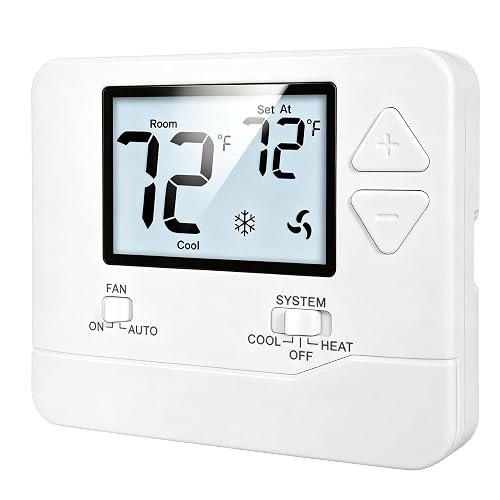
Heagstat 1 Heat/1 Cool NonProgrammable Thermostat
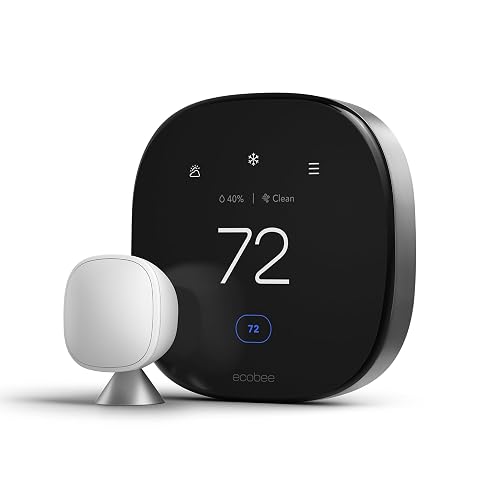
ecobee Smart Thermostat Premium with Smart Sensor
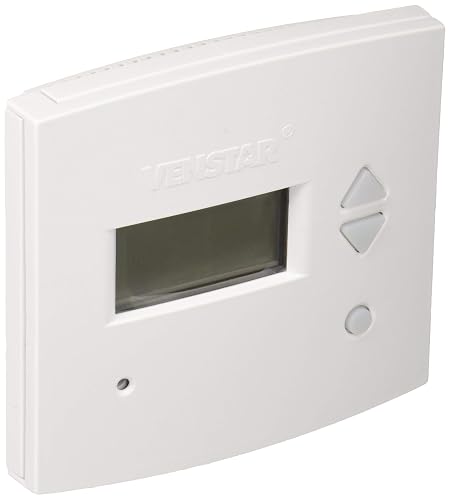
Venstar T2800 Commercial Platinum Slimline Thermostat
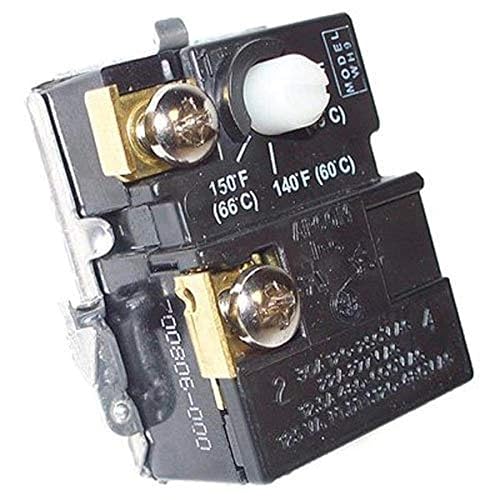
Reliance 9000507-045 Lower Electric Thermostat
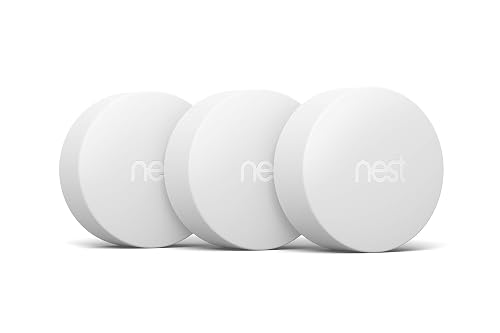
Google Nest Temperature Sensor 3-Pack
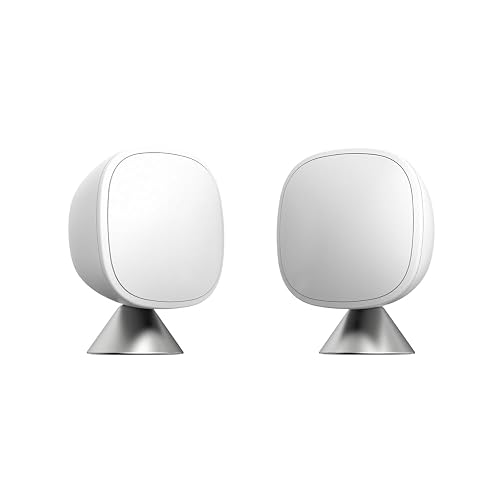
ecobee SmartSensor 2-Pack
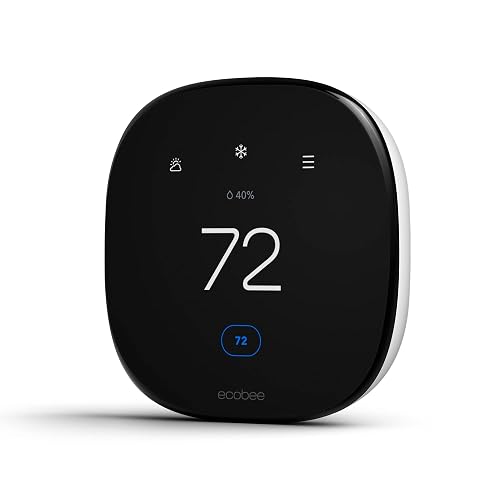
ecobee Smart Thermostat Enhanced
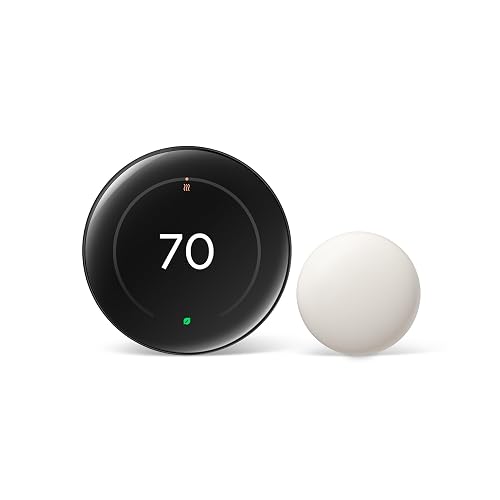
Nest Learning Thermostat 4th Gen + Sensor (Obsidian)
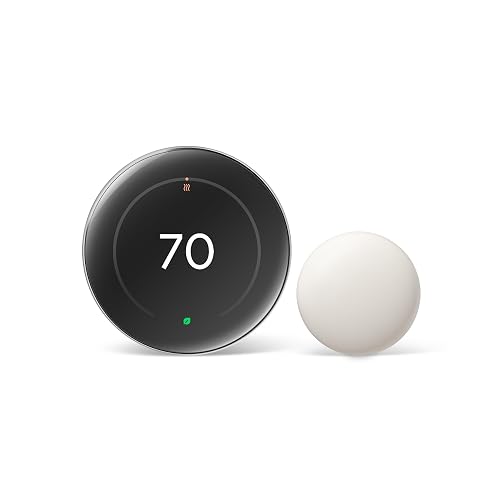
Nest Learning Thermostat 4th Gen + Sensor (Silver)
A Deeper Look At The Lineup
The Heagstat 1 Heat/1 Cool NonProgrammable Thermostat is a no-nonsense wall unit for homeowners who want temperature control without an app, a learning curve, or a WiFi password. It targets 24VAC conventional single-stage systems, which covers most gas, oil, and electric forced-air setups paired with a separate outdoor AC condenser. The white backlight and straightforward button layout make it a friendly swap-in for a tired old mercury dial.
Where this one earns its place is in the basics. A clear backlit display, large readouts, and compatibility with two-to-five-wire low-voltage wiring mean most homeowners with standard HVAC gear can install it in under thirty minutes. Compared to the ecobee Premium reviewed later, there’s no learning algorithm and no smartphone hookup, but you also avoid the app-driven troubleshooting that some shoppers find tiresome. It is, in a real sense, the unit you hand to a relative who wants the house to be 72 and nothing else.
The Upside
- Works with most single-stage forced-air systems using standard 24VAC wiring (two to five wires).
- Backlit white display is easy to read in dim hallways and bedrooms at night.
- Simple physical button controls mean no smartphone required, which is helpful for less tech-oriented households.
- Compact footprint fits cleanly over a standard wall plate without major repainting.
Things To Consider
- Not compatible with multi-stage systems, heat pumps, or systems using six-to-eight-wire configurations.
- No WiFi or scheduling means you cannot trim bills with geofencing or remote access.
Right Fit For
Owners of single-stage forced-air systems who want a simple, dependable wall thermostat without an app, learning curve, or monthly subscription.
Look Elsewhere When
You want app control, room sensing, or multi-stage support, since the ecobee Smart Thermostat Enhanced is a better match for that shopper profile.
The ecobee Smart Thermostat Premium is the top-of-line ecobee unit, packing WiFi connectivity, a built-in air quality monitor, smoke alarm detection, and both Siri and Alexa voice control into one wall-mounted touchscreen. It ships with a single SmartSensor that reports temperatures from another room, so the system can prioritize where you actually spend your time. For households with multi-zone comfort complaints, the included sensor alone is often the reason to choose this model.
Geofencing reads whether anyone is home and eases the system back when the house empties, which usually translates to meaningful savings on heating and cooling across a full year. Compared to the simpler ecobee Smart Thermostat Enhanced covered later, the Premium adds the onboard air quality sensor, a sharper zinc body, and a Live View feed for compatible doorbells. You may find the voice features handy, but you can also leave them disabled if you prefer not to have a microphone on the wall.
Points In Its Favor
- Built-in air quality monitor gives you a continuous read on the air in the main living area.
- Native Siri and Alexa support means you can skip buying a separate voice assistant for the hallway.
- Included SmartSensor trims hot and cold spots by letting the system follow a real occupied room.
- Geofencing and occupancy-based scheduling help reduce wasted runtime when the home is empty.
- Smoke alarm detection can send alerts to your phone, a small but useful safety touch.
Honest Caveats
- Full feature set depends on a stable WiFi connection and a working account login.
- Voice features are a non-starter if your household is uncomfortable with always-listening microphones on the wall.
- The touchscreen interface is more complex than a basic dial-style unit like the Heagstat reviewed earlier.
Who Should Grab It
Connected homeowners with mid-to-large houses who want sensor-based comfort, voice control, and air quality data without stacking extra gadgets.
Where Another Pick Suits Better
Shoppers who just need a clean, app-driven ecobee without the air sensor and voice extras should consider the ecobee Smart Thermostat Enhanced instead.
The Venstar T2800 is a programmable thermostat built for tougher jobs than a typical single-family living room. It supports three heat and two cool stages, three configurable outputs for flexible system design, and a heat pump mode that suits many light-commercial installations and large homes with more demanding HVAC equipment. The Platinum trim is the higher-tier Venstar offering and brings a backlit color display along with color-coded keys.
This is the unit you reach for when the simple wall thermostat from the Heagstat review above is genuinely underpowered. It offers seven-day programming, smart fan logic, service reminders for filters and UV lights, and an LED indicator that glows green or red depending on whether the system is cooling or heating. Compared to the ecobee Premium, there is no app, no voice control, and no remote access, but you do get a tactile, dependable interface that does not depend on cloud services.
Positive Takeaways
- Supports up to three heat and two cool stages, covering most residential heat pump and light-commercial setups.
- Backlit color display and color-coded keys make mode changes easy in low light or commercial spaces.
- Service reminders for filters and UV lamps help with the kind of maintenance easy to forget in larger homes.
- Non-volatile memory retains your programming through power outages without needing a battery swap.
Less Ideal Details
- No WiFi, app, or voice integration, so remote access is out of reach without a separate module.
- Programming interface is more involved than app-based ecobee or Nest units and takes a longer setup pass.
Made For
Owners of multi-stage heat pump or light-commercial systems who want robust scheduling and reliability without depending on a cloud service.
Skip It When
You mostly care about app control and room sensing, because the Nest Learning Thermostat 4th Gen handles that style of use much more naturally.
The Reliance 9000507-045 is not a wall thermostat for the living room. It is a lower-element replacement thermostat designed to drop into standard residential electric water heaters, the kind of part that gets swapped in when a homeowner runs out of hot water and discovers the lower thermostat has failed. The unit is a single-purpose repair part, and it treats that role with appropriate seriousness.
This makes the list because water-heater issues are the most common HVAC-adjacent failure homeowners actually face, and the wrong part lengthens a no-shower weekend fast. The lower position label means it sits below the upper thermostat, and it is intended for use with standard electric water heater setups. Compare that to the ecobee and Nest units earlier, which are designed for whole-home climate comfort, not tanked water heating. You will not use this with 24VAC wall wiring, and you should not expect any smart features.
What Works In Its Favor
- Direct-fit replacement for many residential electric water heater models that use a lower-element thermostat.
- Simple mechanical design that experienced DIYers can swap in with basic tools.
- Restores hot water quickly once installed, which matters when a household has been without it.
Points To Keep In Mind
- Not a wall thermostat, so it does not fit any of the room-comfort roles covered by the other picks.
- Requires shutting off power at the breaker before installation, since it sits on a high-voltage water heater circuit.
Best Suited To
Homeowners with a standard electric water heater whose lower thermostat has failed and who want a focused replacement part.
Consider Something Else When
You need to control room temperature, since the Heagstat NonProgrammable Thermostat is the right wall unit for that job.
The Google Nest Temperature Sensor 3-Pack is an accessory, not a standalone thermostat. Each small wireless puck reports the temperature from whichever room you place it in, and your compatible Nest thermostat uses those readings to decide when the system should run. A three-pack is the most common starting point because it lets you cover the bedroom, the nursery, and a living area in one go.
The sensors communicate over a low-energy Bluetooth link with the main thermostat, which is convenient because it does not chew through your home WiFi bandwidth. Compared to the ecobee SmartSensor 2-Pack covered below, the Nest sensors focus on temperature only, not occupancy. You can move them around freely, which is helpful for households whose comfort priorities shift seasonally. Setup is genuinely simple, and you can place them on a shelf, a wall mount, or even a flat surface in the baby’s room.
Key Advantages
- Three sensors in one pack cover multiple rooms without buying singles over time.
- Low-energy Bluetooth link keeps battery life long and avoids adding to WiFi congestion.
- Move them around easily to track whichever rooms matter most in a given season.
Practical Considerations
- Only works with compatible Nest thermostats, so this is a no-go without a Nest base unit already in place.
- Reports temperature only, with no occupancy detection, which is where the ecobee SmartSensor 2-Pack pulls ahead.
Who It Suits Best
Nest thermostat owners who want better coverage of bedrooms, nurseries, and other rooms that run hot or cold relative to the hallway.
A Better Fit Elsewhere
Shoppers with an ecobee system should look at the ecobee SmartSensor 2-Pack, since that line talks to ecobee thermostats natively.
The ecobee SmartSensor 2-Pack pairs with any ecobee smart thermostat to extend climate awareness into the rooms where life actually happens. Each sensor reports both temperature and occupancy, so your ecobee system can hold the comfort setting in occupied rooms and ease off in empty ones. A two-pack is enough for most apartments and small homes, with room to add more if the layout is unusually spread out.
Where the SmartSensor stands out is its infrared occupancy detection, which means the system reacts to people, not just schedules. You may find this especially helpful in a home office that runs warmer than the hallway, or a guest room that should not be conditioned when nobody is in it. Compared to the Nest Temperature Sensor 3-Pack reviewed above, the ecobee sensors add that occupancy signal at the cost of a smaller pack size per dollar. Both communicate wirelessly to the base thermostat and can be relocated as your routine changes.
Where It Excels
- Infrared occupancy detection lets the system focus on rooms people are actually using.
- Wireless range up to roughly 60 feet covers most floor plans without extra hardware.
- Two-sensor starter is a sensible size for apartments and small homes.
Worth Noting
- Only works with ecobee thermostats, so this is not a cross-compatible accessory.
- Battery life depends on use, and sensors in high-traffic rooms can drain faster than idle ones.
Who Will Love This
Existing ecobee thermostat owners who want their system to react to actual occupancy rather than a static schedule.
Reach For A Different Pick When
You run a Nest thermostat, since the Google Nest Temperature Sensor 3-Pack is the right sensor family for that ecosystem.
The ecobee Smart Thermostat Enhanced sits one step below the Premium in ecobee’s lineup, which is exactly why it lands on so many shortlists. It keeps the WiFi connectivity, occupancy-aware scheduling, and Apple Watch support that make the brand useful, while skipping the built-in air quality sensor and onboard voice assistants. For most households, that is a fair trade for a more approachable price tag.
The Enhanced model learns your routine over time and can suggest schedule tweaks to help trim heating and cooling costs. Its eco+ features automatically back the temperature off when the system thinks everyone has left, which is helpful for busy families with unpredictable mornings. Compared to the ecobee Premium covered above, the Enhanced trades a bit of sensor and voice capability for a more wallet-friendly entry point. The same SmartSensor family is compatible, so you can add occupancy sensing later if needed.
Strengths Worth Knowing
- Occupancy-driven scheduling helps cut wasted runtime without requiring constant manual adjustments.
- Compatible with the same SmartSensor accessories sold separately, so you can expand coverage over time.
- Connects to Apple Watch and major smart home platforms for flexible control options.
Trade Offs
- No built-in air quality sensor, so the Premium remains the better pick for shoppers who care about that data.
- Full feature set still relies on a stable home network and an active ecobee account.
Perfect Match For
First-time smart thermostat owners who want a capable, app-driven ecobee without paying for the top-tier voice and air quality features.
Swap It Out When
You specifically want onboard air quality monitoring or built-in voice control, which is where the ecobee Smart Thermostat Premium earns its higher price.
The Nest Learning Thermostat 4th Gen in Obsidian is the flagship Google smart thermostat, and this bundle ships it together with a second-generation Nest Temperature Sensor so you can extend awareness into a second room from day one. The thermostat itself learns the temperatures you set across the week, then builds a schedule automatically so you stop touching the dial. The Obsidian finish is the darker of the two color options and looks like jewelry on a light wall.
What makes the 4th generation stand out is the combination of a sharper display, smoother Nest app integration, and the included sensor at a price that often beats buying the thermostat alone. Compared to the ecobee Smart Thermostat Enhanced, Nest leans harder into hands-off scheduling and a more polished hardware feel, while ecobee leans into occupancy-driven room logic. You may find Nest’s learning behavior takes two to three weeks to settle in, depending on how often you adjust the temperature in the first stretch.
Bright Spots
- Learns your preferred temperatures on its own, reducing how often you need to open the app.
- Bundle includes a 2nd-gen Nest Temperature Sensor, so multi-room comfort works out of the box.
- Obsidian finish pairs well with darker interiors and modern decor.
Things To Weigh Up
- Scheduling takes a few weeks to feel dialed in, so don’t expect perfection on day one.
- Full smart features depend on WiFi and a Google account, with no fully offline mode.
Whose Shelf It Belongs On
Google-centric households with mixed heating and cooling needs who want a learning thermostat and a room sensor in one purchase.
Where A Sibling Pick Shines
Apple HomeKit and Siri-focused households may get a better day-one experience from the ecobee Smart Thermostat Premium.
The Nest Learning Thermostat 4th Gen in Silver is the same flagship Google unit reviewed just above, finished in a brighter Silver that suits lighter walls, minimalist interiors, and kitchens with stainless accents. The bundle still ships with a second-generation Nest Temperature Sensor, so the second-room sensing benefit is identical to the Obsidian version. Functionally, the two are twins, and choosing between them comes down to interior style.
You get the same self-learning schedule, the same sharp circular display, and the same Google Home app integration. For shoppers who prefer cooler tones on the wall, Silver tends to disappear more politely than the darker Obsidian. The Silver finish also tends to look cleaner in rentals, where bolder hardware can clash with neutral paint. The honest read is that performance is identical, so the decision is purely aesthetic.
The Good Stuff
- Silver finish blends naturally with light walls and stainless hardware.
- Includes a 2nd-gen Nest Temperature Sensor for second-room coverage.
- Same learning engine and app as the Obsidian version, no functional difference.
Where It Is Less Suited
- If your walls are dark, the lighter Silver finish can stand out more than the Obsidian version would.
- Same WiFi and Google account requirements as the Obsidian bundle.
Built With In Mind
Google Home households with lighter wall colors and modern interiors who want the flagship Nest without committing to a dark finish.
Not Your Match When
Your home leans darker or more dramatic on the wall, in which case the Nest Learning Thermostat 4th Gen in Obsidian is the better visual fit.
What To Think Through Before Choosing A Smart Thermostat
System Compatibility Is Non-Negotiable
Before anything else, confirm your HVAC system type. Conventional single-stage systems, multi-stage systems, heat pumps, and electric baseboard each pull different wiring setups, and the wrong match simply will not power on. The Heagstat covered earlier only supports 2-to-5 wire conventional setups, while the Venstar T2800 handles heat pumps and multi-stage equipment more comfortably. Smart thermostats like the ecobee Enhanced and Nest 4th Gen usually include a wiring compatibility checker in the app, which is worth running before you commit.
Sensors Change The Comfort Story
A thermostat mounted in a hallway will always know the hallway. Room sensors fix that by reporting from where you actually sleep, work, or host dinner. The ecobee SmartSensor 2-Pack adds occupancy awareness on top of temperature, while the Nest Temperature Sensor 3-Pack trades occupancy for broader multi-room coverage. Homes with clear hot or cold rooms benefit more from sensor bundles than from the thermostat upgrade alone.
Smart Features Worth Paying For
Geofencing, learning schedules, and remote app control all sound similar on paper but behave differently. Nest thermostats lean on learned schedules, ecobee leans on occupancy and eco+ rules, and the ecobee Premium adds an air quality monitor plus built-in voice control. Match the feature set to how you actually live, since paying for voice and air data you never open the app to check is a common regret.
Installation And Maintenance Realities
Most WiFi thermostats need a common wire (C-wire) for steady power, and older homes without one may need a power adapter or a small rewiring job. After installation, the only real maintenance is keeping the firmware updated and occasionally wiping the touchscreen. Mechanical units like the Reliance 9000507-045 are a different story, since they sit on a high-voltage water heater circuit and should only be swapped with the breaker off.
Where Shoppers Go Wrong With These Picks
Pitfalls Shoppers Hit
The most common mistake is buying a smart thermostat without checking the C-wire situation first. A surprising number of homes, especially those built before the 2000s, run older four-wire setups that need an adapter or a small rewiring job. Skipping that check leads to a thermostat that randomly powers off and a return trip up the ladder. Equally common is ignoring the room layout, since a hallway-mounted thermostat with no sensors will always undershoot or overshoot the rooms that matter.
What The Higher Tier Buys
The jump from a budget wall unit like the Heagstat to a flagship like the ecobee Premium or Nest 4th Gen buys you three things that actually matter: room sensors, app-driven scheduling, and a learning engine that adapts to your routine. The Premium adds an air quality monitor and voice control, which are useful but not essential for most households. Paying up makes the most sense when you have multiple rooms with real comfort gaps, an inconsistent schedule, or a house that is empty for long stretches during the day.
Frequently Asked Questions
Do I need a C-wire to install a smart thermostat?
Most WiFi thermostats do, yes, since they draw continuous power for the screen and radios. Some kits include a power adapter that pulls from the furnace board, which is a workable alternative when no C-wire is present. The Heagstat covered earlier is a low-voltage mechanical-style unit and does not face the same issue.
Will any of these work with Apple HomeKit?
The ecobee Smart Thermostat Premium and ecobee Smart Thermostat Enhanced both support Apple HomeKit, along with Siri and Alexa. The Nest 4th Gen leans into Google Home and works with Alexa, but HomeKit support is more limited there.
Can I install a smart thermostat myself?
Most homeowners with basic electrical comfort can handle a swap in under an hour, provided they turn off the breaker and follow the in-app wiring guide. Heat pump systems, multi-stage equipment, and homes without a C-wire may benefit from a professional installer, especially when an adapter has to be added at the furnace board.
Are room sensors worth buying separately?
For most multi-room homes, yes. A single hallway thermostat cannot see what is happening in a closed bedroom, so a sensor in the rooms that matter most solves the problem at the source. A single sensor bundle is usually enough to feel the difference, with additional units added over time as the layout calls for it.
How do these help lower energy bills?
Learning schedules, geofencing, and occupancy sensing all reduce wasted runtime when no one is home or asleep. Real savings depend on your climate, setpoints, and existing insulation, but trimming a few degrees during unoccupied hours is where most of the benefit shows up.
Wrap Up
The right smart thermostat depends on three things: your HVAC system, your home’s room layout, and how hands-on you want to be. The Heagstat and Reliance cover the no-frills needs, the Venstar handles tougher multi-stage systems, and the ecobee and Nest 4th Gen bundles lead the way for app-driven comfort. Pick the one that matches your wiring and your routine, and the comfort and savings tend to follow.