
Swapping an old dial thermostat for a smarter one feels like a small weekend project, but the difference shows up on every utility bill that follows. The right match depends on your existing HVAC system, how hands-on you want to be with scheduling, and whether floor heating or multi-stage cooling enters the picture. This roundup walks through ten solid options covering app-driven control, traditional wall thermostats, and accessory sensors, so you can pick the one that fits the way your home actually runs.
The Main Contenders
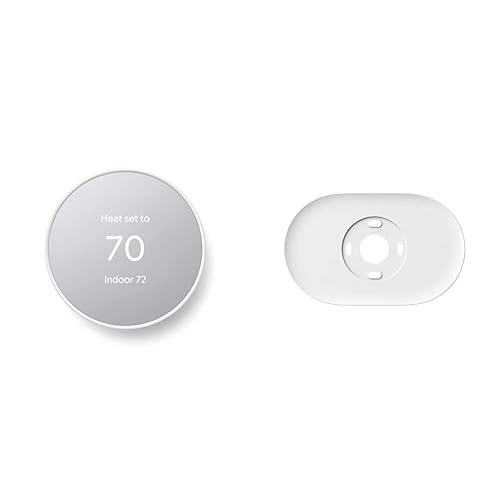
Google Nest Thermostat with Trim Kit (Snow)

SunTouch SunStat ConnectPlus Smart Wi-Fi Floor Heating Thermostat, 4.3″
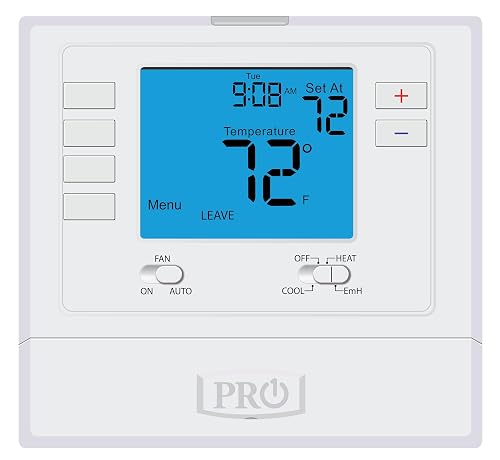
PRO1 T725 Heat Pump/Conventional Programmable Digital Wall Thermostat
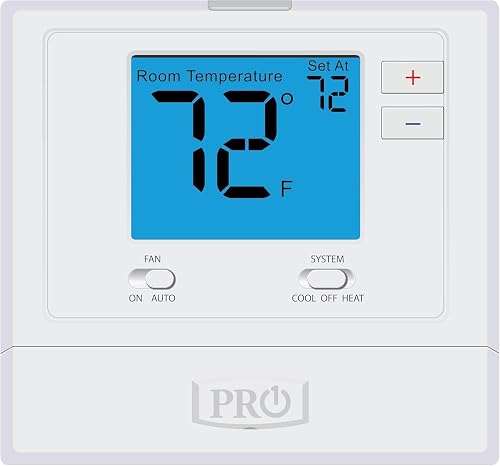
PRO1 T701 Single Stage Non-Programmable Wall Thermostat

PRO1 T715 Multi-Stage Programmable Gas Thermostat
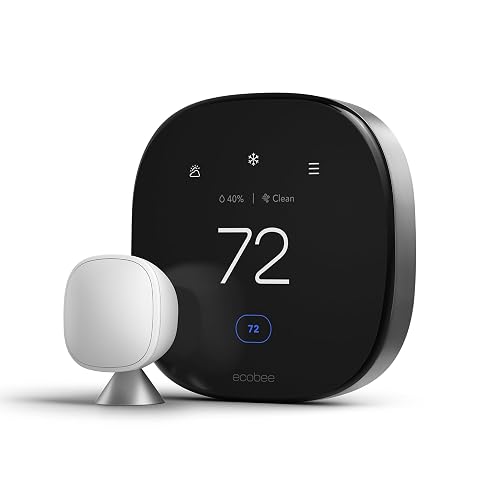
ecobee Smart Thermostat Premium with Smart Sensor
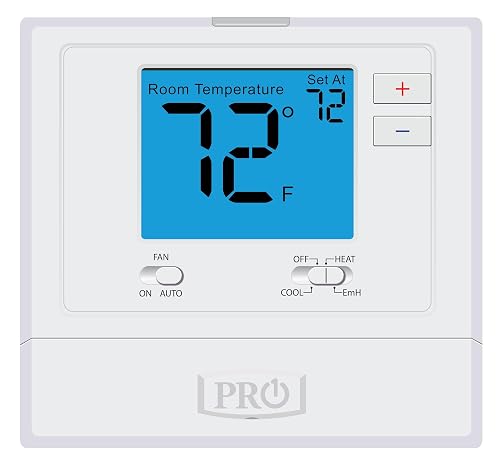
PRO1 T721 Non-Programmable Heat Pump Thermostat
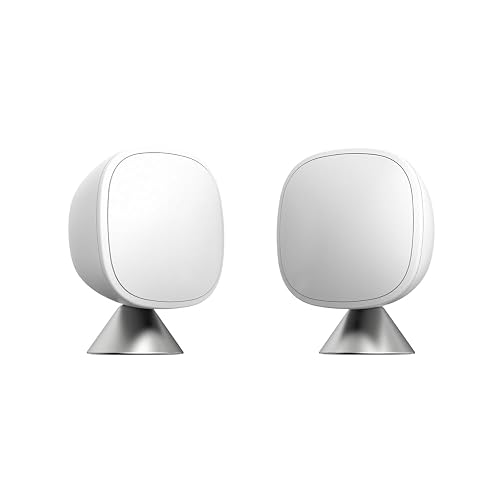
ecobee SmartSensor 2-Pack for Temperature and Occupancy
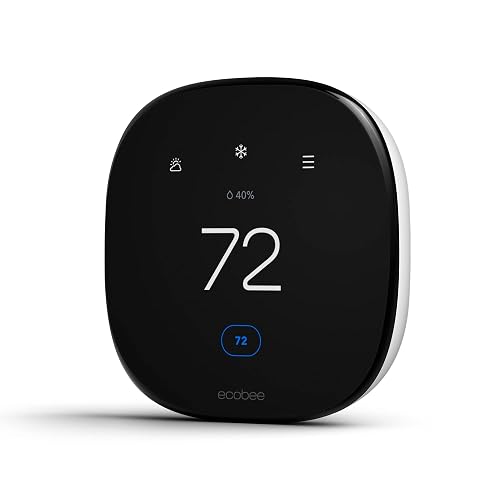
ecobee Smart Thermostat Enhanced, Programmable Wi-Fi

PRO1 T805 Single Stage Programmable Wall Thermostat
Inside Each Recommended Option
The Google Nest Thermostat sits in a useful middle ground for homeowners who want app-driven scheduling without committing to the priciest flagship. Setup runs through the Google Home app, which guides wiring checks before the unit ever powers up.
For a renter or first-time smart thermostat shopper, the included trim plate helps when the old wall box leaves paint scars or holes. Compared to the ecobee Enhanced further down, this model leans more on software learning than on accessory sensors.
What Makes Sense
- ENERGY STAR rated, so heating and cooling cycles stay efficient during work hours
- Trim plate and steel cover included for clean retrofits over older electrical boxes
- Auto-away detection lowers output when nobody is home, useful for unpredictable schedules
- Schedule editor lives in the Google Home app for Android and iPhone
Things To Consider
- Full smart features depend on a stable Wi-Fi connection and a working C-wire setup
- No physical sensor add-on like the ecobee SmartSensor 2-Pack, so remote rooms may run warmer or cooler than the hallway reading
Key Specs
Who It Suits Best
Homeowners already invested in the Google Home ecosystem who want a quick, app-led retrofit.
Where Another Pick Suits Better
The ecobee Smart Thermostat Enhanced makes more sense if room-by-room sensing matters more than trim-kit aesthetics.
The SunTouch ConnectPlus is built for a very different job than the Nest above. It controls electric radiant floor heating, the kind of mat you find under bathroom tile or a basement slab, rather than forced-air HVAC.
If your project involves a tile shower upgrade or a cold basement conversion, this thermostat gives app access where most smart thermostats have no business being installed.
Strong Points
- 4.3-inch color touchscreen with floor temperature and ambient air readings
- Wi-Fi connectivity for remote control and automatic clock setting
- Weather compensation adjusts floor temperature based on outdoor conditions
- Compatible with common voice assistants for hands-free temperature checks
Trade Offs
- Limited to radiant floor systems, not a general HVAC replacement
- Floor sensor probe must be installed correctly during the mat pour or tile work, so retrofit jobs may need extra electrical work
Best Suited To
Homeowners finishing a bathroom or basement with embedded electric radiant heat who want smartphone control.
Not Your Match When
The PRO1 T715 is the better target if you need a multi-stage gas furnace controller instead of floor heating.
The PRO1 T725 is a workhorse wall thermostat designed for heat pump systems that have a two-stage heating side and a single-stage cooling side. It also supports standard 1 heat, 1 cool conventional systems, giving it flexibility for mixed homes.
Programmability runs across 7-day or 5-1-1 schedules, which fits households with predictable weekday routines. The blue backlit display is easy to read, and for a heat pump retrofit, this model handles auxiliary heat lockout logic that prevents the system from short-cycling.
Practical Advantages
- Heat pump compatibility with 2 heat, 1 cool staging
- 7-day or 5-1-1 programming for shifting weekday and weekend schedules
- Large blue backlit screen with clear schedule status icons
Points To Keep In Mind
- No Wi-Fi or app control, so remote adjustments require a wall visit
- Wiring setup is more involved than the Google Nest, especially for first-time installers on heat pump systems
Feature Snapshot
Made For
Heat pump households that want a dedicated wall control without smartphone dependency.
A Better Fit Elsewhere
The ecobee Smart Thermostat Enhanced fits better when app control and remote sensors matter more than staging precision.
The PRO1 T701 is the kind of thermostat a landlord or weekend DIYer reaches for. It is non-programmable, which sounds like a step backward, but for many households that simply means fewer buttons to push and fewer schedules to maintain.
The 4 sq. in. blue backlit display has a glow-in-the-dark light button for late-night adjustments, and the body runs on the T700 platform shared with the more advanced T725. Compared to the SunTouch, this model is firmly aimed at conventional gas or electric HVAC systems rather than radiant floors.
Bright Spots
- Single-stage conventional compatibility covers most basic HVAC setups
- Glow-in-the-dark light button for low-visibility hallways
- Simple up-and-down temperature adjustment with no schedule to manage
Honest Caveats
- No scheduling means manual temperature changes for sleep or away hours
- Limited to single-stage systems, so it will not support multi-stage furnaces or heat pumps
Who Will Love This
Property managers and rental owners who need a reliable, no-fuss replacement wall thermostat.
Skip It When
The PRO1 T715 is the better call for any home with a two-stage gas furnace, since the T701 simply does not support that staging.
The PRO1 T715 takes everything the T701 offers and adds serious multi-stage support. It is built for 2 heat, 2 cool systems, including two-stage gas furnaces and central air setups common in cold-winter regions.
Scheduling can run 7-day, 5-1-1, or be disabled entirely, which gives you room to grow into more granular control without overcommitting on day one. Compared to the Google Nest, this unit trades app control for direct wall-based staging accuracy.
A Favorable Mix
- 2 heat, 2 cool staging handles higher-capacity HVAC equipment
- Multiple schedule modes including non-programmable for flexibility
- Glow-in-the-dark light button plus blue backlit display for visibility
- Battery or hardwired power options simplify different wiring setups
Some Limits To Know
- No Wi-Fi or app connectivity, so all adjustments happen at the wall
- Wiring complexity may require a professional installer for first-time setups
Key Product Details
Right Fit For
Cold-climate households with two-stage gas furnaces that want precise wall-based control.
Look Elsewhere When
The ecobee Smart Thermostat Premium fits better if multi-room sensors and app control outweigh direct staging accuracy.
The ecobee Smart Thermostat Premium is the most feature-rich pick on this list, and the only one with built-in voice assistants. The included SmartSensor in the box is a quiet but valuable addition, since it lets the thermostat react to occupancy in a room other than the hallway.
For smart home households already running Apple HomeKit, Alexa, or Google Assistant, this unit slots in without extra hubs. The trade-off is the cost, which is steeper than the Google Nest above.
Positive Takeaways
- Built-in microphones for voice control, so no extra smart speaker is required
- Indoor air quality monitoring alongside temperature readings
- SmartSensor included to address hot or cold rooms away from the main thermostat
- Compatible with major smart home platforms for unified routines
Less Ideal Details
- Higher price tier than most of the wall thermostats above
- Full feature set requires account setup and consistent Wi-Fi
- Built-in speaker and microphone add another device to keep updated
Perfect Match For
Smart home households who want one device to handle temperature, voice, and air quality in a single wall unit.
Reach For A Different Pick When
The ecobee Smart Thermostat Enhanced makes more sense if voice features are unnecessary and you want a slightly simpler install.
The PRO1 T721 fills a specific gap between the T701 above and the T725. It supports either 2 heat, 1 cool heat pump systems or 1 heat, 1 cool conventional systems, which makes it a sensible choice during HVAC transitions, such as swapping an old furnace for a heat pump.
It runs on the same T700 platform as its siblings, with the same 4 sq. in. blue backlit display and glow-in-the-dark light button. The trade-off is non-programmable operation, which simplifies the install but removes scheduling.
Useful Strengths
- Dual system support covers both heat pump and conventional setups
- Glow-in-the-dark button for finding controls in the dark
- AA battery or hardwired power options
Factors To Consider
- No scheduling, so temperature changes are manual only
- No Wi-Fi connectivity, limiting remote adjustment options
Built With In Mind
Homeowners mid-renovation who need a thermostat that flexes between an old furnace and a new heat pump.
Swap It Out When
The PRO1 T725 is the better fit once you want a programmable schedule for a stable heat pump install.
The ecobee SmartSensor 2-Pack is not a standalone thermostat, and that is the point. These wireless sensors pair with ecobee thermostats, like the Premium above or the Enhanced further down, to extend temperature and occupancy awareness into other rooms.
For larger homes with a nursery, home office, or bonus room that always seems warmer than the hallway, these sensors balance comfort without manual tweaking. They communicate wirelessly to the main thermostat, so most installations only need a clean spot on a shelf or wall.
Noteworthy Benefits
- Infrared-based occupancy detection to focus heating and cooling where people actually are
- Wireless range covers most average homes
- Two-pack format suits multi-room households right out of the box
Potential Drawbacks
- Requires a compatible ecobee thermostat, so this is an accessory, not a replacement
- Battery replacements will be part of long-term ownership
Whose Shelf It Belongs On
Existing ecobee owners looking to fix stubborn hot or cold rooms without moving the main thermostat.
Where A Sibling Pick Shines
The ecobee Smart Thermostat Premium already includes one sensor, so adding more may be unnecessary in smaller homes.
The ecobee Smart Thermostat Enhanced is the comfortable middle child of the ecobee lineup, with most of the Premium’s learning features but a friendlier price. It pairs with optional SmartSensors and supports the same major smart home platforms.
For first-time smart thermostat owners, this model strikes a balance between the all-in approach of the Premium and the no-frills wall units from PRO1. The eco+ features automatically adjust temperatures during away or sleep windows, helping with monthly bills.
Why It Works Well
- Automatic energy savings adjustments based on occupancy and schedule
- Compatible with optional SmartSensors for room-by-room comfort
- Works with Apple Watch, smartphones, and major voice platforms
Worth Bearing In Mind
- No built-in voice assistant, unlike the Premium model above
- Sensors sold separately, so adding room coverage adds to the total cost
Best Suited To
Households stepping into smart thermostats for the first time and wanting a learning thermostat without the top-tier price.
Consider Something Else When
The Google Nest Thermostat fits better if you are already deep in the Google Home app and want a quick retrofit.
The PRO1 T805 closes out the list with a generous 7 sq. in. display, the largest of any thermostat here. It targets single-stage conventional systems and supports 7-day, 5-1-1, or non-programmable operation.
For homeowners with mild vision needs, the larger screen is genuinely useful for reading the schedule mode and current setpoint from across the room. The T800 platform backing it feels like a step forward from the T700 line, with cleaner button feedback and easier battery access.
Real Benefits
- 7 sq. in. display makes setpoint and schedule information easy to read
- Multiple programming modes for different household routines
- Glow-in-the-dark light button for late-night operation
Room For Improvement
- Limited to single-stage conventional systems, so no heat pump or multi-stage gas support
- No Wi-Fi, so remote changes are not possible
Who Should Grab It
Conventional HVAC households that prioritize a large, readable display over smart connectivity.
Another Choice May Suit
The PRO1 T715 is worth a look if a two-stage gas furnace sits behind the wall, since the T805 will not handle that staging.
What To Weigh Before Choosing a Smart Thermostat Installation
Picking the right unit starts with a quick audit of your existing HVAC system. Single-stage conventional setups are the easiest, and almost every wall thermostat in this roundup will fit. Heat pump households need a model that explicitly lists heat pump compatibility, like the PRO1 T725, T721, or any ecobee option. Multi-stage gas systems narrow the field to thermostats that handle 2 heat, 2 cool, which is the T715’s specialty.
Smart features are the next decision layer. App control, voice assistant integration, and room sensors all add convenience, but they also require reliable Wi-Fi and, in some homes, a C-wire adapter for continuous power. For radiant floor heating projects, the SunTouch ConnectPlus is the only one designed for that category, and trying to substitute a forced-air thermostat will not work.
Finally, think about who lives with the thermostat day to day. Rentals and guest spaces often benefit from non-programmable models like the PRO1 T701 or T721, since fewer buttons means fewer accidental changes. Households with kids or elderly relatives may appreciate the larger T805 display or the voice-friendly Premium model.
Matching the System Type
A smart thermostat is only as good as its compatibility with the equipment behind the wall. Most older homes run a 24V conventional system, which broadens the choices. Homes with heat pumps, two-stage gas furnaces, or electric radiant floor mats need a thermostat that explicitly supports those configurations. Skipping this step is the most common reason a new install ends up with a flickering screen or short-cycling equipment.
Programmable Versus Non-Programmable
Programmable thermostats like the PRO1 T725, T805, and ecobee Enhanced handle schedule management for you, useful for predictable work and school routines. Non-programmable models like the T701 and T721 are simpler to operate, and they tend to hold up well in rentals where guests may not touch a schedule. For most households, programmable wins, but simplicity has real value in the right setting.
Smart Features and Connectivity
App control, voice assistants, and occupancy sensors turn a thermostat from a wall widget into a genuine part of the smart home. The trade-off is dependency on Wi-Fi and account setup, which adds occasional software updates and the occasional notification. For whole-home smart ecosystems, the ecobee Premium and Enhanced lead the pack, while the Google Nest fits naturally in homes already running Google Home routines.
Picking Through the Options
Wrong Turns To Avoid
A frequent misstep is buying a smart thermostat without checking for a C-wire, the low-voltage common wire that powers Wi-Fi and backlit displays continuously. Without it, the unit may pull power from the heating circuit, which can cause flickering or short cycling. Another pitfall is choosing a non-programmable wall unit for a home with shifting weekday and weekend routines, where the convenience of a schedule quickly becomes missed. Finally, mixing radiant floor heating with a forced-air thermostat is a common mistake during bathroom remodels, since the controls operate on entirely different wiring logic.
Where The Extra Money Goes
Stepping up from a basic wall thermostat to a smart model pays off in three areas: scheduling, remote access, and room sensing. Higher-tier picks like the ecobee Premium add a built-in voice assistant and air quality monitor, which consolidate devices that might otherwise live on the counter or shelf. For larger homes, the SmartSensor 2-Pack is the kind of upgrade that resolves a long-standing comfort complaint by making the thermostat aware of more than one room. The honest read is that the upgrade pays off most when the home has at least two or three rooms that consistently run at different temperatures.
Frequently Asked Questions
Do I need a C-wire for any of these thermostats? Most smart thermostats, including the Google Nest and ecobee models, work best with a C-wire for continuous power. Some PRO1 models can run on AA batteries, which helps in older homes without that common wire.
Can I install a smart thermostat myself? Many homeowners handle the swap themselves, but heat pump and multi-stage systems often benefit from a professional installer. Wrong wiring on a heat pump can cause the auxiliary heat to run when it should not, driving up costs.
Will these work with my existing voice assistant? The ecobee Premium and Enhanced both support major platforms, while the Google Nest fits most naturally in a Google Home setup. The PRO1 wall thermostats do not have voice features at all.
How do I know if my system is single-stage or multi-stage? Check the furnace or air handler label, or look at how many wires connect to the existing thermostat. Two-stage systems typically have more wires and require a compatible thermostat like the PRO1 T715.
Are the PRO1 thermostats energy efficient? Programmable schedules reduce runtime when the home is empty or asleep, which is where most of the energy savings come from. They lack the learning features of ecobee and Nest, but for a simple, predictable schedule they perform comparably.
Final Verdict
A smart thermostat installation is one of the few home upgrades that pays you back in comfort without demanding a full weekend of work. For most households, the ecobee Smart Thermostat Enhanced is the comfortable all-around pick, while heat pump or multi-stage gas homes will find a closer match in the PRO1 line. Take a minute to confirm your system type and wire count, and the rest of the choice usually makes itself.