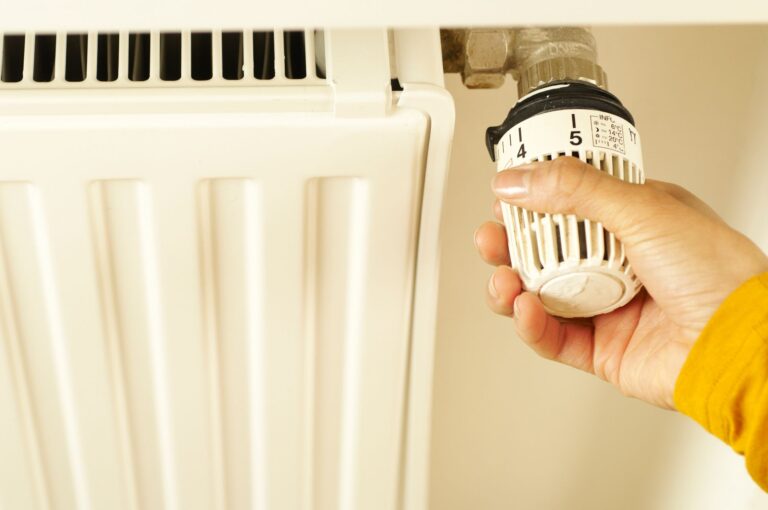

A smart thermostat quietly reshapes how your home feels. The right one learns your patterns, eases hot and cold spots between rooms, and trims wasted heating and cooling without you babysitting the dial. For homeowners comparing app-driven controls, room sensors, and voice integration, this roundup walks through ten options worth your attention, from full HVAC retrofits to add-on sensors that fix stubborn temperature swings in a single nursery or home office.
Your Options, Compared
Sensi Touch 2 Smart Thermostat by Emerson
Google Nest Thermostat with Trim Kit (Snow)

SunTouch SunStat ConnectPlus Wi-Fi Floor Heating Thermostat
Honeywell Home RTH9585WF Wi-Fi Smart Color Thermostat
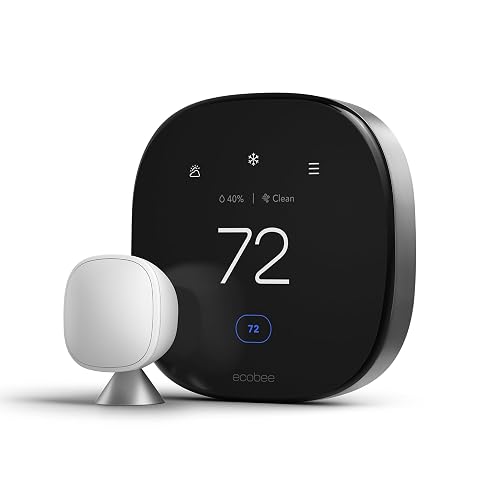
ecobee Smart Thermostat Premium with Smart Sensor
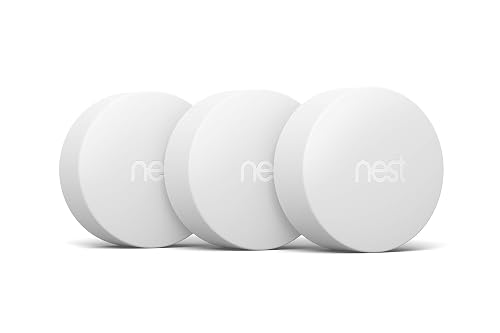
Google Nest Temperature Sensor 3-Pack
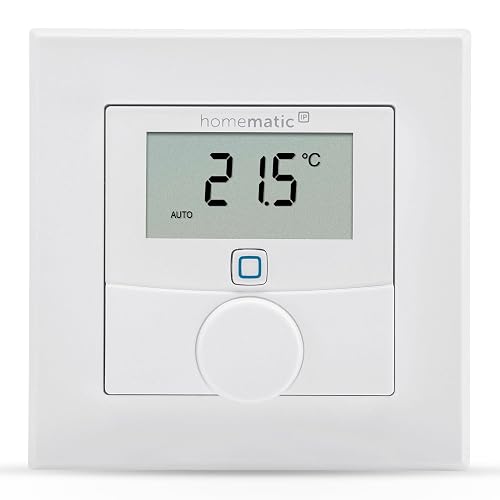
Homematic IP Wall Thermostat with Humidity Sensor
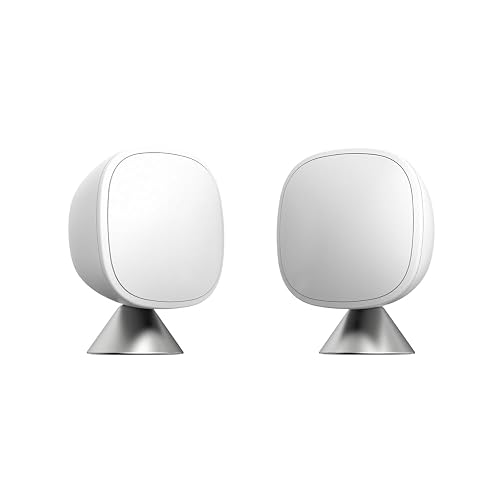
ecobee SmartSensor 2-Pack with Occupancy Detection
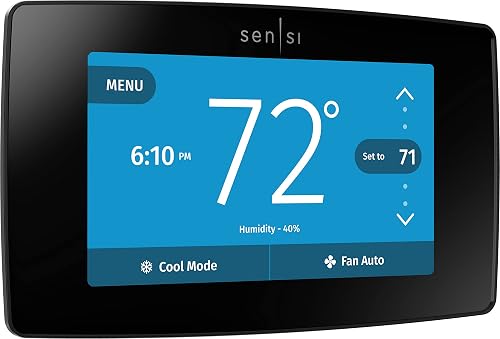
Sensi Touch Smart Thermostat ST75 (Black)
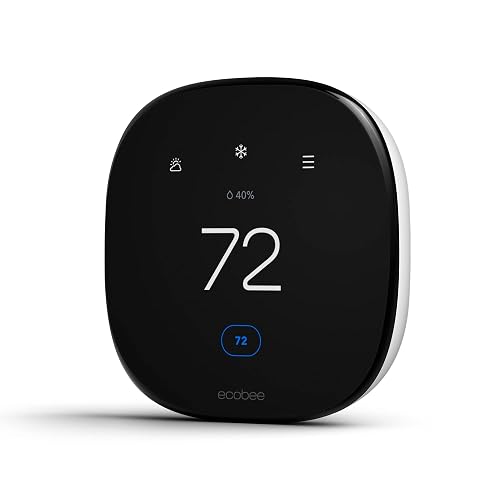
ecobee Smart Thermostat Enhanced Wi-Fi
The Details Behind The Selections
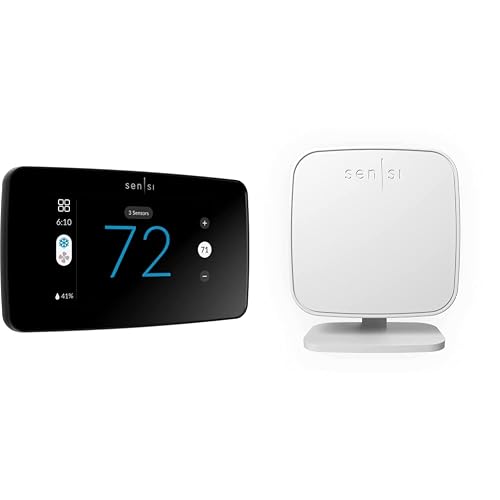
Emerson’s Sensi Touch 2 earns its place near the top for homeowners who want app-guided installation and a clean color touchscreen without paying premium-tier prices. It plays nicely with most central HVAC systems, including forced-air, heat pump, and conventional setups, as long as your existing wiring includes a common wire (often called a c-wire, the low-voltage conductor that supplies continuous power to smart thermostats). For most two-story homes with a single thermostat, that means the install usually wraps up in a single afternoon with the app’s Bluetooth pairing flow.
What separates it from bare-bones models is the option to add Sensi room sensors, which report temperatures from individual rooms and help the system balance comfort where you actually spend time. Scheduling, geofencing (using your phone’s location to adjust temperatures when you leave or return), and energy usage reports are all accessible through the Sensi app. The honest read is that the interface looks slightly more utilitarian than a Nest or ecobee, but the trade-off is data privacy: Emerson explicitly states it does not sell personal information to third parties.
Useful Touches
- ENERGY STAR certification with flexible scheduling and remote access that can trim HVAC run time
- Add-on room sensors solve hot and cold spots in multi-level homes without replacing the base unit
- App-guided DIY install with universal Bluetooth pairing reduces setup friction
- Touchscreen color display reads clearly from across a living room
Worth Noting
- A common wire is required, so homes without one may need a wiring adapter or professional help
- The plastic housing feels functional rather than refined compared with higher-tier competitors
- Room sensors ship separately, adding to total cost for whole-home balancing
Key Specs
Who It Suits Best
Homeowners with a standard central HVAC system and a c-wire who want a privacy-respecting app experience without the top-tier price.
Where Another Pick Suits Better
Shoppers deep in the Google Home ecosystem may find the Google Nest Thermostat a more natural fit for routines and voice control.
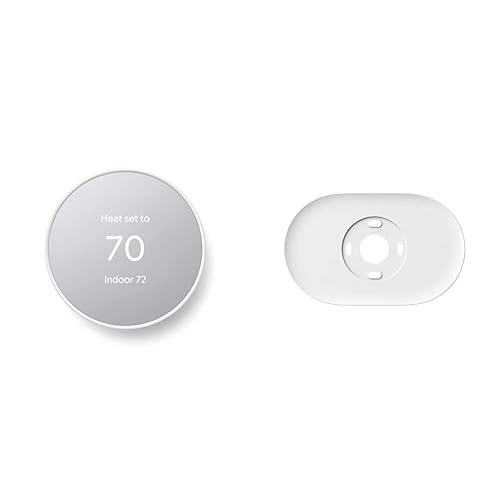
The 2020 Nest Thermostat is the most approachable entry point for households already running Google Home. The mirrored-finish dial rotates to set temperature and presses inward to bring up menus, which feels more intuitive than tapping through a touchscreen for guests and kids. Setup happens in the Google Home app on Android or iPhone, and the included trim plate and steel plate help mask old paint lines or wider electrical boxes left behind by a previous thermostat.
The standout behavior is automatic presence detection. The thermostat learns when you typically leave the house and lowers heating or cooling on its own, then warms things back up before you usually return. ENERGY STAR certification backs up the savings claim with tested efficiency benchmarks. One thing worth considering: this model does not learn your schedule the way the older Nest Learning Thermostat did, so you will lean on manual scheduling or the app to build routines.
Everyday Perks
- Auto-away mode saves energy without requiring you to remember to adjust the dial
- Google Home app integration pulls schedules and voice control into a single ecosystem
- ENERGY STAR certification supports the energy efficiency pitch
- Included trim plate cleans up retrofit installations on older walls
Trade Offs
- No self-learning schedule, so routines require manual setup or app-based automation
- Some homes may need a Nest power adapter or c-wire for consistent power supply
- Best experience lives inside Google Home, so households on other platforms lose some polish
Made For
Renters and homeowners who already use Google Home and want a low-friction thermostat that handles away mode without fuss.
Consider Something Else When
Anyone wanting built-in voice control and air quality monitoring should look at the ecobee Smart Thermostat Premium instead.
SunTouch built the SunStat ConnectPlus specifically for electric radiant floor heating, the kind of system that warms tile in bathrooms, basements, and entryways. A standard HVAC thermostat simply will not work for these systems because it does not read floor temperature or manage floor sensor limits. The 4.3-inch color touchscreen handles programming directly on the wall, and Wi-Fi connectivity extends control to your phone once the unit joins your home network.
Where the ConnectPlus earns its place is in features typically reserved for higher-end floor heating controls. Automatic clock setting, outdoor temperature display, weather compensation (which adjusts floor heat output based on outdoor conditions), and a warm-weather shut-down mode are all on board. Compatibility with Amazon Alexa and Google Assistant means voice commands can pre-warm the bathroom floor before your morning shower. For most homeowners, it slots cleanly into a new tile install or a retrofit that already has a floor sensor embedded in the slab.
What Makes Sense
- Dedicated floor heating control with floor sensor input for accurate slab temperature management
- Weather compensation adapts heat output to outdoor conditions, reducing wasted energy
- Voice control compatibility with major smart home assistants
Soft Spots
- Narrowly designed for electric radiant floors, so it is not a drop-in for forced-air homes
- Installation requires low-voltage wiring knowledge, often handled by the flooring contractor
Best Suited To
Homeowners adding electric radiant floor heating to a bathroom, kitchen, or basement remodel who want app and voice control on top of the slab.
Not Your Match When
Anyone with a conventional central HVAC system will get far more value from the Sensi Touch 2 or the Honeywell Home RTH9585WF.
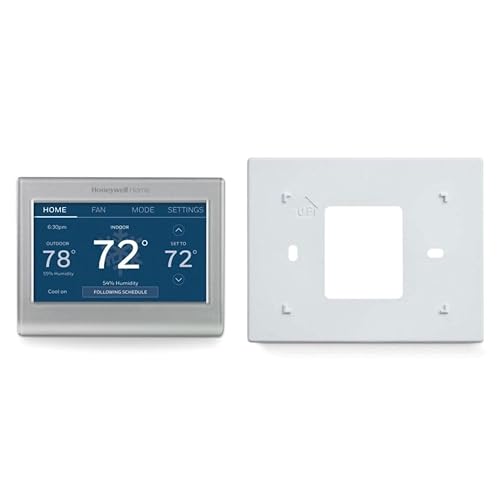
The Honeywell Home RTH9585WF is the most flexible option in this roundup for homes with mixed HVAC equipment. It works with forced-air systems running on gas, oil, or electric, plus hot water, steam, and heat pumps with electric backup. That breadth matters for older homes where the basement boiler and a heat pump addition share a single wall thermostat. Just note that high-voltage electric baseboard heat (120-240V) is not compatible, since that wiring requires a different class of thermostat entirely.
The full-color touchscreen is bright enough to read in direct sunlight, and you can swap the background color to match your wall or décor. Programming is flexible enough to handle utility company peak rate pricing, so you can pre-cool the house before on-peak hours and let temperatures drift during expensive windows. The included wall plate hides gaps and old paint lines from a previous install. For most owners, the trade-off is a slightly less polished app than what ecobee or Nest offers, but the system compatibility more than makes up for it.
What It Does Well
- Broad HVAC compatibility including hot water, steam, and heat pump systems
- Customizable color display to blend with room décor
- Peak rate pricing programming helps lower bills on time-of-use plans
Points To Note
- Does not work with 120-240V electric baseboard heat, limiting some older homes
- App experience feels more utilitarian than the polished ecobee or Nest apps
Feature Snapshot
Right Fit For
Homeowners with non-standard HVAC equipment, including steam boilers and heat pumps, who want reliable scheduling and a bright color display.
Look Elsewhere When
Households wanting built-in air quality monitoring and voice control will find the ecobee Smart Thermostat Premium a more complete package.
The ecobee Smart Thermostat Premium is the closest thing to a hub on your wall. Built-in microphones handle Alexa and Siri voice commands, so you can adjust the temperature, set a timer, or check the weather without a separate smart speaker. The included SmartSensor targets hot and cold spots by reporting temperatures from individual rooms, helping the system focus on the spaces you actually use instead of the hallway where the thermostat lives.
Beyond temperature control, this unit packs an air quality monitor that flags sudden drops in air quality, a smoke alarm detection feature that can alert your phone if a connected listener goes off, and a doorbell live view on the thermostat screen for compatible video doorbells. The trade-off is a higher price tag than mid-tier thermostats, plus more features than some households will ever use. For most people, the question is whether the air quality and built-in voice features are worth the jump over the standard ecobee Enhanced.
The Helpful Details
- Built-in Alexa and Siri remove the need for a separate smart speaker on the wall
- Air quality monitor adds a health signal beyond simple temperature control
- Included SmartSensor improves comfort in priority rooms like a nursery or home office
Some Limits To Know
- Premium price may exceed what a basic HVAC upgrade requires
- Full feature set relies on ecobee’s app and may overlap with smart home routines you already run elsewhere
Who Will Love This
Smart home power users who want a single wall-mounted device to handle temperature, voice, and air quality signals without stacking separate gadgets.
Skip It When
First-time smart thermostat shoppers on a tighter budget will find the ecobee Smart Thermostat Enhanced covers the core comfort needs at a lower entry cost.
Nest Temperature Sensors are small wireless pucks that talk to compatible Nest thermostats, telling the system what the temperature actually is in rooms far from the wall unit. The 3-pack covers a nursery, a living room, and a home office without leaving gaps. If your thermostat sits in a hallway that always reads cooler than the rest of the house, these sensors help the system bias toward the room where you spend your evening.
Setup happens in the Google Home app, and you can pick which room each sensor prioritizes at different times of day. Communication runs over low-energy Bluetooth, with a working range of about 50 feet between the sensor and the thermostat, so most single-family homes stay well within coverage. One thing worth considering: these sensors are companions, not standalone thermostats, so they only add value if you already own a compatible Nest unit.
The Practical Payoff
- Multi-pack covers a typical three-bedroom layout in a single purchase
- Bluetooth communication avoids extra hubs or complicated networking
- Helps the system prioritize the room you actually use at different times of day
What To Weigh
- Requires a compatible Nest thermostat, so it is not a standalone solution
- Range of about 50 feet may fall short in very large or multi-story homes without signal repeaters
Perfect Match For
Existing Nest thermostat owners whose home has stubborn hot or cold rooms that the wall thermostat cannot accurately judge.
A Better Fit Elsewhere
Households running an ecobee system should look at the ecobee SmartSensor 2-Pack instead, which adds occupancy detection.
The Homematic IP Wall Thermostat is designed for European-style radiator and underfloor heating systems, but the included humidity sensor makes it equally useful in any room where moisture control matters. Think bathrooms with frequent shower steam or basements that need both temperature and humidity data. The wall unit displays current readings at a glance, with the option to push data to the Homematic IP app for full remote control.
Pairing requires a Homematic IP Access Point or a CCU3 central unit, which adds a hub to your setup. The benefit is local automation: the thermostat can run schedules, trigger ventilation fans, and integrate with Amazon Alexa or Google Assistant once the hub is in place. For most homeowners, this is a specialist pick rather than a primary whole-home thermostat, so it works best in a specific room with unique comfort needs rather than the main living area.
Strong Points
- Combined temperature and humidity monitoring in a single wall unit
- Local control through the Homematic IP ecosystem keeps automations responsive
- Suits radiator and underfloor heating systems common in European and retrofitted homes
Practical Considerations
- Requires a Homematic IP Access Point or CCU3 hub, so it is not a standalone device
- Setup complexity runs higher than consumer-focused thermostats from ecobee or Nest
Core Details
Built With In Mind
Homeowners with radiator or underfloor heating who already use or plan to install a Homematic IP smart home hub.
Reach For A Different Pick When
Anyone running standard American forced-air HVAC will find the Sensi Touch 2 or Honeywell RTH9585WF a more direct fit without extra hub hardware.
ecobee’s SmartSensors add a layer that Nest temperature sensors skip: occupancy detection. Using infrared, each sensor can tell whether a room is actually in use, and the thermostat uses that data to bias heating and cooling toward occupied spaces. The 2-pack is enough to outfit a primary bedroom and a home office, the two rooms where presence swings the most between day and night.
The wireless range extends to about 60 feet, and the sensors run on coin-cell batteries that typically last a couple of years. The catch is the same as with the Nest sensors: these are companions, not standalones. They only add value if you already own an ecobee thermostat such as the Smart Thermostat Enhanced or Premium. For most ecobee owners, the SmartSensors are the upgrade that finally solves the “thermostat is in the wrong room” problem.
Noteworthy Benefits
- Infrared occupancy detection lets the system skip conditioning empty rooms
- Wireless range of about 60 feet covers most single-family layouts
- Compatible with multiple ecobee thermostats for flexible room-by-room tuning
Minor Gripes
- Requires an existing ecobee thermostat to provide any value
- Coin-cell batteries will need replacement every few years depending on use
Whose Shelf It Belongs On
Ecobee thermostat owners who want occupancy-aware room balancing in a couple of priority rooms.
Swap It Out When
Nest thermostat households should pick up the Google Nest Temperature Sensor 3-Pack, which pairs with their existing setup.
The original Sensi Touch ST75 predates the Touch 2, but it has earned a reputation for reliable day-in, day-out performance. The black color variant reads well in darker hallways and mudrooms, and the color touchscreen keeps the same Emerson app experience covered in the Touch 2 review. For homeowners who prefer a proven device still in active distribution, this is a sensible alternative to the newer model.
Like its sibling, it requires a common wire for stable power, which most newer homes already have. Scheduling, remote access, and energy reports are all available through the Sensi mobile app, and Emerson’s privacy stance is consistent across the line. One thing worth considering: this older model may not include the most recent firmware features, so check the product page for current capability details before committing.
Real Benefits
- Established track record in the Sensi thermostat line
- Color touchscreen with the same Sensi app experience as newer models
- Privacy-focused data policy consistent with the broader Emerson line
Trade-Offs To Consider
- Common wire required, just like the newer Touch 2
- Older generation may lack the latest feature updates found in the Touch 2
Who Should Grab It
Homeowners who prefer a longer-established model and do not need the newest firmware features.
Another Choice May Suit
Shoppers who want the latest generation Sensi experience should consider the Sensi Touch 2 instead, which adds updated connectivity and the room sensor pathway.
The ecobee Smart Thermostat Enhanced is the most approachable entry point into the ecobee ecosystem. It keeps the room-prioritizing intelligence that defines the brand but drops the built-in voice assistants and air quality monitor of the Premium model. For first-time smart thermostat shoppers, that is a sensible trade: you get schedule learning and occupancy-based adjustments without paying for features your household may never touch.
Works with Apple Watch, iOS, and Android through the ecobee app, and integrates with major smart home platforms including Apple HomeKit, Google Assistant, and Alexa. Energy savings are delivered through ecobee’s eco+ features, which automatically adjust temperatures when you are away or asleep. Pairing with SmartSensors (sold separately) extends the same room-balancing capability offered on the Premium tier. The honest read is that this is the sweet spot for most households who want ecobee’s smarts without the premium extras.
Advantages To Know
- Schedule learning and occupancy-based adjustments at a lower entry price than the Premium model
- Works across Apple, Google, and Alexa ecosystems for flexible smart home integration
- Compatible with ecobee SmartSensors for room-by-room comfort
Where It May Fall Short
- Lacks built-in voice control and air quality monitoring found on the Premium tier
- SmartSensors ship separately, adding cost for full multi-room comfort
Quick Facts
Made For
First-time smart thermostat shoppers who want ecobee’s scheduling intelligence and multi-ecosystem support without paying for premium extras.
Where A Sibling Pick Shines
Households wanting built-in voice control and air quality monitoring should look at the ecobee Smart Thermostat Premium instead.
What To Weigh Before Choosing a Smart Thermostat
Compatibility With Your Existing HVAC System
The most important spec is the one nobody posts on the product photo: system compatibility. A thermostat designed for low-voltage 24V central HVAC (the standard for most American forced-air, hot water, and heat pump systems) will not work on high-voltage 120-240V electric baseboard heat, which requires line-voltage thermostats. Honeywell’s RTH9585WF is a good example of broad compatibility, while the SunStat ConnectPlus only suits electric radiant floors. Confirm the wiring in your wall and the equipment in your mechanical room before falling in love with a touchscreen.
Smart Home Ecosystem Fit
Smart thermostats work best when they slot into the voice assistant and routines you already use. Google Home households will feel at home with the Nest Thermostat, while Apple HomeKit and Alexa users get cleaner integrations from ecobee’s Enhanced and Premium models. Sensi plays well with Alexa, Google Assistant, and Samsung SmartThings, making it a flexible choice for mixed-vocabulary homes.
Room Sensors and Multi-Room Comfort
If your thermostat sits in a hallway, you already know the problem: the system overcools the bedroom and underheats the living room. Room sensors fix this by reporting temperature from the spaces you actually use. ecobee’s SmartSensors add occupancy detection, while Nest’s sensors focus on temperature only. For most multi-level homes, a 2-pack or 3-pack of sensors is the single most valuable add-on after the thermostat itself.
Installation, Power, and Long-Term Privacy
A common wire (c-wire) is required by most app-driven thermostats for stable power, and homes without one may need a wiring adapter or professional help. Beyond hardware, pay attention to data policies. Sensi explicitly states it does not sell personal information to third parties, which matters more than most shoppers realize once a thermostat starts logging occupancy and schedule data.
Key Considerations Across These Picks
Common Shopping Slip Ups
The most common mistake is buying a thermostat that does not match the wiring in your wall. Pull the faceplate off your current thermostat and count the wires before you order. Another frequent trap is overlooking the cost of room sensors, which ship separately on most models and can push a “budget” pick well past mid-tier territory. Finally, households deep in one smart home ecosystem often pick a thermostat that forces them to learn a new app. Match the platform first, then choose the features.
Why Top Tier Costs More
The jump from a basic programmable thermostat to a premium model pays for three things most shoppers never see on the spec sheet. First, occupancy detection and schedule learning, which actually save energy instead of just promising it. Second, room sensor expansion, which solves the “thermostat is in the wrong room” problem that no amount of algorithm tuning can fix from a hallway. Third, integrations with smoke alarm detection, air quality monitoring, and doorbell live view, which turn the thermostat into a small home information hub. For most two-bedroom households, mid-tier picks cover the essentials, while larger homes and home office setups often benefit from premium features.
Frequently Asked Questions
Do smart thermostats really save money on energy bills?
Most ENERGY STAR-certified smart thermostats can trim heating and cooling costs by automatically reducing output when you are away or asleep. The exact savings depend on your climate, utility rates, and how often you adjust the temperature manually today.
Will a smart thermostat work without a c-wire?
Some models include power adapter kits or can pull enough current from existing wiring, but many require a common wire for stable Wi-Fi and backlight operation. Check your existing thermostat’s wiring before ordering, and consider professional installation if your system lacks a c-wire.
Can smart thermostats control multiple rooms independently?
The wall unit itself reads one location, so independent room control requires add-on sensors that report temperature and sometimes occupancy from each room. Packs of two or three sensors cover most homes without overbuilding the system.
Are smart thermostats compatible with voice assistants?
Most current models work with at least one major voice platform, and several support multiple. Ecobee’s Premium has Alexa and Siri built directly into the wall unit, while the Enhanced and Sensi models rely on a separate smart speaker for voice control.
How long does installation typically take?
A straightforward replacement with an existing c-wire usually takes 30 to 60 minutes, with most of that time spent labeling wires and snapping the new baseplate to the wall. Systems without a c-wire or with multi-stage equipment can take longer and may warrant a professional.
The Takeaway
Smart thermostats range from simple scheduling tools to full home information hubs, and the right pick depends on your HVAC equipment, your smart home platform, and how much control you want over individual rooms. For most central HVAC homes, the Sensi Touch 2 or the ecobee Enhanced cover the core comfort and savings features. Larger homes with stubborn hot and cold rooms benefit from adding room sensors, while specialty systems like radiant floors or radiator heating call for thermostats designed specifically for those setups. Pick the platform first, confirm the wiring second, and only then weigh the extras like voice control and air quality monitoring.