
Shopping for a new wall thermostat can feel more complicated than it needs to be. Whether you are replacing a dead unit, upgrading from an old mercury dial, or outfitting a new addition, the right pick depends on your system type, your comfort expectations, and how much scheduling you actually want to manage. This lineup covers the most common residential and specialty setups, from simple heat-only walls to radiant floors and electric baseboards.
Your Options, Compared
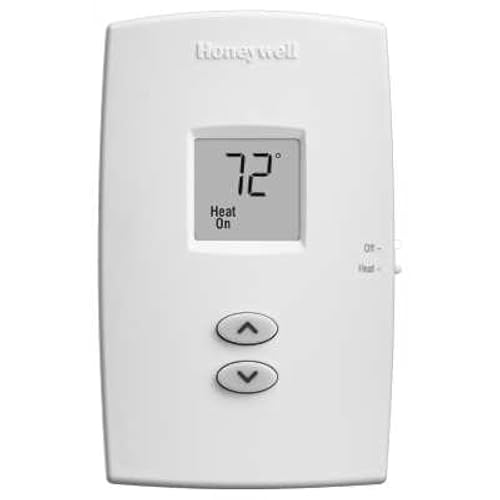
Honeywell TH1100DV1000 PRO 1000 Vertical Heat-Only Thermostat
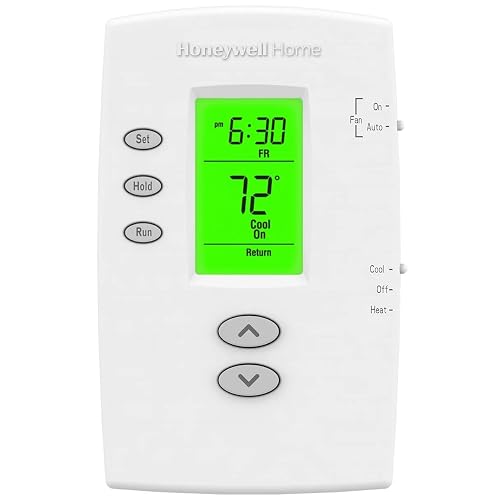
Honeywell TH2110DV1008 PRO 2000 Vertical Programmable Thermostat
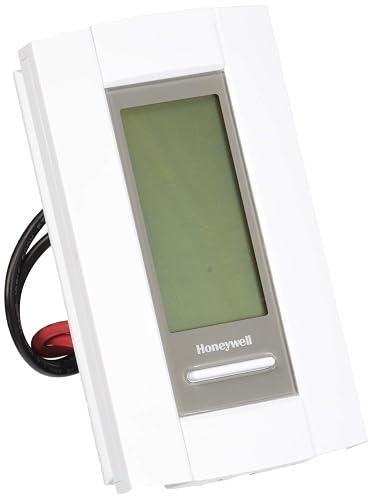
Honeywell TL8230A1003 Electric Heat 7-Day Programmable Thermostat
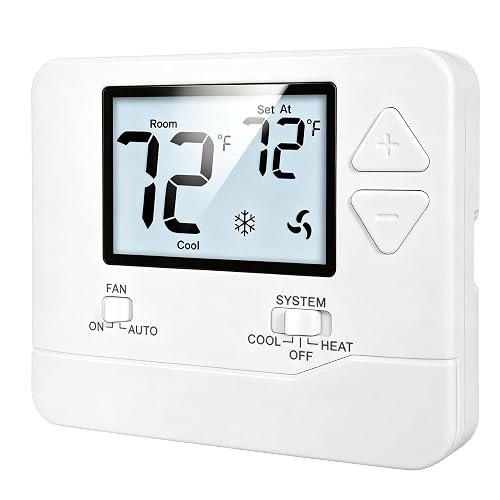
Heagstat 1H/1C Non-Programmable Thermostat, White Backlight
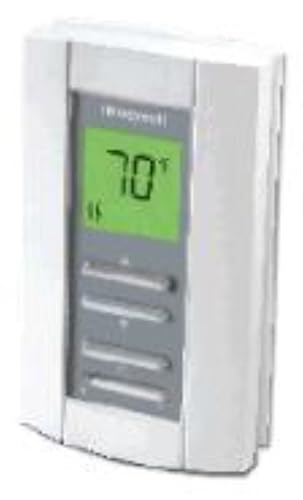
Honeywell TL7235A1003 Line Volt Pro 240V Digital Thermostat
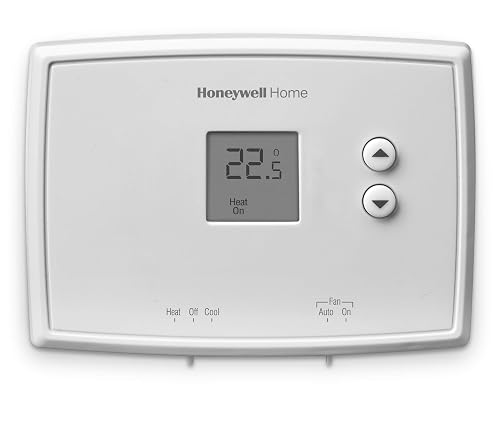
Honeywell Home RTH111B Digital Non-Programmable Thermostat
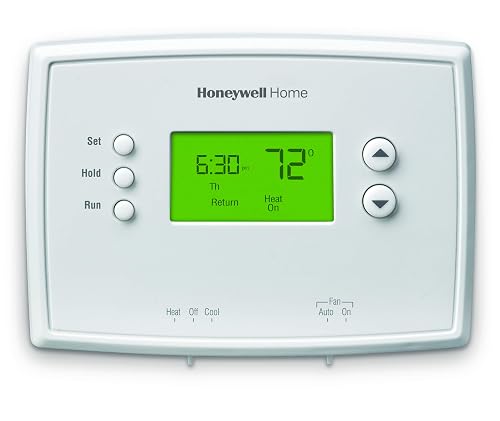
Honeywell Home 7-Day Programmable Thermostat
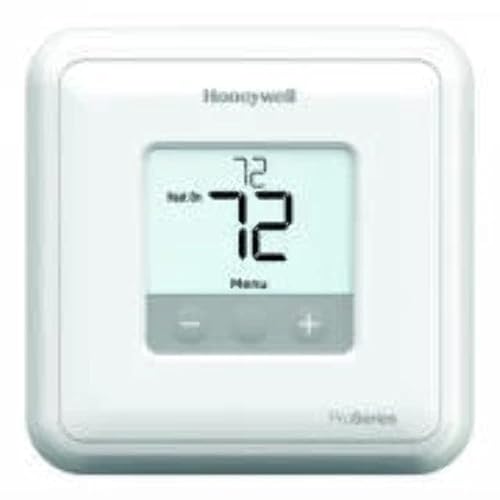
Honeywell TH1110D2009 T1 Pro Low Voltage Thermostat

OJ Microline UTN4 Radiant Floor Heat Thermostat with GFCI
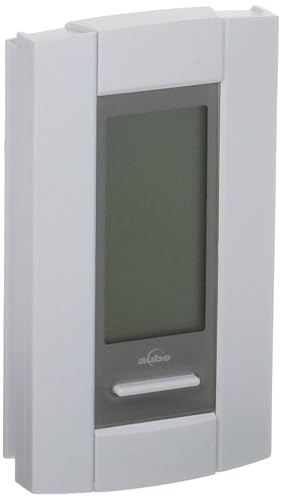
Honeywell TH115-A-12 120V 7-Day Digital Heat Thermostat
A Deeper Look At The Lineup
The Honeywell TH1100DV1000 lives firmly in the “set it and forget it” zone, built for homes that run a single-stage furnace and nothing fancier. Its vertical, premier-white face measures about 4 11/16 inches tall by 2 7/8 wide, so it slips into the same wall opening as most older mechanical units without repainting or patching.
For owners of baseboard-free, heat-only properties (think older apartments with a single gas furnace), this is the kind of part you swap in during a coffee break. No scheduling menus, no app prompts, no learning curve. If you have already looked at the TH2110DV1008 below, know that this one strips out the programming layer entirely in exchange for a lower price and a cleaner read.
Where It Helps
- Single-stage heat-only compatibility keeps the wiring dead simple.
- Vertical layout mirrors the footprint of many legacy thermostats, simplifying retrofits.
- Premier-white finish blends with most wall colors and trim work.
- Domestic Honeywell build quality tends to hold up across decades of seasonal cycling.
Things To Consider
- No cooling control, so central air conditioning needs a different pick.
- Without scheduling, energy savings depend entirely on manual dial changes.
- Owners commonly report that the basic dial feels coarse compared to digital models.
Key Specs
Made For
Owners of single-stage, heat-only homes who want a true no-frills wall unit.
Look Elsewhere When
Your system also runs a central air conditioner, in which case the Honeywell TH2110DV1008 PRO 2000 covers both modes on the same simple platform.
The TH2110DV1008 is essentially the programmable sibling of the TH1100DV1000 you just read about, adding a backlit display, weekday/weekend scheduling, and a one-touch setpoint shortcut. It works with conventional heat-cool setups or heat pumps without auxiliary heat, which covers a healthy share of mid-century homes across the country.
If you commute the same hours every weekday but stay home on weekends, the 5-2 schedule (five weekdays, two weekend days) maps onto that lifestyle without forcing you to program every day separately. Early-start logic nudges the temperature toward your target before you walk in, and the soft-button override lets you bump the heat up for a movie night without rewriting the whole week.
Practical Pluses
- 5-2 weekday/weekend programming fits most office-going schedules.
- Backlit display makes nighttime adjustments easier.
- Heat-cool or heat-pump compatibility widens the install options.
- Manual override preserves comfort during one-off events.
Worth Noting
- Heat-pump systems with auxiliary strip heat fall outside its wheelhouse.
- Schedule resolution is limited, so rotating shifts need different workarounds.
Right Fit For
Households on a steady weekday rhythm who want a programmable upgrade without paying for full 7-day flexibility.
Swap It Out When
Your week looks different on every single day, in which case the Honeywell Home 7-Day Programmable Thermostat lets you set each day independently.
The TL8230A1003 is engineered for line-voltage electric heat, the kind of 120/240-volt circuits feeding baseboard heaters and wall convector units. Its triac relay (an electronic switch that turns the heat on and off without a mechanical contact) eliminates the audible click older thermostats make every time the room crosses a degree, which matters in nurseries and quiet offices.
Seven-day programming with a pre-set energy-saving template trims waste on a per-room basis. The keypad also walks you through the available program periods, so even a first-time user can follow along without cracking the manual. If you have looked at the TH2110DV1008 and realized your wiring is 240-volt rather than low-voltage, this is the right end of the catalog to be browsing.
The Practical Payoff
- Silent triac switching suits bedrooms and home offices.
- Seven-day programming with pre-set energy templates.
- Backlit screen is readable in low light.
- Designed for 120/240V line-voltage electric heat systems.
Honest Caveats
- Not for low-voltage central HVAC, so most furnace homes need a different pick.
- Electric baseboard owners sometimes need help confirming the circuit amperage before installing.
Who It Suits Best
Anyone running electric baseboards or wall convectors who wants a genuinely silent, programmable controller.
Reach For A Different Pick When
Your home uses a low-voltage furnace and central air, in which case the Honeywell Home RTH111B covers the simpler end of that setup.
The Heagstat sits at the most accessible end of the thermostat aisle, designed exclusively for 24VAC conventional single-stage systems (the standard low-voltage wiring found in most gas, oil, or electric furnace homes with central air). Its base accepts two to five wires, which covers the wiring count of the majority of swap-out projects.
What makes it approachable is the absence of menus you have to dig through. A backlit white display shows the ambient temperature at a glance, and the side buttons raise or lower the setpoint. If you have a system with six to eight wires, or anything more elaborate than a single-stage heat plus single-stage cool, this is the wrong shelf. The Honeywell TH1110D2009 T1 Pro, reviewed later, covers that territory.
What It Does Well
- Two-to-five-wire compatibility covers the most common residential wiring.
- Backlit display improves nighttime visibility.
- Non-programmable interface keeps first-time installers on track.
- Works with gas, oil, or electric furnaces paired with a separate AC condenser.
Points To Note
- Heat-pump systems are off the menu, so dual-fuel homes should look elsewhere.
- Six-to-eight-wire setups simply do not fit this base.
- Without scheduling, savings rely on manual setpoint discipline.
Feature Snapshot
Who Will Love This
First-time DIYers replacing an aging thermostat in a gas-or-electric furnace home with central air.
Where A Sibling Pick Shines
If your home uses a heat pump, the Honeywell TH2110DV1008 PRO 2000 is set up for that wiring.
The TL7235A1003 sits firmly in line-voltage territory, rated for 240-volt circuits that feed higher-draw convector and fan-forced heaters. The “Line Volt Pro” name hints at the intended audience: installers and homeowners running dedicated 240V circuits, not a standard 24V thermostat wire.
An on-demand backlight, sound-dampened relay, and a small heating indicator light round out the package. Compared to the TL8230A1003 reviewed above, this model skips the seven-day programming in favor of a direct digital setpoint, which keeps the wall footprint clean and the controls limited to what you actually need to tap on a daily basis.
Everyday Advantages
- Direct 240V switching removes the need for a relay panel.
- On-demand backlight saves a trip across a dark room.
- Sound-dampened operation keeps living spaces calm.
- At-a-glance heating indicator confirms the call for heat at a distance.
Some Limits To Know
- Not designed for low-voltage HVAC, so 24V systems should pick a different unit.
- Wiring into a 240V circuit calls for confidence with electrical work or a licensed installer.
At A Glance
Best Suited To
Homeowners running 240-volt convector or fan-forced heaters who want a clean, simple upgrade from a mechanical dial.
Consider Something Else When
You want silent triac switching plus scheduling, in which case the Honeywell TH115-A-12 is the right adjacent model.
The RTH111B is a study in restraint. Soft-touch buttons, a digital display that shows only what you actually need, and a price tag that does not punish a first-time homeowner. It targets the same single-stage 24VAC territory as the Heagstat reviewed above, with Honeywell’s well-known build pedigree and a clean white face.
For an apartment dweller or a landlord replacing tenant-grade units in bulk, the appeal is the lack of anything to fiddle with. You will not find scheduling here, and that is the point. If you already own a programmable unit like the TH2110DV1008 and want something less tempting for a guest to reprogram, this is a sensible secondary pick.
What Makes Sense
- Minimalist display keeps the wall reading calm and clear.
- Soft-touch buttons reduce accidental changes.
- Honeywell build quality tends to hold up across tenant turnover.
- Non-programmable design removes any user error from the equation.
Trade Offs
- No scheduling, so energy savings depend on manual discipline.
- No backlight, which can make night adjustments harder in dark hallways.
Whose Shelf It Belongs On
Renters, landlords, and anyone who wants a no-surprise wall controller for a small space.
Skip It When
You want even simple weekday/weekend scheduling, in which case the Honeywell TH2110DV1008 PRO 2000 keeps the same Honeywell feel and adds programs.
The Honeywell Home 7-Day Programmable Thermostat solves the schedule problem the TH2110DV1008 cannot quite reach. With four program periods per day (wake, leave, return, sleep) and full independence for each of the seven days, it fits people whose week genuinely varies, including rotating shifts, hybrid office days, and weekend routines that look nothing like the weekdays.
Manual overrides are preserved, the backlit display is easy on the eyes, and the unit’s setup flow is widely reported as one of the friendlier entry points into programmable control. If your home is conventional forced-air with central air, this is a natural step up from the Honeywell Home RTH111B reviewed just above.
A Few Highlights
- Four program periods per day map onto realistic wake-to-sleep routines.
- Each day programs independently, suiting irregular weekly patterns.
- Backlit screen helps in dim hallways and bedrooms.
- Manual override keeps guests and one-off events from rewriting the week.
Worth Bearing In Mind
- First-time setup takes longer than a 5-2 schedule, so expect a weekend afternoon.
- Heat-pump systems with auxiliary heat still need a different model.
Feature Card
Perfect Match For
Households whose schedule genuinely shifts day to day, including hybrid workers and rotating shift families.
A Better Fit Elsewhere
If your week is rock-solid Monday through Friday, the Honeywell TH2110DV1008 PRO 2000 gets the same result with less setup time.
The T1 Pro targets installers and pros working on single-stage 24VAC systems, the same 24-volt low-voltage circuits that feed most standard residential furnaces and central air handlers. Terminals are labeled Y, G, C, W, and R, the alphabet soup most techs can wire from memory, and the system switch handles heat, cool, and off while the fan switch toggles auto or on.
It is a deliberately spartan tool: no scheduling, no app, no filter reminder, no keypad lockout. For a service truck rolling up to a quick swap, that is the entire appeal. Compared to the Heagstat entry above, the T1 Pro leans more toward trade familiarity than homeowner polish, and the Honeywell Home RTH111B reads as the more decorative sibling on a finished wall.
Strengths Worth Knowing
- Five standard low-voltage terminals match most single-stage HVAC wiring.
- Heat-cool-off and fan auto-on switches cover basic mode changes.
- LCD display stays legible across varied indoor lighting.
- Pro-grade build is well suited to high-turnover service work.
Soft Spots
- No scheduling or filter indicator means owners must track both manually.
- Plain-Jane styling looks utilitarian next to consumer-grade units.
Quick Facts
Built With In Mind
HVAC techs and contractors who want a fast, reliable wall unit for service calls and tenant turnovers.
Not Your Match When
You want a homeowner-friendly display, in which case the Honeywell Home 7-Day Programmable Thermostat is the consumer-tier step up.
The OJ Microline UTN4 is a niche specialist, and that is its job. It controls 120- or 240-volt electric radiant floor heating, the kind of mat or cable system laid under tile, stone, laminate, or engineered wood. A built-in Class A GFCI (a ground-fault circuit interrupter that cuts power in milliseconds if it detects current leaking where it should not) is built into the unit, which is required for any underfloor heating system and saves you from buying a separate protection device.
Dual sensing reads both the ambient air and the floor sensor (included), so the thermostat can manage comfort and floor temperature independently. A three-year warranty and USA-based product support cushion the install. If your project is a forced-air home with central air, every other model in this list is a better fit; this one earns its slot by being purpose-built for the floor-heat crowd.
Real-World Strengths
- Built-in Class A GFCI removes a separate breaker-panel accessory.
- Dual sensing balances air and floor temperatures for true comfort.
- Compatible with 120V and 240V floor heat circuits.
- Three-year coverage with USA-based product support.
A Few Limitations
- Non-programmable, so multi-zone scheduling needs a separate controller.
- Strictly for floor-heat systems, and not a generic wall thermostat.
Who Should Grab It
Bathroom and kitchen remodelers running electric radiant floors who want an all-in-one thermostat and GFCI solution.
Where Another Pick Suits Better
For a standard furnace home, the Honeywell TH2110DV1008 PRO 2000 is the right conventional pick at a lower install effort.
The TH115-A-12 closes the list with a quietly capable 120-volt model aimed at electric baseboard and convector circuits where noise matters. Its triac relay keeps operation silent, and a 15-minute cycle algorithm balances comfort against how often the heater cycles on and off. It accepts a remote input, so you can wire an outdoor sensor or a central timer if you want a smarter system later.
With up to four programmable settings per day, one for each day of the week, the TH115-A-12 covers the kind of nuanced routines the Honeywell TL8230A1003 also addresses, but at 120V rather than the higher-voltage line. It is the right unit to shortlist when a bedroom baseboard is keeping the wrong person awake at the wrong temperature.
Where It Excels
- Silent triac switching for noise-sensitive rooms.
- Up to four programs per day, individually set across the week.
- Microprocessor-tuned 15-minute cycles for steady comfort.
- Remote input for outdoor sensors or central timers.
Practical Considerations
- 120V-only rating excludes 240V baseboard circuits, so verify your supply first.
- Wiring into line-voltage circuits benefits from a confident hand or a licensed installer.
Best Suited To
Owners of 120V electric baseboard heaters who want silent operation and full seven-day scheduling in a single unit.
Another Choice May Suit
For a 240V circuit instead, the Honeywell TL7235A1003 Line Volt Pro is the matching model on the higher-voltage side.
What To Weigh Before Choosing Thermostats Aubes
The first decision is always wiring. Low-voltage thermostats (24VAC) drive most central furnaces and air handlers, while line-voltage units (120V or 240V) control electric baseboards, convectors, and radiant floors. Match the voltage first, then worry about features, since the wrong class of thermostat simply will not work in the wrong junction box.
System complexity comes next. Single-stage heat and single-stage cool is the simplest layout, and models like the Honeywell TH1100DV1000 or the Heagstat 1H/1C cover that cleanly. Heat pumps, multi-stage equipment, and dual-fuel systems add terminals and require a thermostat that explicitly lists that compatibility. The Honeywell TH2110DV1008 and the Honeywell TH1110D2009 T1 Pro handle the most common residential layouts without overspending.
Scheduling depth is a comfort-versus-effort trade-off. Non-programmable units like the Honeywell Home RTH111B keep the wall calm and the learning curve short, while the Honeywell Home 7-Day Programmable Thermostat rewards an hour of setup with the most flexibility. Electric heat rooms often need silent triac switching, where the Honeywell TL8230A1003 and the Honeywell TH115-A-12 stand out.
Finally, think about the room. Bedrooms benefit from silent relays and dimmable displays, hallways and living rooms tend to favor bright backlights and large numerals, and specialty projects like radiant floors demand built-in safety like the OJ Microline UTN4’s GFCI.
What Sets These Picks Apart
Where Shoppers Go Wrong
The most common mistake is matching the wrong voltage class. People buy a 24V low-voltage thermostat for a 240V baseboard circuit (or vice versa), then wonder why the system shorts, clicks endlessly, or does nothing. A second slip is over-buying features that the wiring cannot support, like scheduling on a system that lacks a common wire. Before anything else, pull the existing unit off the wall, count the wires, and check the breaker panel for the heater circuit rating.
When Paying More Pays Off
The jump from a basic non-programmable model to a programmable one pays back fastest in homes where the day actually changes between weekdays, weekends, and evenings. A seven-day unit like the Honeywell Home 7-Day Programmable Thermostat can trim noticeable energy by trimming setpoints when the house sits empty. For electric baseboards, paying extra for triac switching (as in the Honeywell TL8230A1003 and the Honeywell TH115-A-12) buys genuine quiet, which is worth the premium in nurseries and bedrooms.
Frequently Asked Questions
How do I know if I have a low-voltage or line-voltage system?
Pull the existing thermostat face off the wall and look at the wires. Thin wires (often 18-gauge) in a bundle of two to eight conductors usually mean 24VAC low-voltage. Two thick wires (often 10- or 12-gauge) heading into a box usually mean 120V or 240V line-voltage for electric heat. When in doubt, an electrician can confirm the circuit in a few minutes.
Do I need a C-wire for these thermostats?
Most low-voltage programmable models benefit from a common wire (the “C” terminal), which provides continuous power for the display. The Honeywell TH2110DV1008 and Honeywell Home 7-Day Programmable Thermostat typically need one. The Heagstat 1H/1C and the Honeywell TH1100DV1000 are simpler units that often run on two- or four-wire installs.
Can a thermostat really save money?
Programmable models can trim heating and cooling use by trimming setpoints while the house sits empty or while everyone sleeps. The actual savings depend on the local climate, the setpoint changes, and how disciplined the household is about not overriding the schedule. Line-voltage silent units like the Honeywell TH115-A-12 add comfort value that does not show up on a utility bill.
Are these thermostats hard to install?
A confident DIYer can swap most 24V units in under thirty minutes with a screwdriver and a phone photo of the existing wiring. Line-voltage 120V and 240V models like the Honeywell TL7235A1003, Honeywell TL8230A1003, Honeywell TH115-A-12, and OJ Microline UTN4 involve higher-voltage circuits and benefit from a licensed installer for safety.
What is a GFCI and why does my floor-heat thermostat need one?
A GFCI (ground-fault circuit interrupter) is a safety device that cuts power in milliseconds if current leaks where it should not, like through water or a person. Electric radiant floor heating is installed in wet-adjacent spaces such as bathrooms, and code generally requires GFCI protection for those systems. The OJ Microline UTN4 builds that protection into the thermostat itself, so there is no need to add a separate breaker.
Closing Remarks
The right thermostat comes down to the wiring on the wall, the routines in your week, and the kind of comfort your rooms actually need. Start with voltage and system type, then narrow by scheduling and noise. With those filters applied, any pick in this lineup is a solid, durable choice, and you can revisit the features later if the household routine changes.