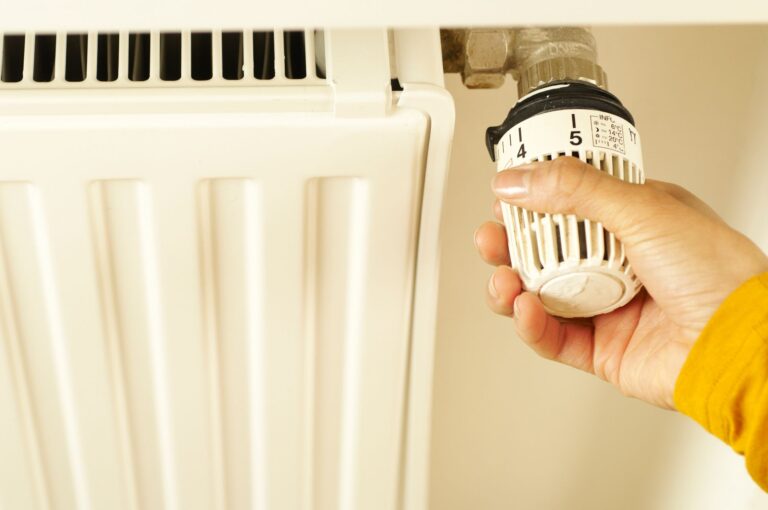

Spending an afternoon in a chilly garage while the thermostat on the wall refuses to budge from “sort of warm” gets old fast. Whether you’re wrenching on a project, working through a hobby, or just trying to keep the space usable past October, the right control makes a real difference. This roundup focuses on wall-mounted units that pair well with the kind of forced-air, radiant, or gas heaters common in detached workspaces, and on the practical details that decide whether a swap is straightforward or a headache.
The Choices Worth Comparing
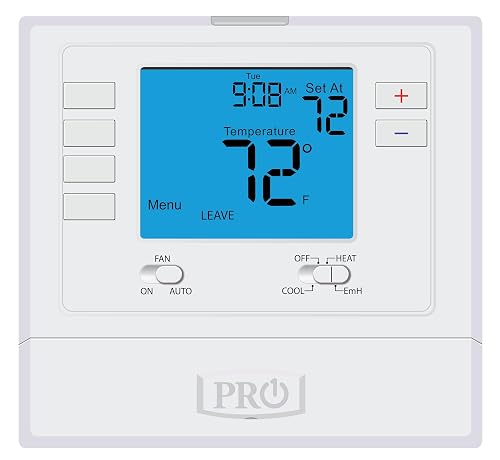
PRO1 T725 Heat Pump/Conventional Programmable Wall Thermostat

PRO1 T771 Single Stage Non-Programmable Wall Thermostat
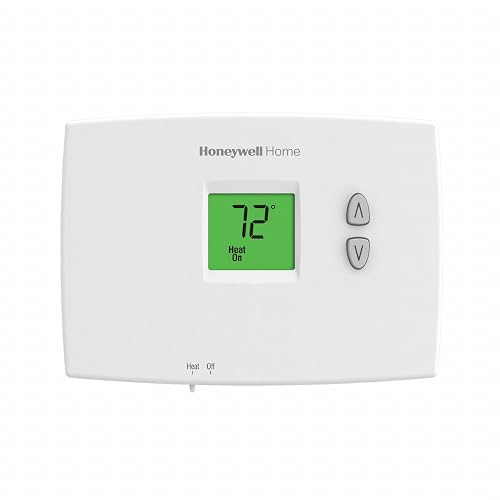
Honeywell TH1100DH1004 Horizontal PRO 1000 Non-Programmable Thermostat
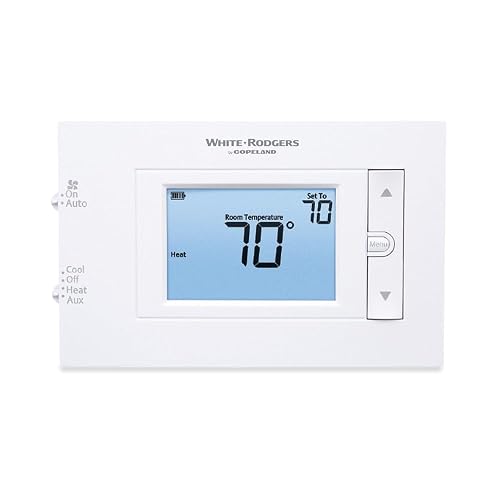
White-Rodgers 80 Series Non-Programmable Heat Pump Thermostat (1F83H-21NP)
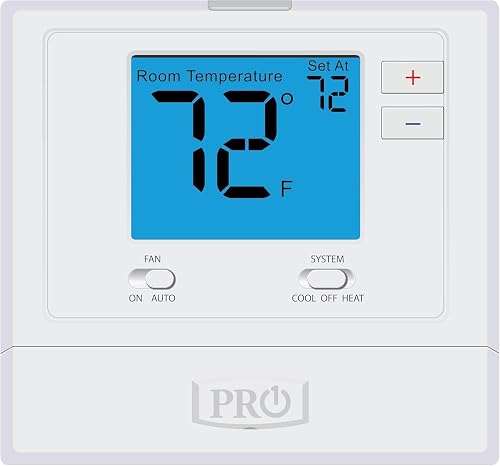
PRO1 T701 Single Stage Non-Programmable Wall Thermostat

PRO1 T715 Multi-Stage Programmable Gas Thermostat
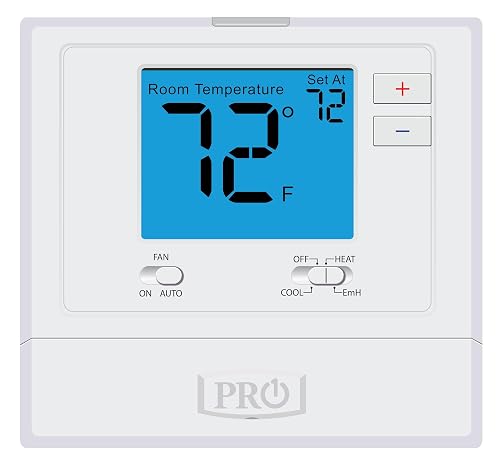
PRO1 T721 Non-Programmable Wall Thermostat (2H/1C Heat Pump or 1H/1C Conventional)

White-Rodgers Single Stage Non-Programmable Thermostat (1E78-144)

OJ Microline UTN4 Radiant Floor Heat Thermostat w/Class A GFCI

PRO1 T805 Single Stage Programmable Wall Thermostat
Meet The Standout Selections
The PRO1 T725 sits at the top because it doesn’t ask you to commit to a single heating style. It works as a 2 heat/1 cool heat pump controller or a 1 heat/1 cool conventional controller, which means swapping heaters later doesn’t mean swapping the wall unit too. The 4 sq. in. blue backlit screen shows the schedule at a glance, with wake, leave, return, and sleep blocks mapped out for the week.
Programmability runs to 7-day or 5/1/1 layouts (a “5/1/1” schedule lets weekdays share one program while Saturday and Sunday get their own), so you can stop the heater from running overnight and warm things back up before you head out for a Saturday project. For a garage that doubles as a workshop on weekends, that flexibility earns its place.
Everyday Wins
- Dual-mode compatibility covers both heat pump and conventional systems in one unit
- 7-day or 5/1/1 scheduling trims wasted runtime overnight or during weekday work hours
- Backlit 4 sq. in. display stays readable in a dim garage, no squinting across the room
- Programmed wake and return blocks mean the space is already warm when you arrive
Things To Consider
- Programming the schedule takes a few trips through the manual the first time around
- More features than a simple up-and-down dial, so minimalists may not tap into half of them
Feature Snapshot
Who It Suits Best
Homeowners running a heat pump in a workshop or hobby garage and wanting real schedule control without learning a touchscreen.
Where Another Pick Suits Better
Stick with the Honeywell TH1100DH1004 if your garage is heat-only and you want a simpler wall unit with a wider low-end setpoint range.
The T771 is the one to look at when your workspace runs cold for long stretches. Its setpoint range reaches down to 25°F, which most home thermostats don’t. Swing adjustment and calibration controls let you fine-tune how often the heater cycles, so a drafty outbuilding stops short-cycling every few minutes.
Where the PRO1 T725 leans on programming, the T771 keeps things deliberately bare. The same 4 sq. in. blue backlit display is easy to read in low light, and the wider setpoint window makes it a sensible match for sheds, detached studios, and garages that aren’t fully insulated.
Good Reasons To Consider
- 25°F to 90°F setpoint range handles unheated, drafty outbuildings that most home stats can’t
- Swing adjustment dials in cycling behavior, useful for oversized or undersized heaters
- Non-programmable layout means no schedule to learn or reset after a power outage
- Calibration feature trims sensor drift so the reading matches a separate thermometer
Points To Keep In Mind
- Limited to single-stage systems, so two-stage gas heaters won’t benefit from staging
- Wider temperature scale trades fine-grained home comfort for low-end range
Best Suited To
Detached garages, sheds, and workshops with poor insulation where the heater fights a losing battle against the cold.
Consider Something Else When
Run a 2 heat/1 cool heat pump instead and you’ll want the scheduling flexibility of the PRO1 T725.
The Honeywell PRO 1000 stands out for one specific reason: a switchable temperature scale. A standard setting runs 40 to 90°F, while the garage setting opens things up to 35 to 90°F. For a heat-only garage heater that needs to keep the space above freezing on a brutal January night, that lower floor matters.
Dual power (battery or hardwired) adds installation flexibility, and the backlit display is easy to read under shop lighting. Precise comfort control in 1°F increments gives you a usable level of tuning without burying you in menus.
The Upside
- Garage scale (35–90°F) handles freeze protection without forcing a separate unit
- Dual power source eases retrofit installs where a C-wire isn’t run
- Heat-only focus keeps the interface minimal, no cooling mode to ignore
- Horizontal layout fits where taller stats look out of place on a garage wall
Trade Offs
- No programmability, so weekend schedules mean manual adjustment
- Limited to heat-only single-stage systems
Who Should Grab It
Anyone running a basic forced-air garage heater and wanting a no-fuss wall control that won’t over-engineer the job.
Skip It When
Cooling matters too, in which case the PRO1 T721 covers both heat and cool on conventional systems.
White-Rodgers built the 1F83H-21NP with a DIY mindset. A built-in level in the base plate takes the guesswork out of mounting, and the backlit display keeps settings visible under harsh shop lighting. For a first-timer wiring a thermostat onto a garage heat pump, that kind of thoughtfulness saves real time.
The non-programmable design keeps the interface tight, useful in a garage where the heater runs on demand rather than a schedule. In our view, this is the kind of unit that gets mounted in an afternoon and forgotten about, in a good way.
The Helpful Details
- Built-in level on the base plate makes a crooked install hard to do
- Backlit display is readable from across a two-car bay
- Heat pump compatibility without auxiliary heat adds system breadth
- Clean button layout avoids the menu-diving common on programmable units
Where It May Fall Short
- Lacks programmability, which costs you in efficiency on inconsistent schedules
- Heat pump focus means conventional-only heaters should look elsewhere
Right Fit For
DIY installers wiring their first garage thermostat who want a forgiving mounting process and a clear display.
Look Elsewhere When
Schedules matter as much as the install, and the PRO1 T725 is the more flexible programmable option.
The T701 lives on the T700 platform, sharing that familiar 4 sq. in. blue backlit display, and adds a glow-in-the-dark light button. For a workshop where the overhead lights get switched off between sessions, that little detail means you can find the controls without fumbling for a flashlight.
Designed for 1 heat/1 cool conventional systems, it covers the common case where a garage runs on a basic gas or electric forced-air unit. Battery or hardwired power gives you flexibility on the wiring side, which matters when retrofitting into an older space.
A Few Strong Suits
- Glow-in-the-dark light button locates the controls in a dark shop
- T700 platform consistency means familiar menus if you’ve used a PRO1 stat before
- Battery or hardwired power eases install in older garages without a C-wire
- Gas or electric compatibility covers the most common garage heating setups
Honest Caveats
- No scheduling means consistent runtimes regardless of the day’s plans
- Single-stage only, so two-stage heaters lose efficiency
Perfect Match For
Garages with intermittent use where the lights go off between sessions and a simple stat is all you actually need.
Reach For A Different Pick When
You want programmable scheduling on a single-stage system, where the PRO1 T805 is the more capable step up.
The T715 steps up to 2 heat/2 cool support, which makes sense in a workshop that pairs a high-BTU garage heater with a separate cooling source. Multi-stage staging trims the temperature swings you get from a single-stage system cycling hard, and the broader 4 sq. in. display keeps the extra mode information readable.
Programmability runs through 7-day, 5/1/1, or non-programmable modes. You may find that last option useful, since it lets you bypass the schedule entirely without rewiring. Battery or hardwired power keeps the install friendly in older spaces.
What Helps Most
- 2 heat/2 cool support matches higher-capacity garage HVAC setups
- Three operating modes (7-day, 5/1/1, non-programmable) flex to the user’s habits
- Multi-stage staging reduces temperature swing compared to single-stage cycling
- Battery or hardwired power smooths the retrofit path
Less Ideal Details
- Overkill for a basic single-stage garage heater
- More configuration upfront than a non-programmable unit
Key Attributes
Whose Shelf It Belongs On
Garages with a two-stage gas system where smoother temperature control matters more than minimalism.
A Better Fit Elsewhere
A simple heat-only garage will pair more naturally with the Honeywell TH1100DH1004 and its switchable garage scale.
The T721 reads like a flexible middle child. It handles 2 heat/1 cool heat pump systems or 1 heat/1 cool conventional systems, so it covers a wider range of garage setups than the T701. The same 4 sq. in. blue backlit display shows up here, paired with a glow-in-the-dark light button for dim shops.
Without programmability, the controls stay approachable, and AA battery or hardwired power keeps the install straightforward. The trade-off shows up when you want weekend-only scheduling, but for steady-use garages, the simplicity is the point.
Why It Works Well
- Dual-system compatibility handles both heat pump and conventional heaters
- Glow-in-the-dark light button locates the stat in a dark shop
- AA battery or hardwired power suits both new and retrofit installs
- Non-programmable design keeps the learning curve short
Softer Spots
- No scheduling means manual setpoint changes around irregular use
- Not suited to multi-stage (2 heat/2 cool) gas systems
Made For
Garages where the heater type might change during a remodel, and the thermostat needs to keep working through the switch.
Swap It Out When
Two-stage gas heating is in play, in which case the PRO1 T715 is the better-supported match.
The 1E78-144 covers 24-volt and millivolt systems, the latter being common in wall-mount gas heaters that don’t draw much current. That compatibility alone is why some garage owners end up with this exact model, since many smart thermostats don’t support millivolt.
The backlit display is easy to read, and the non-programmable layout means few buttons and fewer mistakes. Worth noting though, it’s not designed for electric baseboard heat, so confirm the heater type before ordering.
Everyday Perks
- Millivolt compatibility supports older wall-mounted gas heaters
- Single-stage heating, cooling, and heat pump support covers common garage HVAC
- Backlit digital display reads clearly in mixed shop lighting
- Minimal button layout avoids the menu-diving common on programmable units
Possible Compromises
- Not compatible with electric baseboard heating, a common exclusion for retrofits
- No scheduling, so weekend setpoint changes are manual
Who Will Love This
Owners of older wall-mount gas heaters who need a millivolt-compatible control and don’t need scheduling.
Another Choice May Suit
Heat-only garage owners wanting a wider setpoint range should consider the PRO1 T771, which drops to 25°F.
The UTN4 is built for radiant floor heat, the kind of system embedded under tile, stone, laminate, or engineered wood. The 120/240V compatibility matches common residential circuits, and dual sensing reads both the floor and the air, so the system reacts to changing conditions without overshooting.
The big-ticket feature is a built-in Class A GFCI (Ground Fault Circuit Interrupter), the same safety device required by code for underfloor heating systems. c UL us Listed for the US and Canada, it covers the safety side that bare-bones stats skip.
The Good Stuff
- Built-in Class A GFCI meets code requirements for underfloor heating systems
- Dual sensing (floor and air) tightens comfort control across floor coverings
- 120/240V compatibility fits common residential wiring configurations
- Includes a floor sensor in the box, so no extra parts to source
A Few Limitations
- Niche focus on radiant floor heat limits its usefulness with forced-air garage heaters
- Non-programmable, so setpoint changes are manual around heavy-use days
Feature Overview
Built With In Mind
Garage conversions with embedded radiant floor heating where code-compliant GFCI protection is non-negotiable.
Where A Sibling Pick Shines
Forced-air garage heaters need a wall stat, and the Honeywell TH1100DH1004 is the simpler, garage-scale fit.
The T805 is the easiest of this roundup to read from across a two-car bay. The 7 sq. in. blue backlit display is roughly 75% larger than the 4 sq. in. screens elsewhere in the PRO1 lineup, and for a garage where the stat sits near the door, that distance reads without effort.
Programmability covers 7-day, 5/1/1, or non-programmable modes, so you can set it and forget it, or run it as a simple manual stat. Same story with power: battery or hardwired, and a glow-in-the-dark light button for low-light conditions.
Practical Pluses
- 7 sq. in. display is glanceable from across a two-car garage
- Three operating modes (7-day, 5/1/1, non-programmable) match the user’s habits
- Glow-in-the-dark light button locates the stat in a dark shop
- Battery or hardwired power eases the wiring decision on retrofits
Where It Is Less Suited
- Larger footprint requires more wall real estate than slimmer stats
- Single-stage only, so multi-stage systems lose efficiency
Feature Rundown
The Right Fit
Shop owners who want both scheduling flexibility and a screen that reads from the workbench without walking over.
Consider Something Else When
Multi-stage gas heat is the goal, and the PRO1 T715 supports that configuration directly.
Picking the Right Thermostat for Your Garage Heater
Garage heating covers a wider range than indoor climate control, so a few specific details carry more weight than the marketing copy suggests. System type is the first gate: heat pump, conventional gas, conventional electric, millivolt gas, and radiant floor each have their own compatible list, and the wrong stat simply won’t wire up. Single-stage versus multi-stage is the second gate, since a two-stage heater running on a single-stage stat loses most of the efficiency benefit.
Low-temperature setpoint range matters more than people expect. A thermostat that bottoms out at 40°F can’t hold a garage above freezing during a cold snap, so units like the PRO1 T771 with a 25°F floor or the Honeywell TH1100DH1004 with a 35°F garage scale solve problems that home stats ignore. Display readability is the underrated one: in a shop with mixed lighting, a 4 sq. in. screen with backlight is a noticeable upgrade over an unlit one, and a 7 sq. in. screen is a meaningful jump from there.
Power source is the retrofit make-or-break. Battery-only stats skip the need for a C-wire (the “common” wire that delivers continuous 24V power), which simplifies older installs, while hardwired units tend to pull from the heater’s existing 24V transformer. Dual-power stats bridge both, which is why several of the PRO1 units in this roundup offer that flexibility.
Key Considerations Across These Picks
Where Shoppers Go Wrong
The most common mistake is matching the stat to the heater brand rather than the system type. A Honeywell stat can be perfectly compatible with a White-Rodgers-compatible system, and the reverse, as long as the staging and voltage match up. Buying by brand loyalty adds cost without adding fit.
Another trap is overlooking the low-end setpoint. Home thermostats rarely drop below 40°F, but garage spaces need freeze protection, so confirm the lower bound before ordering. Skipping that detail leads to a stat that idles in “off” mode during cold snaps while the pipes (or paint cans) suffer.
When Paying More Pays Off
Higher-tier stats in this category earn their keep through scheduling, larger displays, and dual-system compatibility. The PRO1 T725 and T805 add programmability that trims wasted runtime, which matters more in a garage with irregular use than in a home with a predictable routine.
The case for spending up is strongest when the garage sees weekday evening use plus weekend projects. A programmable stat learns that pattern, runs the heater only when needed, and stays out of the way the rest of the time. For a workshop that runs four hours a day, a 7-day schedule often justifies the upgrade within a heating season.
Frequently Asked Questions
What thermostat type works with a garage heater?
The right thermostat depends on the heater’s system type. Heat pumps need heat pump stats, conventional gas and electric heaters need conventional stats, and millivolt wall heaters (low-voltage systems common in older gas units) need millivolt-compatible controls. Radiant floor heat requires a dedicated floor-sensing stat with GFCI.
Can a home thermostat work in a garage?
In some cases, yes, but most home stats don’t drop below 40°F, which limits freeze protection. Units with a dedicated garage scale or low-temperature setpoint range, like the Honeywell TH1100DH1004 or the PRO1 T771, fit garage duty better because they reach lower setpoints and tolerate draftier conditions.
Are programmable thermostats worth it for a garage?
Programmable stats help most when the garage sees consistent but limited use, such as weekday evenings or weekend afternoons. The schedule trims wasted runtime while keeping the space warm on arrival. For 24/7 shops, a non-programmable stat is usually enough.
Do garage thermostats need a C-wire?
Not always. Many units, including several from PRO1, run on battery power or hardwired 24V, and dual-power stats cover both. Older garages without a C-wire benefit from battery-capable stats, while hardwired installs pull power from the heater’s transformer.
What’s the difference between single-stage and multi-stage thermostats?
Single-stage stats treat the heater as on or off, while multi-stage stats can run the heater at a lower output for mild conditions and a higher output for cold snaps. Multi-stage staging trims temperature swings and reduces cycling, but the heater itself must support staging for the benefit to apply.