
Picking the right wall thermostat used to mean grabbing whatever the installer left behind. Today, the choice is wider, and the difference between a budget single-stage unit and a learning model can show up in your monthly bill and in how often you fiddle with the temperature.
This list covers everything from rugged garage thermostats to radiant floor sensors and a flagship learning model. Most picks are traditional wall units, because that’s still the workhorse category for whole-home comfort. A smart thermostat rounds out the list for anyone ready to trade manual programming for automated scheduling.
The Leading Options At A Glance
PRO1 T725 Programmable Wall Thermostat 2H/1C Heat Pump

PRO1 T771 Single Stage Non-Programmable Wall Thermostat
Honeywell AC11201 Temperature Sensor for Floor Heating
PRO1 T701 Single Stage Non-Programmable Wall Thermostat

PRO1 T715 Multi-Stage Programmable Gas Thermostat 2H/2C
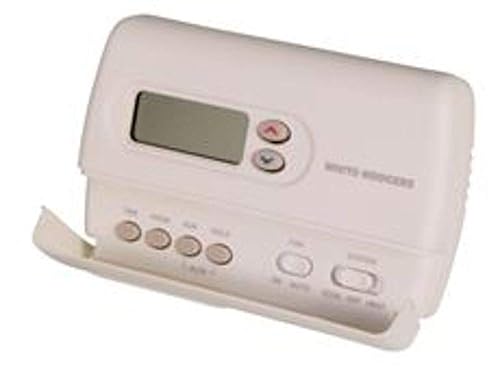
White-Rodgers 1F80-361 Emerson 80 Series Programmable Thermostat
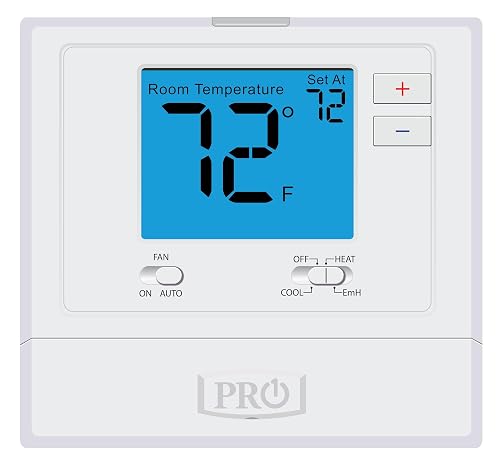
PRO1 T721 Non-Programmable Wall Thermostat 2H/1C
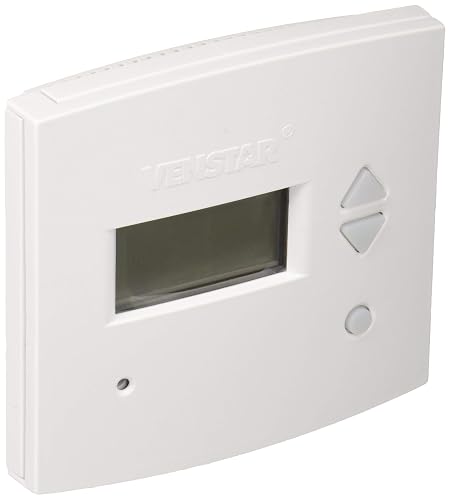
Venstar T2800 Commercial Platinum Slimline Thermostat (White)

PRO1 T805 Programmable Wall Thermostat 1H/1C
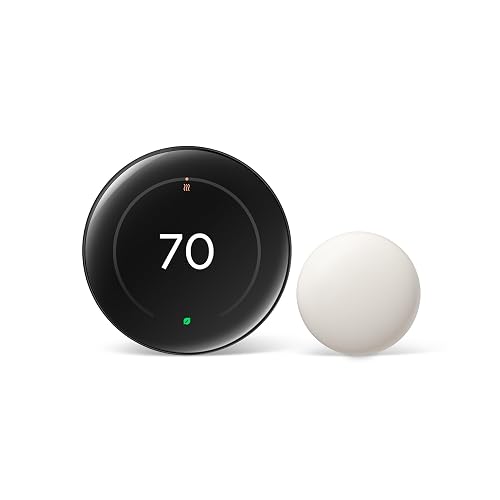
Google Nest Learning Thermostat (4th gen) + Sensor (2nd gen), Obsidian
The Details Behind The Selections
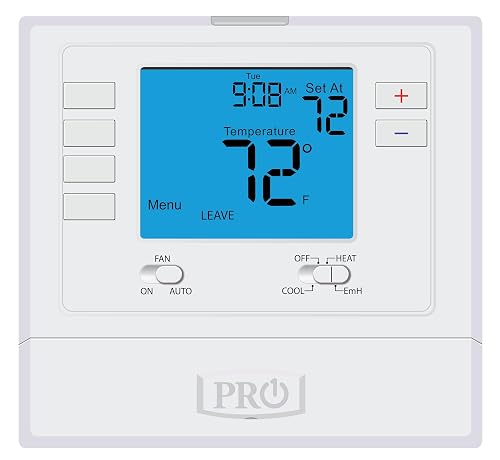
Heat pump households often get stuck with a thermostat that technically works but won’t schedule a week ahead, and that’s where the PRO1 T725 earns its place. It supports 2 heat/1 cool heat pump systems alongside 1 heat/1 cool conventional setups, with 7-day or 5/1/1 programming that lets you set different routines for weekdays and weekends.
The 4 sq. in. blue backlit screen keeps the readout visible from across a hallway, and the schedule modes (wake, leave, return, sleep) cover the rhythms most households actually live by. For a homeowner with a heat pump who wants scheduling without giving up simplicity, this lands in a comfortable middle spot between the bare PRO1 T701 and the heavier two-stage T715 below.
Strengths Worth Knowing
- Dual compatibility with heat pump and conventional systems, useful during HVAC swaps
- 7-day or 5/1/1 programming gives you different schedules for weekdays and weekends
- 4 sq. in. blue backlit display remains readable in dim hallways or basements
- Standard PRO1 T700 platform wiring, so most homeowners can install it themselves
Trade Offs To Consider
- No Wi-Fi connectivity, so remote adjustments require a separate app-based upgrade
- Programming the schedule takes an afternoon the first time, and menus are not intuitive
Who It Suits Best
Heat pump owners who want weekly scheduling and a readable display without stepping up to a smart learning model.
Look Elsewhere When
You need a low-temperature garage range, in which case the PRO1 T771 single stage thermostat reaches down to setpoints a heat pump unit won’t.
Most wall thermostats refuse to set a garage below 50°F, which makes them useless when you’re storing paint, tools, or a classic car. The PRO1 T771 single stage non-programmable thermostat is built around that gap, with a setpoint range that reaches all the way down to 25°F for spaces that need genuine freeze protection without running the heater constantly.
It runs on 1 heat/1 cool conventional systems, which keeps the wiring simple, and the 4 sq. in. blue backlit display stays readable in a dim workshop. For a homeowner whose main thermostat lives indoors, this one quietly handles the outbuilding that nobody thinks about until a pipe freezes.
Everyday Advantages
- Setpoint range down to 25°F, ideal for unheated garages, sheds, and workshops
- Single-stage simplicity means wiring is straightforward for most DIYers
- Backlit display helps during early-morning shop sessions
- Swing adjustment and calibration let you tune cycling behavior to a drafty space
Things To Weigh Up
- Non-programmable, so weekend setpoint changes require a manual press
- Not a fit for heat pump systems or multi-stage conventional setups
- Lacks the glow-in-the-dark light button some PRO1 siblings include
Made For
Garage, shed, and workshop owners who need low-temperature setpoints for freeze protection without scheduling complexity.
Skip It When
You’re running a heat pump indoors and want weekly scheduling, in which case the PRO1 T725 handles that role more naturally.
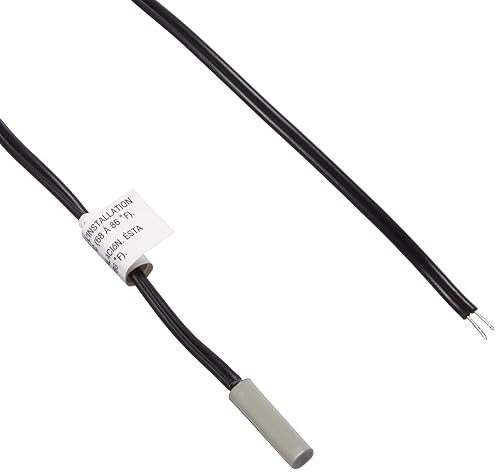
Radiant floor heating lives or dies by where you measure the temperature, and that’s why the Honeywell AC11201 exists. It’s a 10 ft floor sensor designed to read slab or under-tile temperatures directly, giving a radiant system controller the right input instead of guessing from the ambient air.
For anyone with a bathroom, basement, or addition warmed by a hydronic (water-based) or electric radiant mat, this is a replacement-grade sensor or a spare to keep on hand. Compared to the wall-mounted picks earlier, this is a component rather than a controller, and it pairs with a compatible thermostat module.
Notable Gains
- 10 ft cable reaches most radiant installations without splicing
- Designed for North American floor heating systems
- Works as a flexible or rigid installation depending on the substrate
- Honeywell build quality suited to long-term slab burial
Honest Caveats
- Not a standalone thermostat, so it requires a compatible radiant controller
- Replacement sensor only, with no display or programming of its own
Right Fit For
Hydronic and electric radiant floor owners who need a reliable floor sensor to feed a compatible thermostat.
Swap It Out When
You need a wall-mounted controller for a forced-air system, in which case the PRO1 T805 programmable thermostat fits a conventional 1 heat/1 cool setup more directly.
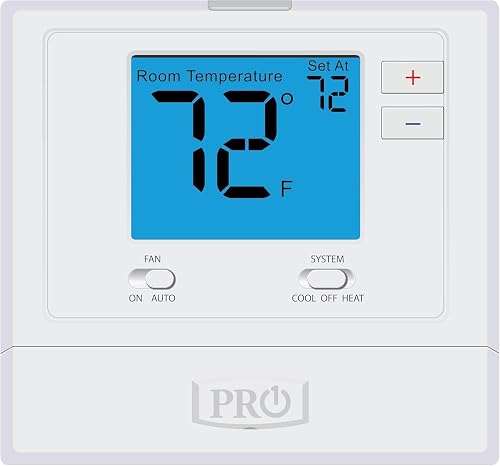
Some households only ever touch the thermostat to nudge the temperature a few degrees, and that’s the whole point of the PRO1 T701. It’s a non-programmable single-stage unit for 1 heat/1 cool conventional systems, with no schedule menus to navigate and no app to pair.
The 4 sq. in. blue backlit display is generous for the price, and a glow-in-the-dark light button helps when you walk past it at night. For an aging parent, a rental unit, or a guest room, it does the job without inviting anyone to fiddle.
Positive Points
- Simple up-and-down temperature adjustment with no scheduling to learn
- Gas or electric compatibility covers most single-stage systems
- Glow-in-the-dark light button helps in dark hallways
- Large backlit display is easier to read than older dial thermostats
A Few Limitations
- No weekly programming, so energy-saving setbacks require manual daily nudges
- Not a match for heat pump or multi-stage conventional systems
Best Suited To
First-time thermostat shoppers and rental property owners who want a reliable, no-fuss unit with minimal setup.
Another Choice May Suit
You want the same simplicity but with a heat pump, in which case the PRO1 T721 non-programmable thermostat covers 2H/1C heat pump and 1H/1C conventional systems.
Two-stage gas furnaces run more efficiently when the thermostat can talk to both stages, and the PRO1 T715 was built for that conversation. It supports 2 heat/2 cool conventional systems, with 7-day, 5/1/1, or non-programmable modes depending on how hands-on you want to be.
The 4 sq. in. blue backlit display is paired with a glow-in-the-dark light button, and the unit runs on either batteries or a hardwired common (C-wire, the continuous low-voltage power line that keeps smart and digital thermostats steadily powered) setup. If you have a multi-stage gas system and want finer control than a single-stage wall unit can offer, this is the right step up from the T725 and T701.
Noteworthy Benefits
- Multi-stage support for 2 heat/2 cool systems handles two-stage gas furnaces cleanly
- 7-day, 5/1/1, or non-programmable modes for any household routine
- Battery or hardwired power, so installation works in older homes without a C-wire
- Glow-in-the-dark light button simplifies nighttime adjustments
Points To Note
- Setup menus take time to navigate, especially for first-time multi-stage owners
- No Wi-Fi, so remote access requires a separate smart upgrade
Who Should Grab It
Multi-stage gas furnace households that want flexible programming and the option to run non-programmable if schedules change.
Reach For A Different Pick When
You need a learning thermostat with app control, in which case the Google Nest Learning Thermostat 4th gen handles scheduling automatically.
Some contractors still hand out the same White-Rodgers single-stage they have trusted for years, and the Emerson 80 Series 1F80-361 keeps that tradition going. It supports 5+1+1 programming with up to four periods per day, which covers the wake, leave, return, and sleep pattern most families actually follow.
The unit is 24V (low-voltage) and millivolt compatible, so it works with most gas, oil, and electric systems. Because this is a single thermostat from a contractor bulk-pack, you receive it in a White-Rodgers anti-static bag rather than retail packaging, which keeps the focus on the hardware itself.
Where It Excels
- 5+1+1 programming with up to four periods per day covers full weekly routines
- 24V and millivolt compatibility fits gas, oil, or electric single-stage systems
- Single-stage simplicity for households without heat pumps
- Contractor-trusted design used widely in service work
Soft Spots
- Comes in contractor bulk packaging, which may not suit shoppers expecting retail boxing
- No Wi-Fi or app control, so remote adjustments aren’t part of the deal
Built With In Mind
Homeowners with single-stage conventional systems who want a contractor-grade programmable thermostat without smart features.
Consider Something Else When
You prefer a glow-in-the-dark light button and a backlit display, in which case the PRO1 T805 offers a similar 1 heat/1 cool role with extra display polish.
The PRO1 T721 is the middle child of the T700 family, bridging heat pump and conventional households without forcing anyone into weekly programming. It supports 2 heat/1 cool heat pump or 1 heat/1 cool conventional systems, so it works whether you run a heat strip (a secondary electric heating element that supplements a heat pump in cold weather) or a basic gas furnace.
On the T700 platform, the 4 sq. in. blue backlit display and glow-in-the-dark light button are familiar to anyone who has seen the T701 or T725. For a household that wants system flexibility without a learning curve, this one quietly handles the wiring map.
What Earns Its Place
- Works with 2H/1C heat pump or 1H/1C conventional systems, so it covers most common installs
- Glow-in-the-dark light button helps in low-light hallways
- Standard T700 platform simplifies mounting and wiring
- Non-programmable design keeps adjustments as simple as up and down
Factors To Consider
- No scheduling, so setpoint changes happen manually each day
- Not a fit for multi-stage conventional systems, which need the T715
Perfect Match For
Heat pump or conventional homeowners who want dual-system flexibility without committing to a weekly schedule.
A Better Fit Elsewhere
You want a programmable heat pump thermostat, in which case the PRO1 T725 brings 7-day scheduling to the same 2H/1C heat pump role.
Small commercial spaces, accessory dwelling units, and home offices with rooftop equipment often need more configuration than a residential thermostat offers, and the Venstar T2800 answers that call. It supports 3 heat/2 cool with three configurable outputs, plus heat pump compatibility and a smart fan mode that runs the blower for air circulation between calls.
Service filter and UV light reminders help with maintenance schedules, and the LED indicator glows green for cooling or red for heating, giving an at-a-glance read from across a room. Compared to the residential PRO1 units, this is more of a light-commercial tool with the kind of flexibility a property manager values.
Notable Upsides
- 3 heat/2 cool staging with three configurable outputs handles rooftop or multi-zone equipment
- Heat pump compatibility widens install options in mixed-use buildings
- Service filter and UV light reminders support routine maintenance
- 7-day programmable scheduling with smart fan circulation
Practical Considerations
- Overkill for a single-stage residential forced-air system
- Programming the configurable outputs requires familiarity with commercial wiring
Whose Shelf It Belongs On
Property managers and contractors running light commercial HVAC equipment who need configurability beyond residential limits.
Where A Sibling Pick Shines
You have a simple residential 2 heat/2 cool gas system, in which case the PRO1 T715 covers that without the commercial-grade options.
The PRO1 T805 takes everything the T701 does and stretches the display to a roomy 7 sq. in., which is the single biggest reason to pick it. Built on the T800 platform, it supports 1 heat/1 cool conventional systems with 7-day, 5/1/1, or non-programmable modes, so you can run it as a learning model early on and switch to manual later.
The glow-in-the-dark light button is paired with the larger backlit screen, and battery or hardwired power options keep it compatible with older homes that lack a C-wire. For a homeowner whose eyesight isn’t what it used to be, or anyone mounting a thermostat across a wide room, the bigger display alone justifies the step up.
Benefits That Matter
- Extra-large 7 sq. in. blue backlit display for easy reading across the room
- 7-day, 5/1/1, or non-programmable modes for flexible scheduling
- Glow-in-the-dark light button helps in low-light hallways
- Battery or hardwired power suits older homes without a common wire
Less Ideal Details
- Larger housing footprint than the 4 sq. in. T701, so old paint lines may show
- No Wi-Fi, so remote control still requires a separate smart upgrade
Who Will Love This
Households that want scheduling flexibility and a larger, easier-to-read display for a conventional single-stage system.
Not Your Match When
You want a smaller, simpler unit, in which case the PRO1 T701 single stage non-programmable thermostat covers the same 1H/1C role without the weekly menus.
The Google Nest Learning Thermostat 4th gen is the first pick on this list that doesn’t ask you to program a thing, because it watches how you set the temperature and starts mirroring your routine on its own. This bundle adds a second-generation Nest Temperature Sensor, so the thermostat can prioritize the rooms you actually live in rather than the hallway where it lives on the wall.
It also helps your heating and cooling system run more smoothly by learning the right ramp-up time for your home, and the Obsidian finish leans into the kitchen-counter aesthetic rather than the builder-grade white of the PRO1 family. For a smart home household, this is the most hands-off option in the lineup.
Practical Advantages
- Learns your temperature preferences over time, removing manual schedule programming
- Includes a second-generation Nest Temperature Sensor for room-by-room priority
- Helps your HVAC system ramp up efficiently based on observed behavior
- Obsidian finish suits modern interior design compared to standard white
Where It May Fall Short
- Smart features require a stable Wi-Fi connection and a compatible HVAC setup
- Learning behavior takes a week or two before the schedule truly clicks into place
Perfect Match For
Smart home households ready to trade manual programming for automated scheduling and remote app control.
Skip It When
You prefer a hardwired wall unit with no app dependency, in which case the PRO1 T805 programmable thermostat delivers 7-day scheduling on the T800 platform.
What To Match Before You Pick a Thermostat
The most expensive thermostat in the world won’t run right if it doesn’t speak the same language as your HVAC system. The first filter is always system type: count the heating stages and cooling stages, note whether you have a heat pump or a conventional furnace, and check the wiring at the wall for a C-wire (a low-voltage common wire that delivers continuous power to digital thermostats). A 1 heat/1 cool conventional system can use a basic single-stage unit, while a 2 heat/2 cool gas system needs a multi-stage thermostat like the T715 or the Venstar T2800.
The next filter is scheduling. Households with predictable weekday routines benefit most from 7-day or 5/1/1 programmability, because a setback of even a few degrees overnight can show up on the bill. Households with shifting schedules may prefer non-programmable simplicity or a learning model that adapts on its own. The third filter is the installation site. Garages and outbuildings need a wide setpoint range, while radiant floor systems need a dedicated floor sensor rather than a wall-mounted unit.
What Separates Budget Units From Multi-Stage Thermostats
A budget single-stage thermostat cycles the heater or air conditioner on and off as one block, which is fine for mild climates and small homes. A multi-stage thermostat can run the system at a lower capacity most of the time, ramping to full output only on the coldest mornings. The trade-off is wiring complexity and price, because a 2 heat/2 cool system needs terminals that a single-stage unit doesn’t have. For most households in moderate climates, a single-stage programmable unit like the T701 or T805 is enough. For two-stage gas furnaces or heat pumps with backup strips, stepping up to a multi-stage model pays back in comfort and efficiency.
Common Buying Mistakes With Heating and Cooling Thermostats
The most common slip-up is matching the thermostat to the wrong system type. A heat pump system has an “O” or “B” terminal for the reversing valve (the component that switches a heat pump between heating and cooling modes), and a conventional furnace doesn’t. Plug a conventional thermostat into a heat pump, and the system won’t switch modes correctly. Always check the wiring diagram on your existing thermostat before ordering a replacement.
Another trap is assuming a smart thermostat works on every system. Most learning thermostats require a C-wire for steady power, and older homes often lack one. Battery-only smart thermostats exist, but the battery life can be short with Wi-Fi radios. A simple workaround is a power adapter kit, but that adds an install step.
Where Shoppers Go Wrong
Shoppers also underestimate how much the display matters in real life. A small screen with faint digits is hard to read across a living room, and that friction adds up over months. Models with 4 sq. in. or larger backlit displays (the T701, T721, T725, T715, and the roomier T805) tend to be easier to live with than the older 2 sq. in. screens some competitors still ship.
A final mistake is overbuying features that go unused. A light-commercial Venstar T2800 in a one-bedroom condo is a mismatch, just as a basic single-stage T701 in a two-stage gas home leaves comfort on the table. Match the thermostat to the system, the schedule, and the room where it lives, and the rest of the decision is straightforward.
Frequently Asked Questions
Do I need a C-wire for a programmable thermostat?
Most digital and smart thermostats need a C-wire for continuous power, especially models with Wi-Fi radios or large backlit displays. Battery-only units exist, but they tend to drain faster under heavier use. Check your existing thermostat’s wiring before ordering, and look for a “C” terminal at the HVAC control board if you plan to install a learning model.
Can one thermostat handle a heat pump and a gas furnace?
Yes, dual-fuel thermostats support both a heat pump and a gas or electric backup. The T725 and T721 are examples of heat pump and conventional units, and a properly configured dual-fuel setup can switch between the two based on outdoor temperature. Wiring is more involved, so a professional install is often worth it.
How wide does the setpoint range need to be for a garage?
For freeze protection in an unheated garage, look for a setpoint range that reaches at least 35°F to 40°F. The PRO1 T771 reaches down to 25°F, which is helpful for spaces storing paint, tools, or vehicles that suffer in extreme cold. Standard indoor thermostats usually stop at 50°F, which is too warm for a low-cost garage setup.
What is a heat pump reversing valve terminal?
The “O” or “B” terminal energizes the reversing valve, the part that flips a heat pump between heating and cooling modes. Heat pump thermostats always include this terminal, while conventional thermostats don’t. Plugging a conventional thermostat into a heat pump will leave the system stuck in one mode, so always match the wiring labels to the system type.
Is a learning thermostat worth the extra cost?
For households with shifting schedules, a learning thermostat removes the chore of programming. For households with rock-solid routines, a 7-day programmable unit like the PRO1 T805 or T725 delivers similar savings for less money. The honest read is that smart features pay off most when your week isn’t the same every week.