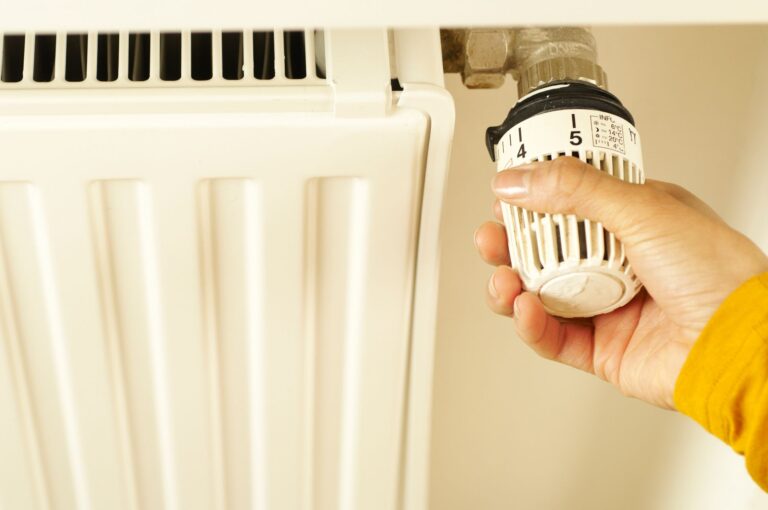

A reliable thermostat is the single most important piece of safety gear in any reptile setup. The wrong temperature swing can stress a snake, blunt a bearded dragon’s appetite, or quietly shorten a gecko’s life. Choosing the right controller means matching probe accuracy, wattage headroom, and tank size to the species you keep, so heat stays stable whether you’re running a heat mat, a ceramic heat emitter, or a basking lamp.
A Side-By-Side Look

VE-100 Digital On/Off Thermostat

ReptiKing Heat Pad 16W with PID Dimming Thermostat
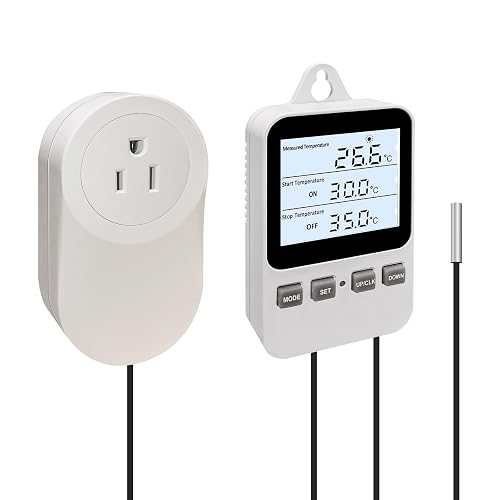
HIADA Heating/Cooling Digital Thermostat 120V 15A
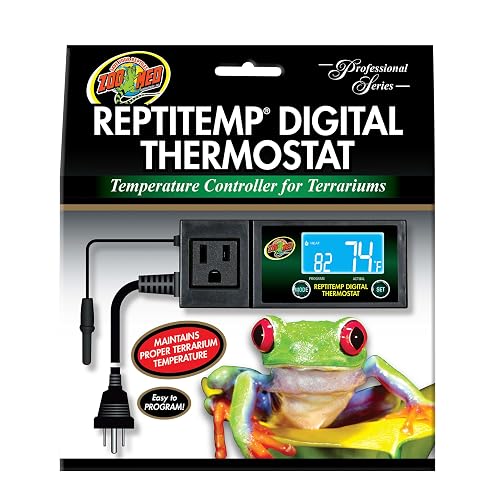
Zoo Med ReptiTemp Digital Thermostat
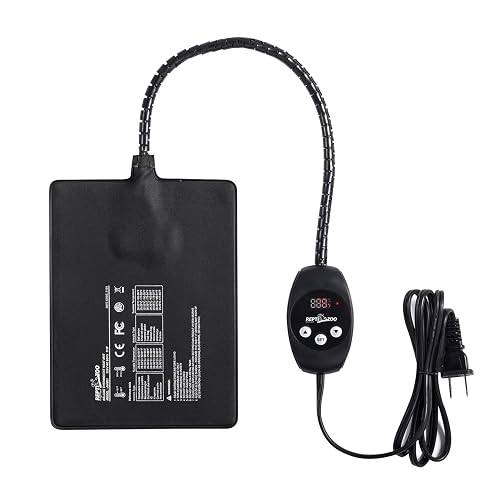
REPTI ZOO Heat Mat with Thermostat 6×8 Inch
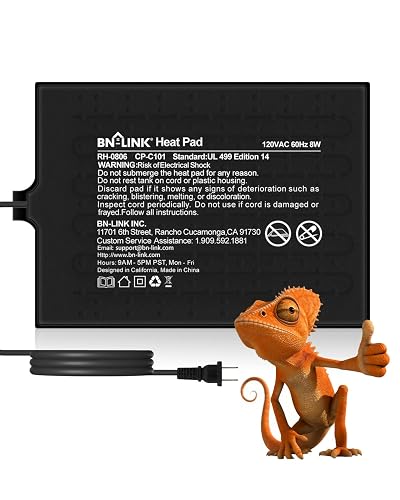
BN-LINK Reptile Heat Pad 6×8 Inch 8W
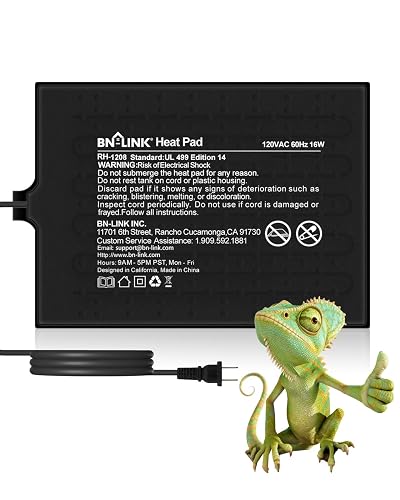
BN-LINK Reptile Heat Pad 8×12 Inch 16W
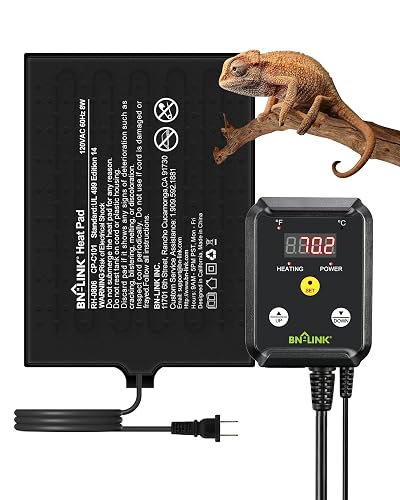
BN-LINK Durable Heating Pad 6×8 with Digital Thermostat
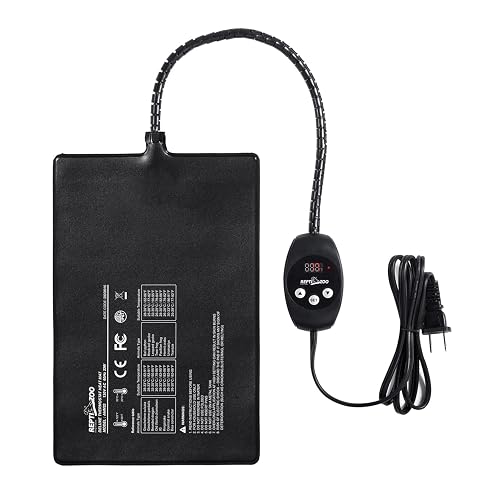
REPTI ZOO Heat Mat with Thermostat 8×12 Inch
A Breakdown Of The Leading Choices
The VE-100 has been a quiet workhorse in serious herp rooms for years, and for good reason. Its 700-watt capacity covers most basking lamps and ceramic heat emitters, while a user-replaceable fuse adds a layer of safety that cheaper units simply skip. The tabletop design keeps the probe cable routed cleanly along the tank edge, which matters when you’re stacking enclosures on a wire shelf.
It remembers your settings through a power blip, so a midnight outage doesn’t reset your carefully dialed basking temperature. Owners commonly rely on the back-lit display for quick nighttime checks without flipping room lights on. Compared to the combo mat-and-controller picks later in this list, the VE-100 is a pure controller, so it’s a sensible match if your heat source is already chosen.
What Works In Its Favor
- 700-watt capacity handles most lamps and ceramic emitters used in mid-sized enclosures
- User-replaceable fuse reduces downtime after a surge
- Back-lit display shows probe temp and set point together
- Retains settings through short power outages
- Table-top form factor keeps cords tidy on stacked racks
Things To Consider
- On/off (not proportional) cycling, which can cause minor temperature swings with high-wattage heat sources
- Probe wire placement matters: route it where the animal can’t drag it into the basking zone
Who It Suits Best
Intermediate keepers running a single 40-breeder or similar mid-sized enclosure with a heat lamp or ceramic emitter.
Look Elsewhere When
You’re heating a glass tank with an under-tank mat and want a single bundled package, in which case the BN-LINK Durable Heating Pad 6×8 with Digital Thermostat is the more practical combo.
The ReptiKing pairing is one of the few setups in this price range that uses a true PID (proportional-integral-derivative) dimming controller instead of a basic on/off switch. In plain terms, the mat doesn’t click fully on and off: it gently throttles power up and down, which keeps belly heat for a leopard gecko or hatchling snake much more stable. The 16-watt mat is sized for medium tanks and spreads warmth evenly across the substrate.
You also get an adjustable setpoint that lets you dial in a species-specific target rather than a vague “warm side.” Where the VE-100 simply cycles power, this unit smooths it out, which matters for thin-skinned species that react to even two-degree swings. ReptiKing’s build is straightforward, with an easy probe placement along the warm hide.
Strong Points
- PID dimming prevents the harsh on/off cycling that can stress sensitive reptiles
- 16-watt mat covers medium enclosures without hotspots
- Adjustable setpoint supports species-specific targets
- Useful for hatchlings and species prone to digestion issues from cool belly heat
Points To Note
- Best suited to glass tanks; wood or PVC enclosures may need additional insulation underneath
- Probe adhesive can lose grip in humid setups, so expect to re-secure it during routine cleaning
Made For
Keepers of heat-sensitive species like leopard geckos, ball pythons, and young bearded dragons who want smoother temperature control than basic on/off units offer.
Consider Something Else When
You want a complete beginner setup with clearer documentation and a more familiar brand name, in which case the Zoo Med ReptiTemp Digital Thermostat is a friendlier starting point.
Most reptile thermostats only think in one direction: when it gets cold, turn the heat on. The HIADA flips that script by supporting both heating and cooling modes on the same 120V 15A outlet. That’s a real advantage in a sun-drenched living room in July, where a basking lamp can push tank temps past safe limits and a small fan or chiller needs to kick in.
It plugs straight into a wall outlet and accepts most standard heaters, mats, and cooling fans up to its 15-amp rating. The digital readout makes target temperatures easy to confirm at a glance, and the unit doubles nicely for seedling mats or incubation projects during the off-season. Compared to the VE-100, this one trades pure reptile focus for genuine flexibility across seasons and use cases.
Well-Handled Touches
- Dual heating and cooling modes handle summer spikes as well as winter dips
- 120V 15A rating covers most household-compatible heating elements
- Plug-in form factor needs no wiring or electrical work
- Useful beyond reptiles for greenhouses, seed mats, and incubation
Honest Caveats
- Cooling mode works with a fan or chiller, not refrigeration-grade equipment, so plan your cooling device accordingly
- Display is functional rather than decorative, which is fine in a utility space but less polished for a living-room tank
Right Fit For
Keepers in climates with hot summers and cold winters who need one controller to handle both extremes without swapping gear each season.
Skip It When
Your setup only needs simple on/off heating for a single small mat, in which case the BN-LINK Reptile Heat Pad 6×8 Inch 8W is a more straightforward match.
Zoo Med is a familiar name in reptile shops, and the ReptiTemp RT-600 leans into that accessibility. The 50°F to 122°F control range covers virtually every commonly kept species, from a cool-loving crested gecko to a basking bearded dragon. The interface is straightforward, and the probe-based design is simple enough that a first-time keeper can install it during a single setup session.
It handles both heating and cooling devices, which gives you room to grow as you add fans or additional heat sources. The build is more about reliability than flashy features. For a first enclosure, that tradeoff usually makes sense.
Useful Strengths
- Wide 50–122°F range supports most pet reptile species
- Works with heating or cooling devices for setup flexibility
- Probe-based temperature control is easy for newcomers to understand
Trade Offs
- Documentation is lean, so first-time owners may need to reference care sheets for ideal setpoints
- No PID-style dimming, so heat cycles on and off rather than modulating
Best Suited To
First-time reptile keepers who want a recognizable, approachable controller that covers the common temperature ranges without a learning curve.
Not Your Match When
You want a built-in heating mat so you don’t have to source a separate heat source, in which case the BN-LINK Durable Heating Pad 6×8 with Digital Thermostat is the more bundled option.
The 6×8 REPTI ZOO mat is built around a layer of safety that cheaper pads skip. A built-in 122°F smart chip acts as a backup ceiling, even if the external controller fails. That kind of redundancy matters in a kid’s bedroom, a classroom, or anywhere a stuck probe could otherwise lead to an overheated mat and a cooked gecko.
The carbon-film heating element warms up quickly and spreads heat evenly across the 6×8 surface, which suits 10 to 20-gallon tanks. The included adjustable controller lets you set a species-specific target, so you’re not stuck at one fixed temperature. It’s a sensible middle ground for keepers who want a heat mat and a thermostat dialed in from the same box.
What Helps Most
- Dual protection: external thermostat plus 122°F backup smart chip
- Carbon-film construction warms quickly and spreads evenly
- 6×8 size fits standard 10–20 gallon glass tanks
- Independent adjustable controller sets species-specific targets
Where It May Fall Short
- Designed for glass terrariums, so PVC or wood enclosures need different placement
- 11-watt output is gentle; very large snakes may need a bigger mat
Who Should Grab It
Safety-conscious keepers of small lizards, hatchling snakes, or hermit crabs in 10 to 20-gallon glass tanks who want backup protection beyond a single controller.
Where Another Pick Suits Better
Your enclosure is 30 to 40 gallons and needs a wider warming area, in which case the REPTI ZOO Heat Mat with Thermostat 8×12 Inch covers the larger footprint.
The 8-watt BN-LINK is the gentlest mat on this list, and that’s the point. For a small 10-gallon tank housing a juvenile leopard gecko, a hermit crab cluster, or a small frog, a low-wattage mat prevents the dangerous hotspots a higher-output pad can create when paired with a thermostat dialed to a low target.
The waterproof construction simplifies routine cleaning, since a damp cloth won’t damage the mat. The mat version here is sold either with a thermostat or with an adjust knob, so you can match your comfort level with controls. It’s an accessible starting point for a first setup where you don’t want to over-spend before learning the ropes.
Notable Gains
- Low 8-watt output is forgiving in small enclosures
- Waterproof design holds up to routine wipe-downs
- Available with thermostat or simple adjust knob
- Compact 6×8 footprint suits nano and juvenile habitats
Small Limitations
- 8 watts may run cooler than expected in a cold room without supplemental insulation
- Larger reptiles in 20+ gallon tanks may need the bigger 8×12 sibling
Perfect Match For
First enclosures and nano habitats for small species, where a low-wattage mat prevents accidental overheating during the learning curve.
Reach For A Different Pick When
Your pet is a juvenile bearded dragon or similar mid-sized reptile that needs a stronger belly-heat source, in which case the BN-LINK Reptile Heat Pad 8×12 Inch 16W provides more output.
The 8×12 BN-LINK scales up the same dependable heating wire and insulation found in its smaller sibling, but doubles the surface area and wattage. That wider footprint spreads warmth beneath a 30 to 40-gallon tank, which is exactly the size range where a 6×8 mat starts leaving cold corners. Snakes that stretch along the warm side, like adult ball pythons or corn snakes, get a more even heat gradient this way.
Like the 6×8, the waterproof surface holds up to cleaning. The mat pairs with a thermostat or knob, so you can build a setup that matches your comfort level with controls. You also get the same low-profile adhesive that doesn’t add much height beneath the tank.
Useful Touches
- 8×12 surface covers 30 to 40-gallon tanks without cold corners
- 16-watt output is strong enough for larger snakes and lizards
- Waterproof build simplifies routine wipe-downs
- Available with thermostat or adjust knob to match experience level
Points To Weigh
- Overkill for 10-gallon setups, where the 6×8 8W mat is more appropriate
- Pairing a high-output mat with a faulty thermostat is a real risk, so inspect probe connections at setup
Whose Shelf It Belongs On
Keepers of adult corn snakes, ball pythons, or bearded dragons in 30 to 40-gallon enclosures who need belly heat across a wider area.
Another Choice May Suit
You want a digital controller bundled with a smaller mat for a 10 to 20-gallon tank, in which case the BN-LINK Durable Heating Pad 6×8 with Digital Thermostat is the more direct match.
This combo takes the guesswork out of pairing a 6×8 mat with the right controller. You set the probe, plug in the controller, pick a target on the large three-button interface, and you’re done. The display supports both Fahrenheit and Celsius, which is convenient if you’re cross-referencing international care sheets. A small buffer zone keeps the controller from rapidly cycling the mat once the setpoint is hit, which is gentler on the heating wire over time.
The LED indicators for power and heating give you a quick visual check from across the room, which is helpful during a morning glance. For a 10 to 20-gallon enclosure, this is one of the cleanest plug-and-play setups you can buy without spending much more than a mat alone.
Notable Upsides
- Mat and digital thermostat sold together, no extra purchases needed
- Three-button interface and dual-unit display are easy to read
- LED status lights confirm power and heating at a glance
- Buffer zone reduces rapid on/off cycling of the mat
Where It Is Less Suited
- Controller buffer zone is typically 2 to 3 degrees, so very sensitive species may still see minor swings
- 6×8 footprint is undersized for enclosures above 20 gallons
Built With In Mind
Keepers who want a complete, ready-to-go heating solution for a 10 to 20-gallon tank without buying a mat and thermostat separately.
Swap It Out When
You prefer smoother PID-style dimming over on/off cycling, in which case the ReptiKing Heat Pad 16W with PID Dimming Thermostat is a meaningful upgrade.
The 8×12 REPTI ZOO sibling brings the same dual-protection design to a larger tank. The 122°F backup chip is a real safety net in a 30 to 40-gallon enclosure, where a 23-watt mat can push higher temperatures faster. The carbon-film element spreads warmth across the full 8×12 surface, so a stretching snake or a sprawling bearded dragon gets consistent belly heat from one end of the warm side to the other.
It’s designed for glass terrariums specifically, which is the most common enclosure material in this size range. Like the smaller REPTI ZOO, the external controller is independently adjustable, so you can dial in a species-specific target rather than relying on the chip’s built-in ceiling. For keepers stepping up from a starter setup, this is a sensible mid-tier choice.
Bright Spots
- Dual 122°F safety chip plus external adjustable controller for layered protection
- 8×12 carbon-film surface heats 30 to 40-gallon glass tanks evenly
- 23-watt output is strong enough for adult reptiles
- Adjustable setpoint supports species-specific temperature targets
What To Weigh
- Glass-only design limits placement on PVC or wooden enclosures
- 23 watts of draw means a working thermostat is non-negotiable; double-check probe placement at setup
Who Will Love This
Keepers upgrading to a mid-sized glass enclosure who want the same dual-protection design as the smaller REPTI ZOO mat, scaled to a larger footprint.
Look Elsewhere When
You need a controller that can also drive a basking lamp rather than just a mat, in which case the VE-100 Digital On/Off Thermostat is the more flexible standalone controller.
Matching A Thermostat To Your Enclosure
Choosing a thermostat comes down to a few clear tradeoffs. First, match the device to your heat source. Under-tank mats pair with simple on/off or dimming controllers, while basking lamps and ceramic heat emitters need a controller with enough wattage headroom for the bulb. The VE-100’s 700-watt ceiling, for example, leaves comfortable room above a 100-watt bulb.
Second, think about species sensitivity. A ball python digesting a meal benefits from the steady, modulated output of a PID-style dimmer like the ReptiKing, while a hardy bearded dragon tolerates a basic on/off cycle more easily. Third, account for room climate. A sun-drenched reptile room in summer benefits from a heating and cooling unit like the HIADA, while a basement setup only needs a heating-focused controller.
Tank size matters just as much. A 6×8 mat over a 20-gallon tank leaves cold corners, while an 8×12 mat over a 10-gallon tank creates more output than the substrate can absorb. Match mat size to floor footprint, and pick a controller with the right wattage rating for whatever heat source you choose. Finally, look for safety redundancies. Backup chips, replaceable fuses, and memory retention through power blips all add meaningful protection in real-world conditions.
Key Considerations Across These Picks
Common Shopping Slip Ups
A frequent mistake is buying a thermostat without checking wattage headroom. A controller rated for 100 watts paired with a 150-watt ceramic heat emitter is a fire and equipment risk, regardless of brand. Always confirm the controller’s rating exceeds your heat source’s draw.
Another trap is placing the probe in the wrong spot. A probe resting on a hot mat rather than inside the enclosure reads surface temperature instead of basking-zone temperature, leading to under-heated animals and confused keepers. Route the probe where the animal actually lives, not where the mat touches glass.
When Paying More Pays Off
Higher-tier reptile thermostats earn their price through smoother temperature control and stronger safety features. A PID dimmer like the ReptiKing reduces the on/off cycling that can stress heat-sensitive species, while a dual-protection mat like the REPTI ZOO adds a backup ceiling even if the external controller fails.
The upgrade pays off most in setups with sensitive animals, expensive breeding stock, or enclosures in rooms with wide temperature swings. For a hardy adult bearded dragon in a climate-controlled room, a basic on/off controller is often enough.
Frequently Asked Questions
What temperature should my reptile’s basking spot be?
Basking temperatures vary by species, with most bearded dragons needing around 95 to 110°F and leopard geckos preferring a warm-side floor of about 88 to 95°F. Always cross-reference your specific pet’s care sheet, since a few degrees can affect feeding and digestion.
Do I need a thermostat for an under-tank heat mat?
A thermostat is strongly recommended for any heat source, including mats, since a runaway mat can cause burns or overheating even at low wattages. A simple controller with a probe prevents dangerous temperature spikes.
Can one thermostat control multiple heat sources?
Most reptile thermostats control a single outlet, so running two mats or a mat plus a lamp usually requires separate controllers. Some larger units handle higher combined loads, but check the wattage rating before stacking devices.
Where should the thermostat probe be placed?
Place the probe in the area your reptile actually uses, such as the basking spot for a lamp or the warm hide for a heat mat. Avoid placing the probe directly against the heating element, which gives falsely high readings.
How often should I check the thermostat’s accuracy?
A monthly check with a separate thermometer helps catch drift, since probes can lose calibration over time. Replacing probes every couple of years is a common habit among experienced keepers.
Wrap Up
The right thermostat turns a heat source from a liability into a reliable part of a healthy habitat. Match wattage, probe placement, and mat size to your enclosure, and choose a controller that fits both your species and your room’s climate. Your setup will reward you with stable temperatures and a reptile that feeds, sheds, and behaves the way it should.