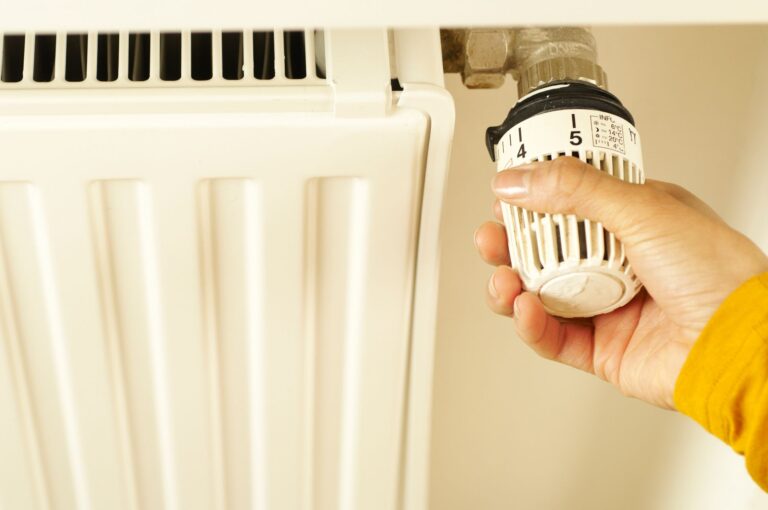

Swapping out an old thermostat is one of those Saturday projects that pays you back for years, but only if the new unit actually matches the system behind the wall. The nine options below cover everything from a basic single-stage wall unit for a garage to a multi-stage gas system in a finished basement. Each pick was chosen because it solves a specific installation scenario, not because it tries to do everything at once.
A Closer Look At The Lineup
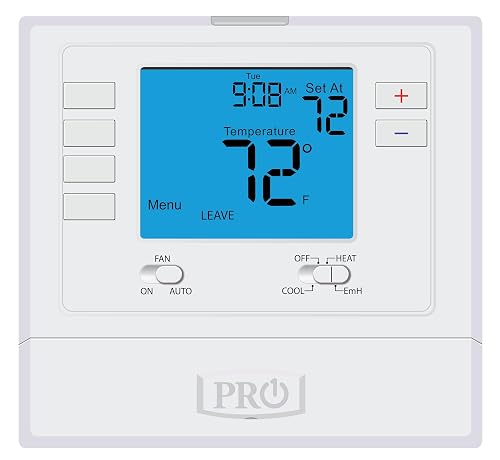
PRO1 T725 Programmable Heat Pump Thermostat

PRO1 T771 Non-Programmable Thermostat for Garages
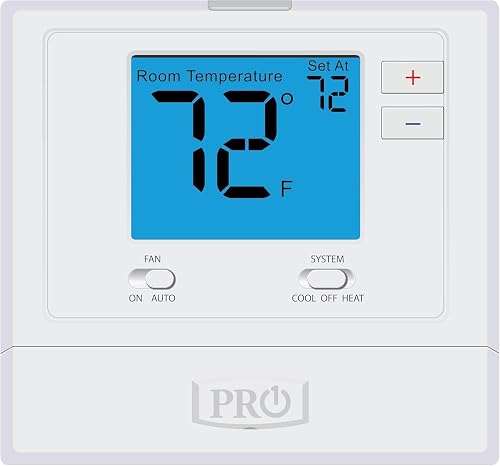
PRO1 T701 Single Stage Non-Programmable Thermostat

PRO1 T715 Multi-Stage Programmable Gas Thermostat
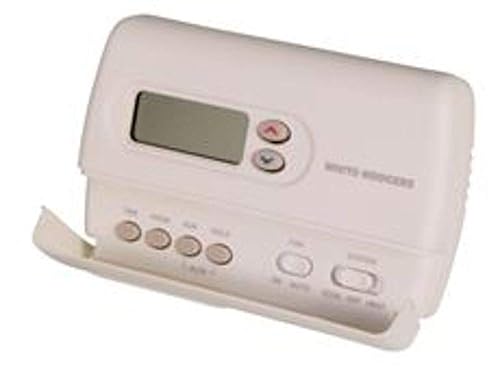
White-Rodgers 1F80-361 Single Stage Programmable Thermostat
PRO1 T721 Heat Pump/Conventional Thermostat
Reliance 9000507-045 Lower Electric Thermostat
King Electric TKIT-1BW Built-In Thermostat Kit

PRO1 T805 Single Stage Programmable Thermostat
More On The Choices That Made The List
The PRO1 T725 earns its spot on this list because it handles two different HVAC setups from a single wall unit, which is the kind of flexibility that matters when you aren’t sure what’s behind the drywall. It supports 2 heat/1 cool heat pump configurations and falls back to 1 heat/1 cool conventional mode, so the same thermostat can move with you between homes or survive a system swap down the road. The 4 sq. in. blue backlit screen stays readable in a dim hallway, and 7-day scheduling covers most household routines without piling on extras.
Homeowners who like the idea of programming weekday wake and sleep setpoints will get real use out of this unit. The trade-off shows up in installation: matching the jumper settings to your specific heat pump stage count is the part where most first-timers pause. For people comfortable reading a wiring diagram, this is a steady, no-surprise choice.
Where It Delivers
- Switches between heat pump and conventional setups without buying a second thermostat
- 7-day programming with four daily periods matches a real work-and-sleep schedule
- 4 sq. in. backlit display is easy to read from across a room
- Schedule modes (wake, leave, return, sleep) keep energy use aligned with occupancy
Things To Weigh Up
- Heat pump stage configuration requires careful jumper setup during installation
- Lacks the larger display found on the PRO1 T805 further down the list
- No smart or app-based control, which may matter for traveling homeowners
Best Suited To
Heat pump owners who want a single wall unit that can also serve as a backup on a conventional system.
Look Elsewhere When
You’d rather have the bigger 7 sq. in. screen and daily flexibility of the PRO1 T805 single stage programmable thermostat.
Most living-room thermostats bottom out around 45°F, which is useless if you’re trying to keep a detached workshop from freezing. The PRO1 T771 stretches its setpoint range down to 25°F, making it one of the few wall units built for unconditioned spaces where pipes and finishes can take real damage. The single-stage design keeps the wiring short, and swing adjustment plus calibration let you tune the trigger point to match a drafty room.
Compared with the T725 reviewed above, this unit is stripped down on purpose. There are no schedules, no app hooks, and no learning curve. For a garage, shed, or hunting cabin, that simplicity is the feature. For a primary living space, most people will want more.
Useful Highlights
- 25°F minimum setpoint protects pipes in unheated outbuildings
- Single-stage 1 heat/1 cool wiring keeps install time short
- Swing and calibration adjustments match real-world room conditions
Trade Offs To Consider
- No programming, so weekend-only spaces will need manual setpoint changes
- Limited to single-stage conventional systems only
- Backlight is functional but smaller than the display on T700-series siblings
Feature Snapshot
Made For
Shoppers outfitting a garage, shed, or workshop who need freeze protection more than scheduling.
Where Another Pick Suits Better
Living-area owners who want daily scheduling should reach for the PRO1 T805 single stage programmable thermostat instead.
The PRO1 T701 is the kind of thermostat you put in a rental property, a guest room, or a kid’s playroom and then forget about. It runs on a single-stage conventional system, accepts gas or electric configurations, and skips the programming screen entirely. The 4 sq. in. blue backlit display is clear, and a glow-in-the-dark light button helps you find the controls without turning on a hallway light at 2 a.m.
For first-time installers, the appeal is that the wiring is essentially color-matched and there are very few menu settings to mis-configure. Compared to the T771 above, the T701 has a similar footprint but is tuned for indoor living spaces rather than extreme low-temperature protection. The honest read is that this unit is unflashy, but that is exactly the point.
The Good Stuff
- Simple interface reduces the chance of mis-configuration during install
- Glow-in-the-dark light button aids nighttime operation
- Works with both gas and electric conventional systems
Honest Caveats
- No scheduling means setpoint changes are manual only
- Display is smaller than the PRO1 T805 reviewed below
Perfect Match For
DIYers and first-time installers who want a basic, dependable wall unit without programming menus.
Skip It When
You’d benefit from the extra-large 7 sq. in. screen and 7-day programming of the PRO1 T805 single stage programmable thermostat.
The PRO1 T715 lives in a different neighborhood than the T701 or T771. It is built for a 2 heat/2 cool gas system, the kind of two-stage furnace that throttles down on mild days to save fuel. You get 7-day, 5/1/1, or non-programmable modes depending on how hands-on you want to be, plus a 4 sq. in. backlit display and a glow-in-the-dark light button for late-night setpoint checks.
The trade-off is the wiring. A two-stage system has more conductors behind the wall, and installers should expect to spend extra time confirming the common and stage-2 terminals before powering up. Once configured, owners commonly report smoother temperature swings and less noise from the furnace cycling constantly.
Points In Its Favor
- Supports full 2 heat/2 cool staging for efficient gas furnace operation
- Three programming modes (7-day, 5/1/1, non-programmable) match different routines
- Compatible with battery or hardwired C-wire setups
- Backlit display with glow-in-the-dark button for night use
Practical Considerations
- Wiring is more involved than single-stage models in this list
- Programming menu is more complex than the T701 or T771 non-programmable options
Quick Facts
Whose Shelf It Belongs On
Owners of two-stage gas furnace systems who want the efficiency of staged heating without learning a smart-home app.
Reach For A Different Pick When
You have a simpler 1H/1C conventional setup, in which case the PRO1 T805 single stage programmable thermostat is an easier match.
The White-Rodgers 1F80-361 from Emerson’s 80 Series is the veteran of this list. It is a single-stage programmable unit that runs on 24V systems and also handles millivolt setups, which makes it a useful problem-solver in older homes with non-standard wiring. It offers 5+1+1 programming with up to four periods per day, so weekday, Saturday, and Sunday can each have their own schedule. It ships in a factory anti-static bag as a single unit from a contractor bulk-pack.
Compared with the PRO1 T805 reviewed below, the 1F80-361 has a more compact display and a more conservative feature set, but it covers the bases for gas, oil, or electric systems. The trade-off is that the manual is short and a few setup steps require careful reading. For most mixed-fuel households, it just works.
The Case For It
- 24V and millivolt compatibility broadens installation options
- 5+1+1 programming with four daily periods supports a varied weekly routine
- Works with gas, oil, or electric systems in one unit
Worth Bearing In Mind
- Display is smaller than the PRO1 T805’s 7 sq. in. screen
- Programming buttons require reading the manual to map correctly
Right Fit For
Households with older millivolt or mixed-fuel systems where compatibility matters more than a large display.
Where A Sibling Pick Shines
For a more modern programmable thermostat with a larger screen, the PRO1 T805 single stage programmable thermostat is the better fit.
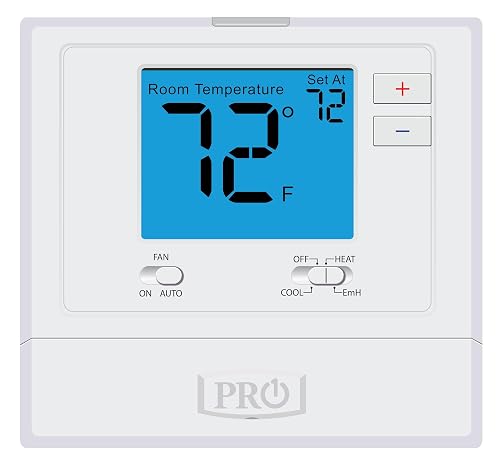
The PRO1 T721 sits in a useful middle ground: it accepts either a 2H/1C heat pump or a 1H/1C conventional system, and it does so without the programming menus that complicate the T725. The 4 sq. in. blue backlit display and glow-in-the-dark light button match what you see on the T701 reviewed earlier, so swapping units between rooms keeps the household on a familiar interface.
For homes that may convert from a conventional furnace to a heat pump down the road, this thermostat is a hedge. You can wire it today for a standard furnace and reconfigure later when a heat pump goes in. The honest catch is that the non-programmable design means schedule changes happen by hand.
Features That Help
- Works with both heat pump (2H/1C) and conventional (1H/1C) systems
- Glow-in-the-dark light button improves low-light operation
- Compatible with AA battery or hardwired C-wire installations
Some Limits To Know
- Non-programmable, so setpoints must be adjusted manually
- Configuration switches require care during heat pump vs. conventional setup
Who Should Grab It
Homeowners who expect their system type to change, or who want one wall unit that survives a future upgrade.
Swap It Out When
Daily programming is the priority, in which case the PRO1 T805 single stage programmable thermostat covers that need better.
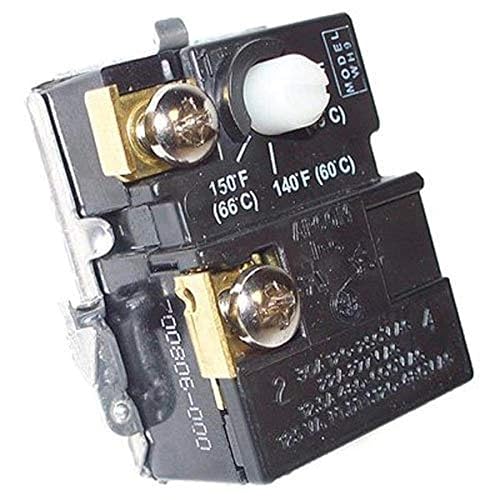
The Reliance 9000507-045 is not a living-room thermostat. It is the lower-mounted electric thermostat used inside an electric water heater, where it senses tank water temperature and signals the heating elements. It is the part that decides when your shower runs cold and when the recovery cycle kicks in. This is a direct replacement component, and it is matched to specific Reliance water heater models.
The installation requires shutting off power at the breaker, draining the tank partially, and working with 240V wiring. Compared with the wall thermostats above, this unit is small, mechanical, and entirely task-specific. For most people, it is a service part rather than a daily-use product.
Reasons It Performs
- Direct-fit replacement for compatible Reliance electric water heaters
- Mechanical design avoids firmware or battery issues
- Lower-element position supports standard dual-element tank operation
What To Weigh
- Works only with specific Reliance water heater models, not a universal part
- 240V wiring means power must be confirmed off before any service work
Technical Reference
Who It Suits Best
Homeowners or service techs replacing a faulty lower thermostat on a compatible Reliance electric water heater.
Not Your Match When
You need a wall-mounted HVAC thermostat, where any of the PRO1 or White-Rodgers picks in this list will do the job.
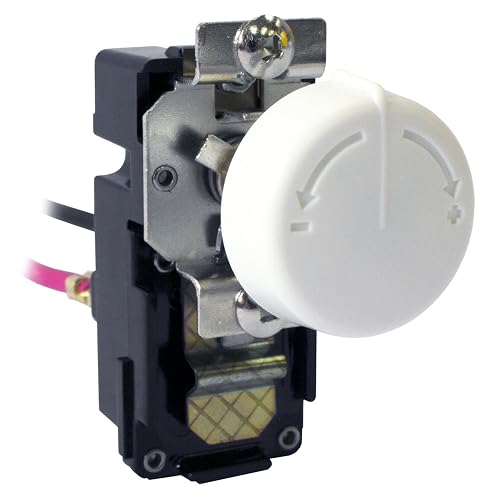
The King Electric TKIT-1BW is a single-pole, single-throw thermostat kit designed to fit inside King PAW and W series wall heaters. It uses a snap-action bi-metal sensor, which is a mechanical strip that physically bends with temperature changes to open and close the circuit. The operating range runs from 48°F to 80°F, which covers a normal heated living space without overshooting into unnecessary territory.
The kit is sized to drop into the heater housing, so installation means opening the heater, removing the old control, and snapping the new one in. Compared to the wall thermostats above, this part is invisible after install. The honest read is that the all-mechanical design trades digital convenience for service life and predictability.
Useful Touches
- Snap-action bi-metal sensor provides positive on/off response
- 48°F to 80°F operating range suits a normal heated room
- Mechanical design avoids batteries and electronic failure points
Soft Spots
- Limited to compatible King PAW and W wall heater models
- Single-pole design means the heater always has power at the element when off
The Details
Who Will Love This
Owners of King PAW or W wall heaters who need a direct-fit replacement thermostat kit.
Where Another Pick Suits Better
Anyone with a standard central HVAC system should look at the PRO1 T701 or PRO1 T805 instead.
The PRO1 T805 closes out the list with the largest display of the group. The 7 sq. in. blue backlit screen is roughly the size of a deck of cards, which makes it easy to read from across the room and easier to program without squinting. It supports 7-day, 5/1/1, or non-programmable modes, so you can schedule tightly, keep weekdays simple, or skip scheduling entirely depending on how much time you want to spend in the menu.
Compared with the T701 reviewed earlier, the T805 adds programming and a much bigger screen, while keeping the same 1H/1C conventional system support. The catch is that more screen real estate also means more menu options to learn, so plan on a setup session rather than a five-minute swap. For daily-use rooms like a main living area, the readability alone can justify the difference.
Well-Handled Touches
- 7 sq. in. extra-large display is readable from across a large room
- Three programming modes (7-day, 5/1/1, non-programmable) match different comfort levels
- Glow-in-the-dark light button aids nighttime operation
- T800 platform offers room to grow with future PRO1 accessories
Possible Compromises
- Larger display means a bigger wall footprint than the T701
- Programming menu has more screens to learn during the first setup
Key Product Details
Built With In Mind
Households that want a large, readable display and the option of weekly programming without smart-home complexity.
Consider Something Else When
You run a two-stage gas furnace, in which case the PRO1 T715 multi-stage programmable gas thermostat is the better fit.
What Matters Most Before Choosing Thermostats Installations
Match The System First
The single biggest decision is what sits behind the drywall. Count the wires, identify whether the system is conventional (a furnace plus air conditioner) or a heat pump, and note any staging. A 1H/1C conventional setup like the PRO1 T701 covers the average household, while a 2H/2C gas system points toward the PRO1 T715. Buying a thermostat that out-specs the equipment wastes money, and buying one that under-specs the equipment causes wiring headaches.
For specialty cases, a garage or shed may need a wide setpoint range, which is where the PRO1 T771 earns its place. For wall heaters and water heaters, look at the King Electric TKIT-1BW and the Reliance 9000507-045 rather than a wall thermostat.
Decide How Much Scheduling You Actually Need
Programmable thermostats are most useful in homes with a predictable weekday-to-weekend pattern. The PRO1 T805 and T725 both offer 7-day flexibility, while the T701 and T771 are stripped down on purpose. Honest owners commonly find that a thermostat left in non-programmable mode saves just as much money as a programmed one.
Plan The Wiring Reality
A C-wire (the common wire that delivers continuous 24V power) simplifies installation and battery replacement. Some PRO1 models accept AA battery or hardwired configurations, which is a useful hedge in older homes without a common conductor. Whichever model you choose, switching off the breaker at the panel and photographing the existing wiring before removing the old thermostat saves an afternoon of guesswork.
Display And Readability
The 4 sq. in. screen on most T700-series units is fine for an arm’s-length read, but a 7 sq. in. screen like the one on the PRO1 T805 makes life easier in larger rooms or for anyone who programs by feel rather than by reading the manual.
Key Considerations Across These Picks
Pitfalls Shoppers Hit
The most common mistake is buying a thermostat based on feature lists rather than system compatibility. A 2H/2C programmable unit does nothing useful on a 1H/1C furnace, and a 1H/1C non-programmable model will not stage a two-stage system. Always match the system before the screen size.
Another trap is assuming any wall thermostat will work in any wall. Garages, sheds, and unconditioned spaces need a wide low-end setpoint, and water heaters and wall heaters need completely different controls. The Reliance 9000507-045 and the King Electric TKIT-1BW are not interchangeable with the wall models above.
Where The Extra Money Goes
Spending more usually buys two things: a larger display and broader staging support. The PRO1 T805’s 7 sq. in. screen and the T715’s 2H/2C capability are real upgrades, not just marketing. The honest read is that you only need those upgrades if you have the equipment to back them up, or if the larger screen genuinely helps someone in the home who struggles to read small print.
Frequently Asked Questions
Do I need a C-wire to install these thermostats?
Most PRO1 T700-series units accept either battery or hardwired power, so a C-wire is helpful but not strictly required. If your existing wiring only has R, W, and G, you can still install models like the PRO1 T701 or T701 with AA batteries, though a hardwired setup is more stable long-term.
When in doubt, switch off the breaker, pull the faceplate off the old thermostat, and photograph the wire colors before disconnecting anything. That single photo saves more troubleshooting than any manual.
Can I install a thermostat myself?
Most wall thermostats in this list are within reach of a confident DIYer, provided the breaker is off and the wiring is correctly matched. A non-contact voltage tester is a worthwhile tool to confirm the wires are dead before touching them.
For 240V water heater thermostats like the Reliance 9000507-045, the stakes are higher and a licensed electrician or plumber is a sensible call.
What is a heat pump versus a conventional system?
A heat pump moves heat between indoors and outdoors using refrigerant, working as both heater and air conditioner. A conventional system burns fuel or uses electric resistance for heating and a separate compressor for cooling. The PRO1 T725 and T721 support both because the wiring logic is similar but the staging and reversing valve differ.
If you are unsure which one you have, check the outdoor unit. Heat pumps usually have a refrigerant line set and a labeling plate that mentions heating and cooling modes.
How do I know if I have a single-stage or multi-stage system?
Single-stage equipment runs at full output until the setpoint is reached and then shuts off. Multi-stage equipment can throttle between a low and high output, which is quieter and more efficient. The number of wires on your old thermostat gives it away: more conductors usually means more stages.
The PRO1 T805 is a 1H/1C single-stage unit, while the PRO1 T715 supports a full 2H/2C gas multi-stage setup.
Are older millivolt systems still supported?
Yes, the White-Rodgers 1F80-361 is one of the few modern units that still lists millivolt compatibility, which is helpful in older homes with pilot-light or wall-switch heating systems. Standard 24V-only thermostats will not power up reliably on a millivolt circuit.
For most newer homes running forced-air furnaces, 24V is the standard and any PRO1 T700-series or T800-series unit will work.
Bottom Line
The right thermostat is the one that matches the system you actually have, not the one with the longest feature list. Start by identifying your equipment, then pick the simplest model that handles the staging and scheduling you will really use. A correct match today saves a return trip tomorrow.