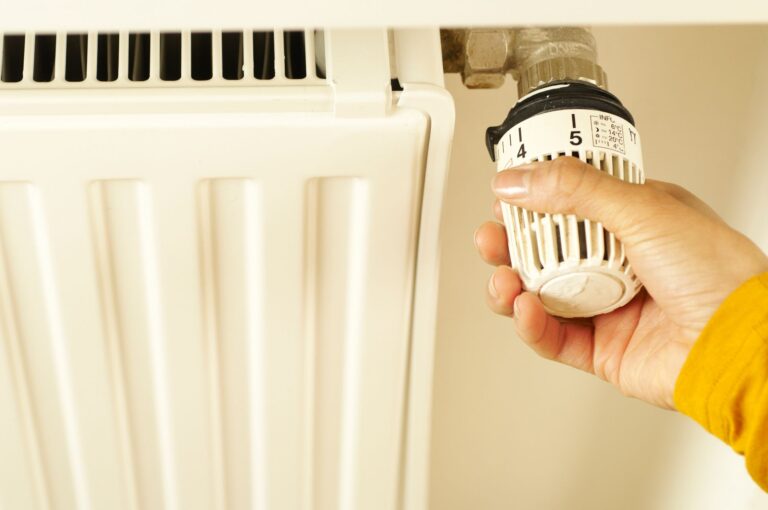

Most homes rely on a wall thermostat to run the heating or cooling system, and that single control often decides whether a room feels just right at 6 a.m. on a school day or stuffy by bedtime. Picking the wrong model, or installing one that does not match the HVAC equipment, leaves you fighting the temperature instead of setting it. The list below covers wall thermostats and fireplace remotes that work with real residential systems, including millivolt gas valves and radiant floor setups.
A Snapshot Of The Selections
PRO1 T725 Heat Pump/Conventional Programmable Wall Thermostat (2 Heat/1 Cool)

PRO1 T771 Single Stage Non-Programmable Wall Thermostat
The-new-style Touch Screen Programmable Thermostat Remote Kit for Millivolt Gas Fireplaces
PRO1 T701 Single Stage Non-Programmable Wall Thermostat

PRO1 T715 Multi-Stage Programmable Gas Thermostat (2 Heat/2 Cool)
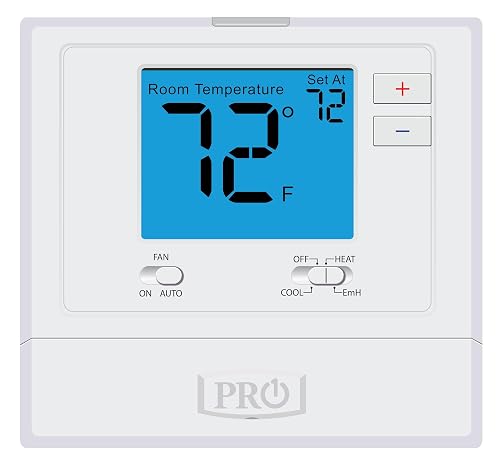
PRO1 T721 Non-Programmable Wall Thermostat (2 Heat/1 Cool)
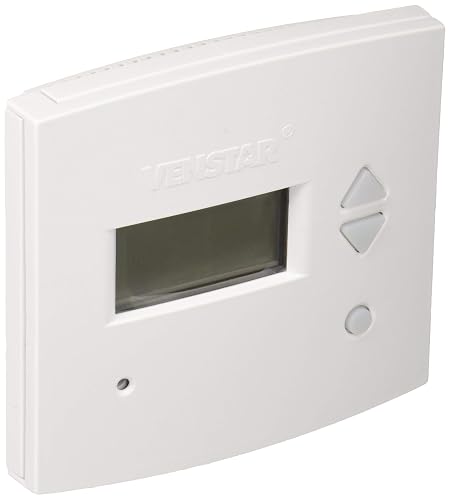
Venstar T2800 Commercial Platinum Slimline Thermostat (White)
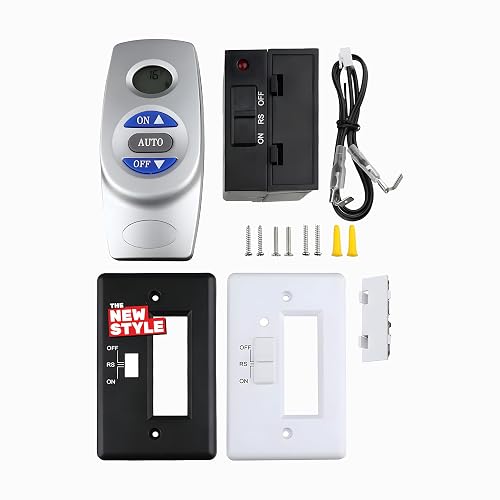
The-new-style Fireplace Remote Control Kit RCST for Millivolt Gas Fireplaces

OJ Microline UTN4 Radiant Floor Heat Thermostat with Class A GFCI

PRO1 T805 Single Stage Programmable Wall Thermostat
The Picks, Examined More Closely
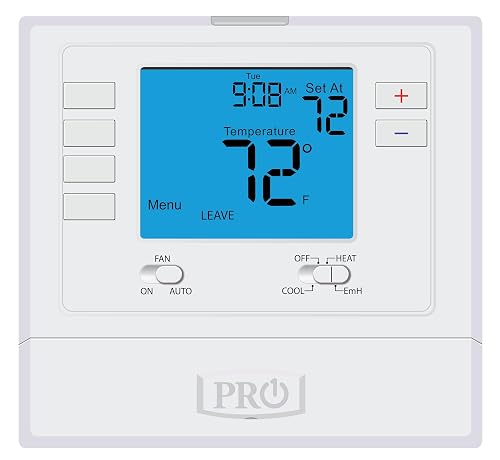
Households running a heat pump want a thermostat that speaks both languages, and the PRO1 T725 covers 2 heat/1 cool heat pump setups along with 1 heat/1 cool conventional systems, which keeps the swap-out simple when an aging system finally gives up. The 4-square-inch blue backlit display reads cleanly across a living room, and the 7-day or 5/1/1 programming options let you set a different schedule for weekdays and weekends without juggling menus.
For most homeowners who already have a heat pump and want a programming upgrade over a basic dial, this lands in a comfortable middle spot. The T700 platform also means the body, terminals, and wiring map match several other PRO1 units, which can simplify installation if the original thermostat left a tidy wire bundle.
A Strong Showing
- Dual compatibility across heat pump and conventional HVAC setups removes the guesswork during system swaps.
- 7-day and 5/1/1 programming give you flexibility to set a weekday routine plus a weekend override.
- The 4-square-inch blue backlit display is readable from across a typical living room.
- Sits on the shared T700 platform, which keeps wire layouts consistent with other PRO1 models.
Things To Consider
- You may find the older push-button interface slower than app-driven smart thermostats if you expect remote phone control.
- Without scheduling discipline, the programmable features add little value over a simpler non-programmable model.
Key Specs
Who It Suits Best
Heat pump homeowners who want a programmable wall thermostat without stepping into app-controlled smart territory.
Consider Something Else When
Shoppers needing a simple dial-style replacement for a garage or shed should look at the PRO1 T771, which handles low-temperature setpoints more comfortably.
Garages, workshops, and detached sheds often need a thermostat that can read lower than a living room unit, and the PRO1 T771 covers a setpoint range from 25°F to 90°F, which suits spaces where you want freeze protection or just a milder ambient temperature. The non-programmable design skips any schedule menus, so you set the dial and forget it. Swing adjustment and calibration options help fine-tune how often the heat kicks on.
For most outbuildings, this is a no-drama control that mounts on a standard wall plate and runs on the same 24-volt system the rest of your HVAC gear uses. If you have ever fought a thermostat that reads 50°F when the room is closer to 60°F, the calibration feature here is the practical fix.
Standout Benefits
- The 25°F to 90°F setpoint window reaches low enough to protect pipes in an unheated garage.
- Swing adjustment and calibration allow you to match the reading to a separate thermometer for accuracy.
- A simple, non-programmable layout keeps operation to a single dial and a backlit display.
Worth Noting
- No scheduling means you cannot drop the temperature overnight automatically, which may run a heater longer than needed.
- The wide setpoint range is helpful but does not replace a dedicated freeze alarm in extreme cold snaps.
Right Fit For
Anyone heating a garage, shed, or workshop where low-temperature setpoints and simple on/off control matter more than programming.
Look Elsewhere When
Households wanting a programmable living room thermostat should look at the PRO1 T725 instead, since the T771 deliberately skips scheduling features.
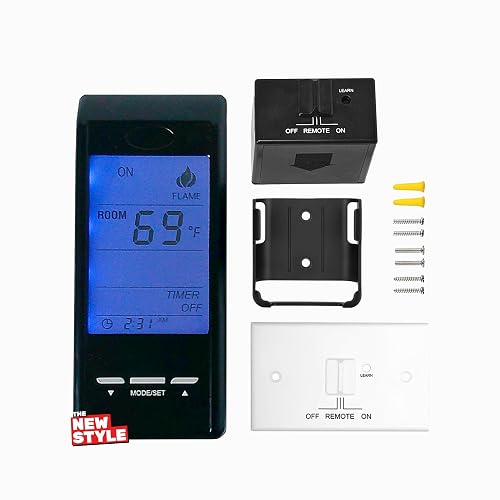
Gas fireplaces with a millivolt valve (a self-powered low-voltage system common in standing pilot and many direct-vent logs) rarely ship with anything fancier than a basic wall switch, and this The-new-style kit upgrades that control without rewiring the fireplace. A blue-backlit touchscreen remote lets you fire up the logs from the couch and dial in a target room temperature, and the receiver connects to any standard millivolt gas valve system.
For most homeowners with compatible Ambient, Majestic, Monessen, or Vermont Castings units, the package includes the remote, receiver, wall plate, an 18-inch wiring assembly, and the mounting hardware you need. Setup leans closer to swapping two wires than to a full thermostat install, which keeps it friendly for first-time DIYers.
The Upside
- Touchscreen control with a blue backlight makes nighttime operation easier than guessing which button to press.
- The kit ships with the receiver, wall plate, 18-inch wiring harness, and anchors included, so a separate parts run is rarely needed.
- Thermostat mode lets the fireplace modulate to a target room temperature rather than just running on a timer.
Trade Offs
- Compatibility depends on the millivolt valve, so confirming the fireplace brand and terminal labels before ordering avoids a return.
- Battery-only remotes require periodic cell swaps, commonly reported as the most frequent upkeep task on these kits.
Perfect Match For
Households with a millivolt gas fireplace who want thermostat control from a handheld remote rather than a wall switch.
Not Your Match When
Shoppers with a simpler install on a tight budget may prefer the RCST kit from The-new-style, which uses an LCD remote and fewer configuration steps.
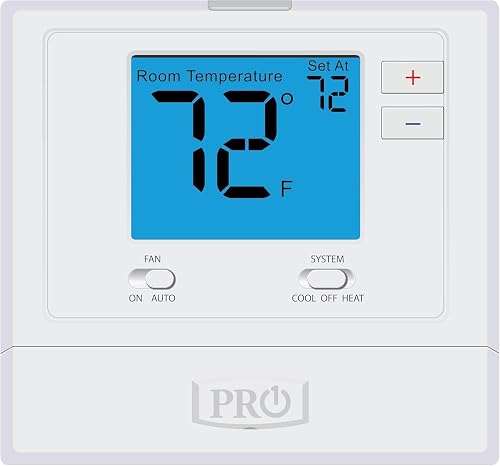
Replacing a dead thermostat in a rental or a guest bedroom does not need a learning curve, and the PRO1 T701 keeps things straightforward with a non-programmable, single-stage design for 1 heat/1 cool conventional systems. The 4-square-inch blue backlit display is comfortable to read, and the glow-in-the-dark light button helps in a dark hallway at 2 a.m. without fumbling for a flashlight.
For most newcomers to thermostat swaps, the T701 sits in the comfortable middle of the PRO1 T700 platform, sharing the same body shape and terminal layout as the T771. That means swapping in a programmable model later is mostly a matter of moving wires rather than patching drywall.
Useful Highlights
- Non-programmable operation keeps the interface to a single setpoint dial and a backlight button.
- The glow-in-the-dark light button stays visible in a power outage.
- The T700 body and terminal layout match other PRO1 models, easing future upgrades.
Honest Caveats
- Without scheduling, the furnace or air conditioner runs whenever the room drifts from your setpoint, which can add to energy use.
- Single-stage support means it is not the right pick for a multi-stage furnace that needs finer temperature staging.
Made For
First-time installers and rental property owners who want a simple, reliable thermostat that residents will not accidentally reprogram.
A Better Fit Elsewhere
Homeowners with a two-stage gas furnace will get better staging from the PRO1 T715, which supports 2 heat/2 cool systems.
Two-stage gas furnaces benefit from a thermostat that can call for low fire on a mild day and ramp up to high fire when the temperature drops, and the PRO1 T715 supports 2 heat/2 cool systems with 7-day, 5/1/1, or non-programmable modes. The 4-square-inch blue backlit display with a glow-in-the-dark light button keeps the controls visible, and you can run the unit on AA batteries or hardwired common.
For most homeowners with a multi-stage gas furnace, the scheduling depth and staging flexibility justify stepping up from a single-stage model. Compared to the T701, this adds more precise control over how aggressively the system runs, which often shows up as quieter operation and steadier indoor temperatures.
Strengths Worth Knowing
- 2 heat/2 cool staging gives a two-stage furnace room to modulate rather than blast at full output.
- Three operating modes (7-day, 5/1/1, non-programmable) cover both hands-off and hands-on households.
- Battery or hardwired common power lets you install it where pulling a C-wire is impractical.
Points To Keep In Mind
- Multi-stage configuration requires reading the system manual to map W1, W2, Y1, Y2 correctly during setup.
- Battery-only operation means replacing cells periodically, commonly reported as a maintenance item on these units.
Key Specs
Best Suited To
Owners of two-stage gas furnaces who want programmable scheduling and proper staging without moving to a smart platform.
Swap It Out When
Households with a single-stage conventional system may find the PRO1 T701 simpler and easier to set up, since the T715’s extra stages go unused.
Mixed HVAC setups, where a heat pump handles mild weather and a conventional system covers the deep cold, need a thermostat that does not lock you into one mode, and the PRO1 T721 supports 2 heat/1 cool heat pump or 1 heat/1 cool conventional systems without forcing a schedule. The 4-square-inch blue backlit display plus the glow-in-the-dark light button make it easy to operate in a dark utility room.
For most homeowners who want a non-programmable thermostat on a heat pump system, this sits between the simpler T701 and the programmable T725. Power can come from AA batteries or a hardwired common, which keeps it friendly for older homes that lack a C-wire.
Reasons It Performs
- Dual compatibility with heat pump and conventional systems simplifies install during a system conversion.
- The glow-in-the-dark light button stays visible during a power outage or in a dim basement.
- AA battery or hardwired common power gives flexibility on older homes without a C-wire.
Possible Compromises
- Non-programmable operation means manual adjustments whenever you want a different nighttime temperature.
- Does not stage like the T715, so it is a less precise fit for two-stage conventional equipment.
Who Should Grab It
Households running a 2 heat/1 cool heat pump or a 1 heat/1 cool conventional system who prefer set-and-forget control over scheduling.
Where A Sibling Pick Shines
Shoppers wanting programmable scheduling on the same dual-mode platform should consider the PRO1 T725, which adds 7-day and 5/1/1 options.
Light commercial spaces, from a back office to a small storefront, often need a thermostat that handles 3 heat/2 cool equipment with configurable outputs, and the Venstar T2800 delivers that flexibility in a slim white housing. A 7-day programmable schedule, smart fan control, and a service filter reminder help the unit stay useful past the install date. Heat pump compatibility and color-coded keys round out a control aimed at technicians rather than first-time DIYers.
For most small offices or storefronts, the LED indicator that glows green or red to show cooling or heating at a glance saves a trip to check the equipment room. Non-volatile memory keeps the schedule intact through power loss, which matters in commercial spaces where reprogramming several thermostats after an outage is genuinely annoying.
The Value In It
- 3 heat/2 cool staging and three configurable outputs cover most rooftop unit and split-system setups.
- Service filter and UV light indicators give early reminders that cut downtime on routine maintenance.
- Non-volatile memory preserves the schedule through power outages, a real benefit in commercial spaces.
Some Limits To Know
- The commercial feature set is overkill for a single-zone home with a basic furnace and air conditioner.
- Configuring the outputs requires a brief read of the installer manual, which is a slow first setup.
Spec Overview
Whose Shelf It Belongs On
Facility managers and contractors running light commercial HVAC equipment who want scheduling, staging, and service reminders in one unit.
Skip It When
Residential homeowners with a single-stage furnace and air conditioner will find the PRO1 T701 simpler and easier to live with.
Millivolt gas fireplaces usually ship with a wall switch or nothing at all, and adding remote thermostat control should not require an electrician, which is where the RCST kit comes in. Pre-programmed at the factory, the kit pairs as soon as you drop in batteries and slide the receiver switch to remote mode, then connects to the TH and TH/TP terminals on a standard millivolt valve. The LCD remote lets you turn the logs on or off and set a target room temperature.
For most homeowners with compatible Ambient, Majestic, Monessen, or Vermont Castings fireplaces, this lands as the easiest upgrade on the list. The pairing defaults out of the box, so you skip the learning curve that often pushes first-time installers toward professional help.
Strong Points
- Pre-programmed pairing removes the manual sync step that complicates many aftermarket fireplace kits.
- Thermostat mode lets the fireplace cycle to maintain a set temperature rather than just running on a manual timer.
- The two-terminal connection to TH and TH/TP keeps the wiring simple for retrofit projects.
Factors To Consider
- The LCD remote lacks the touchscreen feel of the larger The-new-style kit, which may matter if you want a more modern look.
- Periodic battery replacement is the most common upkeep, owners commonly report, so plan to keep spares on hand.
Built With In Mind
Households with an existing millivolt gas fireplace who want thermostat control without a touchscreen interface or extensive setup.
Reach For A Different Pick When
Shoppers wanting a touchscreen remote with backlight for nighttime operation should look at the other The-new-style kit, which offers a more modern interface.
Radiant floor heating runs on 120 or 240 volts and lives in a damp-ish environment near tile, stone, or laminate, so the thermostat needs to handle both the voltage and the safety side. The OJ Microline UTN4 includes a built-in Class A GFCI (Ground Fault Circuit Interrupter, a fast-acting electrical safety switch that cuts power if it detects current leaking where it should not), which is required for underfloor heating circuits. Dual sensing lets the unit read both the floor sensor and the ambient air, which keeps tile from feeling cold underfoot in a chilly bathroom.
For most homeowners renovating a bath or kitchen with electric radiant heat, this is the practical control that meets code and stays simple to operate. The non-programmable design focuses on a single setpoint with sensor priority, which avoids the scheduling gymnastics that occasionally overthink floor heat.
Notable Upsides
- Built-in Class A GFCI satisfies a common code requirement for underfloor heating circuits.
- Dual sensing reads floor and air temperature to keep the surface comfortable without overheating the room.
- 120/240V compatibility covers most North American residential electric floor heating mats.
What To Weigh
- Non-programmable operation means manual setpoint changes, which can be inconvenient on a busy morning routine.
- Installation requires working with line-voltage wiring, commonly reported as the most common hesitation for DIYers.
Feature Card
The Right Fit
Homeowners installing electric radiant floor heating in a bath, kitchen, or basement who want code-compliant GFCI protection built into the thermostat.
Another Choice May Suit
Households wanting app-based scheduling for forced-air HVAC should look at a wall-mounted PRO1 model rather than a floor heat unit.
Reading a thermostat from across the room becomes easier when the screen actually fills the wall plate, and the PRO1 T805 puts a 7-square-inch blue backlit display on a single-stage body for 1 heat/1 cool conventional systems. Programming options include 7-day, 5/1/1, or non-programmable modes, and the glow-in-the-dark light button keeps the controls reachable at night. The T800 platform gives the unit a slightly larger footprint than the T700 series.
For most households with a basic conventional system that wants a bigger readout, the T805 sits comfortably above the T701 in screen size without adding stages you would not use. It also works well for anyone whose eyesight makes the smaller 4-square-inch displays harder to read at a glance.
A Few Strong Suits
- The 7-square-inch blue backlit display is roughly 75% larger than the 4-square-inch screens on T700 units.
- Three operating modes (7-day, 5/1/1, non-programmable) cover both scheduling and set-and-forget households.
- The glow-in-the-dark light button stays visible after the lights go out.
Soft Spots
- The larger T800 body means it does not drop into a smaller T700 wall opening without adjusting the wall plate.
- Single-stage support makes it the wrong pick for two-stage gas furnace installations.
Quick Facts
Made For
Anyone who wants a bigger, easier-to-read display on a 1 heat/1 cool conventional system without moving to a smart thermostat.
Where Another Pick Suits Better
Owners with a two-stage gas furnace will find the PRO1 T715 a stronger staging match, even if the screen is smaller.
What Matters Most Before Choosing Thermostats Remote Controls
Match The Thermostat To The HVAC System
The single biggest factor is whether your equipment is a heat pump or a conventional furnace and air conditioner. A heat pump setup typically requires a thermostat that supports multi-stage heating and cooling plus an auxiliary heat strip setting, while a conventional system only needs 1 heat/1 cool staging. Picking a model that does not match the equipment either refuses to power on or, worse, shorts cycles the system. The PRO1 T725 and T721 both cover heat pump and conventional modes, while the T701 and T771 stay on the conventional side. Confirming the wire count (R, C, W, Y, G, and any second-stage wires) before ordering avoids a return trip.
Decide Between Programmable And Non-Programmable
Programmable thermostats like the PRO1 T715 and T805 let you set weekday and weekend routines, which can shave noticeable runtime off a furnace in a predictable schedule. Non-programmable units like the T701 and T771 stay simple, which renters and guest spaces often prefer because residents cannot accidentally wipe the schedule. For most homeowners with a fixed routine, programmable pays off in set-and-forget comfort; for casual spaces, non-programmable keeps the interface to a single dial.
Mind Power, Wiring, And Safety Requirements
Wall thermostats run on 24-volt control wiring, but a missing C-wire (common wire that supplies continuous power) sometimes forces a battery-powered unit like the PRO1 T715 or T721, which means periodic battery swaps. Radiant floor heating thermostats like the OJ Microline UTN4 work on 120 or 240 volts and need a built-in Class A GFCI to meet code. Fireplace remotes pair with millivolt valves through TH and TH/TP terminals, so confirm the brand and terminal layout before ordering either The-new-style kit.
Key Considerations Across These Picks
Common Shopping Slip Ups
The most frequent mistake is buying a thermostat whose staging does not match the HVAC equipment, which leads to either short cycling or a system that ignores the thermostat altogether. Another slip is assuming any fireplace remote works with any gas valve, when in reality millivolt compatibility and terminal layout matter for safe operation. Always confirm system type, wire count, and brand compatibility before you finalize the order.
Where The Extra Money Goes
Higher-tier picks like the Venstar T2800 and PRO1 T715 add multi-stage support, configurable outputs, and service reminders that pay off in commercial spaces or two-stage residential systems. The premium mostly covers scheduling depth, larger displays, and safety features like the GFCI in the OJ Microline UTN4. If your equipment is a basic single-stage furnace and air conditioner, a simpler PRO1 T701 or T805 will likely serve you without the extra capability sitting unused.
Frequently Asked Questions
What is the difference between a programmable and non-programmable thermostat?
A programmable thermostat lets you set a temperature schedule across weekdays and weekends, while a non-programmable model holds a single setpoint until you change it manually.
Do I need a C-wire for these wall thermostats?
Several PRO1 models accept AA batteries in place of a C-wire, but the T715 and T721 will run longer without battery swaps when a common wire is present.
Are millivolt fireplace remotes universal?
They work with any standard millivolt gas valve, but the wiring terminals (TH and TH/TP) and pairing procedure can vary by fireplace brand, so confirm compatibility before installing.
Why does a radiant floor thermostat need a GFCI?
Underfloor heating circuits run on line voltage in potentially damp environments, and a Class A GFCI trips fast on a fault to meet code and reduce shock risk.
Can a commercial thermostat work in a home?
It can, but the extra staging and configurable outputs often go unused in a single-zone residence, which makes a residential model a simpler fit.
Closing Remarks
The right thermostat is the one that matches the equipment already in your walls, not the one with the longest feature list. Spend a few minutes confirming your system type, wire count, and brand compatibility, then pick the model that fits the way the space actually gets used. A simple dial thermostat in a guest bedroom and a multi-stage unit in a two-story home can both be the right call.