
Older homes rarely have a C wire tucked behind the wall, and pulling new cable through finished drywall is a project most people would rather skip. The good news: plenty of modern thermostats now run on battery power, power-stealing circuitry, or the common wire already sitting behind the cover plate, so you can swap an old dial for something smarter without calling an electrician. The list below covers single-stage, multi-stage, heat-pump, and learning models that work on as few as two to five conductors, with a clear note on what each one needs.
A Snapshot Of The Selections
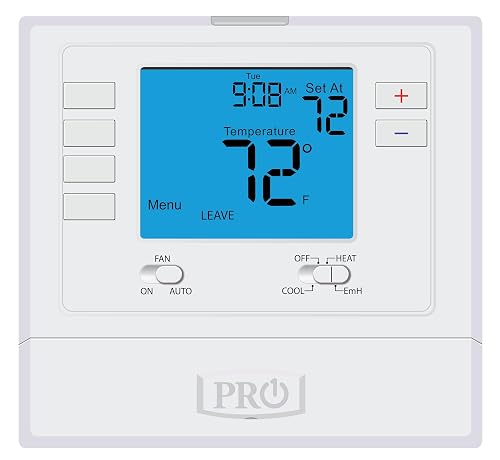
PRO1 T725 Heat Pump/Conventional Programmable Digital Wall Thermostat (2H/1C HP, 1H/1C Conv.)

PRO1 T771 Single Stage Non-Programmable Wall Thermostat (1H/1C Conventional)
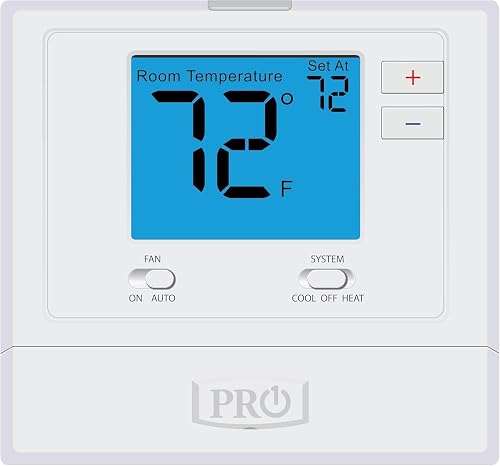
PRO1 T701 Single Stage Non-Programmable Wall Thermostat (1H/1C Conventional)

PRO1 T715 Multi-Stage Programmable Gas Thermostat (2H/2C)
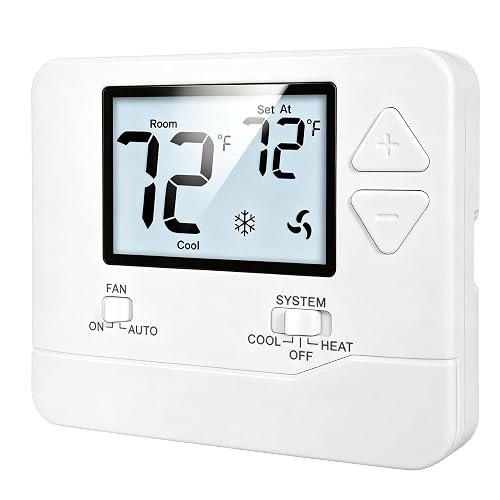
Heagstat Non-Programmable Thermostat 1H/1C for Conventional Single-Stage Systems

Honeywell Home X2P Programmable Thermostat, Single-Stage, White
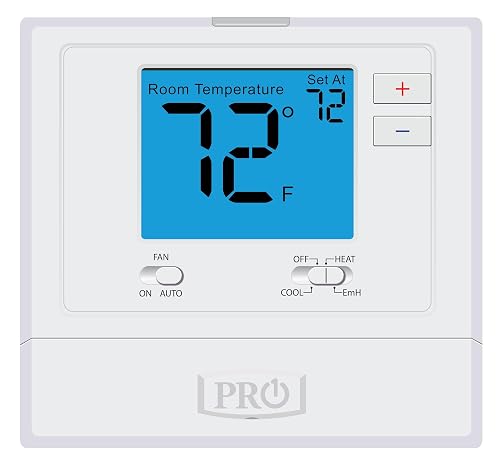
PRO1 T721 Non-Programmable Wall Thermostat (2H/1C HP or 1H/1C Conv.)

PRO1 T805 Single Stage Programmable Wall Thermostat (1H/1C Conventional)
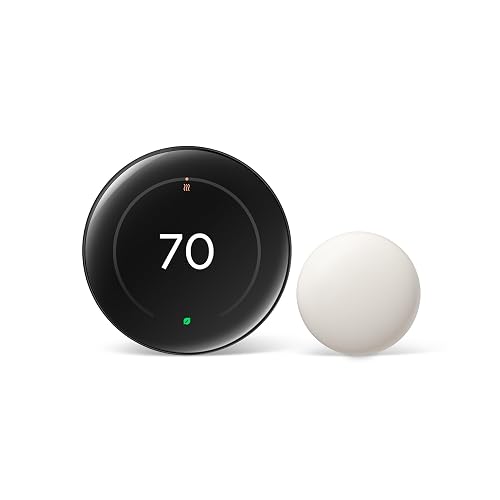
Google Nest Learning Thermostat (4th gen) + Nest Temperature Sensor (2nd gen) – Obsidian
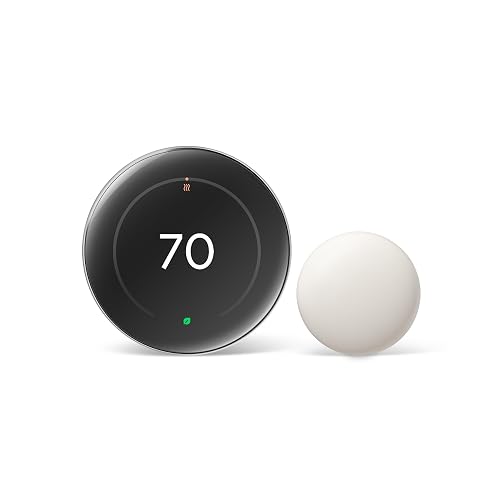
Google Nest Learning Thermostat (4th gen) + Nest Temperature Sensor (2nd gen) – Silver
A Closer Look At Each Pick
The PRO1 T725 sits in an unusual spot: it covers both 2 heat/1 cool heat pumps and 1 heat/1 cool conventional systems, so a single wall unit can move between equipment types if you ever upgrade. A 4 sq. in. blue backlit screen handles the readout, and the body runs on either AA batteries or a hardwire pull from the furnace, which is what makes it useful on no-C-wire installs. The trade-off is menu depth, since accessing scheduling and system mode takes a few extra button presses compared with touchscreen models.
For owners of a heat pump in an older home, this unit removes the usual C-wire worry without forcing you into a learning thermostat. Compared with the simpler PRO1 T701 further down, you get a wider system envelope and more programming flexibility, which matters if your schedule actually changes day to day. For most standard installations on 4 to 5 wires, setup lands in the 20-minute range with a small screwdriver and a level.
A Strong Showing
- Dual-mode support covers heat pumps and conventional furnaces in one body
- Runs on AA batteries, so no C wire is required at the wall
- 7-day, 5/1/1, and non-programmable scheduling covers a wide range of routines
- Blue backlit display stays readable in low light without being harsh
Things To Consider
- Button-driven menu can feel slow if you adjust settings often
- Backplate is on the larger side and may not cover older paint shadows
Key Specs
Right Fit For
Heat-pump owners in older homes with 4 to 5 wires behind the plate who want real scheduling without paying for a learning thermostat.
Where Another Pick Suits Better
If you only have 2 to 3 wires available and run a basic single-stage gas system, the Heagstat non-programmable unit below is a more honest match for that wiring profile.
The PRO1 T771 is built for the spaces your main living-room thermostat forgets about. Its setpoint range stretches down to 25°F, which makes it a sensible match for a detached garage, a workshop, a wine room, or a shed that needs freeze protection. The blue backlit display is small but easy to read across a room, and swing adjustment plus calibration keep the temperature honest when the sensor sits near a drafty door.
Where the Honeywell X2P later in this list pushes programmability, the T771 stays deliberately simple: set the temperature, walk away. Owners of detached spaces usually prefer that simplicity, since scheduling rarely matters in a room you only visit on weekends. In our view, the honest read is that this is a niche tool, and a poor fit as a primary living-area thermostat.
Reasons It Performs
- Wide 25°F to 90°F setpoint range handles cold and mild spaces alike
- Swing adjustment and calibration let you dial in accuracy near drafts
- Compact wall footprint fits narrow studs and shallow boxes
- Single-stage simplicity reduces menu confusion for visitors and renters
Trade Offs
- No scheduling means manual setpoint changes throughout the day
- Not designed for multi-stage or heat-pump systems
Built With In Mind
Owners of garages, sheds, and workshops who need freeze protection or basic climate control without a learning curve or a C wire.
Consider Something Else When
You want a primary living-area thermostat with weekly scheduling, in which case the Honeywell Home X2P delivers more flexibility on a similar wiring profile.
The PRO1 T701 is the kind of thermostat you put in when you simply want the old analog dial gone. It is a 1 heat/1 cool conventional unit on the larger T700 platform, which means a roomy 4 sq. in. blue backlit screen and a glow-in-the-dark light button for those middle-of-the-night adjustments. Battery power keeps it independent of any C wire, so the swap rarely calls for anything beyond a screwdriver and the existing wall wires.
Compared with the T771 above, the T701 has the same straightforward body but a tighter setpoint range, which suits living spaces better than garages. The 4 sq. in. screen is generous at this tier, and most owners should find the layout readable from across a hallway. For most people replacing a dying Honeywell or White-Rodgers dial, this lands as a low-friction upgrade.
Noteworthy Benefits
- Generous 4 sq. in. screen stays readable from a few feet away
- Glow-in-the-dark light button helps in midnight adjustments
- AA battery power avoids the C-wire installation step entirely
- Single-stage focus keeps the control set simple and predictable
Worth Noting
- No scheduling, so you set the temperature manually each change
- Not suitable for heat-pump or multi-stage systems
Made For
Renters and first-time thermostat swappers who need a clean, readable digital control without learning curves or extra wiring.
Skip It When
You want weekly scheduling on a similar wiring profile, in which case the Honeywell Home X2P offers a real schedule at a comparable installation effort.
The PRO1 T715 reaches into multi-stage territory that the T701 and T771 do not. It supports 2 heat/2 cool gas systems, with the same T700 platform DNA: a 4 sq. in. blue backlit display, a glow-in-the-dark light button, and the option to run on AA batteries or a hardwire pull. That battery option is what keeps it on a C-wire-free wall, even when the furnace side expects a common conductor.
Compared with the T725 reviewed earlier, you give up heat-pump support in exchange for a deeper cooling envelope. The T715 is a sensible pick for two-stage gas furnace homes where you want real scheduling on a wiring profile that may not include a C wire. The catch is that the body still has a slightly dated button feel next to any learning thermostat, so this is a fit for people who value control depth over screen polish.
A Few Highlights
- 2 heat/2 cool staging handles most residential two-stage gas systems
- 7-day, 5/1/1, and non-programmable scheduling covers a wide routine range
- Battery or hardwire power keeps it friendly to older wiring
- Glow-in-the-dark button stays easy to find during a power blip
Honest Caveats
- No heat-pump mode, so it is not the right match for heat-pump homes
- Button-driven interface can feel old next to touchscreen units
Feature Snapshot
Best Suited To
Owners of two-stage gas furnace and AC systems who want real programming on a wiring profile that may not include a C wire.
Look Elsewhere When
You run a single-stage gas system, in which case the PRO1 T701 covers the same scheduling options with a simpler installation.
The Heagstat non-programmable thermostat leans into the no-C-wire problem from the wiring side rather than the battery side. Its base is built for 2 to 5 wires, which means it can mount on walls that do not have enough conductors for many smart thermostats. The 24VAC compatibility covers standard forced-air systems with a gas, oil, or electric furnace matched to an independent outdoor AC condenser, as long as the indoor ductwork is intact.
Where the PRO1 units above lean on AA batteries, the Heagstat typically relies on system power through a C-wire equivalent or the R and W terminals, so it asks for slightly more from the wall. It will not work on heat-pump systems or anything that needs 6 to 8 wires, and the manual readout does not try to be a smart hub. In our view, the honest read is that this is a fix for an actual wiring problem, not a do-everything upgrade.
Standout Benefits
- Mounts on walls with as few as 2 to 5 conductors, including low-wire installs
- White backlight keeps the screen readable in dim hallways
- 24VAC compatibility fits standard forced-air systems
- Compact body suits shallow electrical boxes and tight stud bays
Points To Keep In Mind
- Not compatible with heat-pump or multi-stage systems
- No scheduling, so setpoint changes are manual
- Connections with 6 to 8 wires are not supported on this base
Perfect Match For
Owners of older 2 to 5 wire forced-air systems who need a straightforward digital thermostat that actually mounts on the wires they already have.
Reach For A Different Pick When
You want a learning thermostat with remote sensors, in which case the Google Nest Learning Thermostat (4th gen) below is the better long-term fit on a similarly C-free wall.
The Honeywell Home X2P is the scheduling cousin to the simpler PRO1 T701. It is built around 1 heat/1 cool single-stage conventional systems, with a flexible schedule that supports 5-1-1 day, 5-2 day, 7-day, and even a non-programmable fallback for people who like the idea of programming but rarely change anything. The white housing reads as a quiet wall fixture rather than a tech object, which matters in living rooms where a black touchscreen can feel out of place.
Where the T701 keeps things to a single mode, the X2P gives you a real weekly schedule with reminders, including a change-air-filter alert that saves a calendar reminder. It is a fit for households with predictable weekday and weekend patterns, since the 5-1-1 mode lets weekdays share one block and Saturday and Sunday get their own. In our view, the honest read is that this is the pick for people who want a programmable thermostat without going all the way to a learning one.
What It Does Well
- Multiple schedule modes (5-1-1, 5-2, 7-day) match real household routines
- Change-air-filter reminder reduces the chance of a missed swap
- White housing blends into most wall finishes without dominating the room
- Single-stage focus keeps programming menus short and learnable
Potential Drawbacks
- Not designed for multi-stage or heat-pump systems
- No app control, so all programming happens at the wall
Who Will Love This
Homeowners with predictable weekday and weekend routines who want a real weekly schedule and air-filter reminders on a simple single-stage system.
A Better Fit Elsewhere
You want remote sensor support and app-based control, in which case the Google Nest Learning Thermostat (4th gen) further down is a meaningful jump in capability.
The PRO1 T721 is the most flexible of the simpler PRO1 units, accepting either a 2H/1C heat pump or a 1H/1C conventional system on a single body. A 4 sq. in. blue backlit display sits under a glow-in-the-dark light button, and the unit can run on AA batteries or a hardwire pull, so it adapts to whatever is sitting behind the wall plate. That dual-mode capability is the real reason to consider it over the T701.
Where the T725 earlier in this list adds weekly programming, the T721 strips scheduling away and keeps the focus on system flexibility. It suits homes that may switch from a heat pump to a conventional furnace in the future, or rental properties where the equipment changes between tenants. You may find the lack of scheduling limiting if your routine shifts during the week, but for a stable setpoint, the layout is clean and predictable.
Practical Pluses
- Switches between 2H/1C heat pump and 1H/1C conventional setups
- Battery or hardwire power keeps it friendly to older wiring
- Glow-in-the-dark button helps in a dark hallway
- Large 4 sq. in. screen stays easy to read at a glance
Points To Note
- No scheduling, so setpoint changes are manual
- No learning curve means no automatic energy savings over time
Best Suited To
Homeowners with mixed or evolving HVAC systems who want a single digital thermostat that can move between heat-pump and conventional equipment.
Another Choice May Suit
You want scheduling on a similar system envelope, in which case the PRO1 T725 reviewed earlier adds 7-day and 5/1/1 programming without a C wire.
The PRO1 T805 is essentially the T701 with a bigger screen and a slightly newer platform. The display jumps to about 7 sq. in., which is meaningful for anyone who reads their thermostat from across a long living room or has vision considerations. The glow-in-the-dark light button stays in the lineup, and the body still runs on AA batteries, so the C-wire problem stays off the table.
Where the Honeywell X2P brings app-friendly scheduling, the T805 keeps things at the wall with 7-day, 5/1/1, and non-programmable modes. That makes it a good fit for homeowners who want a larger display but do not need app connectivity. In most living rooms, the extra screen real estate is the difference between glancing and walking closer, which matters if the thermostat sits behind a couch or above a doorway.
Useful Highlights
- About 7 sq. in. display is one of the largest in this category tier
- 7-day, 5/1/1, and non-programmable modes cover a wide routine range
- Battery or hardwire power keeps it friendly to older wiring
- Glow-in-the-dark button helps in low-light rooms
Soft Spots
- Single-stage focus means no multi-stage or heat-pump support
- Larger body may not cover small paint shadows from prior thermostats
Feature Card
The Right Fit
Owners of single-stage conventional systems who want a clearly readable wall thermostat with weekly programming and no C-wire requirement.
Where A Sibling Pick Shines
You have a multi-stage gas system and need staging support, in which case the PRO1 T715 offers 2H/2C staging with a similar battery-friendly installation.
The Google Nest Learning Thermostat (4th gen) steps the conversation up from digital to learning. It observes the temperatures you set throughout the day and gradually builds a schedule, so the thermostat starts running itself without you building a 7-day plan. The bundle includes a 2nd generation Nest Temperature Sensor, which lets the system weigh another room’s reading when picking a target temperature, useful for homes with a hot upstairs or a chilly nursery.
Where the Honeywell X2P earlier in this list still wants you to program everything, the Nest reads the patterns for you, which is helpful for households whose routines actually change week to week. The Obsidian finish suits darker walls and modern interiors, and the body is built to work on a C-wire-free install in many cases, depending on the system. The honest read is that this is a smart-home pick, not a budget one, and the learning curve lives in the app rather than at the wall.
Advantages To Know
- Learns comfort patterns and builds a schedule without manual programming
- Included 2nd gen Nest Temperature Sensor adds room-by-room awareness
- Obsidian finish looks at home in modern, dark-walled interiors
- App control extends scheduling and monitoring beyond the wall
Less Ideal Details
- Higher cost than any other pick on this list
- Some HVAC configurations still need a C wire or the Nest Power Connector for stable power
Whose Shelf It Belongs On
Smart-home households that want a learning thermostat, app control, and remote temperature sensing on a wall that may or may not have a C wire.
Swap It Out When
You want a clean digital control without app ecosystems, in which case the Honeywell Home X2P reviewed earlier covers scheduling with no connectivity trade-off.
The Silver version of the Google Nest Learning Thermostat (4th gen) is the same learning core as the Obsidian unit above, with a brighter trim that suits lighter walls, kitchen tile, and modern rentals. You still get the bundled 2nd gen Nest Temperature Sensor, so the room-balancing behavior carries over without buying extras. It is the same product with a different finish, which matters more than people expect when a thermostat sits in a visible hallway.
Compared with the Obsidian option, you trade a darker statement piece for a finish that disappears into a wide range of paint colors. Both versions still lean on app control and learning behavior, so this is a fit for households that want a smart thermostat more than a specific look. In our view, the honest read is that color is the only real differentiator here, and the choice is mostly about your wall.
Bright Spots
- Silver trim blends into lighter walls, kitchens, and modern interiors
- Same learning engine as the Obsidian version, so behavior stays consistent
- Bundled 2nd gen Nest Temperature Sensor adds room-level awareness
- App control supports scheduling from a phone, not just the wall
Trade-Offs To Consider
- Costs more than the conventional picks in this list
- Some systems still need a C wire or the Nest Power Connector for stable power
Who Should Grab It
Smart-home households with lighter walls and trim who want the same learning thermostat and remote sensor as the Obsidian model in a softer finish.
Not Your Match When
You want a non-connected, no-learning digital thermostat, in which case the PRO1 T805 or Honeywell Home X2P keeps the experience purely at the wall.
What To Weigh Before Choosing A No-C-Wire Thermostat
Count The Wires Before Anything Else
Pull the cover plate and look at the bundle behind it. Two to five conductors is the realistic window for most picks on this list, and the Heagstat unit is the only one built specifically for that low range. If your bundle already includes a C wire, the field opens up, but the thermostats above still install cleanly. Match the wire count to the system envelope first, then worry about features.
Match The Thermostat To The System, Not The Other Way Around
Single-stage furnaces pair with 1H/1C thermostats, while two-stage systems need a 2H/2C unit like the PRO1 T715. Heat-pump homes should land on the T725 or T721, since conventional thermostats will not control the reversing valve properly. When in doubt, the equipment label inside the furnace door or on the air handler lists the staging, which is faster than guessing from the thermostat side.
Decide How Much Schedule You Actually Use
Some people enjoy building a 7-day plan; others want the wall to figure it out. The Honeywell X2P and PRO1 T805 give you full control, the non-programmable PRO1 units trade scheduling for simplicity, and the Nest learns over time. In most households, the honest answer sits somewhere in the middle, so picking the right fit is about how often you actually want to touch the thermostat.
Picking Through The Noise
Common Shopping Slip Ups
The most common mistake is choosing a thermostat before checking the wire count behind the plate, which leads to returns and a frustrating weekend. Another is matching a multi-stage furnace to a single-stage thermostat, which works at first but quietly limits efficiency over time. Buyers also tend to overvalue app control and undervalue a screen they can read at a glance, especially in hallways and bedrooms.
Where The Extra Money Goes
Higher-tier models like the Google Nest Learning Thermostat (4th gen) spend the budget on learning behavior, a remote temperature sensor, and a polished interface, not on basic heating and cooling. The conventional picks in the middle of this list keep the focus on reliability, larger displays, and scheduling without the connected extras. When the upgrade is worth it, it usually comes down to whether you want the thermostat to participate in a smart-home routine, not whether it can run your furnace.
Frequently Asked Questions
Do thermostats that don’t need a C wire actually work reliably?
Yes, the models in this list use battery power, power-stealing circuitry, or a power connector accessory to maintain a steady supply. For most single-stage and multi-stage systems, the result is a thermostat that behaves the same as a hardwired unit, with the trade-off that batteries need occasional replacement.
Will any of these work on a two-wire heating-only system?
Some will, but only a few are built for it. The PRO1 T771 and the Heagstat non-programmable unit handle low-wire counts, while learning thermostats usually need a C-wire equivalent or a power accessory. Always check the wire count before assuming a smart thermostat will fire up on two conductors.
Can a no-C-wire thermostat handle a heat pump?
A few can, including the PRO1 T725 and T721, which specifically list heat-pump compatibility. Conventional-only picks like the T701, T805, and Honeywell X2P will not control a heat pump correctly, so the system envelope matters as much as the wiring profile.
Is a learning thermostat worth it without a C wire?
For some households, yes. The Nest Learning Thermostat (4th gen) learns routines over time, which removes the need to build a 7-day plan, and the included temperature sensor balances readings across rooms. The honest read is that you are paying for convenience and app control more than for the basic ability to set a temperature.
How long does installation usually take?
A straightforward battery-powered swap on a compatible wire bundle usually lands in the 20 to 40 minute range, with a screwdriver and a level as the main tools. Heat-pump systems and learning thermostats with app setup tend to take longer because of the additional configuration steps.
Closing Thoughts
A missing C wire is more of a planning step than a deal-breaker, and the list above shows that nearly every HVAC profile has a sensible match. Start with the wire count and the system type, then decide how much scheduling and connectivity you actually want. With those three answers in hand, the right thermostat usually becomes obvious, and the rest is just picking the finish that fits the wall.