

Picking a thermostat sounds simple until you stand in the hardware aisle staring at a wall of options. The right pick depends on what you’re controlling: whole-home HVAC, a single wall heater, a reptile tank, or a radiant floor. This list covers nine real-world options across those categories, so you spend less time guessing and more time enjoying steady, comfortable temperatures.
The Choices Worth Comparing
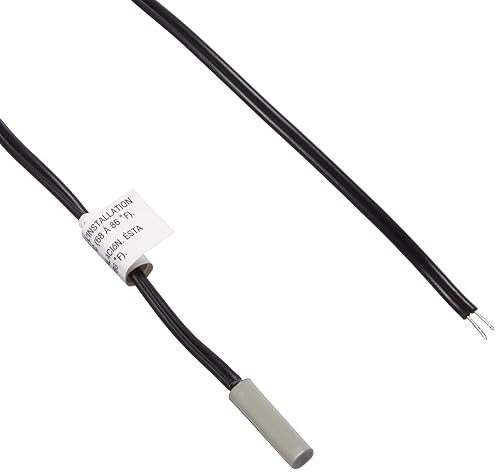
Honeywell AC11201 Floor Heating Temperature Sensor
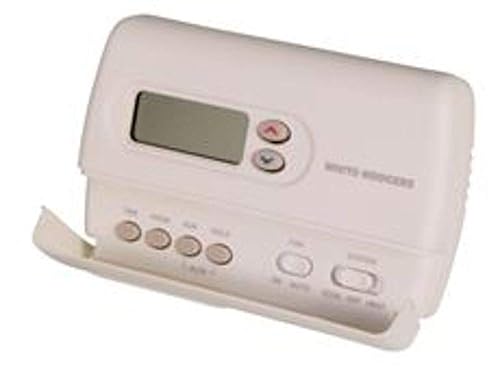
White-Rodgers 1F80-361 Emerson 80 Series Programmable Thermostat
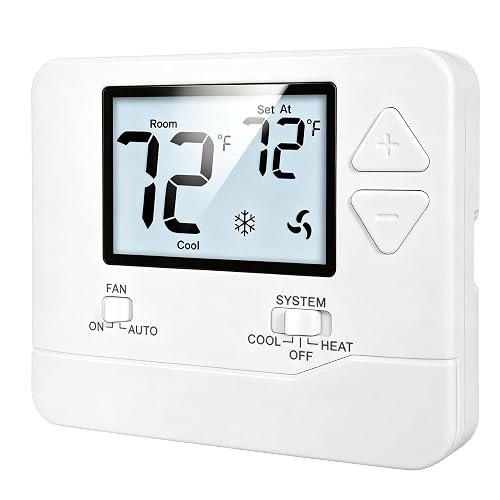
Heagstat Non-Programmable 1 Heat/1 Cool Thermostat
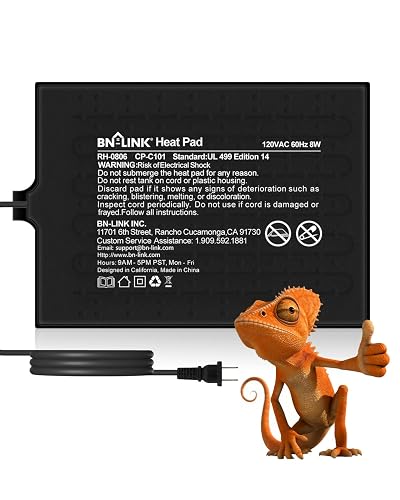
BN-LINK Reptile Heat Pad 6″x8″ 8W for 10-20gal Tanks
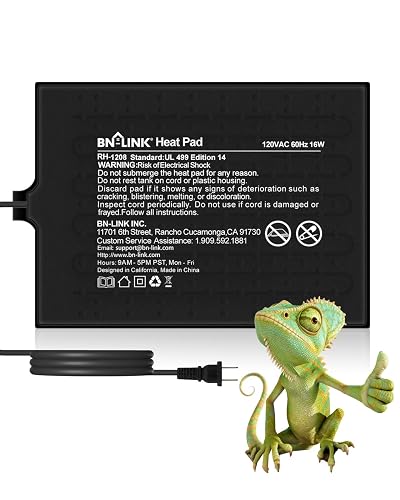
BN-LINK Reptile Heat Pad 8″x12″ 16W for 30-40gal Tanks
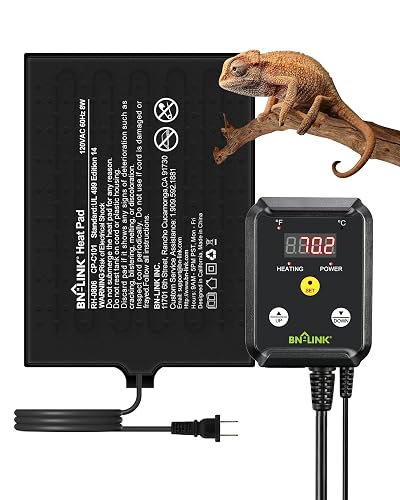
BN-LINK 6″x8″ Reptile Heat Pad with Digital Thermostat Combo
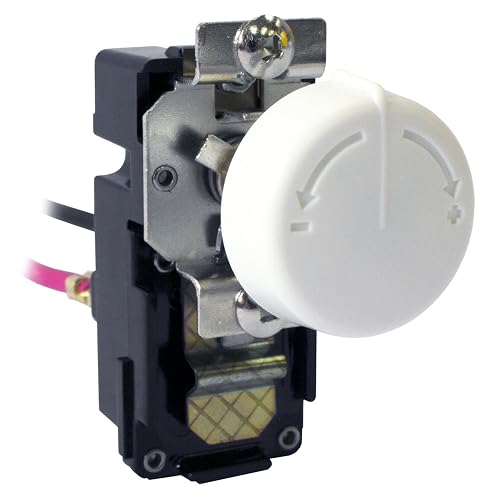
King Electric TKIT-1BW Built-In Thermostat Kit
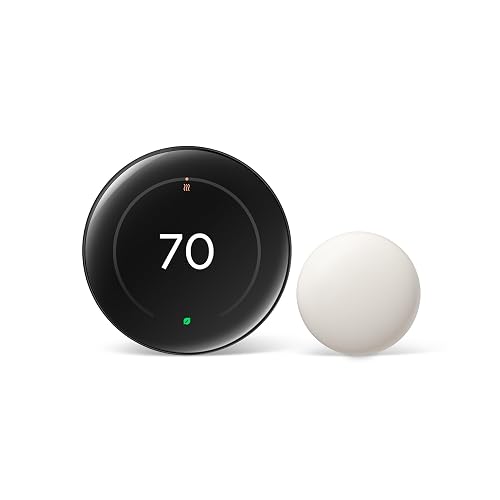
Google Nest Learning Thermostat (4th Gen) Obsidian with Sensor
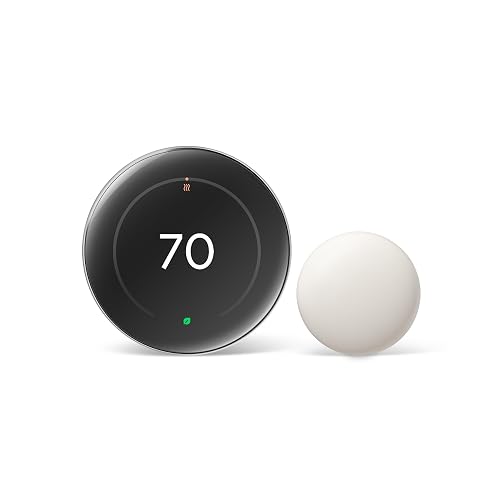
Google Nest Learning Thermostat (4th Gen) Silver with Sensor
Why These Options Stand Out
This Honeywell AC11201 is a dedicated floor sensor probe rather than a wall thermostat, so it fits a narrow but important use case: radiant floor heating systems that need accurate slab temperature readings. A 10-foot cable gives you room to run the lead from the floor back to a compatible control module without splicing.
For homeowners adding radiant heat to a bathroom or kitchen, this sensor handles both flexible and rigid floor installations. It’s a behind-the-scenes component, but a faulty probe throws off the whole system, so the Honeywell name carries weight.
Positive Takeaways
- 10-foot lead offers generous routing flexibility during radiant installs.
- Compatible with both flexible and rigid floor sensor setups.
- Backed by Honeywell’s long-standing HVAC component pedigree.
- Made for North American radiant floor systems, which simplifies sourcing.
Trade Offs
- Not a standalone thermostat: you still need a compatible control module.
- Replacement-style install, so retrofit jobs may require pulling up flooring.
Best Suited To
Homeowners and installers running radiant floor systems who need a trustworthy temperature probe to feed a control module.
Where Another Pick Suits Better
For whole-home forced-air control, the Heagstat Non-Programmable 1 Heat/1 Cool Thermostat is a simpler entry point.
The 1F80-361 from White-Rodgers (the Emerson 80 Series line) targets homeowners who want scheduled comfort without app dependencies. A 5+1+1 program structure means weekday and weekend routines can shift independently, with up to four periods per day.
It runs on common 24-volt systems and stays compatible with millivolt setups, which matters if your home uses a gas furnace, oil burner, or electric baseboard. Compared to the Heagstat below, this one trades simplicity for genuine scheduling.
Why It Works Well
- 5+1+1 programming lets weekdays and weekends run different routines.
- Up to four daily periods handle morning, day, evening, and night shifts.
- Compatible with 24V and millivolt systems across gas, oil, and electric setups.
- Single-stage design keeps installation straightforward for most homes.
Honest Caveats
- Single-stage only, so multi-stage HVAC owners should confirm compatibility.
- The interface is functional rather than touchscreen-modern.
Key Product Details
Who Will Love This
Set-and-forget households who want scheduled heating and cooling without paying for app-driven smart features.
A Better Fit Elsewhere
For a learning-style smart-home experience, the Google Nest Learning Thermostat (4th Gen) Obsidian with Sensor is a stronger match.
Heagstat’s non-programmable unit takes the opposite route from the 1F80-361 above: no scheduling, just up, down, and done. The white backlight helps in dim hallways, and the body supports conventional 1H/1C forced-air systems running on 24VAC.
If your household wants predictable control without programming curves, this thermostat keeps the interface lean. Where the White-Rodgers offers schedules, this Heagstat offers simplicity, which many older homeowners prefer.
What It Does Well
- White backlight improves visibility in low-light hallways.
- Direct 1H/1C control fits standard forced-air setups.
- Simple up/down operation removes any programming learning curve.
Points To Keep In Mind
- Wired for 2-5 wires only, so 6-8 wire systems are not compatible.
- 24VAC conventional systems only; heat-pump and multi-stage setups won’t apply.
- No scheduling, so whole-week automation is out of scope.
Right Fit For
Renters, second homes, and households running a straightforward single-stage system who want no-fuss control.
Look Elsewhere When
For programmable scheduling, the White-Rodgers 1F80-361 Emerson 80 Series Programmable Thermostat is the stronger pick.
This 6-by-8-inch BN-LINK mat is sized for smaller reptile enclosures in the 10-20 gallon range. At 8 watts, it delivers gentle under-tank warmth for species that need belly heat without cooking the substrate.
The pad pairs well with turtles, lizards, frogs, snakes, and hermit crabs, and the waterproof surface handles the inevitable spills. Compared to the larger 8-by-12 below, this one trades coverage area for a lower wattage footprint.
The Practical Payoff
- Compact 6″x8″ size fits standard 10-20 gallon tanks.
- Low 8W draw keeps continuous energy use modest.
- Waterproof surface holds up against misting and spills.
Where It Is Less Suited
- Best paired with a separate thermostat probe for precise control.
- Limited coverage area for anything beyond small enclosures.
Made For
Reptile keepers running small terrariums who want gentle, under-tank warmth without a complicated setup.
Swap It Out When
For a tank that needs both the pad and a digital probe in one kit, the BN-LINK 6″x8″ Reptile Heat Pad with Digital Thermostat Combo is purpose-built.
The 8-by-12-inch BN-LINK pad steps up to 16 watts and 30-40 gallon enclosures. If your snake’s tank or bearded dragon habitat needs more floor coverage, this mat covers more ground without going to multiple pads.
It’s also waterproof and rated for the same mix of reptiles and amphibians. Stack it next to a thermostat probe for the same gentle, regulated warmth the smaller 6-by-8 offers below.
A Few Highlights
- 8″x12″ footprint suits 30-40 gallon enclosures well.
- 16W output delivers stronger heat output for larger tanks.
- Waterproof construction handles routine misting.
Soft Spots
- Doubling the wattage means a separate thermostat probe is strongly recommended.
- Overkill for tanks under 20 gallons, where the 8W pad fits better.
The Right Fit
Reptile owners with mid-sized enclosures who need broader under-tank heat coverage than a 6-by-8 mat provides.
Not Your Match When
For a 10-gallon tank, the BN-LINK Reptile Heat Pad 6″x8″ 8W is the more appropriately sized choice.
BN-LINK’s combo package bundles a 6-by-8-inch heating mat with a digital controller that takes the guesswork out of temperatures. You place a temperature probe inside the enclosure, set the target on a 3-button interface, and the controller toggles the mat on and off to hold that range.
The display switches between Fahrenheit and Celsius, which is helpful for breeders following care sheets from different regions. Against the basic 6-by-8 pad earlier, this kit adds the digital regulation layer.
What Helps Most
- 3-button interface simplifies setup for first-time reptile keepers.
- Fahrenheit and Celsius display modes cover different care-sheet conventions.
- LED heating and power indicators give clear at-a-glance status.
- Includes probe and controller, so no separate thermostat purchase is required.
Practical Considerations
- Controller uses a buffering range before re-engaging heat, so swings of a few degrees are normal.
- Pad size still caps this kit at smaller enclosures, similar to the standalone 6-by-8 above.
Feature Snapshot
Perfect Match For
Reptile keepers who want accurate temperature regulation bundled with the heating mat in one purchase.
Reach For A Different Pick When
For larger enclosures, the BN-LINK Reptile Heat Pad 8″x12″ 16W gives more floor coverage.
King Electric’s TKIT-1BW is a service-part thermostat designed specifically for King PAW and W series wall heaters. It’s a single-pole, single-throw (a simple on/off circuit that opens one line) snap-action kit with a fully protected bi-metal sensor (a temperature-sensitive metal strip that physically bends to open or close the circuit).
The operating range of 48 to 80 degrees Fahrenheit covers typical room heating needs. Compared to the whole-home HVAC thermostats earlier in this list, this kit is a focused replacement part for a specific heater family.
Bright Spots
- Snap-action design responds quickly to temperature changes.
- Fully protected bi-metal sensor improves long-term durability.
- 48 to 80 degree Fahrenheit range suits most room heating needs.
- White finish blends with typical wall-heater aesthetics.
Things To Consider
- Built specifically for King PAW and W heaters, limiting broader use.
- Single-pole design, not suitable as a whole-home programmable controller.
- Replacement-style install may require accessing heater internals.
Whose Shelf It Belongs On
Anyone servicing a King PAW or W wall heater who needs an authentic replacement thermostat kit.
Another Choice May Suit
For whole-home heating and cooling, the White-Rodgers 1F80-361 Emerson 80 Series Programmable Thermostat covers a much wider role.
The 4th-generation Nest Learning Thermostat is the flagship of this roundup, and the included 2nd-gen Nest Temperature Sensor lets you measure a specific room’s conditions. You place the remote sensor where it matters most, like a nursery or home office, and the system balances comfort across zones.
The Obsidian finish suits darker interior palettes. Compared to the Silver version below, the choice is purely aesthetic. Compared to the White-Rodgers above, the Nest adds genuine machine learning that adapts to your routine.
Where It Excels
- Adaptive scheduling learns patterns instead of forcing fixed programs.
- Companion temperature sensor targets priority rooms.
- Obsidian finish suits modern and darker interior palettes.
What To Weigh
- Smart features depend on stable Wi-Fi and a compatible HVAC system.
- Setup is more involved than a basic non-programmable unit.
Feature Rundown
Built With In Mind
Connected households ready to invest in learning-driven climate control and want a remote sensor in the box.
Where A Sibling Pick Shines
If you’d prefer a lighter color profile, the Google Nest Learning Thermostat (4th Gen) Silver with Sensor delivers the same internals.
The Silver variant shares its smarts with the Obsidian model above, including the same 4th-gen learning platform and 2nd-gen remote temperature sensor. The difference comes down to the bright, brushed finish that suits lighter rooms and contemporary interiors.
For households worried about a black thermostat disappearing into a dark wall, Silver often reads as the more visible, neutral choice. Functionally, you get the same learning behavior and remote-sensor flexibility.
The Upside
- Silver finish suits lighter walls and bright interiors.
- Same learning engine and remote sensor as the Obsidian version.
- Modern display visible from across most rooms.
Small Caveats
- Identical feature set means you’re choosing on aesthetics, not function.
- Still depends on Wi-Fi reliability and compatible HVAC wiring.
Who Should Grab It
Smart-home households whose decor leans bright or contemporary and who want the silver finish over Obsidian.
Skip It When
For no-frills HVAC control without learning features, the Heagstat Non-Programmable 1 Heat/1 Cool Thermostat keeps things simpler.
What To Match Against Your System Before You Pick
Start with the system type. Whole-home forced-air, multi-stage heat pumps, radiant floors, single wall heaters, and reptile enclosures all ask for different controls. Wire count matters too: the Heagstat accepts 2 to 5 wires, which excludes 6 to 8 wire installs, so checking the existing low-voltage wiring (the thin control wires, typically 18-24 gauge, that carry signal rather than household power) before buying prevents mid-project returns.
Voltage and stage count decide compatibility fast. Many thermostats run on 24VAC (24-volt alternating current, the standard low-voltage power most HVAC control boards supply), while millivolt systems (low-voltage systems under 1 volt, common in some gas fireplaces and older heating equipment) need a thermostat that explicitly supports both. Single-stage units like the White-Rodgers 1F80-361 cover most basic HVAC setups, but multi-stage homes require a controller rated for those stages.
For reptile keepers, tank size and wattage pair up. A 6-by-8 pad at 8 watts suits a 10-20 gallon enclosure, while an 8-by-12 at 16 watts fits 30-40 gallons. Adding a digital probe controller, like the BN-LINK combo set, takes guesswork out of basking-spot temperatures.
If smart-home integration matters, confirm HVAC compatibility with the learning platform you prefer. The Nest’s learning features only pay off if your system supports the wiring the thermostat expects and your household actually uses scheduling, remote sensors, or app control.
Smart Buying Pointers That Carry Across The List
Pitfalls Shoppers Hit
The most common misstep is buying a thermostat without checking the wire count and system type first. A non-programmable unit like the Heagstat that accepts 2 to 5 wires will physically install but won’t work in a 6 to 8 wire system, leaving you stuck mid-project. Always pull the existing thermostat off the wall and count the wires before ordering.
Another trap is assuming “smart” means universal. Learning thermostats like the Nest 4th gen depend on compatible HVAC wiring, stable Wi-Fi, and at least basic app setup. In homes where the household prefers simple wall controls, a programmable unit like the 1F80-361 actually delivers more daily value.
For reptile keepers, under-sizing the heat mat is the usual issue. A 6-by-8 mat on a 30-gallon tank covers only a fraction of the floor, leaving cold zones that stress the animal. Match tank size to mat footprint and wattage from the start.
Where The Extra Money Goes
Higher-tier models like the Nest Learning Thermostat bundle advanced features such as adaptive scheduling, remote temperature sensors, and connected-app control. That extra spend makes sense for households that want zoned comfort and are comfortable managing devices through an app.
Mid-tier programmable units such as the White-Rodgers 1F80-361 buy you real scheduling and broad HVAC compatibility without app overhead. They suit households that want predictable routines and a familiar wall interface.
Specialty items like the King Electric TKIT-1BW serve a narrow but real need: replacing a built-in thermostat on a specific wall heater. The cost there is about authenticity and fit, not features.
Frequently Asked Questions
What Is A Millivolt Thermostat?
A millivolt thermostat works with self-powered heating systems that produce under one volt, like some gas fireplaces and older wall heaters. Confirm your system type before choosing a controller.
Do Learning Thermostats Actually Save Energy?
Learning thermostats adapt schedules to occupancy patterns, which can reduce heating and cooling runtime in homes with consistent routines. Savings depend on your HVAC system, local climate, and how often you override the schedule.
Can One Heat Pad Work For Multiple Tanks?
Heat pads are designed for direct contact with a single enclosure’s underside. Running one pad across multiple tanks risks uneven heating and is not recommended for animal care.
How Do I Know If My HVAC System Is Single-Stage?
Check your furnace or air-handler documentation. Single-stage systems run at one heating or cooling output, while multi-stage systems modulate between low and high output for finer comfort control.
Is A Programmable Thermostat Worth It Over A Non-Programmable One?
A programmable thermostat earns its keep in households with predictable weekday and weekend routines. If you rarely adjust the temperature manually, the scheduling features deliver tangible comfort and efficiency gains.
The Takeaway
The right thermostat depends entirely on what you’re controlling: a single wall heater, a radiant floor, a reptile enclosure, or your whole HVAC system. Match wire count, voltage, and stage type first, then layer in features like scheduling, smart learning, or remote sensors based on how you actually live day to day. Whatever your situation, one of these nine picks should fit the bill.