

A new thermostat can quietly change how a home feels. Swap a clunky dial for a smart unit, and you gain scheduling, remote control, and a real shot at trimming the utility bill. This lineup mixes full smart thermostats, simple non-programmable wall units, and accessories that round out an existing setup, so you can match tech to room without overbuying.
A Quick View Of The Lineup
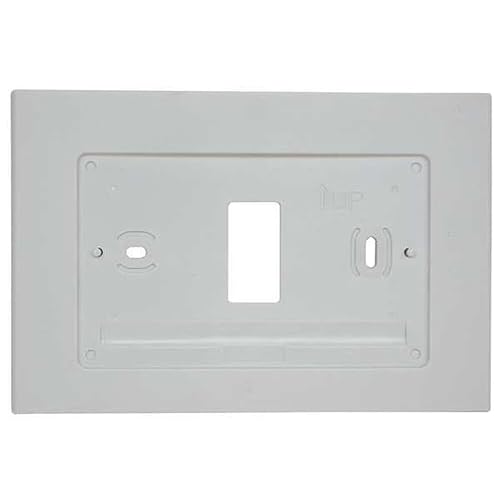
Sensi Thermostat Wall Plate, White, F61-2663
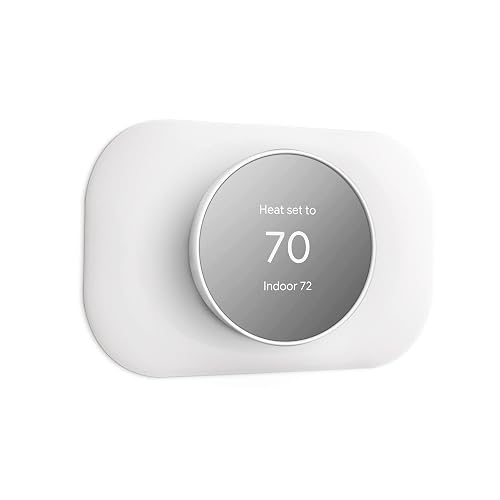
Petrichor Nest Thermostat Wall Plate (Snow)
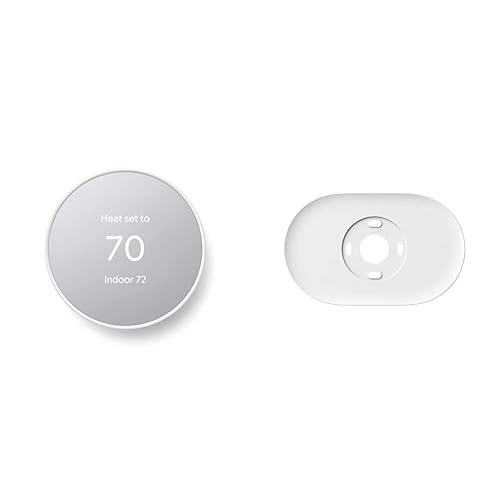
Google Nest Thermostat with Trim Kit (Snow)
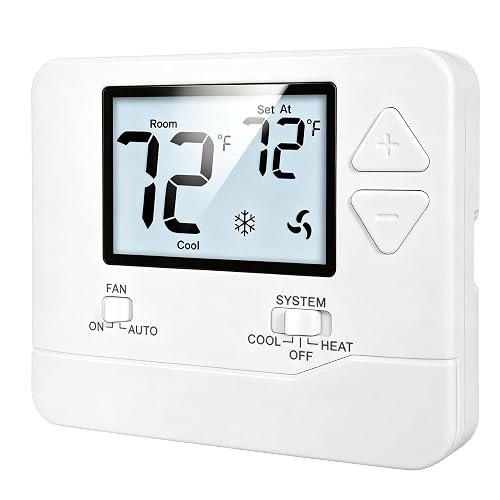
Heagstat 1 Heat/1 Cool Non-Programmable Thermostat
Honeywell Home RTH111B Digital Non-Programmable Thermostat
Reliance 9000507-045 Lower Electric Thermostat
Google Nest Temperature Sensor 3-Pack
Google Nest Learning Thermostat 4th Gen (Obsidian)
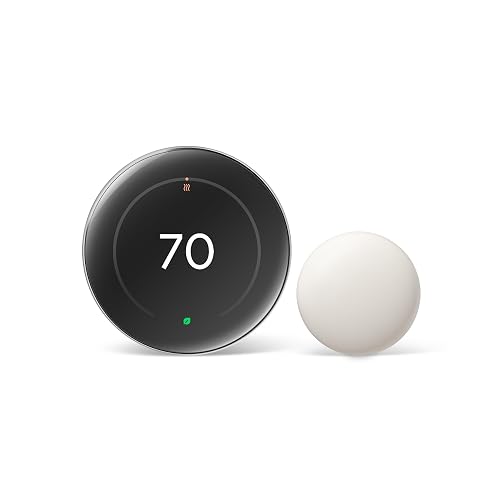
Google Nest Learning Thermostat 4th Gen (Silver)
A Deeper Look At The Lineup
Wall plates get dismissed as an afterthought, yet they decide how finished a smart thermostat actually looks. The Sensi plate is a decorative cover shaped to match the soft curve of the Sensi Wi-Fi unit, so the whole assembly reads as one piece rather than a retrofit.
It is purpose-built, meaning it only fits Sensi ST55 and 1F87U-42WF models. For anyone upgrading from an older thermostat, the plate hides the scuffed paint and visible screw holes left behind, which saves a touch-up paint job.
Real Benefits
- Color-matched white finish that blends with the Sensi unit, no mismatched trim around the screen.
- Generous footprint that covers blemishes from previous thermostats, saving a drywall patch or paint touch-up.
- Curved front profile that mirrors the thermostat’s shape, giving the wall a tidy, intentional look.
- Lightweight install with basic hardware, useful for anyone doing a quick refresh before company arrives.
Things To Consider
- Compatibility is narrow, so the plate will not help owners of other thermostat brands or even other Sensi generations.
- You may find the size oversized on a small wall space, since the plate is designed to mask, not to disappear.
Who It Suits Best
Anyone replacing an older unit on a wall with paint scars, nail holes, or a slightly larger previous footprint who owns a compatible Sensi thermostat.
Skip It When
Nest owners should reach for the Petrichor Nest Thermostat Wall Plate (Snow) instead, since it is sized for the 2020 Nest footprint.
The Petrichor plate does for Nest owners what the Sensi plate does on the other side of the smart-thermostat world. Cut for the 2020 Google Nest Thermostat, it covers exposed drywall and old wire openings in a single move.
Where earlier picks focused on electronics, this one is purely cosmetic infrastructure. It works with Nest models GA01334-US, GA02082-US, GA02081-US, and GA02083-US, which covers the standard 2020 release family.
Useful Strengths
- Targets the most common upgrade pain point: unsightly holes and unpainted drywall after pulling an old thermostat.
- Flush-mount construction that sits neatly against the wall surface, keeping the install looking clean.
- Snow color option that pairs with the standard white Nest face, so the plate almost disappears once mounted.
Points To Note
- Limited to a specific model year, so pre-2020 Nest owners will need to verify their exact unit before buying.
- Surface finish can show fingerprints during install, so a quick wipe-down with a microfiber cloth helps it look pristine on the wall.
Quick Facts
Right Fit For
Nest households who upgraded from an old mechanical thermostat and want a finished wall without a paint touch-up.
A Better Fit Elsewhere
Sensi owners will be better served by the Sensi Thermostat Wall Plate, F61-2663, since sizing is model-specific.
The Google Nest Thermostat is the friendly gateway into app-driven climate control. It runs a programmable schedule through the Google Home app, so a renter or first-time smart-home shopper can adjust temperature from a phone without learning a new interface.
Energy awareness sits at the center of the design. The unit tracks when the home is empty and dials back heating and cooling automatically, which trims the bill without much thought. It ships with both a trim plate and a steel plate for electrical-box installs, so most wall conditions are covered out of the box.
The Upside
- Energy tracking that adjusts automatically when nobody is home, easing the mental load of remembering to turn the system down.
- App-based scheduling through Google Home, so weekday and weekend routines are a few taps away.
- Includes both a standard trim plate and a steel electrical-box plate, sparing a trip to the hardware store.
- Snow finish that reads modern in hallways, kitchens, and family rooms alike.
Honest Caveats
- Full functionality depends on a Google account and a reliable Wi-Fi signal at the mounting location, so weak-network homes may struggle.
- Without a C-wire in some older HVAC setups, owners commonly report needing a power adapter or professional help during install.
Feature Snapshot
Built With In Mind
First-time smart-home owners and renters who want a low-fuss thermostat that integrates with Google Home and learns daily presence.
Consider Something Else When
Power users who want self-learning routines should look at the Google Nest Learning Thermostat 4th Gen (Obsidian), which adapts on its own.
Heagstat skips the smart features on purpose. The 1 Heat/1 Cool unit targets a narrow, common case: a conventional single-stage forced-air system, which describes a wide slice of U.S. homes with a gas, oil, or electric furnace paired with a separate AC condenser.
The draw is straightforward operation. A white backlit display shows the current temperature and target, soft buttons handle up and down, and there is no app to learn. For someone who wants the room comfortable at a glance, this keeps the install simple.
Notable Upsides
- Matches the most common residential setup, so basic furnace-plus-AC households can drop it in without compatibility guesswork.
- Backlit display helps late-night adjustments without turning on a hallway light.
- No app, no account, no firmware updates, which fits households that prefer appliances to stay out of the cloud.
Worth Noting
- Wiring tops out at 5 conductors, so homes with 6 to 8 wires (common with whole-home humidifiers or dehumidifiers) are not a fit.
- No scheduling means anyone wanting set-back routines will need to remember manual adjustments each day.
At A Glance
Whose Shelf It Belongs On
Owners of a basic single-stage furnace-and-AC system who prefer a manual wall thermostat over a connected one.
Look Elsewhere When
Anyone with a multi-stage or heat-pump system should consider the Honeywell Home RTH111B, though both are non-programmable, so connectivity is still a separate question.
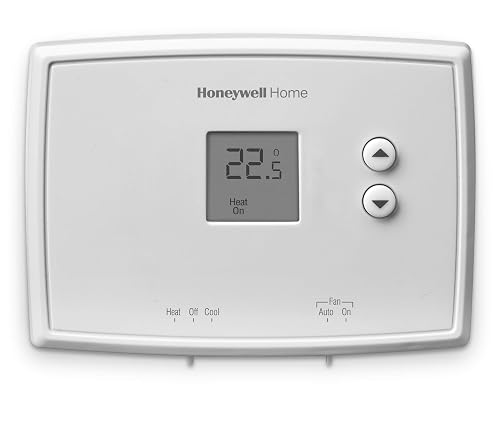
Honeywell has been in the thermostat game for decades, and the RTH111B is a textbook example of keeping things simple. The screen shows the current room temperature and the setpoint, and the soft-touch buttons nudge the temperature up or down. That is the whole interface.
For a guest room, a rental unit, or a workshop, this kind of predictability is a feature. The thermostat does not push firmware updates, and there is no need to sync an account to keep the heat running.
Useful Highlights
- Digital precision without the smart-home tax, ideal for households that want tighter control than a mechanical dial.
- Soft-touch buttons that read clearly, helpful for older eyes or anyone who dislikes clicking through menus.
- Standalone operation, so the thermostat keeps working even if the home Wi-Fi drops.
Room For Improvement
- Lacks a backlight on some listings, so a quick test in a dim hallway before mounting may be worth it.
- No scheduling means set-back routines must be done by hand, which adds a small daily chore in winter.
Best Suited To
Anyone who wants a simple wall thermostat for a guest room, garage conversion, or rental where smartphone control is not a priority.
Reach For A Different Pick When
Smart-home households who want app control should consider the Google Nest Thermostat with Trim Kit (Snow), which adds scheduling and remote access.
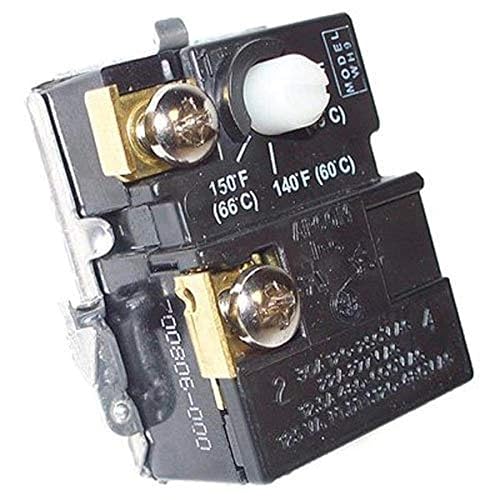
Step away from the living room, because this Reliance part is a different category entirely. The 9000507-045 is a replacement lower thermostat for an electric water heater, used in tandem with an upper thermostat to manage tank temperature.
Tank-style electric water heaters have two thermostats because the lower element handles the bulk of the water, and the upper element re-heats the top portion after heavy draws. Swapping a failing lower thermostat is a common repair for lukewarm showers or a tripped reset button.
What Earns Its Place
- Direct-fit replacement for many Reliance water-heater models, sparing a trip to a parts specialist.
Worth Bearing In Mind
- Designed specifically for the lower position on an electric tank, so it cannot stand alone as a single-element controller.
- Working on a water heater requires shutting off power at the breaker, and many homeowners prefer a licensed plumber for safety reasons.
- Compatibility depends on exact tank model, so verifying the part number against the heater’s spec sheet is essential before ordering.
Made For
DIYers repairing a residential electric water heater with a confirmed lower-thermostat failure and matching part number.
Swap It Out When
Homes with gas tankless water heaters will not need this part, and anyone replacing a living-area thermostat should look at the Honeywell Home RTH111B.
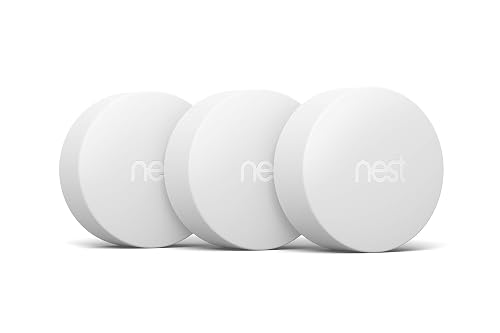
A single thermostat reads the temperature where it sits, which is rarely where everyone is comfortable. The Nest Temperature Sensor 3-Pack solves that by reporting from up to 50 feet away, so a nursery, living room, or bonus room can finally weigh in on the schedule.
Place one in a baby’s room, another in a home office, and a third in the basement play area, and the linked Nest thermostat prioritizes whichever room matters most at that time. It is an inexpensive way to expand an existing Nest system without rewiring the house.
Good Reasons To Consider
- Three sensors in a single pack let you cover a baby’s room, a main living area, and a workspace without buying separately.
- Wireless range up to 50 feet gives flexibility for larger homes and split-level layouts.
- Pair-and-forget install, since the sensor pairs with a compatible Nest thermostat and reports automatically.
Some Limits To Know
- Requires a compatible Nest thermostat to function, so it is not a stand-alone temperature monitor.
- Sensor placement matters, and direct sunlight or placement near a vent can throw off readings over time.
Spec Overview
Who Should Grab It
Families with a nursery, multi-story home, or known hot and cold spots who already run a Nest thermostat.
Where A Sibling Pick Shines
New buyers without a Nest thermostat should consider the Google Nest Learning Thermostat 4th Gen (Obsidian) bundle, which includes a sensor.
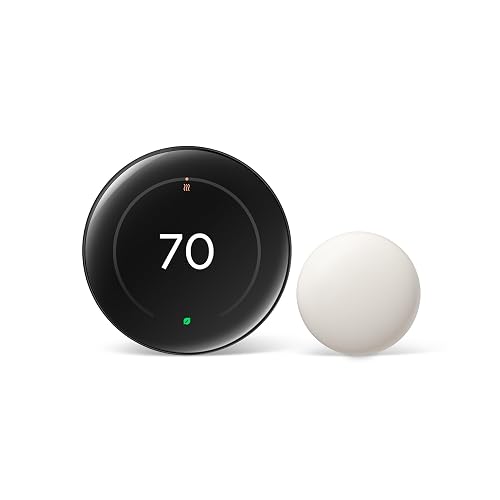
The 4th-generation Learning Thermostat is the top of the Nest family, finished in an obsidian face that disappears into a dark hallway. It tracks patterns over time, learning when the home is empty, when someone wakes up, and which temperatures people prefer at different hours.
This bundle pairs the thermostat with a 2nd-generation Temperature Sensor, so right out of the box a buyer can balance comfort in a second room. The result is a system that adjusts itself as routines change, which is the main reason a heavy daily user upgrades to this tier.
What It Does Well
- Learns preferred temperatures and adapts to schedule changes, so manual tweaking fades into the background.
- Bundled Temperature Sensor expands comfort control to a second room, useful for nurseries or offices.
- Obsidian finish suits modern interiors where a silver face would feel out of place.
Trade Offs
- Premium positioning means the cost is higher than a standard smart thermostat, so casual users may not feel the difference.
- Full feature use depends on a stable Wi-Fi connection and a Google account, which adds setup steps before the system runs smoothly.
Perfect Match For
Tech-comfortable households with shifting routines who want the thermostat to manage comfort on their behalf.
Not Your Match When
Anyone with a simple 1H/1C system and no interest in app control may prefer the Honeywell Home RTH111B for its no-nonsense operation.
Same 4th-generation learning engine, different finish. The silver version of the Nest Learning Thermostat fits traditional kitchens, builder-grade interiors, and any space where a darker face would feel heavy on the wall.
Like the obsidian bundle, this package includes a 2nd-generation Temperature Sensor, so multi-room balancing is ready from day one. The silver casing also tends to hide minor smudges during installation, which is a small but practical detail.
Points In Its Favor
- Adaptive scheduling that responds to routine changes, sparing manual edits after travel or season shifts.
- Silver finish that pairs well with stainless appliances, brushed hardware, and lighter paint palettes.
- Included Temperature Sensor so the household can target a priority room right away.
Potential Compromises
- Higher up-front cost compared to non-programmable options, which may not pencil out for very small homes.
- Some advanced features require a Google Home ecosystem, so households invested in another platform may not see the full benefit.
Key Product Details
Who Will Love This
Households who want the smartest Nest experience but prefer a lighter finish that matches traditional decor.
Another Choice May Suit
Buyers drawn to a darker, more architectural look should consider the Google Nest Learning Thermostat 4th Gen (Obsidian) instead.
Picking The Right Thermostat For Your Home
Match The System First
Before falling for a touchscreen, confirm what the HVAC system can handle. Conventional single-stage setups, which cover most gas, oil, and electric furnaces paired with one AC unit, support a wider range of wall units. Multi-stage systems, heat pumps, and dual-fuel setups narrow the field considerably, since the thermostat needs extra terminals and smarter logic. Counting the wires behind the current thermostat is a quick way to start: 2 to 5 wires usually means a basic unit like the Heagstat 1 Heat/1 Cool will fit, while 6 or more often points to a smart thermostat with accessory control.
Decide How Smart You Want It
Smart thermostats shine when the schedule actually changes day to day. A remote worker, a parent with a school pickup, or anyone whose week looks different from the weekend will appreciate a learning unit like the Google Nest Learning Thermostat 4th Gen. Households with a rigid routine may find a programmable unit sufficient, and a small guest room or workshop may only need a non-programmable like the Honeywell Home RTH111B.
Think About The Wiring And Power
Many smart thermostats draw continuous power, which requires either a common wire (C-wire) or a power adapter. Older homes without a C-wire commonly run into this during install, so a quick peek at the wiring before ordering can prevent a frustrating return. The Google Nest Thermostat ships with hardware for both standard and electrical-box mounts, which helps in remodels and new construction alike.
Accessories That Round Out The System
Wall plates fix cosmetic headaches, and remote sensors fix comfort headaches. If the home has known hot or cold spots, a temperature sensor like the Google Nest Temperature Sensor 3-Pack gives the thermostat a second opinion in a far room, which is often the difference between the bedroom being too warm and just right.
Key Considerations Across These Picks
Where Shoppers Go Wrong
The most common mistake is buying a thermostat before checking system compatibility. A unit that supports 1H/1C will not work on a heat pump, and a learning thermostat without a C-wire can leave a household without heat during a cold snap. The other slip is ignoring the wall behind the old unit, since paint scars and missing drywall show through any retrofit. A wall plate such as the Sensi or Petrichor option covers the mess in minutes, sparing a weekend of patching and painting.
What Separates Premium From Basic
Premium models add learning behavior, multi-room sensors, and refined finishes, which is why the 4th-generation Learning Thermostat commands a higher tier. The case for spending up is strongest in homes where schedules shift often, where one room runs noticeably warmer than the rest, or where the thermostat sits in a visible spot and finish matters. For a guest room or a small office, a basic non-programmable delivers the core job without the connected overhead, and the savings can go toward better insulation or a smart vent instead.
Frequently Asked Questions
Do I need a C-wire for a smart thermostat?
Most Wi-Fi thermostats need constant power, which a C-wire supplies. Some models ship with adapters, and some homes pull a C-wire from the furnace control board with basic electrical work, but checking the existing wires before buying prevents a mid-install surprise.
Can a single thermostat handle a multi-story home?
The thermostat itself reads only one spot, which is why remote sensors are useful in larger homes. A 3-pack like the Google Nest Temperature Sensor 3-Pack expands coverage to a nursery or upstairs bedroom, so the system weighs the priority room when deciding when to run.
What is the difference between programmable and learning thermostats?
A programmable thermostat follows a set schedule that you build, while a learning thermostat studies your manual changes and adjusts the schedule on its own. Learning units are useful when routines change often, but a fixed schedule can be just as efficient in a stable household.
Are wall plates worth buying?
Wall plates cover paint scars, missing drywall, and old screw holes, which is a real time-saver when swapping an older unit. They are also model-specific, so the plate has to match the thermostat brand and generation, such as the Sensi Thermostat Wall Plate for Sensi owners or the Petrichor plate for 2020 Nest units.
Can a thermostat fix hot and cold rooms?
A thermostat can only call for heating or cooling, not redistribute air. Remote sensors help by telling the system to prioritize a particular room, but persistent temperature swings usually point to ductwork, insulation, or ventilation issues that no wall unit can solve alone.
The Takeaway
The right thermostat depends less on features and more on the system behind the wall and the routine of the people inside it. Match the wiring first, then decide how much scheduling you actually want, and reach for accessories like wall plates or remote sensors to handle the details a wall unit cannot solve alone. With those basics in place, any of the picks above can settle into years of quiet, comfortable service.