

That upstairs bedroom never matches the hallway. The nursery runs warm while the basement office feels like a cave. A thermostat on a single wall does its best, but it only knows the air touching it, not the room where you’re actually sitting. Remote temperature sensors fix that gap by reporting back from the spaces you care about, and the picks below cover everything from basic wall units to learning thermostats that pick up your habits over time.
The Shortlist At A Glance
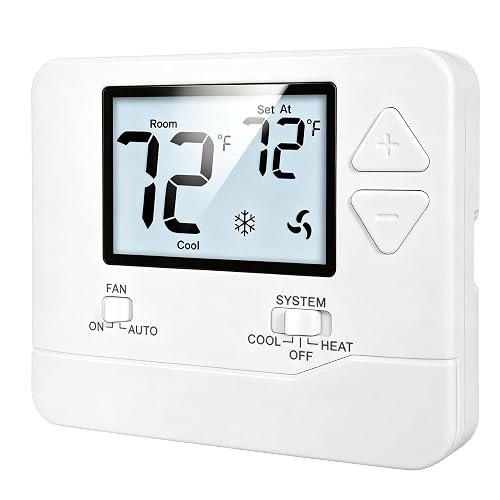
Heagstat 1 Heat/1 Cool Non-Programmable Thermostat
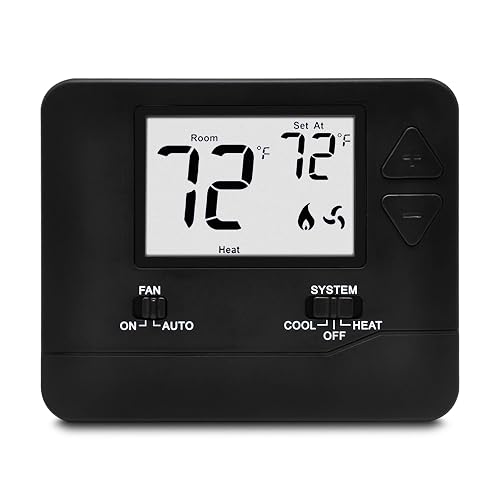
ELECTECK Digital Non-Programmable Thermostat
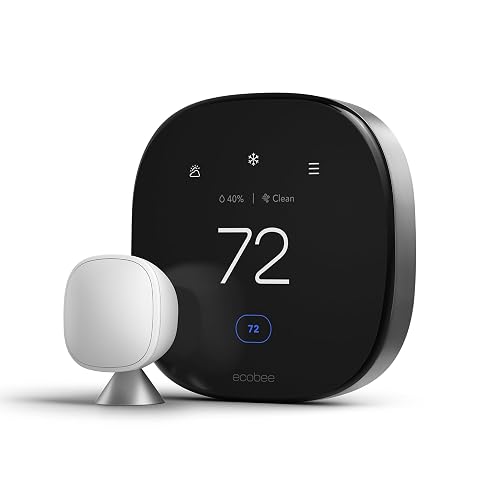
ecobee Smart Thermostat Premium with Smart Sensor
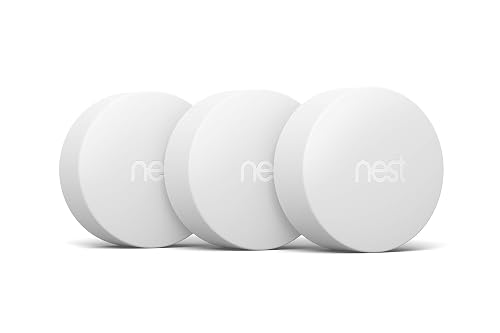
Google Nest Temperature Sensor 3-Pack

ecobee SmartSensor 2-Pack with Occupancy Detection
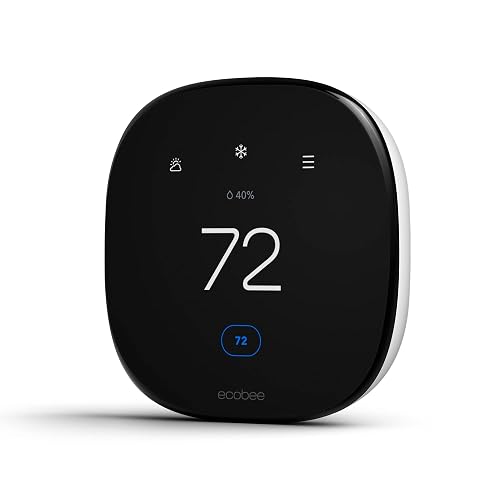
ecobee Smart Thermostat Enhanced, WiFi Programmable

OJ Microline UTN4 Radiant Floor Heat Thermostat
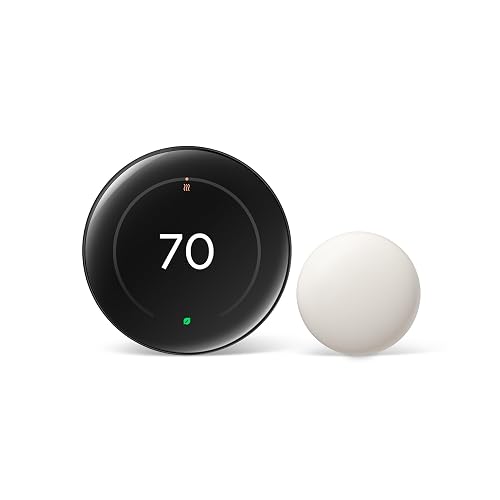
Nest Learning Thermostat 4th Gen with Sensor (Obsidian)
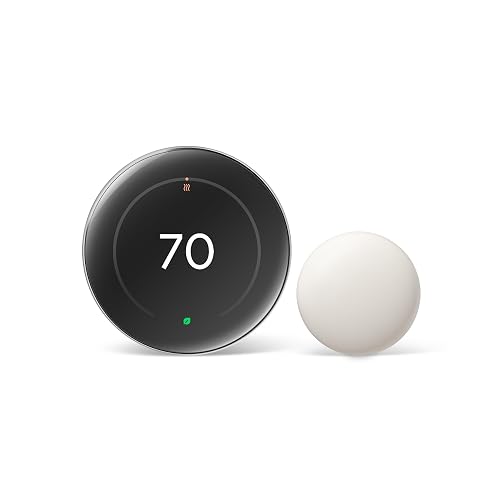
Nest Learning Thermostat 4th Gen with Sensor (Silver)
A Closer Look At Each Pick
The Heagstat 1 Heat/1 Cool non-programmable thermostat keeps the job simple: set a temperature and let the system do its work. It targets single-stage conventional forced-air setups, which covers a lot of older homes with one furnace and one outdoor condenser. The white backlight helps in dim hallways and late-night adjustments, and the wall-mount base takes between two and five wires, matching the low-voltage 24VAC wiring found in most standard installations.
Where this pick fits best is a guest room, a small addition, or a workshop with a basic HVAC setup. You won’t get scheduling, app control, or remote sensors, but you also won’t be paying for features you won’t use. For shoppers replacing a broken manual dial, it lands in a comfortable spot.
What Makes Sense
- Single-stage 1H/1C focus keeps the wiring simple for older homes
- White backlight makes the reading easy at night
- Non-programmable design avoids setup confusion for less technical users
- Wall-mount base handles standard low-voltage hookups cleanly
Worth Noting
- Not compatible with multi-stage, heat pump without auxiliary, or 120/240V electric baseboard systems
- Baseplate only accepts two to five wires, so larger 6-8 wire setups won’t fit
- No remote temperature sensor support, which limits whole-home balancing
Who It Suits Best
Owners of small homes with a basic single-stage furnace who want a low-fuss wall thermostat without the learning curve.
Where Another Pick Suits Better
Shops with radiant floor heating get a more tailored fit from the OJ Microline UTN4, which is purpose-built for that wiring class.
The ELECTECK digital non-programmable thermostat trades a manual dial for a clean digital readout while keeping the operation one-touch. It supports single-stage heating and cooling, with a system selector that toggles between gas, oil, and electric furnace setups, and a basic heat pump (without auxiliary heat) mode. Owners of small ranch homes or rentals often pick this category for the predictable behavior.
Without a remote sensor, the unit only reports the temperature where it sits, so placement matters. Mount it in a frequently used hallway rather than above a heat register, and the readings stay representative. For tight budgets replacing an aging thermostat, this is a sensible step up from a mechanical dial.
Useful Strengths
- Switchable gas, oil, and electric furnace compatibility broadens the install base
- Digital display reads clearly across a room
- Single-stage 1H/1C operation is easy to configure at the wall
- Heat pump without aux support adds flexibility for milder climates
Trade Offs
- Not for multi-stage systems, which rules out larger zoned homes
- Excludes 120/240V electric baseboard heating entirely
- No scheduling or remote sensor expansion if your routine shifts seasonally
Key Product Details
Made For
Owners upgrading an aging mechanical thermostat in a small single-stage home who want a digital face without any smart features.
Skip It When
Households ready to add remote sensors and app control are better served by the ecobee Smart Thermostat Enhanced, which extends into multi-room sensing.
The ecobee Smart Thermostat Premium packs a lot into a single wall unit. It ships with a SmartSensor that reads the temperature in a separate room, so the thermostat can prioritize that space instead of the hallway. Built-in microphones add hands-free voice control through Siri and Alexa, and the unit also monitors indoor air quality, alerting you when conditions drift. Compared to the basic Heagstat at pick 1, this is a different class of tool entirely.
For connected households running a smart speaker setup, the voice layer removes a lot of fiddling. The included sensor goes into a nursery, home office, or living room to balance hot and cold spots, and the system weighs the sensor reading against the wall unit. You may find the learning curve steeper than a non-programmable wall thermostat, so the value lands more for tinkerers than set-and-forget users.
Why It Works Well
- Included SmartSensor adds a second temperature reading point out of the box
- Built-in Siri and Alexa voice control removes the need for a separate smart speaker on the wall
- Air quality monitor adds a health-adjacent signal beyond temperature alone
- App-based scheduling and geofencing adapt to changing routines
Possible Compromises
- Premium pricing puts it out of reach for budget replacements
- Setup takes longer than a basic non-programmable thermostat, so first-time smart-home owners may need patience
- Microphone always-on mode raises privacy questions some households want to manage
Feature Snapshot
Best Suited To
Tech-forward households already running a smart home ecosystem who want voice control and remote sensing bundled into one thermostat.
Not Your Match When
Minimalists who just need a single-stage wall thermostat without apps or voice should look at the Heagstat at pick 1 instead.
The Google Nest Temperature Sensor 3-Pack adds three remote reporting points to a compatible Nest thermostat. Each sensor communicates wirelessly with the wall unit, sending temperature data so the system can weight the room that matters to you. Place one in the baby’s room, one in the living room, and one in a home office to balance comfort across a multi-room layout without installing multiple thermostats.
Pair these with the Nest Learning Thermostat (covered at picks 8 and 9) and the system can prioritize whichever sensor you select. The sensors rely on low-energy Bluetooth, so battery life tends to stretch across long stretches before replacements are needed. You won’t get this kind of room-by-room balancing from the basic Heagstat wall unit.
Where It Excels
- Three sensors in one bundle covers a typical three-bedroom layout
- Wireless design avoids running new cable through walls
- Works with the Nest Learning Thermostat and Nest Thermostat E families
- Sensors can be reassigned between rooms as routines change
Practical Considerations
- Useless without a compatible Nest thermostat on the wall
- Bluetooth range limits how far each sensor can sit from the thermostat
- Some users report occasional pairing hiccups after router changes
Who Will Love This
Existing Nest thermostat owners with a multi-room layout who want to fix the “thermostat is in the wrong room” problem without rewiring.
A Better Fit Elsewhere
Households running an ecobee system should grab the ecobee SmartSensor 2-Pack at pick 5 for sensor compatibility.
The ecobee SmartSensor 2-Pack layers occupancy detection on top of temperature reporting. Using infrared technology, each sensor notices when a room is actually in use and relays that information to the paired ecobee thermostat, prompting automatic comfort adjustments. With a wireless range of around 60 feet, placement flexibility is good in most homes, and the two-pack covers an essential-room-plus-office combination without buying extra units.
This is the right add-on for households with a master bedroom that runs cold or a home office that warms up under afternoon sun. Unlike the Nest sensors at pick 4, these also know whether someone’s actually in the room, which means the system doesn’t waste energy heating an empty nursery at 2 a.m. Owners commonly report the sensors integrate seamlessly once paired through the ecobee app.
Everyday Advantages
- Occupancy detection avoids heating or cooling empty rooms
- Two sensors handle a primary room and a secondary space
- Around 60-foot wireless range fits most floor plans
- Integrates with ecobee smart thermostats for prioritized comfort
Factors To Consider
- Requires a compatible ecobee thermostat to function at all
- Infrared sensing needs a clear line of sight, so furniture placement matters
- Adds another device to swap batteries in over time
Perfect Match For
ecobee thermostat owners who want a sensor that reacts to whether someone is actually in the room, not just to a static temperature reading.
Reach For A Different Pick When
Nest households should pick up the Nest Temperature Sensor 3-Pack at pick 4 instead, since the two ecosystems don’t talk to each other.
The ecobee Smart Thermostat Enhanced sits a notch below the Premium model at pick 3 but keeps the core smart features intact. It supports WiFi scheduling, occupancy-based adjustments, and the eco+ energy-saving features, and pairs with the same SmartSensor family for room-by-room reporting. The trade-off shows up in extras like built-in voice control and the air quality monitor, which are not part of this package.
For households that want app-based control and the ability to add remote sensors later, this lands in a balanced middle ground. It works with your smartphone or Apple Watch, plays nicely with major smart home systems, and adapts as your routine shifts. If you don’t need voice control on the wall, you avoid paying for it.
What Pays Off
- Programmable WiFi control via phone or Apple Watch
- Compatible with ecobee SmartSensors for room-specific readings
- eco+ features automatically trim energy use when you’re asleep or away
- Schedules can be tuned directly in the app without touching the wall unit
Worth Bearing In Mind
- No built-in voice assistant, so you’ll need a separate smart speaker for hands-free control
- Remote sensors are sold separately, adding to the total cost
- Smaller display than the Premium model at pick 3
Quick Facts
Right Fit For
Shoppers who want smart scheduling and remote sensor support but don’t need the voice control and air monitor of the Premium model.
Where A Sibling Pick Shines
Households wanting a learning thermostat that programs itself should look at the Nest Learning Thermostat 4th Gen at pick 8 instead.
The OJ Microline UTN4 is purpose-built for electric radiant floor heating, a different beast from forced-air HVAC. It handles 120V or 240V systems, includes a built-in Class A GFCI (Ground Fault Circuit Interrupter, a safety device that cuts power if it detects a wiring fault), and ships with a floor sensor for true surface temperature control. For tile, stone, laminate, or engineered wood floors with embedded heating mats, this category of thermostat is the right tool, not a generic wall unit.
Dual sensing lets you monitor both the ambient air and the floor itself, which matters for rooms with big windows or heat loss through slab foundations. The non-programmable layout keeps the controls simple, though it also means no automatic setback schedule. If your remodel includes radiant flooring in a bathroom, basement, or sunroom, this is the heavy-duty pick.
Real Benefits
- Built-in Class A GFCI satisfies electrical code for underfloor heating
- Dual sensing reads both air and floor temperature
- Works with 120V and 240V radiant systems
- Listed for USA and Canada, with USA-based product support
Some Limits To Know
- Non-programmable, so weekly schedules aren’t built in
- Specialized for radiant floor heating, not central HVAC
- Floor sensor must be embedded properly during install for accurate readings
Technical Highlights
Built With In Mind
Homeowners finishing a bathroom or basement with electric radiant floor heating who need code-compliant GFCI protection in the thermostat itself.
Consider Something Else When
Anyone managing central forced-air heating and cooling should stick with the ecobee Enhanced at pick 6 or the Nest Learning Thermostat at pick 8.
The Nest Learning Thermostat 4th gen in Obsidian pairs Google’s learning algorithm with an included 2nd gen Nest Temperature Sensor. The wall unit picks up your manual adjustments over time and starts building a schedule without you programming anything, while the bundled sensor gives you a second reading point in another room. For households that forget to tweak the thermostat and then remember three hours later, the learning behavior pays off.
Compared to the ecobee Premium at pick 3, this bundle leans on the Google ecosystem rather than built-in voice. Setup is hands-off once the schedule starts forming, and the obsidian finish suits darker wall colors. You may find the learning algorithm aggressive at first, but it settles after a couple of weeks.
Practical Pluses
- Bundled 2nd gen sensor adds a remote reading point in another room
- Learning thermostat builds a schedule from your manual adjustments
- Obsidian finish blends into modern interior design schemes
- Works with additional Nest sensors for whole-home coverage
Points To Note
- No built-in voice assistant at the wall, unlike the ecobee Premium
- Learning algorithm needs a couple of weeks to settle into your routine
- Higher upfront cost than the basic non-programmable picks
Whose Shelf It Belongs On
Style-conscious homeowners who want a learning thermostat that programs itself plus a sensor for one priority room, all in a dark obsidian finish.
Look Elsewhere When
Shoppers who want a lighter finish should pick the silver version of the same bundle at pick 9, which carries identical features in a different color.
The Nest Learning Thermostat 4th gen in Silver delivers the same learning algorithm and bundled 2nd gen Nest Temperature Sensor as the obsidian version at pick 8, just in a lighter metallic finish. The silver face suits neutral walls, Scandinavian interiors, and kitchens with stainless hardware, where a darker obsidian unit would stand out too much. Functionally, you give up nothing for the color swap.
For multi-room coverage, the included sensor handles one priority space, and you can add more from the Nest Temperature Sensor 3-Pack at pick 4 to round out a larger home. The honest read is that picking between this and the obsidian version comes down to wall color and adjacent finishes, nothing more.
Points In Its Favor
- Silver finish pairs with stainless and neutral-toned interiors
- Same learning algorithm as the obsidian sibling at pick 8
- Included 2nd gen sensor adds a remote reading point
- Compatible with additional Nest sensors for whole-home balance
Honest Caveats
- Costs more than the basic non-programmable options at picks 1 and 2
- No built-in voice control, so a separate smart speaker is needed for hands-free use
- Learning curve for the schedule takes about two weeks of normal use
Who Should Grab It
Homeowners building a connected, design-forward space with stainless or light-toned finishes who want a learning thermostat plus a starter sensor.
Swap It Out When
Anyone needing voice control at the wall should consider the ecobee Smart Thermostat Premium at pick 3 for its built-in Siri and Alexa support.
What To Weigh Before Picking A Remote-Sensor Thermostat
The right thermostat depends more on your existing HVAC system than on any feature list. Start by confirming whether your home runs single-stage, multi-stage, or radiant heat, because thermostats are not interchangeable across these. A single-stage forced-air setup can use the Heagstat or ELECTECK picks cleanly, while a multi-stage system needs a smarter unit, and radiant floor heating calls for something like the OJ Microline UTN4.
System compatibility matters more than features. “C-wire” is the common wire that delivers continuous 24VAC power from your HVAC system to the thermostat. Many smart thermostats need a C-wire, which is the common wire that delivers continuous 24VAC power to the wall unit. Older homes without one may need a power adapter or a professional wire pull. Skipping this check is the most common reason smart thermostat installs hit a wall.
Sensor range and count shape daily comfort. Bluetooth sensors typically work within 50 to 60 feet of the base unit, so a sprawling single-story home may need two sensors minimum. The Nest 3-Pack at pick 4 covers three rooms in one bundle, while the ecobee SmartSensor 2-Pack at pick 5 layers in occupancy detection for smarter setbacks.
App ecosystems lock you in over time. Buying Nest sensors means committing to the Google Home app, while ecobee sensors live inside the ecobee app. The thermostats themselves may cross ecosystems, but the sensors generally do not, so the sensor decision is the longer commitment.
Key Considerations Across These Picks
Common Shopping Slip Ups
The most frequent mistake is buying a smart thermostat before checking the wiring. A C-wire absence turns a 30-minute install into a multi-hour project, and some older homes simply don’t have the right gauge behind the wall plate. Another trap is overbuying sensors, because each room does not need its own reporting point: one or two priority rooms usually cover the hot and cold spots that matter. The third slip is ignoring HVAC system stage count, since a single-stage thermostat on a two-stage furnace only uses the first stage and wastes the second.
What The Higher Tier Buys
Stepping up from a basic non-programmable unit to a smart thermostat adds three things: app control from anywhere, the ability to add remote sensors, and energy-saving automations like eco+ and geofencing (the system detects when your phone leaves home and adjusts accordingly). For households with predictable routines, the smart tier earns its keep on energy bills alone over a couple of seasons. For occasional-use spaces like a guest room, the basic tier makes more sense.
Frequently Asked Questions
How do remote temperature sensors actually work with a thermostat?
The sensor sits in another room and reports the temperature back to the wall unit wirelessly, typically over Bluetooth or a low-power radio. The thermostat then weighs that reading against its own and adjusts the system to balance the room you care about most.
Can I use remote sensors with a non-programmable thermostat?
Generally no, because basic wall units like the Heagstat or ELECTECK do not have the wireless hardware to receive sensor signals. Remote sensors require a smart thermostat base, such as the ecobee or Nest models, to do anything useful.
How many remote sensors do I actually need in a typical home?
Most households get by with two to three sensors, one in the main living area, one in the primary bedroom, and an optional third in a home office. Larger homes with long hallways may need more, and you can always add later.
Will a smart thermostat work with my existing wiring?
It depends on the system. Most modern forced-air homes have a C-wire, the common wire that delivers continuous 24VAC power, but older homes may not. Always check the wiring at the wall plate before ordering, and consult a professional if the bundle falls short.
Do I need a separate sensor for every room I want to control?
No, because the thermostat typically uses the sensor you select as a priority rather than averaging across rooms. Picking the right priority room and adding one or two extra sensors usually solves most comfort complaints.
Bottom Line
The best thermostat with remote temperature sensors is the one that matches your HVAC system, your wiring, and the rooms where comfort actually matters. Basic homes can run the Heagstat or ELECTECK picks without compromise, while connected households get more from the ecobee and Nest bundles. Match the system to the house first, then layer on the sensors.