
Swapping a thermostat on a Trane system doesn’t have to mean calling a service tech or sticking with the original wall unit. Most single-stage Trane furnaces and air handlers run perfectly well on universal non-programmable thermostats that mount on a standard 4-wire or 5-wire base. The catch is matching the wiring count and confirming 24VAC power at the terminal block before you buy.
This list focuses on straightforward, non-programmable replacements that work with the low-voltage control boards common in Trane residential equipment. Each pick is a solid match for a specific scenario, from heat-only baseboards to full 2H/1C setups.
The Shortlist At A Glance
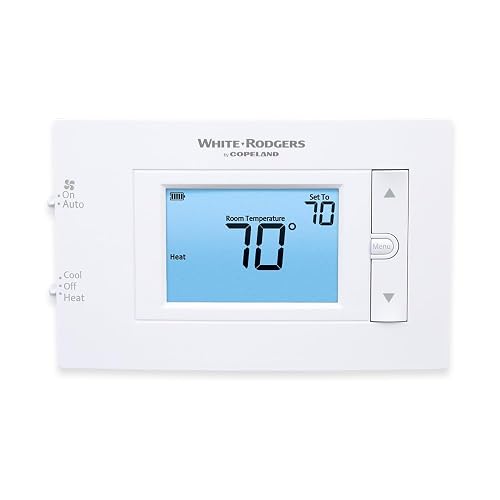
White-Rodgers 80 Series Non-Programmable Thermostat (1F83C-11NP)
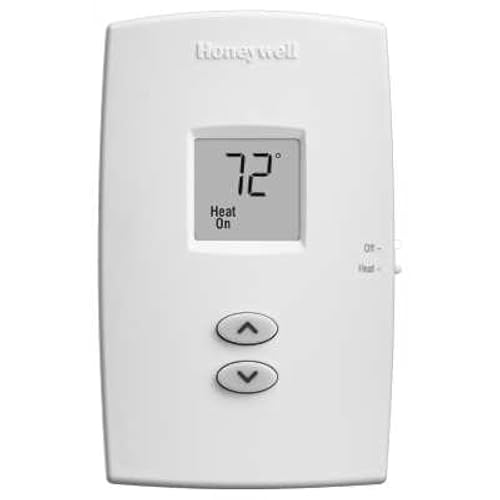
Honeywell TH1100DV1000 PRO 1000 Heat Only Thermostat
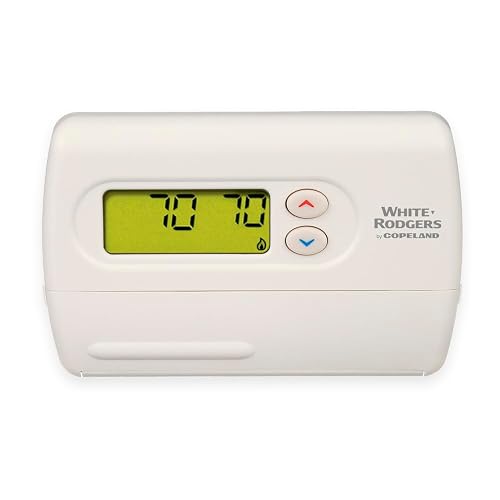
White-Rodgers 80 Series Classic 1F86-344 Thermostat
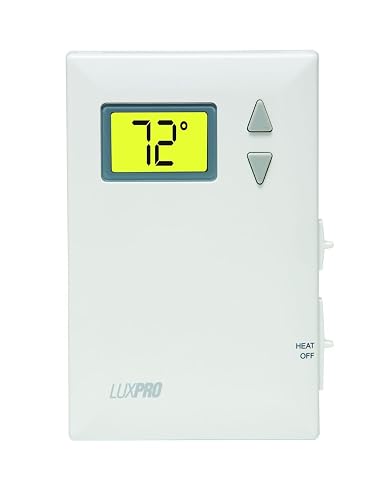
Lux PSD010B 2-Wire Heat-Only Thermostat
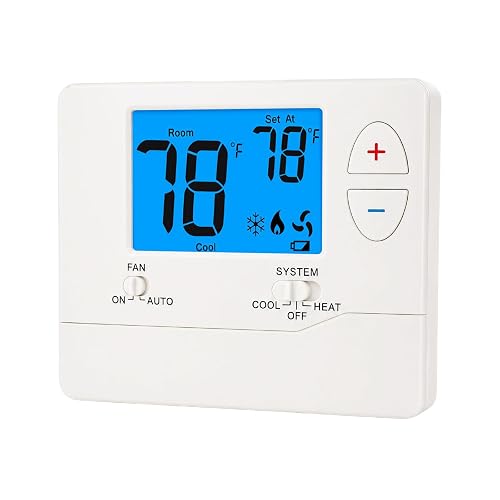
Nurfosttek Digital Energy-Saving Thermostat
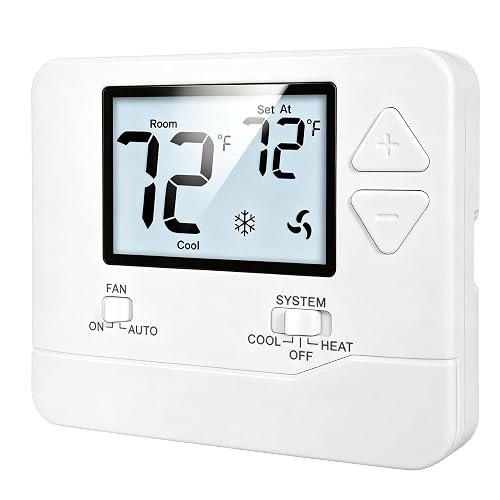
Heagstat Non-Programmable Thermostat 1H/1C

EconoHome Non-Programmable Heat & Cooling Thermostat
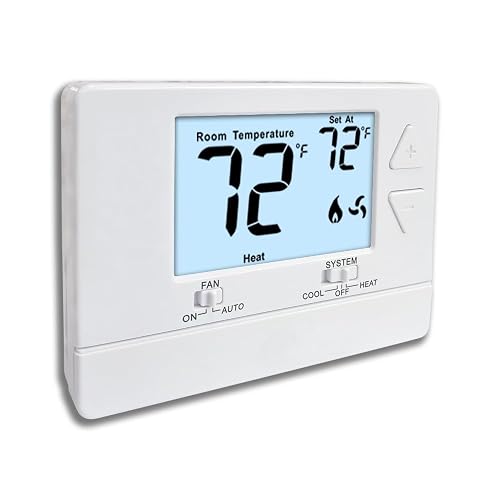
Miuputake Digital Energy-Saving Thermostat 1H/1C
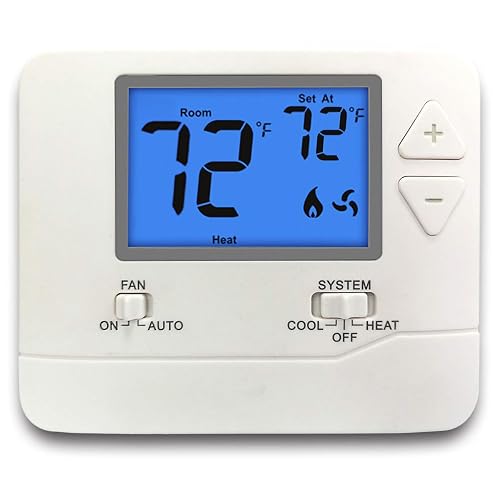
ELECTECK Non-Programmable Digital Thermostat 1H/1C

Honeywell TH3210D1004 Non-Programmable Thermostat
More On The Choices That Made The List
The 1F83C-11NP sits in the sweet spot for most Trane single-stage swaps. It’s a non-programmable unit with a clean backlit display, and the built-in level on the base plate helps you mount it straight without guesswork. For homeowners replacing a worn-out Honeywell or older Trane branded thermostat, this White-Rodgers delivers familiar up/down temperature control without a learning curve.
What makes it a sensible default is the 1H/1C wiring compatibility, which covers the majority of Trane residential systems in North American homes. The straightforward setup menu also helps if this is your first time wiring a thermostat. Most people with a screwdriver and a phone camera to photograph the old wiring can finish the swap in under thirty minutes.
What Makes Sense
- Backlit display reads clearly in dim hallways and bedrooms at night
- Built-in level on the base helps get a straight mount on the first try
- Non-programmable layout keeps daily operation simple for guests or renters
- 1H/1C compatibility covers most Trane single-stage furnaces and AC condensers
Worth Noting
- Lacks scheduling, so energy-conscious households may want a programmable upgrade
- No C-wire adapter included, which can complicate installs on older Trane systems that lack a common wire
Who It Suits Best
Homeowners with a standard single-stage Trane system who want a no-fuss replacement and don’t need weekly scheduling.
Consider Something Else When
The Honeywell TH3210D1004 is a stronger fit if your Trane equipment runs two heating stages and needs 2H/1C support.
The Honeywell TH1100DV1000 stands out mainly for its vertical orientation, which matters more than people think. If your existing wall box is narrow, the tall profile slides right in where a horizontal unit would leave gaps or require patching. The PRO 1000 series has been around long enough that installation diagrams for Trane heat-only systems are easy to find online.
For purely heating applications, this unit strips away cooling controls entirely, which keeps the interface honest about what it does. Dimensions sit around 4 11/16 inches tall by 2 7/8 inches wide, so it’s compact enough for tight spots near door frames. Compared to the broader 1F83C-11NP above, this Honeywell commits fully to heat-only setups and skips fan control.
Why It Works Well
- Vertical body fits narrow wall spaces where horizontal thermostats look awkward
- Heat-only focus simplifies the wiring to just two or three terminals
- Premier white finish blends with most wall colors without standing out
- Long-running PRO 1000 platform with widely available documentation
Trade Offs
- No cooling support, so it can’t serve homes with central air
- No backlight, which can make nighttime adjustments harder in dark hallways
Made For
Older homes with Trane heat-only baseboard or furnace systems that need a narrow-profile wall unit.
Skip It When
The Lux PSD010B is a better match if you specifically need a two-wire heat-only connection for radiant floors or a fireplace insert.
White-Rodgers leans into familiar territory with the 1F86-344, a single-stage 1H/1C unit that trades touchscreen menus for tactile control. The 80 Series Classic has been a go-to replacement for contractors swapping out failed units in older Trane systems, and the backlit display keeps the readouts visible without glare. You won’t find scheduling here, which is the point.
Where it differs from the 1F83C-11NP covered earlier is the button layout and overall presentation, which feels more like a traditional residential thermostat. For a Trane system with straightforward 1H/1C wiring and a standard 24VAC transformer, the 1F86-344 drops in cleanly. The straightforward setup menu also makes it approachable for first-time installers.
What It Does Well
- Classic button layout that feels familiar for anyone replacing an older unit
- 1H/1C support covers most Trane residential furnaces paired with a single AC condenser
- Backlit display readable in low-light conditions
Points To Note
- No programmable scheduling, so set-and-forget households miss out on setback savings
- Lacks the built-in level that the newer 1F83C-11NP includes, so a separate level tool helps
- No C-wire handling described in the source materials, which may complicate installs in older Trane homes
Best Suited To
Trane homeowners who want a familiar-looking, button-driven thermostat and don’t need weekly programs.
Not Your Match When
The Honeywell TH3210D1004 fits better if your Trane system runs two heating stages, since the 1F86-344 only supports single-stage.
The PSD010B is built for a very specific kind of install, and that focus is exactly why it makes this list. Heat-only systems using just two wires, like a fireplace insert, a millivolt floor furnace, or some radiant setups, often don’t work cleanly with the broader 1H/1C thermostats covered above. Lux designed this unit to ignore fan switching entirely and talk directly to a heating load on minimal wiring.
For a homeowner with a Trane-connected system that happens to use a simple two-wire heat call, the PSD010B saves the hassle of trying to adapt a multi-stage thermostat. The non-programmable layout means fewer buttons to navigate, and the straightforward installation sequence means most people can finish the swap in well under an hour. If your heat source is more exotic than a standard furnace, this is the kind of specialist pick that earns its place.
Where It Helps
- Two-wire heat-only design fits fireplace, stove, and radiant floor applications
- No fan switch required, which keeps the wiring minimal
- Clear installation guide aimed at home improvement projects
Honest Caveats
- No cooling support, so it can’t back a system with central air
- Limited to heat-only loads, so it’s a poor match for typical forced-air Trane furnaces
Who Should Grab It
Trane homeowners with heat-only equipment running on a simple two-wire circuit, including fireplaces and radiant floors.
Look Elsewhere When
The Honeywell TH1100DV1000 suits a vertical heat-only baseboard setup better if you need a tall wall profile.
The Nurfosttek unit leans into versatility, supporting nearly any conventional single-stage heating and cooling configuration. The intuitive control layout pairs with a clear LCD, and the “energy-saving” framing speaks to households that want a digital readout without committing to a full programmable schedule. On a Trane 1H/1C system, the wiring generally translates without surprises.
What sets this apart from the White-Rodgers units covered earlier is the wider claimed compatibility, including heat pump setups in addition to standard air conditioners and furnaces. For homeowners unsure exactly which Trane equipment they have, that flexibility can save a return trip. The trade-off is a less established brand name, so the documentation matters more during install.
Real Benefits
- Supports 1H/1C conventional and heat pump configurations in one unit
- Intuitive button layout speeds up daily temperature adjustments
- Digital LCD readouts help monitor current room temperature at a glance
Things To Consider
- Brand has less long-term track record than Honeywell or White-Rodgers, so warranty support may vary
- Non-programmable design means no setback scheduling for sleeping hours
Key Specs
Perfect Match For
Trane households that want one thermostat flexible enough to handle a heat pump or a standard split system without swapping units later.
A Better Fit Elsewhere
The Heagstat 1H/1C is a stronger match if you specifically run a forced-air gas, oil, or electric furnace and want explicit compatibility for that configuration.
The Heagstat unit is purpose-built for 24VAC conventional single-stage forced-air systems, including gas, oil, and electric furnaces paired with a separate AC condenser. That specificity matters because Trane forced-air systems are common in suburban homes, and this thermostat speaks directly to that wiring layout. The white backlight is a small but useful touch for late-night adjustments.
For most people, the install is straightforward on a 2-to-5 wire base, which matches the older Trane systems in homes built before the smart thermostat wave. The Heagstat won’t work with 6-to-8 wire systems, so homes with multi-stage equipment need to look elsewhere. Compared to the broader Nurfosttek covered above, this one trades flexibility for explicit forced-air clarity.
Points In Its Favor
- Specifically designed for 24VAC forced-air single-stage systems common in Trane homes
- White backlight improves nighttime readability
- Compatible with gas, oil, and electric furnace configurations
Things To Consider
- Not compatible with 6-to-8 wire systems, limiting use in newer multi-stage Trane setups
- Non-programmable only, so no setback scheduling
Who Will Love This
Homeowners with a Trane forced-air furnace and AC condenser who want a thermostat that explicitly supports that wiring pattern.
Reach For A Different Pick When
The Honeywell TH3210D1004 suits homes with two heating stages better, since the Heagstat is strictly single-stage.
EconoHome aims squarely at homes that heat with central gas, oil, or electric furnaces and cool with a standard air conditioner, a profile that covers a wide swath of Trane-equipped properties. The unit also includes a fan switch with on and auto modes, which gives more day-to-day control than the simpler heat-only models earlier on the list.
The straightforward digital layout keeps things approachable, and the broad fuel compatibility means renters or homeowners moving between properties can carry the same thermostat to different sites. If your Trane system uses a 4-wire or 5-wire setup, this should mount cleanly on a standard wall plate. The non-programmable framing means it targets people who want to set a temperature and walk away.
Everyday Advantages
- Works with central gas, oil, and electric furnace systems
- Fan switch with on and auto modes for flexible airflow control
- Digital display readable in varied lighting
Room For Improvement
- No programmable scheduling, so manual temperature changes are required for setback
- Digital interface may take a moment to learn for those coming from purely mechanical thermostats
The Right Fit
Trane homeowners with multi-fuel heating equipment who want both heating and cooling covered in a single unit.
Swap It Out When
The Miuputake 1H/1C is a closer match if you specifically want a DIY-friendly install experience with a backlit display.
The Miuputake unit leans hard into the DIY angle, with explicit framing around “easy DIY install” and a backlit white display that simplifies wiring checks in dark basements. It supports single-stage 1H/1C systems, which lines up well with many older Trane installations. The 2-to-5 wire base is the sweet spot, and the documentation specifically cautions buyers to verify wiring before committing.
For a first-time thermostat swap, the combination of an approachable interface and clear installation framing makes this a reasonable pick. Where it differs from the Nurfosttek covered earlier is the explicit DIY focus, including imagery-heavy instructions that walk you through terminal identification. If you have a flashlight, a screwdriver, and a photo of the old wiring, the install is typically quick.
A Strong Showing
- DIY-focused install guidance with image-based wiring instructions
- White backlight improves visibility in dim utility rooms
- 1H/1C single-stage support fits most Trane residential equipment
Worth Bearing In Mind
- Limited to 2-to-5 wire base, so it doesn’t fit multi-stage Trane systems with 6-to-8 wires
- No programmable scheduling, which energy-conscious households may miss
Whose Shelf It Belongs On
Trane homeowners new to thermostat replacement who want a clearly documented DIY path and a backlit display.
Where A Sibling Pick Shines
The ELECTECK is a better fit if you prioritize a larger LCD readout for a living room or hallway wall.
The ELECTECK trades subtlety for readability, with a larger LCD that reads cleanly from across a living room. The single-stage 1H/1C support works for most Trane split systems, and the unit accepts either gas/oil or electric configurations during setup. Compared to the Miuputake covered above, the display is the standout feature rather than the install experience.
It explicitly does not work with 110-240V line-voltage systems like electric baseboard heat, so anyone with a Trane variable-speed electric furnace running on line voltage needs to look elsewhere. The non-programmable framing is intentional, targeting users who want simple up/down control without schedule menus. For households with older members who squint at small digits, the big LCD has real value.
Strong Points
- Larger LCD improves readability from a distance or in poor lighting
- Compatible with both gas/oil and electric single-stage systems
- Straightforward up/down temperature control with no schedule menus
Trade-Offs To Consider
- Not compatible with 110-240V line-voltage electric heat, limiting use in some Trane baseboard setups
- No programmable scheduling, so daily manual adjustments are required
Built With In Mind
Trane homeowners with single-stage split systems who want a clear, easy-to-read display in main living areas.
Another Choice May Suit
The Heagstat 1H/1C fits better if you specifically run a forced-air furnace and want explicit compatibility framing.
The Honeywell TH3210D1004 is the only pick on this list that supports 2H/1C, which makes it the right call for Trane systems with two heating stages. The Pro 3000 series has been a workhorse in residential HVAC for years, and the backlit digital display shows both current and set temperatures at the same time, a small detail that helps you avoid constant re-reading.
For Trane homes running a two-stage furnace with a single-stage AC, this thermostat handles the wiring without complaint. Compared to the single-stage units earlier on the list, the TH3210D1004 trades simplicity for capability, so make sure your system actually needs that second heating stage. Most older Trane installs are single-stage, in which case one of the 1H/1C picks above is the more appropriate match.
Well-Handled Touches
- 2H/1C support covers Trane two-stage heating systems with single-stage cooling
- Backlit display shows both current and set temperatures simultaneously
- Precise comfort control keeps the room within a tight temperature band
Less-Strong Areas
- Non-programmable only, so no automatic setback scheduling
- Overkill for single-stage Trane systems, where a simpler 1H/1C unit is a better match
Feature Snapshot
Right Fit For
Trane homeowners with two-stage heating who want a Honeywell unit without paying for full programmability.
Not Your Match When
The White-Rodgers 1F83C-11NP is a better match if your Trane system is single-stage and you don’t need the extra heating stage.
What Matters Most Before Choosing trane compatible thermostats
Match the Wiring Before Anything Else
Trane residential systems typically use low-voltage 24VAC control circuits, and the number of wires at your existing thermostat dictates which replacements will work. A 2-wire setup usually signals a heat-only system, while 4 or 5 wires cover most single-stage heating and cooling. Count the wires at the wall before browsing, since most returns come from a mismatch in this step.
Understand the Stage Count
Single-stage (1H/1C) systems run one heating and one cooling stage, which covers most Trane homes built before the 2010s. Two-stage (2H/1C) systems, like those supported by the Honeywell TH3210D1004, use a low and high fire for more even heating. Picking a thermostat that can’t handle your actual stage count leads to short-cycling or unused equipment capacity.
Prioritize the Interface You’ll Actually Use
Non-programmable thermostats like the picks on this list trade scheduling features for simpler buttons and a smaller learning curve. For households that set a temperature and leave it alone, that tradeoff is a feature. For people who want setback savings overnight, a programmable upgrade may justify the extra cost, but the simpler units here are easier to live with long term.
Plan for Installation Realities
Most of these thermostats mount on a standard 4-wire or 5-wire base, but several explicitly limit compatibility to 2-to-5 wire configurations. A photo of your current wiring before ordering saves a return trip. If your existing thermostat lacks a C-wire (common wire), some replacements may need an adapter or may not work at all without one.
Key Considerations Across These Picks
Common Shopping Slip Ups
The most common mistake is buying a thermostat based on the brand name without checking stage count and wiring. A Honeywell unit designed for 2H/1C won’t help on a single-stage Trane system, and a 2-wire heat-only Lux won’t serve a 4-wire cooling setup. Confirm the stage count on your furnace or air handler before clicking through, and photograph the existing terminal connections.
Where The Extra Money Goes
Higher-tier non-programmable thermostats like the Honeywell TH3210D1004 cost more because they support multi-stage equipment and offer tighter temperature precision. That upgrade only pays off if your Trane system actually runs two heating stages. For single-stage homes, the money is better spent on a clean display and verified wiring compatibility rather than extra stages you won’t use.
Frequently Asked Questions
Will any of these work with my Trane furnace?
Most single-stage Trane furnaces use a standard 24VAC control circuit that pairs with any of the 1H/1C thermostats on this list. The catch is wiring count, since Trane systems with only two or three wires at the wall need a heat-only or low-wire compatible unit like the Lux PSD010B.
Do I need a C-wire for these thermostats?
Several of these replacements, including the Heagstat and Miuputake units, do not require a C-wire thanks to their 2-to-5 wire base design. For older Trane homes without a common wire, that simplifies install considerably, though verifying the existing wiring is still important before mounting.
Can I install one of these myself?
Most homeowners with a screwdriver and a photo of the old wiring can finish a non-programmable swap in well under an hour. The Miuputake leans into DIY framing with image-based instructions, while the Honeywell and White-Rodgers models follow standard low-voltage wiring conventions. If your existing system has a high-voltage line-voltage circuit, professional help is the safer route.
What’s the difference between 1H/1C and 2H/1C?
1H/1C means one heating stage and one cooling stage, which covers the majority of Trane residential equipment. 2H/1C means two heating stages, which lets the furnace run at low fire most of the time and ramp up only on colder days. The Honeywell TH3210D1004 is the only pick on this list that supports 2H/1C.
Are these thermostats compatible with Trane heat pumps?
Several models, including the Nurfosttek unit, claim compatibility with single-stage heat pump systems. For Trane heat pumps specifically, confirm that the thermostat supports the O/B reversing valve terminal, since some generic 1H/1C thermostats handle conventional systems only. The source data on individual products varies, so check the listing details before purchase.
Closing Remarks
Picking the right replacement for a Trane system comes down to honest wiring, stage count, and a clear picture of how the household actually uses temperature control. Match the wires first, then the stages, then the display and interface. Any of the picks above can serve a well-matched Trane system, and the right one depends on the room, the equipment, and how much daily adjusting you want to do.