
Homes with mixed HVAC gear, a finished basement plus a garage workshop, or two separate rental units on one property often need a pair of wall thermostats that each match the system they control. The challenge is that “thermostat” sounds like a one-size-fits-all word, but a heat pump staged differently from a gas furnace, or a main floor running on a learning thermostat while a sunroom sits on a basic dial, demands careful pairing. This roundup walks through nine thermostats that genuinely work as a matched pair, from simple two-wire replacements to a smart learning unit bundled with a remote sensor, so you can pick the right one for each zone.
The Main Contenders
PRO1 T725 Programmable Heat Pump/Conventional Thermostat (2H/1C)

PRO1 T771 Non-Programmable Wall Thermostat (1H/1C)
PRO1 T701 Non-Programmable Wall Thermostat (1H/1C)

PRO1 T715 Multi-Stage Programmable Gas Thermostat (2H/2C)
1C20-101 Replacement Wall Thermostat (1 Heat, 0 Cool)
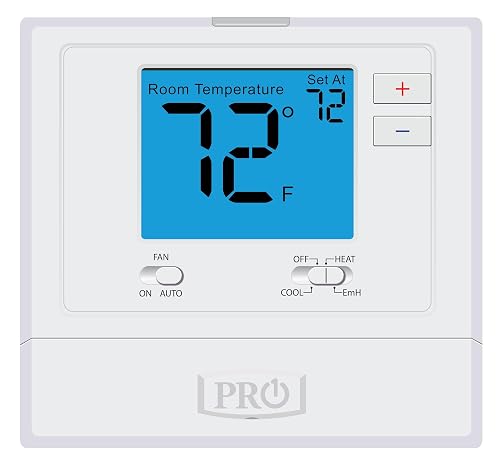
PRO1 T721 Non-Programmable Wall Thermostat (2H/1C)
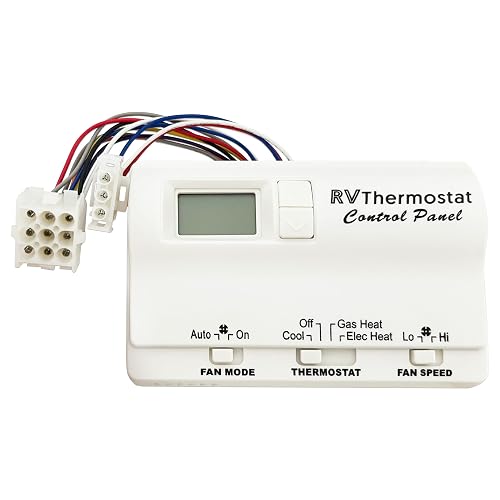
6536A3351 Digital Thermostat for Coleman Mach

PRO1 T805 Programmable Wall Thermostat (1H/1C)
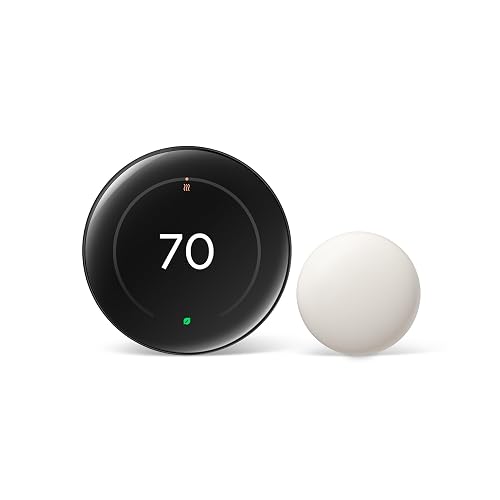
Google Nest Learning Thermostat (4th gen) + Temperature Sensor (Obsidian)
The Strengths Of Each Pick
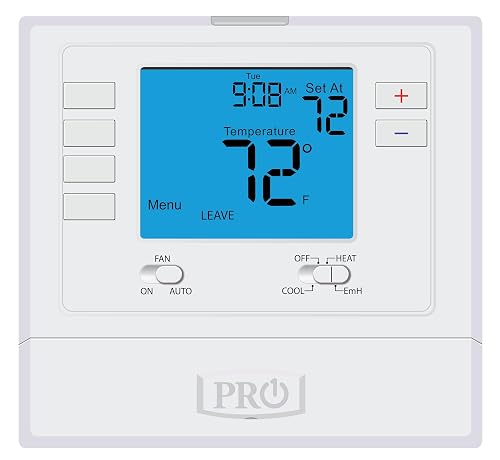
The PRO1 T725 is the kind of wall thermostat that quietly solves the “which box do I buy?” problem when a home uses a heat pump upstairs and a conventional system downstairs. It accepts 2 heat/1 cool heat pump setups as well as 1 heat/1 cool conventional setups, so the same unit can run on either zone without a second trip to the hardware store.
For a household that likes a schedule, the 7-day or 5/1/1 programming options (where 5/1/1 means five weekdays plus Saturday and Sunday each scheduled independently) cover most routines, and the 4 sq. in. blue backlit screen is large enough to read across the room. Compared with the simpler PRO1 T701, this one adds real scheduling muscle without becoming a learning thermostat.
Everyday Advantages
- Dual system compatibility removes the need to stock two different thermostats
- Flexible 7-day or 5/1/1 scheduling fits shifting work weeks
- Large blue backlit display stays readable in dim hallways
- Programmable wake, leave, return, and sleep periods cover a full day
Things To Weigh
- Programming setup can feel tedious for anyone who prefers a learning curve-free dial
- Conventional systems need only the 1H/1C terminals, so a few wires sit unused on heat pump installs
Who It Suits Best
Homeowners with a heat pump plus a conventional backup zone who want one model of thermostat to learn and stock.
Consider Another Pick When
Skip the PRO1 T725 and reach for the PRO1 T701 if your whole house runs on a single-stage conventional system and you have no interest in scheduling.
The PRO1 T771 is purpose-built for the rooms other thermostats forget about. Its 25°F to 90°F setpoint range reaches much lower than most wall units, which makes it a strong fit for unheated garages, detached workshops, and sheds that need freeze protection rather than a comfortable living temperature.
The 4 sq. in. blue backlit screen is small but readable, and swing adjustment (the number of degrees the temperature must drift past the setpoint before the system kicks on) plus calibration controls give a handy installer some fine-tuning room. Unlike the programmable PRO1 T725, this model stays non-programmable on purpose, so setpoint changes happen with a button press rather than a menu.
Standout Benefits
- Wide 25°F–90°F range handles unconditioned spaces that would confuse a typical home thermostat
- Swing adjustment and calibration give installers real tuning room
- Non-programmable design keeps operation simple for seasonal spaces
Trade Offs
- Single-stage conventional only, so it cannot drive a heat pump or multi-stage system
- No scheduling means manual adjustments for day and night
Made For
Garages, sheds, and workshops where low-temperature protection matters more than comfort scheduling.
Look Elsewhere When
Choose the PRO1 T715 instead if you need a gas furnace thermostat with multi-stage scheduling for a livable room.
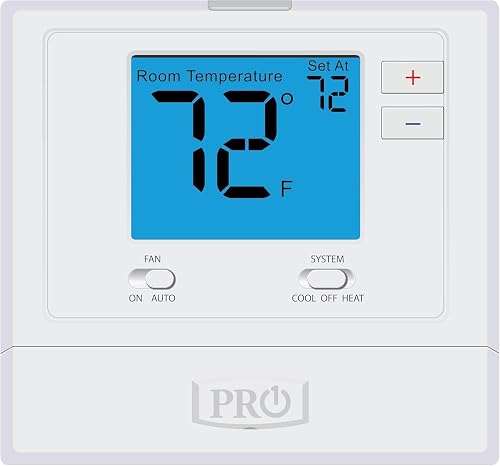
Where the PRO1 T701 shines is in homes that want a thermostat a guest can operate without a tutorial. The 4 sq. in. blue backlit screen pairs with a glow-in-the-dark light button, so the most common action, “turn the heat up,” never feels like a scavenger hunt in a dark hallway.
It supports 1 heat/1 cool conventional systems with gas or electric compatibility, which covers a huge share of older North American homes. Compared with the T771, it shares the non-programmable approach but is tuned for indoor living comfort, so its setpoint range sits in a more typical residential band.
Real Benefits
- Glow-in-the-dark light button makes nighttime adjustments painless
- Gas or electric compatibility covers the most common residential setups
- Larger T700 platform display is comfortable to read across the room
Points To Keep In Mind
- No scheduling means temperature swings follow your manual changes
- Limited to single-stage conventional systems, so heat pump owners should look elsewhere
Best Suited To
Single-stage conventional homes where simple, manual control beats programming complexity.
A Better Fit Elsewhere
Pick the PRO1 T805 instead if you want a similar simple interface plus optional scheduling and a larger display.
The PRO1 T715 is the most capable conventional thermostat in this lineup, built for 2 heat/2 cool gas systems (a configuration that runs two heating stages and two cooling stages for tighter temperature control). The 4 sq. in. blue backlit display is paired with a glow-in-the-dark light button, so navigating menus at night does not feel like a chore.
Programming flexibility is the headline feature. The unit supports 7-day, 5/1/1, or fully non-programmable operation, meaning you can build a custom schedule, a weekday-weekend split, or just turn it into a manual thermostat on a whim. Compared with the T725, this model adds a second stage of heat and cool for systems that benefit from staging.
Where It Excels
- Multi-stage gas support matches two-stage furnaces that prefer gradual ramp-up
- 7-day, 5/1/1, or non-programmable modes let a household pick its own comfort
- Battery or hardwire power (the “C-wire” that delivers continuous 24V power from the furnace) keeps installation flexible
Softer Spots
- Programming has a learning curve that may frustrate casual users
- Overkill for simple single-stage homes, where a T701 would do the same job at lower complexity
Right Fit For
Two-stage gas furnace homes that want true scheduling, not just a manual dial.
Swap It Out When
Choose the PRO1 T725 instead if you run a heat pump primary system rather than a multi-stage gas furnace.
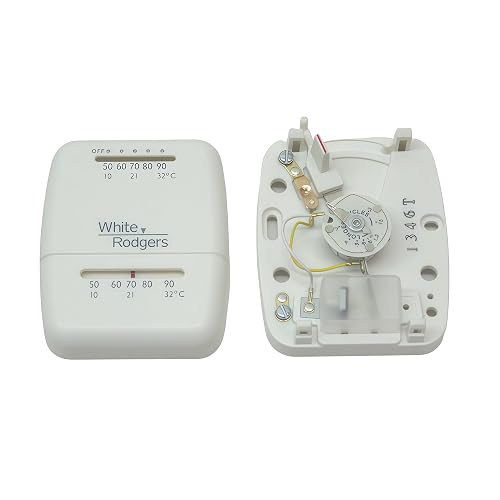
The 1C20-101 is a specialty wall thermostat built to slot directly into existing White-Rodgers 1C20-101 footprints. With 1 heat, 0 cool, two-wire 24V operation, and a snap-action switch (a mechanical switch that clicks firmly between on and off contacts), it’s a like-for-like replacement for older mechanical units that have finally given up the ghost.
The 50°F–90°F range covers a typical living space, and a vertical rounded profile keeps the swap visually quiet. It is mercury-free, which matters for anyone replacing an old mercury-bulb stat. This is not a smart upgrade pick. It is a no-drama replacement for a specific retrofit.
Well-Handled Touches
- Direct compatibility with White-Rodgers 1C20-101 mounts shortens install time
- Snap-action switch delivers firm, predictable contact closure
- Mercury-free design avoids hazards of older mechanical replacements
Less-Strong Areas
- Heat-only configuration rules out cooling zones
- Replacement-specific design means it makes no sense in new construction
Who Should Grab It
Anyone replacing a worn-out White-Rodgers 1C20-101 with a same-fit, modern mechanical substitute.
Reach For A Different Pick When
Pick the PRO1 T701 instead if you want digital precision and a backlit screen for everyday living space.
The PRO1 T721 sits between the simple T701 and the programmable T725, accepting either a 2 heat/1 cool heat pump or a 1 heat/1 cool conventional system. That makes it the right call for a back bedroom, finished basement, or in-law suite where the equipment type does not match the rest of the house.
The 4 sq. in. blue backlit display plus glow-in-the-dark light button carry over from the rest of the T700 family, and AA battery or hardwire power offers installation flexibility. It is non-programmable, so the mental model stays simple: set the temperature, leave it alone.
Benefits That Matter
- Heat-pump-or-conventional compatibility covers mixed-system homes
- Glow-in-the-dark button keeps nighttime adjustments effortless
- Battery or hardwire power (using a C-wire for steady 24V) adapts to older wiring
Worth Noting
- No scheduling, so a regular weekday routine requires manual tweaks
- Heat pump mode uses 2H/1C, but conventional mode drops to 1H/1C, which limits expansion
Perfect Match For
Secondary zones paired with a heat pump primary or a mixed-system home that wants simple, no-schedule control.
Where Another Pick Suits Better
Pick the PRO1 T725 instead if you want scheduling on top of the same dual-mode flexibility.
The 6536A3351 is a two-stage digital thermostat designed specifically for Coleman Mach rooftop systems in RVs, so it solves a problem that a household pick like the PRO1 T701 cannot touch. The unit supports both heat pump and gas furnace operation, which matches how most modern RVs run heating and cooling from a single rooftop unit.
A 9-pin and 3-pin plug-through body configuration lines up with the original wiring, which keeps the swap from turning into a wire-by-wire project. It is not a universal thermostat, but for owners of compatible Coleman Mach systems, it is one of the cleanest ways to bring a failed control board back to life.
Notable Upsides
- Heat pump and gas furnace compatibility matches typical RV rooftop systems
- 9-pin and 3-pin plug-through body aligns with stock Coleman wiring
- Two-stage control offers more precise comfort in a small space
Honest Caveats
- Specific to Coleman Mach models, so it will not drop into a household system
- Replacement focus means no smart features or app control
Whose Shelf It Belongs On
RV owners with compatible Coleman Mach rooftop units who need a direct-swap digital control.
Skip It When
Choose the PRO1 T715 instead if you are outfitting a fixed residential home, since this RV-focused unit is not designed for that environment.
The PRO1 T805 is the readability champion of the lineup, with a 7 sq. in. blue backlit display that nearly doubles the screen area of the 4 sq. in. T701. For anyone who squints at thermostat numbers from across the room, that extra real estate is a genuine quality-of-life upgrade.
It is a T800 platform unit with 7-day, 5/1/1, or non-programmable modes for 1 heat/1 cool conventional systems. The glow-in-the-dark light button carries forward from the T700 line, and the T800 platform typically offers extra configuration depth. Compared with the T701, it adds scheduling and a bigger display without jumping into the multi-stage T715 territory.
Features That Help
- Extra-large 7 sq. in. display is the easiest to read in this list
- 7-day, 5/1/1, or non-programmable modes match any comfort style
- T800 platform typically offers more installer-level configuration
Points To Note
- Single-stage conventional only, so heat pump homes need a different pick
- Larger display means a slightly bigger wall footprint than the T701
Who Will Love This
Households that want scheduling plus the easiest possible display to read, especially in larger rooms or hallways.
Not Your Match When
Pick the PRO1 T725 instead if your primary system is a heat pump, since the T805 is conventional-only.
The Google Nest Learning Thermostat (4th gen) is the most hands-off option in this roundup, since it builds its own schedule by tracking how you adjust the temperature over time. The bundle includes a 2nd gen Nest Temperature Sensor, so the thermostat can average readings from another room rather than relying only on the hallway wall.
The Obsidian finish keeps the look understated, and pairing it with a simpler pick like the PRO1 T701 for a garage or workshop creates a two-zone setup where the main living space learns your routine while a secondary zone stays manual. For a smart-home primary zone, the learning curve feels short, since the device does most of the schedule-building for you.
Everyday Perks
- Learning thermostat builds a schedule based on your adjustments
- Bundled temperature sensor balances hot and cold rooms in the same zone
- Obsidian finish blends with most modern interior styles
Practical Considerations
- Smart features require a stable Wi-Fi connection and ongoing account setup
- Higher complexity than a PRO1 T701 for households that just want a manual dial
Built With In Mind
Smart-home households running a primary living zone with a stable Wi-Fi network and a desire for the thermostat to do the scheduling work.
Another Choice May Suit
Pick the PRO1 T805 if you prefer a traditional wall thermostat with optional scheduling and no app or Wi-Fi dependence.
Matching Thermostats To Your System Type
Picking two thermostats starts with the equipment, not the screen size. Look at the terminals behind your current faceplate. If you see a single Rc or Rh wire plus a W for heat and a Y for cool, you are running a 1 heat/1 cool conventional system, which lines up with the PRO1 T701, T805, or T771. If you spot an O wire (which signals heat pump mode changeover) and a C wire (the common wire that returns 24V power to the thermostat), you likely have a heat pump that calls for the PRO1 T725 or T721.
A two-stage gas furnace usually has two heating wires (W1 and W2) plus two cooling wires (Y1 and Y2). That is where the PRO1 T715 earns its keep. The Coleman Mach 6536A3351 is a different story entirely, since it is engineered for RV rooftop systems with a 9-pin and 3-pin plug-through body that household thermostats cannot replicate.
Power matters too. Most modern wall thermostats run on 24V AC from the furnace, often delivered through a C wire. Some units in this list, like the PRO1 T701 and T721, can run on AA batteries, which helps in older homes without a C wire. If you are unsure, snap a photo of the wiring before you buy.
The next question is scheduling. If you live by a routine, a programmable unit (the T725, T715, or T805) saves real effort. If your day is unpredictable, a non-programmable T701 or T721 stays simpler. Pairing a smart learning thermostat like the Nest 4th gen on the main floor with a basic non-programmable T701 in a guest room is a common two-zone arrangement that balances convenience and simplicity.
Key Considerations Across These Picks
Common Shopping Slip Ups
The most frequent mistake is matching the wrong system type. A heat pump homeowner who buys a 1 heat/1 cool conventional thermostat will lose the O/B reversing valve control, which controls whether the heat pump heats or cools, and the system will run wrong. The second slip is ignoring wiring, especially the C wire. A learning thermostat like the Nest 4th gen typically requires steady 24V power, so households without a C wire may need an adapter or a new wire run before installation.
Where The Extra Money Goes
Premium models in this list add three things: larger displays, more programming flexibility, and smart features. The T805’s 7 sq. in. screen is a real upgrade for anyone who reads thermostats from a distance. The Nest 4th gen bundle costs more because it learns your schedule and ships with a remote temperature sensor. The trade-off is complexity. A homeowner with a single-stage gas furnace and a steady routine may never use the extra capability, while a household juggling two zones and a heat pump primary will feel the difference every day.
Frequently Asked Questions
Can two thermostats work with different HVAC systems in the same home?
Yes, the systems do not need to match. Many homes pair a heat pump primary zone with a conventional backup zone, which is why dual-mode thermostats like the PRO1 T725 and T721 exist. Each thermostat controls its own system independently.
Do I need a C wire for a digital thermostat?
Most digital wall thermostats, including the PRO1 T700 series and the Nest 4th gen, need steady 24V power that a C wire provides. Some PRO1 models accept AA batteries instead, which helps in older homes without that common wire run.
What is the difference between programmable and learning thermostats?
A programmable unit follows a schedule you set in advance, while a learning thermostat like the Nest 4th gen builds its own schedule by watching when you adjust the temperature. Programming upfront takes more effort, but it stays predictable, while learning feels hands-off after the first couple of weeks.
Can I install a thermostat myself?
Many homeowners handle a like-for-like swap, especially when the new thermostat matches the old terminal layout, like the 1C20-101 replacement. A new system type, especially a heat pump where the O/B wire matters, is a reasonable point to call a licensed HVAC installer.
Is a smart thermostat worth it for a second home or rental?
A learning thermostat pays off most in a space you use regularly, since the schedule learns from your patterns. For a rarely used guest room or workshop, a simple non-programmable PRO1 T701 or T701-style unit is usually the more practical pick.
The Takeaway
Two thermostats work best when each one matches the system it sits in front of, so start with the wiring and equipment type before you fall in love with a screen size. A conventional zone and a heat pump zone each have a clear favorite in this roundup, and pairing them turns a two-system home into a comfortable one without overcomplicating either control. Trust the equipment, choose the simplest thermostat that handles it, and you will rarely regret the pick.