

Picking a thermostat that plays nicely with Vivint’s wider smart-home ecosystem can feel like threading a needle, especially when wiring, voltage, and HVAC staging all need to line up. Many households want a clean touchscreen, app control, and reliable scheduling without handing over the keys to a clunky interface. This roundup walks through nine options that slot into most Vivint-friendly 24V setups, with honest notes on who each one actually suits. Whether you’re upgrading a single-stage system or running a heat pump, there’s a sensible match below.
A Quick View Of The Lineup
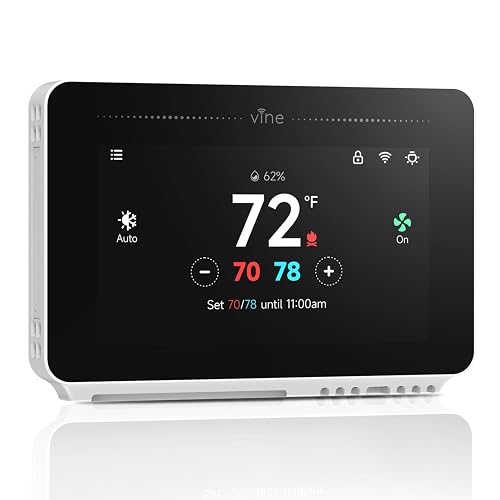
vine Programmable Thermostat with 4.3″ Touch Screen (TJ-919T)
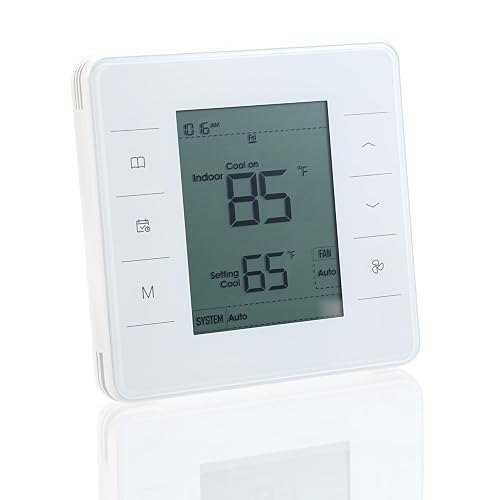
BOWSEN Programmable Thermostat for Heat Pump Systems

Honeywell Home Lyric T6 Pro Wi-Fi Programmable Thermostat
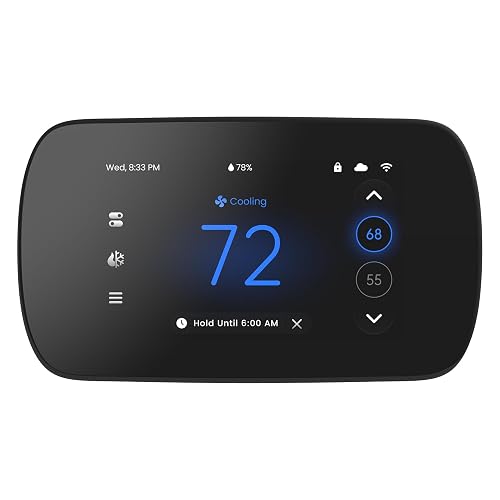
EdgeAnt Smart WiFi Thermostat with 4.3″ Touch Screen
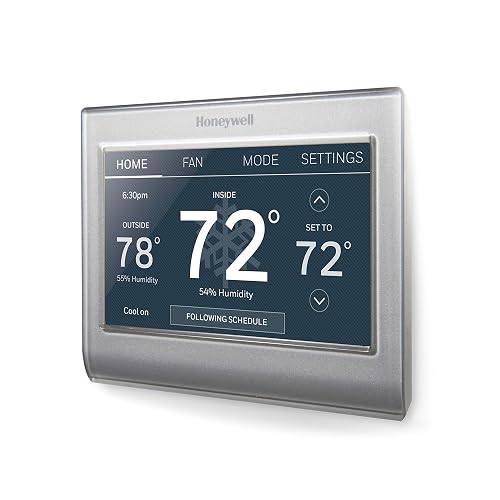
Honeywell Home RTH9585WF Wi-Fi Smart Color Thermostat
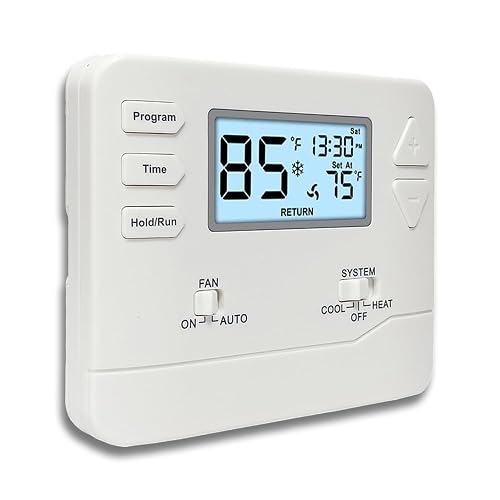
Miuputake 5-1-1 Day Programmable Digital Thermostat
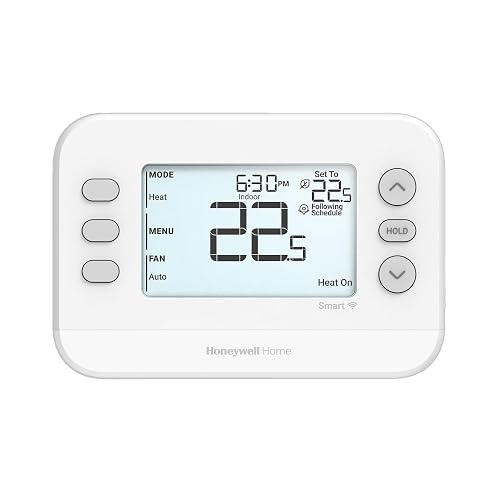
FocusPRO S200 Smart WiFi Thermostat (TH2110WF4008/U)
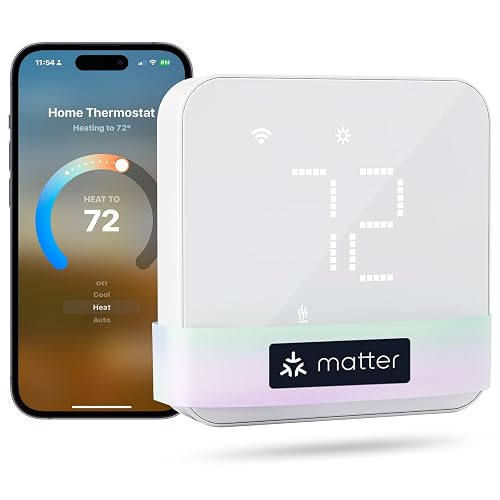
meross Matter Smart WiFi Thermostat for HVAC
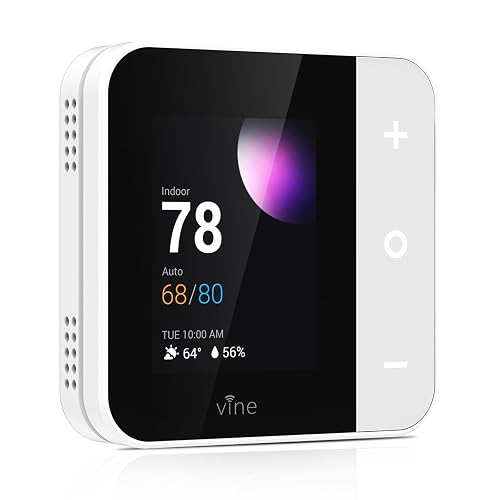
vine Thermostat with 2.8″ Color Touchscreen
Taking A Closer Look At The Options
The vine TJ-919T is the kind of thermostat you notice from across the room, mostly because the 4.3-inch color display is significantly larger than the typical 2.8-inch panel. For households where the thermostat lives at eye level in a hallway, that real estate matters: the room temperature, mode, and schedule read clearly without squinting, and the screen auto-adjusts brightness based on ambient light, so it isn’t a glowing rectangle at midnight.
Setup leans on the Vine app or the Smart Life app, and a C-wire (the common wire that delivers continuous 24V power) is required, which is worth confirming before ordering since some older homes lack one. The voice control side works with Alexa and Google Assistant, and the 7-day, multi-period programming covers most working-from-home schedules.
Benefits That Matter
- 4.3-inch color touchscreen that stays legible at a distance and dims automatically at night
- App and voice control through Alexa and Google Assistant for hands-free adjustments
- 7-day scheduling with multiple periods per day handles shift workers and hybrid routines
- Wide HVAC compatibility covering conventional 2H/2C and heat pump 4H/2C setups
Trade Offs To Consider
- C-wire required, so older homes without a common wire need an adapter or new pull
- App onboarding occasionally requires a firmware update before first pairing, a minor speed bump
Made For
Households with standard 24V HVAC who want a screen large enough to read from across a hallway or open-plan living area.
Where Another Pick Suits Better
Shoppers with a tighter wall footprint or a smaller mounting plate should look at the vine 2.8-inch touchscreen model further down the list.
The BOWSEN thermostat takes a more pared-down approach compared to the vine 4.3-inch touchscreen above. There’s no app-driven deep menu or color interface: instead, you get a single-stage, 1-heat/1-cool programmable unit aimed at homeowners who want reliable temperature control without paying for connectivity they won’t use.
It’s built primarily for 24V heat pump systems and most conventional single-stage setups, including central gas, oil, and electric furnaces. A room temperature monitor is built in, and the unit uses simple push-button scheduling rather than a touchscreen, which keeps the price low and the learning curve short.
Advantages To Know
- Compatible with most 24V conventional single-stage systems and basic heat pumps
- Straightforward push-button programming, no app account required
- Built-in room temperature monitor for at-a-glance readings
Honest Caveats
- No WiFi, app, or voice control, so remote adjustments aren’t possible
- Limited to 1 heat/1 cool, so multi-stage systems will be under-served
- Display is functional rather than decorative, which is fine for utility rooms but less so for main living spaces
Key Specs
Best Suited To
Owners of single-stage 24V systems who want dependable scheduling without WiFi, apps, or monthly features.
Look Elsewhere When
You want voice control and remote scheduling, in which case the Honeywell Home Lyric T6 Pro is a better fit.
The Honeywell Home Lyric T6 Pro steps in for households whose HVAC setup isn’t a one-or-the-other proposition. It supports up to 2 heat/1 cool on heat pump systems or 2 heat/2 cool on conventional systems, which is a meaningful step up from the BOWSEN single-stage approach. If your home has a multi-stage furnace or a heat pump with backup, this thermostat is designed to handle those stages without short-cycling.
WiFi is built in, and the unit pairs with Honeywell’s app for remote scheduling, geofencing (using your phone’s location to adjust the temperature as you come and go), and integration with smart-home platforms. The interface is a soft-touch keypad with a clear monochrome display, which trades the vine’s color flair for a more utilitarian, pro-installer feel.
Bright Spots
- Supports multi-stage systems: 2H/1C heat pump or 2H/2C conventional
- WiFi-enabled with app-based scheduling and remote temperature control
- Honeywell’s reputation for HVAC-grade components and installer-friendly wiring
Points To Note
- Display is monochrome rather than color, so it’s less decorative than the vine or RTH9585WF
- Setup is geared toward professional installers, which can feel involved for first-timers
Feature Snapshot
Right Fit For
Homeowners running multi-stage heating or cooling who want a pro-grade Honeywell unit with WiFi but don’t need a color screen.
Reach For A Different Pick When
You want a full-color touchscreen instead; the Honeywell Home RTH9585WF delivers that while keeping WiFi and 7-day programming.
The EdgeAnt lands in a similar visual category as the vine 4.3-inch model, with a color touchscreen that won’t leave you tapping blindly, but it pushes scheduling deeper. The headline feature is 7-day, 8-period programming, which lets you define eight distinct temperature blocks per day. For households with rotating shifts, school pickups, or nap-time routines, that granularity is genuinely useful rather than theoretical.
WiFi is baked in, voice control works through Alexa and Google Assistant, and a C-wire is required, much like the vine. Compatibility excludes some niche setups, including 2-wire heat-only systems, electric baseboard heating (120-240V), line-voltage or millivolt systems, and humidifiers, so a quick wiring check on the manufacturer’s compatibility page is worth the five minutes.
A Few Highlights
- 4.3-inch color touchscreen with 7-day, 8-period scheduling for highly customized routines
- Voice control via Alexa and Google Assistant, plus app-based remote access
- C-wire required design keeps power delivery consistent across long runs
Less Ideal Details
- Not compatible with 2-wire heat-only, line-voltage, or millivolt systems, so older homes need careful checking
- Pre-purchase compatibility verification on the manufacturer’s site adds an extra step
Core Details
Who Will Love This
Schedulers who want eight temperature blocks per day and a screen large enough to see what each block does at a glance.
Swap It Out When
You want broader smart-home ecosystem support including Apple Home; the meross Matter Smart Thermostat handles that side more directly.
Where the Lyric T6 Pro leans pro, the Honeywell Home RTH9585WF leans into the display itself. It’s a customizable color touchscreen that can be tuned to match paint colors or personal preference, which sounds cosmetic until you live with a thermostat that blends into the wall instead of screaming for attention. For visible living areas, that subtle touch makes a real difference.
Underneath the screen, this is a 7-day programmable, WiFi-enabled thermostat that’s Alexa-ready and Energy Star rated, with a C-wire required for power. It’s not compatible with line-voltage heating, so homes with electric baseboard heat will need to look elsewhere, but for 24V forced-air and most heat pump setups, it slides in cleanly.
Notable Upsides
- Customizable full-color touchscreen that can blend with wall paint or stand out intentionally
- 7-day programmable scheduling with WiFi and Alexa integration
- Energy Star rated for efficiency-focused households
Things That May Matter
- Not compatible with line-voltage heating, so baseboard and high-voltage systems are out
- C-wire required, which may mean an adapter or new wire run in older homes
At A Glance
Perfect Match For
Style-conscious households who want a color display that integrates with the rest of the room rather than dominating it.
Not Your Match When
You run line-voltage or electric baseboard heating; the EdgeAnt or BOWSEN options handle those setups more reliably.
The Miuputake thermostat embraces a familiar scheduling pattern: 5-1-1 programming, which means separate temperature settings for weekdays, Saturday, and Sunday. For households with consistent weekday routines and slightly different weekend habits, that’s plenty of flexibility without the curve of a 7-day grid. A white backlight keeps the display readable in dim hallways and basements.
Compatibility is wide for a single-stage unit: forced air (gas, oil, electric), electric furnaces, hot water steam, gravity radiant heat, heat-only systems, heat pumps without auxiliary heat, millivolt setups, gas fireplaces (24V), floor and wall furnaces, and cool-only systems. Heat pumps with auxiliary or emergency heat are excluded, so double-check the wiring before committing.
What It Does Well
- 5-1-1 day programming covers the common weekday/weekend split
- Broad system compatibility, including millivolt and gas fireplaces (24V)
- White backlight for clear readings in low light
Where It May Fall Short
- Not compatible with heat pumps that use auxiliary or emergency heat stages
- Limited to 1 heat/1 cool, so multi-stage systems will not use their full capacity
Built With In Mind
Single-stage homes with straightforward weekday-to-weekend temperature changes and no need for app or voice control.
Consider Something Else When
You have a heat pump with auxiliary heat; the Honeywell Home Lyric T6 Pro is designed to manage those extra stages properly.
The FocusPRO S200 brings something the rest of this list mostly skips: a 5-year warranty, which signals a manufacturer confident in long-term reliability. For households who install a thermostat and then forget about it for years, that kind of coverage is more reassuring than a flashy color display.
Under the hood, it’s a 1-heat/1-cool, 24V hardwired unit with dual-band WiFi (2.4 GHz or 5 GHz, the two frequency ranges your router broadcasts on) and app control through the First Alert by Resideo app. Voice integration covers Alexa, Google Assistant, and Apple HomeKit, which is broader than most competitors that stop at two ecosystems. Energy Star rating adds efficiency credibility.
The Helpful Details
- 5-year warranty offers long-term ownership peace of mind
- Dual-band WiFi (2.4 GHz and 5 GHz) for flexible network placement
- Supports Alexa, Google Assistant, and Apple HomeKit, broader than most rivals
- Energy Star rated for efficiency
Smaller Caveats
- Limited to 1 heat/1 cool, so multi-stage systems aren’t fully addressed
- Display is more functional than decorative, which suits utility rooms better than feature walls
Whose Shelf It Belongs On
Homeowners who want broad smart-home compatibility, energy efficiency, and a longer warranty than most thermostats offer.
Another Choice May Suit
You need multi-stage support; the Honeywell Home Lyric T6 Pro handles 2H/2C conventional systems without breaking a sweat.
The meross thermostat is the only pick in this roundup built around Matter, the newer smart-home connectivity standard that aims to make devices from different brands talk to each other more reliably. For households juggling Alexa, Apple Home, and Google Assistant, Matter support means the thermostat can sit inside any of those ecosystems without depending on manufacturer-specific bridges. That’s a meaningful forward-looking feature.
Compatibility covers roughly 95% of HVAC systems: heat pumps, air conditioners, furnaces, boilers, dehumidifiers, and humidifiers. It excludes 110V/120V/240V electric baseboard heaters, millivolt thermostats, and two-wire systems, and a C-wire is required. For most modern 24V setups, the wiring is straightforward.
Reasons It Performs
- Matter protocol support for cross-ecosystem compatibility with Alexa, Apple Home, and Google Assistant
- Works with roughly 95% of common HVAC system types
- App and voice control, with scheduling aimed at energy savings
Possible Compromises
- Not suitable for line-voltage (110V/120V/240V) electric baseboard systems
- C-wire required, so older wiring may need an adapter before installation
Who Should Grab It
Smart-home enthusiasts running multi-ecosystem setups who want Matter support as a hedge against future platform changes.
Skip It When
You’d rather keep things simple and WiFi-only; the FocusPRO S200 covers Alexa, Google, and HomeKit without introducing Matter’s learning curve.
The smaller sibling of the vine TJ-919T pairs back to a 2.8-inch color touchscreen, which still reads cleanly but takes up less wall real estate. For narrow hallways, small bedrooms, or older homes with tight thermostat cavities, that compact footprint can be the difference between a clean install and a wall plate that doesn’t quite cover the original hole.
Underneath, the feature set echoes its larger sibling: 7-day, 8-period programming, Alexa and Google Assistant compatibility, WiFi app control, and a C-wire requirement. The manufacturer rates compatibility at roughly 90% of common systems, including conventional 2H/2C, heat pump 4H/2C, natural gas, electric, hot water, gas fireplaces (24V), oil heat, and dual-fuel setups.
Where It Excels
- Compact 2.8-inch color touchscreen fits tighter wall spaces and smaller rooms
- 7-day, 8-period scheduling for detailed daily routines
- Wide system compatibility covering 90% of common HVAC setups
Things To Weigh
- Smaller screen means tapping is slightly more precise than the 4.3-inch vine model
- C-wire required, so homes without one will need an adapter or new wire pull
The Right Fit
Owners with smaller wall cavities, narrow hallways, or those who simply prefer a more discreet thermostat footprint.
A Better Fit Elsewhere
You want a bigger, easier-to-read display; the vine TJ-919T 4.3-inch model covers the same feature set with a noticeably larger screen.
What To Weigh Before Picking Your Vivint Compatible Thermostat
The first thing to confirm is your HVAC system type. Heat pump, conventional furnace, and electric baseboard each demand different thermostats, and the wrong match means either no function or a fried board. Multi-stage systems (those with more than one heating or cooling step) need a unit that explicitly supports 2H/1C or 2H/2C; single-stage homes can save money with simpler models like the BOWSEN or Miuputake.
Voltage matters just as much. Most of these picks run on 24V low-voltage wiring and require a C-wire, the common return line that keeps the thermostat continuously powered. Homes without a C-wire can often add a C-wire adapter, but line-voltage (120V/240V) baseboard heating needs a completely different class of thermostat, so check your breaker panel and existing wiring before falling in love with a color display.
Compatibility with Vivint itself depends on the platform layer you’re working with. Vivint’s own Element thermostat is the most direct fit, but many third-party 24V WiFi thermostats pair cleanly with Vivint smart-home setups for temperature control, even if deeper integration varies. Voice control through Alexa or Google Assistant generally works across the board, so that’s rarely the deciding factor. The deciding factor is usually system staging and C-wire access, both of which you can verify in five minutes with a flashlight and a screwdriver.
Key Considerations Across These Picks
Common Shopping Slip Ups
The single biggest mistake is assuming any WiFi thermostat will work with your system. Line-voltage baseboard heaters, millivolt gas fireplaces, and heat pumps with auxiliary heat all need specific compatibility, and skipping that check is how returns happen. Another slip is ignoring the C-wire. WiFi thermostats draw continuous power, and without a C-wire, you’ll see flickering, random reboots, or full failure to power on. Pull the faceplate off your current thermostat and look at the wire count before ordering.
What The Higher Tier Buys
Moving up the price ladder usually gets you three things: a larger or color touchscreen, deeper scheduling (like 7-day, 8-period versus 5-1-1), and broader smart-home ecosystem support including Apple HomeKit or Matter. For most households, the middle tier covers daily needs comfortably, and the premium tier pays off when you genuinely use the color display, the multi-platform voice control, or the longer warranty. Spending more for features you won’t touch is real money left on the table, so match the thermostat to your routine rather than to the spec sheet.
Frequently Asked Questions
Do all of these thermostats work with Vivint’s smart-home platform? Most WiFi-enabled 24V models in this roundup pair with Vivint for basic temperature control, but integration depth varies. Vivint’s own Element thermostat offers the deepest experience, while third-party units may work through Alexa or Google Assistant rather than directly through the Vivint app.
What is a C-wire, and do I need one? A C-wire, or common wire, delivers continuous 24V power to the thermostat. Most WiFi thermostats in this list require one, and homes built before the mid-2000s often lack it. You can add a C-wire adapter at the furnace end or pull a new wire, both common DIY or electrician-friendly fixes.
Can I install one of these myself? Many homeowners handle the swap with basic tools, but you should always turn off the breaker to the HVAC system first and label every wire before disconnecting the old unit. Heat pump systems with auxiliary heat and multi-stage setups are trickier and may benefit from a professional installer.
Will these work without a Vivint security system? Yes. These are standalone thermostats that work with their own apps and voice assistants. Vivint compatibility is an additional layer rather than a requirement, so you can use any of them in a home without Vivint service.
How long do these thermostats typically last? Solid-state thermostats like these commonly run 7-10 years before capacitor aging or display issues creep in. The FocusPRO S200’s 5-year warranty is on the longer side for the category, and most others rely on standard manufacturer coverage.
The Takeaway
The right thermostat for your home comes down to three honest checks: your HVAC system type, your wiring (especially the C-wire), and how much scheduling depth your routine actually needs. Match those to one of the nine picks above, and you’ll land on a unit that runs cleanly for years rather than a flashy screen you’ll outgrow in a season.