

Choosing a wall thermostat shapes how comfortable your home feels through every season, and how much effort you put into managing it day to day. This roundup covers ten wall-mounted options ranging from straightforward mechanical kits to learning thermostats that adapt to your routine. The picks span common 1H/1C setups, multi-stage gas systems, heat pump configurations, and specialty spaces like garages or workshops, so you can find a match without sorting through dozens of generic listings.
A Closer Look At The Lineup
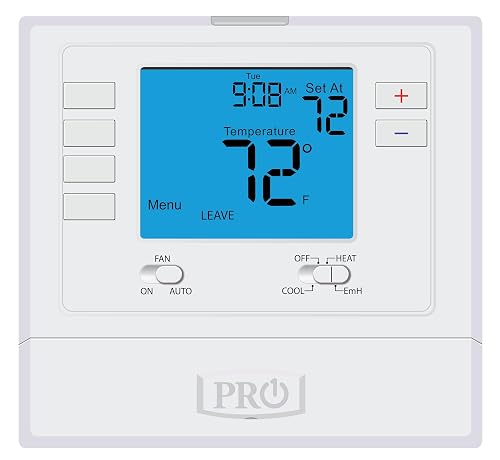
PRO1 T725 Heat Pump/Conventional Programmable Wall Thermostat

PRO1 T771 Single Stage Non-Programmable Wall Thermostat
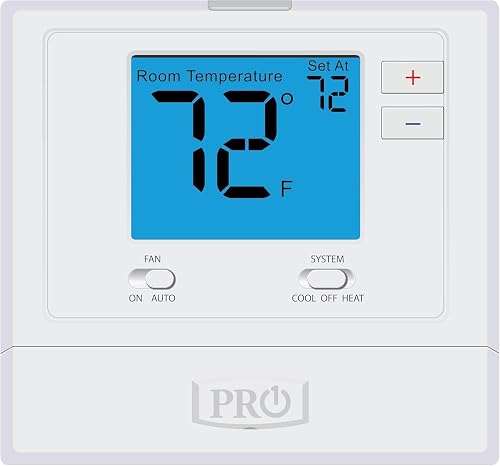
PRO1 T701 Single Stage Non-Programmable Wall Thermostat

PRO1 T715 Multi-Stage Programmable Gas Wall Thermostat
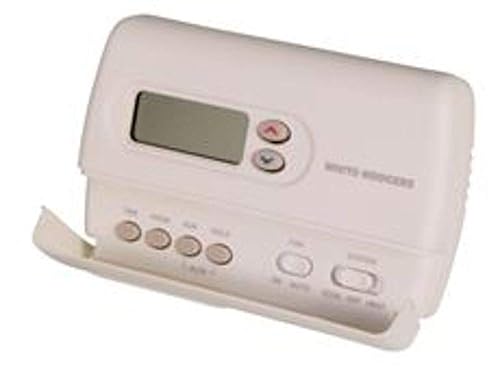
White-Rodgers 1F80-361 Emerson 80 Series Thermostat
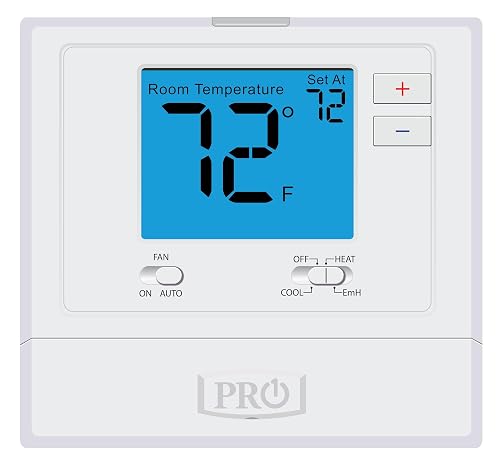
PRO1 T721 Non-Programmable Wall Thermostat
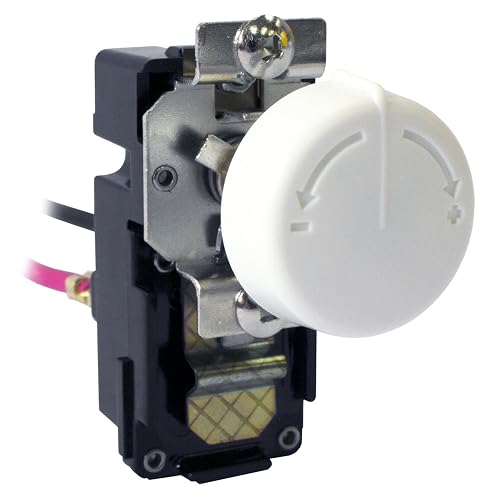
King Electric TKIT-1BW Single-Pole Thermostat Kit

PRO1 T805 Single Stage Programmable Wall Thermostat
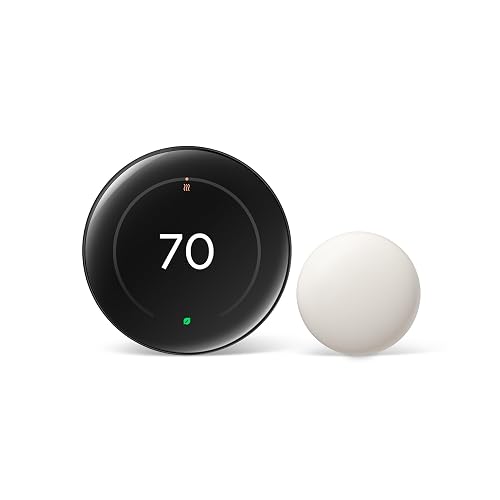
Google Nest Learning Thermostat (4th gen) with Temperature Sensor, Obsidian
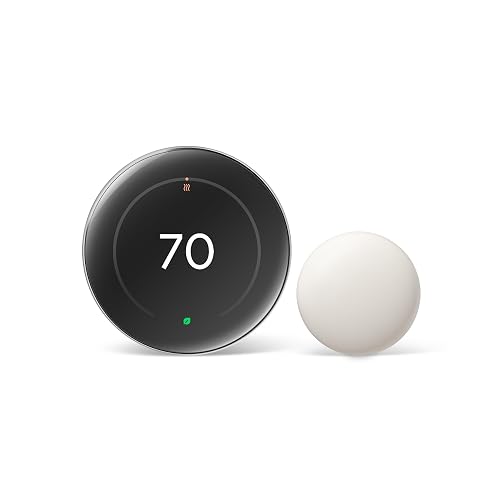
Google Nest Learning Thermostat (4th gen) with Temperature Sensor, Silver
The Details Behind The Selections
The PRO1 T725 sits at the top of this list because it handles two common system types without forcing you to pick a side at the register. It works with 2 heat/1 cool heat pump setups and standard 1 heat/1 cool conventional systems, so homes that have already added a heat pump, or are thinking about it, can stay flexible.
Built on the T700 platform, it offers 7-day or 5/1/1 programming, where 5/1/1 means five weekday slots plus separate Saturday and Sunday blocks. A 4 sq. in. blue backlit screen keeps the readout visible from across a hallway, and the scheduling mode covers wake, leave, return, and sleep periods. For a household running a heat pump in winter and a conventional A/C in summer, the dual compatibility is the main reason to reach for this model over the simpler PRO1 T701 further down the list.
Useful Touches
- Dual system compatibility removes the need to re-buy when upgrading from conventional to heat pump
- 7-day and 5/1/1 scheduling adapt to mixed work-from-home and office routines
- Blue backlit display stays readable in dim hallways and basements
- Four daily periods (wake, leave, return, sleep) cover most household patterns without extra programming steps
Worth Noting
- Programming takes a few minutes to learn for anyone new to multi-period schedules
- No app or remote connectivity, so schedule changes happen at the wall
- 4 sq. in. screen is smaller than the PRO1 T805’s 7 sq. in. panel if you want oversized digits
Who It Suits Best
Homeowners with a 2H/1C heat pump or a mixed heat pump plus conventional A/C system who want reliable scheduling without paying for smart features.
Consider Something Else When
Smart-home users who want phone-based scheduling and learning routines should look at the Google Nest Learning Thermostat (4th gen) in Obsidian instead.
The PRO1 T771 takes a different path than the programmable picks above it. It runs on the same T700 platform family as the T725, but strips scheduling out entirely, leaving a straightforward up/down setpoint adjustment that anyone can operate without reading a manual.
What makes it stand out is the wide setpoint range from 25°F to 90°F, which makes it a strong match for garages, sheds, workshops, and other spaces that need temperature control well below typical living-room comfort. The 4 sq. in. blue backlit display keeps the temperature readable, and swing adjustment plus calibration let you fine-tune how often the system cycles. For a detached garage that needs to stay above freezing in winter, this thermostat solves a problem most living-room thermostats cannot.
The Good Stuff
- Wide 25°F to 90°F range handles low-temperature spaces that other thermostats ignore
- Non-programmable design means zero setup, just set the temperature and forget it
- Swing adjustment and calibration fine-tune cycling behavior for less system wear
- Backlit display remains readable in a dim garage or basement
Trade Offs
- No scheduling means temperatures stay at one setting around the clock
- Limited to single-stage 1H/1C conventional systems, so it won’t work with multi-stage or heat pump setups
- No glow-in-the-dark button, unlike the PRO1 T701, for finding it in total darkness
Made For
Anyone heating or cooling a garage, shed, workshop, or other unconditioned space where low-temperature setpoints and simple operation matter more than scheduling flexibility.
Swap It Out When
Homeowners needing programmable scheduling for a main living space should pick the PRO1 T725 Heat Pump/Conventional Programmable Wall Thermostat instead.
The PRO1 T701 keeps things uncomplicated, which is exactly the point. As a non-programmable thermostat, it sidesteps the schedule setup that trips up first-time installers, and it focuses instead on delivering a clear, reliable temperature reading with minimal fuss.
Compared to the PRO1 T771 above, the T701 adds a glow-in-the-dark light button for locating the controls in a dark hallway or bedroom at night, a small touch that earns its place for anyone who has fumbled for a wall control at 2 a.m. The 4 sq. in. blue backlit display comes from the same T700 platform family, and the unit supports gas or electric conventional configurations. For a guest room, rental unit, or anywhere you want the temperature to stay put without programming, this is a sensible pick.
What Earns Its Place
- Glow-in-the-dark light button makes the thermostat easy to find without turning on a light
- Non-programmable operation means new tenants or family members can use it without a learning curve
- Compatible with both gas and electric conventional systems, giving flexibility during installation
- Backlit display keeps the temperature readable in dim hallways
Points To Keep In Mind
- No scheduling, so the temperature holds steady unless someone adjusts it manually
- Single-stage 1H/1C only, with no heat pump compatibility
- Smaller display than the PRO1 T805, which offers a 7 sq. in. panel
Best Suited To
Bedrooms, guest rooms, and rental properties where straightforward manual control matters more than scheduling or smart features.
Look Elsewhere When
Installers needing heat pump compatibility should consider the PRO1 T721 Non-Programmable Wall Thermostat, which handles both heat pump and conventional systems.
The PRO1 T715 steps up to multi-stage territory, serving 2 heat/2 cool gas systems where the furnace and A/C each have two operating stages. Two-stage equipment runs more quietly and at lower fuel cost most of the time, only ramping up during extreme weather, and the thermostat needs to match that capability.
It offers 7-day, 5/1/1, or non-programmable modes, so you can program a full week of periods, run a weekday/weekend split, or treat it like a manual setpoint unit. The T700 platform foundation provides a 4 sq. in. blue backlit display and a glow-in-the-dark light button, and you can power it with batteries or hardwired common wire. For a home with a two-stage gas furnace, this thermostat is built to handle it without forcing the system to short-cycle.
Features That Help
- 2H/2C multi-stage support unlocks the efficiency benefits of two-stage gas furnaces and A/C units
- Three operating modes (7-day, 5/1/1, or non-programmable) let you match the schedule to your routine or skip it entirely
- Battery or hardwired power offers flexibility during installation, especially in older homes without a C-wire
- Glow-in-the-dark button complements the backlit display for nighttime use
Honest Caveats
- Multi-stage programming is more involved than the single-stage PRO1 T701, and the extra steps may frustrate first-time users
- Requires a compatible 2H/2C system, so it offers no advantage for single-stage homes
- No remote sensors, unlike the Google Nest picks that include a Temperature Sensor in the box
Who Should Grab It
Homeowners with a two-stage gas furnace and central A/C who want to take advantage of the efficiency gains without jumping to a smart thermostat.
Not Your Match When
Anyone with a single-stage system should save the cost and go with the PRO1 T701 Single Stage Non-Programmable Wall Thermostat instead.
The White-Rodgers 1F80-361 carries the Emerson 80 Series name and a long track record in HVAC service trucks. It comes in a contractor bulk pack with a factory anti-static bag, which signals a parts-bin replacement rather than a retail experience, and the manual is hosted on the listing for reference.
What matters for everyday use is the 5+1+1 programming with up to four periods per day, giving you weekday and weekend flexibility without the complexity of full 7-day scheduling. It works with single-stage heat/cool, 24-volt and millivolt systems, and pairs with gas, oil, or electric heat sources. For a home with a millivolt floor furnace or an older boiler, that millivolt compatibility is a genuine advantage, since most modern programmable thermostats require 24V. If your HVAC setup is older or non-standard, this is the kind of unit that gets recommended by technicians.
Where It Helps
- Millivolt compatibility opens up use with older floor furnaces, hydronic boilers, and gas fireplace controls
- 5+1+1 programming with up to four daily periods provides meaningful schedule flexibility without 7-day complexity
- Works with gas, oil, or electric heating systems, useful during fuel-source changes
- Contractor-grade packaging suggests durability for long service life
Possible Compromises
- Bulk-pack presentation means minimal retail packaging, and you may want to keep the anti-static bag for any future storage
- No heat pump support, so it doesn’t cover every system type
- Lacks the glow-in-the-dark button and oversized display of newer PRO1 models
Who It Suits Best
Owners of older homes with millivolt or 24V conventional systems, and anyone replacing a contractor-grade thermostat with a familiar, service-friendly unit.
Where Another Pick Suits Better
Households wanting a larger display and modern glow-in-the-dark button should pick the PRO1 T805 Single Stage Programmable Wall Thermostat, which offers a 7 sq. in. screen.
The PRO1 T721 fills a specific slot: non-programmable simplicity with system flexibility. It handles 2 heat/1 cool heat pump systems or 1 heat/1 cool conventional systems, giving installers a single SKU to reach for when the system type isn’t fully known until the wall plate comes off.
Built on the T700 platform, the T721 shares the 4 sq. in. blue backlit display and glow-in-the-dark light button seen on the PRO1 T701 and T715, so the user experience stays consistent across the lineup. Power comes from AA batteries or a hardwired common wire, which matters for homes that lack a C-wire. For a homeowner replacing a wall thermostat without committing to weekly scheduling, this model offers a comfortable middle ground between the simpler T701 and the fully programmable T725.
Benefits That Matter
- Heat pump and conventional compatibility means one unit works across different HVAC configurations
- Battery or hardwired power provides installation flexibility in older homes without a C-wire
- Glow-in-the-dark button helps locate the controls in a dark bedroom or hallway
- Non-programmable operation keeps setup to a few minutes for anyone less comfortable with weekly schedules
Things To Weigh
- No scheduling means the temperature holds at one setting unless you adjust it manually
- 4 sq. in. display is smaller than the PRO1 T805’s 7 sq. in. panel
- Limited to 2H/1C heat pump or 1H/1C conventional, with no multi-stage 2H/2C support
Right Fit For
Households with a heat pump or a mixed system who want manual setpoint control without learning a weekly schedule, especially in older homes with limited wiring.
A Better Fit Elsewhere
Homeowners wanting full 7-day programming on a heat pump system should look at the PRO1 T725 Heat Pump/Conventional Programmable Wall Thermostat, which adds schedule flexibility.
The King Electric TKIT-1BW is not a wall thermostat in the traditional sense. It is a built-in thermostat kit designed to snap into King PAW and W series wall heaters, replacing a worn or unresponsive internal control without replacing the heater itself.
The kit uses a single-pole single-throw design with a fully protected bi-metal sensor and a 48°F to 80°F operating range, covering the comfort zone for most living spaces. The snap-action mechanism is a classic mechanical approach, so there is no digital screen to fail or programming to lose during a power outage. For anyone with a King wall heater whose built-in thermostat has gone flaky, this is the kind of straightforward replacement part that restores reliable control without rewiring the entire unit.
Notable Upsides
- Snap-action mechanical design avoids digital screen failures common in electronic wall thermostats
- Direct fit for King PAW and W series heaters simplifies the replacement process
- Fully protected bi-metal sensor reduces the risk of damage during installation
- 48°F to 80°F operating range covers typical living-area comfort needs
Less Ideal Details
- Limited to King PAW and W series wall heaters, with no use as a general wall thermostat
- No backlit display or glow-in-the-dark button for nighttime visibility
- Single-pole design means the heater loses its off state in some wiring configurations, a detail worth confirming during installation
Who Should Grab It
Owners of King PAW or W series wall heaters who need a direct replacement thermostat kit and prefer mechanical reliability over digital controls.
Reach For A Different Pick When
Anyone controlling a central HVAC system should choose the PRO1 T701 or another wall-mounted unit, since the King TKIT-1BW is designed exclusively for King wall heaters.
The PRO1 T805 takes the single-stage programmable formula and gives the screen a serious upgrade. It runs on the T800 platform, which steps up to a 7 sq. in. blue backlit display, the largest in this roundup, so the temperature reading is easy to see from across a large living room or for anyone who prefers bigger numbers.
It supports 1 heat/1 cool conventional systems with 7-day, 5/1/1, or non-programmable modes, and the glow-in-the-dark light button returns for nighttime visibility. The T805 is a natural upgrade pick for someone who already knows they want a programmable thermostat and is comparing it against the 4 sq. in. T701 and T725. If you find yourself squinting at the readout on a smaller thermostat, the larger display alone may justify stepping up.
Reasons It Performs
- 7 sq. in. extra-large display is the most readable option in this roundup, helpful in larger rooms or for low-vision users
- Three operating modes give you full 7-day programming, weekday/weekend split, or manual control in one unit
- Glow-in-the-dark button makes the controls easy to locate at night
- Conventional 1H/1C compatibility suits most standard central HVAC systems
Small Caveats
- Single-stage only, with no heat pump or multi-stage support
- Larger display means a slightly bigger wall footprint than the T701 and T725
- No Wi-Fi or app connectivity, so all schedule changes happen at the wall
Perfect Match For
Anyone who prioritizes a large, easy-to-read display and wants full programming flexibility on a standard 1H/1C conventional system.
Where A Sibling Pick Shines
Households with a heat pump should look at the PRO1 T725, which adds heat pump compatibility to the same programmable platform.
The Google Nest Learning Thermostat (4th gen) sits at a different point on the spectrum than every other pick in this roundup. Where the PRO1 and White-Rodgers units are dedicated wall thermostats with manual or scheduled control, the 4th-gen Nest is a connected device that learns the temperatures you prefer and adjusts the schedule as your routine shifts.
The bundle includes a Nest Temperature Sensor (2nd gen), which lets you prioritize comfort in a specific room rather than relying solely on the hallway reading, useful in homes with hot or cold spots. The Obsidian finish gives the unit a dark, understated look that blends into modern interiors. For a household already running on Google Home or simply wanting a thermostat that adapts without constant reprogramming, this is a meaningful step up from any of the programmable picks above.
What Helps Most
- Learning routines reduce the need to manually adjust schedules as your week changes
- Included Temperature Sensor (2nd gen) helps prioritize comfort in a specific room
- App-based control allows temperature changes from anywhere with a phone connection
- Obsidian finish offers a modern, dark aesthetic that suits contemporary interiors
Where It Is Less Suited
- Higher cost than every non-smart pick in this roundup, so the value calculation depends on how much you use the smart features
- Requires a C-wire or compatible power accessory for installation in older homes
- Learning routines take a couple of weeks to settle, so initial behavior may feel less predictable than a fixed schedule
Who Will Love This
Connected-home households who want a thermostat that adapts automatically and can be controlled from a phone, especially homes with noticeable temperature differences between rooms.
Skip It When
Anyone wanting simple, offline control without a C-wire should pick the PRO1 T701 Single Stage Non-Programmable Wall Thermostat, which runs on batteries and keeps setup minimal.
The Silver version of the Google Nest Learning Thermostat (4th gen) shares its platform with the Obsidian model above, so the smart features, learning behavior, and bundled Temperature Sensor (2nd gen) are identical. The difference is purely aesthetic, with a polished silver finish that suits lighter walls and more traditional interior palettes.
For a homeowner whose design choices lean toward stainless appliances, brushed nickel hardware, or light-colored walls, the silver finish tends to look more intentional than the darker Obsidian. Functionally, you get the same adaptive scheduling, app control, and room-specific comfort prioritization through the included sensor. Choosing between this and the Obsidian model comes down to which finish matches the room where the thermostat will live.
Bright Spots
- Silver finish pairs naturally with light walls and stainless or nickel hardware
- Includes the Nest Temperature Sensor (2nd gen) for room-specific comfort
- Learning routines adapt to schedule changes without manual reprogramming
- App control allows temperature adjustments from a phone
Factors To Consider
- Costs more than dedicated programmable thermostats, with most of the value tied to smart features
- C-wire or compatible power accessory required for installation in many older homes
- Initial learning period may produce less predictable behavior than a fixed schedule during the first couple of weeks
Whose Shelf It Belongs On
Design-conscious renovators and homeowners with light-toned interiors who want a smart thermostat that complements the room rather than disappears into it.
Where Another Pick Suits Better
Households wanting a darker, more understated look should choose the Google Nest Learning Thermostat (4th gen) in Obsidian, which has the same features in a different finish.
What Matters Most Before Choosing a Wall Thermostat
Start with your system type, since mismatched thermostats are the most common reason for a return. A 1H/1C conventional setup is the simplest and works with most picks in this roundup, while heat pump and multi-stage systems narrow the field considerably. The PRO1 T725 and T721 both handle heat pump plus conventional configurations, which gives you flexibility if you plan to add a heat pump later.
Power wiring matters more than most people expect. Many modern thermostats need a C-wire, short for “common wire,” which provides continuous 24V power, and older homes often lack one. The PRO1 T701, T721, and T715 all offer battery power as an alternative, while the Google Nest picks generally require a C-wire or a compatible power accessory.
Programmable versus non-programmable comes down to routine. Households with stable weekday and weekend schedules benefit from the 7-day or 5/1/1 modes on the PRO1 T715, T725, and T805, while guest rooms, rentals, and secondary spaces are often better served by the simpler T701, T721, or T771. Smart thermostats add learning routines and app control but trade simplicity for a more involved setup.
Display size and visibility are real considerations for anyone who prefers larger numbers. The PRO1 T805 leads this roundup with a 7 sq. in. screen, while the other PRO1 models and the White-Rodgers 1F80-361 use 4 sq. in. displays. For a long hallway or a large living room, the bigger readout reduces the need to walk up to the wall to confirm the temperature.
Key Considerations Across These Picks
Common Shopping Slip Ups
The most frequent mistake is buying a thermostat before confirming your system type, which means checking the wiring at the existing wall plate for labels like W, Y, G, Rc, and Rh, and noting whether you have a heat pump, conventional furnace, or both. A pick that looks great on the listing can return as incompatible the moment installation starts.
Another slip is overlooking the C-wire requirement on smart thermostats. The Google Nest (4th gen) models typically need continuous power, and older homes without a C-wire may need an adapter or a different pick entirely. Confirming wiring before purchase saves a Saturday afternoon.
Why Top Tier Costs More
Higher-tier wall thermostats earn their price through display size, system compatibility, and smart features. The PRO1 T805’s 7 sq. in. display and the Google Nest’s learning routines, app control, and bundled Temperature Sensor all add real capability, but only if your home and routine benefit from them.
The upgrade is worth it when you have a compatible system, want room-specific comfort through a remote sensor, or simply value the convenience of adjusting temperature from a phone. For simpler spaces like garages, guest rooms, and rentals, a non-programmable unit like the PRO1 T701 or T771 delivers reliable control without the premium.
Frequently Asked Questions
How do I know which wall thermostat is compatible with my HVAC system?
Check the wiring terminals on your existing thermostat and your system’s documentation. Single-stage conventional systems work with most picks, while heat pump or multi-stage systems need specific models like the PRO1 T725 or T715. When in doubt, take a photo of the wiring and confirm with an HVAC technician before purchasing.
What is a C-wire and why does it matter?
A C-wire, or common wire, delivers continuous 24-volt power to the thermostat. Many modern smart thermostats, including the Google Nest (4th gen), need it to operate reliably. Older homes without a C-wire can use battery-powered units like the PRO1 T701 or T721, or install a C-wire adapter.
Can I install a wall thermostat myself?
Most homeowners can handle a straightforward replacement using the existing wiring and the manual that ships with the unit. Turn off the power at the breaker, label each wire, and follow the new thermostat’s wiring diagram. Heat pump systems and homes without a C-wire are trickier and may benefit from professional installation.
What is the difference between programmable and non-programmable thermostats?
Programmable thermostats let you set a temperature schedule that changes throughout the day or week, which can save energy when no one is home. Non-programmable thermostats hold a single setpoint until you adjust it manually. The right choice depends on how stable your routine is and whether you want the thermostat to handle schedule changes automatically.
Do I need a smart thermostat to save energy?
A smart thermostat can help by learning your routine and adjusting temperatures when no one is home, but a basic programmable thermostat set to a sensible schedule delivers most of the same savings. Smart features are most valuable when you want app control, room-specific sensors, or integration with other connected-home devices.
Closing Remarks
The right wall thermostat depends on your system type, wiring, and how much you want the device to think on your behalf. A simple non-programmable unit like the PRO1 T701 or T771 works beautifully for guest rooms and specialty spaces, while the PRO1 T725 and T805 serve main living areas with scheduling flexibility. For households ready to step into connected control, the Google Nest Learning Thermostat (4th gen) pairs learning routines with a remote sensor for room-specific comfort. Match the thermostat to your system first, then choose the feature set that fits your routine.