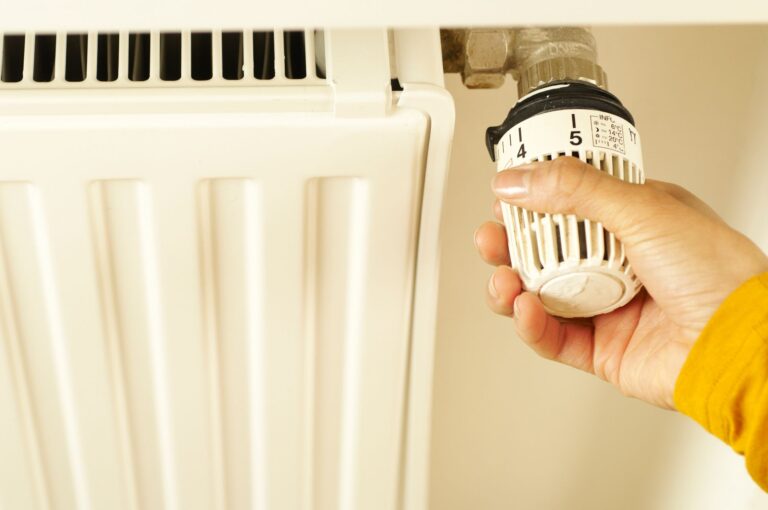

Cold showers, lukewarm dishes, and a water heater that cycles at the wrong temperature are signs the controls inside the tank need attention. Most homeowners don’t think about thermostats, anode rods, and igniters until something stops working, then suddenly every model listing looks identical. The parts on this list cover the most common replacement needs: temperature and pressure relief, RV igniters, sacrificial anode protection, heating elements, full thermostat pairs, and tune-up bundles that include the tools to do the job right. Pick by the failure you actually have, not by what’s cheapest on the page, and you’ll likely save yourself a second service call later this year.
The Choices Worth Comparing
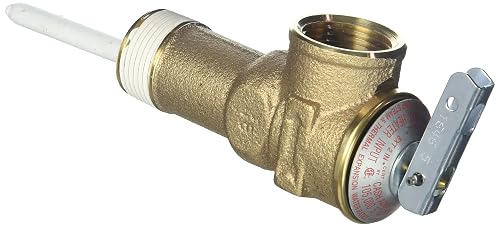
Reliance 100108456 Temperature & Pressure Valve
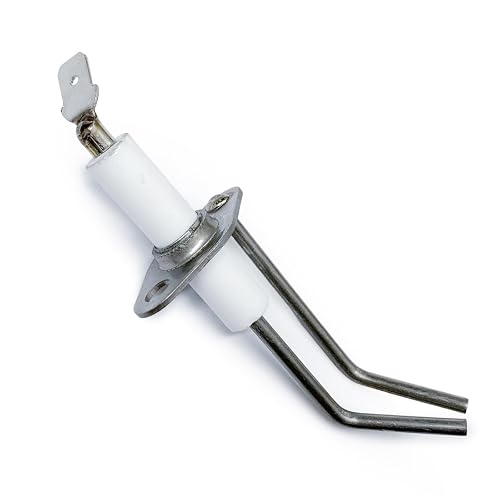
Lrichy 232258 RV Water Heater Igniter Electrode
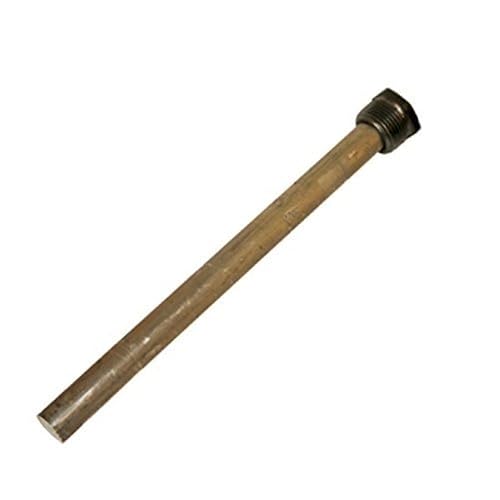
Suburban 232767 Magnesium Anode Rod
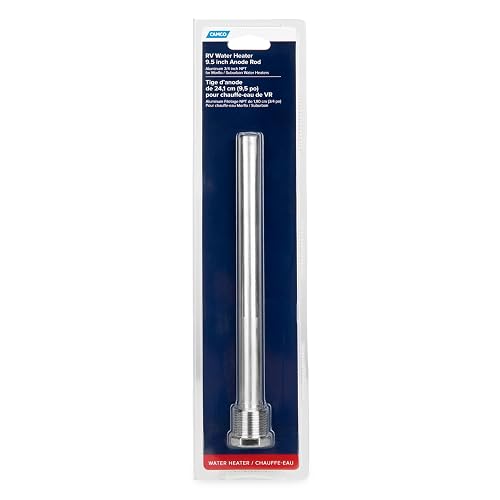
Camco Aluminum RV Anode Rod 11563
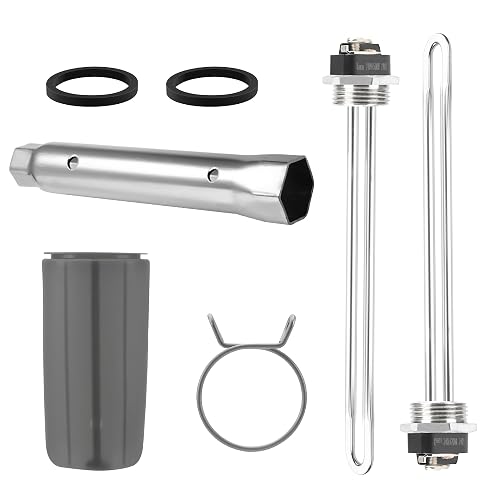
NISHCON 4500W Heating Element Pack
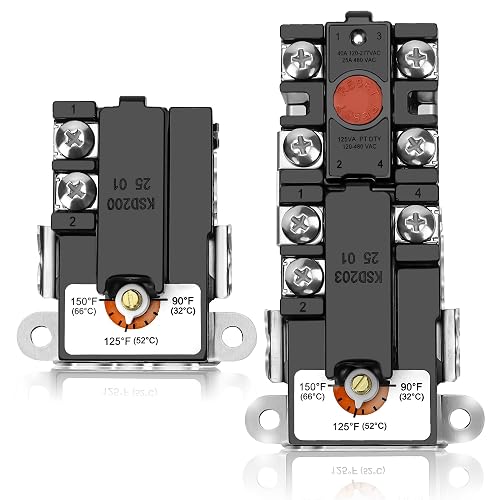
NISHCON EWH-00 Upper and Lower Thermostat Pair
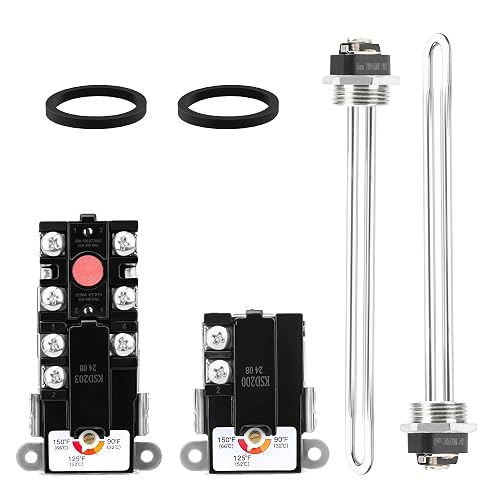
NISHCON EWH-01 Electric Water Heater Tune-Up Kit
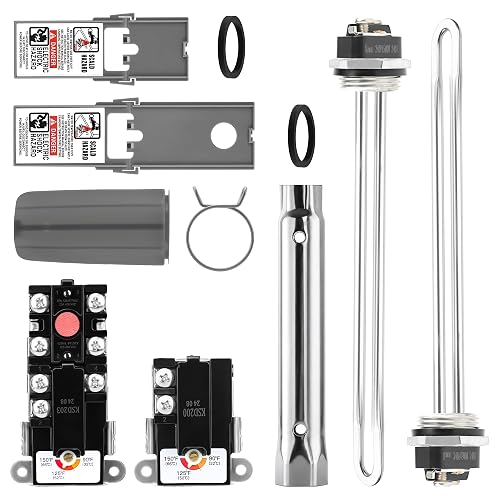
NISHCON Tune-Up Kit with Protective Covers
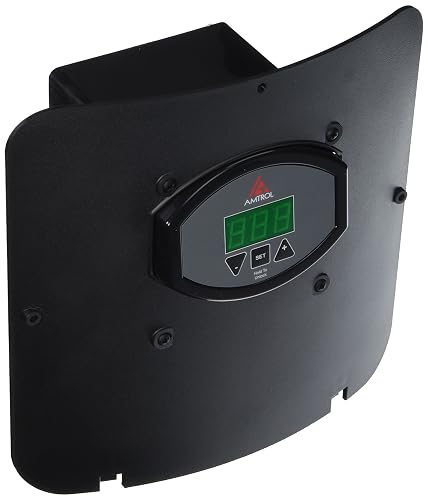
Amtrol 940R101 Smart Control
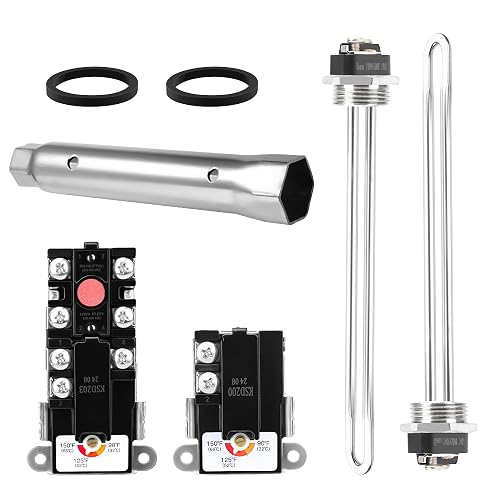
NISHCON EWH-03 Tune-Up Kit with Element Wrench
More On The Choices That Made The List
A temperature and pressure relief valve is one of those parts you don’t think about until a plumber points out that yours hasn’t been tested in years. The Reliance 100108456 is a direct-fit relief valve designed to release water if the tank overheats or pressure climbs too high. The 2-inch shank and 3/4-inch male NPT (National Pipe Thread) inlet match the most common residential tank opening, so for most homeowners this is a like-for-like swap rather than a custom part hunt.
It’s a sensible replacement after a tank flush, a flood event, or any time the existing valve drips continuously from the discharge pipe. For households on standard residential tanks who want a code-aligned safety part without overthinking it, this is the most straightforward place to start.
Useful Highlights
- Standard 3/4-inch male NPT inlet fits most residential tanks
- 2-inch shank length gives clearance for thick insulation jackets
- Replaces worn or weeping valves without modifying the tank
- Restores the safety release function the tank was designed around
Things To Consider
- Not a universal fit, so confirm your existing valve’s thread size before ordering
- Relief valves should be manually lifted to test annually, and a drip after that test is normal
Key Product Details
Who It Suits Best
Homeowners with a standard residential tank who need a direct replacement relief valve after testing reveals a stuck or constantly dripping unit.
Where Another Pick Suits Better
RVers should skip this and reach for the Lrichy 232258 igniter electrode, which addresses RV water heater ignition rather than relief.
Suburban RV water heaters are everywhere in the camper world, and a failed igniter is one of the most common reasons the burner won’t light. The Lrichy 232258 is a 2-prong replacement electrode built as a direct match for Suburban SW series units. The electrode’s job is simple: produce the spark the burner needs to ignite, so when it cracks, corrodes, or the gap widens, you get clicking with no flame.
For RVers who already know their water heater model number and want a non-OEM option that fits without modification, this is a focused part. The two-prong design is specifically what Suburban uses, so you won’t be improvising wire connections or shimming the bracket.
The Case For It
- Direct replacement for Suburban SW series RV water heaters
- Two-prong configuration matches the factory wiring setup
- Fixes the “click but no flame” symptom at its most common source
- Compact enough to keep as a spare in an RV tool kit
Trade Offs
- Compatibility is limited to specific Suburban models, so confirm your model number first
- Installation still requires the gas line to be off and the burner area accessible, which can be tight in some RV compartments
Made For
RVers with Suburban SW series water heaters who need a focused ignition repair part and are comfortable working around propane fittings.
Skip It When
Residential homeowners should look at the Reliance 100108456 valve or a NISHCON thermostat pair instead, since this part only fits RV-specific systems.
Inside every steel water heater tank, an electrochemical reaction is slowly eating the metal. An anode rod is the sacrificial part that corrodes first, protecting the tank walls in the process. Suburban’s 232767 is a magnesium anode rod made for the company’s RV water heaters, and it sacrifices itself so the tank doesn’t have to.
Magnesium is the more active of the common anode materials, which is helpful in soft water where rods tend to last longer than expected anyway. Compared with the Camco aluminum rod in our fourth slot, this one is geared toward owners who want a brand-matched OEM (original equipment manufacturer) part rather than a third-party alternative.
A Favorable Mix
- OEM magnesium rod designed specifically for Suburban RV water heaters
- Absorbs corrosive action to extend tank life
- Easy enough to swap on a seasonal maintenance schedule
Points To Keep In Mind
- Magnesium rods can react strongly in high-mineral water, producing sulfur-like odors some owners notice
- Worn rods need replacement to keep protection consistent, so plan to inspect yearly
Right Fit For
RVers with Suburban-branded tanks who prefer OEM replacement parts and do their own seasonal anode checks.
Consider Something Else When
Aluminum-tank owners should pick up the Camco 11563 instead, since aluminum tanks call for an aluminum anode to avoid galvanic reaction issues.
Not every RV water heater has a steel tank. Aluminum tanks, common in some Suburban and Mor-Flo models, call for an aluminum anode rod because mixing metals accelerates corrosion instead of preventing it. The Camco 11563 is a 3/4-inch NPT aluminum rod at roughly 5/8 by 9.5 inches, sized to drop into those tanks without forcing the drain opening.
Think of it as the right tool for the right material. The trade-off is that aluminum corrodes more slowly than magnesium, so the rod may seem to last forever, but it is still working. A yearly visual check during tank flushes is the simplest way to keep tabs.
Features That Help
- Aluminum construction matched to aluminum tank material
- 3/4-inch NPT thread fits Suburban and Mor-Flo drain openings
- Compact 9.5-inch length suits smaller RV tanks
Honest Caveats
- Not the right choice for steel tanks, where magnesium is the more active sacrificial material
- Aluminum corrodes slowly, so signs of wear can be subtle and easy to miss between inspections
Quick Facts
Best Suited To
RVers with aluminum-tank Suburban or Mor-Flo water heaters who want a material-matched sacrificial rod.
Not Your Match When
Steel-tank owners should pick the Suburban 232767 magnesium rod for stronger sacrificial protection.
When a residential electric water heater stops recovering fast, the heating element is the most common culprit. Sediment coats the element, the coil burns out, or the threaded fitting corrodes into place. This NISHCON pack ships two 4500W elements at 240V (3500W at 208V) along with gaskets, a quick-change water guide board, and a dual hex socket wrench, so you have what you need to do both elements in one session.
It’s a focused DIY bundle. Compared to the EWH-01 kit later on this list, this one zeroes in on the elements themselves and skips the thermostats, which is helpful when you already know the thermostats are fine.
Where It Helps
- Two elements in one pack, so both upper and lower get serviced at once
- 4500W at 240V is the standard residential rating, so no rewiring is required
- Includes the wrench and water guide tool, removing the need to track down specialty tools
Worth Noting
- No thermostats in the box, so a separate purchase is needed if those are also worn
- Elements are copper-sheath, which heats well but can be vulnerable in very hard water if sediment isn’t flushed regularly
Who Will Love This
DIY homeowners who have already diagnosed a failed element and want everything to swap both in one box.
A Better Fit Elsewhere
Anyone doing a full restore should consider the NISHCON EWH-01, which adds upper and lower thermostats to the same kind of element bundle.
Electric water heaters rely on two thermostats to control the upper and lower elements, and when either drifts out of calibration, recovery slows and water temperature swings. The NISHCON EWH-00 is a paired thermostat set in the Apcom-style (a common aftermarket form factor) Thermo-O-Disc (TOD) design, rated 120V to 480V with an adjustment range of 90 to 150 degrees Fahrenheit.
This is a non-simultaneous pair, which is the most common residential wiring configuration. For most homeowners whose tank has two elements and acts up only after years of use, this pair covers the job without making you chase a second part.
Why It Works Well
- Apcom-compatible form factor drops into common dual-element tanks
- Wide voltage range covers 120V to 480V residential installations
- Adjustment range from 90 to 150F handles standard household needs
Points To Note
- Designed for non-simultaneous wiring, so it does not fit tanks set up for simultaneous operation
- No elements in the box, so if the elements are also tired, the EWH-01 kit may save a second order
Feature Snapshot
Perfect Match For
Homeowners with a standard dual-element electric water heater whose thermostats have drifted or stopped responding.
Look Elsewhere When
Tune-up shoppers should jump to the NISHCON EWH-01, which includes elements alongside the same kind of thermostat pair.
For a tank that has been running for a decade, swapping just one component often leaves the next weak part to fail within months. The EWH-01 addresses the four wear items in one box: two 4500W elements, upper and lower thermostats, and gaskets. The high limit is 170F, and the adjust range tops out at 150F.
Compared to the EWH-00 thermostat pair, this is the same approach plus elements, so you get a complete interior refresh in a single order. For a household with a tired but otherwise functional tank, it’s the most efficient path back to consistent hot water.
Benefits That Matter
- Includes both elements and both thermostats, covering the full interior
- 170F high limit sits within common residential safety expectations
- Designed to fit most dual-element electric water heaters
Less-Strong Areas
- Bundle pricing only makes sense when both elements and thermostats actually need replacement
- Does not include protective terminal covers, which the EWH-02 style NISHCON kit adds
Built With In Mind
Homeowners doing a full water heater refresh on a still-functional tank that has lost recovery speed and temperature consistency.
Reach For A Different Pick When
Anyone who also wants terminal protective covers and a quick-change tool should pick the NISHCON tune-up kit with covers instead.
This NISHCON kit is the more complete cousin of the EWH-01. You still get two 4500W elements and a thermostat pair, but it also throws in two protective terminal covers, a water guide board, and a dual hex socket wrench. The terminal covers are the kind of detail that gets overlooked until a wire slips or a curious kid opens the panel.
For homeowners who want a tidy, fully stocked tune-up with safety touches included, this is the more thoughtful version of the EWH-01. The added parts do not change the repair itself, but they make the finished job feel finished.
Real Benefits
- Terminal covers add a layer of physical safety over live connections
- Water guide board and dual hex wrench are included, so no extra tool runs
- Covers both heating elements and both thermostats in one kit
Where It May Fall Short
- Slightly more parts to keep track of during the repair than a thermostat-only option
- Bundle cost is higher than just an element pack when thermostats are still healthy
The Right Fit
DIYers who want a complete interior tune-up with the safety and convenience extras included from the start.
Swap It Out When
Homeowners replacing only worn elements should grab the NISHCON 4500W element pack to avoid paying for parts they don’t need.
Indirect-fired water heaters, where a boiler heats a storage tank through a coil, run on a different kind of control logic than standard electric tanks. The Amtrol 940R101 is a digital smart control with a thermistor (a temperature-sensing probe) and a digital readout, built for Amtrol’s Wi series indirect tanks. It supports both 24V and 120V setups, which covers most residential boiler-driven installations.
This is not a generalist pick. It’s the right call only for households already running an Amtrol indirect tank whose original control has failed or whose display is unreadable. For everyone else on a standard electric tank, the NISHCON kits are the better match.
Well-Handled Touches
- Digital readout makes setpoint adjustment precise
- Compatible with both 24V and 120V indirect-fired systems
- Designed as a complete replacement for Amtrol Wi series controls
Softer Spots
- Limited to Amtrol Wi series indirect water heaters, so compatibility is narrow
- Requires familiarity with indirect-fired system wiring, which is not a beginner-level repair
Feature Card
Whose Shelf It Belongs On
Homeowners with an Amtrol indirect-fired water heater who need a digital replacement control and are comfortable with low-voltage wiring.
Another Choice May Suit
Anyone with a standard residential electric tank should grab the NISHCON EWH-01 kit instead, which fits far more common installations.
The EWH-03 rounds out the NISHCON lineup with the same two-element and two-thermostat combination as the EWH-01, but it swaps in a dual hex element wrench as the included tool. The 1-1/2-inch hex end handles residential screw-in elements, while the 1-1/16-inch end fits 3/4-inch NPT anode rods, so it doubles as an anode tool.
It’s a sensible pick for first-time tank restorers who don’t already own a water heater socket. Compared with the EWH-01, you trade the protective covers and quick-change board for a more general wrench that keeps working on the next maintenance job too.
A Strong Showing
- Dual hex wrench fits both standard elements and 3/4″ anode rods
- Includes elements and thermostat pair, covering the same full interior refresh as the EWH-01
- Temperature range of 90F to 150F with 170F high limit
Some Limits To Know
- No terminal protective covers, unlike the NISHCON kit with covers
- No water guide board, so draining the tank lower than the element is on you
Who Should Grab It
First-time DIYers who want elements, thermostats, and a versatile element wrench in a single order without extras they won’t use.
Where A Sibling Pick Shines
Anyone who also wants terminal safety covers should pick the NISHCON tune-up kit with protective covers for a more complete package.
What To Weigh Before Choosing Replacement Parts
A water heater part that fits one tank may be useless on another, and guessing wastes a service trip. The right match starts with knowing your fuel type, tank material, voltage, and the specific part that’s actually failing. From there, the choice between a single component and a full tune-up kit comes down to age and symptom pattern.
Match The Part To The Fuel And Tank Type
Electric, gas, propane, RV, and indirect-fired systems each use different components. A standard electric tank uses upper and lower elements plus matching thermostats. An RV water heater often shares the Suburban SW form factor and runs on propane with a 2-prong igniter. Aluminum RV tanks require aluminum anode rods to avoid galvanic reaction (an electrochemical reaction between dissimilar metals that accelerates corrosion), while steel tanks pair better with magnesium. The Reliance valve on this list fits residential tanks but not RV systems, and the Amtrol smart control only applies to indirect-fired setups.
Decide Between A Single Part And A Full Tune-Up
Bundles like the NISHCON EWH-01, EWH-03, and the kit with covers make sense when the tank is more than 8 to 10 years old and several wear items are due. If only one thermostat or one element has failed and the tank is younger, a focused part such as the EWH-00 thermostat pair or the NISHCON element pack is the more economical call. Replacing the same-aged part twice in a year is a common frustration, so weigh tank age heavily.
Voltage, Wattage, And Thread Compatibility
Heating elements are sold in standard residential wattages, with 4500W at 240V being the most common, dropping to 3500W at 208V. Thermostats vary by voltage range and wiring style, with non-simultaneous being the typical residential setup. Anode rod threads are usually 3/4-inch NPT, but lengths differ, and using the wrong length in a compact RV tank can prevent the drain from sealing. Confirming these numbers before ordering saves the cost of a return.
Prioritize Safety Parts And Routine Inspection
Relief valves like the Reliance 100108456 are mandatory safety components, and most codes call for testing them annually. Anode rods should be checked yearly as well, since a fully consumed rod leaves the tank unprotected. For DIYers, that means planning a service window rather than waiting for the part to fail in use.
Key Considerations Across These Picks
Pitfalls Shoppers Hit
The most common mistake is buying a part based on brand familiarity without checking the model number on the tank’s data plate (the manufacturer’s sticker with specs and serial info). Suburban, Reliance, Camco, and NISHCON all make parts that look similar but fit different systems, and a “fits most” claim on a listing is not the same as a confirmed match. Skipping a multimeter check on a suspected failed element is the second trap, since a tripped high-limit switch can mimic element failure. Always verify the part is actually the problem before draining the tank.
Where The Extra Money Goes
A higher-tier kit like the NISHCON tune-up with protective covers and the Amtrol 940R101 smart control adds cost in places that show up over time. Terminal covers protect against accidental contact and wire slippage, and a digital control on an indirect system gives finer setpoint accuracy than a mechanical dial. The question isn’t whether the extras are useful, but whether your installation, household size, and skill level will actually use them. A small household that rarely opens the panel may not need covers, while a family that flushes the tank yearly will.
Frequently Asked Questions
How do I know which water heater thermostat I need?
Start by checking whether your tank is single-element or dual-element, and whether it’s wired for simultaneous or non-simultaneous operation. Most residential electric tanks use a non-simultaneous dual-element setup, which is what the NISHCON EWH-00 and the related kits target. Match the voltage range printed on the existing thermostat to confirm the replacement is compatible.
How often should an anode rod be replaced?
A sacrificial anode rod should be inspected at least once a year and replaced when it is more than 50 percent consumed. In soft water, the rod may last several years, while in hard water with high mineral content, it can deplete much faster. RV owners often swap rods every one to two seasons as preventive maintenance.
Can I replace a heating element without draining the tank?
The tank should be drained below the level of the element before removal, since water will spill out otherwise. Some quick-change tools and water guide boards claim to limit spillage, but full drainage is the safer approach. Always shut off power at the breaker before touching wiring.
Are aftermarket thermostats as reliable as OEM parts?
Aftermarket thermostats from established brands, like the NISHCON EWH-00 in the Apcom-compatible form factor, are widely used and generally perform on par with OEM parts for residential tanks. The bigger factor is matching the correct form factor, voltage, and wiring style to your specific tank. Indirect-fired and specialty systems like the Amtrol 940R101 are cases where OEM-style replacements tend to be the safer choice.
Is a tune-up kit worth it over buying parts individually?
For tanks more than 8 to 10 years old, a tune-up kit usually costs less than buying elements, thermostats, and gaskets separately, and it ensures all the wear items are replaced at the same time. For newer tanks with a single failed component, an individual part is the more sensible buy. The trade-off is convenience and parts matching against spending on components that still have life left.
Bottom Line
The right water heater thermostat or replacement part depends less on the brand name and more on the tank you actually own. Match the fuel type, voltage, and form factor first, then decide between a focused single-part repair and a full tune-up based on tank age. Any of the NISHCON kits handles the most common residential case, while the Suburban, Camco, Lrichy, Reliance, and Amtrol picks fill the specific niches for RV owners and indirect-fired systems. Pick by the failure you have, follow the safety steps, and the repair is well within reach.