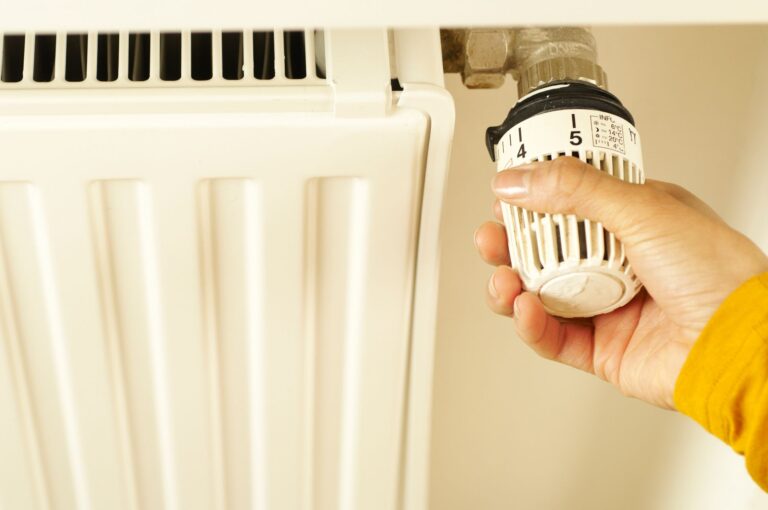

Pulling a cover off an old thermostat and finding just two thin wires tucked behind it stops a lot of projects cold. Heat-only baseboards, older mill-style homes, and outbuildings often run minimal wiring, and most app-driven thermostats want a common wire, sometimes called a C-wire, to deliver steady power. The list below focuses on thermostats that either sip power through two wires without a common line, or include add-ons that make that arrangement practical.
The Main Contenders
The Main Contenders
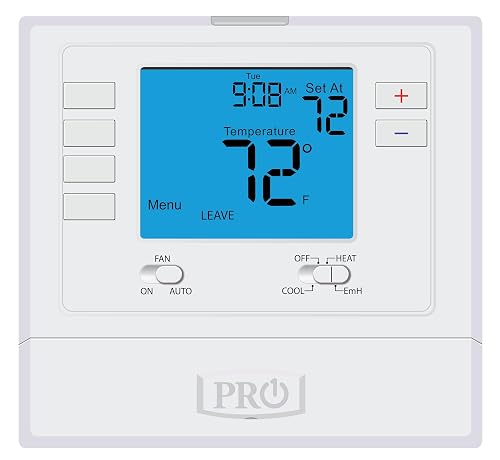
PRO1 T725 Heat Pump/Conventional Programmable Digital Wall Thermostat 2 Heat/1 Cool

PRO1 T771 Single Stage Non-Programmable Wall Thermostat 1 Heat/1 Cool Conventional
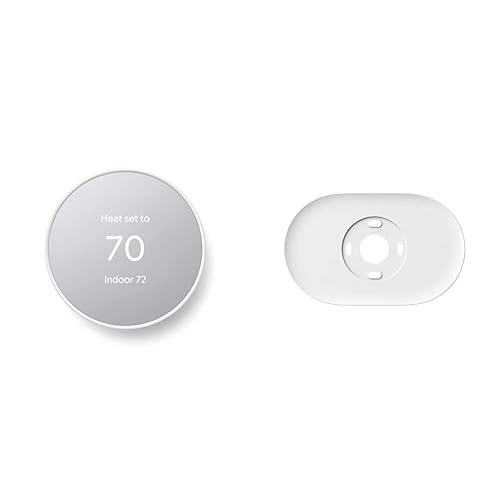
Google Nest Thermostat Smart Thermostat with Trim Kit Snow
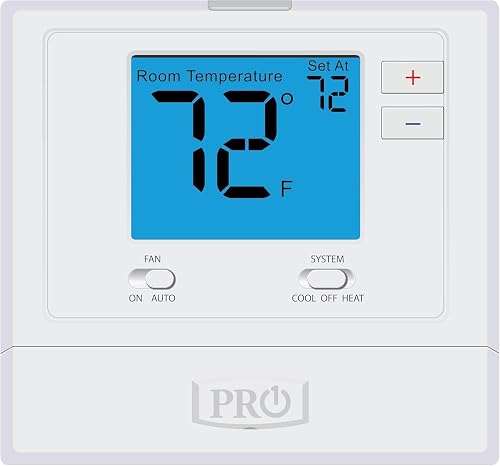
PRO1 T701 Single Stage Non-Programmable Wall Thermostat 1 Heat/1 Cool Conventional

PRO1 T715 Multi-Stage Programmable Gas Thermostat 2 Heat/2 Cool Systems
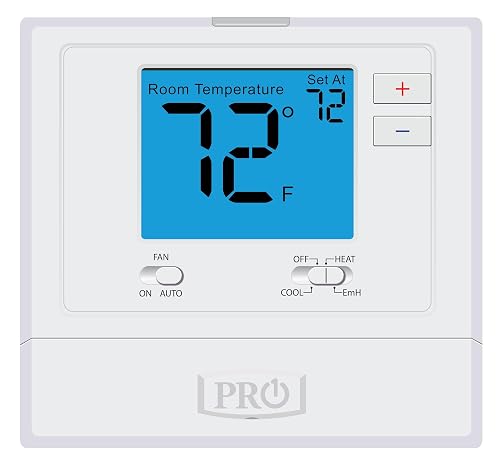
PRO1 T721 Non-Programmable Wall Thermostat 2H/1C Heat Pump or 1H/1C Conventional
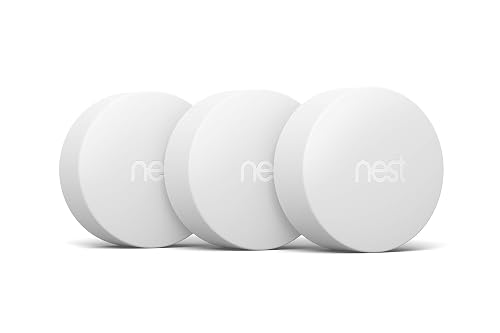
Google Nest Temperature Sensor 3-Pack for Nest Thermostat
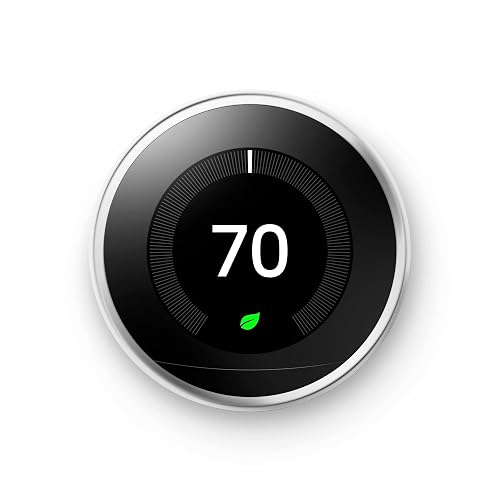
Google Nest Learning Thermostat Smart Wi-Fi Polished Steel
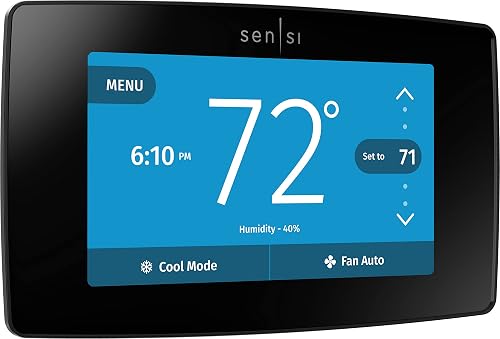
Sensi Touch Smart Thermostat by Emerson with Touchscreen Color Display ST75 Black

PRO1 T805 Single Stage Programmable Wall Thermostat 1 Heat/1 Cool Conventional
A Deeper Look At The Lineup
The T725 sits in the middle of the PRO1 T700 lineup and reads as a problem-solver for homeowners who can’t quite pin down what their system is. It accepts either a 2 heat/1 cool heat pump setup or a 1 heat/1 cool conventional setup, so the same wall box works whether the basement holds a furnace or an air handler with a heat strip.
That kind of dual-mode compatibility pays off at swap time: rather than guessing during install, you set the system type in the menu and move on. Compared to the simpler T701 below, this one trades the single-stage simplicity for actual scheduling, which most people who set a thermostat once and forget it will appreciate.
What It Does Well
- Accepts both heat pump and conventional wiring without extra hardware
- Offers 7-day or 5/1/1 programming for separate weekday and weekend routines
- Large 4 sq. in. blue backlit screen stays readable from across a room
- Backed by PRO1’s T700 platform, which tends to use straightforward AA power or hardwired options depending on the install
- Glow-in-the-dark light button keeps adjustments possible during a nighttime power blip
Things To Consider
- Programming menus take a learning curve the first weekend, especially if you’ve only used non-programmable controls
- The two-wire setup still requires either a power source or batteries, so check your existing wiring before installing
Best Suited To
Homeowners with a heat pump system who want real scheduling without jumping to a fully app-driven thermostat.
Consider Something Else When
You’re sticking with a strictly conventional furnace and don’t need schedules, in which case the PRO1 T701 below keeps things simpler.
The T771 is the odd-one-out pick on this list, and that’s exactly the point. It’s a non-programmable thermostat with a wide setpoint range reaching down to 25°F, which makes it useful in places where living-room comfort isn’t the goal.
Garages, sheds, basements, and workshops often run two-wire circuits because the original install only needed basic on/off control. Pair that with the backlit display and you’ve got a thermostat that works in cold spaces where a scheduled smart unit would be overkill.
Well-Handled Touches
- Setpoint range starting at 25°F keeps pipes from freezing in uninsulated outbuildings
- Swing adjustment and calibration let you tune cycling to match an oversized heater
- Simple up/down arrows mean no learning curve for occasional users
- 4 sq. in. blue backlit screen holds up in dim garage lighting
Worth Noting
- No scheduling means manual temp changes twice a day during weather swings
- Single-stage only, so it won’t handle a multi-speed furnace or heat pump
Made For
Anyone heating a detached workshop, garage, or greenhouse on a basic two-wire circuit and wanting reliable temperature monitoring without smart features.
Not Your Match When
You’re outfitting a primary living space and want weekend scheduling, where the PRO1 T725 is a closer match.
The Google Nest Thermostat is the app-driven option most people picture when they hear “smart thermostat.” It comes with a trim plate for covering paint lines from older installs and a steel plate for mounting over an electrical box, which covers most two-wire retrofit scenarios.
Scheduling happens in the Google Home app, where you can build energy-saving routines that adjust when you leave for work or come home late. For renters and first-time smart-home users, the Snow finish blends cleanly with most wall colors and doesn’t draw attention from landlords.
Standout Benefits
- Auto-adjusts to an Eco temperature when the home is empty, saving energy without manual nudging
- ENERGY STAR certified, so it qualifies for many utility rebates
- Trim plate included, which saves a second trip to the hardware store for older installs
- Works with Android and iPhone through the Google Home app most people already have installed
Honest Caveats
- Some two-wire setups need a power adapter or common wire, so verify wiring compatibility before purchase
- Wi-Fi dependency means a router outage leaves you with basic on-wall control only
Right Fit For
Smart-home beginners with a C-wire or power adapter already in place who want a clean app-driven interface.
Skip It When
Your system runs strict two wires and you’re not comfortable adding a power accessory, in which case the PRO1 T701 stays practical.
The T701 is the simplest member of the PRO1 family and a frequent recommendation for people who just want a working thermostat on the wall. It targets 1 heat/1 cool conventional systems, which covers the majority of forced-air homes running on a basic two-wire setup.
The 4 sq. in. backlit display is the same size as the T725, so you don’t lose readability when you skip the scheduling features. For first-time thermostat swaps, this is the kind of install where the wiring diagram fits on a single index card.
Real Benefits
- Matches a standard 1 heat/1 cool conventional furnace with no extra configuration
- Supports both battery and hardwired power options depending on what’s on the wall
- Glow-in-the-dark light button for nighttime adjustments without flipping a lamp
- Compact footprint fits inside older electrical boxes that larger units struggle with
Worth Bearing In Mind
- No scheduling means manual temperature changes follow your daily routine
- Single-stage only, so a two-stage furnace will run less efficiently than with the T715
Who It Suits Best
First-time thermostat installers who want a clean, no-frills replacement that just works on day one.
Look Elsewhere When
Your home has a two-stage furnace and you’d benefit from finer temperature control, where the PRO1 T715 handles multi-stage gas systems better.
The T715 is the multi-stage sibling of the T701, built for homes with a 2 heat/2 cool configuration. That usually means a two-stage gas furnace paired with a two-stage air conditioner, which is a common setup in mid-sized North American homes.
The thermostat offers 7-day, 5/1/1, or non-programmable modes, so the same box works whether you want full scheduling or just basic manual control. Compared to the T701, the upgrade is meaningful: multi-stage staging keeps the furnace from blasting at full power when a gentle ramp would do.
A Strong Showing
- Handles 2 heat/2 cool gas systems without an extra relay box
- Three programming modes cover full schedules, weekday/weekend splits, or no schedule at all
- 4 sq. in. blue backlit display matches the rest of the T700 family
- Choice of battery or hardwired power based on the existing two-wire setup
Small Caveats
- Programming menus take longer to learn than a non-programmable unit
- Overkill for single-stage homes where the T701 already does the job
Built With In Mind
Homeowners with a two-stage furnace or air conditioner who want finer temperature control and don’t need app integration.
Reach For A Different Pick When
You’re working with a strictly single-stage conventional system, where the PRO1 T701 handles the job without extra menu layers.
The T721 reads as a middle ground between the simple T701 and the programmable T725. It covers the same dual-mode compatibility as the T725 (2 heat/1 cool heat pump or 1 heat/1 cool conventional) but drops scheduling entirely.
For homeowners who want heat-pump flexibility without dealing with weekly program menus, the T721 strips the experience back to a backlit screen and arrow buttons. The T700 platform foundation means the wiring behaves consistently across the family.
Useful Strengths
- Accepts heat pump and conventional wiring, useful when the system type is uncertain
- Glow-in-the-dark light button for adjustments during a nighttime outage
- Compatible with AA battery or hardwired power configurations
- 4 sq. in. backlit display keeps numbers readable from a distance
Points To Note
- No scheduling means manual temp changes for any routine shift
- Two-wire installs may still need a power source, depending on the system
Perfect Match For
Heat-pump homeowners who prefer simple manual control and don’t want to navigate weekly programming menus.
A Better Fit Elsewhere
Your schedule shifts daily and you’d rather automate temperature changes, where the PRO1 T725 handles the same wiring with scheduling.
The Nest Temperature Sensor isn’t a thermostat on its own; it’s an accessory that talks to a compatible Nest thermostat using low-energy Bluetooth. The 3-pack gives you three separate sensors to drop into different rooms.
The thermostat reads the temperature in whichever room the sensor sits in and uses that reading to decide when the system turns on. For homes where the hallway always feels ten degrees off from the nursery, this is a clean way to prioritize comfort where it matters most.
Points In Its Favor
- Communicates with compatible Nest thermostats up to about 50 feet away
- Three sensors let you balance bedrooms, living areas, and a nursery from one thermostat
- Low-energy Bluetooth connection avoids extra Wi-Fi network load
- Small footprint fits on a shelf without disrupting the room
Potential Compromises
- Requires a compatible Nest thermostat as the controlling device
- Single-room sensors can drift in accuracy over time and may need occasional repositioning
Who Will Love This
Existing Nest thermostat owners whose homes have hot and cold zones that the hallway-mounted thermostat can’t reach.
Another Choice May Suit
You don’t already run a Nest thermostat, since the sensors only work inside that ecosystem, where the Sensi Touch Smart Thermostat below is a more standalone smart option.
The Nest Learning Thermostat is the higher-tier sibling to the entry-level Nest Thermostat. The polished steel finish and rotating dial give it a noticeably different presence on the wall, and the software learns your schedule over the first week or two of use.
That learning behavior is the core pitch: instead of programming a schedule, you adjust the temperature when you normally would and the thermostat logs the pattern. After a handful of days, it starts adjusting on its own. Energy History in the app shows what the system did and why, which helps when utility bills land.
Notable Upsides
- Self-programming based on observed routines reduces manual schedule setup
- Home/Away Assist shifts to an Eco temperature automatically when the house empties
- Energy History shows when and why the system ran, helping spot wasteful patterns
- Built-in HVAC monitoring sends alerts if the heating or cooling system behaves unusually
- Remote control from phone, laptop, or tablet for adjustments while away
Practical Considerations
- Two-wire installs commonly need a power accessory or compatible C-wire to deliver steady current
- Polished steel finish shows fingerprints and needs occasional wiping
Whose Shelf It Belongs On
Long-term smart-home owners who want a thermostat that adapts to their routine and don’t mind paying for the premium finish.
Swap It Out When
Your system is a basic heat-only baseboard with no C-wire and you’d rather avoid an adapter install, where the PRO1 T701 stays simple and reliable.
The Sensi Touch stands apart from the Google picks because Emerson has historically marketed it around data privacy, which matters to anyone wary of cloud-connected devices. The color touchscreen is the most visible departure from button-driven units, and the design reads as a modern flat panel rather than a chunky plastic box.
Emerson has deep roots in HVAC manufacturing, so the wiring compatibility list is broad and well-documented. The app guides you through the install step by step, which helps with two-wire retrofits where you want to confirm each terminal before powering up.
Bright Spots
- Color touchscreen replaces the button-and-dial layout for faster adjustments
- Marketed approach to data privacy that keeps usage information on the device where possible
- ENERGY STAR certified, often qualifying for utility rebates
- App-driven setup walks through the wiring step by step
Factors To Consider
- C-wire required, so a two-wire-only install needs a power accessory before this fits
- Touchscreen responsiveness can lag slightly in cold garages where the panel is warming up
The Right Fit
Privacy-conscious smart-home users who want a touchscreen interface and are willing to install a C-wire or adapter.
Where A Sibling Pick Shines
Your system has only two wires and you want to skip the C-wire install, where the PRO1 T725 handles the same wiring without an extra accessory.
The T805 closes the list as the largest-display option on the T800 platform. It covers the same 1 heat/1 cool conventional territory as the T701 but adds programming and a noticeably bigger screen.
For households where the thermostat sits across a wide room, the larger display removes the squint-and-walk-over routine. Programming modes include 7-day, 5/1/1, or non-programmable, so you can scale the experience up or down based on how much automation you actually want.
Everyday Perks
- Extra-large 7 sq. in. blue backlit display is easy to read from across the room
- Three programming modes cover full schedules, weekday/weekend splits, or none at all
- Glow-in-the-dark light button stays usable during nighttime outages
- Built on the T800 platform, which tends to favor straightforward battery or hardwired options
A Few Limitations
- Single-stage only, so two-stage furnaces need the T715 instead
- Physical size may not fit older, smaller electrical boxes without an adapter plate
Best Suited To
Standard households running a 1 heat/1 cool conventional system who want a roomy display and optional scheduling.
Consider Something Else When
Your home has a heat pump and you need dual-mode support, where the PRO1 T725 reads the system and adjusts accordingly.
What To Weigh Before Choosing A Two-Wire Thermostat
Two-wire setups narrow the field fast, but the differences inside that field still matter. Pull the cover off the existing thermostat and count how many conductors land on the terminals before falling in love with any particular unit. Most two-wire installs fall into one of three buckets: mill-voltage baseboard heat, older forced-air furnaces with a simple on/off relay, or heat-only boiler zones.
Heat source matters more than brand here. A heat-only baseboard system with only two conductors usually means power comes from the thermostat side, so a battery-powered or power-stealing unit fits cleanly. A forced-air furnace with two wires typically has the furnace delivering 24 volts through those conductors, which opens the door to more digital units but still excludes anything that needs a C-wire for steady current.
If your goal is app-driven scheduling, a common wire or a power adapter often becomes part of the install. The Google Nest Thermostat, Nest Learning Thermostat, and Sensi Touch all run best with a C-wire present. The PRO1 models run happily on batteries or hardwired configurations depending on what’s already at the wall, which makes them friendlier for renters and outbuildings.
Programming depth is the other real differentiator. Manual-only thermostats like the T701 and T721 stay simple and reliable for households where schedules barely shift week to week. Programmable units like the T725, T715, and T805 unlock weekly routines that pay off when weekdays and weekends follow different patterns. Smart thermostats like the Nest Learning Thermostat automate that pattern detection, but they also depend on Wi-Fi and cloud connectivity, which adds a layer of failure a button-only unit never has.
Key Considerations Across These Picks
Pitfalls Shoppers Hit
The most common mistake is buying a smart thermostat without confirming wiring compatibility. Many app-driven units assume a C-wire is present, and a missing common conductor leads to flickering displays or constant battery warnings. Pulling the existing cover and counting conductors before clicking purchase saves a return trip.
Another slip-up is assuming the thermostat knows the system type. Most units default to conventional, and a heat pump system left on that default will run inefficiently or trigger the auxiliary heat strip more than necessary. The PRO1 T725 and T721 both let you set the system type during install, which prevents that mismatch.
Where The Extra Money Goes
Higher-tier models usually buy three things: learning algorithms, larger displays, and broader compatibility. The Nest Learning Thermostat’s premium sits mostly in the software that adapts to your routine, while the PRO1 T805’s step up over the T701 is mostly screen real estate. Multi-stage thermostats like the T715 cost a bit more because they handle two-stage furnaces and air conditioners without an extra relay box.
The upgrade pays off most when the home has uneven heating, multiple stages, or a schedule that shifts often. For a single-stage home with steady routines, a manual or basic programmable unit often does the job without the extra spend.
Frequently Asked Questions
Do smart thermostats actually work with just two wires?
Most app-driven thermostats need a C-wire for steady power, which is rare in two-wire setups. Some accept a power adapter accessory that plugs into a nearby outlet. Battery-powered or power-stealing units like several PRO1 models run on two wires without an adapter.
What is a C-wire and why does it matter?
The C-wire, short for common wire, delivers continuous 24-volt power from the HVAC system back to the thermostat. Without it, smart thermostats rely on power stealing from the heating or cooling circuit, which can cause display flickering or Wi-Fi dropouts.
Can I install a two-wire thermostat myself?
Most non-smart units swap out in under 30 minutes with a screwdriver and the included wiring diagram. Smart thermostats add app setup and sometimes a C-wire accessory, which can add another 15 minutes. Always cut power at the breaker before touching the conductors.
Will a two-wire thermostat work with a heat pump?
It depends on the unit. The PRO1 T725 and T721 are explicitly designed for 2 heat/1 cool heat pump systems and handle the wiring internally. Smart thermostats often need more conductors to control heat pump functions reliably, which is where C-wire adapters become relevant.
What’s the difference between programmable and learning thermostats?
Programmable thermostats follow a schedule you build manually. Learning thermostats observe your adjustments and build the schedule for you. Both can save energy, but learning models take about a week to dial in your routine.
Wrap Up
Two-wire thermostats don’t have to mean settling for a clunky analog dial. The right pick depends on your heat source, your tolerance for menu-driven setup, and whether your home already has a common wire behind the wall. The PRO1 lineup covers most two-wire retrofit scenarios with battery-friendly installs, while the Google and Sensi smart picks reward households willing to add a C-wire or power adapter for app control.