
Electric baseboard heating has a quiet reputation problem: it’s effective, but the controls often feel stuck in another decade. Turning a clunky dial up or down works fine, yet few setups deliver true scheduling, room-by-room flexibility, or even a temperature readout worth squinting at. That’s where a thoughtful thermostat earns its place, especially one that talks to your phone and learns when you’re actually home.
The list below focuses on line-voltage and low-voltage options designed for (or adaptable to) baseboard setups, with a few smart picks that can integrate if your system supports a relay. Expect a mix of mechanical simplicity, digital accuracy, and learning thermostats that do the thinking for you. Every choice is grounded in real use cases, from small apartments to whole-home retrofits, so you can match tech level to household needs without overspending.
The Lineup, Simplified
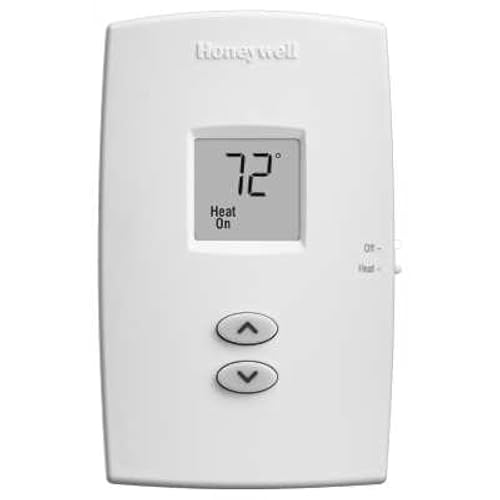
Honeywell TH1100DV1000 PRO 1000 Vertical Thermostat
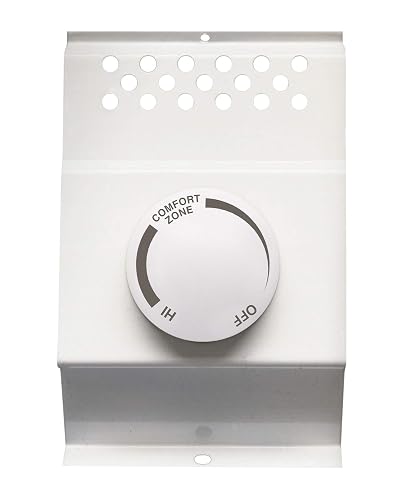
Cadet F Series Double Pole Baseboard Thermostat
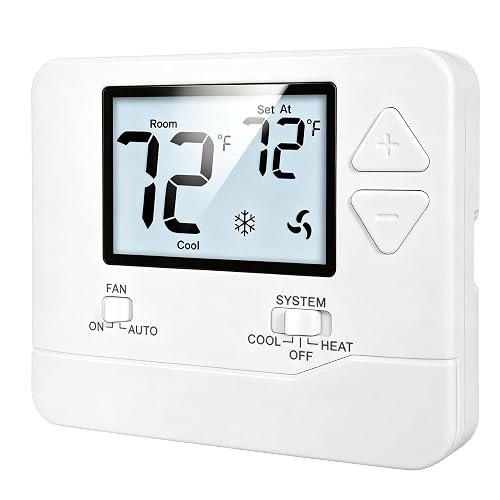
Heagstat 1 Heat/1 Cool Non-Programmable Thermostat
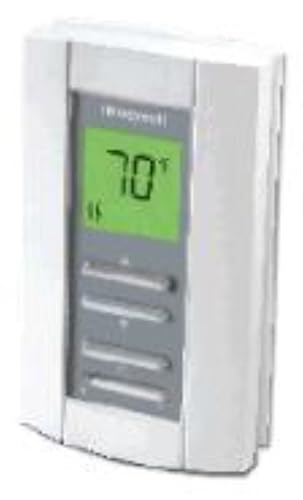
Honeywell TL7235A1003 Line Volt Pro Digital Thermostat

YeloDeer 110V-265V 4-Wire Baseboard Thermostat
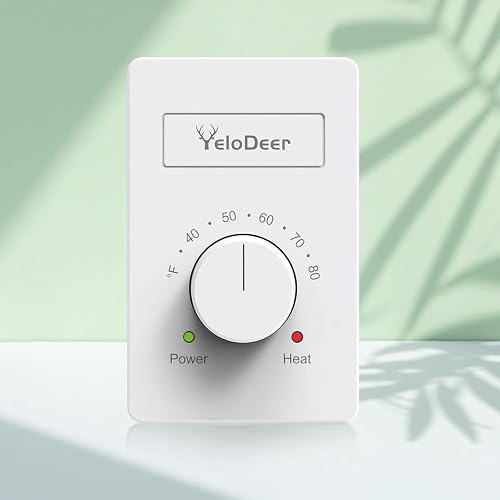
YeloDeer 2-Pack 4-Wire Baseboard Thermostat
YeloDeer 4-Pack 4-Wire Baseboard Thermostat
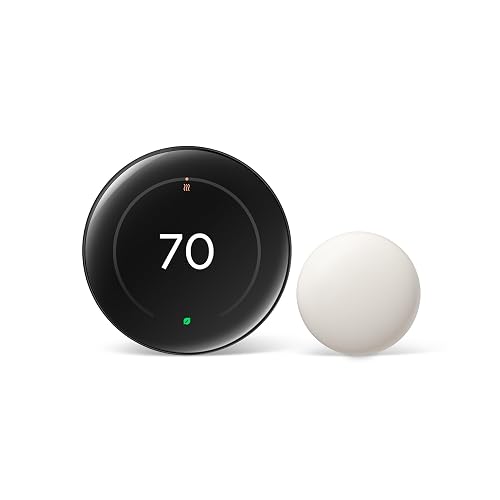
Google Nest Learning Thermostat 4th Gen (Obsidian)
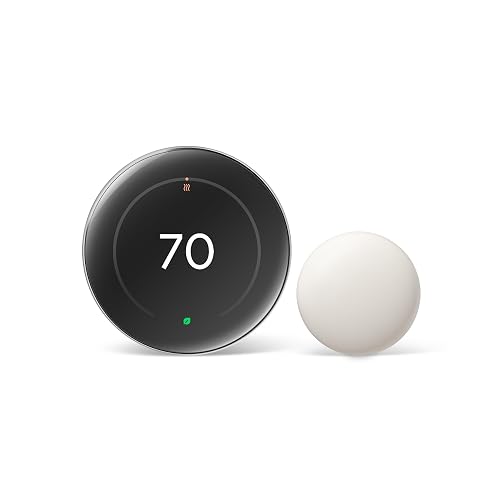
Google Nest Learning Thermostat 4th Gen (Silver)
More Details On Our Top Picks
The Honeywell TH1100DV1000 keeps things refreshingly simple. It’s a vertical, non-programmable unit designed for heat-only single-stage systems, which makes it a natural fit for low-voltage baseboard setups that don’t need schedules or app control.
Measuring roughly 4 11/16 inches tall by 2 7/8 inches wide, it fits a standard wall plate and feels unobtrusive in hallways or smaller rooms. The premier white finish blends into most paint palettes, and the heat-only focus means there’s zero menu diving for the occasional user.
A Favorable Mix
- Straightforward slide-switch operation that anyone in the household can use
- Compact vertical footprint fits tight wall spaces between baseboard runs
- Heat-only design keeps the user interface uncluttered
- Premier white color complements most wall treatments
Worth Noting
- No digital display, so reading the exact setpoint in dim rooms can be tricky
- Not designed for line-voltage baseboard heaters, so verify your system before installing
Made For
Homeowners with low-voltage single-stage heating who want a no-fuss upgrade from a failing analog dial.
Look Elsewhere When
The YeloDeer 110V-265V 4-Wire Baseboard Thermostat suits shoppers with line-voltage 120 or 240V baseboard systems.
Where the Honeywell above relies on wall wiring, the Cadet BTF2W mounts directly to the end of a Cadet F-series baseboard heater. That built-in design means no extra wire runs, no wall plates, and a thermostat that visually merges with the heater itself.
The 22-amp rating handles 120, 208, or 240V systems comfortably, and the twist-dial control covers a 45 to 80 degree F range, which is more than enough for typical comfort adjustments in bedrooms and living areas.
Practical Advantages
- End-mount design eliminates the need for in-wall thermostat wiring
- 22A capacity supports higher-wattage baseboard heaters
- Large twist dial is easy to grip and adjust
- White finish blends with standard Cadet heater housings
Trade Offs
- Only works with Cadet F-series heaters, limiting flexibility for mixed-brand homes
- Mechanical dial lacks precise temperature readouts
- No scheduling or app integration, which may frustrate smart-home households
Best Suited To
Cadet F-series owners replacing a worn end-cap thermostat in a single room or addition.
Swap It Out When
The Honeywell TL7235A1003 Line Volt Pro Digital Thermostat fits shoppers with non-Cadet 240V line-voltage systems who want digital accuracy.
The Heagstat shifts the conversation away from baseboards for a moment. It’s built for 24VAC conventional single-stage systems, so think gas, oil, or electric forced-air furnaces paired with a separate air-conditioning condenser. That’s an important compatibility detail, because forcing this onto a line-voltage baseboard loop will not end well.
For households already running ducted HVAC, however, the white backlight, simple up/down temperature controls, and clean digital readout cover the everyday bases without overwhelming casual users.
Everyday Wins
- White backlight improves readability in dim hallways and bedrooms
- Digital temperature display removes the guesswork of a mechanical dial
- Non-programmable layout keeps setup to a few button presses
- Affordable entry point for upgrading a dated thermostat wall unit
Points To Keep In Mind
- Requires 2 to 5 wire low-voltage connections, so it is not a baseboard replacement
- No scheduling, which may disappoint frequent travelers
Who Should Grab It
Shoppers with conventional forced-air HVAC seeking a straightforward, no-app thermostat swap.
Reach For A Different Pick When
The Google Nest Learning Thermostat 4th Gen (Obsidian) suits anyone wanting learning schedules and app-based control.
Stepping into 240V line-voltage territory, the Honeywell TL7235A1003 is the digital counterpoint to all the mechanical dials on this list. Its electronic temperature control delivers a precise setpoint without the snap-and-pop of a bimetallic strip.
The on-demand backlight makes nighttime adjustments painless, while the silent operation eliminates the clicking some people find jarring in quiet bedrooms. A small heating indicator at a glance confirms the system is calling for warmth.
Everyday Perks
- Electronic accuracy outperforms traditional mechanical thermostats
- Backlight activates on demand for low-light reading
- Silent switching reduces the familiar click of baseboard cycling
- At-a-glance heating indicator confirms system status
Honest Caveats
- 240V only, so 120V owners will need a different model
- Wiring is best handled by someone comfortable with line-voltage work
Key Features At A Glance
The Right Fit
Homeowners with 240V electric baseboards who want digital accuracy without giving up simplicity.
Not Your Match When
The YeloDeer 4-Pack 4-Wire Baseboard Thermostat better serves shoppers rewiring several rooms at once on 120V or 240V.
The single-pack YeloDeer lands in a useful middle ground. It accepts 110V to 265V input and handles up to 20 amps, which works out to roughly 2400W at 120V and 4800W at 240V, so it covers most residential baseboard loops without complaint.
The 4-wire configuration and mechanical-style manual dial keep the install familiar for anyone who has wired a baseboard before, while the 40 to 80 degree F control range gives plenty of room to fine-tune comfort in bedrooms, basements, or small offices.
Strong Points
- Wide voltage range covers 120V and 240V baseboard installs
- 20A capacity supports high-wattage heaters in larger rooms
- 4-wire setup is familiar territory for most electricians
- Non-programmable design means no learning curve
A Few Limitations
- Manual dial lacks a digital display for exact setpoint feedback
- Single unit only, so multi-room projects require buying multiples
Feature Snapshot
Perfect Match For
DIYers replacing a single failed baseboard thermostat on a 120V or 240V circuit.
Where Another Pick Suits Better
The YeloDeer 4-Pack 4-Wire Baseboard Thermostat is a better value for whole-home renovations spanning multiple rooms.
The 2-pack version of the YeloDeer targets the common case of a two-bedroom apartment or a small home with paired baseboard zones. You get identical 110V to 265V compatibility, the same 20-amp headroom, and matching 4-wire terminals, which means both rooms stay consistent in feel and control behavior.
For most two-zone setups, this hits a sweet spot between the single-pack and the 4-pack. You’re not overbuying, but you also save the repeat-shipping cost of ordering two singles separately.
What Helps Most
- Two matching units ensure consistent control across rooms
- Wide voltage compatibility avoids mismatched replacements
- 20A capacity handles larger 240V baseboard heaters
- Non-programmable design simplifies the swap for less tech-savvy users
Small Caveats
- No digital display for exact room temperature readings
- Manual dial requires physical adjustment for each room
Right Fit For
Homeowners updating two baseboard zones at once, especially in older homes with paired circuits.
Skip It When
The Google Nest Learning Thermostat 4th Gen (Obsidian) is the better fit for anyone prioritizing app-based scheduling over per-room manual dials.
The 4-pack version of the YeloDeer targets larger renovation projects where multiple baseboard zones need fresh controls. If you’re rewiring a full floor or finishing a basement with four separate baseboard runs, having matched thermostats on hand removes the friction of staggered orders.
Each unit shares the same 110V to 265V range and 20A ceiling, so you can mix 120V and 240V zones without keeping different SKUs straight. For contractors and ambitious DIYers, the consistency is the real draw.
A Few Highlights
- Four matching units simplify whole-zone renovations
- Consistent electrical ratings across all units
- 4-wire terminals match common baseboard wiring conventions
- Bulk format often lands at a better per-unit cost than singles
Areas To Watch
- Overkill for single-room replacements, so smaller jobs may leave extras unused
- Manual operation across four rooms can feel tedious for whole-home daily adjustments
Feature Rundown
Whose Shelf It Belongs On
Contractors and homeowners managing whole-floor or basement baseboard rewires across multiple zones.
A Better Fit Elsewhere
The Honeywell TL7235A1003 Line Volt Pro Digital Thermostat suits a single-zone digital upgrade on 240V systems.
The 4th-generation Nest Learning Thermostat in Obsidian is the most ambitious pick on this list. Where the mechanical dials earlier trade convenience for simplicity, the Nest takes the opposite approach: it learns your routine, builds a schedule, and adjusts automatically as your week shifts.
The included 2nd-gen Nest Temperature Sensor adds room-level awareness, which matters if you want the system to weigh a chilly nursery or a sun-warmed living room differently than the hallway where the main unit sits. The Obsidian finish leans dark and modern, and feels at home in contemporary interiors.
Everyday Advantages
- Learning algorithm builds a schedule without manual programming
- Companion temperature sensor enables room-by-room awareness
- Obsidian finish suits modern and minimalist interiors
- App control allows remote adjustments from anywhere
Possible Compromises
- Compatibility hinges on system type, so verify your baseboard wiring before buying
- Higher upfront cost than mechanical line-voltage replacements
- Smart features depend on Wi-Fi stability and account setup
Quick Facts
Who Will Love This
Tech-forward households already running smart-home ecosystems and willing to verify HVAC compatibility for baseboard integration.
Consider Something Else When
The YeloDeer 110V-265V 4-Wire Baseboard Thermostat is a better fit for shoppers wanting a quick, app-free mechanical swap.
The silver version of the 4th-gen Nest delivers the same learning intelligence and sensor pairing as the Obsidian edition, just with a brighter, more neutral finish. It pairs well with light-colored walls, stainless appliances, or rooms where a darker thermostat would feel heavy.
Underneath, you get the same adaptive scheduling, app control, and the 2nd-gen temperature sensor for room-specific weighting. Choosing between silver and Obsidian is essentially an aesthetic call, and the silver tends to disappear more into traditional interiors.
A Few Strong Suits
- Same learning engine as the Obsidian edition
- Silver finish suits light walls and traditional decor
- Includes the 2nd-gen temperature sensor for room balancing
- App-based scheduling reduces daily manual adjustments
Worth Bearing In Mind
- Smart-home integration depends on a stable Wi-Fi network
- System compatibility must be confirmed before purchase
- Higher price point than dedicated baseboard controls
The Details
Best Suited To
Smart-home adopters with light-toned interiors who want adaptive scheduling and remote control.
Where A Sibling Pick Shines
The YeloDeer 2-Pack 4-Wire Baseboard Thermostat is a stronger match for multi-room projects where app-free mechanical controls are preferred.
What To Weigh Before Choosing Your Baseboard Thermostat
Voltage And System Type Come First
Before considering color, finish, or app features, confirm whether your system is line-voltage (120V or 240V, wired directly to the heater) or low-voltage (24VAC, common in forced-air setups). Line-voltage thermostats like the Honeywell TL7235A1003 and the YeloDeer models are designed for direct baseboard loops, while low-voltage units such as the Heagstat 1 Heat/1 Cool belong on furnace-driven systems. Mixing the two is the most common installation mistake, and a costly one.
Control Style Matches Your Routine
A twist dial on the Cadet F Series keeps things wonderfully analog, while a learning thermostat on the Google Nest 4th Gen quietly runs a schedule in the background. Daily commuters and frequent travelers often appreciate the automation side. Households with kids or older family members may prefer the predictability of a fixed manual dial, which never asks for a software update or Wi-Fi reconnection.
Capacity, Sensor Range, And Smart Integration
For larger rooms, a 20A thermostat (up to 4800W at 240V) gives plenty of headroom, while a 22A unit like the Cadet BTF2W supports high-wattage Cadet F-series heaters. If smart features matter, check whether your chosen thermostat can pair with external temperature sensors, as the Nest 2nd-gen sensor does, for more accurate room-by-room comfort. Wi-Fi reliability and account setup are also worth thinking through before committing to a learning thermostat.
Key Considerations Across These Picks
Pitfalls Shoppers Hit
The most common slip-up is grabbing a low-voltage thermostat for a line-voltage baseboard loop, which can damage both the unit and the heater. Another is overlooking the wire count, since some thermostats require 4-wire connections while older baseboards may use 2-wire setups. Compatibility checks before clicking purchase save real headaches.
Why Top Tier Costs More
Smart thermostats like the Google Nest 4th Gen carry a premium for the learning algorithm, the companion app, and the included temperature sensor. That extra spend makes sense for households wanting automated schedules and remote control, but it adds little value for a single-zone cabin used seasonally. Match the upgrade to how often you’ll actually use the smart features.
Frequently Asked Questions
Can a wireless thermostat work with electric baseboard heaters?
Yes, but only if the thermostat is rated for line-voltage (120V or 240V) operation and the system supports the required wiring. Low-voltage models are designed for forced-air HVAC, not direct baseboard loops.
Do baseboard thermostats need a common wire?
Most line-voltage thermostats use 2-wire or 4-wire connections without a common wire. Smart thermostats, however, often need a C-wire or power adapter to maintain continuous Wi-Fi connectivity.
Are mechanical thermostats less accurate than digital ones?
Mechanical dials can drift by a few degrees and lack exact readouts, while electronic digital thermostats offer tighter setpoint control. For most homes the difference is modest unless temperatures swing widely throughout the day.
Can I install a baseboard thermostat myself?
Homeowners comfortable with line-voltage wiring and following local electrical codes can often handle a swap, but hiring a licensed electrician is the safer path for high-amperage circuits.
Will a smart thermostat save energy on baseboards?
Learning and scheduling features can reduce run time during unoccupied hours, but the savings depend on how much you previously heated an empty home. Pairing the thermostat with a room sensor improves comfort balance as well.
Closing Remarks
The right baseboard thermostat comes down to matching voltage, capacity, and control style to your home and routine. Mechanical dials deliver no-fuss reliability, digital line-voltage models add precision, and learning thermostats like the Google Nest 4th Gen take over scheduling entirely. Start with your system specs, then choose the level of automation that genuinely fits your daily life.