

Picking a thermostat sounds simple, until you stare at a wall of wiring diagrams and wonder whether your furnace will actually cooperate. Most folks want app control, a clear schedule, and a unit that does not become obsolete next year. This roundup sorts through nine wall-mounted and smart options, mixing straightforward programmable models with learning thermostats, so you can match capability to your home’s HVAC setup.
A Fast Comparison Of The Options
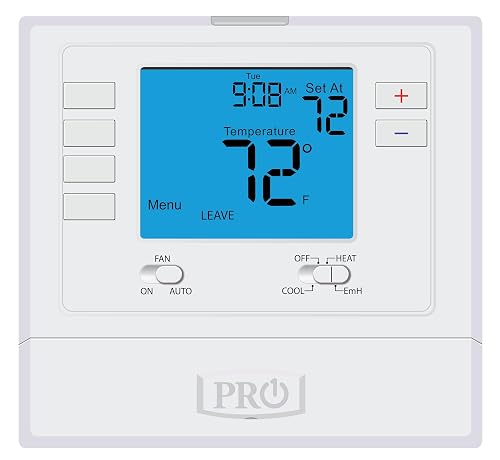
PRO1 T725 Heat Pump/Conventional Programmable Digital Wall Thermostat (2H/1C)
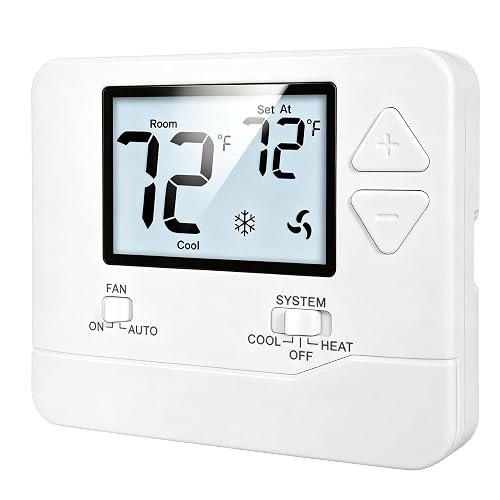
Heagstat NonProgrammable Thermostat 1 Heat/1 Cool for Home Conventional Single-Stage System
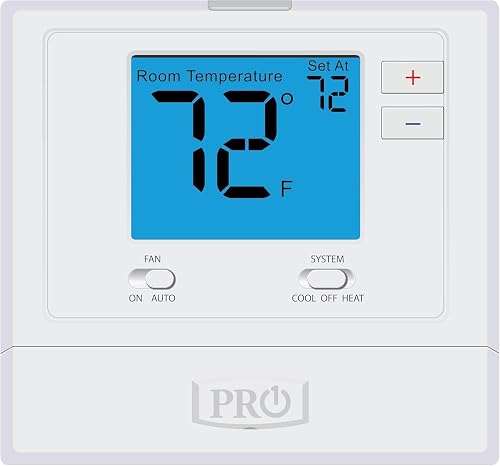
PRO1 T701 Single Stage Non-Programmable Wall Thermostat (1H/1C)

PRO1 T715 Multi-Stage Programmable Gas Thermostat (2H/2C)
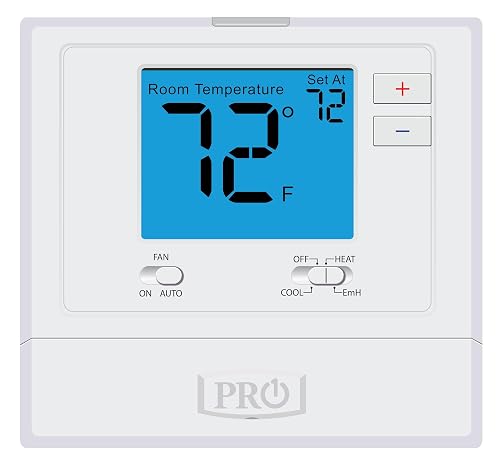
PRO1 T721 Non-Programmable Wall Thermostat (2H/1C Heat Pump or 1H/1C)
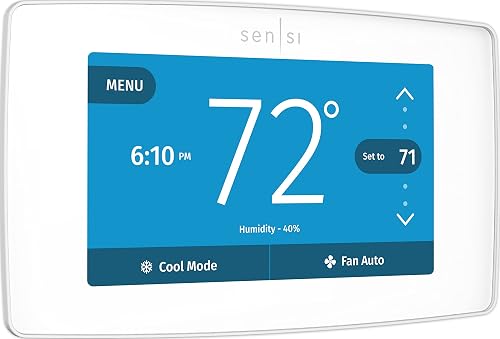
Sensi Touch Smart Thermostat by Emerson with Touchscreen Color Display, Wi-Fi
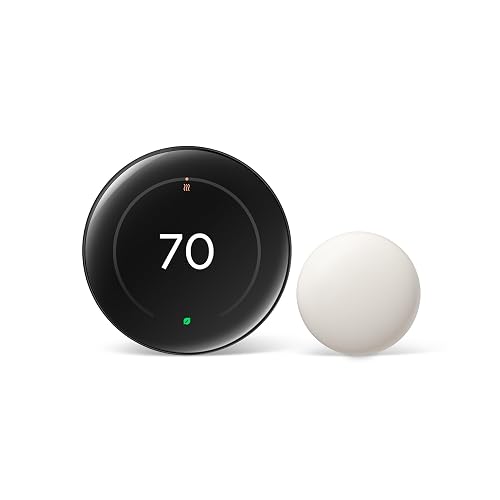
Google Nest Learning Thermostat (4th gen) + Nest Temperature Sensor (2nd gen) – Obsidian
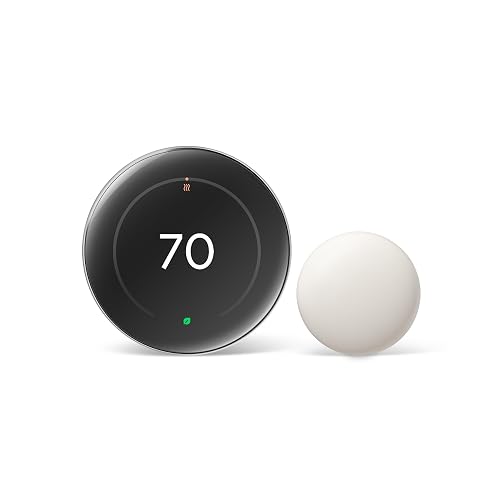
Google Nest Learning Thermostat (4th gen) + Nest Temperature Sensor (2nd gen) – Silver

PRO1 T805 Single Stage Programmable Wall Thermostat (1H/1C)
Taking A Closer Look At The Options
The PRO1 T725 sits in that sweet spot between a basic digital wall unit and a fully connected smart thermostat. It handles 2 heat/1 cool heat pump systems alongside conventional 1 heat/1 cool setups, which matters if your home runs on a hybrid HVAC layout or you have a heat pump with backup strips. Unlike the Heagstat covered next, this model gives you full 7-day or 5/1/1 programming so weekdays and weekends can follow different comfort patterns.
The 4 square-inch backlit screen stays readable from across a hallway, and the glow-in-the-dark light button helps when you stumble past it at 2 a.m. Owners of older homes upgrading from a manual dial thermostat will appreciate that the wiring stays straightforward, though a common-sense caution applies: you still need to confirm your low-voltage common wire is present before scheduling installation.
A Favorable Mix
- Programmable schedule with 7-day or 5/1/1 flexibility for working households
- Dual compatibility means one box covers heat pump or conventional setups
- Backlit display remains easy to read in dim hallways and bedrooms
- Schedule modes like wake, leave, return, and sleep simplify daily tweaks
Points To Note
- Requires a common wire in most installations, which older homes may lack
- No app or Wi-Fi connectivity, so remote adjustments need a physical visit
- Programming interface feels dated next to touchscreen competitors
Key Specs
Who It Suits Best
Homeowners with a heat pump who want genuine scheduling without paying for full smart-home integration.
Where Another Pick Suits Better
Skip this in favor of the Google Nest Learning Thermostat (4th gen) – Obsidian if remote app control matters more than the heat pump compatibility.
The Heagstat NonProgrammable Thermostat leans into simplicity, and for many homes that is the whole point. It targets 24VAC conventional single-stage 1H/1C forced-air systems, which covers a gas furnace paired with central A/C in most older houses. Compared with the PRO1 T725 above, this model skips scheduling entirely, so you walk up, press up or down, and move on.
Wiring is the catch: the base plate accommodates 2 to 5 wires only, so if you have a 6-wire setup you will need to step up to a different unit. For renters and minimalists who just want reliable temperature control, though, the white backlit screen and stripped-down buttons feel almost refreshing in an era of touchscreen overload.
Practical Advantages
- Straightforward manual operation with no learning curve for first-time installers
- Low-voltage design suits most gas, oil, or electric furnaces
- Backlit display helps in dim hallways and basements
- Compact footprint fits tight wall cavities and shallow gang boxes
Worth Noting
- Wire limit of 2 to 5 means it is not for systems with extra conductors
- Heat pump setups are not supported, limiting its versatility
- No scheduling means comfort relies on manual adjustment
Feature Snapshot
Right Fit For
Owners of single-stage conventional systems who want plain wall control without app distractions.
Consider Something Else When
The PRO1 T715 Multi-Stage Programmable Gas Thermostat fits better for two-stage gas furnaces with more wiring.
The PRO1 T701 is essentially a non-programmable cousin to the PRO1 T725 covered earlier. Same 4 square-inch blue backlit screen, same glow-in-the-dark light button, but aimed squarely at single-stage conventional systems with no scheduling layer. This makes it a comfortable middle ground between the Heagstat’s bare-bones approach and a fully programmable unit.
Where the T701 earns its keep is in the visual clarity. The display is roomy enough that older eyes do not have to squint, and the buttons are large enough to navigate by feel. For homes that already upgraded from a manual dial but do not want the complexity of seven-day scheduling, this sits in a quiet sweet spot.
Strong Points
- Generous backlit display stays readable across the room
- Glow-in-the-dark button aids nighttime adjustments without lights
- Single-stage focus keeps the install straightforward
Honest Caveats
- No scheduling, so weekday and weekend routines must be set manually
- Limited to conventional systems, leaving heat pump owners looking elsewhere
- Lacks remote access features found in Wi-Fi models
Feature Rundown
Built With In Mind
Conventional single-stage households that want a clear screen without paying for smart features they will not use.
Swap It Out When
Choose the PRO1 T805 Single Stage Programmable Wall Thermostat (1H/1C) instead, since it adds scheduling on a larger display.
The PRO1 T715 steps up to 2 heat/2 cool systems, which gives two-stage furnaces and matching air conditioners proper control. Where the PRO1 T701 keeps things single-stage, this T715 opens up multi-stage territory while still letting you choose 7-day, 5/1/1, or non-programmable modes. That flexibility lets you start non-programmable and grow into scheduling without swapping hardware.
Setup uses the same 4 sq. in. backlit display and glow-in-the-dark button as the rest of the T700 family, so consistency across PRO1’s lineup helps if you ever service a different property. Battery or hardwired common-wire powering gives an installer a little wiggle room depending on the existing wiring situation.
Everyday Perks
- Multi-stage support lets two-stage systems ramp smoothly for efficiency
- Three operating modes cover beginners and schedule-driven households alike
- Battery or common-wire power adapts to different wiring situations
Trade Offs
- More stages mean the install takes longer and benefits from a careful wire check
- Programming menu is denser than the single-stage PRO1 T701
- No Wi-Fi means scheduling changes happen at the wall only
Quick Facts
Whose Shelf It Belongs On
Two-stage gas furnace homes that want programmable scheduling without paying for connected features.
Look Elsewhere When
The Sensi Touch Smart Thermostat by Emerson with Touchscreen Color Display, Wi-Fi suits households that want app control on top of multi-stage support.
The PRO1 T721 is the heat-pump-friendly sibling of the PRO1 T701. It supports 2H/1C heat pump systems or 1H/1C conventional setups without forcing you into a seven-day schedule. That combination is unusual at this level, since most non-programmable thermostats handle conventional wiring only and leave heat pump owners shopping elsewhere.
Visual and physical design match the T700 family, so the 4 sq. in. backlit display and glow button feel familiar to anyone who has installed a recent PRO1 unit. Power comes from AA batteries or a hardwired setup, giving installers a fallback option.
What Helps Most
- Heat pump compatibility without sacrificing the simple non-programmable operation
- Conventional fallback expands use if the system changes
- Battery or hardwired power eases installation constraints
Room For Improvement
- No scheduling means comfort relies on manual adjustments throughout the day
- Heat pump staging is more limited than the multi-stage T715
- Display interface is functional rather than flashy
Made For
Heat pump homeowners who want straightforward manual control without paying extra for scheduling features.
Reach For A Different Pick When
Upgrade to the PRO1 T725 Heat Pump/Conventional Programmable Digital Wall Thermostat (2H/1C) if scheduling flexibility is more important than keeping the interface minimal.
The Sensi Touch is where the list shifts from wall-mounted basics to genuinely smart control. The color touchscreen replaces the chunky buttons of the PRO1 lineup, and the Sensi mobile app opens up remote adjustments, flexible scheduling, and geofencing that adjusts the temperature based on your phone’s location. That level of automation tends to suit commuters and frequent travelers who want the house comfortable before they walk in the door.
Installation leans toward DIY-friendly territory: built-in level, illuminated easy-click terminals, and step-by-step app instructions help many homeowners complete the swap in under an hour, assuming a standard thermostat footprint. Compatibility runs through Amazon Alexa, Google Assistant, Apple HomeKit, and Samsung SmartThings, which covers the major smart-home ecosystems. One practical caveat: the unit requires a C-wire for steady power, so homes without one will need to pull an extra conductor before mounting.
Where It Helps
- Touchscreen color display simplifies everyday adjustments at a glance
- Geofencing plus flexible scheduling targets meaningful HVAC energy savings
- Works with major voice assistants and smart-home platforms
- Standard thermostat footprint means no extra painting or patching
Points To Keep In Mind
- Requires a C-wire, which older homes may not have on hand
- Smart features only pay off when the Wi-Fi and app are reliable
- Touchscreen adds another point of failure compared to physical buttons
Core Details
Best Suited To
Connected households that want scheduling, voice control, and remote adjustments from a single touchscreen unit.
A Better Fit Elsewhere
The Google Nest Learning Thermostat (4th gen) – Obsidian suits households that prefer a thermostat that programs itself based on daily habits.
The Google Nest Learning Thermostat (4th gen) is the unit you buy when you want the thermostat to figure out your routine rather than programming it yourself. Compared with the Sensi Touch covered above, Nest learns the temperatures you prefer throughout the day and adjusts the schedule as your patterns shift. The included 2nd generation Nest Temperature Sensor lets you factor in a specific room, which is genuinely useful in homes where the hallway runs cold while the upstairs bedroom runs warm.
For larger layouts, that room-specific data becomes the main selling point. The Obsidian finish leans dark and modern, pairing well with contemporary interiors. Setup leans more involved than a basic swap, since smart features and sensors both need configuration through the Google Home app.
Practical Pluses
- Adaptive learning removes manual schedule tweaking in many homes
- Included temperature sensor balances comfort between rooms
- Works inside the Google Home ecosystem alongside other Nest devices
Trade-Offs To Consider
- Higher tier pricing makes it less appealing for basic single-stage homes
- Full benefit depends on a stable Wi-Fi network and smartphone access
- Sensor placement can shift readings, so some tweaking is part of the routine
Perfect Match For
Multi-room households that want a thermostat which programs itself, plus a sensor for rooms that drift in temperature.
Not Your Match When
The Sensi Touch Smart Thermostat by Emerson with Touchscreen Color Display, Wi-Fi is a better fit for households that prefer manual scheduling control and HomeKit compatibility.
The Silver version of the Nest Learning Thermostat delivers the same learning behavior, sensor pairing, and Google Home integration as the Obsidian model, wrapped in a lighter brushed finish. If your walls lean toward soft whites, warm woods, or pastel palettes, the silver dial tends to disappear into the room rather than anchoring it.
Feature-wise, this is the same Nest ecosystem experience, which means you still get the temperature sensor, scheduling that adapts to your routine, and remote control through the app. For shoppers comparing finishes only, the practical decision is aesthetic, not functional.
Useful Touches
- Silver finish complements lighter interiors and minimalist décor
- Same learning engine and temperature sensor as the Obsidian model
- Maintains full Google Home and voice assistant compatibility
Potential Drawbacks
- Costs align with the Obsidian version, so aesthetics drive the choice
- Learning behavior takes time to settle into a true pattern
- Sensor placement still affects how rooms feel during transitions
Who Should Grab It
Households that want Nest’s adaptive scheduling but prefer a lighter, less dramatic dial finish on the wall.
Skip It When
Pick the Obsidian model instead if your interior design leans toward dark walls, contrast hardware, or modern accent pieces.
The PRO1 T805 is the larger-display cousin of the T701 covered earlier, stepping up from a 4 sq. in. screen to a 7 sq. in. blue backlit display on the T800 platform. That extra real estate matters for anyone who programs their thermostat from across the room or relies on a magnifying glass to read tiny digits. Programmability runs 7-day, 5/1/1, or non-programmable, so it grows with your habits.
Like the rest of PRO1’s wall-mounted lineup, it keeps things offline. If you want app-based adjustments, you would need to look at the Sensi Touch covered above. For homeowners who simply want bigger numbers and flexible scheduling, the T805 pulls its weight.
Good Reasons To Consider
- Extra-large display improves readability for older eyes
- Three scheduling modes adapt as routines change
- Glow-in-the-dark light button helps during nighttime navigation
Where It May Fall Short
- Lacks Wi-Fi or app control for remote adjustments
- Limited to single-stage systems, ruling out heat pumps and multi-stage furnaces
- Programming menus feel more involved than non-programmable alternatives
Who Will Love This
Single-stage conventional homeowners who want a generous display with scheduling flexibility and no smart features.
Another Choice May Suit
Choose the PRO1 T725 Heat Pump/Conventional Programmable Digital Wall Thermostat (2H/1C) if you need heat pump support on top of a programmable schedule.
What Matters Most When Picking A New Thermostat
Start with your HVAC system, not the thermostat brand. A 1H/1C conventional setup, a 2H/1C heat pump, and a 2H/2C multi-stage furnace each need specific low-voltage wiring (the thin “control wires” running from your furnace to the wall). Counting the conductors at your existing thermostat and confirming whether a common wire (the “C-wire” that delivers constant 24V power) is present saves a frustrating return trip.
Think honestly about how you will interact with it. Households that travel often or run irregular schedules benefit from Wi-Fi scheduling, geofencing, and learning thermostats that adapt to your comings and goings. Households with steady weekday routines often get equal or better results from a 7-day programmable unit that costs noticeably less.
Finally, consider installation. Most wall thermostats use a standard footprint, so swapping one for another rarely means patching drywall. Smart thermostats add a layer of complexity: app pairing, Wi-Fi credentials, account setup, and sometimes firmware updates. If you are not comfortable with that layer, a programmable but offline PRO1 unit will keep things simple.
Smart Thermostat Or Programmable Wall Unit
The dividing line is app control. Smart thermostats like the Sensi Touch and Google Nest models open up remote access, voice assistants, and adaptive learning. Programmable wall thermostats from PRO1 trade those features for simpler menus, no Wi-Fi dependency, and lower tier hardware requirements, which can suit renters and households that want fewer notifications.
Pick smart when you travel, run split schedules, or already use Alexa, Google Assistant, or HomeKit. Pick programmable when the routine is steady and you just want the temperature to follow a weekly plan without leaning on your phone.
Key Considerations Across These Picks
Common Shopping Slip Ups
The most frequent mistake is matching a thermostat to the wrong HVAC system. A 2H/2C gas furnace will not play nicely with a 1H/1C conventional unit, and the reverse wastes features. The second slip is assuming a C-wire is present: many older homes lack one, and a smart thermostat that requires constant power will not behave without it. A quick photo of your existing wiring before ordering helps avoid both errors.
Where The Extra Money Goes
Higher tier thermostats earn their price through adaptive scheduling, multi-room temperature sensors, color touchscreens, and broader smart-home integration. For a household with stable routines, the extra capability can sit idle. For a household with shifting schedules, multi-room layouts, or frequent travel, that same capability becomes the reason the unit pays for itself in comfort and energy use.
Frequently Asked Questions
Do I need a C-wire for every smart thermostat?
Most modern smart thermostats, including the Sensi Touch and Google Nest 4th gen, require a C-wire for constant power. Some wall-mounted programmable units like the PRO1 T725 and T715 can run on batteries or a hardwired setup, which helps in older homes.
Can I install one of these myself?
Wall thermostats typically use a low-voltage system, which is safe for confident DIYers. Smart thermostats add app configuration, Wi-Fi pairing, and sometimes firmware updates, so a beginner may want a professional for the connected setup even if the wiring is straightforward.
Will a smart thermostat work with a heat pump?
Compatibility depends on the model. The PRO1 T725 and T721 explicitly support 2H/1C heat pump systems, while the Sensi Touch and Nest models handle a broader range, often with configuration steps during setup.
What does “multi-stage” mean for a thermostat?
Multi-stage means your furnace or A/C can run at low and high output levels, rather than just on or off. A 2H/2C thermostat like the PRO1 T715 coordinates those stages for smoother temperature swings and efficiency.
How does a temperature sensor help?
A room sensor, like the Nest Temperature Sensor bundled with the 4th gen Nest, tells the thermostat what a specific room feels like. That helps balance comfort in homes where the hallway runs cold or the upstairs bedroom runs warm.
Wrap Up
The right thermostat depends almost entirely on your HVAC setup and how much daily interaction you want. A PRO1 wall unit covers conventional and heat pump homes with straightforward scheduling, while the Sensi Touch and Google Nest models add remote control, learning, and multi-room sensors for connected households. Match the wiring first, then choose the experience you want, and the rest tends to fall into place.