
The thermostat on your wall quietly shapes how comfortable your home feels from January through July. A good one learns your routine, eases the load on your HVAC system, and shaves a real chunk off monthly bills without you thinking about it. A bad one fights you on every adjustment.
This roundup covers ten solid options across the smart and programmable categories. The picks range from app-connected flagships with room sensors to straightforward, no-app wall units that just get the job done. Whether you want full voice control and scheduling, or a reliable upgrade for a rental property, there’s a fit below.
The Essentials At A Glance
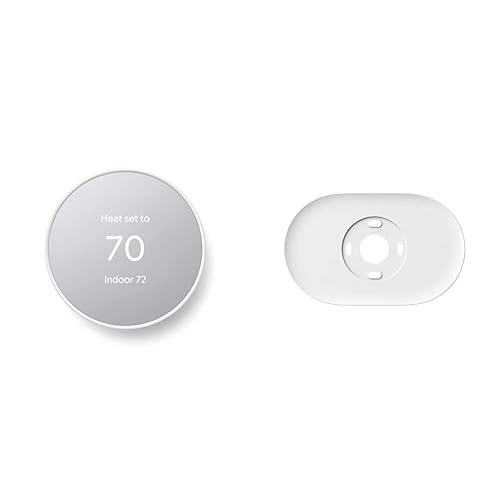
Google Nest Thermostat with Trim Kit (Snow)
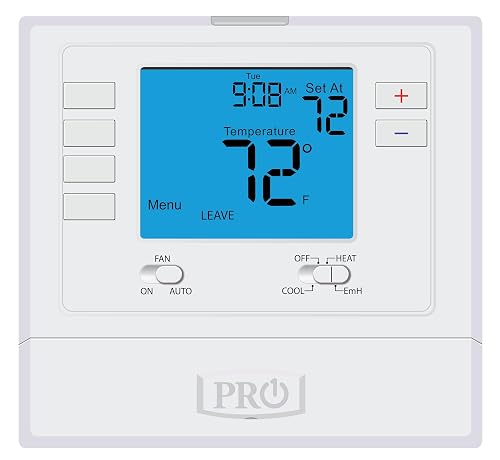
PRO1 T725 Heat Pump/Conventional Programmable Thermostat
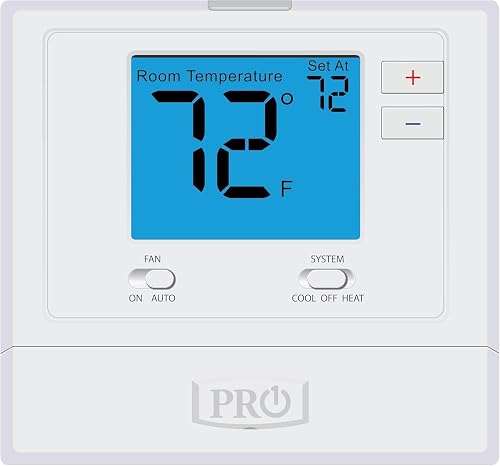
PRO1 T701 Single Stage Non-Programmable Thermostat

PRO1 T715 Multi-Stage Programmable Gas Thermostat
ecobee Smart Thermostat Premium with Sensor
PRO1 T721 Non-Programmable Heat Pump Thermostat
ecobee SmartSensor 2-Pack
Sensi Touch Smart Thermostat ST75 (Black)
ecobee Smart Thermostat Enhanced
ecobee3 Lite Smart Thermostat (Black)
Inside Each Recommended Option
Most homes only need a thermostat that gets out of the way, and the Google Nest Thermostat in Snow does that with quiet confidence. The included trim plate hides old paint lines and wiring gaps, while a steel mounting plate covers an electrical box if your old install left one exposed. You get an ENERGY STAR certified unit that runs schedules through the Google Home app on Android or iPhone.
Once paired, it learns when you leave and nudges the temperature back on its own, so an empty house isn’t running full blast from nine to five. For a first smart thermostat in a smaller home, this hits a comfortable middle ground between the app-heavy flagships and the dial-only basics. The setup process is friendly enough that most people finish it in an afternoon, with the app walking through every wire.
Positive Points
- ENERGY STAR certified, so you can expect meaningful savings on heating and cooling compared to a manual unit
- Auto-away feature drops the temperature when nobody’s home, no schedule entry required
- Trim kit solves the most common install headache: messy paint edges and visible old screw holes
- Google Home app handles scheduling from your phone, so the wall unit stays clean and minimal
Things To Consider
- You’ll need a C-wire (the common wire that provides continuous power) in many cases, and older homes without one may need a small wiring adapter
- Some users find the on-unit controls less intuitive than a physical dial during the first week
Key Specs
Who It Suits Best
First-time smart thermostat owners in apartments or small single-family homes who want a low-lift install.
Where Another Pick Suits Better
Heat pump owners get more direct compatibility from the PRO1 T725, which is built for 2 heat/1 cool heat pump systems.
Heat pump systems are common across the southern US, and a generic smart thermostat often doesn’t speak their language properly. The PRO1 T725 is built specifically for 2 heat/1 cool heat pump systems, plus standard 1 heat/1 cool conventional setups when you need a backup mode. The four-square-inch blue backlit screen is the kind of detail that matters during a 6 a.m. fumbling for the right setting in a dark hallway.
Programmability runs on a 7-day or 5/1/1 schedule, which is a scheduling format that lets you set every day independently, or weekdays and weekends separately, so a home office schedule doesn’t waste energy on Saturday. The T700 platform underneath it gives you a familiar interface. If you need an app-connected unit with full home automation, the Google Nest above offers more; if you want a dependable programmable wall unit that knows heat pump wiring, this earns its spot.
A Strong Showing
- Heat pump system compatibility that matches a 2 heat/1 cool setup, which covers most residential heat pumps
- Large 4 sq. in. blue backlit display is easy to read at a glance
- 7-day or 5/1/1 scheduling gives flexibility for shift workers and home office routines
- Dual system support means a fallback for conventional systems without rewiring
Honest Caveats
- No Wi-Fi or app control, so all adjustments happen at the wall
- Wiring diagrams can feel dense during initial install, so first-timers may want a pro
Feature Card
Made For
Homeowners with a 2 heat/1 cool heat pump who want reliable scheduling without a smartphone dependency.
Skip It When
The ecobee Smart Thermostat Premium is the better choice if you want app control, voice assistants, and room sensors in the same package.
Sometimes the best thermostat is the one that just shows you the temperature and lets you nudge it. The PRO1 T701 sits firmly in that camp. It targets 1 heat/1 cool conventional systems, which describes the most common residential setup in the country: a single-stage gas furnace plus central air. No app, no learning curve, no voice control to configure.
That simplicity is the point. Built on the T700 platform, the T701 has a clear 4 sq. in. blue backlit display and a glow-in-the-dark light button so you can find it in the dark. For an older relative’s house, a rental unit, or a guest room that doesn’t need a smart upgrade, this is a solid, predictable pick. It does what it says, and it doesn’t ask you to fiddle with your phone to change the temperature.
What Helps Most
- Non-programmable design removes all setup friction, ideal for a guest room or a relative who just wants the temperature to follow the dial
- Large 4 sq. in. backlit display is easy on aging eyes
- Glow-in-the-dark light button helps in power-outage situations
- Compatible with gas or electric systems, which covers the bulk of conventional HVAC equipment
Worth Noting
- No scheduling, so you can’t drop the temperature automatically when you leave for work
- Not compatible with heat pump systems, so it’s the wrong choice for homes without a furnace
Right Fit For
Rental property owners and households who want a simple wall unit without any smart features or apps to maintain.
Look Elsewhere When
Anyone wanting automatic energy savings should step up to the ecobee3 Lite, which adds app control and scheduling at a similar accessibility level.
Two-stage gas furnaces run more efficiently when the thermostat understands what they’re doing. A single-stage thermostat ends up short-cycling them, which costs you comfort and fuel. The PRO1 T715 is built for 2 heat/2 cool gas systems, so your furnace can run on low fire most of the time and only kick into high fire on the coldest mornings. That distinction shows up directly in your gas bill over a winter.
The T700 platform also gives you 7-day, 5/1/1, or non-programmable modes, so you can run a full weekly schedule or treat it as a digital dial-only unit if you prefer. The 4 sq. in. blue backlit display and glow-in-the-dark light button keep it readable at any hour. Battery or hardwired power options add install flexibility. It’s a step up from the T701 in capability, without crossing into the app-connected category.
Strong Points
- 2 heat/2 cool staging gets full efficiency from a two-stage gas furnace
- Three operating modes, including 7-day, 5/1/1, and non-programmable, let you set the thermostat’s complexity to match your routine
- Battery or hardwired power, so it works in homes without a C-wire
Trade Offs
- No Wi-Fi, so remote control requires being in front of the wall unit
- Staging setup can confuse first-time installers, since each terminal needs to land in the right spot
Best Suited To
Homeowners with a two-stage gas furnace who want scheduling and efficiency without committing to a smart home ecosystem.
Another Choice May Suit
The PRO1 T725 is a better fit if you have a heat pump rather than a gas furnace, since it’s wired for that equipment family.
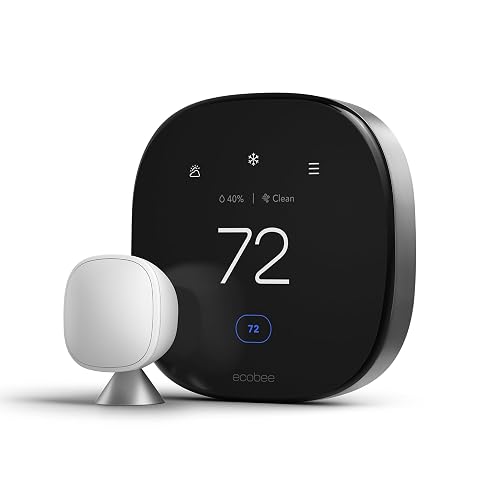
The ecobee Smart Thermostat Premium is the one to look at when you want the thermostat to do more than run a schedule. It ships with a SmartSensor, which is a small wireless accessory that reads the temperature in a separate room and tells the thermostat to balance around it. That alone ends the “thermostat says 70 but the bedroom is freezing” problem that plagues two-story homes.
Built-in voice control through Siri and Alexa means no extra smart speaker on the counter for basic commands. Wi-Fi connectivity ties everything together through the ecobee app, and the included sensor helps the system prioritize the rooms you actually use. Setup leans on the app rather than a wall menu, which is easier for most people once it’s running. If you want a full smart-home-ready unit with sensors, this is the most complete option on the list.
Points In Its Favor
- Included SmartSensor targets hot and cold spots, which makes a real difference in homes with one thermostat controlling multiple rooms
- Built-in Siri and Alexa cut down on extra hardware cluttering the kitchen counter
- App-based setup walks you through wiring and configuration step by step
Points To Keep In Mind
- Premium price tier, so it costs more than the non-smart options above
- Voice features need a stable Wi-Fi connection to stay useful day to day
Quick Technical Notes
Who Will Love This
Smart-home enthusiasts who want voice control, room sensors, and full app integration in a single wall unit.
Reach For A Different Pick When
Privacy-focused households may prefer the Sensi Touch ST75, which emphasizes data privacy and doesn’t add a voice microphone to your wall.
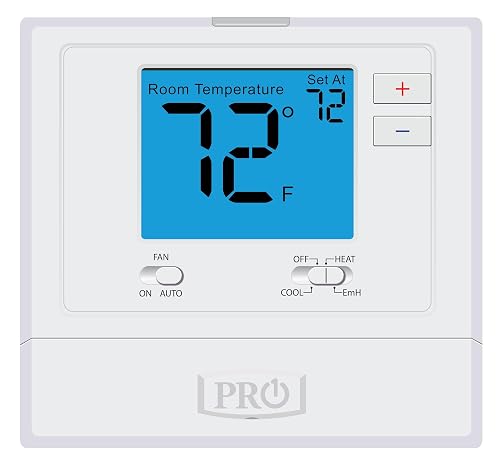
The PRO1 T721 is the heat pump cousin of the T701, and it covers the most common residential heat pump wiring without forcing you to learn a scheduling interface. It’s a non-programmable unit designed for 2 heat/1 cool heat pump systems or 1 heat/1 cool conventional systems, so it bridges both equipment families. If your heat pump uses auxiliary heat strips in winter, this thermostat can manage that staging without extra hardware.
It runs on the T700 platform, which means the same 4 sq. in. blue backlit display and glow-in-the-dark light button that appear on the other PRO1 models. AA battery power keeps installation simple in homes where pulling a C-wire is impractical. It’s a quiet, no-app, no-fuss pick for a heat pump owner who just wants the temperature to track the dial.
Strengths Worth Knowing
- Heat pump system support covers 2 heat/1 cool wiring, which fits most residential heat pumps
- Dual system compatibility gives you a fallback if you switch from a heat pump to a conventional system later
- AA battery power avoids the C-wire install barrier in older homes
Less Ideal Details
- Non-programmable, so you can’t automate a daytime setback for energy savings
- No Wi-Fi, which means no remote access when you’re traveling
Perfect Match For
Heat pump homeowners who prefer a manual dial over a phone app, especially in properties where the wiring isn’t C-wire-ready.
Not Your Match When
Anyone wanting scheduling and energy reports should choose the PRO1 T725, which adds programmability to similar heat pump wiring.
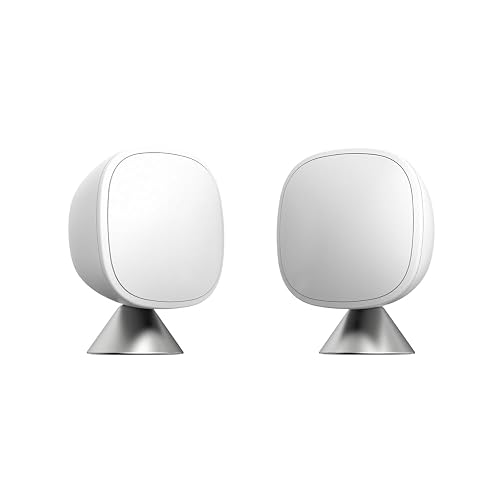
The ecobee SmartSensor 2-Pack isn’t a thermostat on its own; it’s the accessory that makes an ecobee thermostat worth more than a basic model. Each sensor reads both temperature and occupancy, then tells the thermostat which room to prioritize. Drop one in a nursery and another in a home office, and the system stops fighting itself trying to balance based on the hallway reading alone.
Pairing happens through the ecobee app, and the sensors communicate wirelessly to the main thermostat without extra hubs. Occupancy detection is the quiet win: the system can lower the temperature in empty rooms and prioritize the spaces that are actually in use. If you already own an ecobee thermostat, this 2-pack is a sensible upgrade that solves a real comfort problem. If you don’t, start with the ecobee3 Lite or Smart Thermostat Premium and add sensors later.
Advantages To Know
- Temperature and occupancy detection in a single sensor, so comfort follows the people in the room
- Two-pack value if you have a multi-room home with persistent hot or cold zones
- Wireless setup through the ecobee app, no extra wiring required
Practical Considerations
- Requires an existing ecobee thermostat to function, so it isn’t a standalone product
- Battery-operated sensors need occasional battery swaps, typically once a year depending on use
Built With In Mind
Existing ecobee owners in two-story homes or households with one room that’s always warmer or cooler than the rest.
Where A Sibling Pick Shines
For households without an ecobee yet, the ecobee Smart Thermostat Premium includes one sensor in the box, so the entry cost covers both the thermostat and the first sensor.
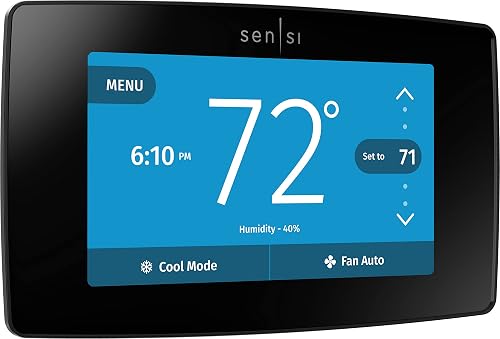
The Sensi Touch ST75 leans into the part of the smart thermostat experience that people notice first: the screen. Its color touchscreen is sharper and more colorful than the typical monochrome display, and it gives the wall unit a modern look that fits a renovated kitchen or living area. The Emerson Sensi line has been around for years, and the app is one of the more straightforward smart home apps to set up.
Energy Star certification and an emphasis on data privacy give it an edge for households that want smart features without sharing more data than necessary. A C-wire is required, which matters if you’re replacing an old battery-powered thermostat in a home without the common wire pulled. Once installed, you get a programmable schedule, Wi-Fi control, and compatibility with Alexa. It’s a strong middle-ground pick between the entry-level ecobee3 Lite and the higher-tier ecobee Premium.
Real Benefits
- Color touchscreen makes the wall unit feel modern without an app-only design
- Emerson’s data privacy stance appeals to households that want smart features without aggressive data collection
- Energy Star certification aligns with federal efficiency benchmarks
A Few Limitations
- C-wire required, which rules out some older wiring configurations without an adapter
- Currently listed as unavailable in some configurations, so check the listing before committing
Whose Shelf It Belongs On
Privacy-conscious homeowners who want a Wi-Fi thermostat with a quality color screen and Alexa compatibility.
Swap It Out When
If you want built-in voice control without buying a separate smart speaker, the ecobee Smart Thermostat Premium puts that on the wall itself.
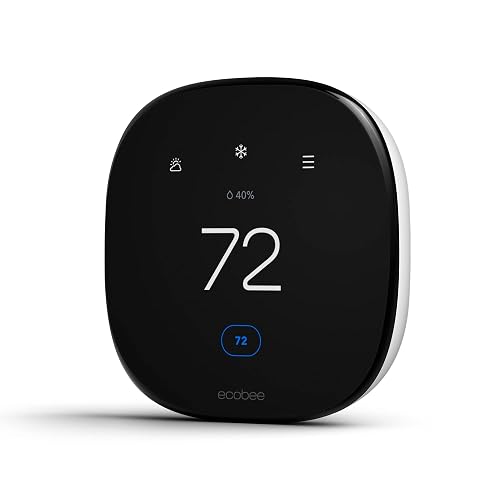
ecobee’s Enhanced model sits between the entry-level ecobee3 Lite and the Premium, which is exactly where a lot of households want to land. You get the same scheduling engine and occupancy-based adjustments that ecobee built its reputation on, without paying for the Premium’s built-in voice control or air quality monitor. The result is a smart thermostat that feels modern without trying to be a kitchen tablet.
Occupancy detection lets it suggest schedule changes and adjust the temperature based on whether anyone’s actually home. The eco+ features quietly trim the temperature when you’re asleep or away, and the system works with Siri, Alexa, and Google Assistant through your existing smart speaker setup. For a first smart thermostat, this is a sensible middle tier that doesn’t lock you into the Premium’s price.
Positive Takeaways
- Occupancy-driven scheduling reduces manual adjustments, which saves energy without nagging you about it
- eco+ features automate setbacks during sleep and away hours
- Works with the three major voice assistants, so you can pick the ecosystem you already use
Possible Compromises
- No built-in voice control, so you’ll still need a separate smart speaker for voice commands
- No air quality monitor, which the Premium model includes
Who Should Grab It
Households ready to move beyond a basic programmable thermostat but who don’t need the Premium’s extra sensors and voice features.
Consider Something Else When
Whole-home comfort with multiple rooms and sensors benefits from the Smart Thermostat Premium plus additional SmartSensors.
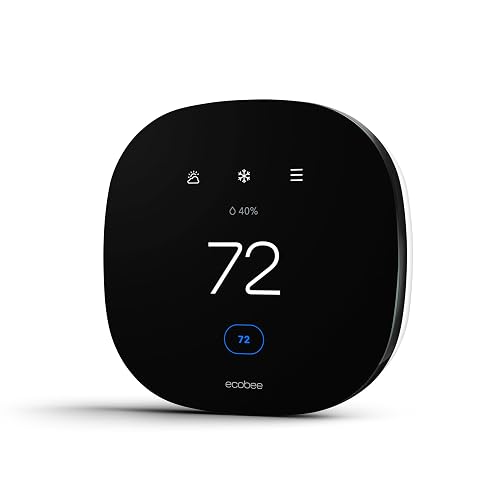
The ecobee3 Lite has been around long enough to develop a quiet reputation as the budget-friendly entry point into ecobee’s smart thermostat lineup. It works with Siri, Alexa, and Google Assistant, so you don’t have to pick a voice ecosystem before you buy. Energy Star certification lines up with federal efficiency benchmarks, and the app is the same one used across the ecobee line, which means updates and improvements roll out across models.
The “Lite” name is honest about what’s missing: no built-in voice, no air quality monitor, and no occupancy-driven schedule suggestions like the Enhanced or Premium models. In exchange, you get a programmable Wi-Fi thermostat that handles the core job well and pairs with SmartSensors if you decide to add room-by-room comfort later. For a first smart thermostat on a tighter budget, this is a sensible, well-supported pick.
Standout Benefits
- Works with all three major voice assistants out of the box, so ecosystem choice can wait
- Energy Star certified, which matters for any utility rebates your area offers
- Compatible with ecobee SmartSensors, so you can expand into room-aware comfort later
Some Limits To Know
- No built-in voice, so hands-free control requires a separate smart speaker
- Older interface design compared to the Enhanced and Premium models, though app updates keep it functional
The Right Fit
First-time smart thermostat shoppers who want ecobee’s app and ecosystem without paying for the Premium’s extras.
Where It Is Less Suited
Households that want built-in voice or air quality monitoring should move up to the ecobee Smart Thermostat Premium instead.
What To Weigh Before Choosing a Smart Thermostat
Match the Thermostat to Your System Type
The single biggest mistake is buying a thermostat that doesn’t speak your HVAC system’s language. A conventional furnace and air conditioner pair, which describes the bulk of US homes, uses 1 heat/1 cool wiring. A heat pump uses different terminals entirely, and a two-stage furnace expects more connections than a single-stage unit. Picking the right wiring profile upfront avoids an afternoon of frustration with wire labels.
Decide How Smart You Actually Need
Smart thermostats vary wildly in how much they try to do. A simple programmable unit, like the PRO1 T701, runs on a schedule you set and that’s it. Mid-tier models like the ecobee3 Lite add Wi-Fi, app control, and voice assistant compatibility. Premium units like the ecobee Smart Thermostat Premium add built-in voice, air quality monitoring, and room sensors that follow you through the house. Honest self-reflection about whether you’ll actually use those features saves money and avoids paying for complexity you won’t touch.
Plan for Wiring and Power Early
Many smart thermostats need a C-wire, a common wire that delivers continuous 24-volt power, which older homes often lack. If your current thermostat runs on batteries only, expect to either pull a new wire, install a power adapter, or pick a model that runs on AA batteries. Checking the wiring at your current thermostat before ordering saves a return trip and an afternoon of troubleshooting.
Room Sensors Solve Real Problems
Homes with one thermostat controlling multiple rooms usually have hot and cold spots, because the hallway reading doesn’t match the nursery or the upstairs bedroom. Smart thermostats with room sensors, like the ecobee Premium and the SmartSensor 2-Pack, average or prioritize readings from the rooms you actually use. For two-story homes and houses with a finished basement, room sensors are often the difference between a thermostat that works and one that frustrates.
What To Watch Before You Buy
Pitfalls Shoppers Hit
The most common error is choosing a thermostat based on screen size and design without confirming HVAC compatibility. A pretty unit that doesn’t match your system’s wiring will either fail to install or limit your system to a fraction of its capability. Always confirm the staging, which refers to how many heating and cooling stages your system can run, and the system type, heat pump or conventional, before you commit. Another frequent slip is buying a smart thermostat for a rental property that doesn’t need Wi-Fi access, then paying for features the tenant won’t use. Simple programmable units handle most rental situations cleanly.
Where The Extra Money Goes
The jump from a basic programmable unit to a smart, sensor-equipped model pays off in two ways. First, occupancy-driven scheduling adjusts the temperature when you actually leave or sleep, which typically outpaces what most people set up on a manual schedule. Second, room sensors address comfort gaps that no amount of programming can fix from a hallway thermostat. The premium tier beyond that, with built-in voice and air quality monitoring, is worth it mainly if you’ll actively use those features, and for many households the mid-tier offers a better balance of cost and everyday value.
Frequently Asked Questions
Do smart thermostats actually save money?
Smart thermostats can lower heating and cooling costs by adjusting the temperature when you’re asleep or away, which most people don’t do consistently with a manual schedule. Actual savings depend on your climate, your HVAC system, and how much you interact with the scheduling features.
Will a smart thermostat work with my old wiring?
Many smart thermostats require a C-wire, which provides continuous 24-volt power and isn’t present in every home. Some models run on AA batteries, and others include power adapters for older wiring. Checking the terminals on your current thermostat before ordering avoids a frustrating install day.
What’s the difference between programmable and smart?
A programmable thermostat runs a schedule you set directly on the wall unit. A smart thermostat adds Wi-Fi, app control, voice assistant compatibility, and usually some form of automatic adjustment based on occupancy or weather. The two categories overlap, since many smart thermostats are also programmable, but smart models add the connected features on top.
Do I need room sensors?
Room sensors help if your thermostat is in a hallway or central location, and you have rooms that run consistently warmer or cooler than the rest of the house. They make less of a difference in small, open floor plans where one reading is broadly representative.
Are smart thermostats hard to install?
Most smart thermostats are designed for DIY installation, with the app walking you through wiring and setup step by step. Comfort with a screwdriver and the ability to identify your existing wiring are the main requirements. Heat pump and multi-stage systems can be more complex, so a professional installer is a reasonable choice for those setups.
Final Takeaway
The right thermostat depends less on brand and more on what your HVAC system actually does and how much automation you want to maintain. A programmable wall unit covers the basics for a rental or a simple system. A Wi-Fi model earns its keep when you actively use schedules and remote control. Room sensors and built-in voice are worth paying for only when the problem they solve matches your home. Pick the level of smart that fits your routine, and the comfort and savings tend to follow.