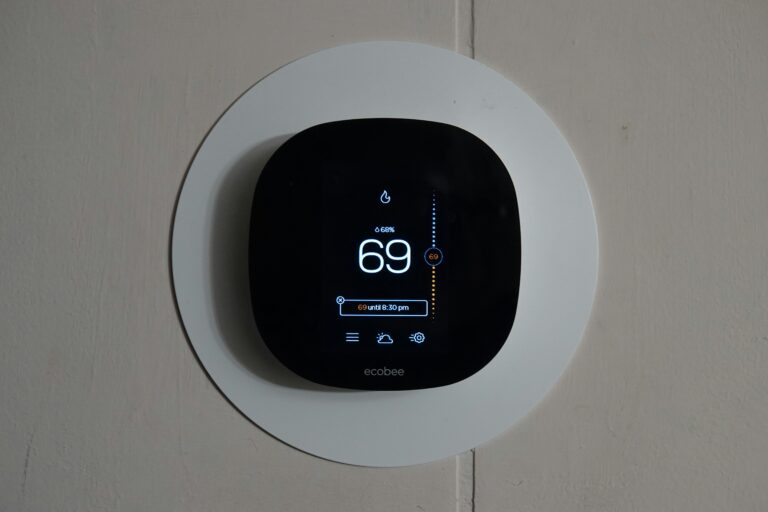


Yes, for most homes, though the size of the savings depends on your climate, insulation, HVAC system, and how often you adjust the dial. ENERGY STAR certified models trim heating and cooling bills by roughly 8% on average, while field measurements range from about $200 a year down to zero. C-wire compatibility decides whether installation takes ten minutes or a full weekend.
This resource explains what a smart thermostat actually does, where the energy savings come from, and why some households pocket $200 a year while others see nothing change on their utility bill.
What a Smart Thermostat Actually Does
A smart thermostat is a Wi-Fi-enabled device that adjusts your home’s temperature automatically using schedules, sensors, and remote app control. It learns your patterns, detects when you leave, and trims heating or cooling during empty hours without you touching a dial. That automation layer is what separates it from the programmable thermostats that have hung on hallways since the 1990s.
Smart vs. Programmable: The Practical Difference
A programmable thermostat follows a fixed schedule you punch in once and forget. Set 68°F at 6 a.m., 74°F at 9 a.m., repeat Monday through Friday. It has no idea whether you are home, whether a heat wave just rolled in, or whether you left for vacation on Tuesday instead of Wednesday. A smart thermostat adapts to those variables using sensors, your phone’s location, and sometimes a learning algorithm that watches your manual changes over weeks.
For a household with a rigid routine and a homeowner who never tweaks the dial, a $30 programmable unit does most of the same work. For everyone else, the automation layer is where the savings come from.
Core Features That Separate Budget From Premium Models
- Learning algorithms: Track your manual changes for 1–2 weeks, then start predicting and setting temperatures on their own.
- Geofencing: Use your phone’s GPS to detect when the last person leaves and turn the system down automatically.
- Occupancy sensors: Built-in motion or infrared sensors detect whether rooms are actually in use.
- Remote app control: Adjust temperature from anywhere with a smartphone or tablet.
- Multi-zone support: Manage separate sensors across different rooms or floors for balanced comfort.
Budget Wi-Fi models ship with app control and basic scheduling. Mid-tier units add geofencing and remote sensors. Premium learning thermostats such as the Nest Learning Thermostat and ecobee SmartThermostat layer all of the above, including algorithms that fine-tune runtime based on how quickly your home actually heats and cools.
What the Savings Numbers Actually Look Like
Manufacturer claims and field measurements often tell different stories, and the gap matters when you weigh a $200 device against a $30 programmable model. Independent data puts the typical homeowner savings at roughly 8% on heating and cooling, while vendor estimates run higher for specific households. The range is wide, and your home’s specifics determine where you land.
Manufacturer Claims and EPA Estimates
Nest’s internal data and EPA modeling suggest the typical user saves $131–$145 per year after installing a Learning Thermostat. Those figures assume reasonable weather, average insulation, and a household that lets the algorithm run without constant overrides. ENERGY STAR certified smart thermostats are independently documented to save about 8% on heating and cooling bills on average, which lines up with the Nest range for a typical U.S. utility bill.
Independent Field Studies Tell a Different Story
A 2015 randomized trial in Florida found no statistically significant savings for some households, even after months of use. The study showed that energy use barely budged compared to a control group with standard programmable thermostats. Climate, behavior, and HVAC type all played a role in the outcome.
Variance is the real headline. One household might save $200 a year while a neighbor with the same device saves nothing. The hardware is only part of the equation, and behavior often decides the rest.
Why Some Homes Save $200 a Year and Others Save Nothing
Climate, insulation, and daily routine drive most of the gap between homes that hit big savings and the ones that do not. A smart thermostat amplifies existing efficiency, but it cannot fix a leaky envelope or a struggling heat pump on its own. The device works with what your home already has.
The Variables That Swing Your Results
Utility rate structure matters more than most people realize. A homeowner in California paying $0.32 per kWh sees different dollar savings from the same percentage cut as someone in Seattle at $0.11 per kWh. Climate severity also shifts the picture: harsh winters or sweltering summers give the thermostat more raw hours to optimize. Insulation quality, HVAC age, and system type, whether heat pump, furnace, or central AC, round out the technical factors.
If your home is already well-insulated and your bills are low, the percentage savings translate to small dollar amounts. The upgrade still pays off in convenience, just not always in money.
Behavior Trumps Algorithms
Smart thermostats work best when you let them. Owners who constantly override schedules, fiddle with the setpoint, or keep the temperature at the same level year-round erase most algorithmic gains. The 2015 Florida trial pointed to this directly: when residents ignored the learning features and treated the device like a fancy remote, savings evaporated.
The Hidden Benefit Most Calculators Skip
Reduced short cycling extends HVAC lifespan. Smart thermostats ramp temperatures gradually and avoid the rapid on-off pattern that wears out compressors and heat strips. A furnace or AC unit that runs fewer cycles per day can last years longer, which is an indirect financial benefit that rarely appears in savings calculators but can exceed the energy savings over a decade.
That longevity matters only if the wiring and system underneath actually accept the device in the first place.
Compatibility, Installation, and the C-Wire Question
Most smart thermostats require a common wire, called a C-wire, to deliver continuous 24-volt power from the HVAC system. Older homes built before the mid-2000s often lack this wire, and that gap determines whether installation is a ten-minute swap or an afternoon with a drill and a voltage tester.
What the C-Wire Does and Why It Matters
A C-wire completes the circuit so the thermostat always has power for its Wi-Fi radio, display, and sensors. Without it, the device steals power from the heating or cooling circuit, which can cause flickering, battery warnings, or outright failure on heat-only systems. The Nest Learning Thermostat, ecobee SmartThermostat, and Honeywell T9 all list C-wire requirements in their compatibility checkers.
Workarounds for Homes Without a C-Wire
- C-wire adapters: Small kits that repurpose an existing wire as the common conductor, included free with some ecobee models.
- Power extender kits: Sold separately for installations where no spare wire exists, requiring wiring at the furnace board.
- Professional installation: Recommended for heat pumps, multi-stage systems, and multi-zone setups where miswiring risks equipment damage.
- Proprietary system lockout: Some older HVAC controls use communication protocols that block third-party thermostats entirely.
Renters and Shared Systems
Renters face a separate constraint: landlord permission. Installing a smart thermostat usually requires swapping the wall unit, which most leases prohibit. Even portable smart AC controllers depend on window units or specific HVAC configurations. If you cannot modify the wall control, the upgrade is off the table.
Features That Genuinely Earn the Higher Price Tag
Not every feature on the spec sheet translates to lower bills. Geofencing and occupancy sensors drive most of the automation gains, while voice integration adds convenience without affecting energy use. Knowing which features actually save money helps you avoid paying extra for flash.
Premium vs. Mid-Tier vs. Budget Models
| Feature | Learning Thermostat (Nest, ecobee) | Mid-Tier Wi-Fi (Honeywell T9) | Budget Wi-Fi |
|---|---|---|---|
| Learning algorithm | Yes, fully autonomous | Partial, schedule-based | No |
| Geofencing | Yes, multi-user | Yes, single user | Sometimes |
| Occupancy sensors | Built-in plus remote sensors | Remote sensors sold separately | Rare |
| Multi-zone support | Up to 20 sensors | Up to 20 sensors | Single zone |
| Voice integration | Yes | Yes | Sometimes |
| Typical price | $180–$280 | $120–$170 | $60–$100 |
The learning algorithm in the Nest and ecobee lines is the single biggest differentiator. It watches how your home responds to temperature changes and adjusts ramp times so the system hits the target right when you want it, not ten minutes early or late. That precision trims runtime, which is where the savings come from.
Where Utility Rebates Change the Math
Utility rebate programs in many U.S. states and Canada can knock $50–$150 off the purchase price, sometimes more for income-qualified households. A $250 ecobee with a $100 rebate pays for itself in roughly two years for a household saving 8% on a $1,800 annual heating and cooling bill. Check your utility’s website before buying; the rebate rules shift often and vary by region.
Even the best features fall flat if your home’s usage pattern or utility rebates fail to justify the upfront cost.
When a Smart Thermostat Pays Off and When to Skip It
The decision comes down to climate, existing HVAC equipment, household routine, and the price after rebates. Some profiles see clear returns; others spend money for marginal gains. Running the compatibility check and the rebate lookup takes twenty minutes and reveals which side of the line you fall on.
Profiles That See Strong Returns
- Central air or heat pump in a moderate-to-harsh climate: More heating and cooling hours mean more opportunity to trim runtime.
- A C-wire already in place: Installation takes ten minutes, with no electrician or rewiring cost.
- A household whose schedule changes day to day: Shift workers, hybrid office schedules, and families with irregular routines benefit most from geofencing.
- Utility rebate eligibility: Cuts the upfront cost and shortens payback time.
Profiles That Should Pass
- Well-insulated homes with already-low utility bills: The percentage savings translate to small dollar amounts.
- Manual thermostat users who never touch the device: A $30 programmable unit delivers the same results without the learning curve.
- Anyone unable to install without rewiring: Electrician fees erase the savings.
- Renters without landlord permission: The upgrade simply is not available.
The Three-Year Decision Rule
If projected annual savings plus available rebates exceed the purchase price within three years and your HVAC system is compatible, the upgrade earns its keep. Most households meeting climate and behavior criteria hit this threshold easily. Those who do not should wait for insulation upgrades, HVAC replacements, or utility rate changes to shift the math.
Bottom Line
Smart thermostats earn their place when climate, equipment, and routine align. The 8% average savings from ENERGY STAR certified models is real, but the variance is enormous: some homes save $200 a year, others save nothing. C-wire compatibility, household behavior, and rebate eligibility decide which side of that range you land on. Run the compatibility check, check your utility’s rebate page, and only buy if the math works in your specific home.
FAQ
Do smart thermostats actually save money?
ENERGY STAR certified smart thermostats save roughly 8% on heating and cooling bills on average. Actual results range from about $200 per year down to zero, depending on climate, insulation, HVAC type, and how often you override the schedule.
How long does it take a smart thermostat to pay for itself?
Most households see payback within two to four years at typical savings rates. Utility rebates can shorten that window to under two years in many U.S. states and Canadian provinces.
Are smart thermostats hard to install?
Installation is straightforward if your home has a C-wire and a compatible HVAC system, usually taking ten to thirty minutes. Homes without a C-wire may need an adapter kit or professional installation, which can add cost and time.
Can a smart thermostat work without Wi-Fi?
Yes, most models still function as basic thermostats using on-device schedules and manual adjustments when Wi-Fi is down. Remote app control, learning features, and geofencing require a live connection.
Do smart thermostats work with older furnaces?
Compatibility depends on the system’s voltage and staging, not its age alone. Most smart thermostats support standard 24-volt furnaces, but proprietary communication protocols in some older units block third-party installation entirely.
What are the downsides of a smart thermostat?
Common downsides include C-wire installation requirements, learning curve for app-based controls, and dependency on cloud services for advanced features. Privacy concerns around data collection exist but are generally limited to usage patterns and home occupancy rather than audio or video.